fuel cap AUDI Q7 2012 Owner´s Manual
[x] Cancel search | Manufacturer: AUDI, Model Year: 2012, Model line: Q7, Model: AUDI Q7 2012Pages: 342, PDF Size: 86.42 MB
Page 257 of 342
Unlocking the fuel filler flap by hand
You can open the fuel filler flap by hand if the
power locking system should fail.
•
•
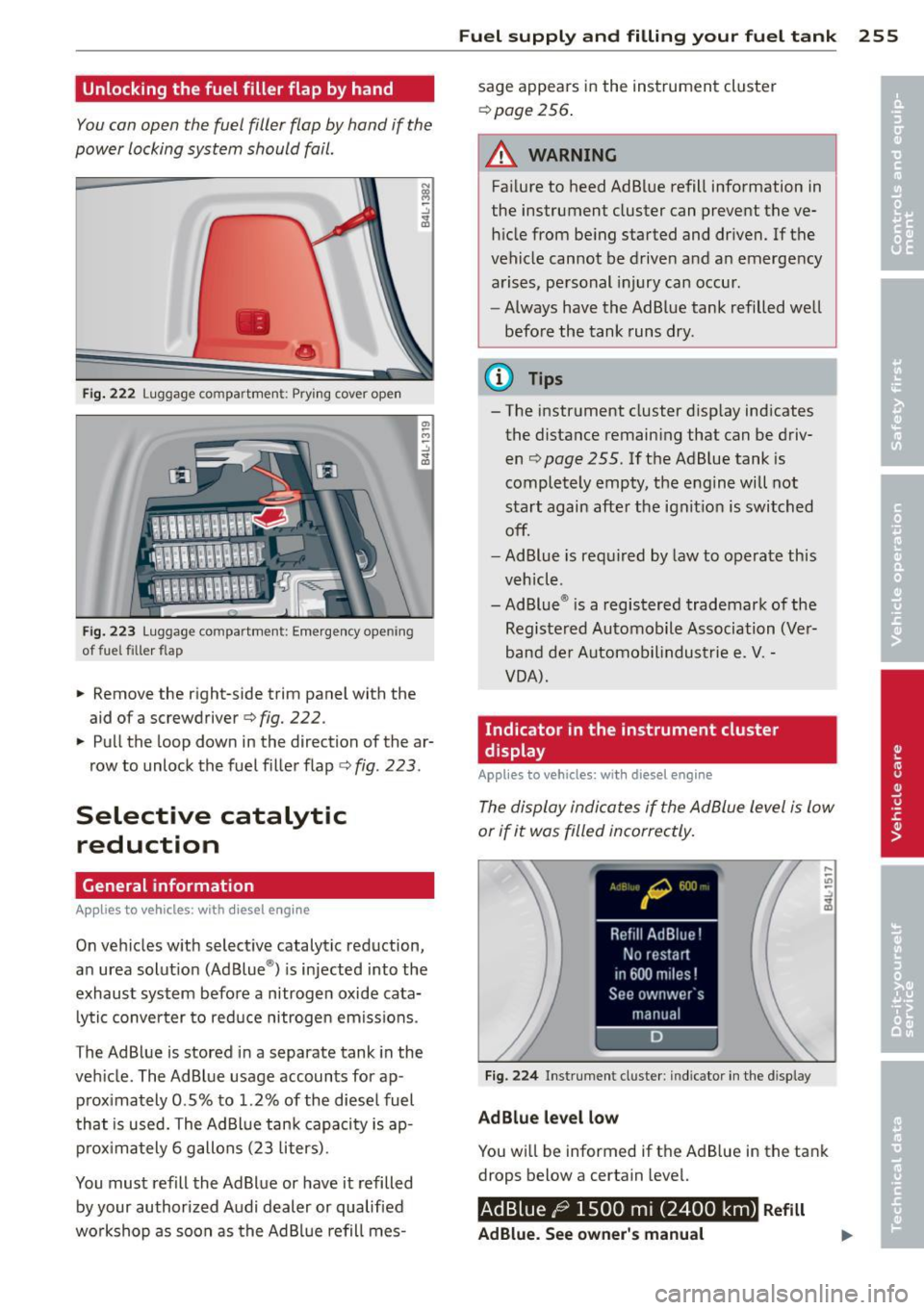
Fig . 222 Luggage co mpa rtme nt: Pry ing cover ope n
Fi g. 22 3 Luggage co mpartmen t: Emergency ope ning
of fue l filler flap
.. Remove the right-side trim panel with the
aid ofa screwdriver
¢ fig. 222.
.. Pull the loop down in the direction of the ar
row to unlock the fuel f iller flap ¢
fig. 223 .
Selective catalytic
reduction
General information
App lies to vehicles : with diesel engine
On vehicles w ith select ive catalytic reduction,
an urea solut ion (Ad Blue ®) is injected into the
exhaust system befo re a nitrogen oxide cata
lytic converter to reduce nitrogen em iss ions .
The AdBlue is stored in a separate tank in the
veh icle. The AdBlue usage accounts for ap
p rox imately 0.5% to 1.2% of the diese l fuel
that is used. The Ad Blue tank capaci ty is ap
pr ox ima tely 6 gallons (23 liters) .
You must refill the Ad Blue or have it refilled
by your authorized A udi dealer or qualified
wo rkshop as soon as the Ad Bl ue refill mes-
Fu el suppl y and filli ng your fuel t ank 255
sage appears in the instrument cluster
¢ page 256.
A WARNING
Failure to heed AdBlue refill info rmation in
the instrument cluster can prevent the ve hi cle from be ing started and dr iven. If the
vehicle cannot be driven and a n emerge ncy
a rises, pe rsonal injury can occur .
- Always have the AdBlue tank refilled well
befo re the tank runs dry .
(D Tips
- The instrument cluster d isp lay ind icates
the distance remain ing that can be driv
en ¢
page 255. If the Ad B lue tank is
completely empty, the engine will not
start again afte r the ignit ion is switched
off.
- Ad Blue is req uired by law to operate th is
veh icl e.
- Ad Blue ® is a registered trademark of the
Registe red Automobile Association (Ve r
band de r Automob ilindustrie e .
V. -
VOA) .
Indicator in the instrument cluster
display
Appl ies to vehicles: wit h diesel eng ine
The display indica te s if the Ad Blue level is low
or if it was filled incorrectly.
Fi g. 22 4 Instrument cluste r: in dicator in t he d isp lay
AdBlue level low
You w ill be informed if t he AdB lue in the tank
drops below a certain level.
AdBlue /9 1500 mi (2400 km) Refill
AdBlue. See owner 's manual
Page 258 of 342
256 Fuel supply and filling your fuel tank
This indicator appears when there is on ly
enough Ad B lue left to drive th e distance indi
cated in the driver informat ion system. Please
add Ad B lue.
AdBlue ,0 600 mi (1000 km) Refill
AdBlue! No restart in 600 miles (1000 km )!
See owner 's manual
This indica to r appea rs when there is on ly
enough Ad B lue left to drive the distance ind i
cated in the dr iver information system. Please
add Ad B lue . Otherw ise the eng ine will not
start aga in if you stop it once the distance i n
d icated has been driven .
Refill Ad Blue! No
restart! See owne r's manual
This message appears whe n the AdBl ue ta nk
i s empty . Please add AdBlue. Ot herwise yo u
will not be able to start the engi ne again o nce
you stop it.
When the m inim um AdB lue leve l has been
reached , you must add Ad Bl ue
c:> page 256 .
f.i Filling incorrectly
I f the Ad B lue tank was filled with a diffe rent
f luid than Ad Blue and t he system detec ts that
it is incor re ct, a mess age w ill appe ar.
AdBlue ./' 600 mi (1000 km) AdBlue!
No re start in 600 mile s (1000 km)! See own·
er' s manual
This message appears when it is only poss ible
to drive the distance indicated in the dr iver in
formation system . Dr ive to the nearest qua li
fied work shop to have the malfunc tion re
pai red . O therw ise the engine w ill not start
a ga in if you stop it once the distan ce indicated
has been driven .
AdBlue : sy stem
fault. No restart! See owner's manual
This message appears if the sys tem detects it
was fille d in corre ct ly . Drive immed iate ly to
the nea rest qualified wo rkshop to have t he
mal func tio n repaired. Otherw ise you wi ll not
b e able to s tart the engine ag ain once yo u
stop it. Filling AdBlue
Applies
to vehicles: with diesel engine
A special refill bottle must be used to fill the
AdBlue .
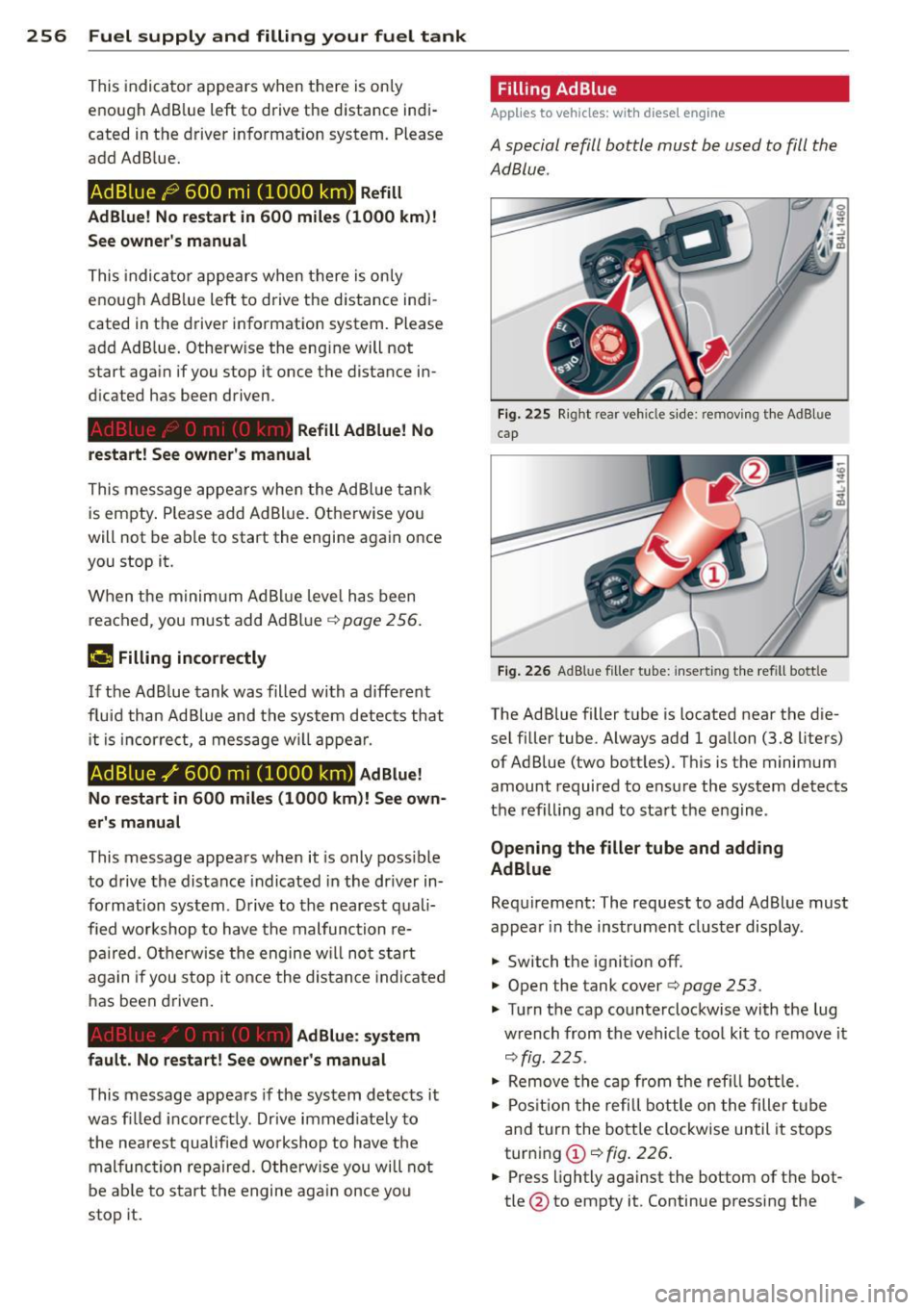
Fig. 22 5 Right rear veh icle side: re m oving th e AdB lue
cap
Fig. 226 AdB lu e fi ller t ube: inser ting the re fill bott le
The Ad Blue filler t ube is located near the d ie
sel filler tube. Always add 1 gallon (3.8 liters)
of Ad Blue (two bott les) . T his is the minimum
amount required to ensu re the system detects
the refill ing and to sta rt the e ngine .
Opening the filler tube and adding
AdBlue
Req uirement: The request to add Ad Blue mus t
appea r in the instrument cluster display.
.,. Switch t he ignit io n off.
.,. Open the tank cover
c:> page 253.
.,. Tur n t he cap counterclockwise with the lug
w rench from the vehicle tool kit to remov e it
<=> fig. 225 .
.,. Remove the c ap fr om the refi ll bottle.
.,. Pos it io n the refill bottle on the filler tube
an d tur n the bo tt le clockwise until it stops
tur ning
(D <=> fig . 22 6.
.,. Press lightly against the bottom of t he bot-
tle @to empty it . Continue pressing the ..,.
Page 259 of 342
bottom of the bottle until it is empty or
until fluid stops f lowing into the tank.
~ Turn the bott le to the left without press ing
on the bottom.
Closing the filler tube
~ Turn the cap clockwise on the filler tube
with the lug wrench until you hear it tighten
completely.
~ Close the tank cover .
After filling
The vehicle must be driven . The system may
take up to two minutes to detect that the
Ad B lue has been filled.
~ If there was no AdBlue left in the tank and a
range of
O mi (0 km ) was displayed in the
instrument cluster, switch the ignition on
for about 15 seconds before starting the en
gine .
.&_ WARNING
Ad Blue can irritate the skin, eyes and res
piratory system. If there is contact with
the fluid, flush immediately with plenty of
water . Consult a physician if necessary .
(D Note
-Only use Ad Blue that conforms to the
standard ISO 22241-1. Do not mix any
additives with the Ad Blue and do not di
lute it with water .
- Ad Blue is not a diesel additive. Do not
add it to the diesel tank. If Ad Blue is
mixed w ith diesel fuel, it can lead to
damage to the eng ine and the Ad Blue
tank system . The Limited New Vehicle
Warranty does not cover such damage.
- AdBlue attacks surfaces such as painted
vehicle components, plast ic and carpet.
Remove the fluid as quick ly as possible
with a damp cloth and plenty of cold wa
ter . If the AdBlue has already crystal
lized, use warm water and a sponge.
AdBlue residue that is not removed w ill
crystall ize and can damage the affected
surface .
Fuel supply and filling your fuel tank 257
-Do not store the refill bottle in the vehi
cle . If it leaks, the escaping Ad Blue could
damage the vehicle interior.
- Do not allow Ad Blue to come into con
tact with clothing . If there is contact
with the fluid, flush immediate ly with
plenty of water .
(1) Tips
-Yo u can obtain refill bottles from any au
thorized Audi dealer or other qualified
workshop .
- Follow the Ad Blue manufacturer's in
struct ions for usage and storage. •
•
Page 261 of 342
-Apply the parking brake.
- Move selector lever to "P" (Park).
- Always let the engine cool down. Hot
components will burn skin on contact.
- To reduce the risk of being burned, never
open the hood if you see or hear steam
or coolant escaping from the engine
compartment. Wa it until no steam or
coolant can be seen or heard before care
fully opening the hood.
- Keep children away from the engine com
partment .
- Never spill fluids on hot engine compo
nents. They can cause a fire.
- Never touch the radiator fan. The auxili
ary electric fan is temperature controlled
and can switch on suddenly.
- Never open the coolant reservoir cap
when the engine is still warm. The cool
ant system is pressurized and hot cool
ant could spray out .
- Protect your face, hands and arm from
steam or hot engine coolant by placing a
thick rag over the cap when you open the
coolant reservoir .
- If work on the fuel system or the electri
cal system is necessary:
- Always disconnect the battery.
- Never smoke or work near heaters or
open flames. Fluids in the engine com
partment could start a fire.
- Keep an approved fire extinguisher im
mediately available.
- To avoid electrical shock and personal in
jury while the engine is running or being
started, never touch:
- Ignition cables
- Other components of the high voltage
electronic ignition system.
-If you must perform a check or repair
with the engine running:
- First, fully apply the parking brake,
move selector lever to "P" (Park).
Checking and filling 259
-Always use extreme caution to prevent
clothing, jewelry, or long hair from get
ting caught in the radiator fan, V-belts
or other moving parts, or from contact ing hot parts . Tie back hair before
starting, and do not wear clothing that
will hang or droop into the engine.
- Minimize exposure to emission and
chemical hazards
9 .&, .
&_ WARNING
California Proposition 65 Warning:
- Engine exhaust, some of its constituents,
and certain vehicle components contain
or emit chemicals known to the State of
California to cause cancer and birth de
fects and reproductive harm. In addition,
certain fluids contained in vehicles and
certain products of component wear con
tain or emit chemicals known to the
State of California to cause cancer and birth defects or other reproductive harm.
- Battery posts, terminals and related ac
cessories contain lead and lead com
pounds, chemicals known to the State of
California to cause cancer and reproduc
tive harms. Wash hands after handling .
(D Note
When adding fluids, always make sure that
they are poured into the proper container
or filler opening, otherwise serious dam
age to vehicle systems will occur.
@ For the sake of the environment
To detect leaks in time, inspect the vehicle
floor pan from underneath regularly. If
you see spots from oil or other vehicle flu
ids, have your vehicle inspected by an au
thorized Audi dealer. •
•
Page 277 of 342
-Never mount used tires on yo ur vehicle if
you are not sure of their "previous histo
ry." Old used tires may have been dam
aged even though the damage cannot be
seen that can lead to sudden tire failure
and loss of vehicle control.
Glossary of tire and loading terminology
Accessory weight
means the comb ined weight (in excess of
those standard items wh ich may be rep laced)
of automa tic tra nsmission, power steering,
power br akes, power w indows, power sea ts,
radio, and heater, to the ex tent that these
items are avai lab le as factory -installed equip
ment (whether installed or not).
Aspect ratio
means the rat io of the height to the w idt h of
the tire in percent. Numbers of 55 or lower in
d icate a low sidewall fo r improved s teer ing re
sponse and better overall handling on dry
pavement.
Bead
means the pa rt of the t ire t hat is made o f
s teel wires, wrapped o r rein force d by ply cor ds
and that is shaped to fit the r im.
Bead separation
means a b reakdown of the bond between
components in the bead.
Cord
means the strands forming the plies in the
tire.
Cold tire infl ation pressure
means t he tire pressure recommended by the
vehicle manufacturer for a t ire of a designated
size that has not been dr iven for more than a
couple of miles (kilometers) at low speeds in
the three hour period before the tire pressure
i s measu red or adjusted.
Tire s an d wheel s 275
-If you notice un usua l vibration or if the
veh icle pulls to one side when driv ing, a l
ways stop as soon as it is safe to do so and check the wheels and tires for dam
age.
Curb weight
mea ns the we ight of a motor ve hicle w it h
standard equipment in cl ud ing t he maximum
capa city of fuel, o il, and coolant, ai r cond i
tion ing a nd addi tional weig ht o f optiona l
equipment .
Extra load tire
means a t ire design to operate at h igher loads
and at higher inflation pressures than the cor
respondi ng s tanda rd tire. Extra load tires may
be identified as "X L", "xl", "EXTRA LOA D", or
"R F" on the sidewall .
Gross Axle Weight Rating ("GAWR ")
mea ns the load-carry ing capac ity of a s ingle
axle system, measured at the tire-ground in
te rfaces.
Gross Vehicle Weight Rating ( "GVWR ")
means the maximum total loaded we ight of
t h e ve hicle.
Groove
means the space between two adjacent tread
ribs.
Load rating (code )
means the maximum load tha t a t ire is rated
to carry for a given inflation pressure. Yo u
may not find this information on all tires be
ca use it is not required by law.
Maximum load rating
me ans the loa d ra ti ng f or a t ire at the maxi
mum pe rm issi ble inflat ion pressure for that
ti re .
•
•
...
Page 283 of 342
pressure label lists the recommended cold
tire i nflatio n pressures for the vehicle at its
maximum capacity we ight a nd the tires that
were on your vehicle at the time it was man
ufactured . For recommended t ire pressures
for normal load condit ions, please see chap
ter ~
page 2 78 .
-Turn the valve stem cap counter-clockwise
to remove it from the tire valve .
- Place the air pressure gauge on the valve.
- The tire pressures should only be checked
and adjusted when the tires are cold . The
s light ly raised pressures of warm tires must
not be reduced .
- Adjust the tire pressure to the load you are
carrying.
- Re insta ll the va lve stem cap on the valve .
When should I check the tire pressure ?
The correct tire pressure is especially impor
tant at high speeds . The pressure sho uld
therefo re be checked at least once a month
and a lways before start ing a journey. Do not
forget to check the tire pressure for the spare
wheel.
When should I adju st the tire pre ssures?
Ad just the tire pressure to the load you are
carrying. After changing a wheel
or replacing
wheels you have to adjust the tire pressures
on all wheels. In addition, you must then
store the new tire pressures i n the t ire pres
sure mon itor ing system
~ page 294.
A WARNING
Incorrect tire pressures and/or unde rinfla
tion ca n lead sudden tire failure, loss of
cont ro l, col lision, ser ious persona l inju ry
or even death.
- Whe n the wa rning symbo l
RI] appears in
the instrument cl uster, s top an d inspect
the tires.
- Incorre ct tire pressure and/or unde rinfla
t ion can cause inc reased t ire wear and
can affect the handling o f the veh icle and
stopp ing ability.
- Incorrect tire pressures and/or underin
flation can also lead to sud den tire fa il-
Tires an d wheel s 281
ure, including a blowout and sudden de
flation, ca using loss of veh icle contro l.
- The driver is responsib le for the correct
tire pressures for all tires on the veh icle.
The applicable pressure values are locat
ed on a sticker o n the dr iver's s ide B-pil
lar .
- Onl y when all tires on the vehicle are fil
led to the correct pressure, the t ire pres
sure mon itor ing system can work cor
rectly .
- The use of incorrect tire pressure va lues
can lead to acc idents or other damage .
Therefore it is ess ential that th e drive r
observe t he spec ified t ire p ress ure val ues
for the tires and the cor rect pressures for
the func tion of the t i re p ress ure moni to r
ing system.
- Always in flate tires to the recommen ded
a nd correct t ire p ress ure be fore dr iv ing
off .
- D riving with unde rinf lated tires bend
mo re, letting them get too hot resulting
in tread separation, s udden tire failure
and loss of control.
- Excessive speed and/overloading can
cause heat b uild- up, sudden tire failure
and loss of control.
- If the tire pressure is too low or too high,
the t ires will wear prematurely and the
veh icle w ill not handle well.
- If the tire is not flat and you do not have
to change a wheel immediately, d rive at
red uced speed to the nearest service sta
tion to check the t ire press ure and add
air as requ ired .
(D Note
Driving w ithout valve stem caps can cause
damage to the tire valves. To prevent this,
a lways make sure that factory installed
valve s tem caps o n all whee ls are sec urely
mounted o n the valve .
@ For the sake of the environment
Underinflated tires will also increase the
fuel consumpt ion.
•
•
Page 284 of 342
28 2 T ire s and wheel s
Tires and vehicle load limits
There are limits to the amount of load or
weight that any veh icle and any t ire can carry.
A vehicle that is overloaded wi ll not handle
well and is more difficult to stop. Overload ing
can not on ly lead to loss of vehicle control
,
but can a lso damage impo rtant parts of the
vehicle and can lead to sudden tire failure in-
,
eluding a blowout and sudden deflation that
can cause the veh icle to crash .
Your safety and that of your passengers a lso
depends on making sure that load limits are not exceeded. Vehicle load includes everybody
and everyth ing in and on the vehicle . These
load limits are tech nically referred to as the
vehicle 's
Gr oss Vehicl e W eig ht Rating
("GVWR").
The "GVWR" includes the we ight of the basic
vehicle, all factory installed accessories , a full
tank of fuel , oi l, coo lant and other fluids plus
maximum load. The maxim um load includes
the number of passengers that the vehicle is intended to carry ("seating capacity") with an
assumed weight of 150 lbs (68 kg) for each
passenger at a designated seating position
and the tota l weight of any l uggage in the ve
h icle. If you tow a trailer, the weight of the
trailer h itch and the tongue weight of the
loaded trailer must be included as part of the
ve hicle load .
The
G ro ss Ax le We ight Rat ing ("GAWR") is
the maximum load that can be applied at each
of the vehicle's two axles .
The Gross Vehicle Weight Rating and the
Gross Axle Weight Rating are listed on the
safety compliance st icker label located on the
driver's side B -p illar . Your Audi has 5 seating
positions, 2 in the front and 3 i n the rear for
total seating capacity of 5. On vehicles w ith
six seats*, your veh icle has two front seats,
two seats in the second row seating and two
seats in the third row seating . On vehicles
with seven seats*, your vehicle has two front
seats, three seats in the second row seating
and two seats in the third row seating . Each seating position has a seat belt
q
page 170,
Safety belts .
The fact that there is an upper limit to yo ur
vehicle's Gross Vehicle Weight Rating means
that the total weight of whatever is being car
ried in the vehicle (including the weight of a
trailer hitch and the tongue weight of the
loaded tra iler) is lim ited. The more passen
gers in the vehicle or passengers who are
heavier than the standard we ights assumed
mea n that less we ight can be carr ied as lug
gage .
The tire pressure label on your Audi also lists
the maximum combined weig ht of a ll of the
occupants and luggage or other cargo that
the vehicle can carry . Fo r the location of the
label qpage278, fig. 237.
_& WARNING
Overloading a vehicle can cause loss of ve
h icle cont ro l, a crash or other accident, se
rious personal injury, and even death.
- Ca rrying more we igh t than your veh icle
was des igned to carry wi ll prevent the
vehicle from handling properly and in
crease the risk of the loss of vehicle con
trol.
- The brakes on a vehicle that has been
overloaded may not be able to stop the
veh icle w ith in a safe distance.
- Tires on a vehicle that has been over load
ed can fail s uddenly, including a blowout
and sudden deflation, causing loss of
control and a crash .
- Always make sure that the total load be
ing transported -including the weight of
a trailer hitch and the tongue we ight of a
loaded trailer -does not ma ke the vehi
cle heavi er than the vehicle's Gross Vehi
cle Weight Rating.
Determining correct load limit
U se t he exa mple b elo w t o ca l
c ulat e th e t otal w eight of the
pa sseng ers a nd luggage or
Page 292 of 342
29 0 T ire s and wheel s
was manufactured . Please see ¢ page 286,
Speed roting (letter code) for
a listing of the
speed rating letter codes and the maximum
speed at which the t ires can be driven.
The speed rating letter code ( ¢
page 2 76) is
on the side wall of the tire ¢
page 285.
A WARNING
Winter tires have maximum speed limits
that may be lower than your vehicle's max
imum speed. Always know the maximum
speed before driving off . Never drive faster
than the speed permitted for your specific
w inter t ires. This will cause damage to the
tires leading to an accident and serious
personal inj ury to you and your passen
gers .
A WARNING
=
Driving faster than the maximum speed
for which the winter tires on your vehicle
were designed can cause tire fai lure in
cluding a blowout and sudden deflation,
loss of control, crashes and serious per
sonal injuries. Have worn or damaged tires
rep laced immed iate ly .
- Winter tires have maximum speed rat ing
that may be lower than your veh icle's
maximum speed .
- Never drive faster than the speed for
w hich the winter or other tires installed
on your vehicle are rated.
A WARNING
Always adjust your d riving to the road and
traffic conditions. Neve r let the good ac
celeration of the wi nte r t ir es and all-whee l
dr ive temp t you in to taking extr a ris ks. A l
ways remember:
- Whe n bra king, an a ll-wheel d rive vehicle
hand les in the same way as
a front drive
vehicle.
- Drive caref ully and reduce your speed on
icy and slippery roads, even winter tires
cannot he lp under black ice conditions.
{® For the sa ke of the env ironment
Use summer tires when weather condi
tions permit. They are qu ieter, do not wear
as quickly and reduce fuel consumption.
Snow chains
Snow cha ins may be f itted only to the rear
whee ls, and only to certain tire sizes . Ask your
autho rized Aud i dealer on which tire sizes
snow c hains ca n be used.
The snow chains must have low-prof ile links
and must not be t hicker than 0.53 inch
(13 .5 mm), includ ing the loc k.
Remove wheel center covers and trim discs
before putt ing snow chains on your vehicle
¢ @ . For safety reasons cover caps must then
be fitted over the wheel bolts. These are ava il
able from autho rized Aud i deale rs.
A WARNING
Using the wrong snow chai ns for your veh i
cle o r insta lling them inco rrect ly can in
crease the risk of loss of cont ro l leading to
se rious pe rsonal injury.
- Snow chains are available in different
sizes. Always make sure to follow the in
structions p rov ided by the snow chain
manufacturer.
- When driving with snow chains never
drive faster than the speed permitted for
your specif ic snow chains.
- Always observe local regulations .
(D Note
-Remove snow chains before dr iv ing o n
roads not covered with snow to avoid
damaging tires and wea ring the snow
chains down unnecessarily.
- Snow chains, which come into direc t con
tact with the whee l rim, can scratch or
damage it . Therefo re, make sure that the
snow chains are s uitably covered. Check
the pos ition of the snow chains after
Page 318 of 342
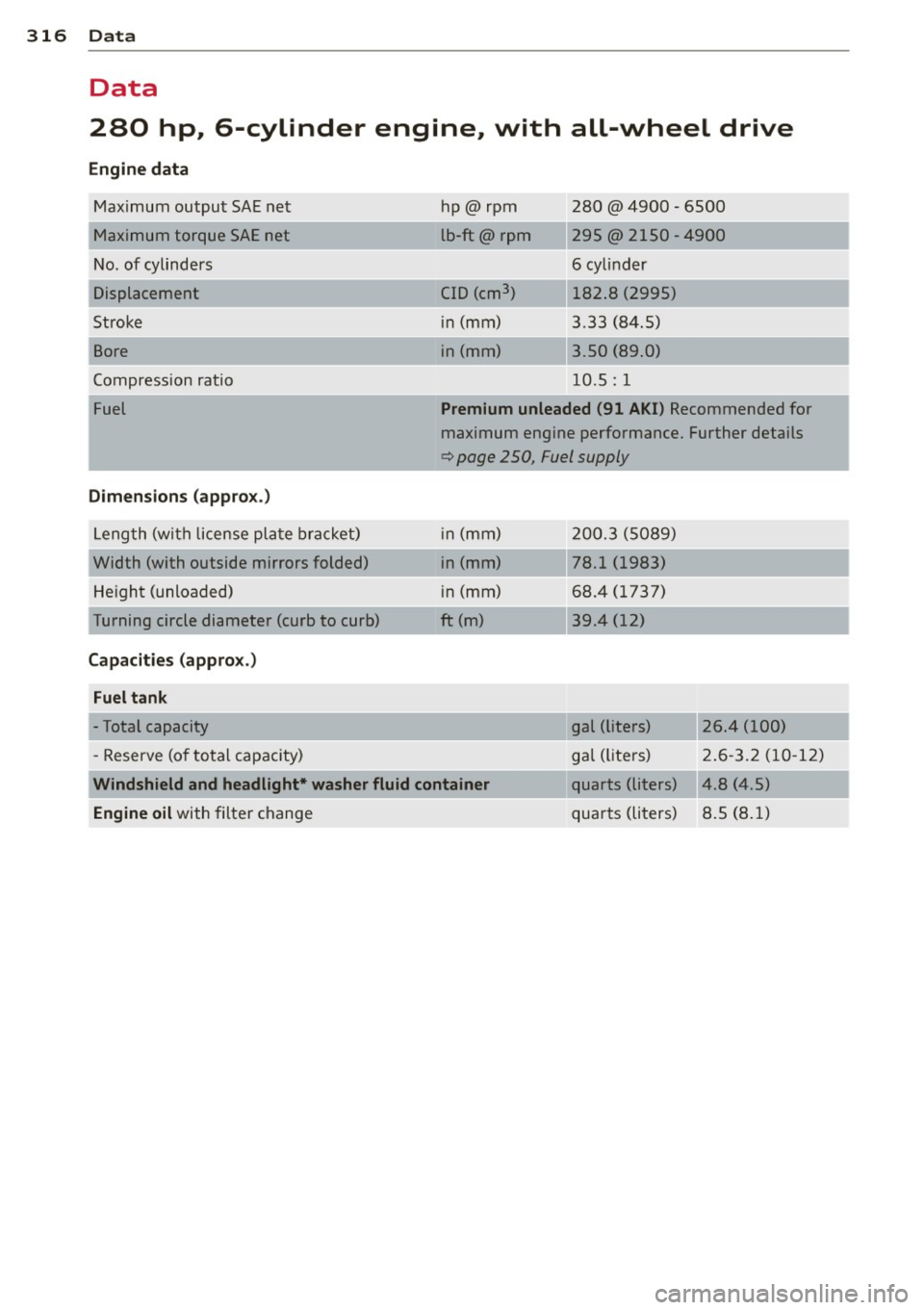
316 Data
Data
280 hp, 6-cylinder engine, with all-wheel drive
Engine data Maximum output SAE net
Maximum torque SAE net
No . of cylinders
Displacement
Stroke
Bore
Compression ratio
Fuel
Dimensions (approx .)
Length (with license plate bracket)
Width (with outside mirrors folded) Height (unloaded)
Turning circle diameter (curb to curb)
Capacities (approx .)
Fuel tank
- Total capacity
- Reserve (of total capacity) hp@ rpm
lb-ft@ rpm
CID (cm
3 )
in (mm)
in (mm) 280@ 4900
-6500
-·--295@ 2150 -4900
6 cylinder
-·~-182 .8 (2995)
3.33 (84 .5)
3 .50 (89 .0)
--· 10.5 : 1
Premium unleaded (91 AKI) Recommended for
maximum engine performance. Further details
¢page 250, Fuel supply
in (mm) 200.3 (5089)
in (mm) 78.1 (1983)
in (mm) 68.4 (1737)
ft (m) 39 .4 (12)
gal (liters) 26.4 (100)
gal (liters) 2.6-3.2 (10 -12)
Windshield and headlight* washer fluid container quarts (liters) 4.8 (4 .5)
Engine oil with filter change quarts (liters) 8.5 (8.1)
Page 319 of 342
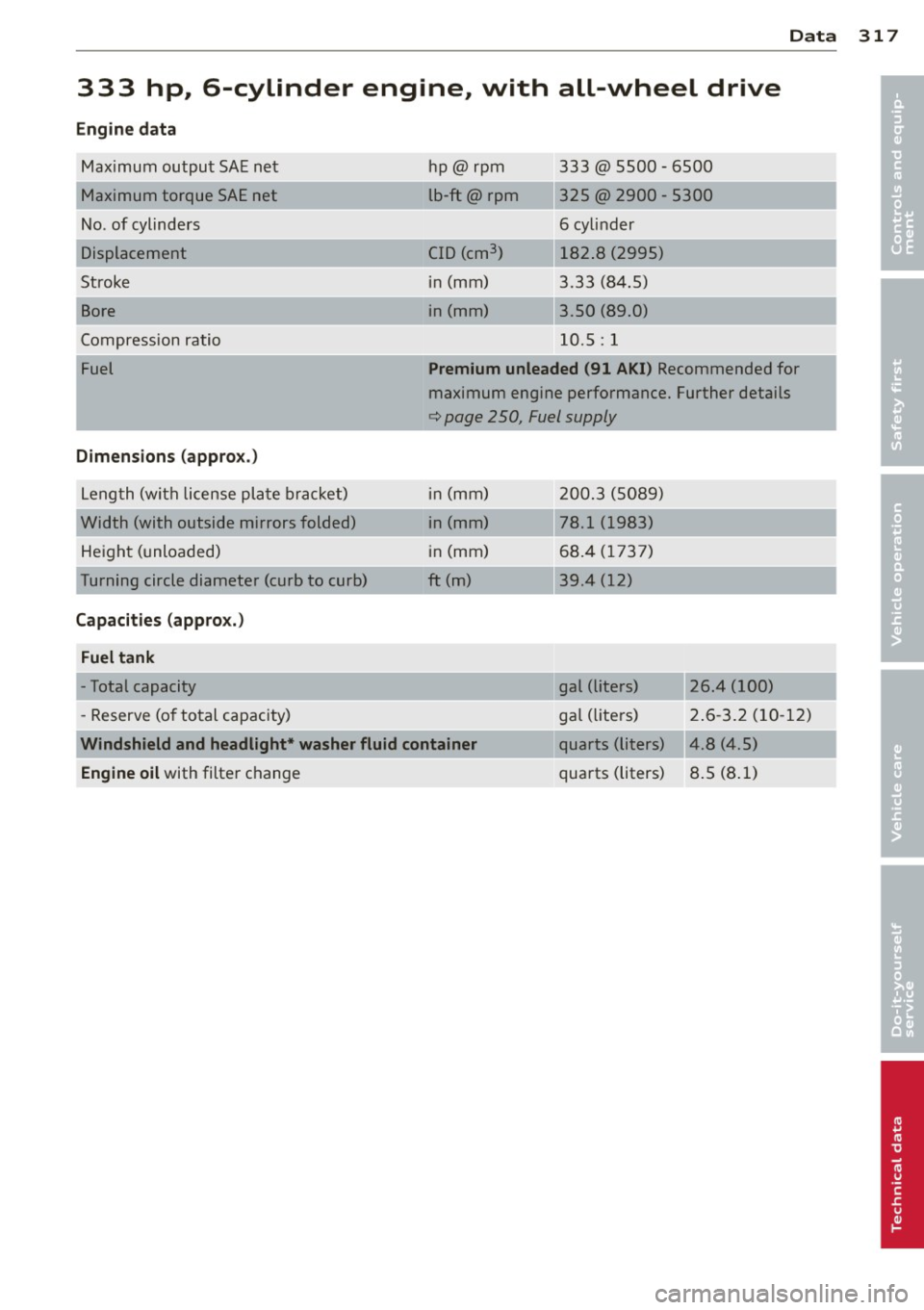
Data
333 hp, 6-cylinder engine, with all-wheel drive
Engine data
Maximum output SAE net
Maximum torque SAE net
No. of cylinders
Displacement
Stroke
Bore
Compression ratio
Fuel
Dim ension s (appro x.)
Leng th (with license pla te bracket)
Width (with outside mirrors folded) He igh t (unloaded)
T urning circle diameter (curb to curb)
Capacit ies (appro x.)
Fuel tank
- Total capacity
- Reserve (o f total capacity) 333@ 5500 - 6500
hp@rpm
lb-ft@ rpm
-~~-
CID (cm3
)
in (mm)
in (mm)
--·
325 @ 2900 - 5300
6 cylinder
182 .8 (2995)
3 .33 (84.5)
3 .50 (89.0)
10.5 : 1
Premium unleaded (91 AKI) Recommended for
maximum engine performance. Further details
<=> page 250, Fuel supply
in (mm) 200.3 (5089)
in (mm) 78.1 (1983)
in (mm) 68.4 (1737)
ft (m) 39 .4 (12)
gal (liters) 26.4 (100)
gal (lite rs) 2 .6 -3.2 (10 -12)
Windshield and headlight* washer fluid container quarts (liters) 4 .8 (4 .5)
Engine oil with filter change quarts (liters) 8
.5 (8 .1)
317
•
•