tow AUDI Q7 2012 Owner´s Manual
[x] Cancel search | Manufacturer: AUDI, Model Year: 2012, Model line: Q7, Model: AUDI Q7 2012Pages: 342, PDF Size: 86.42 MB
Page 145 of 342

Parking system
General information
App lies to vehicles: with rea r park assis t/Audi park ing sys
tem plus w ith rearview camera
There are two different park assist systems
avai lab le depending on your vehicle's equip
ment leve l.
The
r ea r p ark ass is t is an acoustic park assist
system that will give you a sound warning to let you know there is something
behind the
veh icle
¢ page 143.
The Aud i p arki ng sys te m p lus with rea rvie w
ca mera
audibly and visually tells you there is
something
in front of and behind the veh icle.
A rearview camera also shows you what is be
hind the veh icle. This image he lps you when
parallel parking or reverse parking
¢ page 144.
@ Tips
The sensors must be kept clean and free of
snow and ice for the park assist to operate.
Rear park assist
Description
App lies to vehicles: with rear park assist
The rear pork assist is on audible system.
Sensors are located in the rear bumpers. If
these detect an obstacle, audible signals warn
you. The range at which the sensors begin to measure is approximately:
side 2 ft (0.60 m)
rear center
5.2 ft (1.60 m)
T he closer you get to the obstacle, the shorter
the interval between the audible signals. A continuous tone sounds when the obstacle is
less than approximately 1 foot (0 .30 meters)
away . Do not cont inue driving farther .
If the d istance to an obstacle remains con
stant, the volume of the d istance warning
gradually drops after about four seconds (th is
does not apply in the continuous tone range) .
Parking system 143
The park assist is activated automatica lly
when reverse gear is engaged. A short confir
mation tone sounds.
_& WARNING
- The parking system cannot replace the driver's attention. The driver alone is re
sponsible for parking and similar driving maneuvers .
- Sensors have blind spots in wh ich objects
cannot be detected. Pay spec ial attent ion
to small children and an imals because
the sensors cannot always detect them.
- Always keep your eyes on the vehicle 's
surroundings, us ing the rea r view mirror
as well.
(D) Note
Low obstacles already signaled by a warn
i ng can d isappear from the system's detec
tion range as they are approached and w ill
not cont inue to be signaled. Objects such
as barrier chains, trailer d raw bars, th in
painted vertica l poles or fences may not be
detected by the system, posing risk of
damage.
(D Tips
- Please follow the instructions for tow ing
a trailer
¢page 149.
-Yo u can change the vo lume and pi tch of
the signals
¢ page 148.
-
Page 147 of 342
Rearv iew cam era c overage a rea
The MM I display shows the area covered by
the rearview camera c:>
fig. 166 (!). Objects
that are not in the area covered @are not
shown on the MMI display .
We recommend that yo u practice parking with
the rearview camera in a traffic-free location
or parking lot to become familiar with the sys
tem, the orientation lines, and their function.
When do ing th is, there should be good light
and weather conditions.
I n the MMI disp lay, objects or vehicles appear
closer or further away if:
- you are driving in reverse gear from a level
s u rface onto an incline, or a downward
s lope,
- you are driving in reverse gear toward pro
truding objects,
- the vehicle is carrying too much load in the
rear .
The accuracy of the or ientat ion lines and blue
surfaces dimin ishes if:
- the Adaptive A ir Suspension* is faulty or the
dynamic, offroad or lift mode is on,
- the rearv iew camera does not provide a reli
able image, for example, in poor visibility
cond it ions or if the lens is dirty,
- the image on the screen is not visible due to sun glare and reflection.
Ca ring for the rear view c amer a len s
The rearview camera is located above the rear
license plate bracket . For the parking system
to operate, the lens
c:> fig. 167 must be kept
clean:
- Dampen the lens with a househo ld alcoho l
based glass cleaner, and then wipe the lens
clean with a dry cloth c:>0 .
- Remove snow with a hand brush and ice
preferably with a de-icing spray
c:> ([).
A WARNING
-The parking system cannot rep lace the
dr iver's attention. The driver alone is re-
-
Par king system 145
sponsib le for parking and simi lar d riving
maneuvers.
- Sensors have blind spots in which objects
cannot be detected. Pay spec ia l attention
to small children and an imals because
the sensors cannot always detect them.
-Always keep your eyes on the vehicle's surroundings, us ing the rearview mirror
as well.
- Do not allow yourself to be distracted
from traffic by the rearv iew camera pic
tures .
- If the position and the installation angle
of the camera has changed, for example,
after a rear end collision, do not continue
to use the system for safety reasons.
H ave it checked by a qualified dea le rship.
(D Note
- Low obstacles a lready s ignaled by a
warning can disappear from the system's
detect ion range as they are approached
and w ill not continue to be s ignaled. Ob
jects such as ba rr ie r chains, trai le r d raw
bars, thin painted vert ica l poles or fen
ces may not be detected by the system,
posing r isk of damage .
- Never use warm or hot wate r to remove
snow or ice from the rearview camera
lens -this could cause the lens to crack!
- When cleaning the lens, never use prod
ucts that are ab rasive.
Page 148 of 342
146 Parking system
Switching on and off
Applies to vehicles: with Audi parking system plus w ith
rea rview camera
The reorview camera switches on automati
cally together with the acoustic and visual
pork assist when you put the vehicle in re verse .
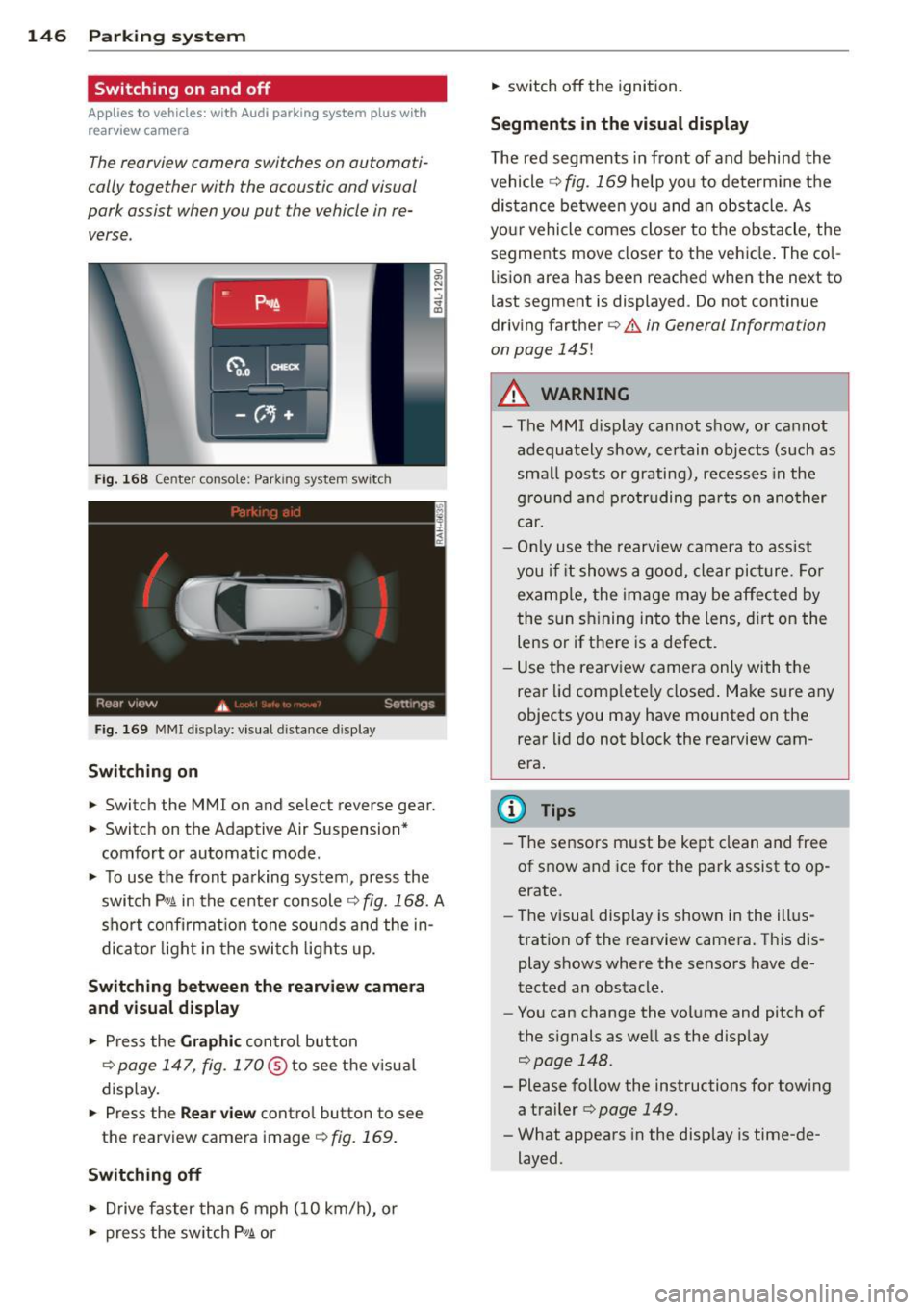
Fig. 168 Ce nter console: Park ing system switc h
Fig. 169 MMI display: visual d istance d isplay
Switching on
> Switch the MMI on and se lect reverse gear.
> Switc h on the Adaptive Air Suspension*
comfort or automatic mode.
> To use the front pa rking system , press the
switch P"1t in the center console
c:> fig. 168. A
short confirmat ion tone sou nds a nd the in
di ca to r li ght in the swi tch lights up.
Switching betwe en the r earview camera
and visual display
> Press the Graphi c control button
¢
page 147, fig. 170@to see the v isua l
display.
> Press the Rea r view contro l button to see
the rearview camera image
<=:> fig. 169.
Switching off
> Drive faster than 6 mph (10 km/h), or
> press the sw itch P 1t or
> switch off the ignition.
Segm ents in the visual display
The red segments in fro nt of and behind the
vehicle
<=:> fig. 169 help you to determ ine t he
distan ce between yo u and an obstacle. As
your vehicle comes close r to the obstacle, the
segments move closer to the vehicle . The co l
lision area has been reached when the next to
l ast segment is displayed . Do not continue
driving farther ¢
& in General Information
on page
145!
A WARNING
-
- The MMI d isplay cannot show, or ca nnot
adequately show, certain objects (such as
sma ll posts or grating), recesses in the
g rou nd a nd p rot ruding pa rts on ano ther
car.
- Onl y use t he rearview camera to ass ist
you i f it shows a good, clear pic ture. For
examp le, the image may be affec ted by
the sun s hining into the lens, d irt on the
lens or if there is a defect.
- Use the rearv iew came ra only wi th the
rear lid comp lete ly closed . Make s ure any
objects you may have mounted on the
rear lid do not b lock the rearview cam
era.
(D Tips
- The sensors m ust be kept clean and free
of snow and ice for the park assist to op
erate.
- The visua l display is shown in the ill us
tration of the rearview camera. Th is dis
play shows where the sensors have de
tected an obstacle.
- You can change the volume and pitch of
the s ignals as we ll as the disp lay
c:> page 148.
- Please follow the instructions for tow ing
a trailer
c:> page 149.
- What appears in the display is time-de
layed.
Page 151 of 342
-On -when the parking system is switched
on, either the visual display or the picture
from the rearview camera is disp layed .
Warning tones
- Front volume* -
front sensor vo lume
- Front frequency* -front sensor frequency
-Rear volume -rear sensor volume
-Rear frequency -rear sensor frequency
-In -ca r entertainment fader/Music volume
while parking -
when the parking system is
switched on, the volume of the active audio source is lowered.
The newly adjusted value is briefly heard from
the signal generator.
(D} Tips
- The warning tones can also be adjusted
direct ly by the v isual disp lay* or the pic
ture from the rearview camera*. Simply
press the
Settings* control button .
- Changed settings are activated when
parking system is switched on aga in.
- The settings are automatically stored
and ass igned to the remote control key.
Trailer hitch
Applies to vehicles: with rear park assist/Audi parking sys·
tem plus with rearview camera and trailer hitch
For vehicles with a factory installed trai ler
hitch, or a trai ler hitch installed according to
factory specifications, the parking system rear
sensors do not come on whenever you shift in
to reverse gear or when you press the P
11,
switch*. If you install a hitch yourself, th is
function may not work . In general the follow
limitations may come up:
Rear park assist*
There is no warning for distances to the rear.
Audi parking system plus with rearview
came ra*
There is no warning for distances to the rear .
The front sensors remain activated. The visual
display switches to the trailer towing mode.
The picture from the rearview camera will not
Parking system 149
show the orientation lines nor the blue surfa
ces.
Error messages
Applies to vehicles: with rear park assist/Audi parking sys
tem plus with rearview camera
There is an error in the system if the LED on
the
P" 1! switch* is blinking and you hear a con
tinuous alarm for a few seco nds after switch
ing on the park ing system or when the park
ing system is already activated. Have your au
thorized Audi dea ler correct the error .
(D Tips
If the error is not corrected before you
switch off the ignition, when you switch on
the parking system again, the LED in the
p,,1, switch* will blink .
Page 152 of 342
150 Adapti ve Air Susp en sion
Adaptive Air
Suspension
Air suspension and damping
Description
App lies to vehicles: with Adapt ive Air Suspe nsion
Air suspension and damping can be adjusted
separately.
Adaptive Air Suspension is an electronically
controlled springing and damping system .
This chassis system makes it easier on the
driver by adapt ing to the particular situat ion
through imperceptible control processes.
The
Ad apti ve Air Su sp ension component reg
ulates ground clearance depending on vehicle
speed and driver input. It functions independ
ently from the load condition . Accelerating to
a speed above a predetermined limit will make the vehicle lower itself . On the other
hand, driving more slowly results in the vehi
cle raising aga in at specific speeds.
The
d am ping component provides individual
control of the damping forces. For example,
with damping characterist ics set to prov ide
greater comfort, damping is set somewhat
harder for a brief per iod only as required, for
example, when going around a curve or when brak ing .
Set tings
Adapt ive A ir Suspension provides the driver
with the opportun ity to set the chassis charac
teristics also to their individual prefe rence.
W ith the dr iv ing modes
Comfort, Automatic
and Dynamic the driver has three chassis set
tings available, ranging from comfort to spor
ty. The
Offrood mode can be selected for driv
ing on poor quality stretches of road. In addi
tion,
Lift provides a fifth mode, which can be
selected when exceptionally high ground
clearance is needed
c::> page 150, Chassis con
trols.
The modes are set in MMI r:::;, poge 152.
A WARNING
The height of the parked vehicle can
change due to temperature fluctuations or
changes in load.
([) Note
- Whenever you park your vehicle, a lways
make sure there is adequate clearance
above and below the vehicle. The he ight
of the parked vehicle can change as the
result of temperature f luctuations,
changes in load cond ition and changes in
the driving mode (ground clearance).
- If the vehicle is being t ransported (e.g.
by tow truck, train, sh ip, etc.), mount the
tie-down chains/cables over the running
surface (circumference) of the tires. Nev
er secure the vehicle by the axle, the sus
pension struts or the front or rear tow
line eye. For technical reasons, the pres
sure in the suspens ion struts may change
during the transport, which could result
in the vehicle no longer be ing secured
properly .
- If you are going to tow a trailer with a trailer hitch that was
not installed ac
cording to factory specif ications, you
must activate the tra iler operation mode
manually
c;, page 154.
(D Tips
- Before you can raise your vehicle us ing
the vehicle jack (for example, when
changing a f lat t ire) or a veh icle lift, yo u
must activate the jac king mode
c::>poge 154.
-On some mode ls, the vehicle can reach
its maxim um speed only in the
Automat
ic
and Dynamic modes.
Chassis controls
Applies to vehicles: wit h Adaptive A ir Suspensio n
Five different driving modes con be set by the
driver.
The automatic control processes are speed
and t ime -dependent . Fo r example, it is not
Page 156 of 342

154 Adapti ve Air Susp en sion
Di spl ay ing the vehicl e lev el
The cu rrent vehicle level is shown w ith seg
ments fi lled out in the segment disp lay @ . If
only the bottom segment is filled out, the ve
hicle is at highway level. If all segments are
fi lled out, the vehicle is at high level 2 and has
the greatest amount of ground clearance pos
sible.
While the vehicle is being raised or lowered,
the target leve l is indicated by an arrow ©
¢
fig. 176 or a white border ©¢ fig. 177. The
arrow/border disappears aga in when the vehi
cle is at the target level.
Jacking mode when changing a flat tire
Appl ies to vehicles: with Adaptive Air Suspens ion
This mode must be activated in the MMI be
fore raising the vehicle with a jack or on a ve
hicle lift.
,. Select: Funct ion button ICARI > Function
button
! SETUP I> Jacking mode . Or
,. Select : Funct ion button
ICARI > Control but
ton
Car sy stem s* > Serv icing & ch eck s > Air
su sp .: tire ch ang e.
The vehicle jack mode must be activated be
fore changing a wheel so that the automatic
control processes for the a ir suspension do
not make lifting with the vehicle jack more dif
ficu lt.
The check lamp
II in the instrument cluster
d isplay illuminates in v ehicle jack mode.
(D) Tips
The vehicle jack mode is switched off auto
mat ically at speeds above 9 mph (15 km/
h).
Towing a trailer
Appl ies to vehicles: with towing hitch and Adapt ive Air
Suspension
Automatic lowering is not desirable when
towing a trailer.
,. Se lect: Function button ICARI > Function
button
! SE TUP I> Towi ng mod e. Or ,.
Select: Function b utton
I CAR !> Control but
ton
Car s ystem s* > Vehicle setting s > Air
su sp.: towing .
As long as towing mode is activated, a vehicle
with a trai ler appears in the
adap tiv e air su s
pen sion
main menu.
Level Ad ju stment when towing a t railer
- Before hitching up the tra ile r and before ad
jus ting the tongue weight at the trailer, the
automatic or comfo rt mode
mu st be se lect
ed so that the ve hicle can be at normal level
¢ page 152, MMI settings .
-If driving in dynamic mode is desired, this
mode
mu st be selected before hitching up
the trailer and before ad justing the tongue
weight. However, note that your vehicle is lowered and ground clearance is reduced.
- If you have to drive under difficult road con
ditions, you can select offroad or lift mode,
after hitching up the trailer or after adjust ing the tongue weight .
- If the veh icle is at
normal level, and you se
lect offroad mode wh ile traveling at speeds
higher than 22 mph (35 km/h), the veh icle
w ill not be ra ised . Offroad mode will appear
as the active mode in the MM I Disp lay.
- If the veh icle is in offroad mode at
high level
1 ,
it automa tically lowers to normal level
when the vehi cle is t ravel ing at speeds ex
ceed ing approximate ly 31 mph (SO km/h) .
The vehicle is automatically raised to
high
level 1
again when the traveling speed falls
be low approximately 25 mph (40 km/h).
Rest rictions when ope rating with a tr ailer
When operating w ith a trailer, the lift mode
can on ly be selected up to about 12 mph (20
km/h). Lift mode is automatically cance led
again w hen a speed of about 25 mph (40 km/
h) is exceeded.
If t he vehicle is in au toma tic , comfo rt, offroad
or lift mode before the trai ler towing mode is
activated, the dynamic mode cannot be acti
vated.
If t he vehicle is in dynamic mode before tow -
ing opera tion is activated, it can be driven in
11>-
Page 157 of 342
this mode. If the suspension is switched from
this mode to another mode, dynamic mode
cannot be re-se lected .
{D) Tips
-For vehicles with a factory installed tow
ing hitch or a trailer hitch that was in
stalled later accord ing to factory specifi
cations, the system recognizes "Trailer
tow ing mode" and activates this special
mode automatically, as soon as the elec
trical connection on the trailer socket is
connected . The mode ceases automat i
cally when the elect rical connection to
the trailer socket is d isconnected.
- If the tra iler towing mode has been act i
vated, the vehicle will not drop to the l ow or highway level.
Cargo mode
A pp lies to vehicles: wit h Adap tive Air S uspe nsio n
The rear of the vehicle con be lowered to
make it easier to load .
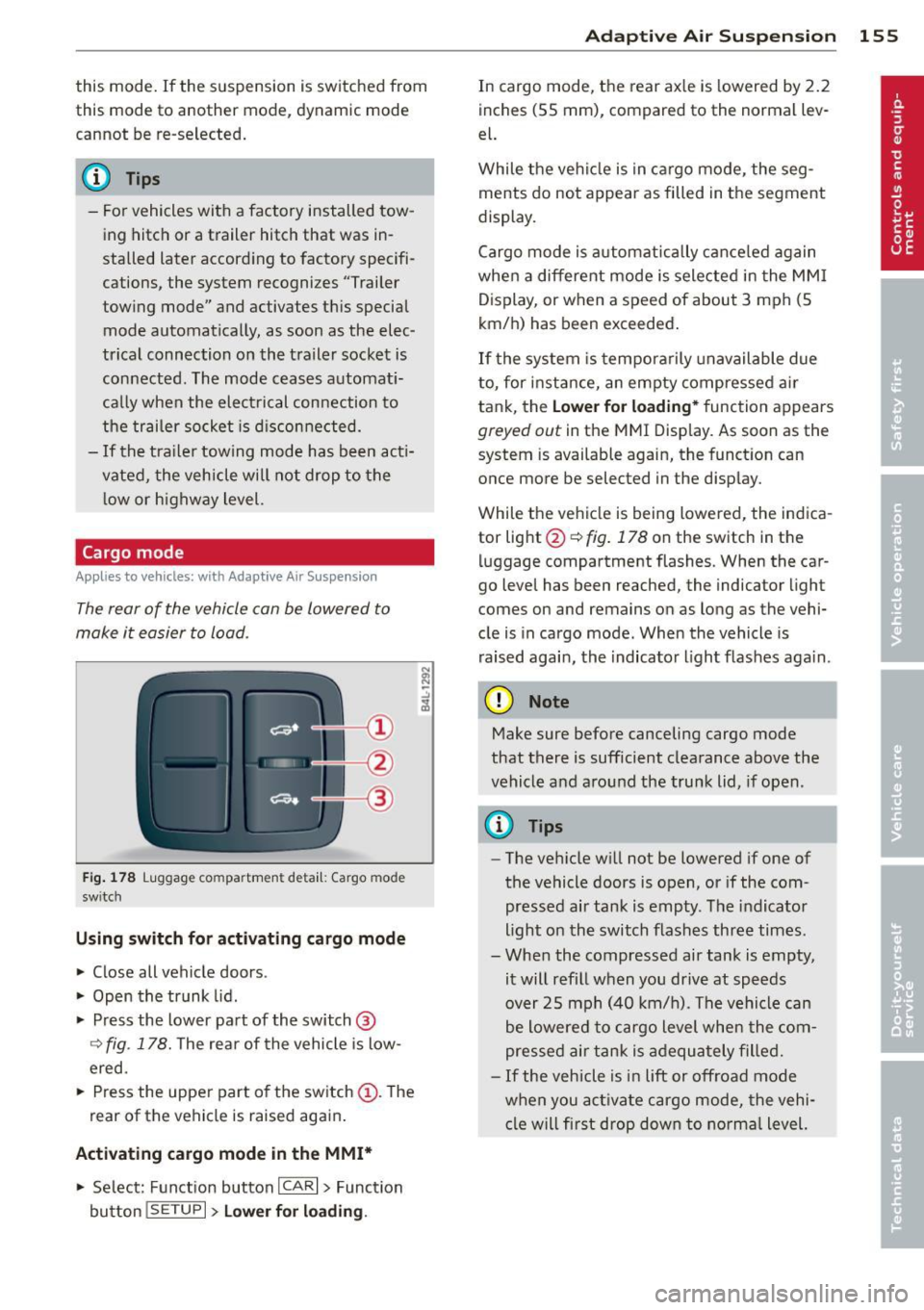
Fig. 178 Luggage compa rtment detail: Cargo mode
sw itc h
Using sw itch for activating cargo mode
~ Close all vehicle doors .
~ Open the trunk lid .
~ Press the lower pa rt of the switch@
Q fig. 178. The rear of the vehicle is low
ered.
~ Press the uppe r part of the sw itch (D . The
rear of the vehi cle is raised aga in .
Activating cargo mode in the MMI*
~ Se lect: Function button ICAR I > Function
button
! SE TUP I> Lower f or load in g. Ad
apti ve A ir Sus pension 155
In cargo mode, the rear ax le is lowered by 2 .2
inches (55 mm), compared to the normal lev
el.
While the ve hicl e is in ca rgo mode, the seg
ments do not appear as filled in the segment
display.
Cargo mode is a utomatically c ance led again
when a different mode is selected in the MM I
D isplay, or when a speed of about 3 mph (5
km/ h) has been exceeded.
If the system is tempora rily unavailable due
to, for instance, an empty compressed ai r
tank, the
Lower fo r loading* function appears
greyed out in the MMI Display. As soon as the
system is available again, the function can
once more be selected in the disp lay.
While the vehicle is being lowered, the indica
tor light @~
fig. 178 on the switch in the
luggage compartment flashes. When the car
go level has been reached, the indicator light
comes on and remains on as long as the vehi
cle is in cargo mode. When the vehicle is
raised agai n, the indicator l ight f las hes aga in.
(D Note
Make sure before canceling cargo mode
that there is sufficient clearance above the
vehicle and around the tru nk lid , if open .
(D Tips
-The ve hicle w ill not be lowered if one of
the vehicle doors is open, or if the com
pressed air tank is empty . T he indicator
light on the switch flashes three times.
- When the compressed air tank is empty,
it will refill when you drive at speeds
over 25 mph (40 km/ h). The vehicle can
be lowered to cargo level when the com
pressed air tank is adequately fille d.
- If the veh icle is i n lift or off road mode
when you act ivate cargo mode, the vehi
cl e w ill first drop dow n to norma l level.
Page 164 of 342
162 Driving Safely
• Always keep both feet in the footwell so
that you are in control of the vehicle at all
times.
For detailed information on how to adjust the
driver's seat, see
¢ page 72.
A WARNING
Drivers who are unbelted, out of position
or too close to the airbag can be seriously
injured by an airbag as it unfolds. To help
reduce the risk of serious personal injury:
- Always adjust the driver's seat and the
steering wheel so that there are at least
10 inches (25 cm) between your breast
bone and the steering wheel.
- Always hold the steering wheel on the
outside of the steering wheel rim with
your hands at the 9 o'clock and 3 o'clock positions to help reduce the risk of per
sonal injury if the driver's airbag inflates.
- Never hold the steering wheel at the
12 o'clock position or with your hands at
other positions inside the steering wheel
rim or on the steering wheel hub. Hold
ing the steering wheel the wrong way
can cause serious injuries to the hands,
arms and head if the driver's airbag de
ploys.
- Pointing the steering wheel toward your
face decreases the ability of the supple
mental driver 's airbag to protect you in a
collision .
- Always sit in an upright position and nev
er lean against or place any part of your
body too close to the area where the air
bags are located.
- Before driving, always adjust the front
seats and head restraints properly and
make sure that all passengers are prop
erly restrained.
- Never adjust the seats while the vehicle
is moving . Your seat may move unexpect
edly and you could lose control of the ve
hicle.
- Never drive with the backrest reclined or
tilted far back! The farther the backrests
are tilted back, the greater the risk of in- jury due to incorrect positioning of the
safety belt and improper seating posi
tion.
- Children must always ride in child safety
seats ¢
page 200. Special precautions
apply when installing a child safety seat
on the front passenger seat¢
page 179 .
Proper seating position for the front
passenger
The proper front passenger seating position
is important for safe, relaxed driving .
For your own safety and to reduce the risk of
injury in the event of an accident, we recom
mend that you adjust the seat for the front
passenger to the following position :
• Adjust the angle of the seatback so that it is
in an upright position and your back comes
in full contact with it whenever the vehicle is
moving .
• Adjust the head restraint so the upper edge
is as even as possible with the top of your
head. If that is not possible, try to adjust
the head restraint so that it is as close to
this position as possible ¢
page 163.
• Keep both feet flat on the floor in front of
the front passenger seat .
• Fasten and wear safety belts correct
ly ¢
page 174 .
For detailed information on how to adjust the
front passenger's seat, see ¢
page 71.
A WARNING
-Front seat passengers who are unbelted,
out of position or too close to the airbag
can be seriously injured or killed by the air
bag as it unfolds. To help reduce the risk of
serious personal injury:
- Passengers must always sit in an upright
position and never lean against or place
any part of their body too close to the
area where the airbags are located.
- Passengers who are unbelted, out of po
sition or too close to the airbag can be
seriously injured by an airbag as it
Page 168 of 342
166 Driving Safel y
Stowing luggage
Loading the luggage compartment
All luggage and other objects must be prop erly stowed and secured in the luggage com
partment.
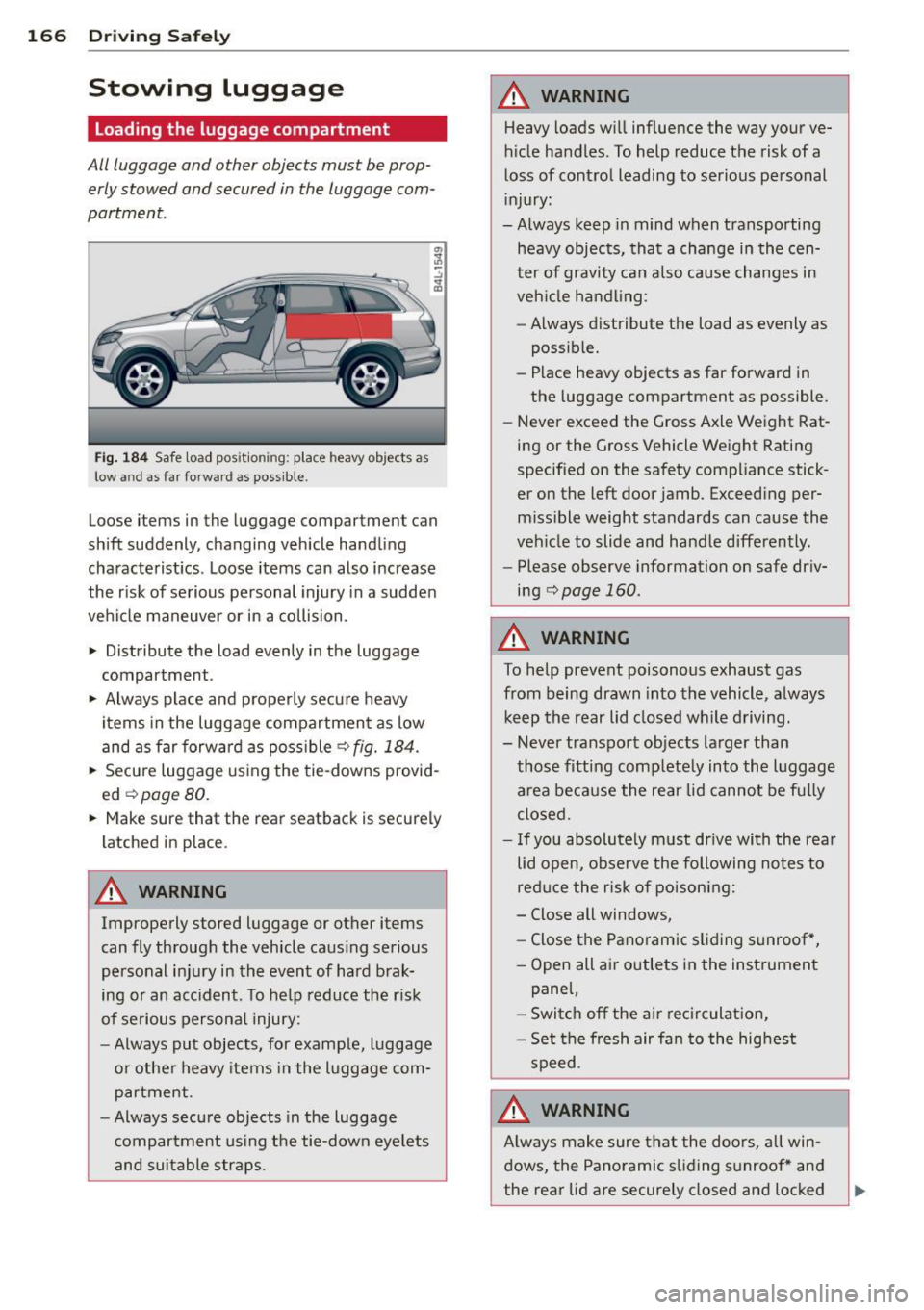
Fig . 184 Safe load pos ition ing: place heavy objects as
low and as far forward as possible.
Loose items in the luggage compartment can
shift suddenly, changing vehicle handling
characterist ics . Loose items can also increase
the r isk of serious personal injury in a sudden
vehicle maneuver or in a collision .
,. Distribute the load evenly in the luggage
compartment .
,. Always place and properly secure heavy
items in the luggage compartment as low
and as far forward as poss ible
¢fig. 184.
,. Secure luggage using the tie-downs provid
ed
¢ page 80.
,. Make sure that the rear seatback is securely
latched in place .
A WARNING
Improperly stored luggage or other items
can fly through the vehicle caus ing serious
personal inj ury in the event of hard brak
ing or an acc ident. To help reduce the r isk
of serious persona l injury:
- Always put objects, for example, luggage
or other heavy items in the luggage com
partment.
- Always secu re objects in the luggage
compartment us ing the tie-down eye lets
and suitable straps.
A WARNING
-Heavy loads wi ll influence the way your ve-
h icle ha ndles. To help reduce the risk of a
loss of control leading to serious personal
i njury:
-Always keep in mind when transporting
heavy objects, that a change in the cen
ter of gravity can also cause changes in
veh icle handling:
- Always distribute the load as evenly as
poss ible.
- Place heavy objects as far forward in
the luggage compartment as possible.
- Never exceed the Gross Axle We ight Rat
ing or the Gross Vehicle Weight Rating
specif ied on the safety compliance stick
er on the left door jamb. Exceed ing per
miss ible weight standards can cause the
veh icle to slide and handle differen tly.
- Please observe information on safe dr iv
ing
¢page 160.
A WARNING
-
To help prevent poisonous exhaust gas
from being drawn into the vehicle, a lways
keep the rear lid closed while driving.
- Never transport objects larger than those fitting comp letely into the luggage
area because the rear lid cannot be ful ly
closed.
- If you absolutely m ust dr ive wi th the rear
lid open, observe the following notes to
red uce the risk of poisoning:
- Close all windows,
- Close the Panoramic sliding sunroof *,
- Open all air outlets in the instrument pane l,
- Switc h off the air recirculat ion,
- Set the fresh air fan to the highest
speed.
A WARNING
Always make sure that the doors, all win
dows, the Panoramic sliding sunroof * and
the rear lid are securely closed and locked
-
Page 178 of 342
176 Safety belts
• Insert the tongue into the correct buckle of
your seat until you hear it latch securely
¢page 174, fig. 191.
• Pull on the belt to make sure that it is se
curely latched in the buckle.
A WARNING
Improperly positioned safety belts can
cause serious personal injury in an acci
dent.
- Expectant mothers must always wear the
lap portion of the safety belt as low as
possible across the pelv is and be low the
rounding of the abdomen.
- Always read and heed all WARNINGS and
other important information¢ .&.
in Fas
tening safety belts on page 174.
Unfastening safety belt s
Unbuckle the safety belt with the red release
button only after the vehicle has stopped.
Fig. 194 Releasing the tongue from the buckle
• Push the red release button on the buckle
¢
fig. 194. The belt tongue will spring out
of the buckle
c:> &_ .
• Let the belt wind up on the retractor as you
guide the belt tongue to its stowed position.
On vehicles with
third row seat* : an unfas
tened safety belt can be secured in the retain
ing clip in the luggage compartment side
tr im. In this way, the luggage compartment
cover can be removed without obstruction. Al
so, the belt tongue height can be adjusted so
that luggage compartment can be loaded
without obstruction with the backrest folded
forward.
A WARNING
-Never unfasten safety belt while the vehi-
cle is mov ing. Do ing so will increase your
risk of being injured or killed.
Adjusting safety belt height
With the aid of the safety belt height adjust
ment, the three point safety belt strap rout
ing can be fitted to the shoulder area, accord
ing to body size.
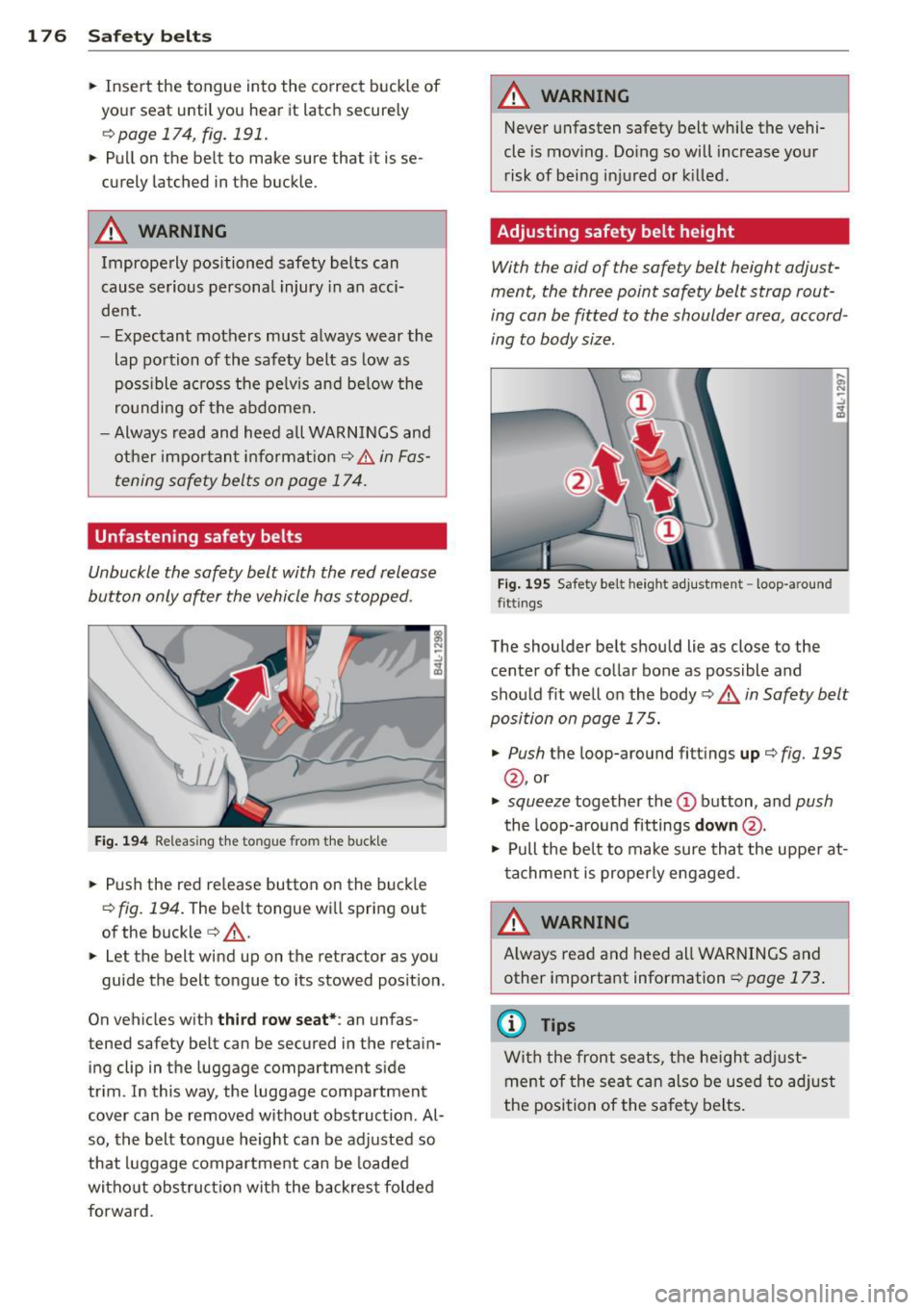
Fig. 195 Safety belt heigh t adj ustment- loop -around
f ittings
The shoulder belt should lie as close to the
center of the collar bone as possible and
should fit well on the body¢&.
in Safety belt
position on page 175.
• Push
the loop- around fittings up c:> fig. 195
@,or
• squeeze together the CD button, and push
the loop-around fittings down@.
• Pull the be lt to make sure that the upper at
tachment is properly engaged.
A WARNING
Always read and heed all WARNINGS and
other important information
¢page 173.
(D Tips
With the front seats, the height adjust
ment of the seat can also be used to adjust
the position of the safety belts.