steering wheel AUDI Q7 2013 Owner´s Manual
[x] Cancel search | Manufacturer: AUDI, Model Year: 2013, Model line: Q7, Model: AUDI Q7 2013Pages: 348, PDF Size: 87.72 MB
Page 187 of 348
Since the circums tances will vary considerab ly
between one collision and another , it is not
possible to define a range of veh icle speeds
that will cover every possible k ind and angle
of impact t hat w ill always t rig ger the a irbags .
Important factors include, for example, the
nature (hard or so ft) of the object which the
car h its, the ang le of impact, vehicle speed,
etc. The front airbags will a lso not inflate in
side or rear collisions, or in ro ll-overs .
Alw ays rememb er: Airbags will deploy only
once, and only in certa in kinds of co llisions.
Your safety belts are always there to offe r pro
tect ion in those s ituations in which airbags
are not supposed to deploy, or when they have
a lready deployed ; for example , when your ve
hicle strikes or is struck by another vehicle af
ter the first co llision .
This is just one of the reasons why an a irbag is
a supp lementary restraint and is not a s ubsti
tute for a safety belt . The airbag system
works most effectively when used with the
safety belts. Therefore, always properly wear
your safety belts¢
page 175.
A WARNING
Sitting too close to the steer ing whee l or
instrument panel will dec rease the effec
tiveness of the airbags and will inc rease
the risk of pe rsonal injury in a co llision .
- Never sit closer than 10 inches (2S cm)
to the stee ring wheel or instr ument pan
el.
- If you cannot sit more than 10 inches
( 2 5 cm) from the steer ing whee l, investi
ga te whethe r adaptive equipment may
be available to help you reach the pedals
and increase your seating distance from
the steering wheel.
- If you are unrestrained, lean ing forward,
sitting sideways or out of position in any
way, yo ur risk of inj ury is much higher.
- You w ill also receive serio us injuries and
cou ld even be killed if you are up against
the a irbag or too close to it when it in
flates -even with an Advanced Airbag.
A irbag system 185
-To reduce the risk of injury when an air
bag inflates, always wear safety belts
properly ¢
page 179, Safety belts.
-Always make certain that ch ild ren age 12
or younger a lways ride in the rear seat. If
children are not properly restrained, they may be severe ly inju red or killed when an
airbag inf lates .
- Never let ch ildren ride unrestra ined or
improperly restrained in the vehicle. Ad
just the front seats prope rly .
- Never ride with the back rest reclined .
- Always sit as far as possible from the
steer ing whee l or the instrument pane l
¢page 166.
-Always sit upright with your back against
the backrest of your seat .
- Never p lace your feet on the instrument
panel or on the seat. Always keep both
feet on the f loor in front of the seat to
he lp preven t serio us in ju ries to the legs
and h ips if the airbag infla tes.
- Never recline the front passenger 's seat
to transport objects . Items can a lso
move into the area of the s ide a irbag or
the front a irbag du ring bra king or in a
sud den maneuve r. Obje cts near the air
bags can become projectiles and cause
in jur y when an airbag inflates.
A WARNING
Airbags that have de ployed in a crash must
be replaced.
- Use on ly orig inal equipment airbags ap
proved by Aud i an d installed by a trained
technician who has the necessary too ls
and d iagnost ic equipment to properly re
place any airbag in your vehicle and as
sure system effectiveness in a crash .
- Never perm it salvaged or recycled air
bags to be installed in your vehicle . •
•
Page 191 of 348
conditions is impossible in all conceiva
ble s ituations that may happen during
the useful life of your vehicle.
- The Advanced A irbag System can deploy
in accordance with the "low risk" opt ion
under the U.S. Federa l Standard if a child
that is heavier than the typical one-year
old child is on the front passenger seat
and the other cond itions for airbag de
ployment are met.
- Acc ident statist ics have shown that chil
dre n are generally safe r in the rea r seat
area than in the front se ating posit io n.
- For their own safety , all children, espe
ci ally 1 2 yea rs and younger, sho uld al
w ays ride in the ba ck p roperly restrained
f or their age and size .
Advanced front airbag system
Your vehicle is equipped w it h a front Advanced
Ai rbag System in compl iance with United
States Federal Motor Vehicle Safety Standard
208 as applicable at the time your vehicle was
manufactured.
The front Advanced Airbag System supp le
ments the safety belts to provide addit iona l
protection for the driver's and front passeng
er's heads and upper bodies in frontal crashes.
The airbags inflate only in frontal impacts
when the vehicle decele rat io n is high enough .
The front Advanced Airbag System for the
fro nt seat occupants is not a substitute for
your safety belts . Rather, it is part of the over
all occupant rest raint system in your veh icle .
A lways remember that the airbag system can
only help to pro te ct you, if you a re s itting up
right, wearing yo ur safe ty be lt and wearing i t
p roperly. This is why you and yo ur passenge rs
must always be properly restrained, not just
beca use the law requires you to be.
The Advanced Airbag System in your veh icle
h as been cer tified to meet the " low r is k" re
q uir ements for 3 and 6 year -o ld children on
the passenger side and very small adu lts on
the dr iver side. The low risk dep loyment crite
ria are intended to he lp red uce the risk of in-
A irbag system 189
jury through interaction with the front ai rbag
that can occur, for examp le, by being too
close to the steering wheel and instr ument
panel when the airbag inflates.
In add ition, the system has been certi fied to
comply with the "s uppression" requirements
of the Sa fety Standa rd, to turn off the front
airbag for infants 12 months old and younger
who are restrained on the front passenger
seat in child restraints that are listed in the
Standard
~ page 207, Child restraints and
Advanced Airbags .
"Suppression" requires the front a irbag on the
passenger s ide to be turned off if:
- a child up to abo ut one year o f age is re
strained on the front passenger seat in one
of the rear-fac ing or fo rward-facing infant
restrai nts listed in Federal Motor Vehicle
Safety Standa rd 208 with wh ich the Ad
vanced Ai rbag System in your ve hicl e was
cert ified. Fo r a listing of the chi ld res traints
t h at were used to certify you r vehi cle's com
pliance w it h t he US Sa fe ty Standard
~page 207,
-weigh t less than a thres ho ld level stored in
the control unit is de tected on the fron t pas
senger seat .
When a person is dete cted on t he front pas
senger se at, weigh ing more than the tota l
weight of a chi ld tha t is about 1 year old re
stra ined in one of the rear-facing or forward
facing infant restraints ( listed in Federal Mo
tor Vehicle Safety Standard 208 w ith which
the Advanced Airbag System in you r vehicle
was certified), the front airbag on the passen ger side may or may not de ploy.
The
PASSENGER AIR BAG OFF light comes on
whe n the electro nic contro l unit detects a to
ta l we ight on the front passe nger seat that re
quires the front airbag to be tu rned off . If the
PASSENGER AIR BAG OFF light does no t
come on, the front ai rbag on t he passe nger
s ide has not been turned off by the cont ro l
u ni t an d can dep loy if t he con trol un it senses
an impact that meets the cond itions stored i n
its memory . ..,. •
•
Page 193 of 348
-Always make sure the forward-facing
seat has been des igned and certified by
its manufacturer for use on a front seat
with a passenger front and side airbag .
- Never put the forward-facing child re
straint up aga inst or very near the instru
ment panel.
- Always move the passenger seat into its
rearmost position in the seat's fore and
aft adjustment range, as far away from
the a irbag as poss ible, before insta lling
the fo rward-facing child restraint . The
b ackres t m ust be adjus ted to an upr ight
posit ion.
- Make su re that the
PASSENGER AIR BAG
OFF
light comes on and s tays on all the
t ime whenever the ignition is switched
on .
Advanced Airbag System components
The front passenger seat in your vehicle has a
l ot of very important parts of the Advanced
Airbag System in it. These parts include the
weight-sens ing mat, sensors, wiring, brack
ets, and more . The function of the system in
the front passenger seat is checked by the
e lectronic control un it when the ignit ion is on .
The control un it mon itors the Advanced Air
bag Sys tem and turn s the a irbag in dica tor
light on when a ma lfunction in t he system
components is detected . The function of the
airbag indicator light is described in greater
deta il below. Because the front passenger
seat contains important parts of the Ad
vanced A irbag System, you must take care to
prevent it from being damaged . Damage to
the seat may p revent the Advanced A irbag for
the front passenger seat from doing its job in
a crash .
The front Advanced Airb ag System
consists of the following:
- Crash sensors in the front of the veh icle that
measu re ve hicle accelera tion/decele ra ti on
to provide inform ation to the Advanced Air
bag System about the severity of the crash.
A irbag system 19 1
-An elect ron ic cont ro l unit, with integrated
crash sensors for front and side impacts .
The control un it "decides" whether to f ire
the front a irbags based on the informat ion
received from the crash sensors. The control
unit also "decides" whether the safety belt
prete nsioners shou ld be act iva ted.
- An Advanced A irbag w it h gas generator for
the driver inside the steering wheel hub .
- An Advanced A irbag w ith gas generator in
side the instrument pa nel for the front pas
senge r.
- A weight-sensing mat under the upholstery
padding of the front passenge r seat cushion
that measures the to tal weight o n the seat.
The informat ion reg iste red is sent continu
ously to the elect ronic con trol u nit to regu
la te deployment of the front Adv anced Air
bag on the passenger side .
- An airbag moni tori ng sys tem and ind ic a tor
light in the instr ument cluster
q page 195.
- The PASSENGER AIR BAG OFF ligh t comes
on and st ays on in the cen ter o f th e instr u
ment panel
q page 195, fig . 212 and tells
you whe n the front Advanced Airbag on the
passenger side has been tu rned
off .
-A sensor below the safety be lt latch fo r the
front seat passenger to measure the tension on the safety be lt . The tension on the safety
be lt and the weight registered by the
weight-sensing mat he lp the control unit
"decide" whether the front a irbag for the
front passenge r seat should be turned
off or
not
q pag e 186, Child restraints on the
front seat -some important things to
know.
- A senso r in the safety belt latch fo r the d riv
er a nd fo r the fro nt sea t passenger tha t
senses w hethe r that safe ty belt is latched or
no t and transmi ts this informa tion to the
electronic control unit.
.&_ WARNING
Damage to the front passenger seat can
prevent the front airbag from work ing
properly.
-
•
•
Page 200 of 348
198 Airbag system
(D Tips
If the weight-sensing mat in the front pas
senger seat detects an empty seat, the
front airbag on the passenger side will be turned off, and the
PASSENGER AIR BAG
OFF
light will stay on.
Repair, care and disposal of the airbags
Parts of the airbag system are installed at
many different places on your Audi . Installing,
removing, servicing or repairing a part in an
area of the vehicle can damage a part of an
airbag system and prevent that system from
working p roperly in a collision.
There are some important things you have to know to make sure that the effectiveness of
the system will not be impaired and that dis
carded components do not cause injury or pol
lute the environment.
A WARNING
Improper care, servicing and repair proce
dures can increase the risk of personal in
jury and death by preventing an airbag from deploying when needed or deploying
an airbag unexpectedly:
- Never cover, obstruct, or change the steering wheel horn pad or airbag cover
or the instrument panel or modify them
in any way .
- Never attach any objects such as cu
pholders or telephone mountings to the
surfaces covering the airbag units.
- For cleaning the horn pad or instrument
panel, use only a soft, dry cloth or one
moistened with plain water. Solvents or
cleaners could damage the airbag cover
or change the stiffness or strength of the material so that the airbag cannot de
ploy and protect properly.
- Never repair , adjust, or change any parts
of the airbag system.
- All work on the steering wheel, instru
ment panel, front seats or electrical sys
tem (including the installation of audio
equipment, cellular telephones and CB radios, etc.) must be performed by a
qualified technician who has the training
and special equipment necessary.
- For any work on the airbag system, we
strongly recommend that you see your
authorized Audi dealer or qualified work
shop.
- Never modify the front bumper or parts
of the vehicle body.
- Always make sure that the side airbag
can inflate without interference:
- Never install seat covers or replace
ment upholstery over the front seat
backs that have not been specifically
approved by Audi.
- Never use additional seat cushions that
cover the areas where the side airbags
inflate.
- Damage to the original seat covers or
to the seam in the area of the side air
bag module must always be repaired
immediately by an authorized Audi
dealer. - The airbag system can be activated only
once. After an airbag has inflated, it
must be replaced by an authorized Audi
dealer or qualified technician who has
the technical information, training and
special equipment necessary.
- The airbag system can be deployed only once . After an airbag has been deployed,
it must be replaced with new replace
ment parts designed and approved espe
cially for your Audi model version . Re
placement of complete airbag systems
or airbag components must be per
formed by qualified workshops only. Make sure that any airbag service action
is entered in your Audi Warranty
& Main
tenance booklet under
AIRBAG REPLACE
MENT RECORD .
-For safety reasons in severe accidents,
the alternator and starter are separated
from the vehicle battery with a pyrotech
nic circuit interrupter.
- Work on the pyrotechnic circuit inter
rupter must only be performed by a
qualified dealer - risk of an accident!
Page 208 of 348
206 Child Saf ety
- Always install rear-facing child safety
seats on the rear seat.
- If you must install a rearward facing
ch ild safety seat on the front passenger
seat in exceptiona l circumstances and
the
PAS SENGER AIR BA G OFF light does
not come on and stay on, immed iately
install the rear-facing child safety seat in
a rear seating posit ion and have the air
bag system inspec ted immediately by
yo ur Audi dealer.
_& WARNING
If, in exceptional c ircumstances, you mus t
install a forward -facing child restra int on
the front passenger's seat:
- Always make su re the forward-fac ing
seat has been designed and certified by
its manufacturer for use on a front seat
with a passenger front and side airbag.
- Always follow the man ufacturer's in
struct ions provided with the child safety
seat or carrier.
- Always move t he passenger seat into its
rearmost position in the seat 's fore and
aft adjustment range, as far away from
the a irbag as poss ible before installing
the ch ild restraint. The backrest must be
adjusted to an upr ight position .
- Always make sure that the
PASSENGER
AIR BAG OFF
light comes on and stays
on all the time whenever the ignition is
switched on.
(D Tips
Always rep lace child rest raints that were
installed in a vehicle during a crash. Dam
age to a child rest raint that is not visible
could cause i t to fail i n another collisio n
si tua tion.
Advanced front airbag system and
children
Your veh icle is equipped with an "Advanced
A irbag System" in compliance w ith United
States Federal Motor Vehicle Safety Standard (FMVSS) 208 as applicable at the time you
r
vehicle was manufacture d.
T he Adv anced Airbag system in yo ur vehicle
has been certified to mee t the "low-risk" re
quirements for 3-and 6-year old children on
the passenger side and sma ll adults on the
drive r side. The low r is k dep loyment cr iteria
are intended to red uce the risk of in jury
through interact ion w it h the airbag that can
occur, for example, by being too close to the
steering wheel and instrument panel when
the a irbag inflates . In addition, the syst em
has been ce rtified to comply wit h the "sup
pression" re quirements o f th e Safety Sta nd
ard, to t urn off the fron t airbag for infan ts up
to 12 months who are res trained on the front
passenger seat in child restraints that a re list
ed in the Standard.
E ven though your veh icle is eq uipped wit h an
Advanced Airbag system , a ll children, espe
cia lly those 12 years and yo unger, should a l
ways ride in the back seat properly restrained
for their age and size. The airbag on the pas
senger side makes the front seat a potentially
dangerous place for a ch ild to ride . The front
seat is not the safest p lace for a ch ild in a for
ward-fac ing ch ild safety seat. It can be a ve ry
dange rous place fo r an infan t or a large r child
i n a rea rward-f acing se at.
Advanced Airbags and the weight
sensing mat in the front seat
The Advanced A irbag System in your vehicle
detects the presence of an infant or child in a
c h ild restra int on the front passenge r seat us
i ng the weig ht-sens ing mat in the seat cush
ion and the sensor be low th e safe ty belt latch
o n the front passenge r seat that measures t he
tens ion on the s afety be lt.
T he we ight -sensi ng mat measures total
we ight of t he chi ld and the ch ild safety seat
and a c hild b la nk et on the front passenger
seat. The we igh t on the fron t pa sse nger se at
is re late d t o the desig n of the ch ild res trai nt
and its "f ootprint", the s ize and shape o f the
bottom of the chi ld restraint as it sits on the .,..
Page 227 of 348
Intelligent technology Notice about data
recorded by vehicle
control modules
Your vehicle is not equipped with an Event Da
ta Recorder (EDR), installed by some manu
facturers for the express purpose of capturing
data for retrieval after an accident or crash
event. EDRs are sometimes called "crash re
corders".
Some state laws restrict the retr ieval or down
loading of data stored by EDRs that were in
stalled in a vehicle for the express purpose of
retrieving data after an accident or crash
event without the owner's consent.
Although your vehicle is not equipped with an
EDR, it is equipped with a number of electron
ic control modules for various vehicle systems
such as, for example, engine function, emis
sion control, as well as for the airbags and
safety belts.
These electronic control modules also record
vehicle-related data during norma l vehicle op
eration for diagnostic and repair purposes.
The recording capacity of the electronic con
trol modules is limited to data (no sound is re
corded) and only a small amount of data is ac
tually recorded over a very limited period of
time and stored when a system fault or other
condition is sensed by a control unit. Some of
the data then stored may relate to vehicle
speed, direction, braking as we ll as restraint
system use and performance in the event of a
crash or other condition. Stored data can only be read and downloaded with special equip
ment.
Intelligent technology 225
Electronic Stabilization
Control (ESC)
General information
The ESC improves the vehicle stability.
. ..---------..
------- -
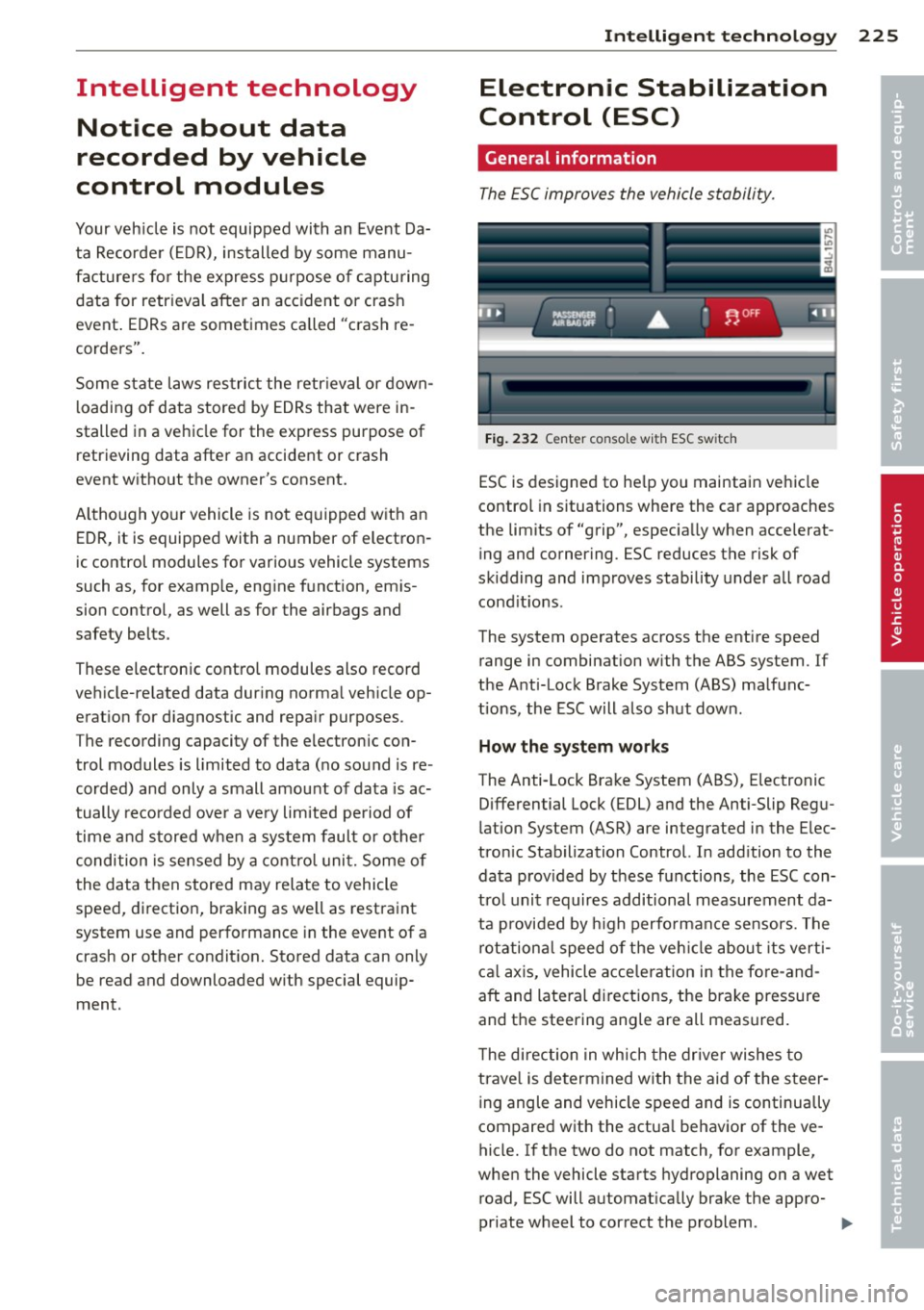
Fig. 232 Center console with ESC sw itch
ESC is designed to help you maintain vehicle
control in situations where the car approaches
the limits of "grip", especially when accelerat
ing and cornering. ESC reduces the risk of
skidding and improves stability under all road
condit ions .
The system operates across the entire speed range in combination with the ABS system. If
the Anti-Lock Brake System (ABS) malfunc
tions, the ESC will also shut down.
How the system works
The Anti-Lock Brake System (ABS), Electronic
Differential Lock (EDL) and the Anti-Slip Regu
lation System (ASR) are integrated in the Elec
tronic Stabilization Control. In addition to the
data prov ided by these functions, the ESC con
trol unit requires additional measurement da
ta provided by high performance sensors. The
rotational speed of the vehicle about its verti
cal axis, vehicle acceleration in the fore-and
aft and lateral directions, the brake pressure and the steering angle are all measured.
T he direction in wh ich the driver wishes to
travel is determined with the aid of the steer
ing angle and vehicle speed and is continually
compared with the actual behavior of the ve
hicle. If the two do not match, for example,
when the vehicle starts hydroplaning on a wet
road, ESC will automatically brake the appro-
priate wheel to correct the problem. ..,_
•
•
Page 228 of 348
226 Intellig ent technol ogy
The vehicle is then stabilized by the forces act
ing on the whee l during braking. If the vehicle
is
oversteering (rear tends to sk id out of the
turn), the brakes are ma inly applied on the
wheel that is on the outside of the curve. In
the case of a vehicle that is
understeering
(tendency to slide out of the curve), the
brakes are applied as needed on the whee l
that is on the ins ide of the curve or addit ional
l y on the o ther wheels. An acoustic s ignal indi
cates when ESC b rake app lication cuts in
¢ A .
The system operates across the entire speed
range in combination with the ABS system
¢ page 229. If the Anti-Lock Brake System
(ABS) malfunctions, the ESC wi ll be out of ac
tion as well .
Activating
When you turn on the engine, ESC w ill auto
mat ica lly be act ivated and will perform a se lf
test. As soon as the test is comp leted, the sys
tem is in normal operating mode.
Offroad mod e
ESC should normally be ope rated in normal
mode because this ensures maximum vehicle
stability. If necessary, you can act ivate the
ESC offroad mode by pressing the but to n
¢ fig . 232 to obtain maximum traction and
braking ability when driving
off paved roads at
l ow speeds. In ESC offroad mode, the indica
tor light
Ii) ill uminates and the message Sta
b ilization control (E S C): Offr oad . Wa rning !
R estric te d stabilit y
appears br iefly in the dis
p lay .
The ESC offroad mode can be useful in the fo l
low ing except ional situations when slip or a
h ighly effective differential locking function is
des irable . Examp les:
- when driving with tire chains,
- when driving in deep snow or on loose
ground,
- when driving on uneven surfaces with the
whee ls severe ly unloaded (articulation), and
- when rocking the vehicle loose after it has
become stuck . When the
unusual situation is past, you
sho uld shift back to the norma l ESC operating
mode by pushing the button again . The mes
sage
S ta b ilizat ion cont rol (ES C): O n then ap
pears briefly in the display.
H ill desc ent control
The hill descent control is switched on in ESC
offroad mode . When slowly descending steep
gradients on loose ground or when the axles
are articulated, hill descent control provides ass istance by automatically apply ing the
brakes to keep vehicle speed constant. The ve
hicle is also rendered easier to steer by selec
t ive d istr ibut ion of braking force. Hill descent
control intervenes when:
- the acce lerator pedal is not pressed,
- the vehicle is travelling less than 12 mph
(20 km/h),
- a steep gradient is detected,
- wheel behavior indicates loose ground or
conditions with poor adhesion (e .g. also axle
art iculation).
Hill descent contro l operates both d riving for
ward and in reverse. Active hill descent con
tro l is deactivated by pressing the accelerator
pedal until the condit ions for activation al
ready listed are met again .
A WARNING
--
- The Electronic Stabilization Contro l is
neverthe less s ubject to the laws of phys
ics. It is part icularly important to pay at
tention to this fact on wet and slippe ry
roads . It i s therefore important that you
always adapt your dr iving to the cond i
tion of the road and traffic conditions . Do
not a llow the increased safety provided
by the E lectronic Stabilization Contro l
system to lull you into accepting addi
tional safety risks .
- Please be aware that in ESC offroad
mode, particularly on a smooth and s lip
pe ry road, the wheels may have an in
creased tendency to sp in and the vehicle
may b reak away - dange r of skidding!
~
Page 232 of 348
230 Intellig ent technol ogy
8_ WARNING
Although the ABS is very effective, always
remember that bra king capability is limit
ed by t ire traction . Always adjust your dr iv
ing spee d according to the road and t raffic
co nditions. Do no t let t he extra sa fety af
forded by the ABS tempt you into ta king
extra risks. The ABS cannot overcome the
laws of physics.
@ Tips
- If ABS is not functioning prope rly, a
warning light will come on. See
¢page 18 .
-If a fault occurs in the ABS, the EDL is al
so not functioning. This is indicated by
the ABS warning light .
Brake assistant
The brake assistant is designed to achieve the
optimum braking effect .
The brake assistant helps to increase the ef
fective b rak ing power and thus to achieve a
shorter stopp ing distance. If the driver
presses the brake pedal very quickly, the brake
assistant automatica lly boosts the braking
force to the maximum level, up to the point where the anti-lock brake function (ABS) inter
venes to stop the wheels from locking. You
should then keep the brake pedal pressed un
til the veh icle has braked to the required
speed . The brake assistant sw itches itself off
as soo n as you re lease the brake pedal.
Automatic full braking a ssist
This funct ion allows full brak ing in spite of
h igh brake pedal forces (e .g . when the brakes
a re severely stressed because the vehicle is
fully loaded) . The driver notices th is function
throug h a reduction of pedal force and in
creased pedal trave l. When the brake peda l is
r e leased, fu ll braking assis t switc hes off again
automatically.
I f the re is an ABS fa il ur e, the brake ass ista nt
and automatic full b rak ing ass ist are not avai l
ab le . The brake assistant wi
ll not be operative if
there is a ma lfunction in the ABS .
8_ WARNING
-Please remember that the accident risk a l-
ways increases if you drive too fast, espe
cially in corners or on a slippery road, or if
you follow the veh icle ahead of you too
closely. Increased r isk of an accident can
not be compensated for even by the brake
assistant, so always maintain a safe speed.
Servotronic ® -
advanced power
steering system
The power steering systems uses the power of
the running engine to allow precise steering
with little effort.
The advanced Servotronic ® power steering
system senses the road speed and electron i
cally adjusts power assistance to provide com
fortab le and safe steering response exact ly
matched to the vehicle speed .
Power steer ing will not work if the engine is
off . As a result, the steering wheel will be hard
to turn .
The power steering fluid level is checked dur
ing the scheduled maintenance services .
d) Note
If there is an electronic malfunction, ser
votronic
will still function like a conven
tiona l powe r steering system, providing a
constant steering support force that is no
l onger proportionate to the vehicle speed .
This is most not iceable when turning the
stee ring wheel at low speeds (fo r example
when pa rking), - more effort w ill be re
q uired than us ua l.
- Be aware o f the different than usual
steering response and adjust your steer
ing force accordingly.
- Have the problem checked and set r ight
by an Audi dealer as soon as possible .
Page 233 of 348
@ Tips
- When the engine is running, never hold
the steer ing whee l turned a ll the way to
the right or t o the left f or longer than 15
seconds. The power steering pump w ill
overheat the hydraulic f lu id if you keep
hol ding the steer ing wheel turned all the
way. This is likely to damage the power
steering system.
- If the power steer ing system should fail
ent irely, or if the engine is not running
(fo r example, while being towed), you
will still be ab le to steer the vehicle.
However,
considerably more effort will
be required to do so.
- If the power s teer ing system should
have a leak, or is not functioning proper
l y, contact yo ur authorized Audi dealer
immediately.
- The power stee ring system requires a
spec ially formulated hydraulic fluid. The
power steering reservo ir is the one locat
ed farthest to the rear on the left side of
the engine compartment
c> page 266.
The co rrect flu id level in the reservoir is
i mportant for proper functioning of the
power steer ing .
Driving with your
quattro ®
With all-wheel drive, oil four wheels ore driv
en.
Gener al information
W ith all -whee l dr ive , power is distributed to
a ll fo ur wheels. This happens automatica lly
depending on yo ur driving sty le and the road
conditions at the time . See also
¢ page 227,
Electronic differential lock (EDL) .
Winter tires
When driving in the w inter, your ve hicl e w it h
all -wheel drive has an advan tage, even with
regu lar tires . In winter road conditions it may
be advisable to mount winter tires (or all -sea
son t ires) for improved driveability and brak-
Int ellig ent technolog y 231
ing: these tires must be mounted on all four
wheel s. See also ¢
page 295, Winter tires .
Tire chains
Where tire chains are mandatory o n certain
roads, this no rma lly also app lies to veh icles
with all-wheel drive¢
page 296, Snow
chains.
Replacing wheels /tires
Vehicles with all-wheel drive must always have ti res of t he same s ize. A lso avo id tires
with different t read depths. For det ails see
page
c!;> page 291, New tires and replacing
tires and wheels .
_& WARNING
A lways adj ust yo ur driv ing to road and traf
f ic conditions. Do not let the extra safety
afforded by all-wheel drive tempt you into
taking extra risks.
-Altho ugh the all-wheel drive is very ef
fective, always remember that braking
capacity is lim ited by tire traction. You
should therefore not drive at excessive
speeds on icy or slippe ry road surfaces .
- On wet road surfaces, be careful not to drive too fast because the front wheels
could begin to slide o n top of the water
(aquaplaning). If th is should occur, yo u
will have no warning from a s udden in
crease in engine speed as w ith a front
wheel drive vehicle. Always drive at
speeds which are suited to the road con
ditions -risk of crash.
Energy management
Starting ability is optimized
Energy management controls the distribution
of electrical energy and thus optimizes the
availability of electrical energy for starting the engine.
If a vehicle with a conventiona l energy system
is not driven for a long per iod of t ime, the bat
te ry is discharged by idling cur rent consume rs
(e.g. immobi liz e r). In certa in circumstan ces it ..,_
•
•
Page 246 of 348
244 Trailer towing
have become comp lete ly familiar with the way
your vehicle-trailer combination behaves and responds.
Backing up is difficult and requires practice.
Backing up with a trai ler genera lly requires
steering action opposite to that when backing
up your veh icle without a trailer .
Maintain a greater distance be tween your ve
hicle and the one in front of you. You will need
more room to stop. To compensate for the
trailer, you will need a larger than normal
turning radius.
When passing, remember that you cannot ac
celerate as fast as you normally would be
cause of the added load. Make sure you have
enough room to pass . After passing, allow
plenty of room for your trailer before chang
ing lanes again .
Avoid jerky starts, sharp turns or rapid lane
changes.
- Do not tow a trailer during the break-in
period of your vehicle.
- If you tow a trailer, your Audi may re
quire more freq uent maintenance due to
the extra load
c> page 325.
Parking on a slope
Do not pork on a slope with a trailer. If it can
not be avoided, do so only after doing the fol
lowing:
When parking:
.. Apply the foot brake .
.. Have someone place chocks under both the
vehicle and the trai ler wheels .
.. With chocks in p lace, slowly re lease the
brakes until the wheel chocks absorb the
load .
.. Turn the wheels towards the curb .
.. Apply the parking brake .
.. Move the selector lever to
P.
When restarting after parking:
.. Apply the foot brake. ..
Start the engine.
.. Move the se lector lever to
D.
.. Release the parking brake and s low ly pull
out and away from the wheel chocks.
.. Stop and have someone retr ieve the wheel
chocks .
(D Tips
If you move the selector lever of the auto
matic transmission to
P before applying
the parking brake and before blocking the
wheels, you may have to use more fo rce
l ater to move the lever out of the
P posi
tion.