check engine AUDI Q7 2014 Owner´s Manual
[x] Cancel search | Manufacturer: AUDI, Model Year: 2014, Model line: Q7, Model: AUDI Q7 2014Pages: 340, PDF Size: 85.02 MB
Page 269 of 340
-Antifreeze is poisonous . Always store an
t ifreeze in its or iginal container and well
out of the reach of children.
- If you drain the coolant, it must be
caught and safely stored in a proper con
tainer clearly marked "poison".
(D Note
- Coolant pollutes the environment and
could cause an engine fire. Excess coo l
ant will be forced out through the pres
sure re lief va lve in the cap when the en
gine becomes hot.
- If, in an emergency, only water can be
added, the correct ratio between water
and antifreeze ¢
page 264 must be re
stored as soon as possib le.
@ For the sake of the environment
Drained coolant should not be reused. Al
ways dispose of used coolant while observ ing all environmental regulations .
Radiator fan
The radiator fan switches on automatically by
itself
The radiator fan is driven by the engine via the
V-belt . The viscous clutch regulates the speed
of the fan accord ing to the temperature of the
coolant .
An auxiliary electric radiator fan* switches on
and off depending on coolant temperature
and other vehicle operating conditions .
After you switch the engine off, the auxilia ry
fan can continue running for up to 10 minutes
- even with the ignition off. It can even switch
on again later by itself¢& , if
- the temperature of the engine coolant rises due to the heat build-up from the engine in
the engine compartment, or
- the engine compartment hea ts up because
the vehicle is parked in intense sunlight .
Checking and fillin g 267
A WARNING
-To reduce the risk of personal injury nev
er touch the rad iator fan.
- The auxiliary electric fan is temperature
controlled and can switch on suddenly
even when the engine is not running .
- The auxiliary radiator fan switches on au
tomatically when the engine coolant reaches a certain temperature and will
continue to run until the coo lant temper
ature drops.
Brake fluid
Checking brake fluid level
The brak e fluid lev el can be check ed with a
quick glance.
N
N
-N ,.
:8
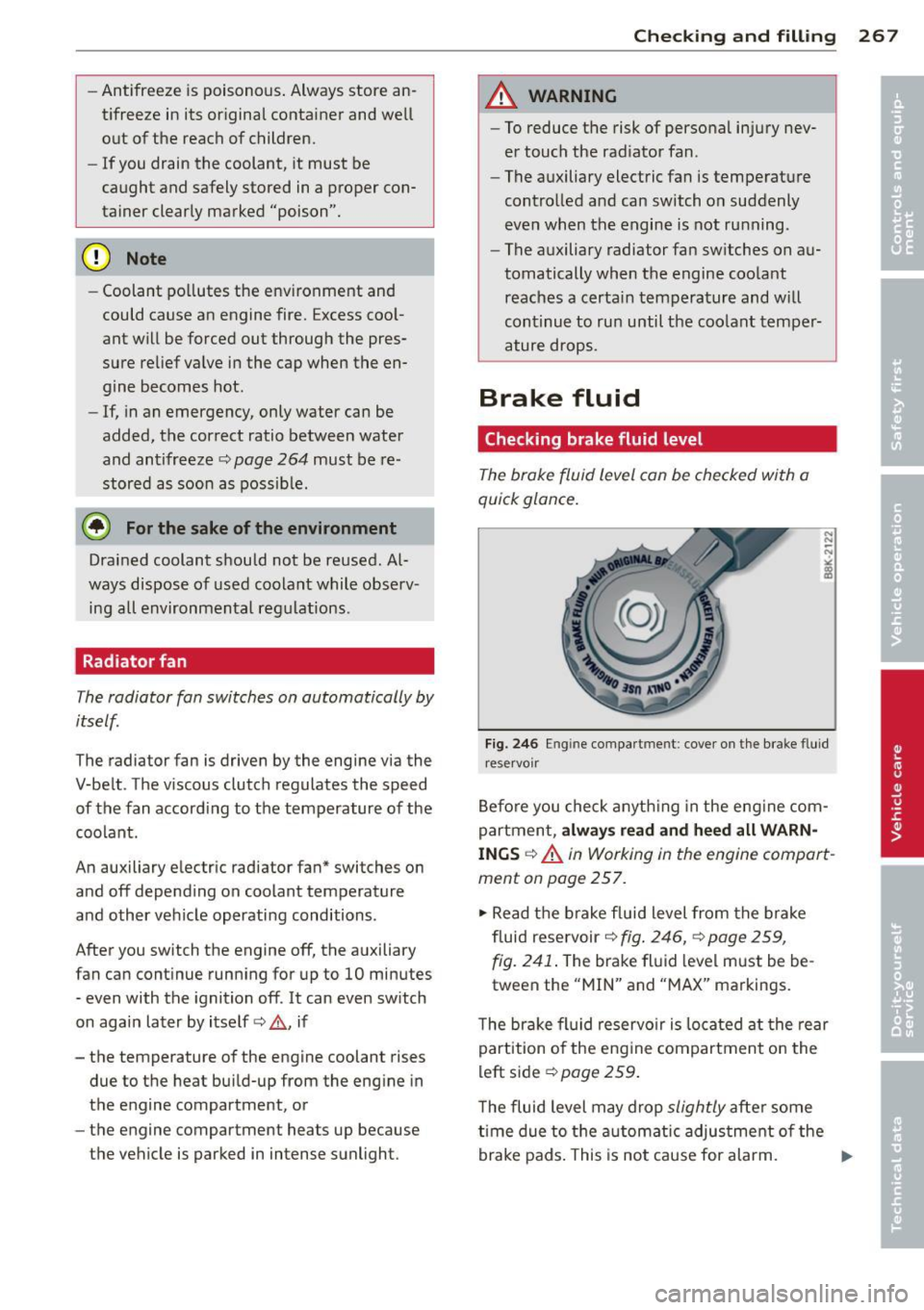
Fi g. 246 En gin e compa rtm en t: cover o n the bra ke fluid
reservoir
Before you check anything in the eng ine com
partment ,
always read and heed all WARN
INGS ¢ A in Working in the engine compart
ment on page 257.
.,. Read the brake fluid level from the brake
fluid reservoir ¢
fig. 246, ¢ page 259,
fig. 241.
The brake fluid level must be be
tween the "MIN" and "MAX" markings .
The brake fluid reservoir is located at the rear
partition of the eng ine compartment on the
left side ¢
page 259.
The fluid level may drop slightly after some
time due to the automatic adjustment of the
brake pads. This is not cause for alarm. ..,_
Page 271 of 340
Disconne cting the batt ery t erminals
Some vehicle functions (power w indow regu
l ators, for example) are lost if the battery ter
minals are disconnected . These functions have
to be re learned after the battery terminals are
connected again. To prevent this, the battery
should only be disconnected from the vehicle
electrical system when absolutely necessary
for repairs .
Vehicle s not driven fo r lo ng period s
If you do not drive your vehicle over a period
of several days or weeks, electrical compo
nents are gradually cut back or switched off .
This reduces energy consumption and main
tains starting capab ility over a longer per iod
¢ page 229 .
Take into consideration that when you unlock
your vehicle, some convenience functions,
such as the inter ior lights or the power seat
adjustment, may not be available . The con
ve nience funct ions w ill be available again
when yo u turn on the ignition and start the
engine.
Winter op eration
During the winter months, battery capacity
tends to decrease as tempe ratures d rop . This
i s because more powe r is also consumed while
start ing, and the headl ights, rea r window de
fogger, etc., are used more often.
Avo id unnecessary power consumption, par
ticularly in c ity t raffic or when t rave ling on ly
short d istances. Let you r autho rized Aud i
dealer check the capacity of the vehicle bat
tery before winter sets in ¢
page 270. A we ll
charged battery wi ll not only prevent starting
prob lems when the weather is cold, but will
also last longer .
If your vehicle is left standing for severa l
weeks at extremely low temperat ures, the
veh icle battery should be removed and
stored where it will not freeze. This will
prevent it from bei ng damaged and hav ing
to be replaced.
Checkin g and fillin g 269
Working on the battery
Be especially careful when working on or near
the battery.
The battery is located under the driver 's seat.
Before you check anyth ing under the dr iver's
seat,
read and h eed all WARNINGS G &_ .
Always heed the safety warnings , when work
ing on the vehicle battery or the vehicle e lec
trical system to prevent injury .
The following WARNINGS are ver y
important when working on the batter y:
Alway s heed the following WARN IN G SY M-
BOLS a nd safety p re caution s when working
on the battery .
®
Alway s wear e ye prote ction.
&
Bat te ry acid contains s ulfuric acid. Al-
ways w ear glov es and ey e prot ect ion .
@
No
-spar ks
- flames
- smo kin g.
A
When a batt ery i s charged , it produ ce s
hydro gen g as whi ch i s explo sive and
c o uld cau se pe rsonal injur y.
®
Alw ays k eep th e batt ery w ell out of
reac h of chi ldr en .
.8, WARNING
Whenever working on the battery or on
the electrical system, there is the risk of
injury, accident and even fire . Read and
heed the following WARNINGS:
- Always wear eye protection. Do not let
battery ac id or any lead particles get on
your skin or clothing . Shield you r eyes .
Exp losive gases can cause blindness or
other injury.
- Battery acid contains sulfuric acid. Sulfu
ric acid can cause blindness and severe
burns.
- Always wear g loves and eye protection.
-
Do no t tilt the ba ttery because acid .,. •
•
Page 272 of 340
2 70 Checking and filling
could leak out of the ventilation
openings.
- If you get battery acid in your eyes or
on your skin, immediately rinse with
cold water for several minutes and get
medical attention.
- If you should ingest any battery acid,
seek medical attention immediately.
- Do not expose the battery to an open
flame, electric sparks or an open light.
- Do not smoke.
- Do not interchange the positive and neg-
ative cables.
- When working on the battery , be sure
not to short-circuit the terminals with
tools or other metal objects. This would
cause the battery to heat up very quickly,
which could lead to damage or explosion
and personal injury.
- When a battery is charged, it produces
hydrogen gas which is explosive and
could cause personal injury .
- Always keep the battery well out of the
reach of children .
- Before work is done on the electrical sys
tem, disconnect the negative ground ca
ble .
- Before performing any work on the elec
trical system, switch off the engine and
ignition as well as any electrical equip
ment. The negative cable on the battery
must be disconnected. If you are just go
ing to replace a light bulb, then it is
enough to switch off the lights.
- Before disconnecting the battery, switch
off the anti-theft alarm system! Other
wise you will set off the alarm.
- When disconnecting the battery, first
disconnect the negative cable and then
the positive cable .
- Before reconnecting the battery, make
sure all electrical consumers are switch
ed off. Reconnect the positive cable first
and then the negative cable. Never inter
change the cables -this could start a fire!
- Never charge a frozen or a thawed-out
battery. It could explode! If a battery has
frozen, then it must be replaced. A dis- charged battery can freeze over at 32
°F
(0 oc).
-Make sure the vent hose is always attach
ed to the opening on the side of the bat
tery .
- Never use batteries which are damaged.
There is the danger of an explosion! Al
ways replace a damaged battery.
A WARNING
-
California Proposition 65 Warning:
- Battery posts, terminals and related ac
cessories contain lead and lead com
pounds, chemicals known to the State of
California to cause cancer and reproduc
tive problems. Wash hands after han
dling.
(D Note
- Do not disconnect the vehicle battery
when the ignition is switched on or when
the engine is running, otherwise, you will
damage electronic components in the
electrical system.
- If your vehicle is going to stand for a
long period of ti me without being driven,
protect the battery from "freezing", oth
erwise it will be damaged and will then
have to be replaced.
Battery charging
Starting the engine requires a well charged
battery.
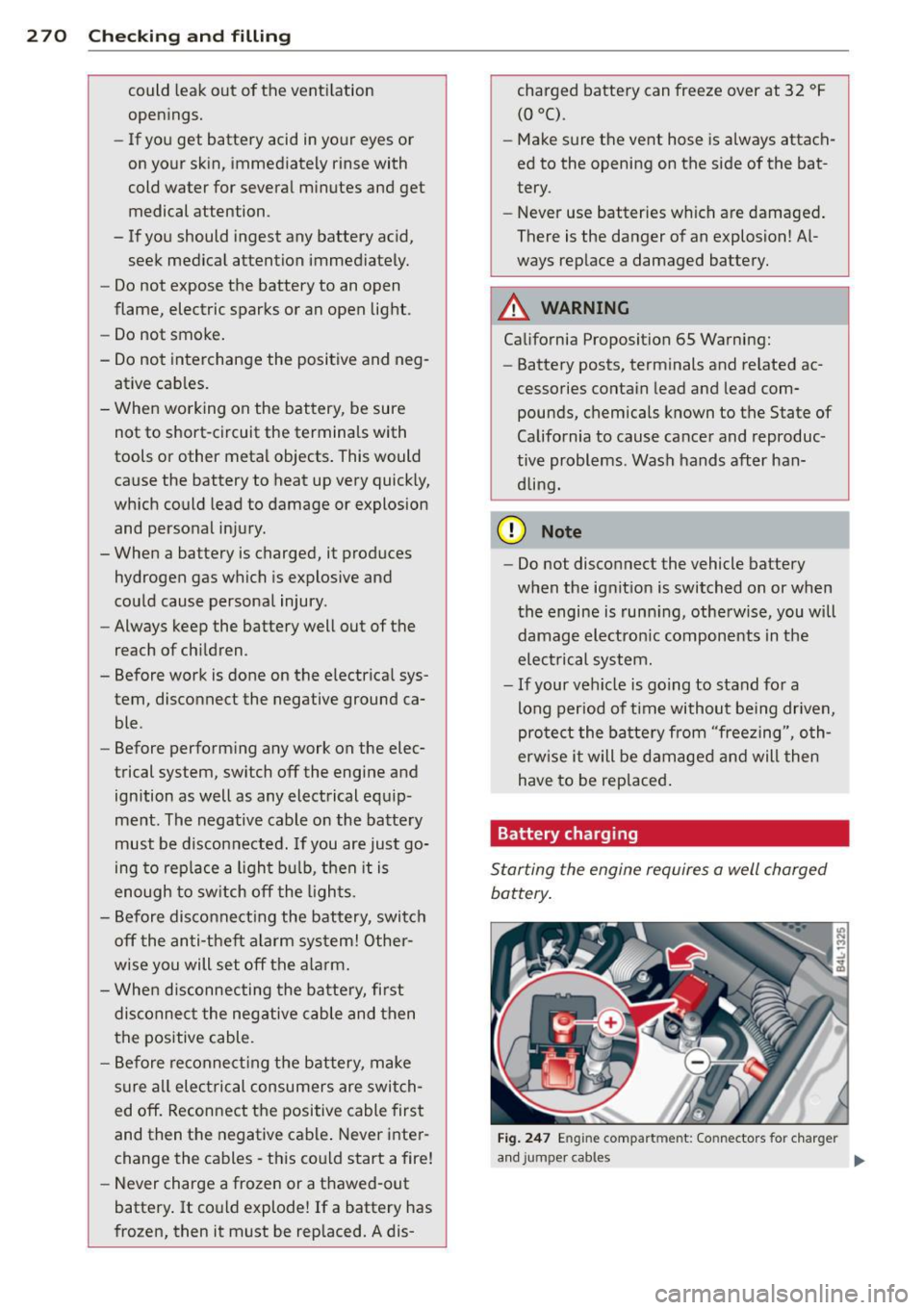
Fig. 247 E ngin e compart men t: Co nnectors fo r charger
and j umper cab les
Ill>
Page 273 of 340

Always read and heed all WARNING S below
¢ A. and
¢A. in Working on the battery on
page 269.
.,. Turn off the ignit ion and a ll electrical con
s u mers .
.,. Make sure the area is well vent ilated when
you charge the battery.
.,. Open the hood¢
page 257.
.,. Open the red cover on the posit ive pole
¢ fig . 247.
.,. Connect the charger connectors accord ing to
the instructions to the
jump start bolt s.
(Bolts unde r the red cover= "positive", Bolts
with hex head= "negative") .
.,. Only now pl ug the mains lead for the charg
ing equipment into the wall outlet and turn
it on ¢
A_.
.,. Make su re the charging rate i s not o ver
30 arnp s/14.8 Volt.
.,. When the battery is fully charged: Turn the
charging equ ipment
off and remove the
mai ns lead from the wa ll outlet.
.,. Now remove the clamps for the charging
equipment.
.,. Close the red cove r on the pos it ive po le.
.,. Close the hood¢
page 257.
A discharged batte ry can fr eez e at tempera
t ures of only O
0C. Allow a frozen batte ry to
thaw comp letely before a ttempting to charge
it ¢& . However, we recommend not using a
thawed battery again because the battery cas
ing can be cracked due to ice formation and
can leak battery acid.
Battery charging (Ma ximum charging rate
o f 30 amp s/14 .8 Volt)
When charging at low voltages (e.g . w ith a
tric kle charger ), the battery cables do not
h ave to be disconnected first. The battery
caps should
not be opened when charging a
battery .
It is not necessary to remove the battery from
the luggage compartment.
Checkin g and fillin g 2 71
Fast charging the battery (cha rging rate
ab ove 14 .8 V olt s)
For technical reasons do not use a battery
charger that uses voltage greater than 14.8
Volts to charge your vehicle's battery.
A WARNING
~ -
Charging a battery can be dangerous .
-Always follow the operating instructions
provided by the battery charger manu
facturer when charg ing your battery .
- Never charge a frozen battery.
It may ex
plode because of gas trapped in the ice.
Allow a frozen batte ry to thaw out f irst.
- Do not reuse batteries wh ic h were fro
zen. The battery hous ing may have
cracked and weakened when t he battery
froze.
- Charge the battery in a well ventilated area. Keep away from open flame or elec
tr ica l spar k. Do not smoke. Hyd rogen gas
genera ted by the battery is explos ive .
- To reduce the danger of explosion, never
connect or d isconnect c harger cab les
while the charger i s ope rat ing .
- Fast cha rging a batte ry is dange rous and
should only be a ttempted by a compe
tent techn ic ian wi th the p rope r equip
men t.
- Battery acid tha t may spi ll dur ing cha rg
ing should be washe d
off with a solu tion
of wa rm water and baking soda to neu
tralize the acid.
([) Note
Never use a fast charger as a booster to
star t the engine. This w ill seriously dam
age sens it ive e lectronic com ponen ts, s uch
as contro l units, re lays, radio, etc., as well
as the batte ry charger. •
•
Page 274 of 340

272 Ch eck ing and filling
Battery replacement
The new battery must have the same specifi
cations and dimensions as the original equip
ment battery.
Intelligen t energy management in your veh i
cle is respons ible for d istributing the e lectr i
cal en ergy throughout your vehicle
¢
page 229. T he intell igent e nergy manage
ment system w ill keep the eng ine battery
cha rged better then vehicles w ithout this sys
tem . To make sure the additional e lectrica l en
ergy is availab le once again after you have
changed the battery, we recommend that you install batteries of the same type and manu
facture only (the same as those installed at
the time your vehicle was delivered). Specifi
cations are listed on the battery hous ing . Your
author ized dealer must code the battery in
the ene rgy management system to enable you
to use the energy management f unct ions co r
rectly after replac ing the battery.
If it is not poss ible to use a battery of this
type, the new battery must have the same ca
pac ity, voltage (12 volts), amperage , con
struction and plug seal ing.
When insta lling the battery, make sure the ig
n it ion and all e lectr ica l consumers a re turned
off.
Q;) Note
Make sure the venti lation hose on the s ide
of the battery is connected, otherwise
fumes or battery ac id can leak o ut.
@ For the sake of the environment
Because of the problem of proper d isposa l
of a battery, we recommend your autho r
i z ed Audi dealer change the ba tte ry for
you. Bat teries con tain s ulfu ric ac id and
lead and m ust always be disposed of prop
erly in compliance with all environmental
reg ulations. Disposing of vehicle batteries
improper ly is very dangerous to the envi
ronment.
Windshield/headlight
washer container
F ig . 24 8 Eng in e compar tment : cover on t he wi nds hield
and headl ig ht* washe r flu id reservoi r
The washer fluid co nta iner is marked w ith the
symbol Won its cap ¢
fig. 248, ¢ page 259,
fig. 241 .
.. Before you check anything in the engine
compartment,
alwa ys read and he ed all
W ARNING S
¢ & in Working in the engine
compartment on page 257 .
.. Lift the fille r cap tongue to add washer flu
id. You can fi ll the container to the top.
.. Press the cap back onto the fi ller neck afte r
fi lling the container.
You can find the reservo ir
capacity in the table
in
¢ page 315.
Clean water should be used when filling up . If
poss ible, use soft water to prevent scaling on
the washer jets. A lways add a glass clea ne r
so lution (with frost prote ction in the winter).
0 Note
Do not mix engine coolant antifreeze o r
any other additives to fill up the wind
s hi eld washer rese rvoir.
Page 309 of 340

Emergency situations
General
This chapter is intended for trained emer
gency crews and working personnel who have the necessary tools and equipment to
perform these operations.
Starting by pushing or
towing
(D Note
Your v ehicl e is e quipped w ith an automatic
tra nsm iss io n. Cons eque ntly, the e ngine
cann ot be started by pus hing o r tow ing.
Starting with jumper
cables
If necessary, the engine can be started by
connecting it to the battery of another vehi
cle.
If th e engine shou ld fail to start because of a
d ischarged o r weak battery, the battery can be
connected to the battery of
another veh icle,
usi ng a
pair of jumper cables to start the en
gine .
Jumper c ables
Use only jumper cab les of sufficiently large
cross section to carry the starter cur rent safe
l y. Refer to the man ufacturer's specifications.
Use only jumper cables with
insulated te rm i
na l clamps w hich are d istinctly mar ked:
plus(+ ) cable in mos t ca ses co lore d red
minus(-) cable
i n most cases colored black .
A WARNING
Batteries con tai n elec trici ty, a cid, and gas.
Any o f these c an caus e ve ry ser ious or f atal
injury . Follow the instruc tions below fo r
safe han dling of your veh icle's battery .
- Alw ays s hield y our eyes and a void le an
ing over the batte ry w henever possib le .
Emergency situations 307
- A discharged battery can freeze at tem
pe rat ures just below 32 °F (0 °C). Before
connecting a jumpe r cable, you must
thaw the frozen battery c omp lete ly, ot h
e rwise it could explode.
- Do not allow battery acid to co ntact eyes
or skin . Fl ush any con tacted area wi th
wat er immediately .
- Imp roper use of a booster battery to
s tart a vehicle may cause an ex plosion.
- Vehicle batter ies generate expl osive gas
es. Keep sparks, flame and lighted c iga
rettes away from ba tte ries.
- Do not t ry to jump start a ny ve hicle w it h
a low ac id leve l in the battery.
- The voltage of the booste r battery m ust
also have a 12-Vo lt rat ing. T he capac ity
(Ah) of the booste r batt ery sho uld not b e
lowe r than that of th e discharged bat
t ery. Use o f batt eries of d iffe ren t vol tage
or su bstan tia lly differen t "Ah" rat ing
may cause an exp losion and pers onal in
jury .
- N ever ch arge a fr ozen batt ery. Gas t ra p
pe d in the ice may c ause an ex plosion .
- N ev e r ch arge o r use a batt ery th at h as
been fro zen . Th e batte ry case may have
be weake ned.
- U se o f batter ies of di ffere nt vol tage or
substantially differen t ca pa city (Ah) rat
i ng may cause an exp losion and injury .
T he ca pa c ity (Ah) of the booster battery
should not be lower than that of the dis
charged battery.
- Before you check anything in the engine
compa rtment, always read an d heed a ll
WARNINGS
c::;,page 257.
(D Note
-App lyi ng a hi gher vo ltage booste r ba t
t ery wi ll cause expens ive damage to sen
sit ive e lectronic components, such as
cont ro l units, relays, rad io , etc.
- There must be no electrical c ontact be
tween the vehicles as otherw ise current
co uld already start to f low as soon as t he
posi tive(+) terminals a re con nect ed. ..,. •
•
Page 311 of 340
-Jumper cables must be long enough so
that the vehicles do not t ouch.
- W hen connecting jumper ca bles, make
sure that they cannot get caught in any
moving parts in the eng ine compart
ment.
- Before you check anything in the engine
compartment, always read and heed all
WARNINGS
Q page 257.
(D Note
Improper hook-up of jumper cables can ru
in the generator.
- Always connect POSITIVE( +) to POSI
TIVE(+), and NEGATIVE(-) to NEGATIVE
( - ) ground post of the battery manager
control unit.
- Check that all screw plugs on the battery
cells are screwed in firmly. If not, tighten plugs prior to connecting clamp on nega
tive battery terminal.
- Please note that the procedure for con
nect ing a jumper cable as described
above applies spec ifically to the case of
your vehicle be ing jump started . When
you are giving a jump start to another ve
hi cle, do
not connec t the negat ive (-) ca
ble to the negat ive( -) term inal on the
discharged battery ©¢
fig. 2 72. In
stead, securely connect the negative( -)
cable to e ither a solid metal component
that is firmly bolted to the engine block
or to the engine block itse lf. If the bat
tery that is being charged does not vent
to the outside, escaping battery gas
could ignite and exp lode!
Em erg en cy si tuation s 309
Emergency towing
with commercial tow
truck
General hints
Your Audi requires special handling for tow
ing.
T he following information is to be used by
commercial tow t ruck operators who know
how to operate their equipment safely.
- Never tow your Audi , towing will cause
damage to the engine a nd transmi ssion.
- Never wrap th e safet y chain s or winch c a
ble s around th e brak e lin es.
- To prevent unne ce ss ary dam age, your Aud i
mu st be t ransp orted with a flat bed truck .
- To load th e vehi cle on to the fl at bed, us e
the t owing loop found in the vehicle t ool s
and atta ch to the front or rear anch o rage
¢ page 310 and Qpage 310 .
A WARNING
A vehicle being towed is not safe for pas
sengers. Never allow anyone to ride in a
vehicle be ing towed, for any reason.
-
•
•
Page 314 of 340

312 Emergency situations
fall from a lift if there is a change in ve
hicle weight distribution and balance.
This might happen, for example, when
heavy components such as the engine
block or transmission are removed .
- When removing heavy components like
these, anchor vehicle to hoist or add cor
responding weights to maintain the cen
ter of gravity. Otherwise, the vehicle
might tilt or slip off the hoist, causing
serious personal injury.
(D Note
- Be aware of the following points before
lifting the vehicle:
-The vehicle should never be lifted or
jacked up from underneath the engine
oil pan, the transmission housing, the
front or rear axle or the body side
members. This could lead to serious
damage.
- To avoid damage to the underbody or
chassis frame, a rubber pad must be
inserted between the floor jack and
the lift points.
- Before driving over a workshop hoist,
check that the vehicle weight does not
exceed the permissible lifting capacity
of the hoist.
- Before driving over a workshop hoist,
ensure that there is sufficient clear
ance between the hoist and low parts
of the vehicle.
Page 319 of 340
complexity of today's automobi les, have
steadi ly reduced the scope of maintenance
and repairs which can be carried out by vehicle
owners.
Also, safe ty and e nvir onm en tal con
cerns p lace very strict limits on the na ture of
repairs and adjustments to engine and trans
miss io n pa rts which an owner can perform .
Maintenance, adjustments and repa irs usua lly
require special tools, testing dev ices and oth
er equipment avai lab le to specially trained
workshop personnel in order to assure prope r
performance, reliab ility and safety of the vehi
cle and its many systems .
Improper ma intenance, adjustments and re
pa irs can impair the operation and reliability
of your vehicle and even void your vehicle war ranty. The refo re, p roof of servici ng in accord
ance w ith the maintenance sched ule may be a
condition for upholding a poss ible war ranty
claim made within the warranty period.
Above all, operational safety can be adversely
affected, crea ting unnecessary risks for you
and your passengers.
If in doubt about any servicing, have it done
by your authorized Audi dealer or any other
properly equipped and q ualified workshop .
We strong ly urge you to give you r a uthorized
Audi dealer the opportunity to perform all
schedu led maintenance and necessary repairs .
Your dea ler has the facilities, or iginal parts
and trained spec ialists to keep your vehicle
running properly .
Performing limit ed m aintenance you rself
The following pages describe a limited num
ber of procedures which can be performed on
your vehicle with ordinary too ls, should the
need arise and trained personnel be unavaila
b le. Before performing any of these proce
dures, always thoroughly read all of the app li
cable text and carefully follow the instruc
tions given . Always rigorously obse rve the
WARNINGS provided .
Before you check anything in th e engine
compartment, a lway s re ad and heed all
Con sumer In formation 317
WARNINGS ¢ & and ¢ & in Working in the
engine comportment on page 257 .
A WARNING
-Ser ious personal injury may occur as a re
sult of improperly performed mainte nance, adjustments or repa irs.
-Always be extremely careful when work ing on the vehicle. Always follow com
mon ly accepted safety pract ices and gen
eral common sense . Never r isk personal
lnJUry .
- Do not attempt any of the ma intenance ,
checks or repairs descr ibed on the fol
lowing pages if you are not fully fam iliar
wit h these or othe r pro cedures with re
spect to t he veh icle, or are uncerta in how
to p roceed .
- Do not do any work without the proper
too ls and equipment. Have the necessary
work done by your authorized A udi deal
er or another proper ly equipped and
qualified workshop .
- The engine compartment o f any motor
veh icle is a potentially hazardous area.
Never reach into the area around or
touch the rad iator fan. It is temperature
contro lled and can switch on suddenly -
even when the engine is
off and the igni
tion key has been removed. The rad iator
fan switches on automat ica lly when the
coo lant reaches a certai n temperatu re
and will cont inue to run until the coo lan t
tempera ture drops .
- Always remove the ign ition key befo re
anyone gets under the vehicle.
- Always support your veh icle with safety
s tands i f it is necessary to work under
neath the vehicle. The jack s upplied with
the vehicle is not adequate for this pur
pose and cou ld collapse causing serio us
personal injury.
- If you must work underneath the vehicle
with the wheels on the ground, a lways
make sure the vehicle is on leve l ground,
that the wheels are a lways securely
blocked a nd that the engine cannot be
started .
•
•
Page 320 of 340
318 Con sum er Inf ormation
-Always make sure the transmission se
lector lever (automatic transmiss ion) is
in P (Park position) and the park brake is
firmly applied .
@) For the sake of the environment
-Changing the engine settings wi ll ad
versely affect em iss ion levels. This is det
rimental to the environment and increas
es fuel consumption .
- Always observe env ironmental regula
tions when dispos ing of old engine oil,
used brake fluid, dirty engine coolant,
spent batteries or worn out tires.
- Undeployed airbag modules and preten
s ioners might be classified as Perchlo
rate Material -spec ial handling may ap
ply, see www.dtsc.ca .gov/hazardous
was te/perch lorate . When the veh icle or
parts of the res traint system including
airbag modules safety belts wit h preten
sioners are scrapped, all applicable laws
and regulations must be observed. Your
authori zed Aud i dea ler is familiar with
these requirements and we recommend
that you have your dealer perform this
serv ice for you .
Additional accessories,
modifications and
parts replacement
Additional accessories and parts
replacement
Always consult an authorized Audi dealer be
fore purchasing accessories.
Your veh icle incorporates the latest safety de
sig n featu res ensu ring a high standard of a c
tive and passive safety .
This safety could be comp romised by non-ap
proved changes to the ve hicle. For this reason ,
if pa rts have to be replaced , please obse rve
the following points when install ing addition
a l accessories: Approved Audi accessories and genuine Aud
i
parts are available from authorized A udi deal
ers.
T hese dea le rs a lso have the necessary facili
ties, tools and tra ined specialists to install the
parts and acc essories proper ly .
A WARNING
-Using the wrong spare parts or using non-
approved accessories can cause damage to
the veh icle and ser ious persona l injury.
- Use on ly accessories express ly approved
by Audi and gen uine Audi spare parts
- These parts and accessories have been
specia lly designed to be used on yo ur ve
h icle .
- Never install accessor ies such as tele
phone crad les or beverage ho lders on a ir
bag covers or within the airbag deploy
ment zones . Do ing so will increase the
risk of injury if a irbags are triggered in an
accident!
- Before you check anything in the engine
compa rtment, always read and heed a ll
WARNI NGS
9 page 257.
(D Note
-If items other than genu ine Audi spare
parts, add-on equipment and accessory
items are used or if repair work is not
performed accord ing to specified meth
ods, this c an resu lt in seve re damage to
your vehicle's eng ine and body (such as
corrosion) and adversely affect yo ur vehi
cle's warranty .
- If emergency repairs must be performed
elsewhere, have the vehicle examined by
an authorized Audi dealer as soon as
possible .
- The manufacturer cannot be held liable
for damage wh ich occ urs due to failure
to comply with these stipu lations.