key AUDI R8 SPYDER 2011 Owner's Manual
[x] Cancel search | Manufacturer: AUDI, Model Year: 2011, Model line: R8 SPYDER, Model: AUDI R8 SPYDER 2011Pages: 244, PDF Size: 59.74 MB
Page 81 of 244
-The engine c annot be started by pushing
or towing the vehicle.
@) For the sake of the environment
To avo id u nnecessary engine wea r and to
reduce exhaust emissions, do not let your
vehicle stand and warm up . Be ready to
drive off immediately after start ing your
veh icle.
Stopping the engine
On vehicles with R tronic*, the engine can be
turned off in the neutral position N and in
each gear (1 -6 and R).
.. Turn the ignition key to position@
¢page 77, fig. 85.
A WARNING
- Never turn off the eng ine unt il the vehi
cle has come to a complete stop.
- The brake booster and servotronic on ly
work when the engine is running. With
the ignition turned off, you have to apply
more force when steering or braking.
S ince you cannot steer and stop norma l
ly, this can lead to accidents and ser ious
injuries.
(D Note
- If the engine has been under heavy load
for an extended period of time, heat
builds up in the engine compartment af
ter the eng ine is sw itched off -there is a
risk of damaging the engine . Allow the
engine to continue to run at idle for a
short time or drive until it has cooled
down before you turn it off¢
page 159 .
-If the engine has been under heavy load
for an extended period of time, it can be
come extreme ly hot. You should not park
your vehicle over eas ily combustible ob
jects or areas (e .g. grass or leaves). There
i s a risk of start ing a fire.
On th e road 7 9
@ Tips
After the engine has been switched off, the
radiator fan can continue to run for up to
10 minutes -even wit h the ignition switch
ed off. It can also sw itch on again after
some time if the coolant temperatu re rises
as the result of heat bu ildup or if the en
gine compartment is heated by the s un's
r ays and the engine is hot.
Parking brake
Parking brake
When the parking brake is set, it prevents the
vehicle from rolling away unintentionally .
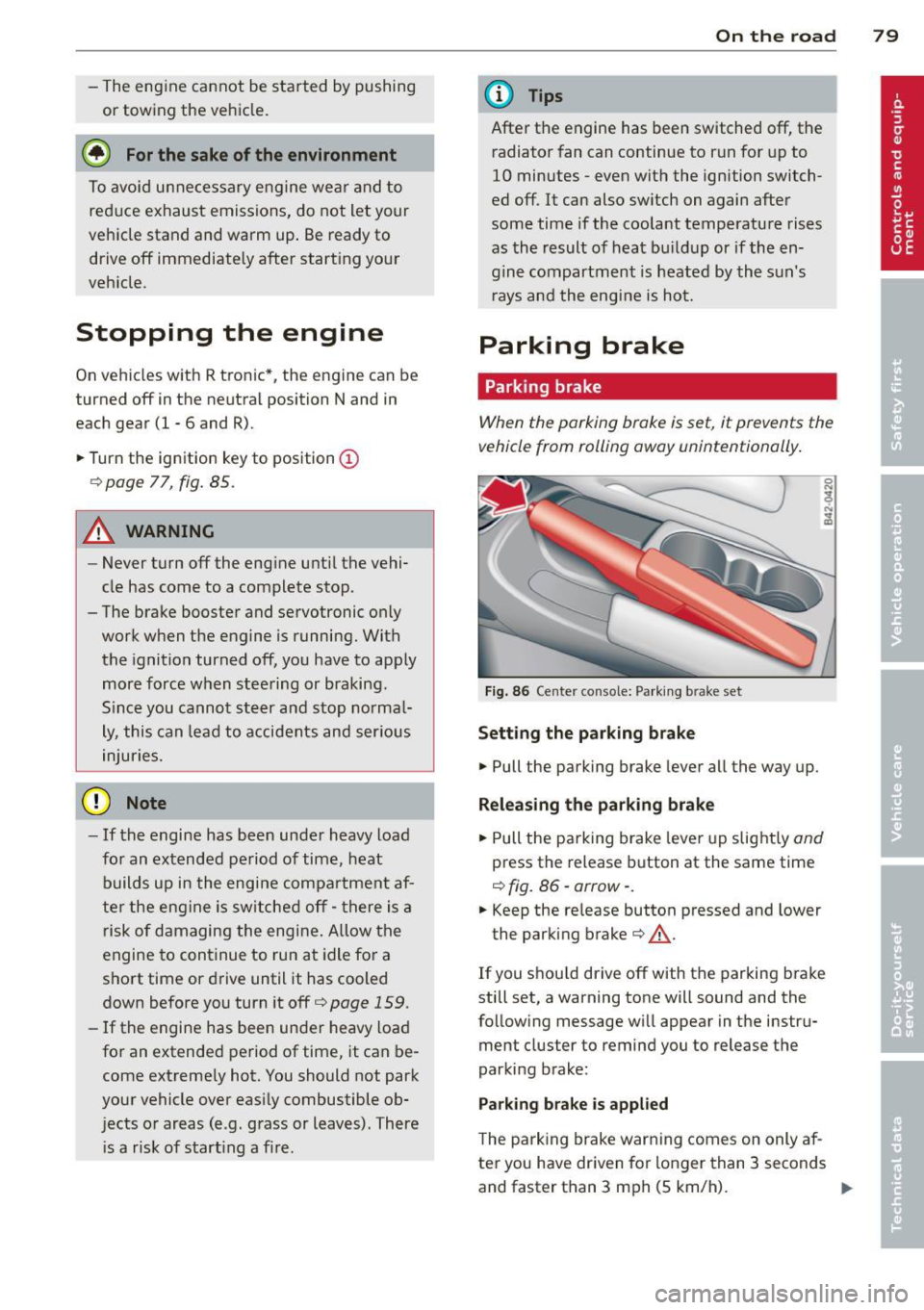
Fig. 86 Ce nter console: Pa rk ing b rake set
Set ting the parking brake
.. Pull the parking brake lever all the way up.
Releasing th e park ing bra ke
.. Pull the parking brake lever up slight ly and
press the release button at the same time
¢ fig. 86 ·arrow· .
.. Keep the re lease button pressed and lower
the parking brake¢,&..
If you shou ld drive off with the parking brake
still set, a warning tone will sound and the
follow ing message wi ll appear in the instru
ment cluster to remind you to release the
parking brake:
Parking bra ke is appl ied
T he parking brake warning comes on only af
ter you have driven for longer than 3 seconds
and faster than 3 mph (5 km/h). ..,.
Page 98 of 244
96 Homelink®
Programming the Homelink ®
transmitter
Applies to vehicles: with Homelink® universal remote
co ntrol
The transmitter is programmed in two phas
es. For rolling code transmitters, a third
phase is also necessary .
~----------------- g: ~
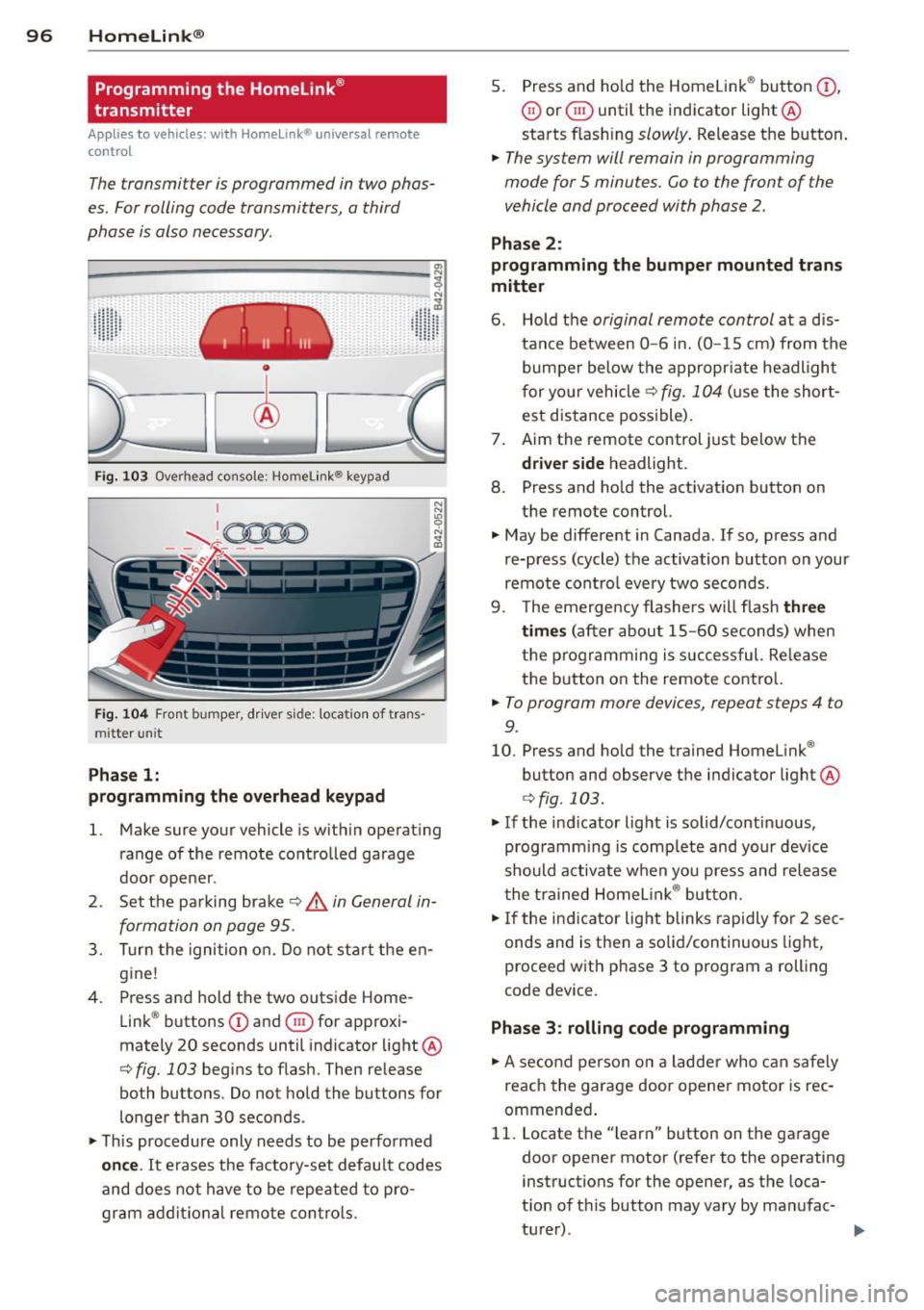
Fig . 103 Overhead console ; Homelink ® keypad
Fig. 104 Fron t bumper, drive r side: location of trans ·
m itterun it
Phase 1:
programming the overhead keypad
"' ,A
1. Make sure your vehicle is within operating
range of the remote controlled garage
door opener .
2 . Set the parking brake~,&.
in General in
formation on page 95 .
3. Turn the ignition on. Do not start the en
gine!
4 . Press and hold the two outside Home
Link ® buttons
CD and @for approxi
mately 20 seconds until indicator light ®
¢ fig. 103 begins to flash. Then release
both buttons . Do not hold the buttons for
longer than 30 seconds .
"'T his procedure only needs to be performed
once. It erases the factory-set default codes
and does not have to be repeated to pro
gram additional remote controls. 5
. Press and hold the Homelink ® button
(D ,
@ or @ until the indicator light ®
starts flash ing
slowly . Release the button.
.,. The system will remain in programming
mode for 5 minutes. Co to the front of the
vehicle and proceed with phase 2 .
Phase 2:
programming the bumper mounted trans
mitter
6 . Hold the original remote control at a dis
tance between
0 -6 in. (0 -15 cm) from the
bumper below the appropriate headlight
for your vehicle
~ fig. 104 (use the short
est distance possible).
7. Aim the remote control just below the
driver side headlight.
8. Press and hold the activation button on
the remote control.
"' May be different in Canada . If so, press and
re-press (cycle) the activation button on your
remote contro l every two seconds .
9. The emergency flashers will flash
three
times
(after about 15-60 seconds) when
the programming is successful. Re lease
the button on the remote control.
.,. To program more devices , repeat steps 4 to
9 .
10. Press and hold the trained Homelink ®
button and observe the indicator light®
¢fig . 103 .
"'If the ind icator light is solid/continuous,
programm ing is comp lete and your device
should activate when you press and release
the trained Homelink ® button.
"'If the indicator light blinks rapidly for 2 sec
onds and is then a solid/continuous light,
proceed with phase 3 to program a rolling
code device.
Phase 3: rolling code programming
.,. A second person on a ladder who can safely
reach the garage door opener motor is rec
ommended .
11. Locate the "learn" button on the garage
door opener motor (refer to the operating instructions for the opener, as the loca
t ion of this button may vary by manufac-
turer) .
~
Page 99 of 244
12. Press and release the learn button on the
garage door opener motor.
.. Note: once the button is pressed, there are
30 seconds in which to initiate the next
step .
13. On the Homel ink ® keypad inside the vehi
cle, firmly press and hold the Homelink ®
button previously programmed in phases
1 and 2 for two seconds and release. Re
peat this sequence
twice .
.. Some vehicles may require the press/hold/
release sequence up to three times to com
plete the training process .
.. Homelink ® should now activate your rolling
code equipped device.
If the 5 minute time limit is exceeded, the
emergency flashers will flash one time to in
d icate that the process has been terminated.
In this case, repeat steps 4 through 9 .
If the emergency flashe rs do not flas h
three
times (after about 15-60 seconds), program
ming was not successful. In this case, repeat
steps 4 through 9.
Remote control units for garage door openers
in Canada are set to stop transmitting radio
frequency s ignals after two seconds. This time
may not be sufficient for the Homelink ® sys
tem to learn the radio frequency s ignal. Per
form all other steps as described above .
Operating the Homelink® transmitter
Appl ies to vehicles: with Home link® univers al remote
co ntrol
The Homelink ® transmitter works in the
same manner as the original handheld re
mote control that came with the system.
en
~-----------------~
0
t
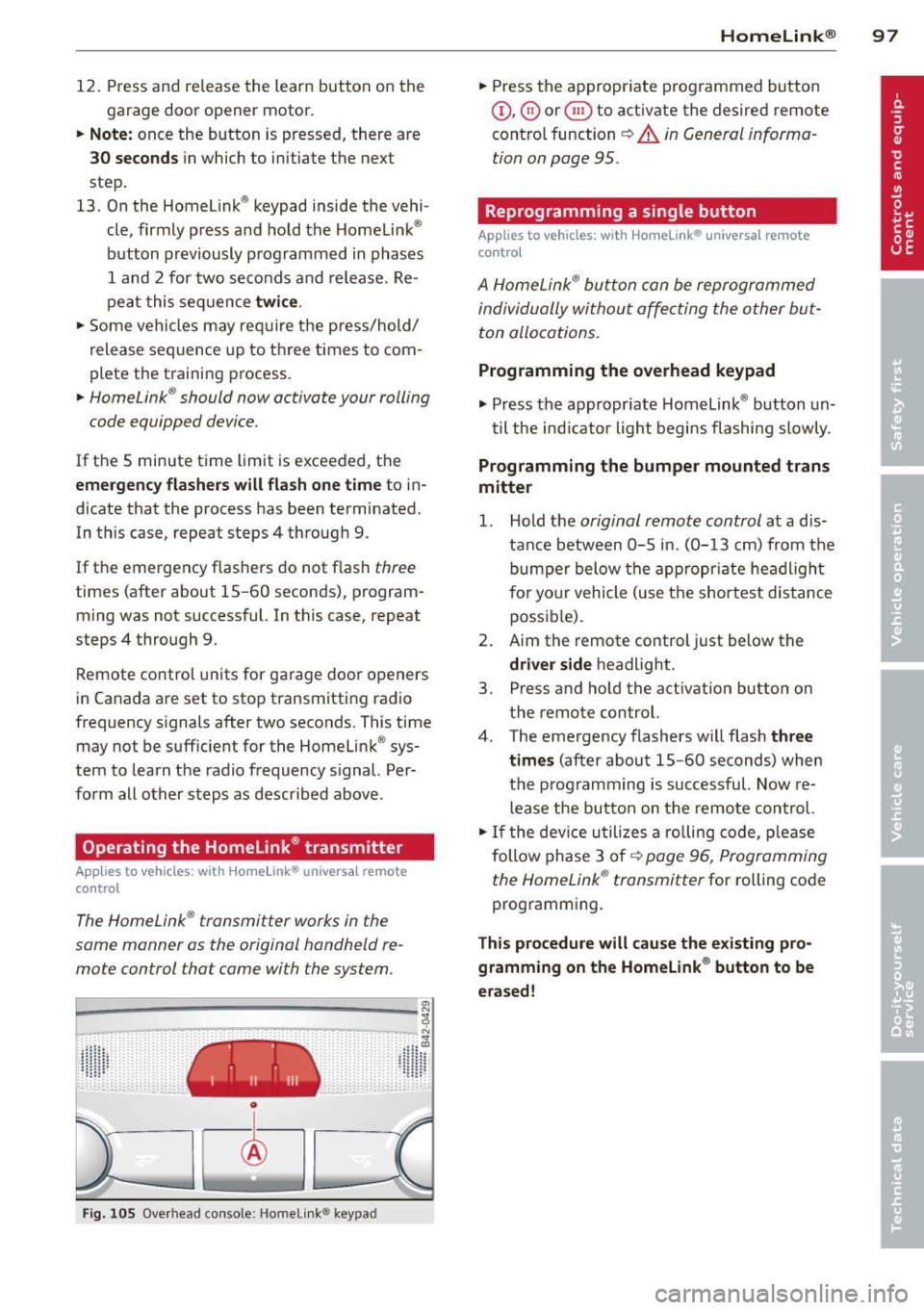
Fi g. 105 Overhead co nsole: Homelink ® keypad
"' ..
Iii~ ::: ~, ~:::
Homelink ® 97
.. Press the appropriate programmed button
Q),@) or @ to activate the desired remote
contro l function
~ A in General informa
tion on page 95 .
Reprogramming a single button
Applies to vehicles: with Hom elink ® univ ersal remote
contr ol
A HomeLink ® button can be reprogrammed
individually without affecting the other but
ton allocations.
Programming the overhead keypad
.. Press the appropr iate Homelink ® button un-
til the indicato r light begins flashing slowly.
Programming the bumper mounted trans
mitter
1. Hold the original remote control at a dis
tance between
0-5 in. (0-13 cm) from the
bumper below the appropriate headlight
for your vehicle (use the shortest distance
possible) .
2. Aim the remote control just below the
driver side headlight.
3. Press and hold the activation button on
the remote control.
4. The emergency flashers w ill flash
three
times
(after about 15 -60 seconds) when
the programming is successful. Now re
lease the button on the remote control.
.. If the device utilizes a rolling code, please
follow phase 3 of
c:> page 96, Programming
the Homelink ® transmitter
for rolling code
programming.
This procedure will cause the existing pro
gramming on the Homelink ® button to be
erased!
Page 100 of 244
98 Homelink®
Erasing the programming of the
Homelink® transmitter
Appl ies to vehicles: with Home Link® unive rsa l remote
co ntrol
When you erase the programming, the pro
gramming on all three of the transmitter channels with be lost!
., Perform steps 1 to 4 as described on
c> page 96, Phase 1: programming the over
head keypad .
When completed, the Homel ink ® system will
be in the programming mode and is then
ready to learn the codes for remote controlled
devices .
@ Tips
-Programmed buttons cannot be erased
individua lly.
- For security reasons you are advised to
erase the prog ramming of the Home
Link ® system before you sell your vehicle .
Page 113 of 244
-Always keep feet in the footwell in front
of the seat while the vehicle is being driv
en .
- Never let any person ride with feet on
the instrument panel or sticking out the
window or on the seat.
- Never remove a safety belt while the ve hicle is moving. Doing so will increase
your risk of being injured or killed .
- Never wear belts twisted.
- Never wear belts over rigid or breakable
objects in or on your clothing, such as
eye glasses, pens, keys, etc., as these
may cause injury.
- Never wear the shoulder part of the belt
under your arm or otherwise out of posi
t ion .
- Several layers of heavy clothing may in
terfere with correct positioning of belts
and reduce their effectiveness .
- Always keep belt buckles free of anything
that may prevent the buckle from latch
ing securely .
- Never use comfort clips or devices that
create slack in the shoulder belt. Howev
er, special clips may be required for the
correct use of some chi ld restraint sys
tems.
- Never allow safety belts to become dam
aged by being caught in door or seat
hardware.
- Torn or frayed safety belts can tear and
damaged belt hardware can break in an
accident. Inspect belts regularly.
If web
bing, bindings, buckles, or retractors are
damaged, have belts replaced by an au
thorized Audi dea ler or qualified work
shop.
- Safety belts that have been worn and
loaded in an accident must be replaced
with the correct replacement safety belt
by an authorized Audi dealer or qualified
workshop . Replacement may be necessa
ry even if damage cannot be clearly seen.
Anchorages that were loaded must also
be inspected .
- Never remove, modify, disassemble, or
try to repair the safety belts yourself.
Safety belts 111
-Always keep the belts clean. Dirty belts
may not work properly and can impair
the function of the inertia reel
c:> page 168, Safety belts .
Illustrating the
principle of an accident
Frontal collisions and the law of physics
Frontal crashes create very strong forces for
p eople riding in vehicles .
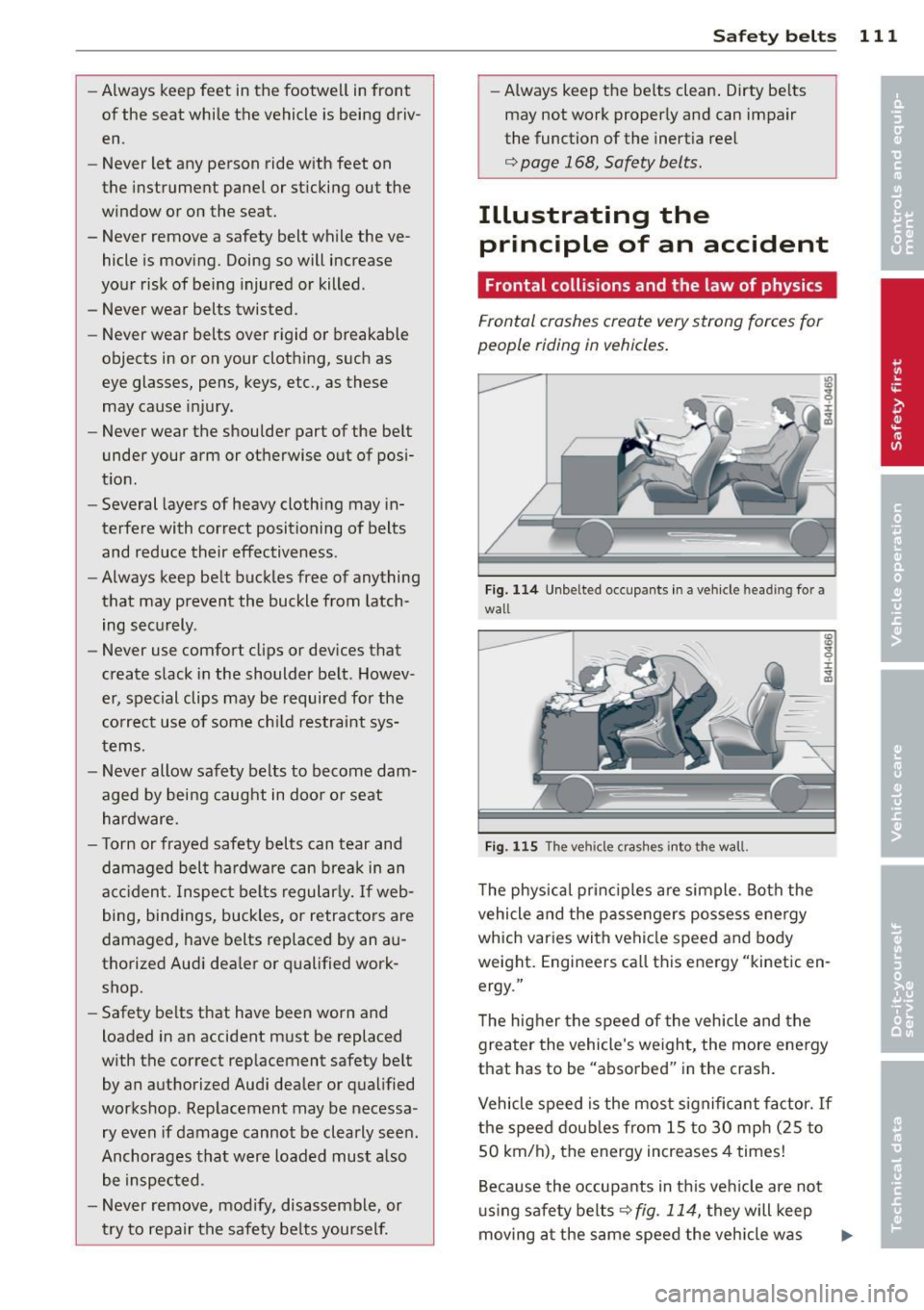
Fig. 114 Unbelted occupants in a vehicle heading for a
wa ll
Fig. 11S The ve hicle c rashes in to the wal l.
The physical principles are simple. Both the
vehicle and the passengers possess energy
which vari es with vehicle speed and body
weight. Eng ineers call this energy "k inetic en
ergy."
The higher the speed of the vehicle and the
greater the vehicle's weight, the more energy
that has to be "absorbed" in the crash.
Vehicle speed is the most significant factor.
If
the speed doubles from 15 to 30 mph (25 to
50 km/h), the energy increases 4 times!
Because the occupants in this vehicle are not
using safety belts
c:>fig . 114, they will keep
moving at the same speed the veh icle was .,,_
Page 115 of 244
.. Hold the be lt by the tongue and pull it even
l y across the chest and pelvis
c::> &_.
.. Insert the tongue into the correct buckle of
your seat until you hear it latch securely
c::>fig. 118.
.. Pull on the belt to make sure that it is se-
c u rely latched in the buckle.
Automatic safety belt retracto rs
Every safety belt is equipped with an automat
ic belt retractor on the shoulder belt. This fea
ture locks the belt when the belt is pulled out
fast, dur ing hard braking and in an accident.
The belt may also lock when you drive up or
down a steep hill or through a sharp curve.
During normal driving the belt let s you move
freely.
Switchable locking feature
Every safety belt except the one on the driver
seat is equ ipped w ith a switchable locking fea
ture that
must be used w hen the safety belt is
used to atta ch a chi ld seat. Be sure to read the
i mportant information about this fea ture
c::> page 146.
A WARNING
Imprope rly positioned safety belts can
cause serious injury in an accident
c::> page 113, Safety belt position.
- Safety belts offer optimum protection
only when the seatback is upright and
belts are properly positioned on the
body.
-
- Never attach the safety belt to the buck
le for another seat. Attach ing the belt to
the wrong buckle w ill reduce safety belt
effect iveness and can cause serious per
sonal inj ury.
- A passenger who is not properly restrain
ed can be seriously in jured by the safety
belt itself whe n it moves from the stron
ger parts of the body into c ritical a reas
like the abdomen.
- Always lock the convert ible lock ing re
tra ctor when yo u are secur ing a chi ld
sea t in the vehicle
c::> page 148.
Safety belts 113
@ Tips
Depending on veh icle equipment, micro
phones * are located on the safety be lt to
i mprove hands-free call quality. For addi
tional information about safety belt m icro
phones, refer to the infotainment system
owner's manual.
Safety belt position
Correct belt position is the key to getting
maximum protection from safety belts.
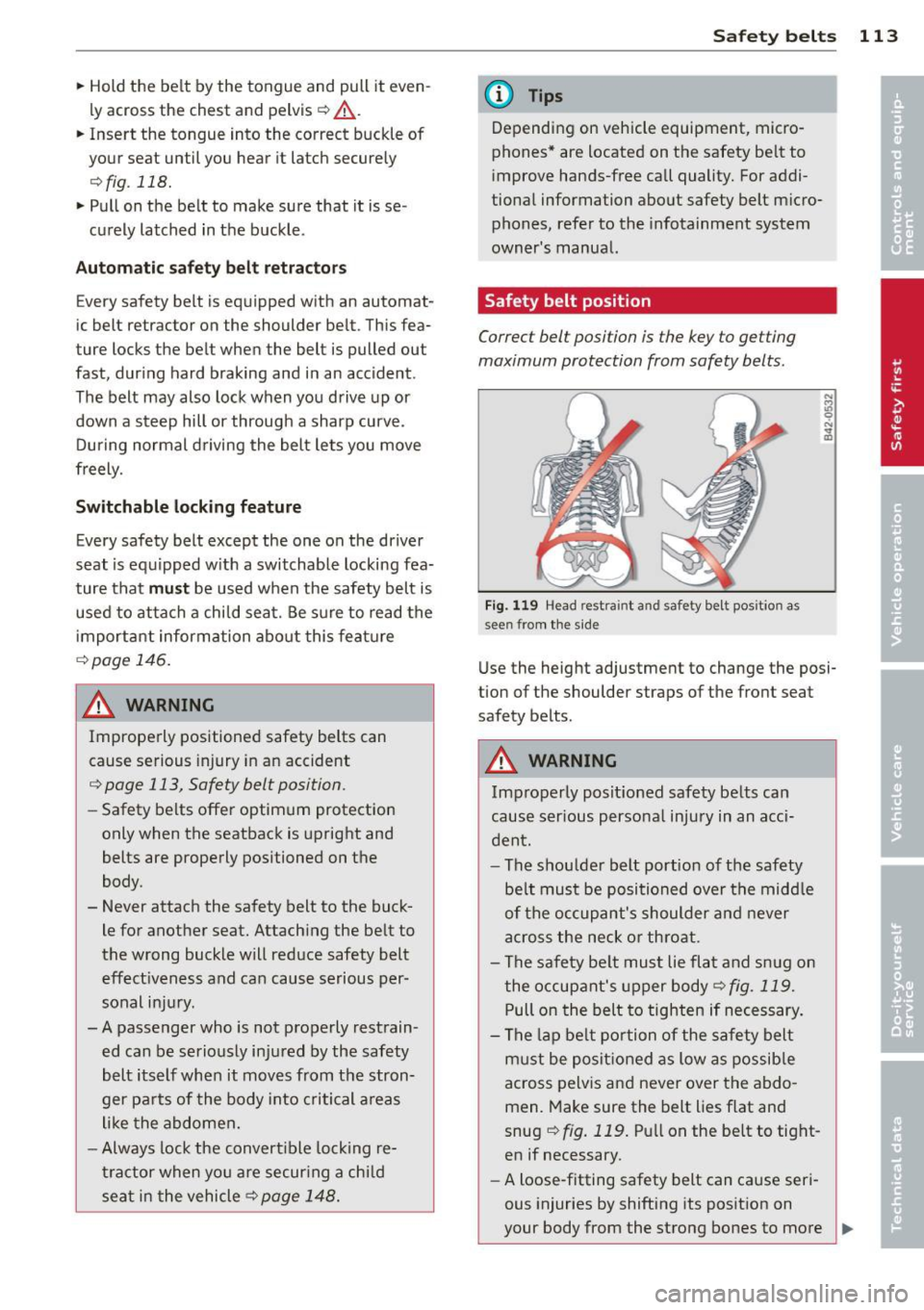
Fi g. 119 Head restraint and safety belt position as
seen from the side
"' ra q
"' ., m
Use the height adjustment to change the posi
tion of the shoulder straps of the front seat
safety belts.
A WARNING
Imp roperly posit ioned safety belts can
cause ser ious persona l inju ry in an acci-
dent.
- The s houlder belt portion of the safety
be lt must be positioned over the midd le
of the occupant's shoulder and never
across the neck o r throat.
- The safe ty be lt mus t lie flat and snug on
the occupant's upper body
c::>fig. 119.
Pull on the belt to tighten if necessary.
-
- The lap be lt po rtion of the safety belt
m ust be posit ioned as low as possib le
across pelvis and never over the abdo
men. Make sure the belt lies flat and
snug
r:!) fig. 119. Pu ll on the belt to tight
en if necessary.
- A loose-f itting safety belt can ca use seri
ous injuries by shifting its posit ion on
your body from the strong bones to more
~
Page 158 of 244
156 Intelligent technology
Dynamic energy management
While the veh icle is be ing driven , dynamic en
e rgy management distributes the energy gen
erated according to the needs of the individu
a l components . It regu lates consumption, so
that more electrical energy is not being used
than is being generated and ensures an opti mal state of charge for the battery .
(D Tips
- But even energy management cannot
negate the limits of physics. Consider
that the power and life of a battery are li mited .
- If starting ab ility is threatened, you are
i nformed by a warn ing
<=> page 156,
Driver notification in the instrument
cluster display .
What you should know
The highest priority is given to maintaining
starting capability.
The battery is severely taxed in short-distance
driving, in city traffic and during the cold time
of year. Abu ndant electr ical energy is re
qu ired, but only a little is generated . It is also
cr itical if the engine is not running and elect ri
cal components are turned on. In th is in
stance energy is being consumed but none is
being generated .
It is in precisely these situations that you w ill
notice energy management actively regulat
ing the distrib ution of energy .
Vehicle stands for an extended period
If you do not drive your vehicle over a period
of severa l days or weeks, elect rical compo
nents are gradually cut back o r switched off .
This reduces energy consumption and main
tains starting capabi lity over a longer period.
Take into considerat ion that when you un lock
your vehi cle, some convenience functions,
such as the remote key or power seat adjust
ment, may not be available. The convenience
functions will be available again when you
turn on the ignition and start the engine. With the
engine turned off
If you listen to the radio, for examp le, w ith
the engine turned off, the battery is being dis
charged.
If starting capability is jeopardized due to en
ergy consumption , a message appea rs in the
driver information display.
You have to start the engine to charge the batte ry.
With the engine running
Although electrical energy is generated when
the vehicle is being driven, the battery can be
come discharged. This happens mostly when
little energy is being gene rated and a great
deal consumed and the battery's state of
charge is not optimal.
To bring the energy balance back into equili
brium , consume rs which requ ire espec ially
large amounts of energy are temporar ily cut
back or sw itched off. Heating systems in par
ticu lar require a great deal of energy. If you
notice, for example, that the heated seats or
the heated rear window are not heating, they
have been temporarily cut back or switched
off . These systems will be available again as
soon as the ene rgy balance has been restored.
You wi ll also notice that engine id le speed has
been increased slightly . Th is is normal and not
a cause for concern. By increasing engine idle
speed the additional energy required is gene r
ated and the battery is charged .
Driver notification in the instrument
cluster display
If battery power drops into the range where it
can limit the ability of the engine to start, this
is shown in the instrument cluster display
with the following driver message:
(•i Low battery charge: battery will be
charged while driving
T h is not ificat io n r eminds you that the start ing
capability of the engine may be lim ited. As
soon as you start driving again, the battery .,..
Page 171 of 244
~ For cleaning, use a mild soap and water sol
u tion . Let be lts dry thoroughly and away
from direct sunlight.
~ Do not allow inertia reel safety be lts to re
tract before they are completely dry.
~ Check the condition of your safety belts reg
ularly .
A WARNING
Damaged safety belts can break in a crash.
- Anything that might damage your safety
belts could mean that you and your pas
sengers would not be adequately pro
tected in an accident.
- Safety belt performance depends on cor
rect installation. Never remove belts
from the vehicle to clean them.
- Do not use chemical cleaning agents,
bleach or dyes. They have corrosive prop
erties which weaken the webbing.
- When cleaning your safety belts, inspect
them for damage . If you discover dam
age, see your authorized Audi dealer.
- Always read and heed all WARNINGS and
the information
<=? page 161.
Engine compartment
Be especially careful when cleaning the en
gine compartment.
Corrosion protection
The engine compartment and transmission
have been corrosion -protected at the factory .
Good anti-corrosion treatment is very impor
tant, particularly in the winter. If the vehicle
is frequently driven on salt treated roads, the
entire engine compartment and plenum panel
should be thoroughly cleaned at the end of
winter and retreated to prevent salt damage. At the same time, the underside of the vehicle
should be washed as well.
If the engine compartment is cleaned at any
time with grease removing solutions
1>, or if
l) Use only the correc t cleaning sol utio ns. Never use gas
oline or diesel fuel.
Cleaning and protection 169
you have the engine washed, the anti-corro
sion treatment is almost always removed as
well. It is therefore essential to have a long
lasting corrosion protection reapplied to all
surfaces, seams, joints and components in the
engine compartment.
A WARNING
Be aware: The engine compartment of any
motor vehicle is a potentially hazardous
area.
- Before working in the engine compart
ment, be sure to read the information
<=? page 175.
-Before reaching into the front plenum
panel, always remove the ignition key.
Otherwise, the windshield wiper system
could unintentionally be switched on,
possibly causing persona l injury from the
moving wiper linkage.
- Never reach into the area around or
touch the radiator fan. The auxiliary fan is temperature controlled and can switch
on suddenly -even when the ignition is
off.
- Do not wash, wax or dry the engine with
the engine running. Moving or hot parts
could injure you.
- Do not clean the underside of the chas
sis, fenders, wheel covers, or other hard
to reach parts without protecting your
hands and arms . You may cut yourself on
sharp-edged metal parts.
- Always read and heed all WARNINGS and
other information
<=?page 161.
•
•
Page 177 of 244
Checking and filling Engine compartment
lid
Relea sing the engine compartment lid
The engi ne compartment lid is released from
inside the vehicle.
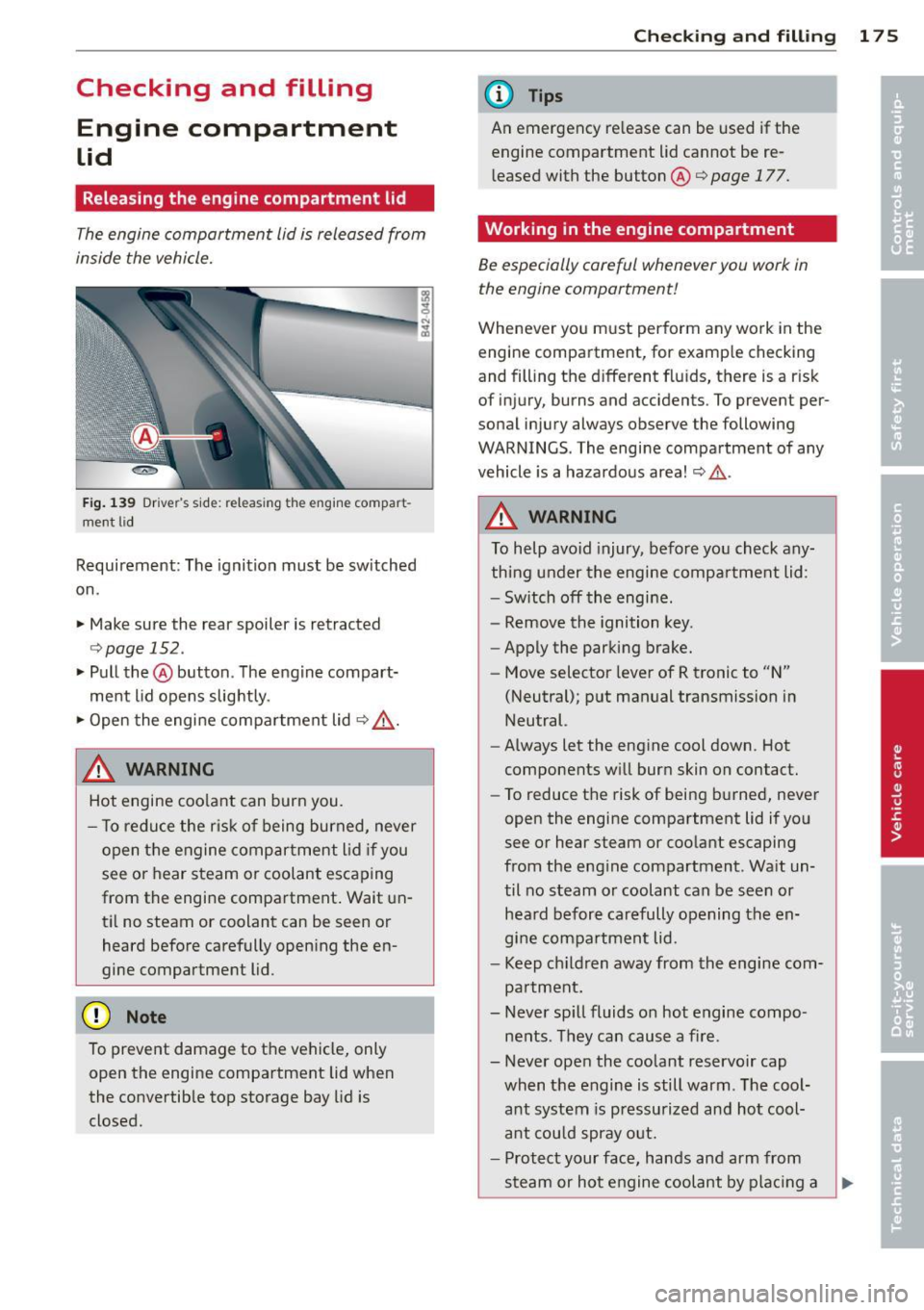
F ig . 139 Dr ive r's side: releasing the engine compart
ment lid
Requi rement: The ignition must be switched
on.
• Make sure the rear spoiler is retracted
9page 152.
• Pull the@ button. The engine compart
ment lid opens slightly.
• Open the engine compartment lid
9 .&,.
_& WARNING
Hot engine coolant can burn you.
- To redu ce the r isk of being burned, never
open the engine compartment lid if you
see or hear steam or coolant escaping
from the engine compartment . Wait un
ti l no steam or coolant can be seen or
heard before carefully opening the en
gine compartment lid .
(D Note
To prevent damage to t he vehicle, only
open the engine compartment lid when
the convertib le top storage bay lid is
closed.
Checkin g and fillin g 175
@ Tips
An emergency release can be used if the
engine compartment lid cannot be re- l eased with the button @
i:> page 177.
Working in the engine compartment
Be especially careful whenever you work in
the engine compartment!
Whenever you must perform any work in the
engine compartment, for example checking
and filling the d ifferent flu ids, there is a risk
of in jury, burns and accidents . To prevent per
sonal injury always observe the following
WARNINGS . The engine compartment of any
vehicle is a hazardous area'
i:> A .
_& WARNING ,.;;
To help avoid injury, before you check any
thing under the engine compa rtment lid:
- Sw itch off the engine.
- Remove the ignition key.
- Apply the parking brake.
- Move selector lever of R tronic to "N"
(Neutral); p ut manual transmission in
Neutral.
- Always let the eng ine cool down. Hot
components w ill burn skin on contact.
- To reduce the risk of being b urned, never
open the engine compartment lid if you
see or hear steam or coo lant escaping
from the eng ine compartment. Wa it un
til no steam or coolant can be seen or
hea rd before carefully opening the en
gine compa rtment lid.
- Keep ch ild ren away from the engine com
pa rtment.
- Never sp ill fluids o n hot engine compo
nents. T hey can cause a fi re .
- Never open the coolant reservoir cap
when the engine is still warm. The cool
ant system is pressurized and hot cool
ant cou ld spray o ut.
- Protect your face, hands and arm from
steam or hot e ngine coolant by plac ing a ""
Page 212 of 244
210 Consum er Inf orm ati on
steadi ly reduced the scope of maintenance
and repairs which can be carried out by vehicle
owners.
Als o, sa fe ty a nd en vir onm ent al con
cerns p lace very strict limits on the nature of
repairs and adjustments to engine and trans
miss ion parts which an owner can perform .
Maintenance, adjustments and repa irs usua lly
require special tools, testing devices and oth
er equipment available to specially trained
workshop personnel in order to assure proper pe rformance, reliab ility and safety of the vehi
cle and its many systems .
Improper maintenance, adjustments and re pa irs can impair the operation and reliab ility
of your vehicle and even void your vehicle war
ranty. Therefore , proof of servic ing in accord
ance w ith the ma intenance schedule may be a
condition for upholding a poss ible warranty
claim made within the warranty period.
Above all, operational safety can be adversely
affected, c reating unnecessary risks for you
and your passengers .
If in doubt about any se rv icing, have it done
by your author ized Audi dealer or any other
p roperly equipped and qualified workshop .
We strong ly urge you to give yo ur a utho rized
Aud i dealer the opportunity to perfo rm all
schedu led maintenance and necessary repairs.
Your dea ler has the facilities, original parts
and trained spec ialists to keep your vehicle
running properly .
Performing limit ed ma int enance your self
The following pages describe a limited num
ber of proced ures which can be performed on
your ve hicle with ordinary too ls, shou ld the
need arise and trained personnel be unavaila
ble. Before performing any of these proce
dures, always thoroughly read all of the app li
cable text and carefully follow the instruc
tions given . Always rigorously observe the
WARNINGS p rovided.
Before you ch eck a nything in th e eng ine
co mpartm ent , alwa ys re ad and h eed all
WA RNINGS
c::> .&. and c::> ..&. in Working in the
engine compartment on page 175.
A WARNING
- Serious personal injury may occur as a re
sult of improperly performed mainte
nance, adjustments or repa irs .
- Always be extremely careful when work
ing on the vehicle . Always follow com
monly accepted safety pract ices and gen
eral common sense. Never r is k personal
injury.
- Do not attempt any of the maintenance ,
checks or repairs descr ibed on the fol
lowing pages if you are not fu lly fam iliar
with these or other procedures with re
spect to the vehicle, or are uncertain how
to proceed .
- Do not do any work without the proper
too ls and equipment. Have the necessa ry
work done by your authorized A udi deal
er or another proper ly equipped and
qualified workshop.
- Always remove the ignition key before
anyone gets under the veh icle.
- Always support your veh icle with safety
stands if it is necessary to work under neath the vehicle . The jack* is not ade
quate for this purpose and cou ld collapse
causing ser ious personal inju ry.
- If you must work underneath the vehicle
with the wheels on the ground, a lways
make sure the vehicle is on level ground,
that the wheels a re a lways secure ly
b locked and that t he engine cannot be
started.
- Always make sure the transmission se
lec to r l ever is in "N" (Neut ral) (R t ron ic)
or Neutral (manual transmission) and
the hand bra ke is f irmly app lied.
@ For the sake of the environment
- Changing the engine sett ings will ad
verse ly affect emission leve ls. Th is is det
r imental to the environment and increas
es fuel consumpt ion .
- Always observe environmenta l regu la
tions when disposing of old eng ine oil,
used brake flu id, dirty engine coo lant,
spent batte ries o r worn out tires.