light AUDI R8 SPYDER 2014 Owners Manual
[x] Cancel search | Manufacturer: AUDI, Model Year: 2014, Model line: R8 SPYDER, Model: AUDI R8 SPYDER 2014Pages: 244, PDF Size: 61.06 MB
Page 197 of 244
A WARNING
-Incorrect tire pressures and/or underin
flation can lead to a serious or fatal acci
dent .
- Incorrect tire pressures and/or underin
flation cause increased tire wear and can
affect the handling of the vehicle.
- Incorrect tire pressures and/or underin
flation can also lead to sudden tire fa il
ure, including a blowout and sudden de
flation, causing loss of vehicle control.
Checking tire pressure
The correct tire pressure for the tires original
ly installed on your vehicle is listed on the tire
pressure label located on driver's side 8-pil lar.
The recommended t ire pressures are on the
tire pressure labe l and in the tab le
¢ page 193, Cold tire inflation pressure . This
means that the pressure must be checked and
ad justed when the tire has not been driven for
more than a couple of m iles (kilometers) at
low speeds during the previous three hours.
Air in the tires expands when the tire heats up
as a result of internal fr iction as it flexes in
use. The tire pressure is higher when the tire
has warmed up than when it is "cold".
It is the inflation pressure in a "cold" tire that
counts. Therefore, you should never let air out
of a warm t ire to match "Cold tire inflation
pressure" recommendations
¢ page 193. The
tires would then be under inflated and could
fa il suddenly.
The tire pressure label on your Audi lists the recommended cold t ire inflat ion pressures for
the new, or iginal equipment tires that were
on you r vehicle at the t ime it was manufac
tured. For the location of the label
¢page 193, fig. 149.
Most tires lose a ir naturally over time. They
can also lose some a ir if you dr ive over a pot
h ole o r hi t a curb while pa rking. It is usua lly
not possib le to see whether the radia l tires
Tire s an d wheel s 195
used today are underinflated just by looking
at them .
T he refore, be su re to check t ire p ress ures at
least once a month and a lways befo re going
on a long trip . Make s ure to take the number
of peop le and the amount of luggage into ac
count when adjusting tire pressure for a trip -
even one that yo u wou ld not consider to be
"long". See
¢ page 196, Tires and vehicle
load limits
for more important information .
A lways use an accurate tire pressure gauge
when checking and adjusting inflation pres
sures. Check all of the tires. If the pressure in
any tire is too high when the tire is "cold", let
a ir out of the tire slowly with the edge of the
tire gauge and keep checking the pressure un
ti l you reach the pressure that is co rrect fo r
the load (passenge rs and luggage) and kind of
driv ing you plan to do .
If the pressure in any tire is too low, note the
difference between the p ressure in the cold
t ir e and the pressure you need and add the air
that you need to reach the correct pressure for
the vehicle load (passengers and luggage) for
the tires on your vehicle as listed on the on
your vehicle and in this man ua l and the kind
of driving you plan to do .
Never e xceed the m ax imum infl ation pre s
sure listed on the tire side wall f or an y re a
s on .
Remember that the vehicle manufacturer, not
the tire manufact urer, determines the cor rect
tire p ress ure for the tires on your ve hicle .
I t i s important to check the t ire press ure when
the tires are co ld .
- Read the required tire pressure from the t ire
p ressure labe l located on drive r's side B-pil
lar.
- Tu rn the va lve stem cap counter-clockw ise
to remove it from the t ire va lve.
- Place the a ir p ressure gauge on the va lve .
- The tire pressures should only be checked and ad justed when the tires are cold . The
slightly raised pressures of warm tires must
no t be reduced. .,. •
•
Page 209 of 244
illuminates, you should stop and check your
tires as soon as possible, and inflate them to
the proper pressure. Driving on a significantly under- inflated tire causes the tire to overheat
and can lead to tire failure. Under-inflation a l
so reduces fuel efficiency and tire tread life,
and may affect the ve hicle's handling and
stopping ab ility .
Please note that the TPMS is not a substitute
for proper t ire maintenance, and it is the dr iv
e r' s responsib ility to ma inta in correct t ire
p ressure, even if under- inflation has not
reac hed the level to t rigge r illumination of the
TPMS low tire pressure telltale .
Your veh icle has also been equ ipped with a
TPMS malfunction indicator to indicate when
the system is not operating properly. The
TPMS malfunction indi cato r i s combined wi th
the low ti re pressure tell ta le . When the sys
tem detec ts a malf unction, the te lltale will
flash for approximately one minute and t hen
remain cont inuo usly illuminated. This se
quence will continue upon subsequent vehicle
start-ups as long as the malfunction ex ists.
When the malfunctio n indicator is ill uminat
ed, the system may not be able to detect or
signal low t ire pressure as intended . TPMS
malfunct ions may occur for a variety of rea
sons, includi ng the installat io n of rep lace
ment or alternate tires o r wheels on the veh i
cle that prevent the TPMS from funct ion ing
p roperly . Always chec k the TPMS malfunct ion
t ellt ale after replacing one o r more t ires or
wheels on your veh icle to ensure that the re
p lacement or a lternate tires and wheels allow
the TPMS to continue to function properly .
Introduction
T he tire pressure monitoring system monitors
oir pressure in all four road wheels while the
vehicle is moving .
As soon as the tire pressure monitoring sys
tem senses a significant loss of air pressure in
one or several ti res, text messages and yellow
symbo ls appear in the instr ument cluster d is
p lay to alert the driver. T he
RE warning light
Tire s an d wheel s 207
in the instrument cluster comes on when the
tire is significant ly underinflated .
T he wa rni ng lig ht
RE also ill umi nates in the
case of a system malfun ct ion.
Be awa re that t ire pr essure is a lso dependent
o n the tempe ratu re of the t ire. For eve ry 18 ° F
(10 °C) incre ase in tire temper ature, tire pres
s ur e increases by about 1.5 psi (0 .1 bar). The
ti re warms up while the vehicle is moving and
tire press ure rises . So you sho uld ad just tire
pressure only when they a re
cold, when the
temperature of the tires is ro ughly the same
as the ambient a ir temperature.
In order to keep the tire p ress ure monitoring
system p roperly ca librated, t ire pressu re on
a ll four tires sho uld be checked at regu lar in
terva ls.
The tire pressure is shown on the label located
on the dr iver's side B-pillar (v is ible when the
door is open).
A WARNING
When t he tire pressure mo nitoring system
war ning light is lit, one o r more of your
tires is s ignificantly under-infla ted . You
should stop and check you r tires as soon as
possib le, and in flate t hem to the proper
p re ssur e a s in di cate d on the ve hicle's tir e
press ure label
¢page 19 3. D riving on a
significantly under -inflated ti re causes the
tire to over heat and can lead to tire failure.
Under-inflat ion also is like ly to impair the
vehicle's handling and stopping ab ility.
@ For the sake of the environment
D riving wit h un der -inflated tires red uces
fuel efficiency an d tire t read life.
(D Tips
- Ea ch tire should be chec ked monthly
w hen the temperature of the tires is
about the same as ambient a ir tempera
t u re and set to the recommended infla
tion press ure as specified on the tire
pressure label
¢ page 193.
•
•
Page 210 of 244

208 Tire s and whee ls
- The tire pressure monitoring system
helps the driver to keep an eye on tire
pressures. But the driver st ill has the re
sponsibility for maintaining the correct
tire pressure.
- Tire pressure must only be adjusted
when the temperature of the tires is
about the same as ambient air tempera
ture.
- When tires are replaced, the sensors and
valves should not be exchanged . The
valve core, nut, valve sealing and seal
washer (rep lacement kit) needs to be re
placed. If necessary, the valve and the
whee l electronics have to be rep laced.
- The tire pressure monitoring system on
your Audi was calibrated us ing tires w ith
"RO" identification. We recommend us
ing these tires.
- If you should put different whee ls and
ti res on yo ur vehicle (e.g. w inter wheels
and tires), yo u m ust be certain that the
whee ls and tires are compatible with the
tire pressure monitoring system . Other
wise the system w ill reg ister a ma lf u nc
tion and a fault message will be d is
played . For more information, contact
your authorized Audi dealer .
- For Declaration of Compliance to United
States FCC and Industry Canada regula
tions ~
page 230 .
Programming a new set of tires
Applies to vehicles: with tire pressure monitoring system
When driving with a new set of ti res, you can
program them to the t ire pressure monitoring
system using the menu disp lay.
"'Turn the ign ition on .
"' Select the menu :
Set > Tir e pr essu re >
Wheel cha ng e.
"'Confirm that you wo uld like to begin the
programming process. The message
Wh eel
s en sors a re being in it ia lised. Thi s ma y ta ke
a fe w minut es ...
appears in the instrument
clus te r disp lay. You can switch between programmed tire sets
at any time without r einitializing the system .
(D Tips
-If the programm ing process was no t
completed s uccessfully, the message
Wheel senso rs could not be init ialised
appears in the disp lay and the 119;~, in
dicator light turns on. If this happens,
repeat the procedure.
- Do not store the tire pressure if there are snow chains on the tire.
' TPMS Tire pressure monitoring system
malfunction
A malfunction can have various causes .
If the (Bl warning light in the instrument clus
ter flashes for app roximate ly one minute and
then remains cont inuously illumin ated and
additionally the
lliiff1 symbol appears in the
display, the tire pressure monitor ing system is
not availab le . The text
Ti re pre ssure! S ystem
malfun ction
appears in the d isplay. This can
have various ca uses .
- A wheel sensor or other component may
have fai led.
- Dur ing init ialization the system has detect
ed more than 4 wheels on the vehicle, for
examp le w hile d riving next to anothe r ca r
w ith a t ire press ure monitoring system.
- Aud i rep lacement parts were not used .
- If snow cha ins are be ing used, system func -
tion can be compromised due to the sh ield
ing prope rties of the chains.
- The tire pressure mon itoring system may
not be ava ilab le because of a radio malfunc
tion.
- Transm itters w ith the same frequency, such
as radio headphones in the vehicle o r radio
equipment, can cause a temporary disrup
t ion of the system through excessive elec
tromagnetic fie lds .
- Eliminate the interference if yo u can and
then proceed as fo llows: T urn off the eng ine
for 20 minutes . Then drive another 10 mi
nutes .
If the warning light comes on again, ll-
Page 214 of 244
212 What do I do now?
Preliminary steps
Applies to vehicles: with T ire Mobility System
Some preliminary steps are necessary for tire
repair .
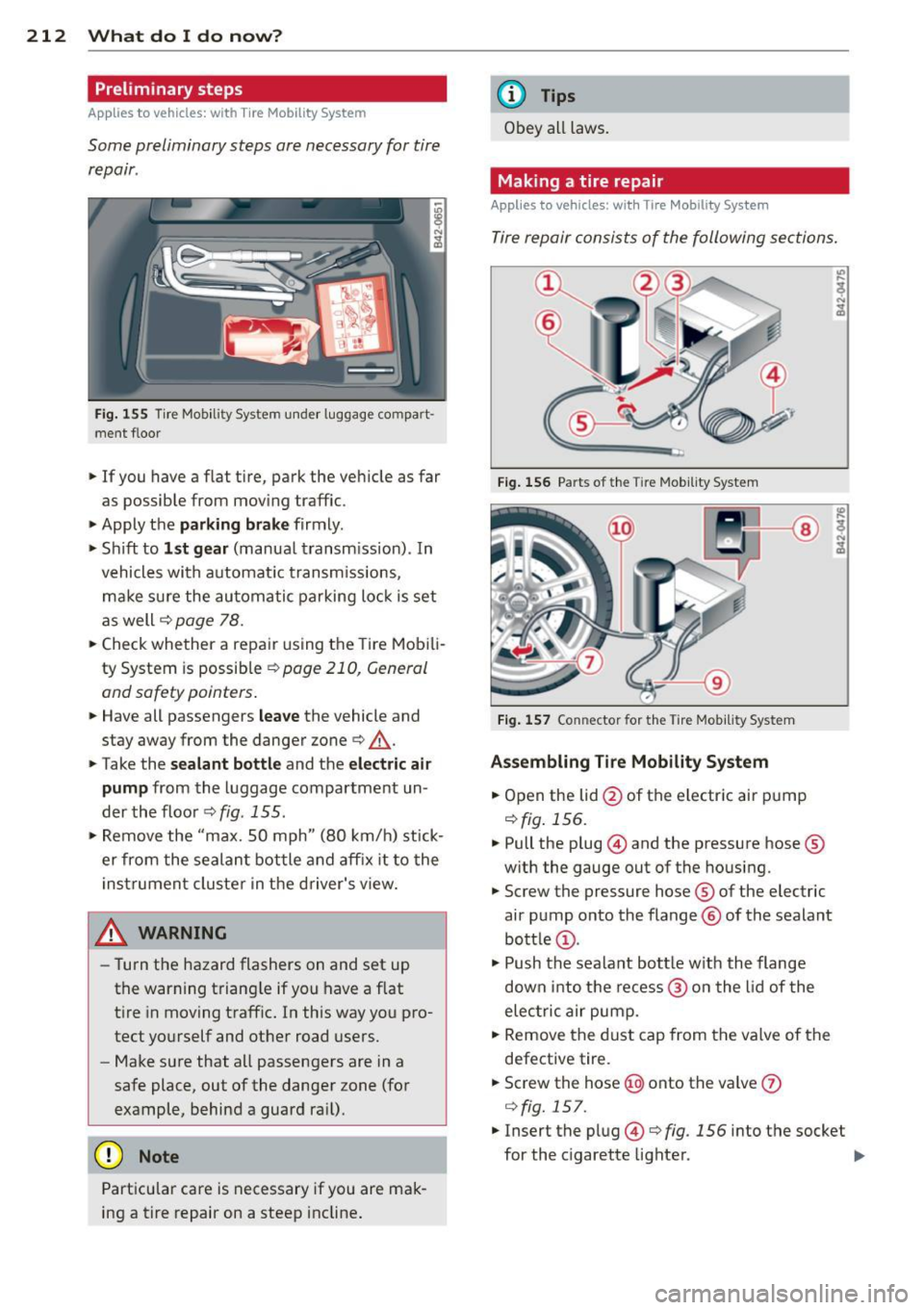
Fig. 155 Tire Mobili ty System under luggage co mpart
ment f loor
.,. If you have a flat tire, park the vehicle as far
as possible from mov ing traffic .
.,. Apply the
park ing brake firmly .
.,. Shift to
1st gear (manual transmission) . In
vehicles with a utomat ic transm iss ions,
make sure the automatic parking lock is set
as well
c::> page 78 .
.,. Check whether a repair using the Tire Mobili
ty System is possible
c::> page 210, General
and safety pointers .
.,. Have all passengers leave the vehicle and
stay away from the danger zone
c::> .&, .
.,. Take the sealant bottle and the electric air
pump from the luggage compartment un
der the floor
c::> fig. 155.
.,. Remove the "max. 50 mph" (80 km/h) stick
er from the sealant bottle and affix it to the
instrument cluster in the driver 's view.
A WARNING
- Turn the hazard flashers on and set up
the warning triangle if you have a flat
tire in moving traff ic. In this way you pro
tect you rs elf and other road users.
- Make sure that all passengers are in a
safe place, out of the danger zone (for
example, behind a guard ra il).
(D Note
Particular care is necessary if you are mak
ing a tire repair on a steep incline.
-
(D Tips
Obey all laws.
Making a tire repair
Applies to vehicles: with Tire Mobility System
Tire repair consists of the following sections.
Fig. 156 Parts of the Ti re Mobility System
Fig. 157 Conn ector for the Tire Mob i,lity System
Assembling Tire Mobility System
.,. Open the lid @of the electric air pump
c::> fig. 156 .
.,. Pull the plug© and the pressure hose ®
w ith the gauge out of the housing.
.,. Screw the pressure hose ® of the electric
air pump onto the flange @ of the sealant
bottle @.
.,. Push the sealant bott le w ith the flange
down into the recess @ on the lid of the
electric air pump.
.. Remove the dust cap from the valve of the
defective tire.
.. Screw the hose @onto the valve
(j)
c::>fig. 157.
.,. Insert the plug© c::> fig. 156 into the socket
for the cigarette lighter. .,,_
Page 215 of 244
Inflating tire
"' Move the switch @¢ fig. 157 on the elec
tric air pump
ll to posit ion I. After 5 mi
nutes, tire pressure must have reached at
l east 1.8 bar .
"' Switch the electric a ir pump off - switch in
position
0 . If the required tire pressure of at
least 1.8 bar has not been reached, follow
the instructions in the section
Re -inflating
tire .
Re-infl ating tire
"' Remove the hose from the valve and pu ll the
plug out of the socket.
"' Drive the vehicle slowly 10 meters backward
or forward. This helps to distribute the seal
ant better.
"' Remove the empty inflat ion bottle and
sc rew the hose ®¢
fig. 156 from the elec
tric pump directly onto the va lve.
"' Insert the plug @ into the socket for the
cigarette lighter .
"' Switch on the ignition.
"' Move the switch @¢
fig. 157 on the elec
tric a ir pump
l) to posit ion I. After 5 mi
nutes, t ire pressure must have reached at
least 1.8 bar.
"' Switch the electric a ir pump off - switch in
pos ition
0 . If the requ ired t ire pressu re of at
l east 1.8 ba r has not been reached, it is not
possible to make a repair with the tire seal
ant . Seek professional assistance .
Disassembling Tire Mobility System
"'Remove the hose from the valve and pu ll the
plug out of the soc ket.
"' Screw the dust c ap onto the va lve.
"' Place the empty sealant bottle back in the
o riginal packaging and clip it in p lace under
the floor so that no tire sealant can run out into the vehicle.
"' Start driving right away so that the sealant
is d istributed in the tire.
l ) The e lectr ic a ir pu mp sho uld never r un for lo nge r th an
6 m in utes .
What do I do now? 213
A WARNING
-Follow the manufacturer's safety instruc
tions on the decal for the air pump and
the sealant bottle.
- If a tire pressure of 1.8 bar cannot be
achieved after pumping for 5 minutes,
the t ire is too severe ly damaged . Do not
continue to dr ive.
- Seek professional ass istance if it is not
possible to repa ir the tire w ith the t ire
sealant.
(D Tips
- Do not operate the electric air pump for
more than 6 minu tes witho ut stopping,
otherwise it can overheat . When the a ir
pump has coo led down, you can continue
to use it.
- I f sea lant has escaped, allow it to dry,
t hen yo u can peel it off.
Final check
App lies to vehicl es: wi th Tire Mobility Sy stem
Aft er driv ing for a short distance, tire
pre ssure must be chec ked
"' After driving for about 10 min utes, stop and
check the tire pressure.
"' If tire pressure is st ill at least 1.3 bar, in
flate the tire to specified pressure (see dr iv
er's side B-pillar), drive to the next repa ir
shop and have the tire and the sealant bot
tle replaced .
"'I f ti re pressu re is less than 1.3 ba r, the t ire
is too severely damaged. Do not con tinue to
drive . See k professiona l assist ance.
A WARNING
=
If t ire press ure is less than 1.3 bar after
driving for 10 minutes, the tire is too se
verely damaged. Do not cont in ue to drive.
Seek professional ass istance.
-
•
•
Page 218 of 244
216 What do I do now?
Removing the wheel
.. Use the hexagonal socket in the screwdriv
er handle
to comp letely turn out the top
most wheel bolt and set it aside on a
clean
sur face .
.. Screw the threaded end of the
alignment
pin
from the tool kit hand-tight into the
now vacant bolt hole
o fig. 162.
.. Then completely unscrew the other wheel
bolts as described above .
.. Take off the wheel leav ing the alignment pin
in the bolt hole
o(D .
Putting on the wheel
.. Lift the spare wheel and carefully slide it
over the alignment pin to guide it in place
o@.
.. Use the hexagonal socket in the screwdr iver
handle to screw in and tighten all wheel
bolts
slightly .
.. Unscrew the alignment pin and insert and
tighten the remaining whee l bolt slig htly
like the rest.
.. Turn the jack handle counter-clockw ise to
lower the vehicle until the jack is fully re
leased .
The wheel bolts must be clean and turn easily.
Check the contact surfaces of wheel and hub. Remove contaminants on these surfaces be
fore installing the wheel.
The hexagonal socket in the screwdriver han
dle makes it easier to handle the wheel bolts.
The reversible blade should be removed.
When mounting
unidirectional tires, observe
the direction of rotation
o page 214.
«I) Note
When removing or installing the wheel,
the rim could hit the brake rotor/ceramic
brake rotor* and damage the rotor. Work
carefully an have a second perso n he lp
you .
1l You need the appropriate adapte r to tigh ten the anti
theft whee l bo lts
c:> page 214.
(D Tips
Never use the hexagonal socket in the han
dle of the screwdriver to loosen or tighten
the wheel bo lts.
Tightening wheel bolts
.. Fit the wheel bolt wrench over the wheel
bolt and push it down as far as it will go
ll.
.. Close your grip around the end of the
w rench handle for maximum torque and
turn each wheel bolt
clockwise until it sits
tight .
Have the
tightening torque of the wheel bolts
checked as soon as possible with a to rque
wrench. It should be 120 Nm .
Check the
tire pressure as soon as possible.
Return the veh icle tool k it to its proper place.
A WARNING ..,___
Loosening the wheel bolts is prohibited;
danger of an acc ident!
(D Tips
- Never try and use the hexagonal socket
in the handle of the screwdriver to loos
en or t ighten the wheel bo lts.
- If you have determined that wheel bolts are corroded and difficult to turn, the
bolts must be replaced before check ing
the torque .
- Until the t ightening torque is checked,
dr ive at reduced speeds as a precaution.
Notes on wheel change
-
Please read the information o page 199, New
tires and replacing tires and wheels,
if you are
go ing to use a spa re tire wh ich is different
from the tires on your vehicle.
After you change a tire:
Page 220 of 244

218 Wh at do I do now ?
-Vehicle batteries generate explos ive gas
es. Keep sparks, flame and lighted ciga
rettes away from batteries.
- Do not try to jump start any vehicle with
a low acid level in the battery.
- The voltage of the booster battery must
also have a 12-Volt rating. The capacity
(Ah) of the booster battery should not be
lower than that of the discharged bat
tery. Use of batteries of different voltage or substant ially different "Ah" rating
may cause an explos ion and personal in
Jury.
- Never charge a frozen battery. Gas trap
ped in the ice may cause an explosion.
- Never charge or use a battery that has
been frozen. The battery case may have
be weakened.
- Use of batteries of different voltage or
substant ially different capacity (Ah) rat
ing may cause an explosion and injury.
T he capacity (Ah) of the booster battery
should not be lower than that of the dis
charged battery.
- Before yo u check anything in the engine
compartment, always read and heed all
WARNINGS ¢
page 172, Working in the
engine compartment.
(D Note
- Applying a higher vo ltage booster bat
tery wi ll ca use expensive damage to sen
sitive electronic components, s uch as
control units, relays, radio, etc.
- There m ust be no e lectrica l contact be
tween the vehicles as otherwise current
could already start to flow as soon as the
positive(+) terminals are connected .
(0 Tips
-The discharged battery must be proper ly
connected to the vehicle's electrical sys
tem.
- Switch off any car phone, or follow the
car phone instructions for this situation.
Use of jumper cables
Make sure to connect the jumper cable
clamps in exactly the order described below!
F ig . 1 63 Luggage compartment: co nnectors for a
charge r and jump start cables
Fi g. 1 64 Jump start us ing the battery in a nother vehi
cle: A· Fema le socket, B • D isc harge
The battery is located in the luggage compart
ment¢
page 185. T he front lid can be opened
i n an emergency¢
page 34.
Do not connect the negative cable d irectly to
the negative term inal on the battery. Connect
it to a
jump st a rt pin instead ¢ fig. 163.
Connect the po sitive cable (red ) to the
positive terminal
1. Co nnect one end of the red jumper cable
¢
fig . 164 (!) to the positive terminal of
discharged battery @.
2 . Connect the other end of the red jumper
cable to the positive terminal @of the
booster battery @.
Connect the n egativ e cable (black ) to the
n egati ve terminal
3. Connect one end of the b lack jumper ca
ble @ to the negative terminal of the
booster battery @. .,.
Page 223 of 244
Fuses and bulbs
Electrical fuses
Replacing fuses
Fuses that have blown will have metal strips
that have burned through.
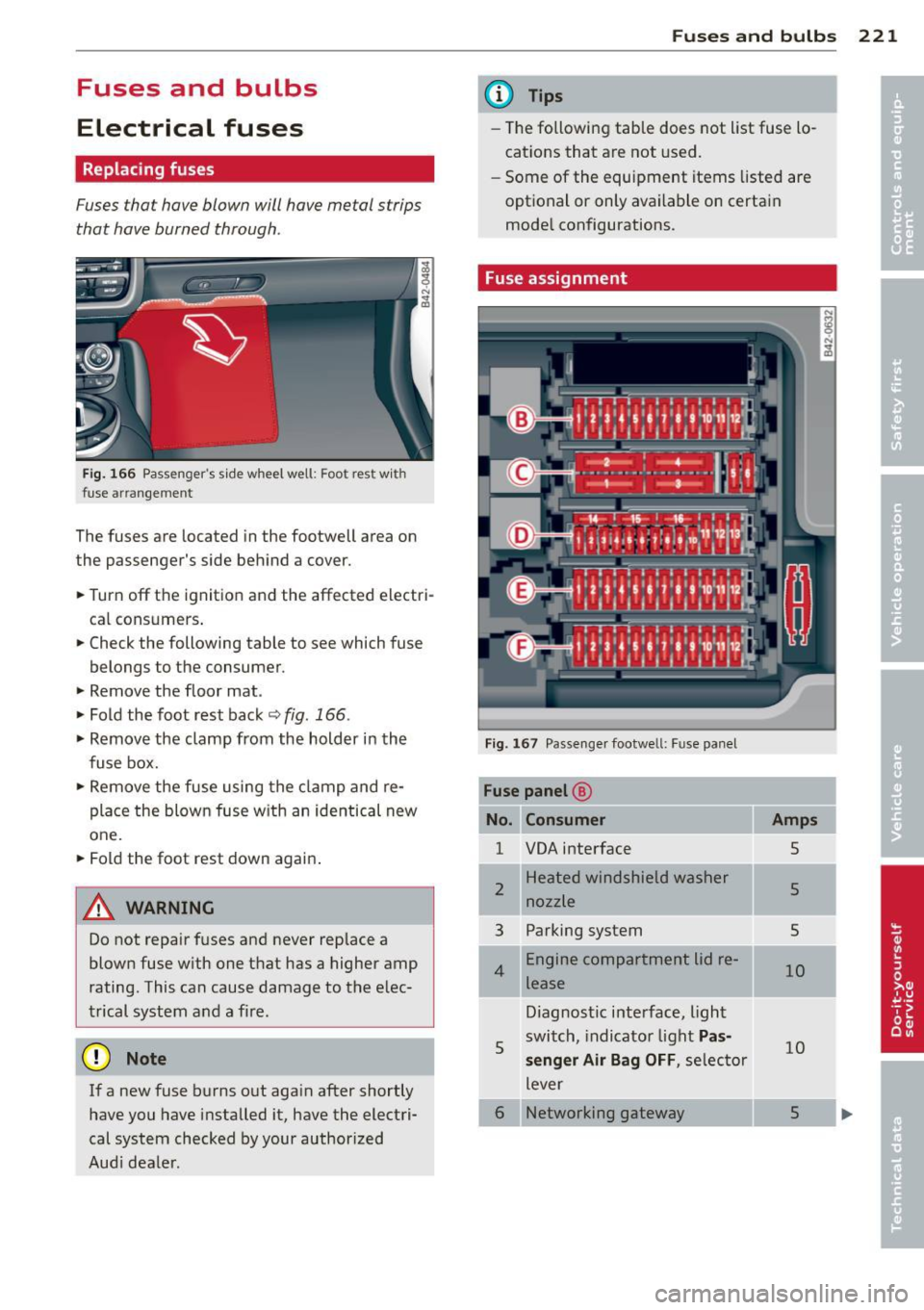
Fig. 166 Passenger 's s ide wheel well: Foot rest w ith
fuse arrangement
The fuses are located in the footwell area on
the passenger's side behind a cover.
• Turnoff the ignition and the affected electri
cal consumers .
• Check the following table to see which fuse
belongs to the consumer.
• Remove the floor mat .
• Fold the foot rest back
c::> fig. 166 .
• Remove the clamp from the holder in the
fuse box.
• Remove the fuse using the clamp and re
place the blown fuse w ith an identical new
one.
• Fold the foot rest down again .
A WARNING
Do not repair fuses and never replace a
blown fuse w ith one that has a higher amp
rating. This can cause damage to the e lec
trical system and a fire.
(D Note
If a new fuse burns o ut aga in after shortly
have you have installed it, have the electri
cal system checked by your author ized
Aud i dealer.
Fu se s and bulb s 221
@ Tips
-The following tab le does not list fuse lo
cat ions that a re not used.
- Some of the equipment items listed are
optional or only ava ilable on certain
mode l con figurations.
Fuse assignment
Fi g. 167 Passe nge r foo twell: Fuse panel
Fuse panel @
Consumer
1 VOA interface
2
3
4
s
H ea ted windshield washer
nozz le
Parking system
E ngine compartment lid re
lease
Diagnostic inte rface, light
switch, indicator light
Pa s
senger Air Bag OFF ,
selector
lever
6 Networking gateway
Amps
5
5
5
10
10
5
Page 224 of 244
222 Fuses and bulbs
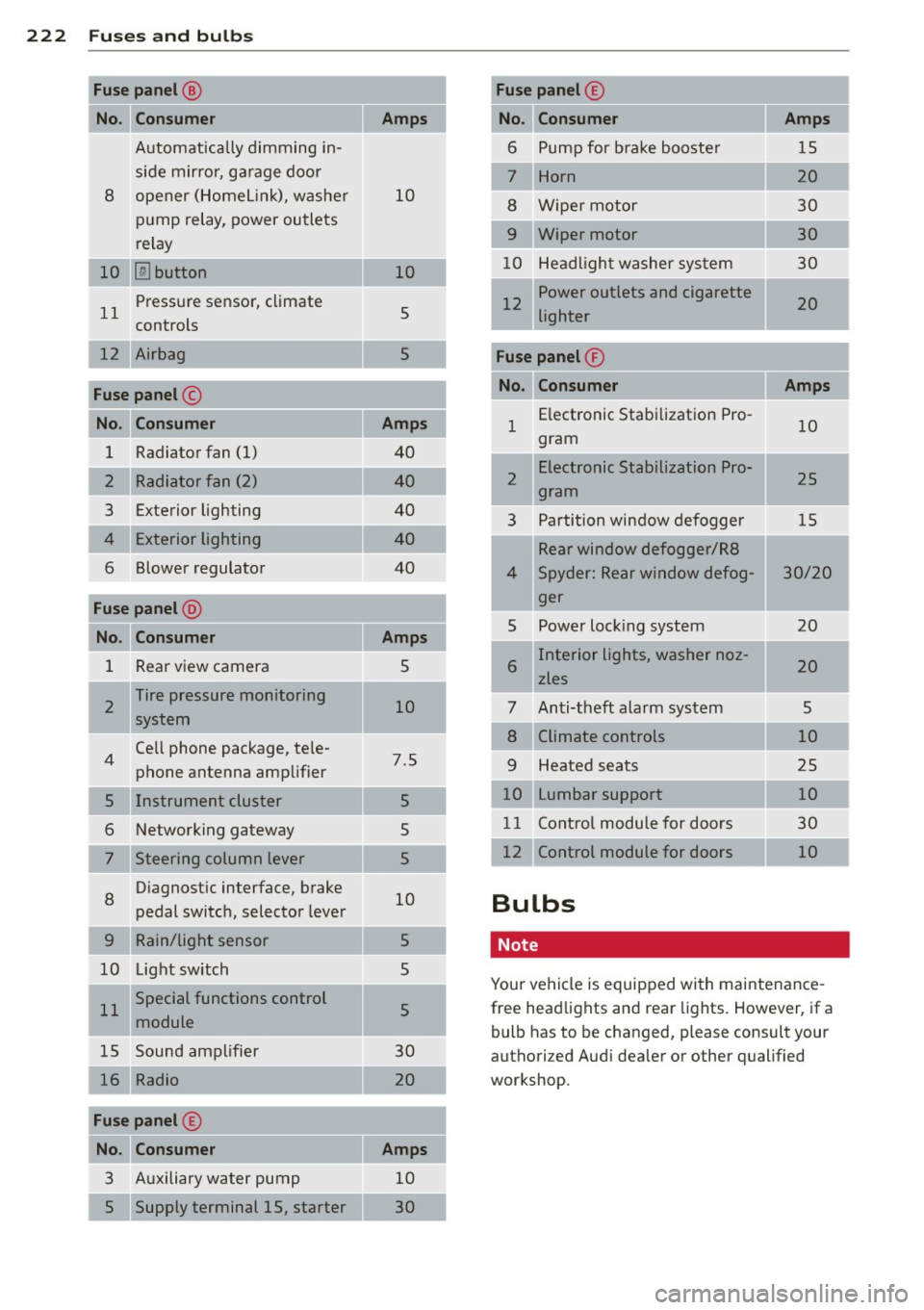
Fuse panel @
Consumer Amps
Automatically dimming in-
side mirror, garage door
8 opener (Homel
ink), washer
10
pump relay, power outlets
relay
10
[ru button 10
11 Pressure sensor, climate
5
controls
12 Airbag 5
Fuse panel@
No . II Consumer
II Amps
1 Radiator fan (1)
40
2 Radia
tor fan (2)
40
3 Exterior lighting
40
4 Exterior lighting 40
6 Blower regulator 40
Fuse panel@
No . II Consumer
II Amps
1 Rear view camera
5
2
Tire pressure monitoring
system 10
4 Cell phone package, te
le-
7.5
phone antenna amplifier
5 Instrument cluster 5
6 Networking gateway
5
7 Steering column lever 5
8 Diagnostic interface, brake
10
pedal switch, selector lever
9 Rain/light sensor 5
10 Light switch 5
11 Special functions control
5
module
15 Sound amplifier 30
Radio 20
Fuse panel E
No. Consumer Amps
3 Auxiliary water pump 10
5 Supply terminal 15, starter 30
Fuse panel @
No. Consumer Amps
6 Pump for brake booster 15
7 Horn
20
8 Wiper motor 30
9 Wiper motor
30
10 Headlight washer system 30
12 Power outlets and cigarette
20
lighter
Fuse panel ®
No. !!Consumer
ll Amps ,
1 E
lectronic Stabilization Pro -
10
gram
2 Electronic
Stabilization Pro-
25
gram
3 Partition window
defogger
15
Rear window defogger/RB
4 Spyder: Rear window defog- 30/20
ger
5 Power lock
ing system 20
6
Interior Lights, washer noz-20
zles
7 Anti-theft alarm system 5
8 Climate controls 10
9 Heated seats 25
10 Lumbar support 10
11 Control module for doors 30
12 Control module for doors
10
Bulbs
Note
Your vehicle is equipped with maintenance
free headlights and rear lights. However, if a
bulb has to be changed, please consult your
authorized Audi dealer or other qualified
workshop.
Page 233 of 244
A
A/C operation . . . . . . . . . . . . . . . . . . . . . . . 66
Accessories .. ... .. .. ...... .. .. .. .. .
229
Active ro llover protection system . .. .. . 101
Retract ing ro llover protection . .. .. .. . 102
Add ing
Engine coolant . ....... ... .. .. .. ...
183
Engine oi l .. .. ... ..... ... .. .. .. ... 180
Addit io nal accesso ries ...... .. .. .. .. . 229
Addit ives .. .. .. ........... .. .. .. ... 180
Ad justab le steer ing column . ... .. .. .... 68
Adj usti ng front seats ....... .. .. .. .. ..
57
Advanced Airbag System
Ch ildren . .. ............. .... .. .. .
133
Components .. ........... .. .. .. ... 117
Front airbags ............. ... ... .. 115
H ow the components work together . . 119
Moni toring . ................ ... ... 12 1
Weight-se nsing mat ...... .. .. .. .. . 133
Airbag
War ning/ indicator lights . .. .. .. .. .. ..
14
Airbag system . . . . . . . . . . . . . . . . . 111, 130
Ca re ... .. .. .. .... .. .... ... .. .. ... 124
Child restra ints ........... .... .. ... 134
Components (front airbags) .. .. .. .. . 117
Danger of fitting a child safety seat on
the front passenger seat ....... . ... .
1 12
D isposal . ................ ... ... .. 124
Fr ont airbags ............ .... .. ... 1 15
H ow do the front a irbags work? . .. .. . 120
H ow many airbags does my vehicle
have? ... .. .. .... .. .... ... .. .. ...
1 17
Important safety instructions on the
knee airbag system ....... .. .. .. .. .
128
Important things to know . . . . . . . . . . . 111
Indicator light ........... .. .. .. ... 121
Knee airbags . . . . . . . . . . . . . . . . . . . . . . 126
Mo nitor ing . ................ ... ... 12 1
PASSENGER AIR BAG OFF l ight .. ... .. 122
Repa irs .. .. ............. .... .. ... 124
Side airbags . . . . . . . . . . . . . . . . . . . . . . 128
When mus t the system be inspected? . 12 1
Air cond itioni ng
A/C operation . . . . . . . . . . . . . . . . . . . . . . 66
A ir dist ribution ........... .. .. .. ....
65
A ir r eci rcula tion mode ..... .. .. .. .. .. 66
Automatic mode . . . . . . . . . . . . . . . . . . . 66
Inde x 231
Controls . . . . . . . . . . . . . . . . . . . . . . . . . . 63
Defrost ... .. .. .... . ... ...... ... .. . 66
Econom ica l use . ... . .. ..... ... .. .. . 66
Fan ........ .. .. .................. 64
Rear window defogger . ............. . 67
Switching on and off ................ 64
T emperature ... .. .. . .. .... .... .. .. . 64
Air distribution . . . . . . . . . . . . . . . . . . . . . .
65
A ir recircu lation mode
Air condi tioning . . . . . . . . . . . . . . . . . . . . 66
All -wheel drive .. .. .. ..... ..........
149
Winter tires ..... .. ..... .......... 203
A lternator
refer to Generator . . . . . . . . . . . . . . . . . . 14
Anti-freeze
refer to Engine coolant sys tem ... .. .. 181
Anti- lock b rake system
Warning/ind icator lights .......... .. .
16
Anti- lock braking system ......... .... 144
Anti -slip reg ulation . .. ... .... ... .. .. 144
Anti-theft ala rm system ......... .... .. 34
Anti-theft whee l bolts ........... .... 214
Ashtray .. .. .. .. .. .... ........... .. . 60
Asterisk
What does it mean when something is marked w it h an aster isk? . . . . . . . . . . . . . . 5
Audi magnet ic r ide . . . . . . . . . . . . . . .
19, 75
Description .. .. .. .. ............... . 75
Indicator light . .. .... ... .... .... .. . 19
Audi Service Repair Manuals and Litera-
ture .. ... .. .. .... .. . .. .. ..... ... ..
227
A utoma tic belt re tractor 106
Automat ic car wash
refer to Washing . . . . . . . . . . . . . . . . . . 156
Automatic headlight .. .. ..... ... .. .. . 46
Automat ic transm iss io n .......... .. .. .
78
also refer to S tr onic (Automatic t rans
m1ss1on) . . . . . . . . . . . . . . . . . . . . . . . . . .
78
Automatic transm iss ion (S tronic)
Pa rking lock eme rgency release . . . . . . .
82
Automat ic transm iss ion (t iptronic)
Emergency mode . ................. .
81
Auto Sa fe ty Hot line . .. .. ..... ... .. .. . 99
Average fuel mileage ... .. ...... .... .. 21
Average speed ... .. .. .. .. .. .... ... .. . 21
Avoid damaging the vehicle ....... .. .. 153
•
•