ABS AUDI R8 SPYDER 2014 User Guide
[x] Cancel search | Manufacturer: AUDI, Model Year: 2014, Model line: R8 SPYDER, Model: AUDI R8 SPYDER 2014Pages: 244, PDF Size: 61.06 MB
Page 147 of 244
switched on all the time. In certain situations
when you need less traction, you can switch
off ESC by pressing the button
lru. Be sure to
switch ESC on again when you no longer need
less traction.
Anti-lock braking system (ABS)
ABS prevents the wheels from locking up
when braking . The vehicle can still be steered
even during hard braking . Apply steady pres
sure to the brake pedal. Do not pump the ped
al. A pulsing in the brake pedal indicates that
the system is helping you to brake the vehicle.
Brake assist system
The brake assist system can decrease braking
d istance. It increases braking power when the
driver presses the brake pedal quickly in emer
gency si tuations. You must press and hold the
brake pedal until the situation is over .
Anti-slip regulation (ASR)
ASR reduces engine power when the drive
wheels begin to spin and adapts the force to
the road condit ions. This makes it easier to
start, accelerate and drive up hills.
Electronic differential lock (EDL)
The EDL brakes wheels that are spinning and
transfers the drive power to the other drive
wheel or whee ls if the vehicle is equipped with
all-wheel drive*. This function is available up
to about 60 mph (100 km/h) .
In extreme cases, EDL automat ica lly switches
off to help keep the brake on the braked wheel
from overheating. EDL w ill switch on again au
tomatically when conditions have returned to
normal.
..&, WARNING
- ESC, ABS, ASR and EDL cannot overcome
th e laws of physics. This is especially im
portant on slippery or wet roads.
If the
systems begin acting to stabilize your ve
hicle, you should immediately change
yo ur speed to match the road and traffic
condit ions. Do not let the increased safe
ty provided by these systems tempt you
Intelligent technology 145
to take risks. Doing so will increase the
risk of a lo ss of vehicle control, co llision
and serious personal injuries.
- Always adapt your speed to road, traffic
and weather conditions. The risk of los
ing control of the vehicle increases when
driving too fast, especially through
curves and on slippery or wet roads, and
when driving too close to vehicles up
ahead. ESC, ABS, the brake assist sys
tem, EDL and ASR cannot prevent colli
sions.
- Always accelerate with special care on
even, smooth surfaces such as those that
are wet or covered with ice and snow.
The drive wheels can spin even with
these assistance systems that cannot al
ways he lp to reduce the risk of loss of ve
hicle control.
@ Tips
- ABS and ASR only work correct ly when
all four whee ls are equipped with identi
cal tires. D ifferent tire si zes can lead to a
reduction in engine power.
- You may hear noises when the systems
described are working.
- If the ind icator lightD] orE (USA
models)/ [iJ (Canada models) appears,
there may be a malfunction¢
page 16,
¢ page 15.
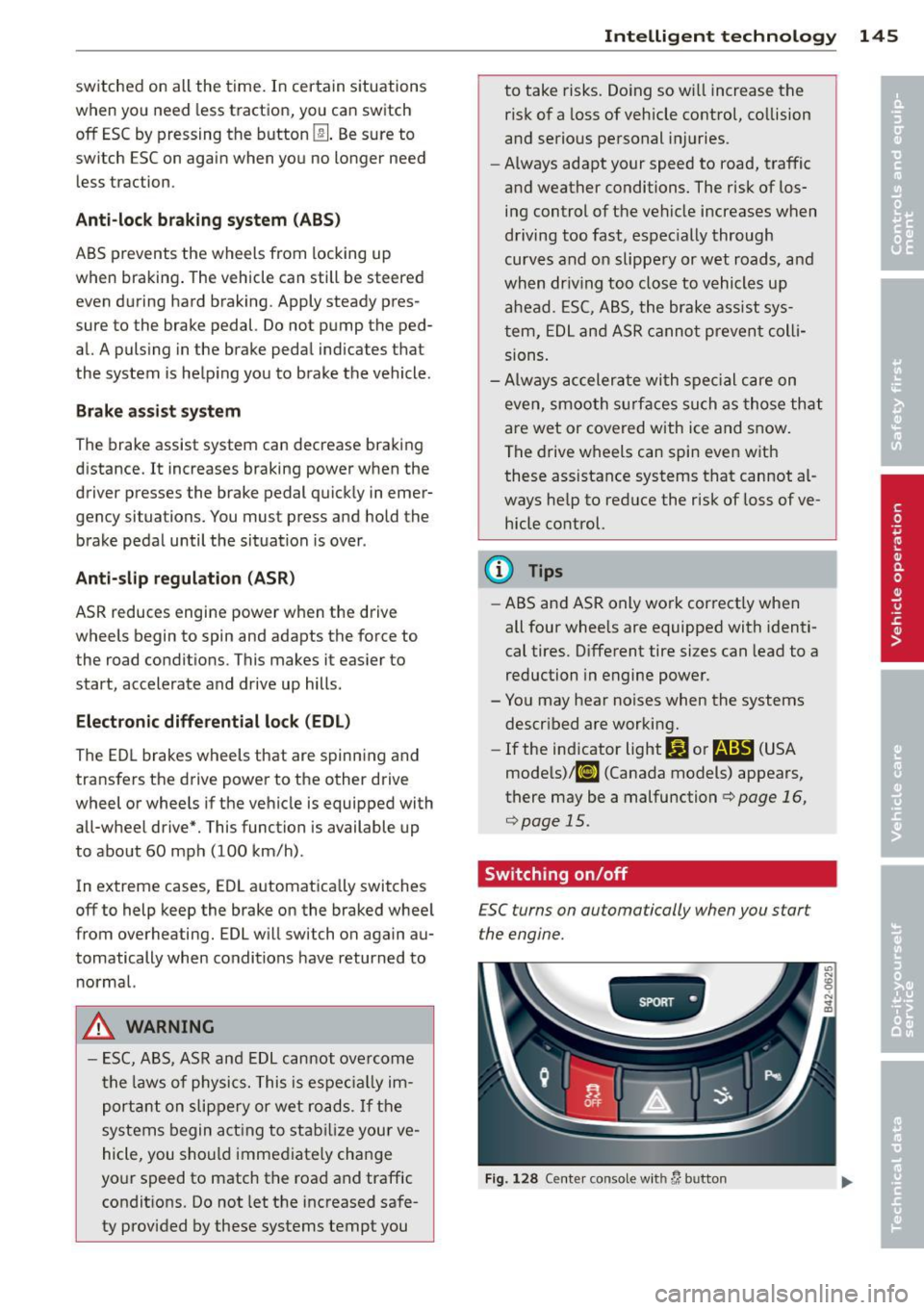
Switching on/off
£SC turns on au tomatically when you start
the engine.
-
SPORT •
Fig. 1 28 Cent er console w it h t b utton
Page 164 of 244
162 Cleaning and protection
Plastic parts and imitation leather
You can clean plastic parts and imitation
l eathe r with a damp cloth .
If this does not re
move the dirt, you can treat these parts only
with specia l
sol vent-free pla st ic cleaning and
care product s.
A WARNING
So lvents can change the properties of
some plastics and make it harder for the
airbag to dep loy .
- Never clean the instrument pane l or the
surface of Airbag modules with cleaning
products that contain solvents .
- Products containing solvents w ill make
the surface of th is part porous.
- Serious injur ies can result if plastic parts
come loose when the airbag is deployed.
- Always read and heed all WARNINGS and
the informat ion
¢ page 156 .
Cleaning agents containing solvents will
attack the material and can change the
way it behaves.
Carbon-fiber parts
App lies to vehicles: with carbon-fibe r parts
The carbon-fiber parts of your vehicle have a
p a inted su rface . They do not require any spe
cial care and are cleaned like plast ic parts
¢ page 162 .
Fabrics and fabric coverings
Fab rics and fabr ic coveri ngs (e.g. seats, doo r
tr im panels, etc.) should be cleaned a t reg ular
inte rva ls with a vacu um cleaner. This removes
surface dirt particles which could become em
bedded in th e fabric thro ugh use. Steam
cleaners shou ld not be used, because the
s team tends to push the dir t deeper into the
f abric and lock i t there.
Normal cleaning
Gener ally, we re commend using a soft sponge
o r a lint -free microfibe r cloth to the clean fab
ric. Brushes s hou ld only be used for carpets
and floor mats, since other fab ric surfaces
could be harmed by b rushes.
Norma l su rface s tains can be cleane d using a
commercially availab le foam cleaner . Spread
the foam on the s urface of the fabric with a
soft sponge and work it in gently . Do not satu
rate the fabric. Then pat the foam dry us ing
absorbe nt, dry cloths (e .g. m icrofiber cloth)
and vacuum i t after it has dried completely .
Cleaning stains
Stains caused by beverag es (e .g. coffee, fr uit
j uice, etc .) can be treated with a mild deter
gen t solution. Apply the detergent solution
with a spo nge . In the case of stubborn stains,
a detergent paste can be applied directly to
the stain and worked i nto the fabric. After
wards, use copious amounts of clean wa ter to
remove the rema ining deterge nt. App ly the
wate r w ith a damp doth or sponge and pat
th e fabric dry wi th an abso rbent, dry cloth .
Stai ns from choco late or ma keup should have
de tergent pa ste (e.g. ox-gall so ap) rubbed in
to them. Afterwa rds, remove the soap wi th
water (damp sponge) .
Alcohol can be used to treat sta ins from
grease, o il, lipstick or a ballpoint pen . M elted
grease or dye mus t be patted off using a b
sorbent ma terial.
It may be necessary to re
treat the areas with detergent paste and wa
ter.
In the case of gene ral soiling of the upho ls
tery and cover material, we recommend hiring
a specia list t hat has the equipment to clean
the seat covers and other fabr ic surfaces by
shampooing and spray extraction.
A WARNING
-A lways read and heed all WARNINGS and
the information
¢ page 156.
Page 166 of 244
164 Cleaning and protection
Cleaning and caring for leather
upholstery and trim
Applies to vehicles: with natural leather
Natural leather requires special care and at
tention.
Normal cleaning
• Clean soiled are as with a slightly moistened
cotton or woolen cloth.
More stubborn dirt
• More stubborn dirt can be removed using a
cloth saturated with a mild soap solution (2
tablespoons mild liquid soap).
• Never allow the soap solution to saturate
the leather , and make certain that no water
soaks into the seams .
• Wipe off the soap solution with a soft, dry
cloth .
Cleaning spots
• Remove fresh water-based spots (such as
coffee, tea, juices, blood) with an absorbent
cloth or paper towel.
• Remove fresh
grease or oil-based spots
(such as butter, mayonnaise , chocolate) with
an absorbent cloth or paper towel, or use
the cleaner from the leather care kit if the
spot has not yet penetrated into the surface
of the leather.
• Use an oil/grease dissolving spray, if
oil/
grease spots have dried on.
• Remove specific kinds of spots (ballpoint
pen, felt marker, fingernail polish, water
based paint, shoe polish, etc.) with a spot
remover specifically formulated for leather .
Leather care
• Every half year use an approved leather care
product (available from your authorized
Audi dealer) to care for the leather .
• Apply the product very sparingly.
• Wipe it off with a damp cloth.
If you have any questions about cleaning and
caring for the leather in your vehicle, it is best
to contact your authorized Audi dealer, who
will be glad to help you and tell you about our
full range of leather care products, such as: -
Leather cleaning and care kit
- Cremes to care for colored leather
- Spot removers for ballpoint pens, shoe pol-
ish, etc.
- Oil/grease dissolving spray
- New and upcoming products .
_&. WARNING
-Always read and heed all WARNINGS and
the information
~ page 156.
(D Note
-Never use chemical solvents (e.g . lighter
fluid, turpentine), waxes, shoe polish or similar products on the leather surfaces
in your Audi .
- To avoid damage, have stubborn stains
removed by a commercial cleaning spe
cialist.
Cleaning Alcantara ® (synthetic suede)
Applies to vehicles: with Alcantara upholstery
Removing dust and dirt
• Moisten a cloth, squeeze out excess water
and wipe down the seat surfaces.
Removing stains
• Moisten a cloth with lukewarm water or
with diluted
ethyl (rubbing) alcohol.
"' Dab at the stain . Start at the outside and
work inwards .
• Once the stain is no longer visible, use a soft
dry cloth or tissue to soak up the moisture.
Do not use leather cleaning products on Al
cantara.
You may use a suitable shampoo for removing dust and dirt .
Dust and grit in the pores and seams can
scratch and damage the surface . If the car is
left standing in the sun for long periods, the
Alcantara covers should be protected against
direct sunlight to prevent it from fading .
Slight color variations will develop in normal
use and are not an indication of material dete-
rioration. ""
Page 185 of 244
container out of the reach of children. It
is a poison hazard.
@ Note
Do not add any type of radiator leak seal
ant to your vehicle's engine coolant. Add
ing radiator repair fluid may adversely af
fect the function and performance of your
cooling system and could result in damage
not covered by your New Vehicle Lim ited
Warranty.
Adding coolant
Before you check anything in the engine com
partment,
always read and heed all WARN
INGS q A in Working in the engine compart
ment on pag e 173.
"'Add coolant .
"'Twist the cap on again
tightly.
"'Tighten the cap (D q page 182, fig. 145
again.
Replacement engine coolant must conform to
exact specifications
q page 181, Coolant .
We recommend using only coolant additive
G12++, G13 or in an emergency G12 +. Do
not
use a different additive. In an emergency use
plain water until you can get the correct addi
tive and can restore the correct ratio. This
should be done as soon as possible.
If you have lost a considerable amount of
coolant, then you should add cold antifreeze
and cold water only when the engine is cold.
Always use
new engine coolant when refilling .
Do not fill coolant above the "max" mark. Ex
cess coolant will be forced out through the
pressure relief valve in the cap when the en
gine becomes hot.
A WARNING
- The cooling system is under pressure and
can get very hot. Reduce the risk of
scalding from hot coolant by following
these steps.
Checking and filling 183
- Turn off the engine and allow it to cool
down.
- Protect your face, hands and arms from
escaping fluid and steam by covering
the cap with a large, thick rag.
- Turn the cap slowly and very carefully
in a counter-clockwise direction while
applying light, downward pressure on
the top of the cap.
- To avoid being burned, do not spill an
tifreeze or coolant on the exhaust sys
tem or hot engine parts. Under certain
conditions, the ethylene glycol in en
gine coolant can catch fire .
- Antifreeze is poisonous. Always store an
tifreeze in its original container and well
out of the reach of children.
- If you drain the coolant, it must be
caught and safely stored in a proper con
tainer clearly marked "poison" .
Q) Note
- Coolant pollutes the environment and
could cause an engine fire . Ex cess cool
ant will be forced out through the pres
sure relief valve in the cap when the en
gine becomes hot.
- If, in an emergency, only water can be
added, the correct ratio between water
and antifreeze
q page 181 must be re
stored as soon as possible.
@ For the sake of the environment
Drained coolant should not be reused . Al
ways dispose of used coolant while observ
ing all environmental regulations.
Brake fluid
Have the brake fluid changed by an experi
enced t echnician.
Brake fluid absorbs moisture from the air. If
the water content in the brake fluid is too
high, corrosion in the brake system may result
afte r a period of time. The boiling point of the
brake fluid will also decrease considerably and
decrease braking performance. .,.. •
•
Page 186 of 244
184 Checking and filling
Therefore, the brake fluid must be changed
ev ery two yea rs. A lways use new brake fluid
which conforms to Federal Motor Vehicle Standard "FMVSS 116 DOT 4".
Brake fl uid is rep laced according to the Audi
maintenance service schedule . Your author
ized Audi dealer is equipped with the necessa
ry special tools and rep lacement parts, has
the necessary expertise, and can d ispose of
the used fluid .
A WARNING
-Brake fluid is po isonous . It must be stor
ed only in the closed orig inal container
out of the reac h of children!
- Brake fa ilure can result from old o r inap
propriate b rake fluid. Observe these pre
c aut ions:
- Use on ly brake fluid that meets SAE
specif icat ion
J 1703 and conforms to
Federal Motor Vehicle Standard 116 .
Always check with your authorized Audi
dealer to make su re you are using the
correct brake flu id. The correct type of
b rake fluid is a lso indicated on the
b rake fluid reservoir.
- The brake fluid must be new. Heavy use
of the brakes can cause a vapor loc k if
t he brake fl uid is left in the system too
long. This can ser ious ly affect the effi
ciency of the brakes as well as yo ur
safety . This could result in an accident.
CJ) Note
Br ake fl uid will damage the paint of your
veh icle.
@.l For the sake of the environment
Because of the problem of prope r d isposa l
of brake fl uid as we ll as the speci al tools
req uired and the necessary expert ise, we
recommend that you have the brake fluid
changed by your authorized Audi dealer .
Battery
General information
Your vehicle is equipped with a specia l bat
te ry, an
ACM battery. This ba tte ry is located
i n the luggage compartmen t an d must be re
placed with an origina l equipment battery .
U nder normal operating conditions, the bat
tery is
maintenance -free.
Have the batte ry checked when yo u take your
vehicle in for service. You are well advised to
replace a battery that is o lde r than 5 years.
Disconnecting the battery te rminals
Some vehicle fu nctions (power window reg u
lators, for ex ample) are lost if the batte ry te r
mina ls are disconnected. These f unctions have
to be relearned after the battery termina ls are
connected again. To prevent this, the battery
sho uld only be disconnected from the veh icle
electrical system when abso lutely necessary
for repairs.
Vehicles not driven for long periods
If you do not drive your vehicle over a period
of seve ral days or weeks , e lectrica l compo
nents are gradually cut back or switched off.
This reduces energy consumption and ma in
ta ins start ing capability over a longer period
r:> page 150. Some of the convenience func
t ions may not operate, such as the inter ior
li ghts or powe r seat ad justment. The conven
ience funct io ns w ill be available again when
you sw itch on the ign it io n and s tart the en
gine.
Winter operation
D uring the winte r months, battery capac ity
tends to dec rease as temperatures drop. This
is because mo re power is a lso co nsumed wh ile
sta rting, and the headlig hts, rear win dow de
f ogger, e tc., are used more often .
Avoid unnecessa ry powe r consumpt ion, pa r
t icu lar ly i n city traffic o r when traveling only
sho rt dist ances. Let yo ur au thori zed Au di
dealer check the capacity of the vehicle bat -
tery before winter sets in
r:> page 187. A well ll>
Page 187 of 244
charg ed batte ry wi ll not only prevent starting
prob lems when the weather is cold, but will
a lso last longer.
Replacing battery
The new battery mu st h ave the same capac i
ty, vo ltage ( 12 volts), amperage, construction
a nd p lug sealing, as the origina l battery . Spec
ifications are listed on the battery housing.
Batteries specially developed by Audi fulfill
the maintenance, output, and safety require
ments.
When insta lling the battery, make sure the ig
nition and all electrica l consumers are switch
ed
off c:> (D .
We recommend that you use maintenance
free or
c y cle- re sis tant /leak-proof batteries
according to the standards TL 82S 06 (from
April 2008) and VW 7 50 73 (from Apr il
2010).
Replacing the battery should be carried by a
qua lified workshop. P lease follow the instruc
tions on the battery cover.
(D Note
-All work on the battery requires techni
ca l knowledge. Please contact an A udi
dealersh ip or another a uthorized facility
fo r quest ions about the battery - danger
of acid burns and explosion hazard!
- The battery must not be opened ! Do not
try to change the battery's liquid leve l,
othe rwise detonating gas w ill escape
from the battery - explos ion ha zard!
- The AGM batte ry in the luggage com
partment ca nnot leak, because the elec
trolyte fo r th is battery is absorbed into a
spec ial glass ma t. T his leak-proof battery
mus t not be repla ce wi th a convention al
batte ry .
- M ake sure the ven tilat ion hose on the
s id e of the b attery is con ne cte d, o ther
wise fumes or ba ttery acid can leak ou t.
- Ba ttery ho lder and term inals always
have to be secured cor rectly.
Checkin g and fillin g 185
-Be fore all wo rk on the batte ry follow the
warnings below co.&. in Working on the
battery on page 186 .
@ For the sake of the environment
Because o f the p rob lem of prope r disposal
of a battery, we recommen d your author
i zed Audi dealer change the battery for
you. Batteries contain sulfur ic acid and
l ead and must always be disposed of prop
e rly in comp liance with a ll environmental
regulat ions. Disposing of veh icle batter ies
i mprope rly is very dange rous to th e envi
r o nment. Make sure that the removed bat
te ry canno t overb alance, othe rwi se su lfu
r ic acid might escape!
(D Tips
If your vehicle is left s tanding for seve ral
weeks at ext remely low temperatures, the
vehicle battery sho uld be removed and
stored where it w ill not freeze . This will
prevent it from be ing damaged and having
to be replaced.
Working on the battery
Be especially careful when working on or near
the battery!
T he bat tery is located in the luggage compar t
ment behind a cover. Befo re you work on or
near the battery,
read and heed all WARN
INGS
co .&, .
A lways heed the
safety warnings , when work
ing on the vehicle battery or the vehicle e lec
trical system to prevent in jury.
The following WARNINGS are very
important wh en working on the battery :
Alway s heed the following WARNING SYM
BOLS and safety pre caution s when working
on the battery .
® Always wear eye protection . !
I). Battery acid contains sulfuric acid_-Al
~ ways wear gloves and eye protection. ..,.
•
•
Page 222 of 244
220 What do I do now?
(D Note
The vehicle has very low ground clearance.
Make sure that no damage is caused to the
underside of the vehicle when it is being
loaded onto a flat bed truck .
Front towing loop
Do not install the front towing loop until it is
needed.
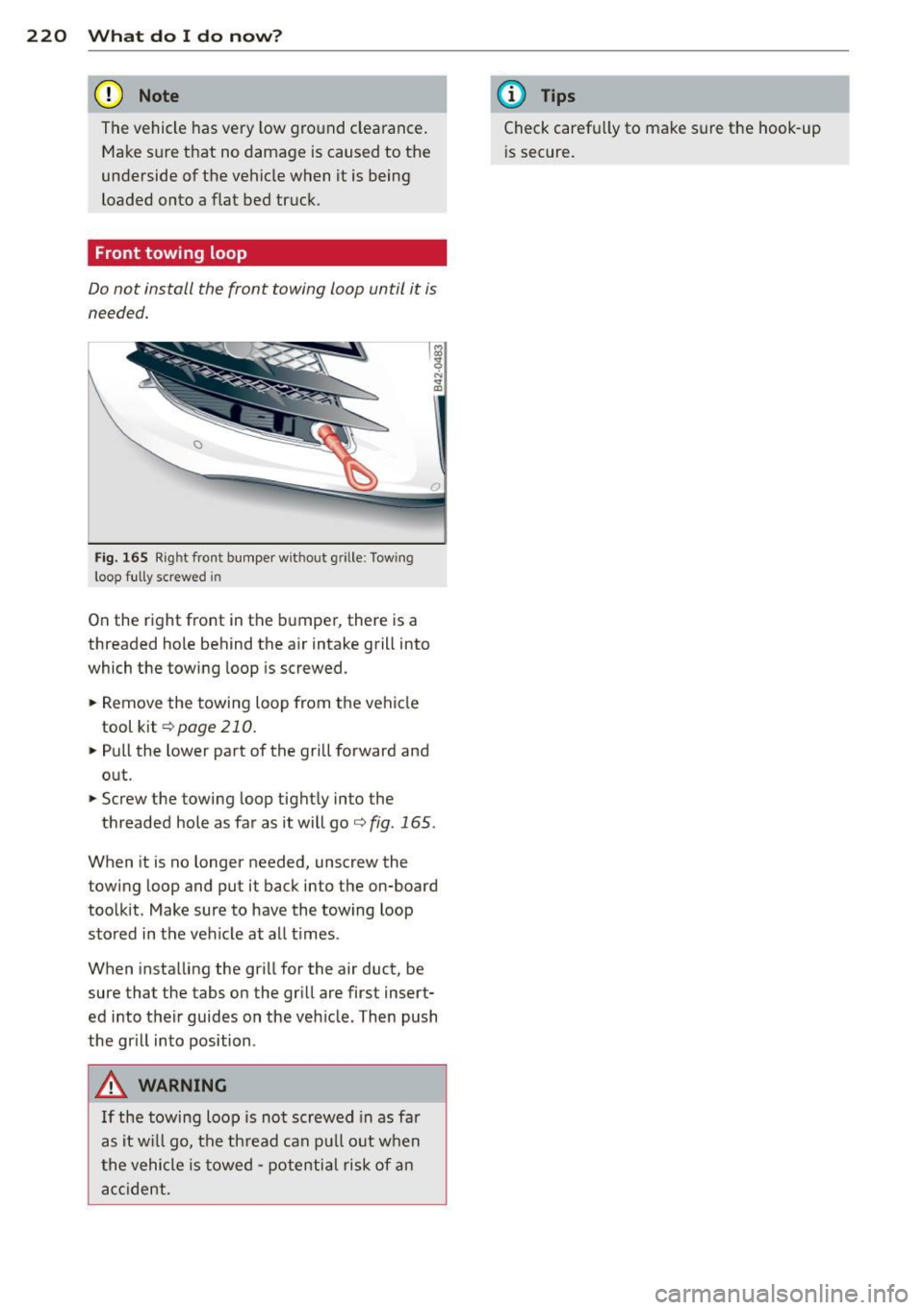
Fig. 165 Rig ht fron t bumper wit hout g rille: Tow ing
loop fully screwed in
On the r ight front in the bumper, there is a
threaded ho le behind the air intake grill into
which the towing loop
is screwed .
.. Remove the towing loop from the vehicle
tool kit
Q page 210 .
.. Pull the lower part of the grill forward and
out .
.. Screw the towing loop tightly into the
threaded hole as far as it will go¢
fig. 165.
When it is no longer needed, unscrew the
towing loop and put it back into the on-board
toolkit. Make sure to have the towing loop
stored in the vehicle at all times.
When installing the grill for the air duct, be
sure that the tabs on the grill are first insert
ed into their guides on the vehicle . Then push
the gr ill into position .
A WARNING
If the towing loop is not screwed in as far
as it will go, the thread can pull out when
the vehicle is towed -potentia l risk of an
accident.
(D Tips
Check carefu lly to make sure the hook-up
is secure.
Page 241 of 244

Tire pressure monitoring system .... .. . 206
Malfunctions .... ..... ... ... ... ... 208
Sensors . ... .... ........ ... .. .. .. . 201
Tires and whee ls ......... .. .. .. .. . 201
Valves ... .. ................. .. ... 201
Warn ing/ indicator light ....... .. .... . 19
Tire repair kit . ..... .... ... .. .. .. ... 210
T ires .. .. .. .. .... ............. .. .. . 189
P ressu re . .. .. ........... .. .. .. ... 206
Replacing . . . . . . . . . . . . . . . . . . . 199, 201
Service life ..... ...... ... .. .. .. ... 198
Speed rating letter code ... .. .. .. .. . 200
T ire manufacturing date ... .. .. .. .. . 200
Tire pressure monitoring system .. .. . 206
Tire specifications ........ .. .. .. .. . 200
T read depth . . . . . . . . . . . . . . . . . . . . . . 198
Uniform t ire quality grading .. .. ... .. 203
W inte r tires ................ ... ... 203
T ires/Wheels
Low aspect ratio tires ...... .. .. .. .. . 205
T ire mobility system ...... .. .. .. .. . 210
Tire repa ir kit ......... ...... .... .. 210
Tires and vehicle load limits . ... .. .. .. . 196
Tires and whee ls
C heck in g tire p ressu re ..... .. .. .. .. . 19S
Cold ti re inflation pressu re ... .. .. ... 193
D imensions ... .... .... ... .. .. .. .. .
General notes ... .. .... ... .. .. .. .. .
Glossary of t ire and load ing termino lo-
gy .. .. ' . .. ................. .. .. .
New tires and wheels ...... .. .. .. .. .
Replacing .. ................ ... .. . 199
189
190
199
200
Snow chai ns ... .. .. ...... .. .. .. .. . 204
T ire pressure monitor ing system .. .. . 20 1
Tires and vehicle load limits .. .. .. .. . 196
Wheel bol ts ............. .... .. .. . 205
W inter t ires . .... ..... ... .. .. .. ... 203
Tire serv ice life .... .. ...... .. .. .. .. . 198
T ool kit ... .. .. .. ........... .. .. ... 210
Touch -up paint ............ .... .. .. . 160
T owing
Tow truck procedures ........... .... 219
Towing loop .. .... .. .... ... .. .. .. ... 220
T railer towing ............. .. .. .. .. . 155
Transm ission
Manual transmission .......... ... ... 77
Transm ission ma lf u nct ion (indicator light) 81
Inde x 239
Transpor t Canada ..... .. .. ..... ... .. 100
Tread Wea r Ind icator (TWI) ........... 198
Tr ip comp uter . .. .. ............... .. . 21
S ingle-trip memory ............ .... . 21
Tota l-trip memory .. . ... .... ... .. .. . 21
T rip odometer ..... .. . .. .. ..... ... .. . 10
Turn signals . .. .. .... ... ....... ...... 47
Warning/ind icator lights ........ .... . 19
u
Un fastening safety belts 108
Un idirectional tires . ............. .... 189
Un iform tire qua lity gradi ng ...... .. .. 203
U ni versal Radio- Frequency Remote Con-
trol (Homelink ®) . . . . . . . . . . . . . . . . . . . . 90
U nl ocking
Power locking system .............. . 32
Remote contro l key . . . . . . . . . . . . . . . . . 31
V
Vanity mirro r .. .. .. .. .. .. .. .... ... .. . 51
Vehicle-ca re p roducts ............ .... 156
Vehicle electrical system . . . . . . . . . . . . . . 14
Vehicle Identification Number (V IN) . ... 223
Vehicle jac k .... ... .. ............... 214
Vehicle literature .. ................. .. 4
Vehicle sh ut-down . ............. .. .. 154
Vehicle tool kit .. ... ............... . 210
Ventilation . . . . . . . . . . . . . . . . . . . . . . . . . 63
Voltmete r display . . . . . . . . . . . . . . . . . . . . 11
w
Warning/ind icator lights . . . . . . . . . . . . . . . 8
Airbag syst em . . . . . . . . . . . . . . . . . . . . . 14
An ti- lock b rake sys tem (ABS) .... .. .. . 16
Br ake system . . . . . . . . . . . . . . . . . . . . . . 13
Cruise cont ro l .... .. . .. .. ..... ... .. . 19
E lectronic power contro l . . . . . . . . . . . . . 17
E lectronic Stabilization Contro l (ESC) . .. 15
Generator . . . . . . . . . . . . . . . . . . . . . . . . . 14
Malfunction Ind icator Lamp (MIL) .. .. . 17
Parking brake .. .. .. . ....... ..... .. . 13
Safety be lt . . . . . . . . . . . . . . . . . . . . . . . . 14
Safety systems . . . . . . . . . . . . . . . . . . . . . 14
•
•