lock AUDI RS5 COUPE 2015 Repair Manual
[x] Cancel search | Manufacturer: AUDI, Model Year: 2015, Model line: RS5 COUPE, Model: AUDI RS5 COUPE 2015Pages: 254, PDF Size: 64.12 MB
Page 189 of 254
"' N
0:: loo
rl I.O
"' N
"' rl
Checking and Filling Hood
Releasing and opening the engine hood
The engine hood is released from inside the vehi
cle.
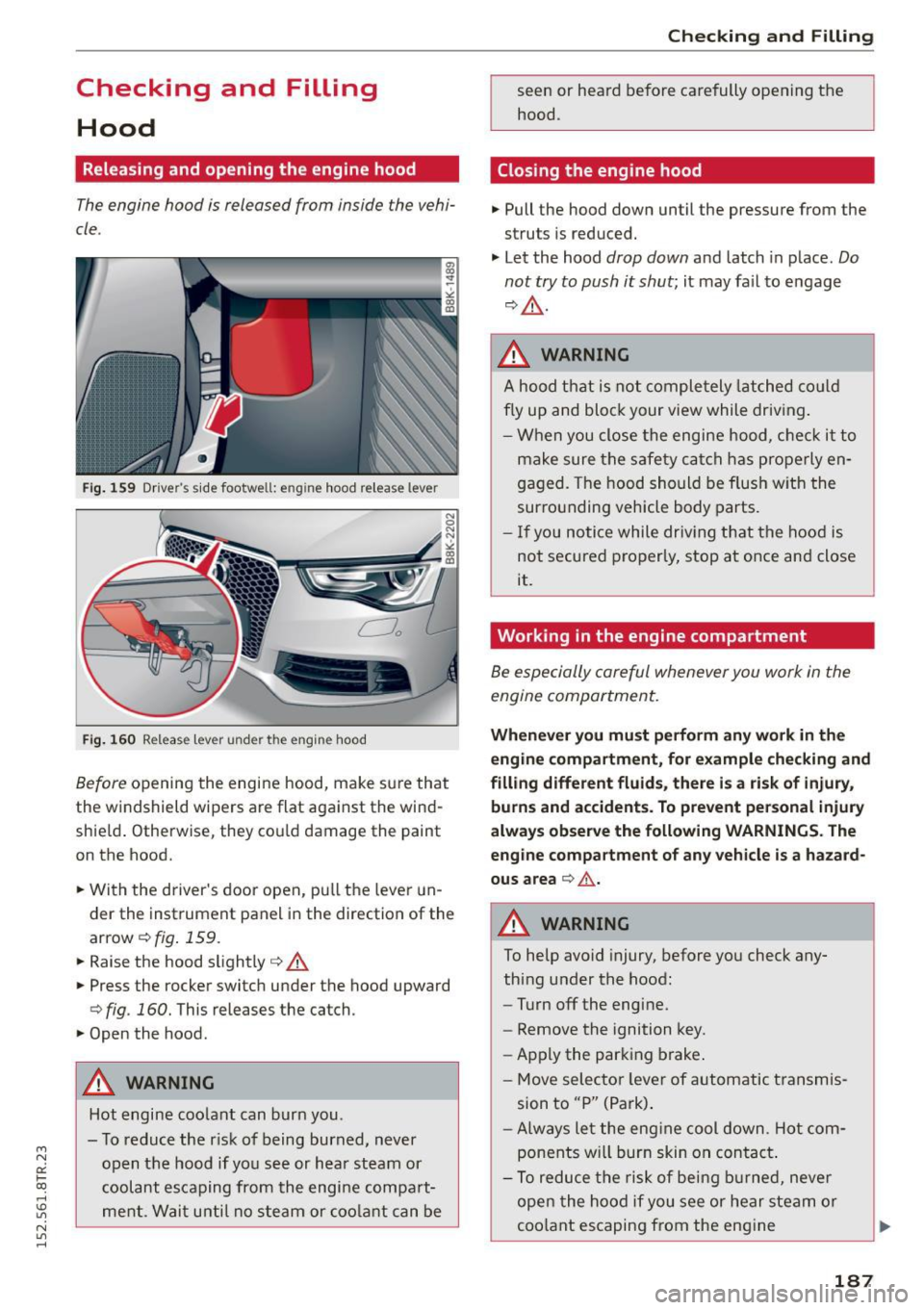
Fig. 159 Driver's side footwell: e ng in e hood release lever
Fig. 160 Releas e lev er un der t he e ngin e hood
Before opening the engine hood, make sure that
the windshield wipers are flat against the wind
shield . Otherwise, they could damage the paint
on the hood.
.. With the driver's door open, pu ll the lever un
der the instrument panel in the direction of the
arrow
c::> fig . 159.
.. Ra ise the hood slightly c::> &.
.. Press the rocker switch under the hood upward
c::> fig . 160. This releases the catch .
.. Open the hood.
A WARNING
Hot engine coolant can burn you.
- To reduce the r isk of being burned, never
open the hood if you see or hear steam or
coolant escaping from the engine compa rt
ment. Wait until no steam or coolant can be
Checking and Filling
seen or heard before carefully opening the
hood .
Closing the engine hood
.. Pull the hood down until the pressure from the
struts is reduced.
"' Let the hood
drop down and latch in place. Do
not try to push it shut;
it may fa il to engage
c::> &. -
A WARNING
A hood that is not comp letely latched could
fly up and block your view while driving.
- When you close the engine hood, check it to
make sure the safety catch has properly en
gaged . The hood should be flush with the
surrounding vehicle body parts.
- If you notice while driv ing that the hood is
not secured properly, stop at once and close
it.
Working in the engine compartment
Be especially careful whenever you work in the
engine compartment.
-
Whenever you must perform any work in the
engine compartment, for example checking and
filling different fluids , there i s a risk of injury ,
burns and accidents. To prevent personal injury
always observe the following WARNINGS . The
engine compartment of any vehicle is a hazard
ous area
c:> .&. .
A WARNING
-
To help avoid injury, before you check any-
thing under the hood:
- Turn off the engine.
- Remove the ignition key .
- Apply the parking brake.
- Move selector lever of automatic transmis-
sion to "P" (Park) .
-Always let the engine cool down. Hot com
ponents wi ll burn skin on contact .
- To reduce the risk of being burned, never
open the hood if you see or hear steam o r
coo lant escaping from the engine
187
Page 196 of 254
Checking and Filling
"' Place a thick rag over th e coolant expansion
tank and
carefully turn the cap counter-clock
wise
¢ ,& .
"'Read the engine coolant level inside the coolan t
expansion tank
¢ fig . 164, ¢page 189,
fig. 16 1.
With a cold engine , the coolant level
should be between the ' 'MIN" and "MAX " mark
ings
¢ fig . 165 -arrows- . When the engine is
warm, the level may be slightly above the
"MAX" marking.
"'Add coolant mixed in the correct ratio, if neces
sary ¢
page 192 . Coolant may be a maximum
of 1 mm above the MAX marking.
"' Twist the cap on again
tightly .
The location of the coolant expansion tank can be
seen in the engine compartment illustration
¢ page 189.
To obtain an accurate reading , the engine must
be switched off.
The expansion tank in your vehicle is equipped
with an electric coolant level sensor.
When the coolant level is too low, the warning
light in the Auto-Check System¢
page 17 will
blink until you add coolant and the level has been
restored to normal. Even though there is an elec
tric coolant level sensor, we still recommend you
check the coolant level from time to time.
Coolant loss
Coolant loss may indicate a leak in the cooling
system. In the event of coolant loss, the cooling
system should be inspected immediately by your
authorized Audi dealer. It is not enough merely
to add coolant.
In a
sealed system, losses can occur only if the
boiling point of the coolant is exceeded as a re
sult of overheating.
Adding coolant
Replacement engine coolant must conform to ex
act specifications ¢
page 192, Coolant.
We recommend using only coolant additive Gl2+
+ , G l3
or in an emergency Gl2+ . Do not use a
different additive . In an emergency use plain wa
ter until you can get the correct additive and can
194
restore the correct ratio. This should be done as
soon as possible.
If you have lost a considerable amount of cool
ant, then you should add cold antifreeze and cold
water only when the engine is cold.
Always use
new engine coolant when refilling.
Do not fill coolant above the "MAX" mark. Excess
coolant will be forced out through the pressure
relief valve in the cap when the engine becomes
hot.
,&_ WARNING
- The cooling system is under pressure and
can get very hot. Reduce the risk of scalding
from hot coolant by following these steps.
- Turn off the engine and allow it to cool
down .
- Protect your face, hands and arms from
escaping fluid and steam by covering the
cap with a large, thick rag .
- Turn the cap slowly and very carefully in a
counter-clockwise direction while applying
light, downward pressure on the top of
the cap .
- To avoid being burned, do not spill anti
freeze or coolant on the exhaust system or
hot engine parts. Under certain condi
tions, the ethylene glycol in engine cool
ant can catch fire.
- Antifreeze is poisonous. Always store anti
freeze in its original container and well out
of the reach of children.
- If you drain the coolant, it must be caught
and safely stored in a proper container
clearly marked "poison".
(D Note
- Do not add any type of radiator leak sealant
to your vehicle's engine coolant. Adding ra
diator repair fluid may adversely affect the
function and performance of your cooling
system and could result in damage not cov
ered by your New Vehicle Limited Warranty.
- Coolant pollutes the environment and could
-
cause an engine fire. Excess coolant will be .,.
Page 213 of 254
M N
0:: loo ,...., \!) ..,.,
N ..,., ,....,
yourself, because this increases the risk of
an acc ident.
Winter tires
W inter tires sign ificantly improve t he vehicle's
h andling when drivi ng in winter condit ions. Be
cause of the ir construction (width, compound,
tread pattern), summer t ires p rov ide less t ract ion
on ice and snow.
.. Use w in ter t ires on all four wheels.
.. Only use winter tires that are approved for your
vehicle .
" Please note that the maximum permitted
speed may be lower w it h w inter tir es ~,&. .
You r authorized Audi dea le r or a uthorized re
pair facility can in form you about the maximum
permitted speed fo r yo ur tires.
.. Check the tire pressure after insta lling wheels
~ page 206.
The effectiveness of winte r tires is reduced great
l y when the tread is worn dow n to a depth of
0 .157 inch (4 mm). The characteristics of w inter
tires also decrease greatly as the tire ages, re
gardless of the remai ning tread .
A WARNING
-Never drive faster than the maximum per
mitted speed for your t ires. This could cause
the tires to heat up too much . This increases
the risk of an ac cident be cause it can cause
the tire to b urst.
- Always adapt you r driv ing to the road and
t raff ic conditions. Dr ive ca refully and re duce
yo ur speed on icy or slippery roads. Even
w inter tires can lose tract ion on black ice.
@ For the sake of the environment
Reinstall summer tires at the approp riate
t ime, because they prov ide be tter h and ling
when roads a re free of snow and ice. S ummer
tires ca use less road no ise, tire wea r and fuel
consumption.
Wheels
{!) Tips
You can also use a ll season tires instead of
winter tires. P lease note that in some coun
tries where w inter tires are required, only win
ter tires w ith the
& symbol may be permit
ted.
Snow chains
Snow chains improve traction in the snow .
.. On ly install snow chains on the front wheels .
T his applies a lso to vehicles with a ll whee l
drive .
.. Check and correct the seating of the snow
chains if necessary after driving a few feet . Fol
low the instructions from the manufactu rer .
.. Note the maximum permitted speed when dr iv
ing wit h snow chains . Do not exceed 30 mph
(SO km/h).
Snow c ha ins not only improve the
driving in w in
te r road cond itions , but also the
braking .
Use of snow chains is only permitted with certain
rim/tire combinations due to technical reasons .
Check with an authorized Audi dea ler or author
ized repa ir fac ility to see if you may use snow
chains.
Use
fine-mesh snow chains. They must not add
more than 0 .41 inch (10 .5 mm) in he ight, includ
i ng the cha in lock.
You must remove the chains when driving on roads that are
free of snow . When roads are free
of snow, snow cha ins can impair handl ing and
damage the tires, and the chains wi ll quickly be
dest royed.
A WARNING
Using incor re ct snow chains o r insta lli ng snow
cha ins incorrect ly can result in loss of ve hicle
control, which increases the risk of an acci
dent .
(D Note
Snow ch ains can damage the rims/wheel cov
ers * if the chains come into direct contact
211
Page 221 of 254
M N
0:: loo ,...., \!) 1.1'1
N 1.1'1 ,....,
A WARNING 1=
You or your passengers cou ld be injured while
chang ing a wheel if you do not follow these
safety precautions:
- If you have a flat t ire, move a safe distance
off the road . Turn off the engine, turn the
emergency flashers on and use other warn
ing devices to alert other motorists.
- Make sure that passengers wait in a safe
place away from the vehicle and well away
from the road and traff ic.
- To help prevent the veh icle from mov ing
sudden ly and possibly slipping off the jac k,
always fully set the pa rking brake and block
the whee l diagona lly opposite the w heel be
ing changed with the folding chocks or oth
er objects. When one front wheel is lifted
off the ground, placing the Automatic Trans
mission in "P" (Park) will
not prevent the ve
hicle from moving.
- Before you change a wheel, be sure the
ground is level and firm. If necessary, use a
sturdy board under the jack.
- Always store the vehicle tool kit, the jack *
and the replaced tire in the luggage com
partment
c> page 117.
(D Note
If you are changing the wheel on a steep in
cline, use a rock or sim ilar object to block the
opposite whee l to prevent the vehicle from
mov ing.
{!) Tips
Obey a ll laws.
Changing a wheel
When you change o wheel, follow the sequence
described below step-by-step and in exactly that
order.
1. Remove the wheel bolt caps*. F or more de
tails see also ¢
page 220 , Wheels with
wheel bolt caps .
2. Loosen the wheel bolts¢ page 220.
Emerge ncy ass is tanc e
3. Locate the proper mounting point for the
jack and alig n the jack below that point
¢ page 221 .
4. Lift the car with the jack¢ page 221.
5. Remove the wheel with th e fla t tire and then
install the other wheel¢
page 222 .
6. Tighten all whee l bolts lightly.
7 .
Lower the vehicle with the jack .
8. Use the wheel bolt wrench and
firmly t ighten
all wheel bo lts in a crisscross pattern
¢page 220.
9. Replace the wheel bolt cap s* .
A WARNING
A lways read and fo llow all WARNINGS and in
formation
¢ &. in Raising the vehicle on
page221
and ¢page 223.
After changing a wheel
A wheel chonge is not complete without the do
ing the following.
.. Always store the vehicle tool kit, the jack*, and
the replaced tire in the luggage compartment
¢ page 117.
.. As soon as possib le, have the t ightening tor
ques
on all wheel bolts checked with a torque
wrench . The correct t ightening to rque is 90 ft
lbs. (120 Nm) .
.. Have the flat tire
replaced as soon as possible .
(D Tips
-If you not ice that the wheel bo lts a re cor
roded and difficult to tur n while changing a
tire, they should be replaced before you
check the tigh tening torque.
- Dr ive at reduced speed until you have the
tightening to rques che cked.
219
Page 224 of 254
Emergency assistance
points on the sill. Otherwise, your vehicle will
be damaged.
Taking the wheel off/installing a wheel
Follo w these instructions step-by-step for chang
ing the wheel.
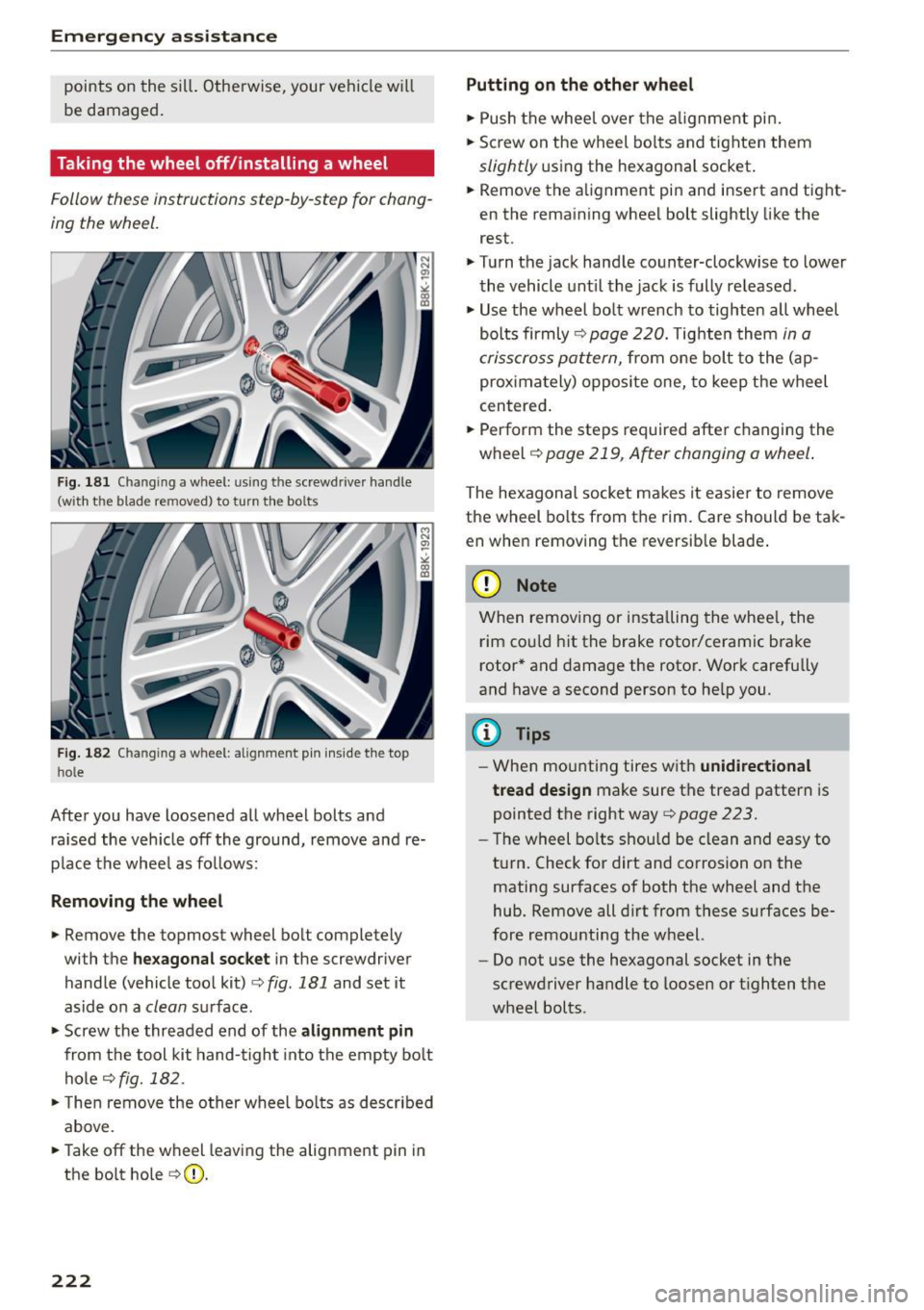
Fig. 181 Changing a wheel: using the screwdrive r handle
(with the blade removed) to turn the bolts
Fig. 182 Changing a wheel: alignment pin insid e the top
hole
After you have loosened all wheel bolts and
raised the vehicle off the ground, remove and re
place the wheel as follows:
Removing the wheel
.. Remove the topmost wheel bolt completely
with the
hexagonal socket in the screwdriver
handle (vehicle tool kit)
¢fig . 181 and set it
aside on a
clean surface.
.. Screw the threaded end of the
alignment pin
from the tool kit hand-tight into the empty bolt
hole
¢fig. 182 .
.. Then remove the other wheel bolts as described
above .
.. Take off the wheel leaving the alignment pin in
the bolt hole
c::;, (D.
222
Putting on the other wheel
.. Push the wheel over the alignment pin .
.. Screw on the wheel bolts and tighten them
slightly using the hexagonal socket .
.. Remove the alignment pin and insert and tight
en the remaining wheel bolt slightly like the
rest .
.. Turn the jack hand le counter-clockwise to lower
the vehicle until the jack is fully released .
.. Use the wheel bolt wrench to tighten all wheel
bolts firmly
c::;, page 220. Tighten them in a
crisscross pattern,
from one bolt to the (ap
proximately) opposite one, to keep the wheel
centered .
.. Perform the steps required after changing the
wheel
c::;, page 219, A~er changing a wheel.
The hexagonal socket makes it easier to remove
the wheel bolts from the rim. Care should be tak
en when removing the reversible blade.
(D Note
When removing or installing the wheel, the
rim could hit the brake rotor/ceramic brake
rotor* and damage the rotor. Work carefully
and have a second person to help you.
(D Tips
- When mounting tires with unidirectional
tread design
make sure the tread pattern is
pointed the right way
c::;, page 223.
- The wheel bolts should be clean and easy to
turn. Check for dirt and corrosion on the
mating surfaces of both the wheel and the
hub. Remove all dirt from these surfaces be
fore remounting the wheel.
- Do not use the hexagonal socket in the
screwdriver handle to loosen or tighten the
wheel bolts .
Page 227 of 254
"' N
0:: loo
rl I.O
"' N
"' rl
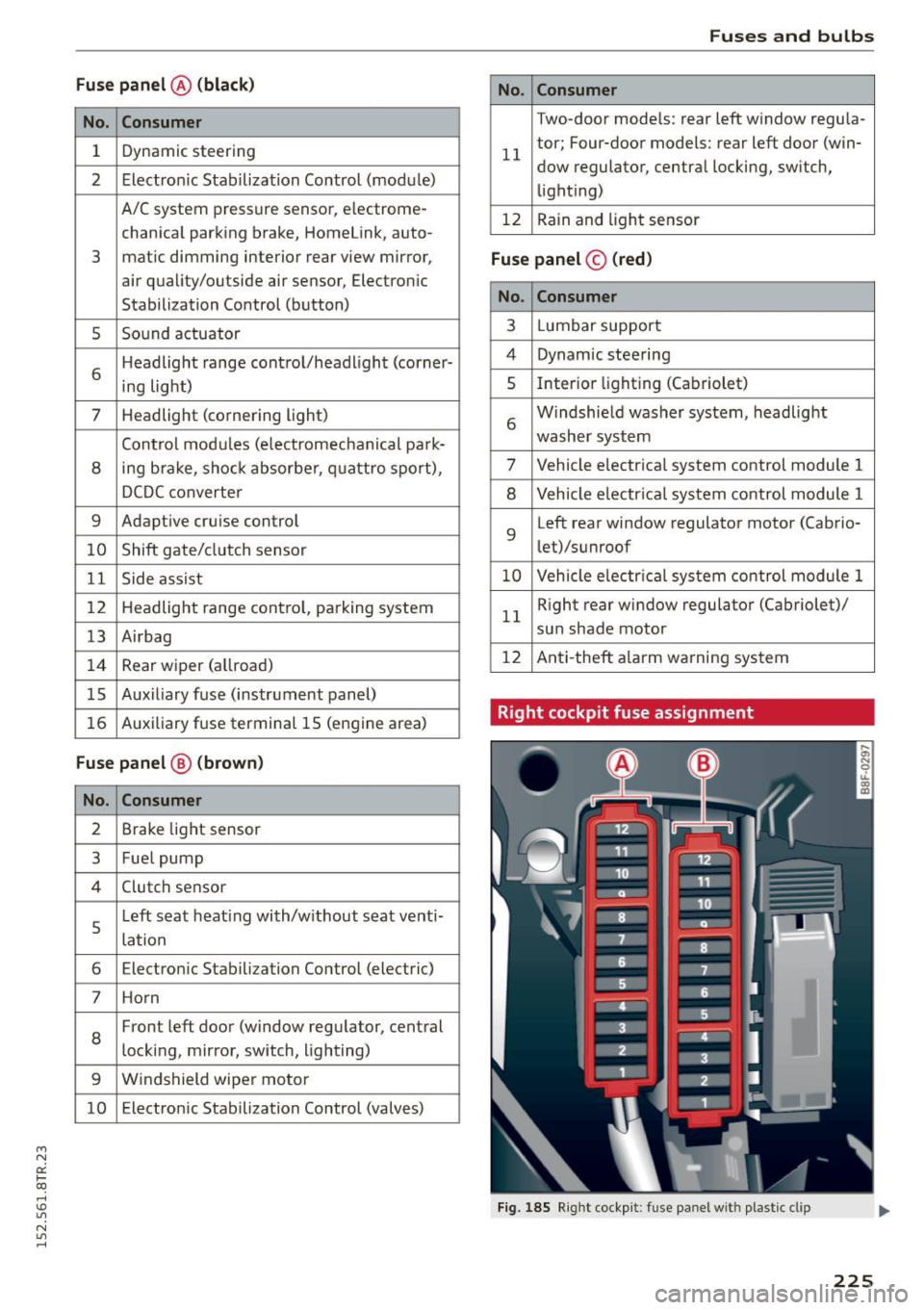
Fu se pa nel @ (black )
No. Consumer
1 Dynamic steering
2 Electron ic Stabilization Control (module)
A/C system pressure sensor, electrome-
chanical parking brake, HomeLink, auto-
3 mat
ic dimming interior rear view mirror,
air quality/outside air sensor, Electron ic
Stabilization Control (button)
s Sound actuator
6 Headlight range control/headl
ight (corner-
ing light)
7 Headlight (cornering light)
Control modu les (electromechanical park-
8 ing brake, shock absorber, q uattro sport),
DCDC converte r
9 Adaptive
cruise control
10 Shift gate/clutch sensor
11 Side assist
1 2 Headlight range cont ro l, parking system
13 Airbag
14 Rear
wiper (a llroad)
15 Auxiliary fuse (instrument panel)
16 Auxiliary
fuse termina l 15 (engine area)
Fuse p anel @ (brown )
No. C onsumer
2 Brake light sensor
3 Fuel pump
4 Clutch sensor
5
Left seat heating with/without seat venti-
lation
6 Electronic Stabilization Control (electric)
7 Ho rn
8
Front left door (window regulator, central
locking, mirror, switch, lighting)
9 Windshield wiper motor
10 Electronic Stabilization Control (valves) Fu
ses a nd bulb s
No. Consumer
Two-door mode ls: rear left window regula-
11 tor; Four-door
models: rear left door (win-
dow regulator, central locking, switch,
light ing)
12 Rain and l
ight sensor
Fuse panel © (r e d )
No . Con sumer
3 Lumbar support
4 Dynamic steering
5 Inter
ior l ight ing (Cabriolet)
6 Windshie
ld washer system, headlight
washer system
7 Vehicle electrica l system control module 1
8 Vehicle electr ica l system control module 1
9 Left rear
window regulator motor (Ca brio-
let)/su nroof
10 Vehicle electr ica l system co ntrol module 1
11 Right rear
window regulator (Cabriolet)/
sun shade motor
12 Anti-theft
alarm warning system
Right cockpit fuse assignment
Fig. 185 Right cockpit: fu se panel with plastic cl ip
225
Page 228 of 254
Fuses and bulbs
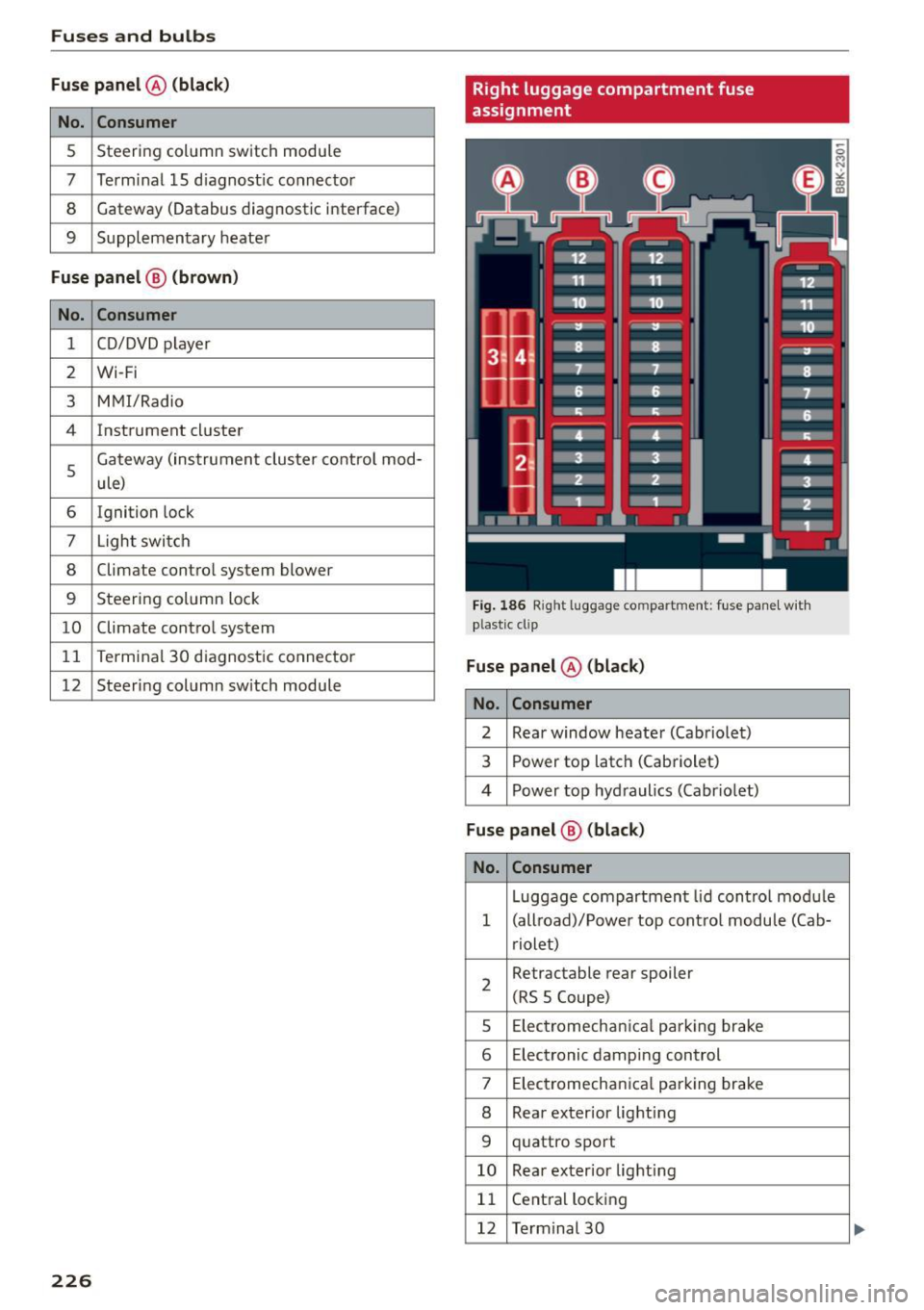
Fuse panel @ (black )
No. Consumer
5 Steering col
umn switch module
7 Term inal 15 d iagnost ic connector
8 Gateway (Databus diagnostic interface)
9 Supplementary heater
Fuse panel@ (brown )
No. Consumer
1 CD/ DVD p laye r
2 Wi-Fi
3 M
MI/Radio
4 Instrument cluster
5
Gateway (ins trument cluster co ntrol mod-
ule)
6 Ignition lock
7 Ligh t swi tch
8 Climate control system blower
9 Steering col umn lock
10 Climate contro l system
1 1 Te
rm inal 30 d iagnost ic connector
12 Steer ing column sw itch module
226
Right luggage compartment fuse
assignment
Fig. 186 Right lu ggage compartment: f use pane l w it h
plast ic clip
Fuse panel @ (black )
No . Consumer
2 Rea r window heater (Cabriole t)
3 Power top latch (Cabriolet)
4 Power top hyd raulics (Cabr io let)
Fuse panel @ (black)
No . Consumer
Luggage compartment lid con trol mo dule
1 (all road)/Powe r top cont ro l modu le (Cab-
r iolet)
2 Retractable rear
spoiler
(RS 5 Coupe)
5 Elec tromechan ica l pa rking brake
6 Electronic damping control
7 Elec tromech anica l par king brake
8 Rear exterior lig hti ng
9 qu attro sport
10 Rear exter ior lighting
1 1 Cent
ral locking
12 Term inal 30
Page 229 of 254
M N
0:: loo ,...., \!) 1.1'1
N 1.1'1 ,....,
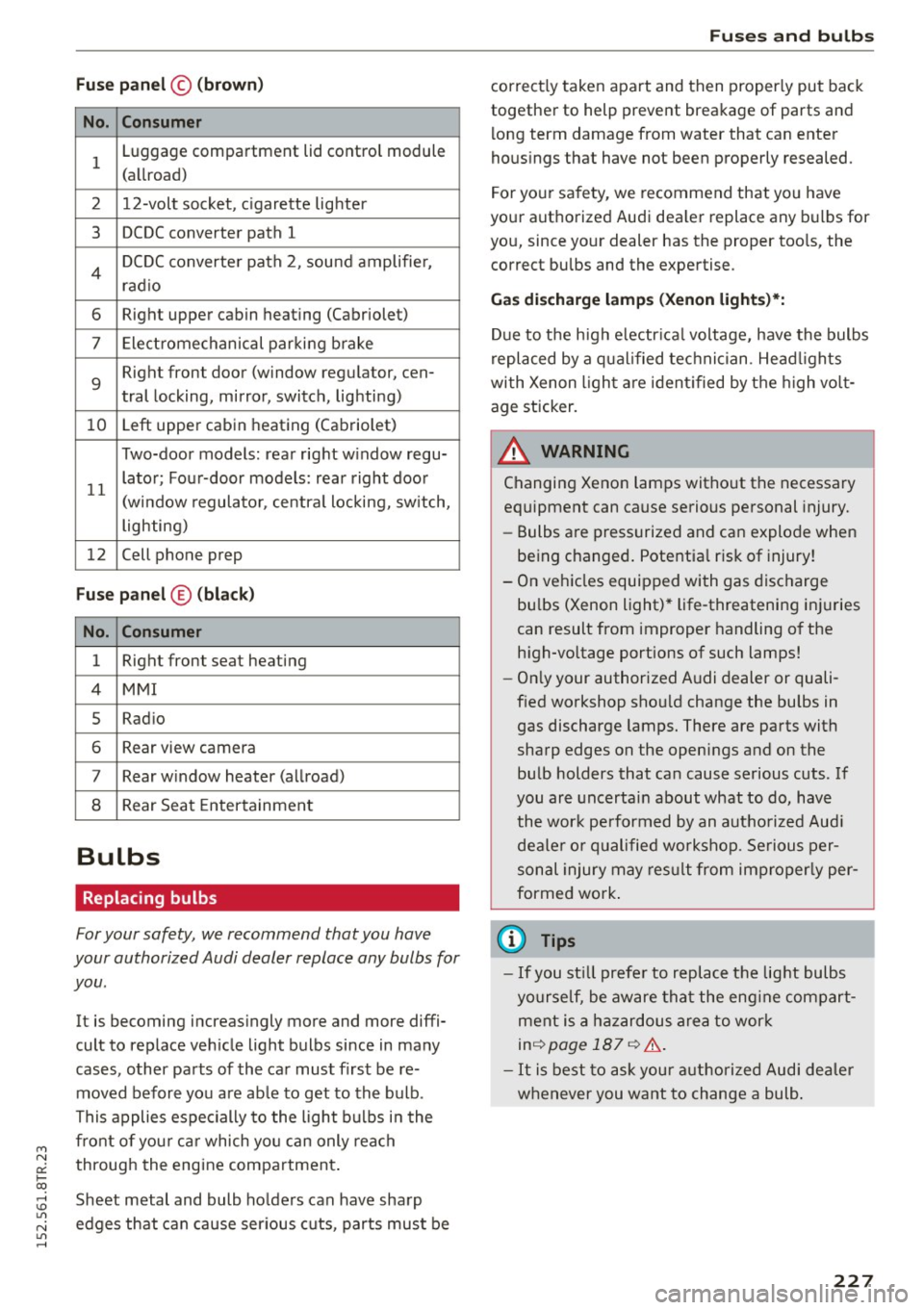
Fuse panel© (brown)
No. Consumer
1 Luggage compartment lid control module
(allroad)
2 12-volt socket, cigarette lighter
3 DCDC converter path 1
4 DCDC converter path 2, sound amplifie r,
rad io
6 Right upper cabin heating (Cabriolet)
7 Electromechanical parking brake
9
Right front door (window regulator, cen-
tral locking, mirror, switch, lighting)
10 Left upper cabin
heating (Cabriolet)
Two-door models: rear right w indow regu-
11 lator; Four-door models: rear
right door
(window regulator, central locking, switch,
lighting)
12 Cell phone prep
Fuse
panel © (black)
No. Consumer
1 Right front seat heating
4 MMI
5 Radio
6 Rear view camera
7 Rear window heater (allroad)
8 Rear
Seat Entertainment
Bulbs
Replacing bulbs
For your safety, we recommend that you have
your authorized Audi dealer replace any bulbs for
you .
It is becoming increasingly more and more diffi
cult to replace vehicle light bulbs since in many
cases , other parts of the car must first be re
moved before you are ab le to get to the bulb .
This applies especially to the light bulbs in the
front of you r ca r which you can only reach
through the engine compartment .
Sheet metal and bulb holders can have sharp
edges that can cause ser ious cuts, parts must be
Fuses and bulbs
correct ly taken apart and then properly put back
together to help prevent breakage of parts and
long term damage from water that can enter
housings that have not been properly resealed.
For your safety, we recommend that you have
your authorized Audi dea ler replace any bulbs for
you, since your dealer has the proper tools, the
correct bulbs and the expertise.
Gas discharge lamp s (Xenon lights)*:
Due to the high electr ical voltage, have the bulbs
replaced by a qualified technician . Head lights
with Xenon light are identified by the high volt
age sticker.
A WARNING
Changing Xenon lamps without the necessary
equipment can cause serious personal injury.
- Bulbs are pressurized and can explode when
being changed . Potential risk of injury!
- On vehicles equipped with gas discharge
bu lbs (Xenon light) * life -threatening injuries
can result from improper handling of the
high -vo ltage portions of such lamps!
-On ly your authorized Audi dealer or quali
fied workshop shou ld change the bulbs in
gas discharge lamps. There are parts with
sharp edges on the openings and on the
bulb holders that can cause serious cuts . If
you are uncertain about what to do, have
the wor k performed by an autho rized Audi
dealer or qualified workshop. Serious per
sonal injury may result from improperly per
formed work .
(D Tips
-If you st ill prefer to replace the light bulbs
yourself, be aware that the eng ine compart
ment is a hazardous area to work
inq page 187 q &..
-It is best to ask your authorized Audi dealer
whenever you want to change a bulb.
227
Page 232 of 254

Emergency situation s
-The ba ttery ce ll lockin g screws must be
t ightened securely .
- Before you check anyt hing in the engine
compartment, always read and heed all
WARNINGS
c> page 187.
(D Note
Improper hook -u p of jumper cables can r uin
the generator .
- A lways connect POS ITIV E(+ ) to POS ITIV E
( + ), and NEGATIVE( -) to NEGATIVE( -)
gro und post of the battery manager control
unit .
- Check that a ll screw plugs o n the batte ry
ce lls are screwed in firmly . If not, tighten
pl ugs prior to connect ing clamp on negat ive
battery te rminal.
- Please note that the procedure for connect
i ng a jumper cable as desc ribed above ap
plies specifica lly to the case of yo ur vehicle
being jump started . W hen you a re g iving a
j u mp sta rt to another vehicl e, do
not co n
ne ct the negative ( -) cab le to the negative
( -) t erminal o n the di scharged battery @
c> fig. 18 8 . In stea d, secure ly co nn ect the
nega tive ( -) cab le to either a solid me tal
com ponent that is f irm ly bolted to the en
gine block o r to t he engine bloc k itself. I f
the battery that is being charged does not
vent to the outside , escap ing battery gas
could ignite and exp lode!
Towing with a tow truck
General hints
Y o ur Audi requires special handling for towing.
The fo llow ing information is to be used by com
mercia l tow truck operato rs who know how to op
erate their eq uipment safe ly .
- Never tow your Audi, towing will cause dam
age to the engine and transmiss ion.
- Never wrap the safety chains or winch cables
around the brake lines .
- To pre vent unnecessary damage, your Audi
must be transported with a flat bed truck.
230
- To load the vehicle on to the flat bed , use the
towing loop found in the vehicle tools and at·
tach to the front or rear anchorage
c> page 230 and c:>page 231.
A WARNING
A veh icle being towed is not safe f or passe n
gers . Never a llow anyone to ride in a ve hicle
be ing towed, fo r any reason .
Front towing loop
Do not install the front towing loop until it is
needed .
Fig. 18 9 Fro nt b um per: remov ing t he cove r cap
Fig. 190 Front b umper: sc rew ing in t he tow ing loop
The towing loo p fits in to the threade d hole locat
ed on the right side o f the front bum per and cov
e red by a small cover when not in use .
.,. Remove the tow ing loop fr om the vehicle tool
ki t
c> page 216.
... Take ho ld of the bot tom edge o f the cover cap
and pull it out of the bumpe r
9fig . 189 .
... Sc rew the tow ing loop t ightly into the threaded
hole as far as it will go
c> fig. 190 and t ighten it
with the wheel wrench . ..,.
Page 234 of 254
Emergency situation s
Raising the vehicle
Lifting with workshop hoist and with floor
jack
The v ehicle may only be lifted at the lifting
points illustrated.
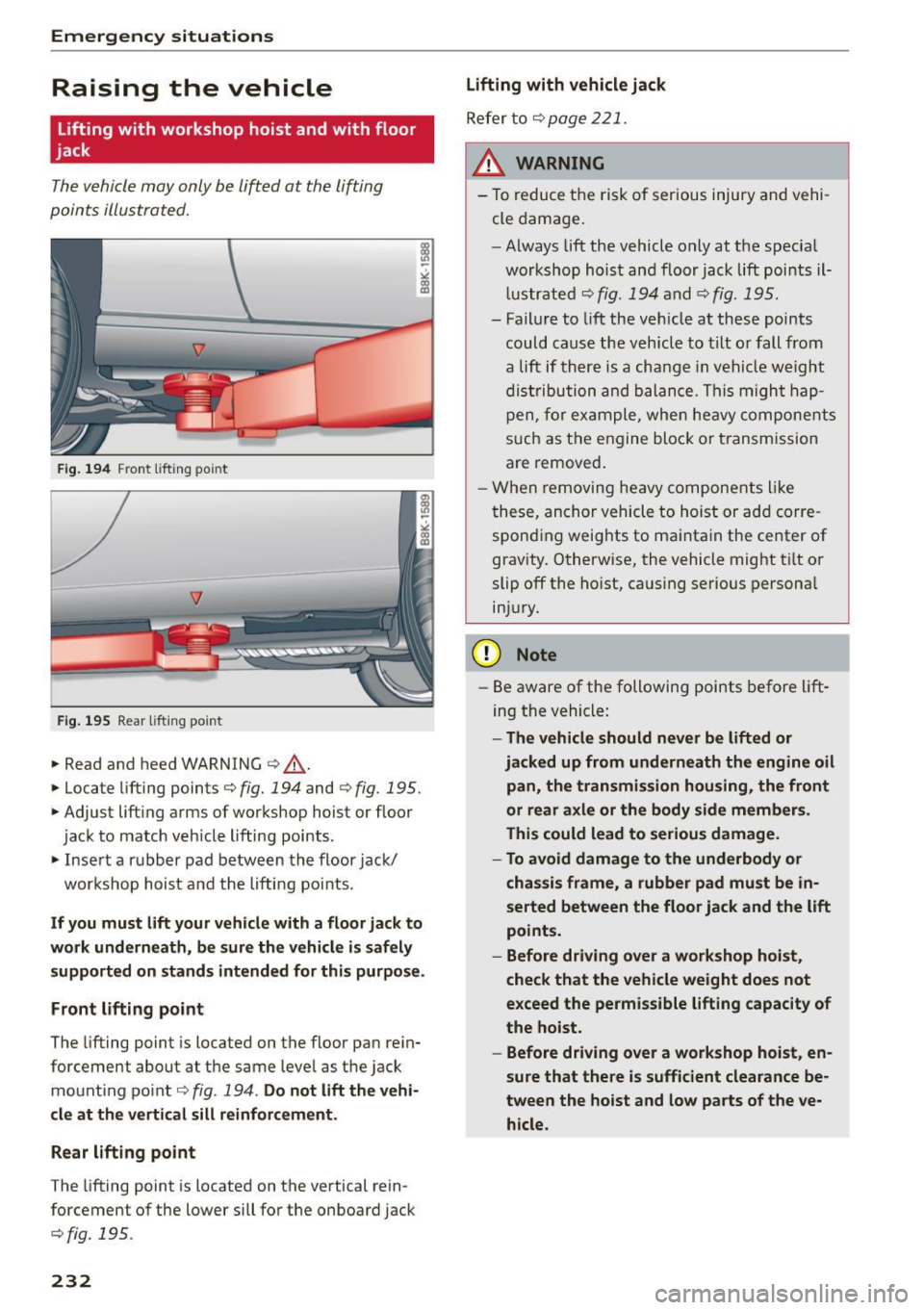
F ig . 1 94 Front lift in g po int
F ig . 1 95 Rear l ift ing po int
... Read and heed WARNING c> &_ .
... Locate lifting points c> fig. 194 and c> fig . 195.
... Adjust lift ing arms of workshop hoist or floor
jack to match veh icle lifting points.
... Inse rt a r ubber pad between the floor jack/
workshop hoist and the lifting points .
If you must lift your vehicle with a floor jack to
work underneath, be sure th e vehicle is safely
supported on stands intended for this purpo se.
F ront l ifting point
The lifting point is located on the floor pan rein
forcement about at the same leve l as the jack
mount ing po int
c> fig . 194 . Do not lift the vehi
cle at the vertical sill reinforcement .
Rear lift ing point
The lifting point is located on the vertical rein
forcement of the lower sill fo r the on board jack
c>fig. 195.
232
Lifting with vehicle jack
Refer to c::> page 221.
A WARNING
- To reduce t he risk of serious injury and vehi
cle damage .
- Always lift the vehicle only at the specia l
workshop hoist and f loor jack lift points il
l ustrat ed
c::> fig . 194 and c> fig. 195.
-Failure to lift the veh icle a t these points
could cause the veh icle to tilt o r fall from
a lift if th ere is a cha nge in vehi cle we ight
dis tribu tio n and balance. T his m ight hap
p en, for example, whe n he avy compone nts
s uch as the en gine block or tran smission
are removed .
- W hen removing he avy componen ts like
these, anchor vehicle to hoist or ad d corre
spond ing weights to ma intain the center of
grav ity . Otherwise, the vehicle might ti lt o r
slip off the ho ist , causing se rious persona l
in jury .
(D Note
-Be aware of the following points before lift
ing the vehicle:
- The veh icle should never be lifted or
jacked up from underneath the engine oil pan, the transmis sion housing, the front
or rear axle or the body side members .
This could lead to serious damage .
- To avoid damage to the underbody or
chas sis frame , a rubber pad must be in
serted between the floor ja ck and the lift
points.
- Before driving over a workshop hoist,
check that the vehicle weight doe s not
exceed the permissible lifting capacity of
the hoist.
- Before driving over a work shop hoist , en
sure that the re is sufficient clearance be
tween the hoist and low parts of the ve
h icle.