overheating AUDI RS7 SPORTBACK 2015 Owners Manual
[x] Cancel search | Manufacturer: AUDI, Model Year: 2015, Model line: RS7 SPORTBACK, Model: AUDI RS7 SPORTBACK 2015Pages: 302, PDF Size: 74.76 MB
Page 24 of 302
22 Instruments and warning/indicator lights
There is a malfunction with the sport differen
t ial.
Drive to your authorized Aud i dealer immedi
ately to have the malfunction cor rected.
(II Sport differential: overheating
The transmission temperature has increased
significantly due to the sporty driving manner .
Drive in a less sporty manner until the tem
perature returns to the normal range and the
indicator light switches of.
& WARNING
Contact your authorized Audi dealer or a
qualified workshop if the sport differential
is faulty or malfunctioning. The repair
must be performed by trained personnel
using the correct oil in order to ensure
safety.
¢ Q Turn signals
-
The indicator light blinks when you use either
turn signal.
Whenever you use the left. or the rig ht B
turn signal , the indicator light blinks. When
you use the emergency flashers, both indica
tor lights f lash.
I f one of the turn signal light bulbs burn out,
the turn signa l will blink twice as fast as nor
mal. Carefully drive to your authorized Audi
dealer immediately to have the malfunction
corrected.
@ Tips
For more information on the turn signals,
refer to r::!>
page 46.
CRUISE /"(0) Cruise control
The warning/indicator light II (USA models)/
ll (Canada models) illuminates when the
cru ise control is activated
c::> page 79 .
Driver information
display
Overview
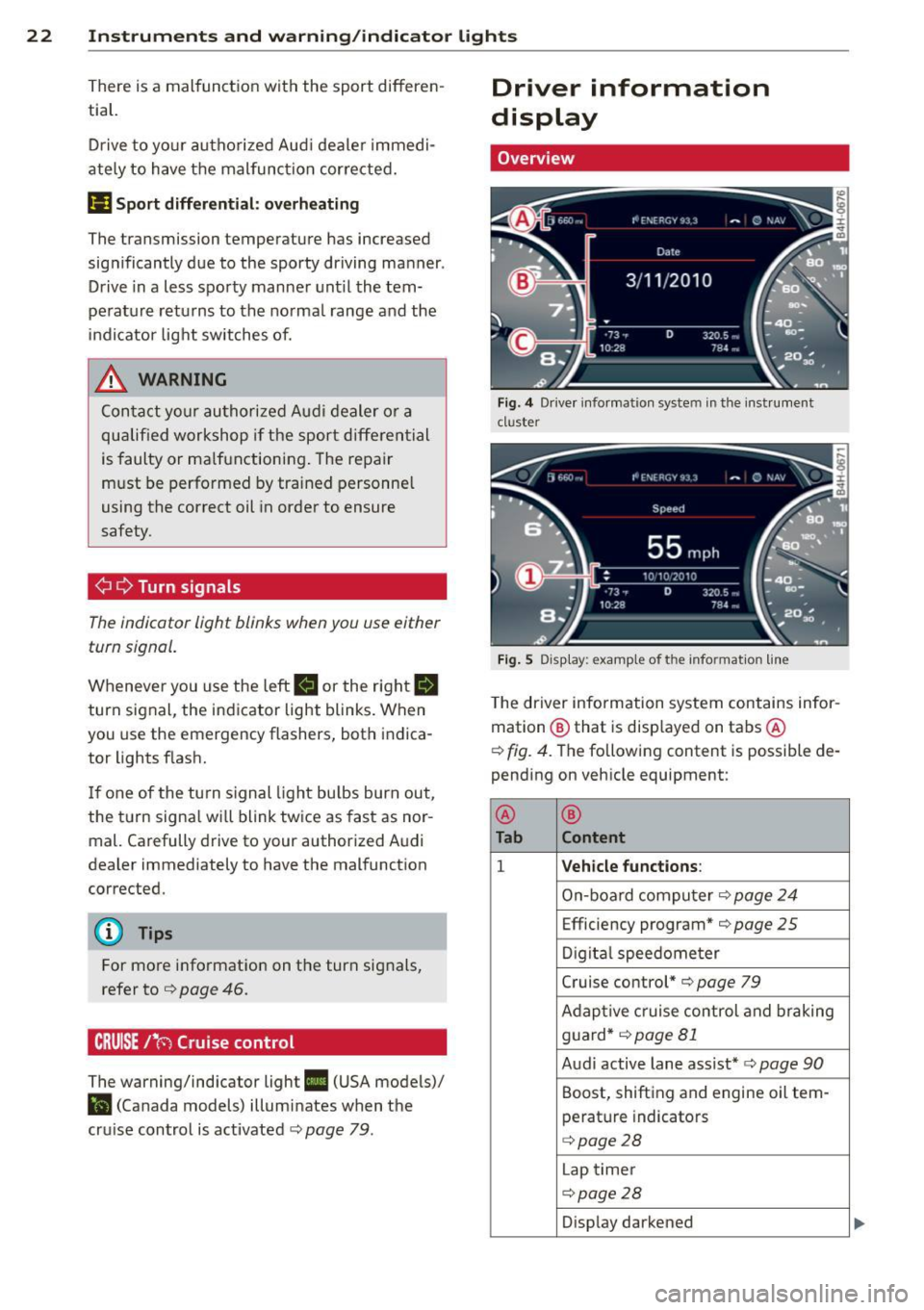
Fig. 4 Dr iver informat ion syste m in the instrument
cl uster
Fig. S Di sp lay: exampl e of t he info rmatio n lin e
The driver information system contains infor
mation @ that is displayed on tabs @
c::> fig. 4. The following content is possible de
pending on vehicle equipment:
@
®
Tab Content
1 Vehicle functions :
On-board computer c::> page 24
Efficiency program* c::> page 25
Digital speedometer
Cruise control*
c::> page 79
Adaptive c ruise control and braking
g uard*
c::> page Bl
Audi active lane assist* c::> page 90
Boost, shifting and engine oil tern-
perature indicators
c::> page 28
Lap timer
c::> page 28
Display darkened
Page 82 of 302
80 On the road
the distance between your vehicle and
other vehicles.
- For safety reasons, the cruise control
should not be used in the city, in stop and-go traffic, on twisting roads and
when road conditions are poor (such as
ice, fog, gravel, heavy rain and hydro
planing) -risk of accident .
- Turn off the cruise control temporarily
when entering turn lanes, highway exit
lanes or in construction zones.
- Please note that inadvertently "resting" your foot on the accelerator pedal causes
the cruise control not to brake. This is
because the cruise control is overridden
by the driver's acceleration.
- If a brake system malfunction such as
overheating occurs when the cruise con
trol system is switched on, the braking
function in the system may be switched
off. The other cruise control functions re
main active as long as the indicator light
II (US models) !Iii (Canadian models)
is on.
The brake lights illuminate as soon as the
brakes decelerate automatically.
Changing speed
Applies to vehicles: with cru ise control
.,. To increase/decrease the speed in incre
ments, tap the lever in the
010 direction
¢ page 79, fig . 86
.,. To increase/decrease the speed quickly, hold
the lever in the
010 direction until the de
sired speed is displayed.
You can also press the accelerator pedal down
to increase your speed, e.g . if you want to
pass someone. The speed you saved earlier
will resume as soon as you release the acceler
ator pedal.
If , however, you exceed your saved speed by
6 mph (10 km/h) for longer than 5 minutes,
the cruise control will turn off temporarily.
The green symbol
II (US models) !Iii (Cana- dian models) in the display will go out but the
saved speed remains the same.
Presetting your speed
Applies to vehicles: with cruise cont
rol
You can preset your desired speed while the
vehicle is not moving.
.,. Switch on the ignition.
.,. Pull lever into position@¢
page 79,
fig. 86.
.,. Press the lever in the 0 or 0 direction to
increase or decrease your speed.
.,. Release the lever to save that speed.
This function makes it possible, for example,
to save the speed you want before driving on
the highway. Once on the highway, activate
the cruise control by pulling the lever toward
@.
Switching the system off
Applies to vehicles: with cruise control
Temporary deactivation
.,. Press the brake pedal, or
.,. Press the lever into position@(not clicked
into place)
~ page 79, fig . 86, or
.,. Drive for longer than 5 minutes at more
than 5 mph (10 km/h) above the stored
speed.
Switching off completely
.,. Press lever into position @ (clicked into
place), or
.,. Switch the ignition off .
The system retains the saved speed if you de
activate the cruise control temporarily. To re
sume the saved speed, release the brake ped
al and pull the lever to position @.
Switching the ignition off erases the saved
speed .
A WARNING
-You should only return to the saved speed
if it is not too fast for the current traffic
conditions -risk of an accident!
Page 109 of 302
"' N
a:: I.J "". rl I.O
"' rl
"' rl
Manual shift program
Using the manual shift program you can
manually select gears.
,
Ir_
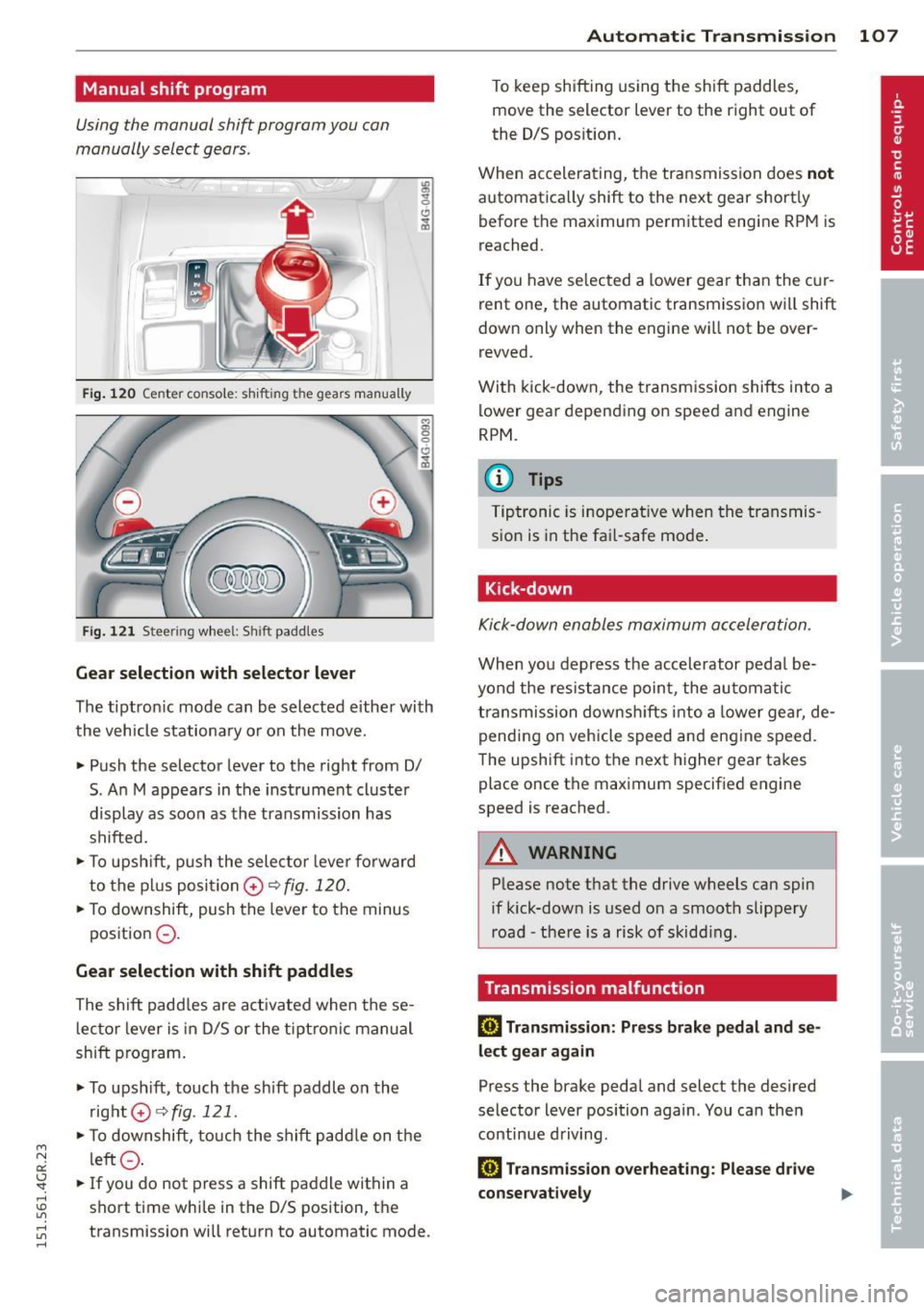
Fig. 120 Ce nter console : sh ift ing the gears manually
Fig. 121 Stee rin g wheel : S hi ft paddles
Gear selection with selector lever
The t iptron ic mode can be selected eithe r with
the vehicle stationary or on the move.
• Push the selector lever to the right from
0/
S. An M appears in the instrument cluster
display as soon as the transmission has
shifted.
• To upshift, push the selector lever forward
to the plus posi tion 0
~ fig. 120.
• To downshift, push the lever to the minus
position
0 -
Gear selection with shift paddles
The shift paddles are activated when these
lector lever is in D/S or the tiptron ic manual
shift program.
• To upsh ift, touch the shift paddle on the
right 0~fig.121 .
• To downshift, touch the shift paddle on the
left
0 .
• If you do not press a shift paddle within a
short time while in the
0/5 posit ion, the
transmission will return to automatic mode .
Automatic Transmission 107
To keep shifting using the shift paddles,
move the selector lever to the right out of
the D/S pos ition.
When accelerating, the transmission does
not
automatically shift to the next gear shortly
before the maximum permitted engine RPM is
reached.
If you have se lected a lower gear than the cur
rent one, the automatic transmission will shift
down only when the engine will not be over
revved.
With kick-down , the transmission shifts into a
lower gear depending on speed and engine
RPM.
(D Tips
Tiptronic is inoperat ive when the transmis
sion is in the fa il-safe mode.
Kick-down
Kick-down enables maximum acceleration.
When you depress the accelerator peda l be
yond the resistance point, the automatic
transmission downshifts into a lower gear, de
pending on vehicle speed and engine speed .
The upshift into the next higher gear takes
place once th e maximum specified engine
speed is reached .
A WARNING
Please note that the drive wheels can spin
if kick-down is used on a smooth slippery
road - there is a risk of skidd ing.
Transmission malfunction
[!l Transmission : Press brake pedal and se
lect gear again
Press the brake pedal and select the desired
selector lever position again . You can then
continue driving.
[!l Transmission overheating: Please drive
conservatively
Page 200 of 302
198 Driving and en vironm ent
_& WARNING
The temperature o f the exhaust system is
high, both when driving and after stopping
the engine .
- Never touch the exha ust tail p ipes once
they have become hot. This could result in burns .
- Do not park or operate the veh icle in
areas where the hot exhaust system may
come in contact with dry grass, brush,
fuel spill or other material which can cause a fire .
- Do not apply additional undercoating or
rustproofing on or near the exhaust
man ifold , exhaust p ipes, catalytic con
verte r or heat shie lds. D uri ng d riving, the
substance used for undercoating cou ld
over heat and cause a fire .
(I) Note
- Be aware that just one tank filling with
l eaded fuel will already seriously de
grade the perfo rmance of the cata lytic
conve rter.
- Do not exceed the correct engine oil leve l
¢page 215.
- Do not d rive until the fuel tank becomes
completely empty. The eng ine could mis
fire. Unburned f uel could a lso ge t in to
t h e exhaus t sys tem and this could cause
the ca talyt ic converte r to ove rheat.
- Do no t switch off the ign ition wh ile the
vehicle is moving.
- Do no t continue to operate yo ur vehicle
u nder these condi tions, as otherw ise fuel
can reac h the catalytic converter . This
could result in overheating of the co n
verter, req uiring its replacement.
- To assure efficient operation of the Emis
sion Control System :
- Have your veh icle maintained properly
and in accordance with the service rec
ommendations in your Wa rranty
&
Ma intenance booklet.
- Lack of proper maintenance as well as
improper use of the vehicle will impa ir the function of the em
ission cont ro l
system and could lead to damage .
~ For the sake of the env ironment
Even when the Emiss ion Con trol Sys tem is
operat ing proper ly, the exha ust gas can
have a sulfur-li ke ex haust gas smell under
some ope rat ing states . This depends on
the sulfur content of the fuel being used .
Using a different brand of fue l may help,
or fil ling the tank with lead -free super
grade gasoline .
Shutting down vehicle
If you would like you r vehicle to remain inop
erative for a longer per iod of t ime, contact an
Audi o r other spec ia lized dealer. They can ad
v ise you on ne cessa ry precautions e .g. co rro
s io n preven tion , maintena nce and s to rage.
Pay a ttent ion to addi tional in fo rmat ion con
cerning the battery. Refer to
¢ page 2 21.
Operate your vehicle
economically and
minimize pollution
General
Your p ersonal style of driving will determine
the economy of your vehicle , as well as ex
haust and nois e le ve ls .
Fu el economy, environmenta l impact, and
wear on your engine , brakes and tires largely
depend on three factors:
- your personal d riving style
- operati ng conditions
- technical limitat ions
If you an tic ipate what you need to do next and
drive economically, you can easily cut your
fuel consumpt io n by 10 -15 percent . This sec
t ion w ill give you some tips on how you can
help the e nvir onment and your pocketbook .
Page 219 of 302
"' N
a:: I.J "". rl I.O
"' rl
"' rl
Engine cooling system
Coolant
The engine coolant performs two functions: it
keeps the engine from overheating and it pro
tects the engine from freezing in the winter .
The cooling system is sealed and generally re
qu ires little attention .
The cooling system has been filled at the fac
tory with a permanent coolant which does not need to be changed. The coolant consists of a
mixture of specially conditioned water and the
manufacturer's glycol-based coolant addi-
tive G13 antifreeze with anticorros ion addi
tives (50% for USA models; 60% for Canadian models) . This mixture both assures the neces
sary frost protection and protects metal com
ponents in the engine's cooling system from
corrosion and scaling.
It also raises the boil
ing point of the coolant.
Do not reduce the concentration of the coo l
ant in the summer by adding plain water .
The
proportion of coolant additive must be at
least 50% but not more than 60%
to main
tain antifree ze protection and cooling efficien
cy. If the coolant frost protection is too low,
the coolant could freeze and damage the vehi
cle heating and eng ine cooling system .
For year-round driving, antifree ze is added at
the factory for temperatures down to:
- -31°F(-35°C)USA
- -40 ° F ( - 40 °C) Canada.
I f you must add coo lant, use a mixture of wa
ter and coolant addit ive. Mixing the coolant
additive with distilled water is recommended.
& WARNING
Before you check anything in the engine
compartment, always read and heed all
WARNINGS ~.&.
in Working in the engine
compartment on page 211.
(D Note
- Before winter sets in, have the coolant
checked to see if the coolant additive in
Checkin g and fillin g 217
your vehicle is sufficient to meet the cli
mate conditions. This is especia lly impor
tant if you live in a region where the win
ter is extremely co ld. If necessary, in
crease the proportion of coolant additive
to 60% .
- When adding coolant additive to your
cooling system, remember :
- We recommend using only coolant ad
ditive G12++ or G13 (check the label)
for your vehicle . This coolant additive is
avai lable at authorized Audi dealers .
Other types of antifreeze can signifi
cantly reduce corrosion protection. The resulting corrosion can cause a loss of
coolant and serious engine damage.
- Do not add any type of radiator leak seal
ant to your vehicle's engine coolant.
Adding radiator repair fluid may adverse
ly affect the function and performance of
your cooling system and could result in
damage not covered by your New Veh icle
Limited Warranty.
Checking the engine coolant level
The engine coolant level can be checked with
a quick glance.
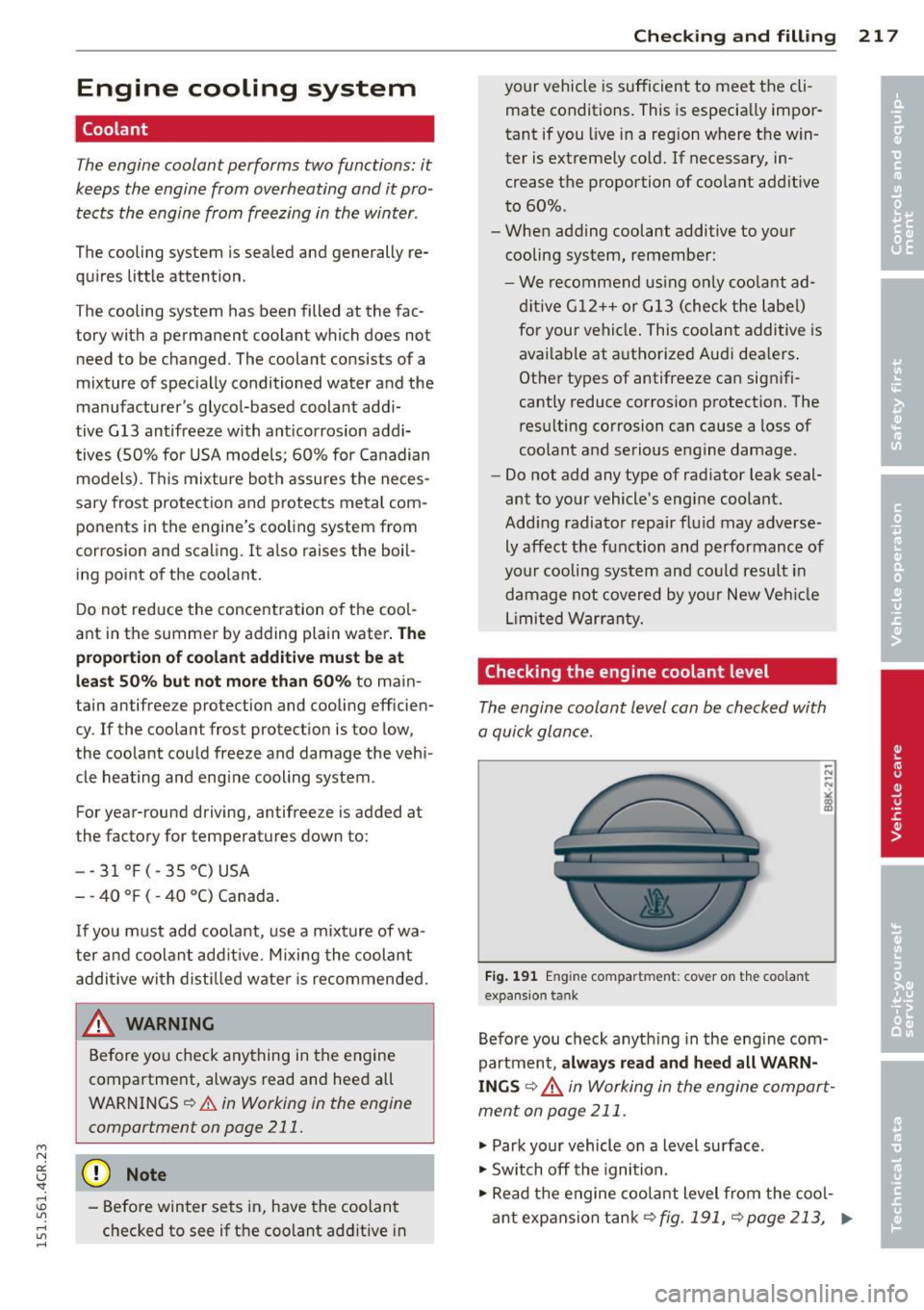
Fig. 191 En gin e compar tment: cover on the coo lant
expansio n tan k
Before you check anyth ing in the eng ine com
partment,
always read and heed all WARN
INGS¢.&, in Working in the engine compart
ment on page 211 .
"'Park your vehicle on a level surface .
"' Sw itch off the ignition.
"' Read the engine coolant level from the cool
ant expansion tank ¢
fig. 191, ¢ page 213, Ill>-
Page 220 of 302
218 Check ing and filling
fig . 188. With a cold engine, the coo lant
l evel should be between the "min" and
"max" markings . When the engine is warm ,
the leve l may be slightly above the "max"
mark ing .
The location of the coolant expansion tank
can be seen in the engine compartment illus
tration
9 page 213.
To obtain an accurate reading, the engine
must be switched off .
The expans ion tank in you r vehicle is equipped
with an e lectric coolant level sensor.
When the coolant level is too low, the warning l ight in the Auto-Check System
9 page 15 w ill
illum inate unti l you add coolant and the level
has been restored to normal. Even though
there is an electric coolant level senso r, we
still recommend you check the coolant leve l
from time to time .
Coolant loss
Coolant loss may indicate a le ak in the cooling
system . In the event of coolant loss, the cool
ing system should be inspected immediately
by your authorized Audi dealer. It is not
enough merely to add coolant.
I n a
s ealed system, losses can occur only if
the boiling point of the coolant is exceeded as
a result of overheating.
A WARNING
The cooling system is under pressure and can get very hot. Reduce the risk of scald
ing from hot coolant by followi ng these
steps .
- Turn off the engine and allow it to coo l
down.
- Protect your face, hands and arms from
escaping fluid and steam by covering the
cap with a large, thick rag .
- Turn the cap slowly and very carefu lly in
a counter-clockwise direction w hile ap
plying light, downward pressure on the
top of the cap . -
To avoid being burned, do not spi ll anti
freeze or coolant on the exha ust system
or hot engine parts. Under certain cond i
tions, the ethylene glycol in engine coo l
a nt can catch fire.
(D Note
Do not add any type of radiator leak sea l
ant to your veh icle's engine coolant. Add
i ng radiator repair fluid may adverse ly af
fect the funct ion and pe rformance of you r
cooling system and could result in damage
not cove red by your New Veh icle Limited
War ran ty.
Adding coolant
Be very careful when adding engine coolant.
Befo re you check anyth ing in the eng ine com
partment,
always read and he ed all WARN
INGS ¢ ..&. in Working in the engine compart
ment on page
211.
" Requirement: There must be a residua l
amo unt of coolant in the expansion ta nk
¢ (D .
"Tu rn off the engi ne.
" Le t the eng ine cool down.
" Place a thick rag over the coolant expansion
t ank
9 page 217, fig. 191 and ca refully
twist the cap counter-clockwise ¢&,, .
" Add coolant m ixed in the correct rat io
¢
page 217, Coolant up to the MAX mark
ing.
" Make sure that the flu id leve l remains sta -
ble . Add more coo la nt if necessary .
" Twist the cap o n again
tightly .
Replacement engine coo lant must conform to
exact spec ificat ions ¢
page 217, Coolant.
We recommend using only coolant add i-
tive
Gl2++, Gl3 or in an emergency Gl2 +. Do
not use a d ifferent addit ive . In an emergency
use p la in water until you can get the correct
additive and can resto re the co rrect rat io . This
shou ld be done as soon as possib le. .,..