instrument panel AUDI S3 2015 Owner's Manual
[x] Cancel search | Manufacturer: AUDI, Model Year: 2015, Model line: S3, Model: AUDI S3 2015Pages: 310, PDF Size: 76.15 MB
Page 174 of 310
172 Child Saf ety
c::> page 144, Airbag system and
c::> page 170 , Important things to
know.
Always rep lace child restraints that were
installed in a vehicle during a crash . Dam
age to a child restraint that is not visible
could cause it to fail in another collision
situation.
Advanced front airbag system and children
Your veh icle is eq uipped with a front "Ad
vanced Airbag System" in compliance with
United States Federal Motor Vehicle Safety
Standard ( FMVSS) 208 as applicab le at the
time your vehicle was manufactured.
The Advanced Airbag system in your vehicle has been certified to meet the " low -risk" re
quirements for 3 and 6 year-o ld children on
the passenger side and small adults on the
driver side. The low risk deployment criter ia
are intended to reduce the risk of injury
through interaction with the a irbag that can
occur, for example, by be ing too close to the
steering wheel and instrument panel when
the airbag inflates. In addi tion, the system
h as been certified to comply w ith the "sup
pression" requirements of the Sa fety Stand
ard, to turn
off the front airbag for infants up
to 12 months who a re restrained on the front
passenger seat in chi ld restraints that are list
ed in the Standard.
Even though yo ur vehicle is equipped with an
Advanced Airbag system, all chi ldren, espe
cially those 12 years and younger, shou ld al
ways ride in the back seat properly restrained
for the ir age and s ize . The a irbag on the pas
senger side makes the front seat a potentially
dangerous place for a child to ride. The front
seat is not the safest place fo r a ch ild in a fo r
ward-facing child safety seat. It can be a ve ry
dangerous place for an infan t or a large r ch ild
in a rearward- facing seat. The vehicle's Advanced Airbag System has a
capacitive passenger detection system i n the
front passenger seat cush ion that can detect
the presence of a baby or a ch ild in a child re
stra int system on this seat.
The capacitive passenger detection system registers the changes that result in an electri
ca l fie ld when a chi ld, a child restra int, and a
baby blanket are on the front passenger seat.
The change in the measured capac itance due
to the p resence of a child, a ch ild restraint,
and a baby blanket on the front passenge r
seat is related to the chi ld restraint system
rest ing o n the seat. The meas ured capa cit an ce
of a child restrain t system varies depend ing
on the type of system and specific make and
model.
T he electrical c apa citan ce of the various
types, makes, and models of child restraints
specified by the U .S . Nationa l Highway Traffic
Safety Administration (NH TSA) in the re levant
safety standard are stored in the Advanced
Airbag System contro l unit together with the
capacitances typical of infants and a 1-year
o ld child . When a child restraint is used on the
front passenger seat with a typical 1 year-old
infa nt, the Advanced Airbag System compa res
the capacitance measu red by the capacitive
passenge r de tection system wi th the data
stored in the electron ic cont ro l unit . Child restraints and Advanced front
airbag system
Regardless of the c hild restra int that you use,
make sure that it has been cert ified to meet
U nited States Federal Motor Vehicle Safety
Standards and has been ce rtified by its manu
factu rer for use with an airbag. A lways be sure
t h at the c hild restr aint is properly installed at
one of the rear seating posi tions. If in excep
t iona l circumstances yo u must use it on the
front passenger seat, carefully read a ll of the
information on child sa fety and Advanced Air
bags and heed all of the applicable WARN
INGS . Make certain that the c hild and chi ld re
stra int are correctly recognized by the capac i
t ive passenger detection system in the front .,.
Page 221 of 310
....,
N
0 > co
rl I.O
"' ....,
"' rl
Opening the hood
The hood is released from the interior.
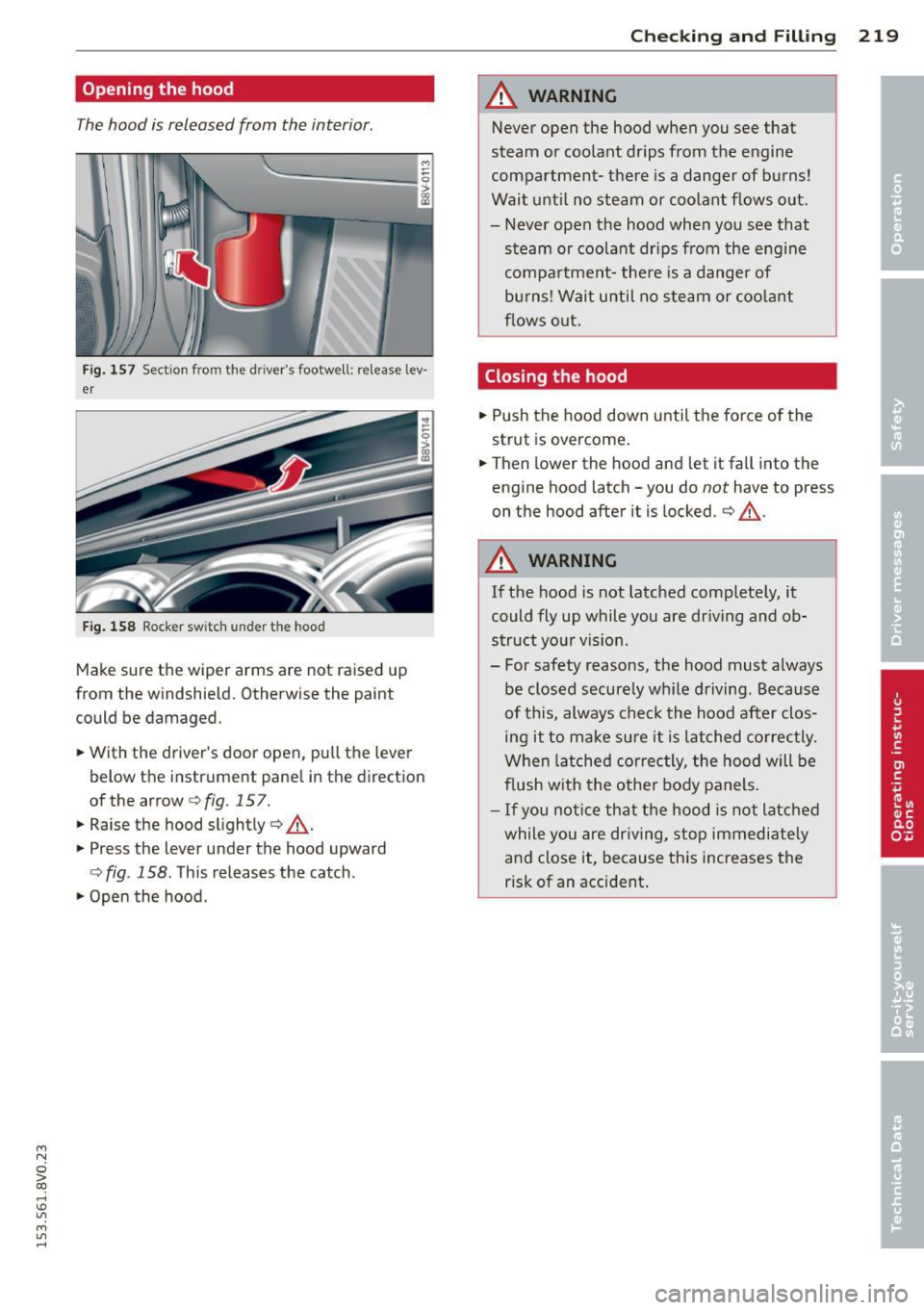
Fig. 157 Sect ion from the driver's footwe ll: release lev·
er
F ig. 158 Rocker switch un de r the hood
Make sure the wiper arms are not raised up
from the windshield. Otherwise the paint
could be damaged.
• With the driver's door open, pu ll the lever
below the instrument pane l in the direction
of the arrow
¢ fig. 157.
• Raise the hood slightly c;, &_ .
• Press the lever under the hood upward
c;, fig . 158. This releases the catch .
• Open the hood .
Che cking and Fillin g 219
A WARNING
Never open the hood when you see that
steam or coo lant drips from t he e ngine
compartment· there is a danger of burns!
Wait unti l no steam or coolant flows o ut.
- Never open the hood when you see that
steam or coo lant dr ips from the engine
compa rtment- the re is a dange r of
bu rns! Wai t until no ste am or coo lan t
flows o ut.
Closing the hood
• Push the hood down unti l the fo rce of the
strut is overcome .
• Then lower the hood and let it fall into the
engine hood latch -you do
not have to press
on the hood after it is locked.
c;, &_ .
A WARNING
If the hood is not latched complete ly, it
could fly up while you are dr iv ing and ob
struct you r vis io n.
- For safety reasons, the hood must always
be closed secure ly wh ile d riving. Because
of this, always check the hood after clos
ing it to make sure it is lat ched co rrectly.
When latched correc tly, the hood will be
f lush w ith the othe r body panels .
-If you no tic e th at t he hood is not latched
while you are dr iving, stop immedi ately
and close it, because this increases the
ris k of an accident .