warning light AUDI S3 SEDAN 2015 Owners Manual
[x] Cancel search | Manufacturer: AUDI, Model Year: 2015, Model line: S3 SEDAN, Model: AUDI S3 SEDAN 2015Pages: 282, PDF Size: 71.14 MB
Page 199 of 282
....,
N
0 > co
rl I.O
"'
"'
"'
rl
This message appears if the system has detected
that the tank was filled incorrectly or that there
is a malfunction. Drive immediately to the near
est authori zed Aud i dealer or authori zed Audi
Service Facility to have the malfunction correct
ed . Otherwise you will not be able to start the en
g in e again once you stop it.
Filling the Ad Blue
Applies to vehicles: with selective catalyt ic red uctio n
A special refill bottle must be used to fill the
AdBlue.
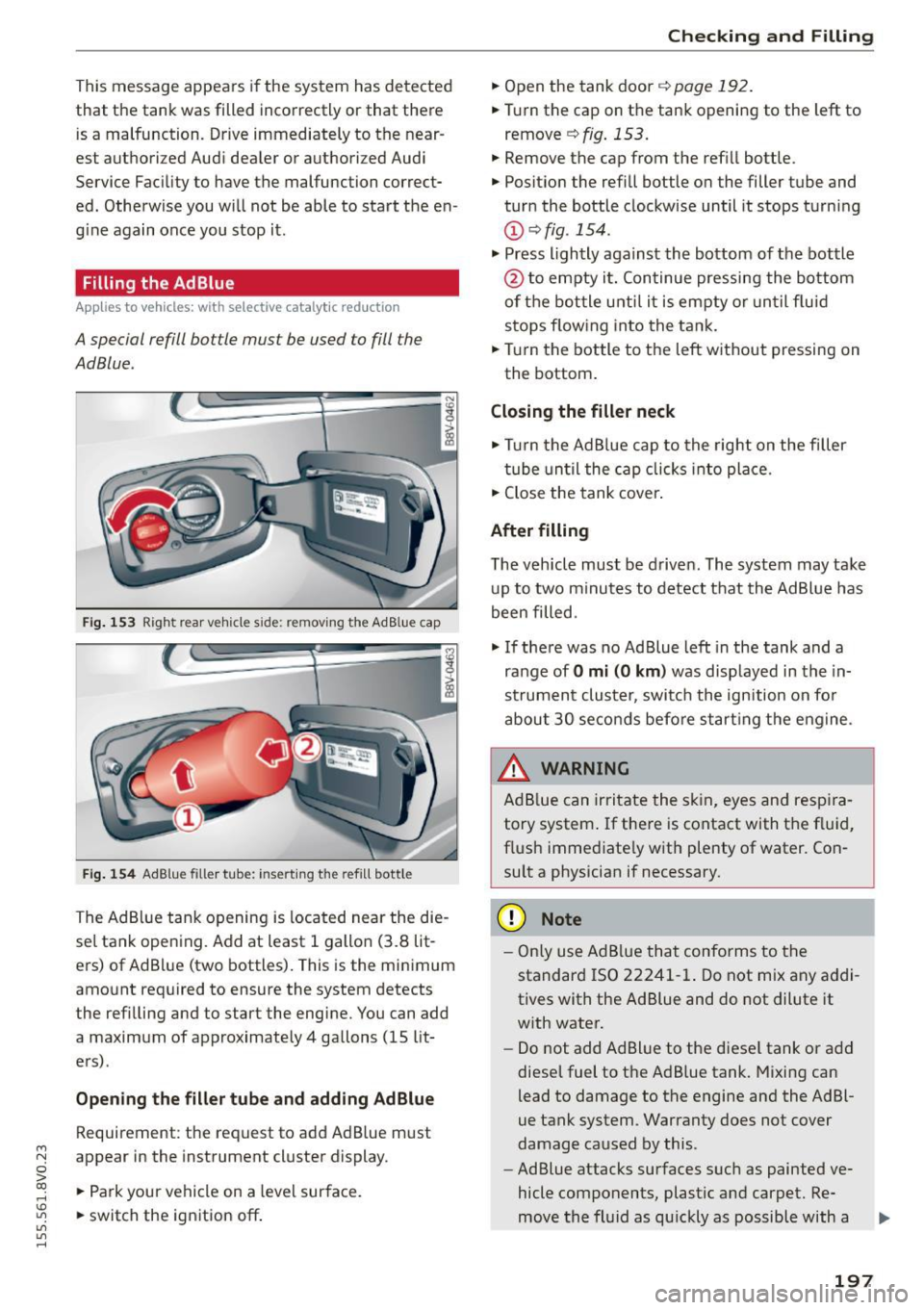
Fig. 153 Right rear vehicle s ide: removing the Ad B lue cap
Fig. 154 Ad Blue filler tube: inserting the refi ll bott le
The Ad Blue tank opening is located near the die
sel tank opening. Add at least 1 gallon (3.8 lit
ers) of AdBlue (two bottles). This is the minimum
amount required to ensure the system detects
the refilling and to start the engine. You can add
a maximum of approximately 4 gallons (15 lit
ers) .
Opening the filler tube and adding AdBlue
Requirement: the request to add Ad Blue must
appear in the instrument cluster display.
• Park your vehicle on a level surface.
• switch the ignition off .
Checking and Filling
• Open the tank door q page 192.
• Tur n the cap on the tank opening to the left to
remove
q fig. 153.
• Remove the cap from the refill bottle.
• Position the refill bottle on the filler tube and
turn the bottle clockwise until it stops turning
@ qfig. 154.
• Press lightly against the bottom of the bottle
@ to empty it. Con tinue pressing the bottom
of the bottle unti l it is empty or until flu id
stops flowing into the tank.
• Turn the bottle to the left without pressing on
the bottom.
Closing the filler neck
• Turn the Ad Blue cap to the right on the filler
tube until the cap clicks into place.
• Close the tank cover.
After filling
The vehicle must be driven. The system may take
up to two minutes to detect that the AdBlue has
been filled.
• If there was no Ad Blue left in the tank and a
range of
O mi (0 km ) was displayed in the in
strument cluster, switch the ignition on fo r
about 30 seconds before start ing the engine.
_& WARNING
=
Ad Blue can irritate the skin, eyes and respira-
tory system . If there is contact with the fluid,
flush immediate ly with plenty of water. Con
sult a physician if necessary.
(D Note
- Only use Ad Blue that conforms to the
standard ISO 22241-1. Do not mix any addi
tives with the Ad Blue and do not dilute it
with water.
- Do not add AdBlue to the diese l tank or add
diesel fuel to the Ad B lue tank. Mixing can
lead to damage to the engine and the Ad Bl
ue tank system. Warranty does not cover
damage caused by this .
- Ad Blue attacks surfaces such as painted ve
hicle components, plastic and carpet. Re-
move the fluid as quickly as possible with a ..,.
197
Page 201 of 282
....,
N
0 > co
rl I.O
"'
"'
"'
rl
-Always proceed with extreme caution so
that clothing, jewelry or long hair do not
become caught in the radia tor fan, fan
belt or other moving components or do not come into contact with hot compo
nents . T ie back long hair before beg inning
work and do no t wear cloth ing that can
hang down into the eng ine.
- limit your exposure to exhaust and chemi
cals to as short a time as possible
q ,& .
..&, WARNING
California Propos ition 65 Warning:
- Engine exhaust, some of its constituents,
and certai n veh icle components conta in or
em it chemicals known to the State of Cali
forn ia to cause cancer and birth defec ts and
reproductive harm. In addition, certai n flu
ids contained in vehicles and certain prod
ucts of component wear contain or emit
chemicals known to the State of California
t o cause cancer and birth defects or other
reproductive harm .
- Battery posts , terminals and related acces
sories contain lead and lead compounds,
chem icals known to the State of California
to cause cancer and reproductive harms .
Wash hands after hand ling.
(D Note
When filli ng flu ids, be sure not to m ix the flu
ids up . Otherwise seve re malfunctions and en
gine damage w ill occur .
@ For the sake of the environment
You should regu larly check the grou nd under
your veh icle in order to detect leaks quickly . If
there are visible spots from oil or other f luids,
b ring yo ur vehicle to an autho rized Aud i dea l
er or authori zed Audi Se rv ice F acili ty to be
checked.
Ch eck in g and Fillin g
Opening the hood
The hood is released from the in terior .
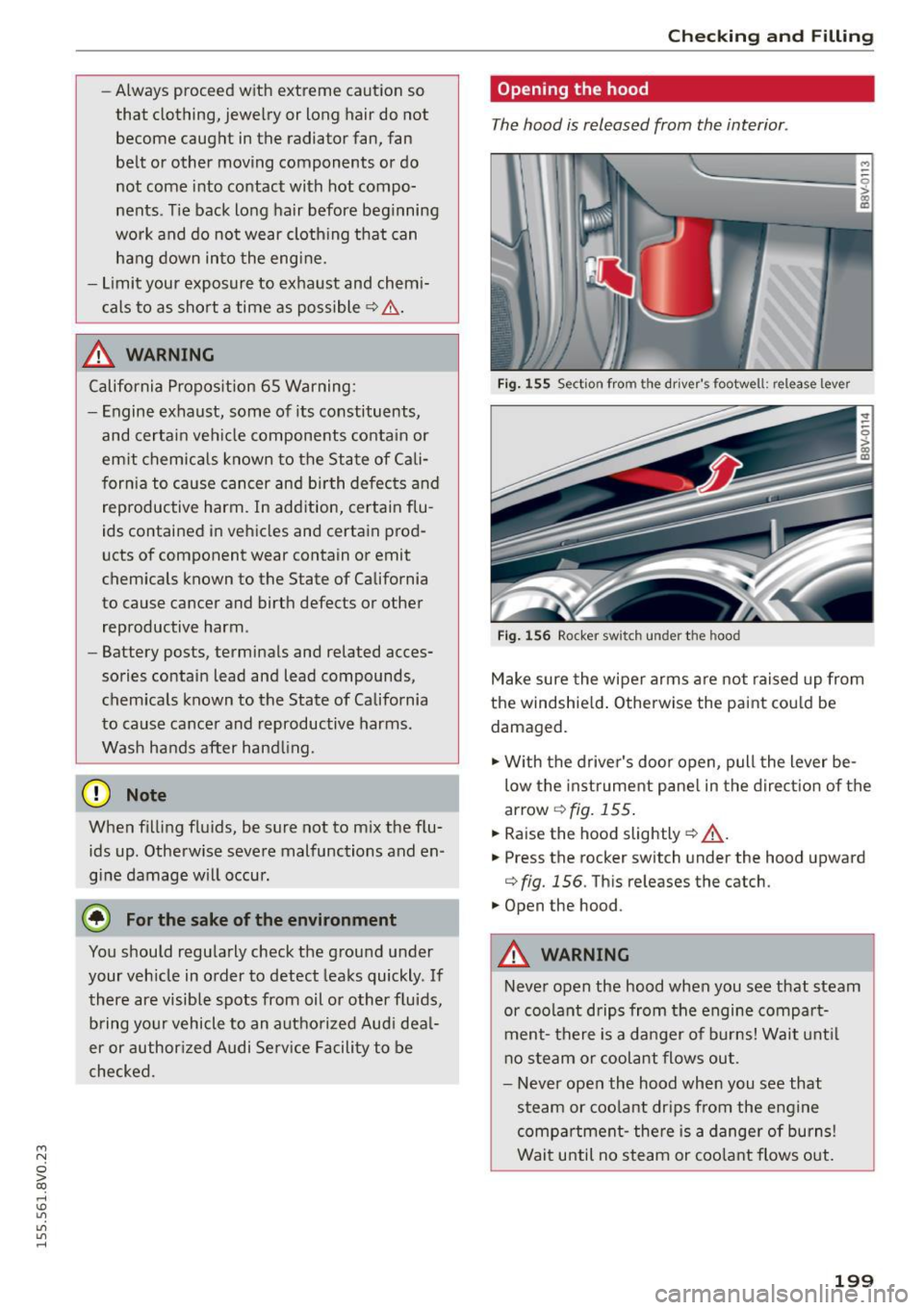
Fig . 155 Se ctio n from t he dr iver' s footwe ll: re le a se le ve r
Fig . 156 Ro cke r swit c h un der t he hoo d
Make sure the wiper arms a re not raised up from
the windsh ie ld . Oth erwise the paint cou ld be
damaged.
.,. W ith the driver's door open, pull the lever be
low the instr ument pane l in the d irect ion of the
arrow
<=> fig. 155.
.,. Raise the hood slightly r:!> ff::.. .
.,. Press the rocker switch unde r the hood upward
q fig. 156 . This re leases the catch .
.,. Open the hood .
..&, WARNING
-=
Never open the hood when you see that steam
or coolant drips from the engine compart
ment- there is a da nger of bu rns! Wait unt il
n o steam or coolant flows out .
- Never open the hood when you see that
s team or coo lant dr ips from the e ngine
comp artment- the re is a dange r of burns !
Wait until no steam or coo lant flows o ut .
199
Page 202 of 282
Checking and Fill in g
Closing the hood
.. Push the hood down until the force of the strut
is overcome.
.. Let the hood fall light ly into the Latch.
Do not
press it in.
c::> _&. .
A WARNING
If the hood is not latched completely, it cou ld
fly up while you are driving and obstruct your
vision.
Gasoline engine compartment overview
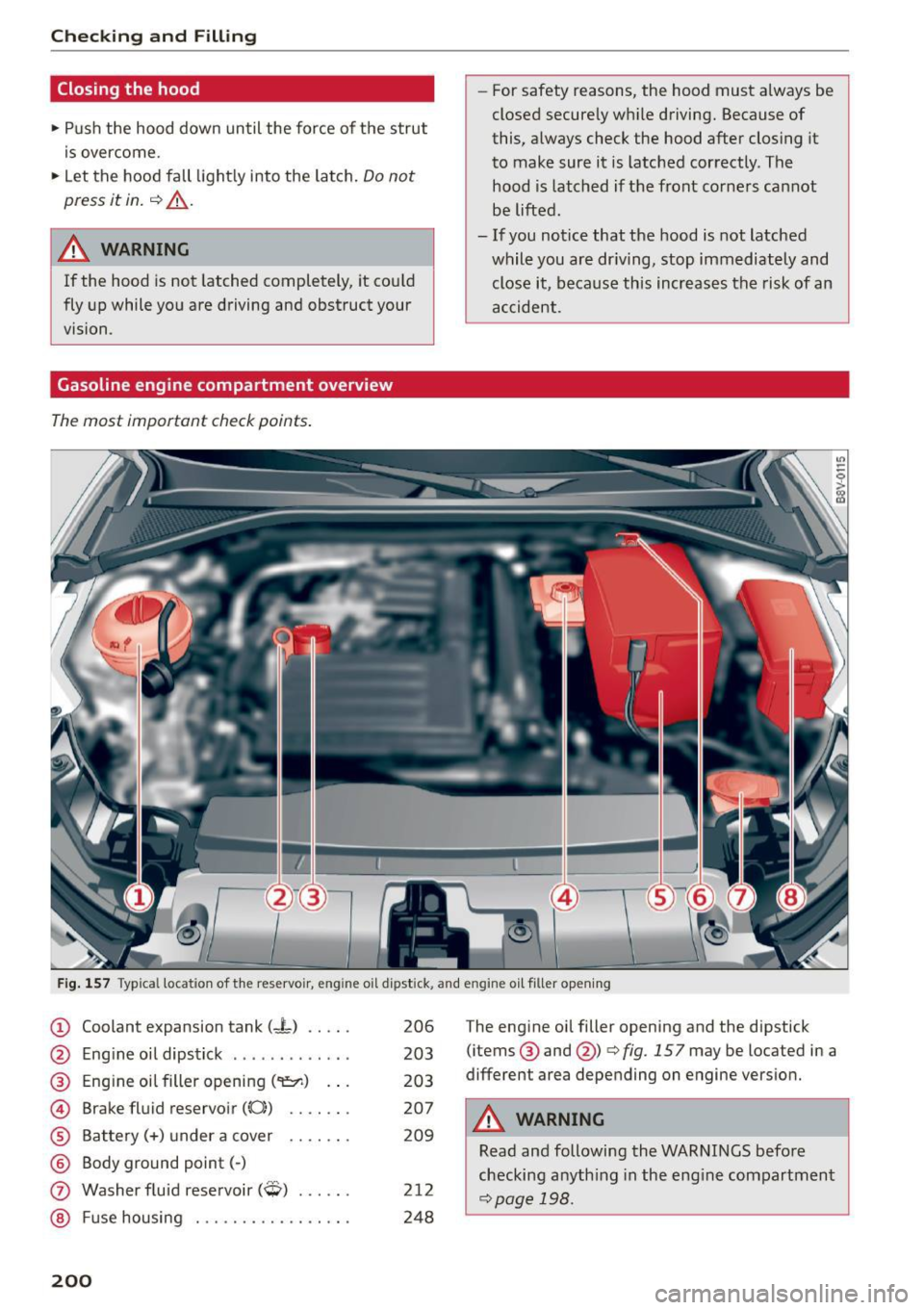
The most important check points .
-For safety reasons, the hood must always be
closed securely wh ile d riving. Because of
this, always check the hood after closing it
to make sure it is Latched correctly . The
hood is Latched if the front corne rs cannot
be Lifted.
- If you notice that the hood is not Latched while you are dr iving, stop immediately and
close it, because this increases the risk of an
accident.
F ig . 1 57 Typica l locat io n of th e reservo ir, eng ine oil dipstick, a nd engine o il filler opening
(D Coolant expansion tank (_L) .....
@
@
©
®
®
0
®
Eng ine oil dipstick ......... ... .
E ng ine oil filler opening
("!:::r.) .. .
Brake fluid reservoir((())) ...... .
Ba ttery(+) under a cover
Body ground point(-)
Washer fluid reservoir
(W) ... .. .
Fu se housing ... ......... .... .
200
206
203
203
207
209
212
248
The engine oil filler opening and the dipstick
( items @and
@) c::> fig. 157 may be Located in a
different area depending on engine vers io n.
A WARNING -
Read and following the WARNINGS before
checking anyth ing in the eng ine compartment
c::> pag e 198.
Page 204 of 282
Checking and F ill in g
Using the proper engine o il is important for the
functionality and service life of the engine. Your
engine was factory-fi lled w ith a high-quality o il
which can usually be used throughout the ent ire
year.
@) Note
Your L imited New Vehicle Warranty does not
cover damage or malfunctions due to failure
to follow recommended ma intenance and use
requ irements as set forth in the Audi Ow ne r's
Manual and Wa rranty
& Ma intenance booklet .
- Use only a high quality eng ine oil t hat ex-
pressly comp lies w ith the Audi o il quality
standard specified for your vehicle's e ngine .
Using a ny other oil can cause se rious engine
damage.
- Do not mix any lubricants o r othe r addit ives
i nto the engine oil. Doing so can cause en
g ine damage.
(D Tips
If you need to add oil and there is none availa
ble that meets the Audi o il quality standard
y o ur eng ine requires, you m ay add a total of
no more than 0.5 quart/li ter o f a h igh-quali ty
"synthet ic"oil that meets the fo llowing speci
fications .
- V ehicles wi th gasoline engine: AC EA A3 o r
API SM with a viscosity grade of SAE 0W- 30,
SAE SW -30 or SAE SW-40 .
- Vehicles with d iesel engine: ACEA C3 o r
API CF with a viscosity g rade of SAE 0W-30
or SAE SW-30.
- Fo r more information abo ut engine oi l t h at
has been approved for your vehicle, please
contact either your a uthorized Audi dea ler
or Audi Customer Relations at
1 (800) 822-2834 or visit ou r web site at
www.aud iusa.com or www .aud icanada .ca.
Engine oil consumption
The engine in your vehicle depends on an ade
quate amount of oil to lubricate and cool all of
its moving parts .
In order to provide effective lubrication and cool ing of in ternal engine components, all internal
202
combust ion engines consume a certa in amoun t
of oil. Oil consumptio n varies from engine to en
gine and may change sign ificant ly over the li fe of
the engine . Typically, eng ines with a specif ied
break-in period (see
¢ page 70) consume more
o il dur ing the break-in per iod than they consume
after oil consumption has s tabilized .
Under normal cond itions, the rate of oil con
sump tion depends on the quality and viscos ity of
the oil, the RPM (revolutions per minute) at
wh ich the engine is operated, the ambie nt tem
perature and road cond it ions . Furthe r facto rs a re
t h e amo unt of o il di lution from water conde nsa
t ion or fue l residue and the ox idat ion leve l o f the
o il. As any engine is s ubject to wear as mileage
builds up, the oil consumption may increase ove r
time unt il rep lacement of wo rn components may
become necessary.
With a ll these va riab les coming into p lay, no
standard rate of oil consumption can be estab
li shed or spec ified. There is no alte rnative to reg
ul ar and frequent checking o f the oil leve l, see
Note .
If the yellow engine oi l level warning sym bo l Ill
in the instrument cluster lights up, yo u should
check the o il level as soon as possible
¢ page 203. Top off the oil at your earliest con
venience
¢ page 203.
A WARNING
Before you c heck anythi ng in the eng ine com
partment, always read and heed al l WAR N
IN GS ¢page 198.
(D Note
Driving w it h an insufficient o il level is likely to
cause severe damage to the engine.
(D Tips
- The oil pressure warning d isplay. is not
an indicator of the oil level. Do not rely on
it. Instead, check th e oil level in your en
gine at regular intervals, preferably each
time you refuel , and alway s before going
on a long trip.
Page 208 of 282
Checking and Fill in g
system and could result in damage not cov
ered by your New Vehicle Limited Warranty.
Adding coolant
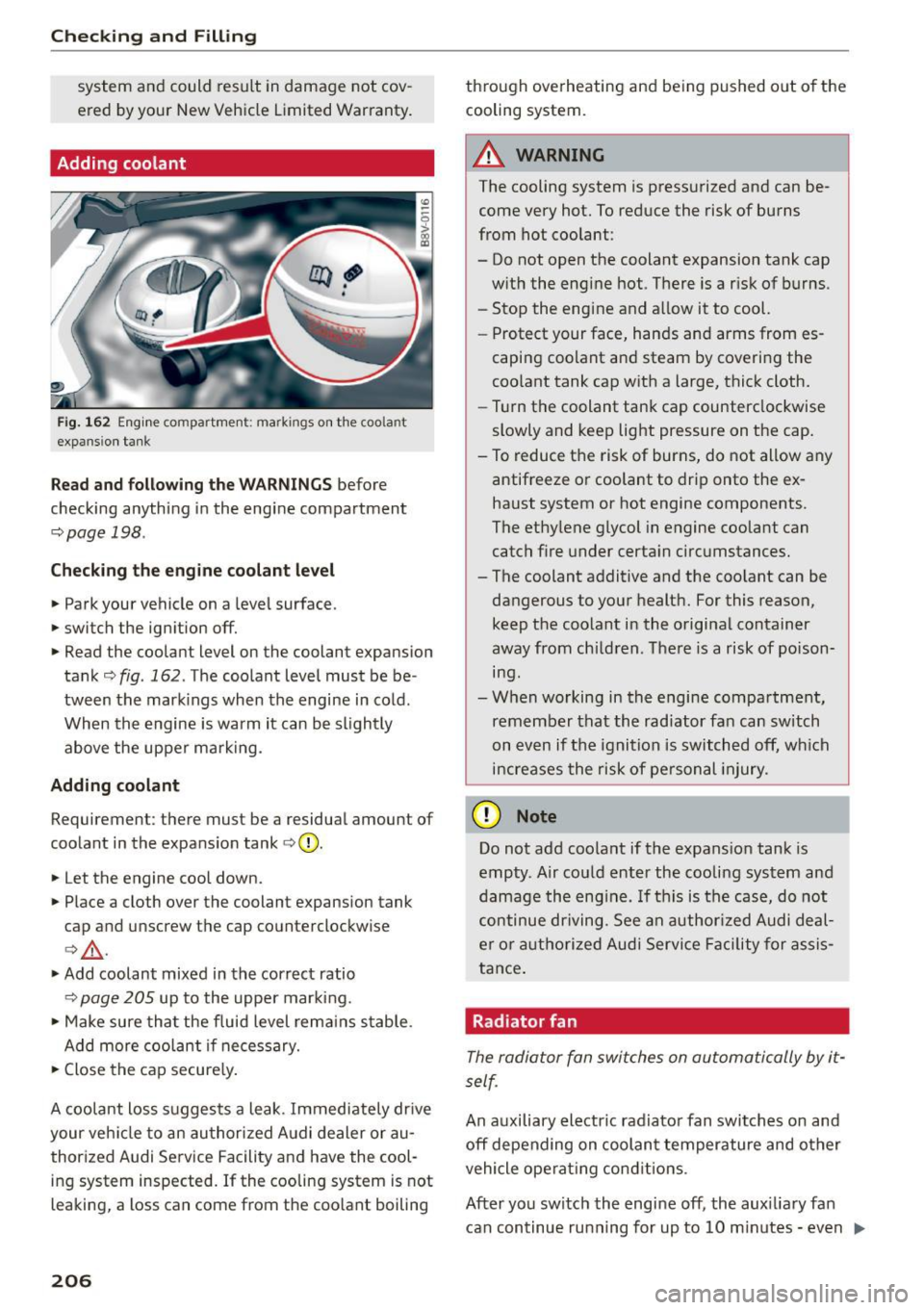
Fig. 162 Eng ine compartment: ma rkings on the coola nt
expans ion tank
Read an d follo wing the WARNINGS before
checking anything in the engine compartment
r::;,page 198.
Checking the engine coolant level
.. Park your vehicle on a level surface.
.. switch the ignition off.
.. Read the coolant level on the coolant expansion
tank
r::;, fig . 162 . The coolant level must be be
tween the mark ings when the engine in cold .
When the engine is warm it can be slightly
above the upper marking .
Adding coolant
Requirement: there must be a residual amount of
coolant in the expans ion tank
c> Q).
.. Let the engine cool down.
.. Place a cloth over the coolant expansion tank
cap and unscrew the cap counterclockwise
<=>& .
.,. Add coolant mixed in the correct ratio
r::;, page 205 up to the upper marking .
.. Make sure that the fluid level rema ins stable.
Add more coolant if necessary.
.. Close the cap secure ly.
A coolant loss s uggests a leak. Immediate ly drive
your veh icle to an authorized A udi dealer or au
thor ized Audi Service Facility and have the cool
ing system inspected.
If the cooling system is not
leaking, a loss can come from the coolant boiling
206
thro ugh ove rheating and being pushed out o f the
cooling system.
A WARNING
The cooling system is pressurized and can be
come very hot. To reduce the risk of burns
from hot coolant:
- Do not open the coolant expansion tank cap
w ith the engine hot. There is a risk of burns .
- Stop the eng ine and a llow it to cool.
- Protect your face, hands and arms from es-
caping coolant and steam by covering the
coo lant tank cap with a large, thick cloth.
- Turn the coolant tank cap counterclockwise
slowly and keep light pressure on the cap.
- To reduce the risk of burns, do not allow any
antifreeze or coolant to drip onto the e x
haust system or hot engine components.
The ethy lene glycol in engine coola nt can
catch fire under certa in circumstances.
- The coolant additive and the coolant can be
dangerous to your health. For this reason,
keep the coolant in the o riginal container
away from ch ildren . The re is a risk of poison
ing .
- W hen working in the engine compartment,
remember that the rad iator fa n can switch
on ev en if the ignition is switched off, wh ich
increases the risk of pe rsonal injury.
@ Note
Do not add coolant if the expans ion tank is
empty . Air cou ld enter the cooling system and
damage the eng ine. If this is the case, do not
continue driving. See an author ized Audi deal
er or a uth ori zed Audi Service Facility for a ssis
ta nce .
. Radiator fan
The radiator fan switches on automatically by it
self
An a uxiliary electric radiato r fan switches on and
off depending on coolan t temperature and other
vehicle ope rat ing cond itions .
After yo u sw itch the engine off, the aux ilia ry fan
can continue running for up to 10 m inutes -even .,,.
Page 209 of 282
with the ignition off. It can even switch on again
l ater by itself~.& , if
- the temperature of the engine coolant rises due to the heat bui ld-up from the eng ine in the en
gine compartment, or
- the engine compar tment heats up because the
vehicle is parked in intense sunlight.
A WARNING , --
- To reduce the risk of personal injury never
touch the radiator fan.
- The auxiliary e lectric fan is temperature con
trolled and can switch on suddenly even
when the engine is not running.
- The aux iliary radiator fan switches on auto
matically when the engine coo lant reaches a
certain temperature and will continue to run
until the coolant temperature drops.
Brake fluid
Checking brake fluid level
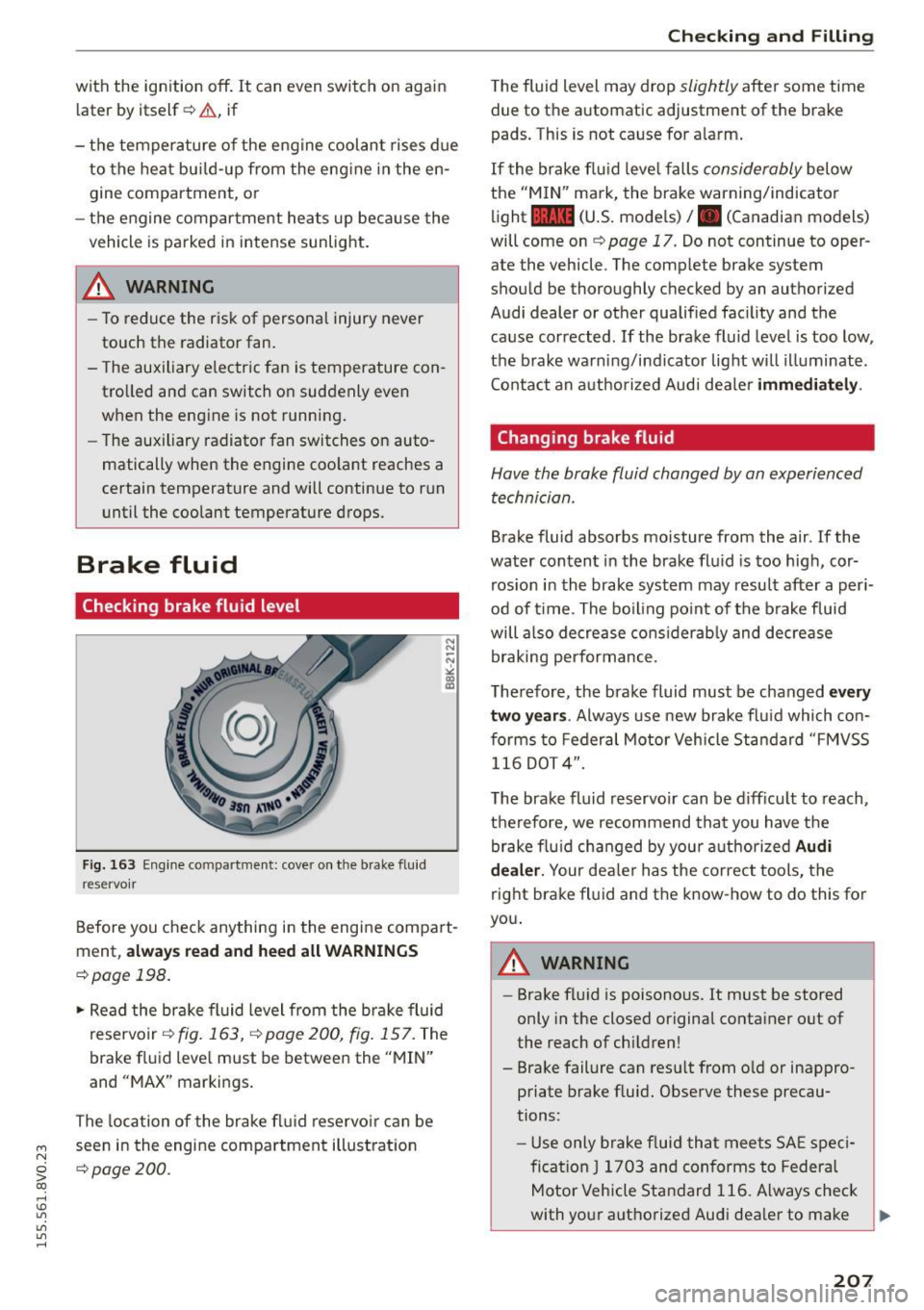
Fig. 163 Engine compa rt m ent: cove r on the brake fluid
reservo ir
N N -N
"' :ll
Before you check anything i n the engine compa rt
ment,
al ways re ad and h eed all W ARN INGS
~page 198.
... Read the brake fluid level from the b ra ke fluid
reservoir
r¢ fig. 163, r:¢ page 200, fig. 157. The
brake f luid leve l must be between the "MIN"
and "MAX" markings.
The location of the brake fl uid reservo ir can be
...., seen in the engine compartment illustration
N
~ r¢ page 200.
co
rl I.O
"'
"'
"'
rl
Check in g and Fillin g
The fluid level may drop slightly after some time
due to the automatic adjustment of the brake
pads . This is not cause for a larm.
If the brake f luid leve l falls considerably below
the "MIN" mark, the brake warning/indicator
light
1111 (U.S. mode ls) I. (Canadian models)
will come on
~ page 17. Do not continue to oper
ate the vehicle . The comp lete brake system
should be thoroughly checked by an authorized
Audi dealer or other qualified fac ility and the
cause corrected . If the brake flu id level is too low,
the brake warning/indicator light wi ll illuminate .
Contact an a uthorized Audi dea ler
immedi ate ly .
Changing brake fluid
Have the brake fluid changed by an experienced
technician.
Brake fluid absorbs moisture from the air. If the
water content in the brake flu id is too hig h, cor
ros ion in the brake system may result after a per i
od of t ime. The bo iling po int of the brake fluid
will a lso decrease cons iderab ly and decrease
braking performance.
Therefore, the brake fluid must be changed
e ve ry
tw o years .
Always use new brake flu id which co n
forms to Federal Motor Vehicle Standard "FMVSS
116 DOT 4".
The brake fluid reservoir can be diff icu lt to reach,
therefore, we recommend tha t you have the
brake flu id changed by you r authorized
Audi
de aler.
Your dea le r has the correct tools, the
right brake fluid and the know-how to do this for
you .
A WARNING
- -
-Brake flu id is poisonous. It must be stored
only in the closed original conta iner out of
the reach of children !
- Brake failure can resu lt from o ld or inappro
priate brake fluid. Observe these precau
tions:
- Use only brake fluid that meets SA E spe ci
ficat ion
J 1703 and conforms to Federa l
Motor Vehicle Standard 116. Always check
with your a uthorized Audi dea ler to make
~
207
Page 211 of 282
M N
0 > co ,...., \!) er,
er,
er,
,....,
A WARNING ,~
- Work on the battery requires expert knowl
edge. Contact an authorized Aud i dealer or
authorized Audi Service Fac ility for informa
t ion regarding the v ehicl e batte ry. There is a
risk for chemical burns or e xplosions.
- Never open the vehicle battery . Do no t try to
change the batte ry elect ro lyte level. Other
wise ex plosive gas will e scape from the bat
tery and increase the r is k of an explosion.
@ Tips
If your vehicle is not driven for severa l wee ks
in very cold tempe ratu res, remove the battery
and store it in a pla ce where i t will no t freeze.
This preven ts the bat tery from being d am
aged and needing to be replaced .
Working on the battery
Be especially careful when working on or near
the battery.
The bat te ry is loc ated in t he luggage compart
men t under the floor. Before yo u check any thing
i n the l uggage comp artme nt,
read and heed all
WARNINGS
q ,&. .
Always heed the sa fety warning s, when working
on the vehicle battery o r th e veh icle elec trical
sys tem to preven t inju ry.
The following WARNINGS are very important
when work ing on the battery:
Always he ed the following WARNING SYM-
BOLS and safety pre caution s wh en working on
the battery .
®
Always wear eye protect ion.
A
Battery acid contains sulfuric acid. Al ·
ways wear gloves and eye protection.
@
No
• sparks
- flame s
- smok ing.
Checking and Fillin g
&
When a battery is charged, it produce s
-hydrog en gas which i s explo siv e a nd
c ould cau se p ers onal injury.
®
Always keep the battery well out of
reach of children .
A WARNING ..,__ -
Whenever working on the battery or on the
electr ica l system, the re is the risk of in jury,
accident and even fi re. Read and heed the fol
l ow ing WARNI NGS:
- Always wear eye protection. Do not let bat
tery ac id or a ny lead particles get on your
skin o r clothing. Shield yo ur eyes. Exp losive
gases can ca use blindness or o ther in jury.
- Battery acid conta ins sulfuric acid. Sulfuric
acid can ca use b lindness and severe burns.
- Always wear g loves and eye protection. Do
not tilt the battery because ac id could leak
out of the ventilation openings.
- If you get battery ac id in your eyes or on
your s kin, immed iate ly r inse with cold wa
ter fo r several minutes and get medical at
tent ion.
- If you shou ld ingest any battery acid , seek
med ica l attent io n immed iate ly.
- Do not expose the batte ry to an open flame,
electric sparks or an open light.
- Do not smoke.
- Do not interchange the positive and nega-
tive cables .
- When working on the battery , be s ure not to
short-c ircuit the terminals with tools or oth
er metal objects . This would ca use the bat
tery to heat up very quickly , which could
lead to damage or exp losion and perso nal
in jur y.
- When a battery is charged, it produces hy
drogen gas which is e xplos ive and could
cause persona l injury .
- Always keep the battery well out of the
reach of children.
- Before work is done on the electrical sys
tem, disconnect the negat ive g round cab le.
- Before performing any work on t he e lectr i
cal system, sw itch
off the engine and igni-
tion as well as any electrical equ ipme nt. The .,..
209
Page 212 of 282
Checking and Fill in g
negative cable on the battery must be dis·
connected. If you are just going to replace a
light bulb, then it is enough to switch off
the lights .
- Before disconnecting the battery, switch off
the anti-theft alarm system! Otherwise you
will set off the alarm .
- When disconnecting the battery, first dis
connect the negative cable and then the
posit ive cab le.
- Before reconnect ing the battery, make sure
all electrical consumers are switched off . Re
connect the pos itive cable first and then the
negative cable . Never intercha nge the ca
bles -th is could star t a fire!
- Never charge a froze n or a thawed-out bat
te ry.
It co uld explode! If a batte ry has fro
zen, then it m ust be repl aced. A d isc harged
b at tery can free ze over at 3 2 °F (0 °C).
- Make sure the vent hose is always attached
to the opening on the side of the battery .
- Never use batte ries which are damaged.
T he re is the danger of an explos ion! Always
replace a damaged battery.
_& WARNING
California P ropos ition 65 Warning:
- Battery posts , termina ls and re lated acces
sories contain lead and lead compounds ,
chemicals known to the Sta te of C alifornia
to cause ca nce r and reproductive problems.
Wash hands after hand ling.
(D Note
- Do not d isconnect t he ve hicle battery when
the ignition is o n or when the engine is run
ning, othe rwise , you w ill damage electronic
components in the electrical system .
- If your vehicle is going to stand for a long
period of time without be ing driven, p rotect
the battery from "freezing", otherwise it
will be damaged and will then have to be re
placed.
210
Battery charging
Starting the engine requires a well charged bat
tery .
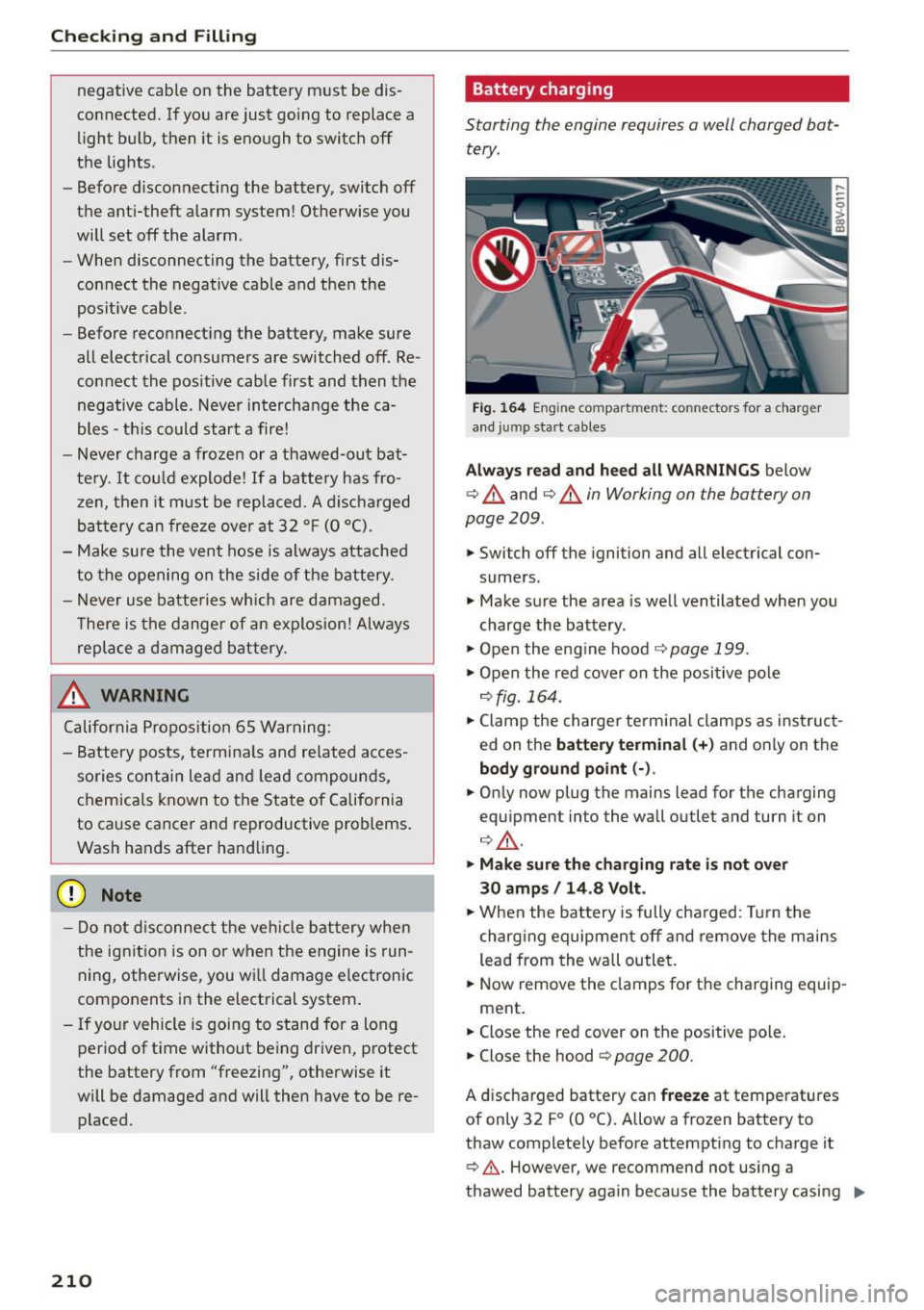
Fig. 16 4 En g in e compa rtmen t: connecto rs fo r a c harg er
and jump start c ables
Always read and heed all WARNINGS below
c> .& and q .& in Working on the battery on
page 209 .
.,.. Switch off the ignition and all elec trical con
sumers.
.,.. Make s ure the area is we ll ventilated when you
charge the battery .
.,.. Open the eng ine hood
q page 199 .
.,.. Open the red cover on the positive pole
q fig. 164 .
.,.. Clamp the charge r te rm inal clamps as inst ruct
ed on the
battery terminal (+ ) and o nly on the
body ground point (· ).
.,.. On ly now plug the mains lead for the charging
equ ipmen t in to the wall outlet and turn it on
~ .& -
... Make sure the charging rate is not ov er
30 amps / 14 .8 Volt .
.,.. When the bat tery is fully cha rged : Tur n the
charg ing equipment off and remove the mains
lead from the wall outlet.
.,.. Now remove the clamps fo r the charging equip -
ment .
.,.. Close the red cover on the positive pole.
.,.. Close the hood
c> page 200.
A d ischarged battery can freeze at temperatures
of only 32 F
0 (0 °C) . Allow a frozen battery to
thaw complete ly before attempting to charge it
~ .&. . However, we recommend not using a
thawed battery aga in because the battery casing ..,_
Page 235 of 282
....,
N
0 > co
rl I.O
"'
"'
"'
rl
If the Tire Pressure Monitoring System
indicator appears
Applies to vehicles: with t ire p ressure monitoring syste m
The tire pressure indicator in the instrument
cluster informs you if the tire pressure is too low
or if there is a system malfunction.
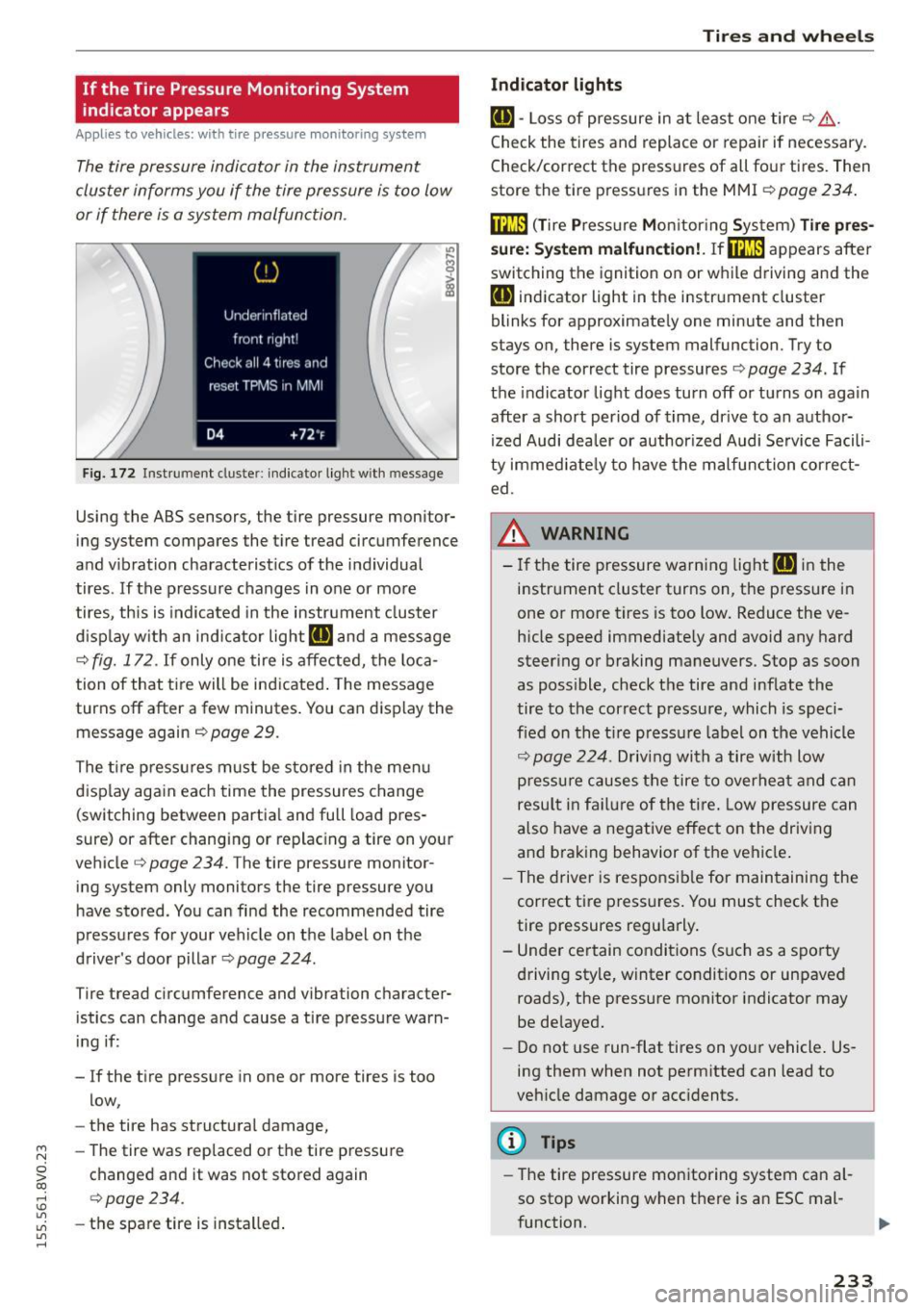
F ig. 172 Instrument cluster: in dicator light w ith message
Using the ABS sensors, the tire pressure monitor
ing system compares the tire tread circumference
and v ibration characterist ics of the ind ividual
tires.
If the pressure changes in one or mo re
tires, th is is indicated in the instrument cluster
d isp lay w ith an ind icator light
RE and a message
¢
fig. 172. If only o ne tire is affected, the loca
tion of that ti re will be indicated . The message
turns off after a few minutes . You can display the
message again
r::;,page 29.
The tire p ressu res m ust be stored in the menu
disp lay aga in each time the pressures change
(switching between partia l and full load pres
sure) or after changing or replac ing a tire on your
ve hicle¢
page 234. The tire pressure monitor
ing system only monitors the tire pressure you
have stored. You can find the recommended tire
pressures for your vehicle on the label on the
driver's door pillar¢
page 224.
Tire tread circumference and vibration character
istics can change and cause a tire pressure warn
in g if:
- If the tire pressure in one or more tires is too
low,
- the tire has structural damage,
- The tire was replaced or the tire pressure
changed and it was not stored again
¢ page 234.
-the spare tire is insta lled .
Tires and wheels
Indicator lights
RE -Loss of pressure in a t least one tire ¢ ,&.
Check the tires and replace or repair if necessary.
Check/correct the pressures of all four t ires. Then
store the tire p ressu res in the MMI ¢
page 234.
film (T ire Pressure Mon itor ing Sys tem) Tire pres
s ure: Sy stem malfunction!. If@m
appears after
switching the ignition on or while driving and the
RE ind icator light in the instr ument cluster
blinks for approximate ly one minute and then
stays on, there is system malfunction. Try to
store the correct tire pressures ¢
page 234. If
the indicator light does turn off or turns on aga in
after a short period of time, dr ive to an author
i zed Audi dea ler or author ized Audi Serv ice Facili
ty immed iate ly to have the malfunction corre ct
ed.
,&. WARNING
- If the tire pressure warning light RE in the
i n str ument cluster turns on, the pressure in
one or more tires is too low . Reduce the ve
h icle speed immediate ly and avoid any hard
steer ing or braking maneuvers. Stop as soon
as poss ible, check the tire and inf late the
tire to the correct pressure, which is speci
fied on the t ire p ress ure label on the vehicle
r::;, page 224. Driv ing with a tire with Low
p ressu re causes the tire to overhea t and c an
resul t in fa il ur e of the tire . Low pressure can
a lso have a negative effect on the driving
and b rak ing behavior of t he vehicle .
- T he drive r is respons ib le for main taining the
correct ti re press ures . You must check the
tire pressures regu larly .
- Under certain conditions (such as a sporty
driving style, winter conditions or unpaved
roads), the pressure monitor indicator may
be de layed.
- Do not use run-flat tires on yo ur vehicle . Us
ing them when not permitted can lead to
veh icle damage or acc idents.
(D Tips
- The tire pressure monitoring system can al
so stop working when t here is an ESC mal-
function. ..,.
233
Page 237 of 282
M N
0 > co ,...., \!) 1.1"1
1.1"1
1.1"1
,....,
Care and cleaning
General information
Regular, proper care helps to maintain your vehi
cle's value.
It can a lso be a req uirement when
submitting warranty claims for corrosion damage
and paint defects on the body.
The necessary care products can be obtained
from an a uthorized Audi dea ler or authorized
Audi Service Faci lity . Read and fo llow the instruc
tions for use on the packaging.
A WARNING
- Us ing clean ing and care products incorrectly
can be dangerous to your health.
- Always store cleaning and care products out
of reach of children to reduce the r isk of po i
soning.
@ For the sake of the environment
- Preferably use environmentally-friendly products when buying cleaning agents.
- Do not d ispose of leftover cleaning and care
p roducts with household trash.
Car washes
The longer that depos its s uch as insects, bird
droppings, tree sap or road sa lt rema in on the ve
h icle, the more the surface can be damaged. High
temperatures such as those caused by sunlight
in crease the damaging effect.
Before washing, rinse off heavy depos its with
p le nty of water.
Stubborn deposits s uch as bird droppings or tree
sap are best removed w ith p lenty of water and a
m ic rofiber cloth.
Also, wash the underside of your vehi cle once
road salt stops being used for the season.
Pressure washers
W hen washi ng your ve hicles w ith a pressure
washer, always fo llow the oper ating instr uctions
p rov ided wi th the p ress ure washer. This is espe
cially importan t in rega rd to the p ress ure and
spraying distance . Do not aim the spray direct ly
Care and cleaning
at seals on side w indows, doors, t he hood, the
lu ggage compartment lid or the sunroof* or at
tires, rubber hoses, insulating material, sensors *
or camera lenses*. Keep a distance of at least 16
inches (40 cm).
Do not remove snow and ice with a pressure
washe r.
Neve r use rotary nozzles or high pressure no z
zles .
T he wate r temperature must not be above 140 °F
(60 °( ).
Automatic car washes
Sp ray off the veh icle before washing.
Make sure that the w indows and roo f* are closed
and the windsh ield wipers are off. Follow instruc
tions from the car wash operator, especially if
the re are accessor ies attached to you r vehicle .
If possible, use car washes that do not have
brushes .
Washing by hand
Clean the ve hicl e starting from the top and work
ing down using a soft sponge or cleani ng b rush.
U se solvent -free cleaning p rod ucts .
Washing vehicles with matte finish paint by
hand
To avoid damaging the paint when was hing, first
remove dust and large particles from yo ur vehi
cle. Insects, g rease spots and fingerprints are
best removed with a spec ia l cleaner for matte
finish pai nt.
Apply the p rod uct us ing a microfiber cloth . To
avo id damaging the paint surface, do not use too
much pressure.
Rinse the vehi cle thoro ughly with water . Then
clean usi ng a neutra l shampoo and a soft micro
fiber cloth.
Rinse the ve hicl e thoroughly again and le t it air
dry. Remove any wate r residue using a s ham my . .,.
235