lock AUDI S3 SEDAN 2015 Workshop Manual
[x] Cancel search | Manufacturer: AUDI, Model Year: 2015, Model line: S3 SEDAN, Model: AUDI S3 SEDAN 2015Pages: 282, PDF Size: 71.14 MB
Page 186 of 282
Child safety
-Always make sure the forward-facing seat
has been designed and certified by its man
ufacturer for use on a front seat with a
passenger front and side airbag.
- Never put the forward-facing child restraint
up, aga inst or very near the instrument pan
el.
- Always move the passenger seat into its
rearmost position in the seat's fore and aft
adjustment range, as far away from the air
bag as possible before installing the for
ward-fac ing child restraint. The backrest
must be adjusted to an upright posit ion.
- Make sure that the
PASSENGER AIR BAG
OFF
light comes on and stays on all the time
whenever the ignition is switched on.
_&. WARNING
Rearward-fac ing ch ild restra ints:
- A child in a rearward-facing child safety seat
installed on the front passenger seat will be
seriously injured and can be killed if the
front airbag inflates -even with an Ad
vanced Airbag System .
- T he inflating airbag wil l hit the child safety
seat or infant carrier with great force and
will smash the chi ld safety seat and child
against the backrest, center armrest, door
or roof.
- Always be especially carefu l if you must in
stall a rearward facing child safety seat on
the front passenger seat in exceptional cir
cumstances.
- Make sure that the
PASSENGER AIR BAG
OFF
light comes on and stays on all the t ime
whenever the ignition is switched on .
- If the
PASSENGER AIR BAG OFF light does
not come on and stay on, immed iately in
stall the rear-fac ing ch ild safety seat in a
rear seating position and have the airbag
system inspected by your Aud i dealer.
184
· Activating the convertible locking retractor
Use the convertible locking retractor to secure a
child restraint.
Always heed the child safety seat manufacturer's
instructions when installing a child restraint in
your vehicle . T o activate the convert ible locking
retractor:
.. Place the child restraint on a seat, preferably on
the rear seat .
.. Slowly pull the belt
all the way out.
.. Route it around or through the child restraint
belt pat h
c::> ,&..
.. Push the ch ild safety seat down with your full
weight to get the safety belt really tight.
.. Insert the belt tongue into the buckle for that
seating position.
.. Guide the safety be lt back into the retractor un
til the belt lies flat and snug on the ch ild safety
seat.
.. You should hear a "clicking" noise as the belt
w inds back into the inertia reel. Test the con
vert ible lock ing retractor by pulling on the belt .
You should no longer be able to pull the belt
out of the ret ractor. The convertible locking re
tractor is now activated .
.. Make sure that the red release button is facing
away from the child restraint so that it can be
unbuckled quickly .
.. Pull on the belt to make sure the safety belt is
properly tight and fastened so that the seat
cannot move forward or s ideways more than
one inch (2 .5 cm).
_&. WARNING
Using the wrong child restraint or an improp
erly installed child restraint can cause serious
personal injury or death in a crash.
- Always make sure that the safety belt re
tractor is loc ked when insta lling a child safe
ty seat. An unlocked safety belt retractor
cannot hold the child safety seat in place
during normal driving or in a crash.
- Always buckle the child safety seat firmly in
place even if a chi ld is not sitting in it. A
loose child safety seat can fly around during
a sudden stop or in a crash.
.
Page 187 of 282
M N
0 > co ,...., \!) 1.1'1
1.1'1
1.1'1
,....,
-Always make sure the seat backrest to which
the ch ild restraint is installed is in an up
right position and securely latched into
place and cannot fold forward. Otherw ise,
the seatback with the ch ild safety seat at
tached to it co uld f ly forward in the event of
an acc ident or o ther emergency si tuat ion.
- Always read and heed all WARNINGS when
ever using a child rest rained in a vehicle is
being used
r=;, page 172. Spec ia l precautions
apply when ins talling a child s afety se at on
the front passenger seat¢
page 149, Child
restraints on the front seat -some impor
tant things to know.
Deactivating the convertible locking
retractor
The convertible locking retractor for child re
straints will be deactivated automatically when
the belt is wound all the way back in to the re
tractor .
~ Press the red button on the safety belt buck le.
The belt tongue will pop out of the buckle.
~ Guide the safety belt all the way back into its
stowed position .
Always let the safety belt retract comp lete ly into
its stowed position . The safety be lt can now be
used as an ordinary safety belt without the con
ve rtible locking retrac to r fo r child restra ints .
If the convert ible locking retractor shou ld be ac
tivated inadvertently, the safety belt must be un
fastened and gu ided completely back into its
stowed position to deact ivate this feature .
If the
convert ible lock ing retractor is not deactivated,
the safety belt w ill gradua lly become tighter and
uncomfo rt a ble to wear .
_& WARNING
-
Imprope rly insta lled child sa fe ty se ats in
crease the risk of ser ious personal inju ry and
death in a co llision.
- Never unfasten the sa fe ty belt to deac tiva te
the conve rtible locking retractor for child re
straints while the veh icle is moving. You
Child sa fety
wou ld not be restra ined and cou ld be ser i
ously injured in an accident.
- Always read and heed all WAR NINGS when
ever using a child restrained in a vehicle is
be ing used
¢ page 172. Special precaut ions
apply when install ing a child safety seat on
the front passenger seat
c:> page 149, Child
restraints on the front seat -some impor
tant things to know .
LATCH system (Lower
anchorages and tethers
for children)
Child Restraint System anchors and how
are they related to child safety
T o provide a simpler and more practicable way to
attach the ch ild restra int on the veh icle seat, Fed
eral regulations require special lower anchorages
in vehicles a nd devices on new child restraints to
attach to the vehicle anchorages .
The combination of the tether anchorages and
the lower anchorages is now generally ca lled the
LATCH system f or " Lower Anchorages and
T ethers for Child ren ."
Forward -facing chi ld restraints manufactured af
ter September 1, 1999, are requ ired by U.S. fed
eral regulations to comp ly w ith new ch ild head
movement performance requ irements . These
new pe rformance requ irements make a te ther
necessary on most new ch ild seats .
Installing a ch ild restra int that requires a top
tethe r without one can seriously impair the per
fo rmance of the child restra int and its ability to
protect the ch ild in a co llision . Installing a ch ild
r est rain t that requ ires a top te ther w it h out t he
top tether m ay be a vio lation o f st ate l aw .
Child rest raint manufacturers offer LA T CH lower
anchorages on the ir chil d seats with hook-o n or
push-on connec tors attached to adjustab le
str aps.
In add ition to the LATCH lower anchorages, these
c hi ld restra int systems usually requ ire the use of
te the r straps to he lp keep the c hild restra int
firmly in pla ce. .,..
185
Page 189 of 282
M N
0 > co
Please remember that the lower anchorage
points are only intended for installation and at
tachment of child restraints specif ica lly certif ied
for use w ith
LATCH l ower anchorages . Child re
straints that are not equipped w ith the lower an
chorage attachments can still be installed in
compliance w ith the child rest raint manufactur
er 's instructions on using vehicle safety belts .
.8, WARNING
Improper use of LATCH lower anchorages can
cause serious personal injury in an accident.
- Always ca refully fo llow the ch ild restra ints
man ufactu rer's instr uctio ns for proper i n
sta llation of the child restrain t and proper
u se of the lower anchorages or safety belts
in yo ur vehicle.
- Never se cure o r attach any l uggage or other
items to the
LATCH lower anchorages .
- Always read and heed the impor tan t infor
mation about child restraints in this chapter
and WARNINGS
¢ page 172, Child safety.
Installing a child restraint with LATCH
lower anchorages
App lies to vehicles: with top tether
Whenever you install a child restraint always fol
low the child restraint manufacturer's instruc
tions.
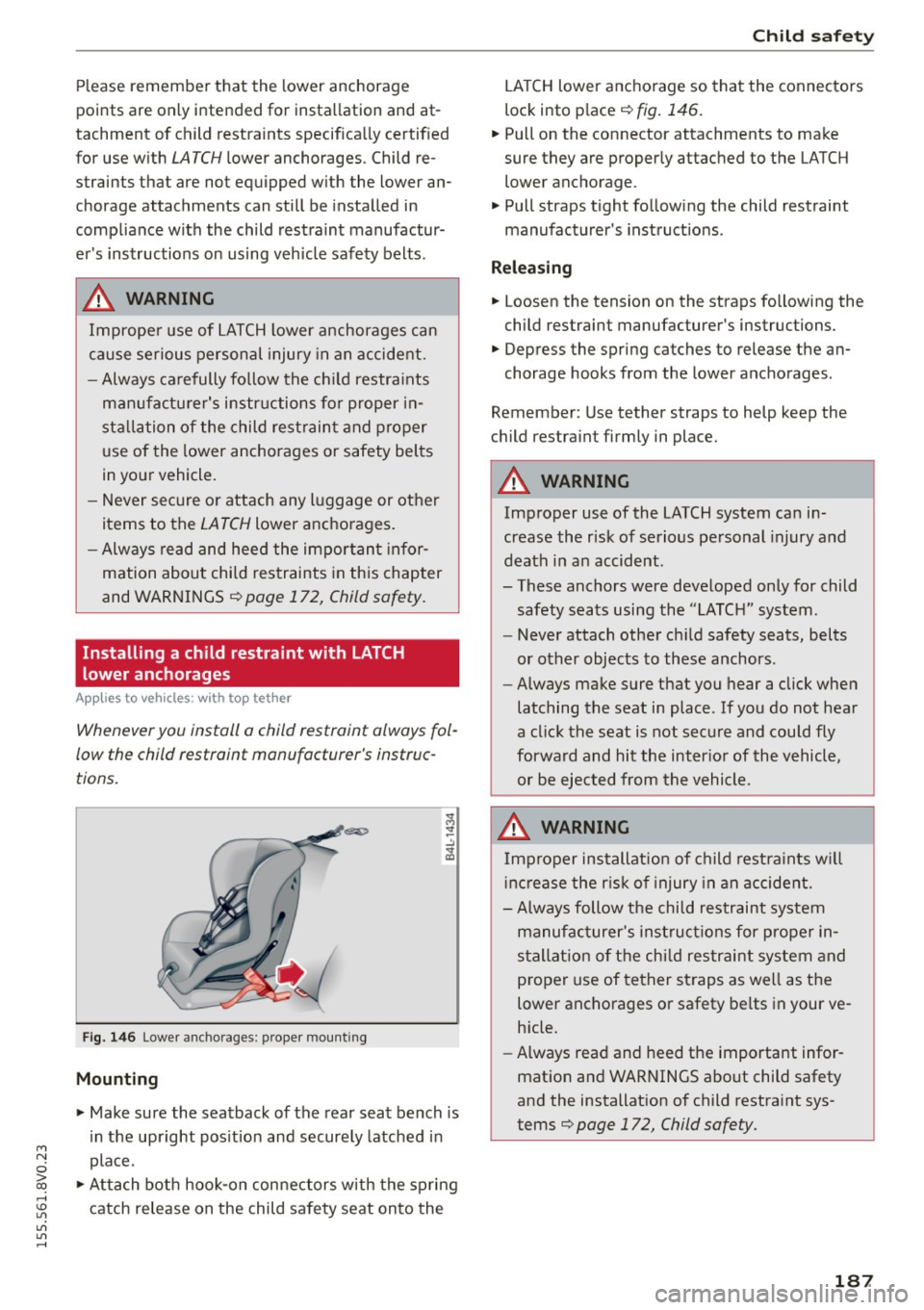
F ig . 14 6 Lower anchorages: p roper mount ing
Mounting
.,. Make sure the seatback of the rear seat bench is
in the upright pos ition and secure ly latched in
place.
.,. Attach both hook-on con nectors with the spring
,....,
~ catch release on the child safety seat onto the
Vl
Vl
,....,
Child sa fety
LA TCH lower ancho rage so that the connecto rs
lock into p lace
¢ fig. 146 .
.,. Pull on the connector attachments to make
sure they are properly attached to the LATCH lower anchorage .
.,. Pull straps tight fo llow ing the child restraint
manufacturer's instruct ions .
Releasing
.,. Loosen the tension on the straps following the
child restraint manufacturer's instructions.
.,. Depress the spring catches to release the an
chorage hooks from the lower anchorages .
Remember: Use tether straps to help keep the
child restra int firmly in place.
.8, WARNING "---Improper use of the LATCH system can in
crease the r isk of serious pe rsonal injury and
death in an accident.
- These anchors were developed only for child safety seats using the "LATC H" system .
- Never attach other ch ild safety seats, belts
or other objects to these anchors.
- Always make sure that you hear a click when
latching the seat in place. If you do not hear
a cl ick the seat is not sec ure and could fly
forward and hit the inter io r of the vehicle,
or be ejec ted from the vehicle .
.8, WARNING
Improper installat ion of child restra ints w il l
i nc rease the r is k of i njury in an accide nt.
- Always follow the child res traint system
manufac turer's ins truct ions for proper in
s tallat ion of the ch ild restrai nt system and
proper use of tether straps as we ll as the
lower ancho rages or safety be lts in your ve
h icle.
- Always read a nd heed t he important infor
matio n and WARNINGS about child safety
and the installat ion of child restra int sys
tems
¢ page 172, Child safety .
187
Page 194 of 282
Checking and Fill in g
These fuels contain substances that can se
verely damage the fuel system and the en
gine if the engine is started .
- If the diesel f uel quality is poor, it may be
necessary to have the water d rained from
the water separator in the
fuel filter more
often than specified in the maintenance
schedule. This can help reduce engine ma l
funct ions
c:> page 2 3.
Refueling
Fuel filler neck
The fuel filler neck is located on the right rear
side pane l behind the fuel f iller flap.
If the power locking sys tem should fail, you can
still open the flap manua lly -for detai led instruc
tions see
c:> page 194.
You can find the fue l tank capacity of you r vehicle
in
c:> page 260.
The label on the inside of the fue l filler flap te lls
you t he cor rect fuel for your vehicle. For more in
form ation abo ut fue l specifications, see
c:> page 190 .
Your vehicle fuel tank has an on board refue lling
vapor re cove ry system . This feature helps to p re
ve nt fuel vapors from escaping from the tank and
pollut ing t he environment w hile you refue l yo ur
ve hicle. In orde r to fill the tank p roperly whi le
protecting the environment, please follow this
refueling procedure carefully.
A WARNING
Under normal operating conditions, never ca r
ry additional fuel containers in your car . Gas
canisters and ot her conta iners used to trans
port fuel can be dangerous . Such contai ners,
full or empty, may leak and could cause a fire
in a collision. If yo u m ust t ransport fue l to
use fo r yo ur l awn m owe r, snow b lower, etc.,
be very ca re ful and a lways observe loca l and
state laws rega rding the use, transportation
and sto rage of such fuel containe rs . Make cer
tain the container meets industry standards (ANSI/ASTM F852 - 86).
192
(D Note
Never drive your vehicle until the fue l tank is
complete ly empty . The irregular supply of
f u el can cause misfiring. Gasoline could enter
the exhaust system and damage the catalytic converter.
Fueling procedure
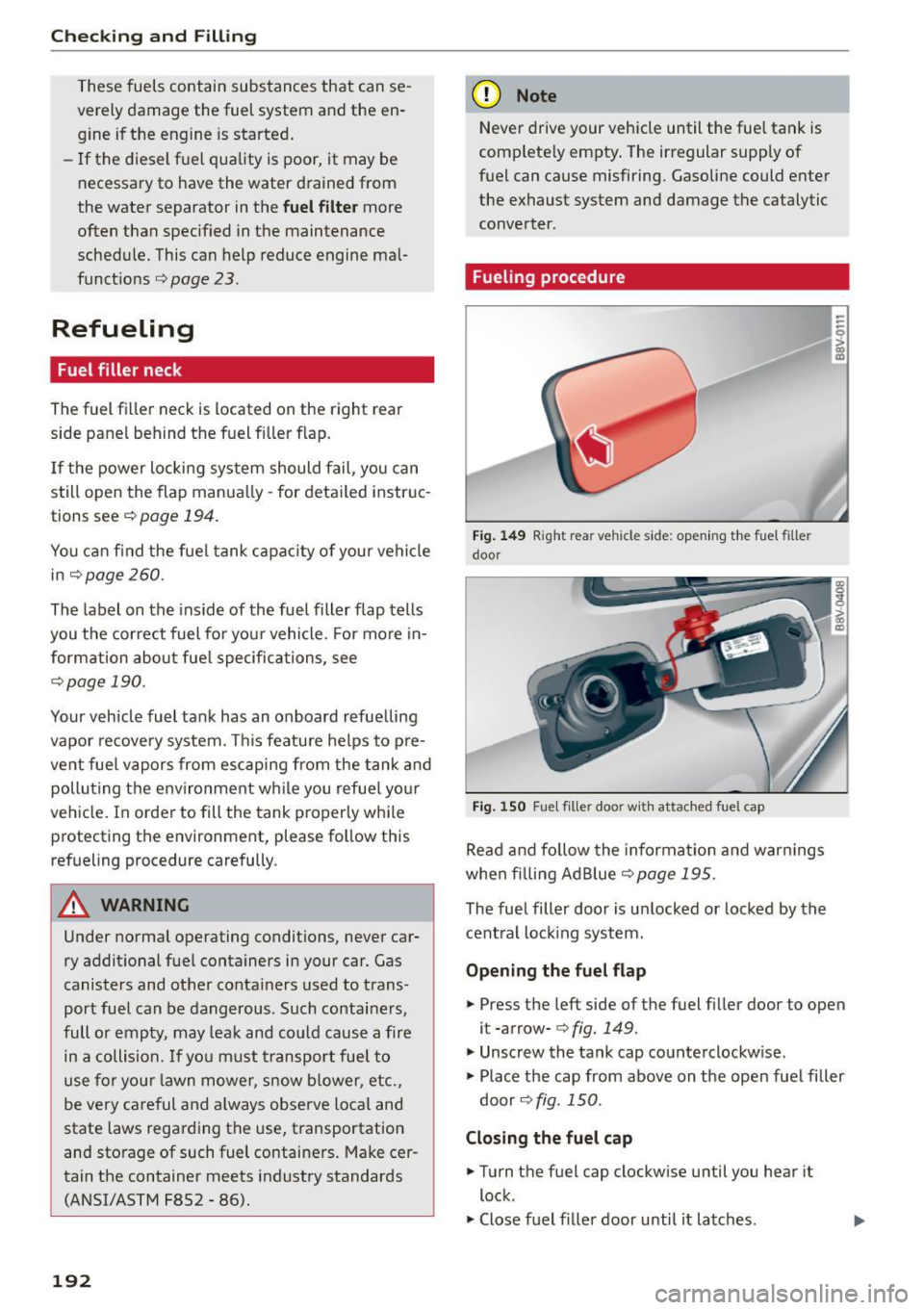
F ig . 149 Righ t rea r ve hicle s ide: open ing t he fuel filler
door
Fi g. 15 0 Fuel fill er doo r wit h attac hed fuel cap
Re ad a nd fo llow the informa tion and war ning s
whe n filling AdB lue
c:> page 195 .
The fuel filler doo r is u nlocked or locked by the
cent ral lock ing system.
Opening the fuel flap
--0 ~
ffl
.,.. Press the left side of the fuel f iller door to open
it -arrow-
c:> fig. 149 .
.,.. Unscrew the tank cap counterclockw ise .
.,.. Place the cap from above on the open fue l filler
door
c:> fig . 150.
Closing the fuel cap
.,.. Turn the f uel cap clockwise until you hear it
lock .
.,.. Close fuel fi ller door until it latches.
Page 196 of 282
Checking and Fill in g
the expansion space in the tank will fi ll,
which can result in fuel spilling out when it
becomes warm and polluting the environ
ment.
(D Tips
- If
the engine is running while fueling, va
pors can escape or the fuel can spill over.
Because of th is, the fuel nozz le switches off
before th e tank is full.
- Do not fue l the vehicle when the ignition is
switc hed on. Otherwise, the fuel gauge may
not show the correct level after fueling the
vehicle.
- Diesel vehicles are equipped with a diesel
misfueling guard
l). It allows the vehicle to
be fueled on ly w ith a diesel fuel p ump noz
zle .
- A worn o r damaged nozzle or a nozz le that
i s too sma ll may not be able to open the die
se l m isfue ling protector. If this is the case,
try turning the no zzle before inser ting it in
the fue l filler neck, use a different fuel
p ump or see an a uthorized Audi dea le r or
a uthorized Audi Service Facility for assis
tance .
- The misfueling guard does not o pen whe n
adding fue l from a fuel contai ne r. Yo u can
bypass it by adding the diese l fuel s low ly .
- The fuel filler door on your vehicle does not
l ock when you lock the vehicle from the in
side.
l l Market -spec ifi c
194
Fuel filler door emergency release
If the central locking system is faulty, the fuel
filler door can be unlocked manually .
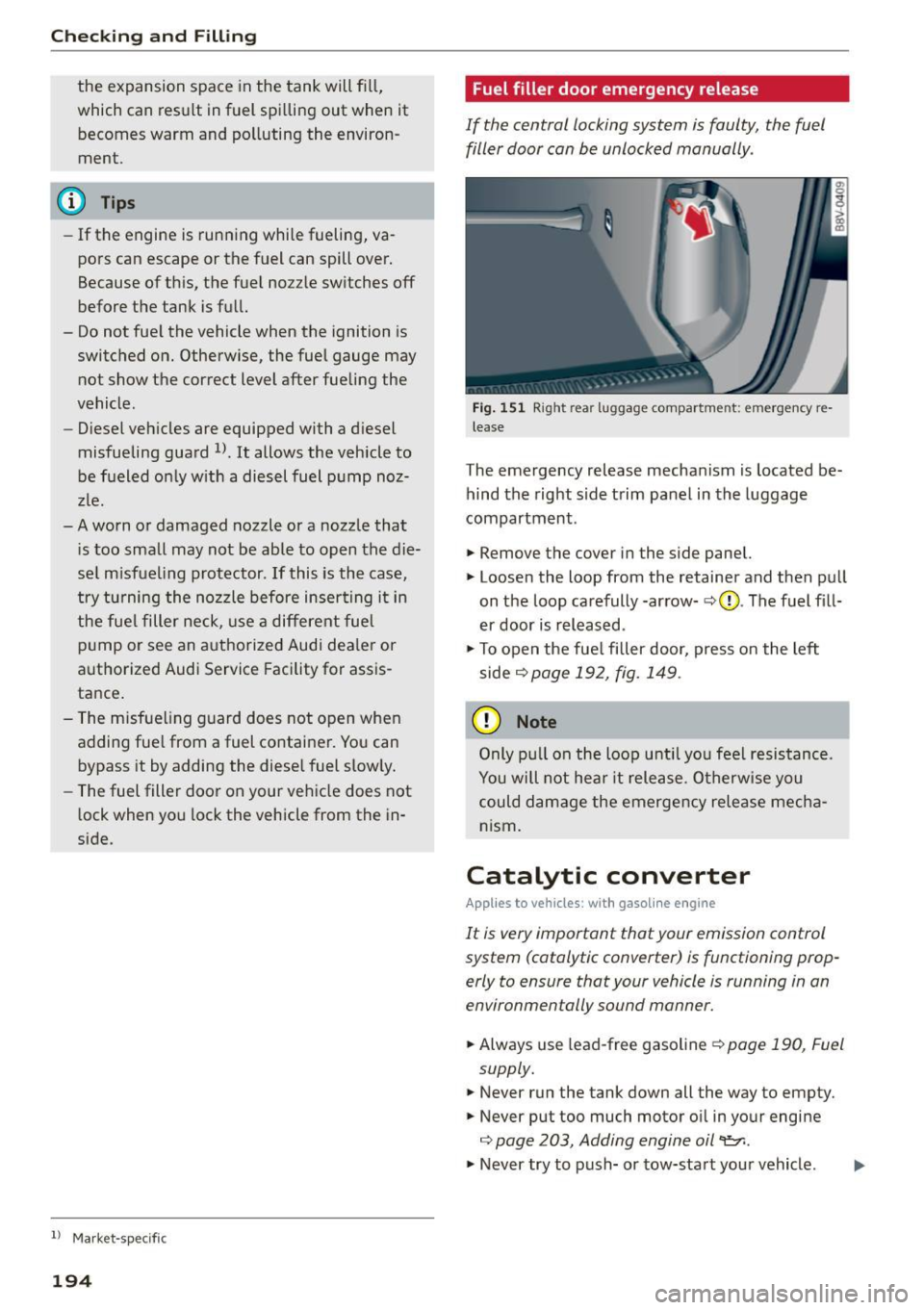
Fig. 15 1 Rig ht rear luggage compartme nt: emergency re
lease
The emergency release mechanism is located be
hind the right side trim panel in the luggage
compartment.
.,. Remove the cover in the side panel.
.,. Loosen the loop from the retainer and then pull
on the loop ca refully-ar row-
c::> 0 . The fuel fill
er door is released .
.,. To open the fue l filler door, press o n the left
side
opage 192, fig. 149 .
(D Note
Only pull on t he loop u ntil yo u feel resistance.
You will not he ar it release. O therwise you
could damage the emergency rele ase mecha
nism.
Catalytic converter
App lies to vehicles: with gasoline e ngine
It is very important that your emission control
system (catalytic converter) is functioning prop
erly to ensure that your vehicle is running in an
environmentally sound manner .
.,. Always use lead-free gasoline c::> page 190, Fuel
supply .
.,. Never run the tank down all the way to empty .
.,. Never put too much motor o il in yo ur engine
o page 203, Adding engine oil 'l:::11 .
.,. Never try to push- or tow-sta rt you r vehicle .
Page 199 of 282
....,
N
0 > co
rl I.O
"'
"'
"'
rl
This message appears if the system has detected
that the tank was filled incorrectly or that there
is a malfunction. Drive immediately to the near
est authori zed Aud i dealer or authori zed Audi
Service Facility to have the malfunction correct
ed . Otherwise you will not be able to start the en
g in e again once you stop it.
Filling the Ad Blue
Applies to vehicles: with selective catalyt ic red uctio n
A special refill bottle must be used to fill the
AdBlue.
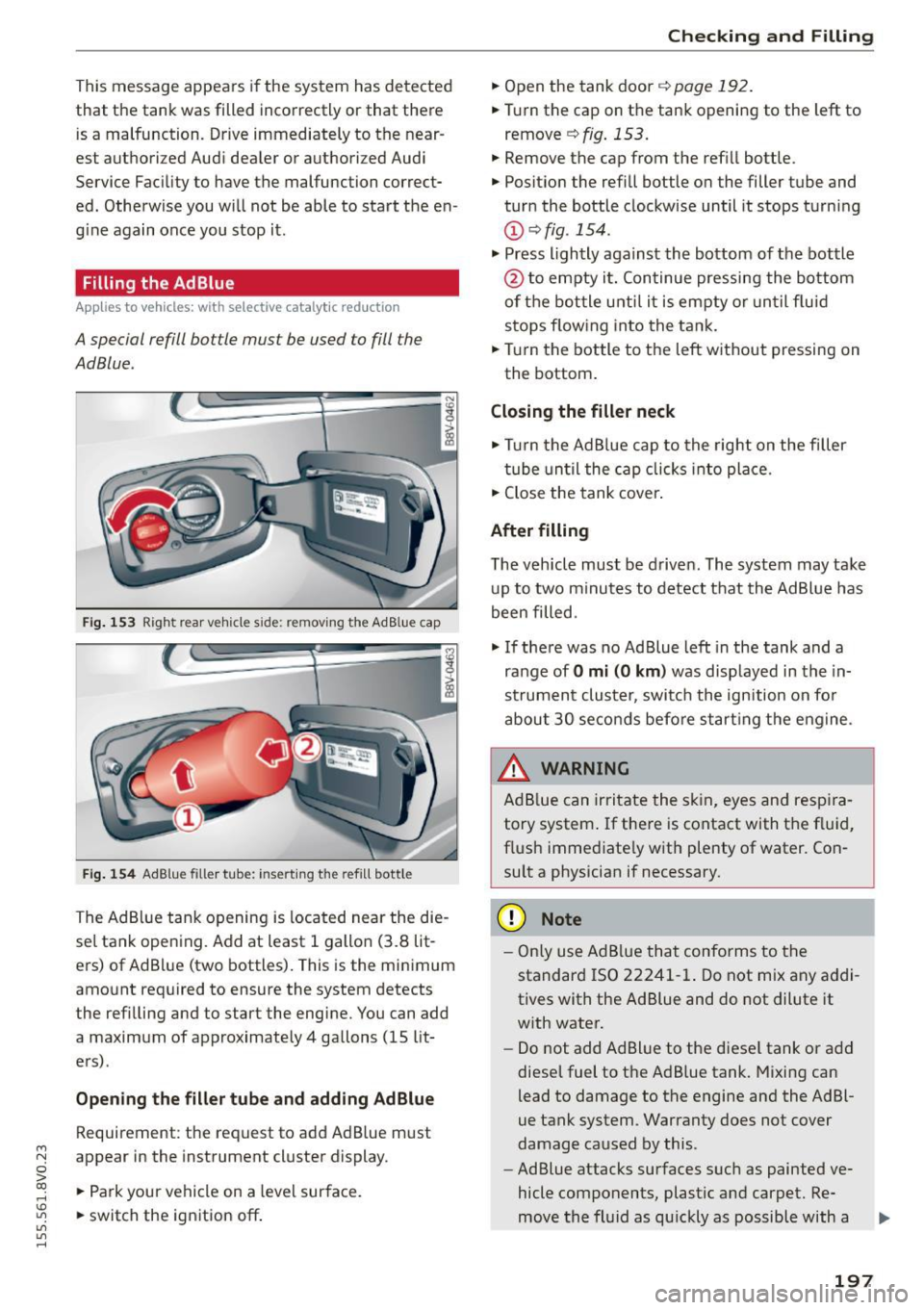
Fig. 153 Right rear vehicle s ide: removing the Ad B lue cap
Fig. 154 Ad Blue filler tube: inserting the refi ll bott le
The Ad Blue tank opening is located near the die
sel tank opening. Add at least 1 gallon (3.8 lit
ers) of AdBlue (two bottles). This is the minimum
amount required to ensure the system detects
the refilling and to start the engine. You can add
a maximum of approximately 4 gallons (15 lit
ers) .
Opening the filler tube and adding AdBlue
Requirement: the request to add Ad Blue must
appear in the instrument cluster display.
• Park your vehicle on a level surface.
• switch the ignition off .
Checking and Filling
• Open the tank door q page 192.
• Tur n the cap on the tank opening to the left to
remove
q fig. 153.
• Remove the cap from the refill bottle.
• Position the refill bottle on the filler tube and
turn the bottle clockwise until it stops turning
@ qfig. 154.
• Press lightly against the bottom of the bottle
@ to empty it. Con tinue pressing the bottom
of the bottle unti l it is empty or until flu id
stops flowing into the tank.
• Turn the bottle to the left without pressing on
the bottom.
Closing the filler neck
• Turn the Ad Blue cap to the right on the filler
tube until the cap clicks into place.
• Close the tank cover.
After filling
The vehicle must be driven. The system may take
up to two minutes to detect that the AdBlue has
been filled.
• If there was no Ad Blue left in the tank and a
range of
O mi (0 km ) was displayed in the in
strument cluster, switch the ignition on fo r
about 30 seconds before start ing the engine.
_& WARNING
=
Ad Blue can irritate the skin, eyes and respira-
tory system . If there is contact with the fluid,
flush immediate ly with plenty of water. Con
sult a physician if necessary.
(D Note
- Only use Ad Blue that conforms to the
standard ISO 22241-1. Do not mix any addi
tives with the Ad Blue and do not dilute it
with water.
- Do not add AdBlue to the diese l tank or add
diesel fuel to the Ad B lue tank. Mixing can
lead to damage to the engine and the Ad Bl
ue tank system. Warranty does not cover
damage caused by this .
- Ad Blue attacks surfaces such as painted ve
hicle components, plastic and carpet. Re-
move the fluid as quickly as possible with a ..,.
197
Page 208 of 282
Checking and Fill in g
system and could result in damage not cov
ered by your New Vehicle Limited Warranty.
Adding coolant
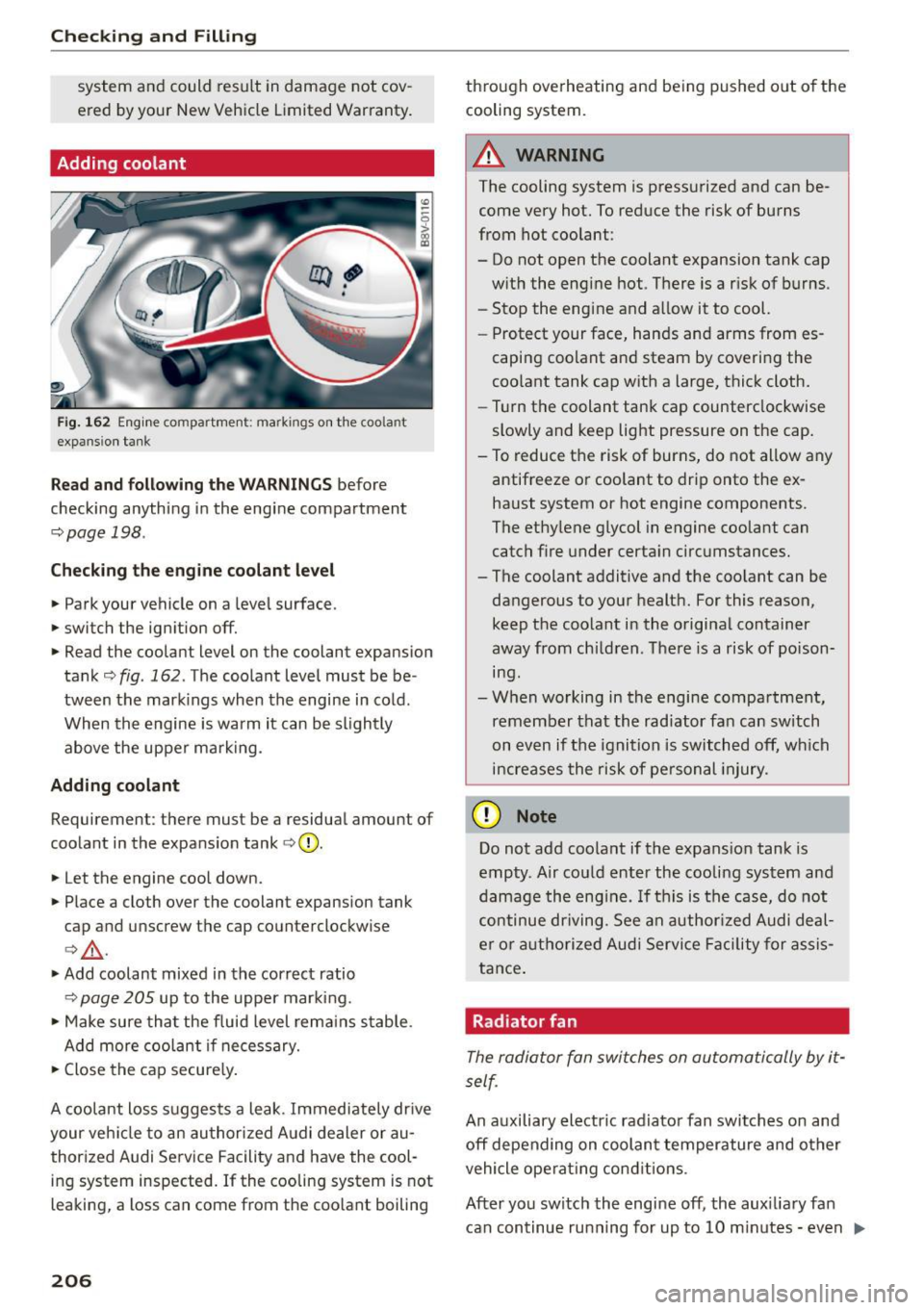
Fig. 162 Eng ine compartment: ma rkings on the coola nt
expans ion tank
Read an d follo wing the WARNINGS before
checking anything in the engine compartment
r::;,page 198.
Checking the engine coolant level
.. Park your vehicle on a level surface.
.. switch the ignition off.
.. Read the coolant level on the coolant expansion
tank
r::;, fig . 162 . The coolant level must be be
tween the mark ings when the engine in cold .
When the engine is warm it can be slightly
above the upper marking .
Adding coolant
Requirement: there must be a residual amount of
coolant in the expans ion tank
c> Q).
.. Let the engine cool down.
.. Place a cloth over the coolant expansion tank
cap and unscrew the cap counterclockwise
<=>& .
.,. Add coolant mixed in the correct ratio
r::;, page 205 up to the upper marking .
.. Make sure that the fluid level rema ins stable.
Add more coolant if necessary.
.. Close the cap secure ly.
A coolant loss s uggests a leak. Immediate ly drive
your veh icle to an authorized A udi dealer or au
thor ized Audi Service Facility and have the cool
ing system inspected.
If the cooling system is not
leaking, a loss can come from the coolant boiling
206
thro ugh ove rheating and being pushed out o f the
cooling system.
A WARNING
The cooling system is pressurized and can be
come very hot. To reduce the risk of burns
from hot coolant:
- Do not open the coolant expansion tank cap
w ith the engine hot. There is a risk of burns .
- Stop the eng ine and a llow it to cool.
- Protect your face, hands and arms from es-
caping coolant and steam by covering the
coo lant tank cap with a large, thick cloth.
- Turn the coolant tank cap counterclockwise
slowly and keep light pressure on the cap.
- To reduce the risk of burns, do not allow any
antifreeze or coolant to drip onto the e x
haust system or hot engine components.
The ethy lene glycol in engine coola nt can
catch fire under certa in circumstances.
- The coolant additive and the coolant can be
dangerous to your health. For this reason,
keep the coolant in the o riginal container
away from ch ildren . The re is a risk of poison
ing .
- W hen working in the engine compartment,
remember that the rad iator fa n can switch
on ev en if the ignition is switched off, wh ich
increases the risk of pe rsonal injury.
@ Note
Do not add coolant if the expans ion tank is
empty . Air cou ld enter the cooling system and
damage the eng ine. If this is the case, do not
continue driving. See an author ized Audi deal
er or a uth ori zed Audi Service Facility for a ssis
ta nce .
. Radiator fan
The radiator fan switches on automatically by it
self
An a uxiliary electric radiato r fan switches on and
off depending on coolan t temperature and other
vehicle ope rat ing cond itions .
After yo u sw itch the engine off, the aux ilia ry fan
can continue running for up to 10 m inutes -even .,,.
Page 210 of 282
Checking and F ill in g
sure you are using the correct brake f luid .
The correct type of brake fluid is also indi
cated on the brake fluid reservoir .
- The brake fluid must be new. Heavy use of
the brakes can cause a vapor lock if the
brake fluid is left in the system too long.
This can ser iously affect the effic iency of
the brakes as well as your safety . This
could res ult in an accident.
(D Note
Brake flu id will damage the paint of your vehi
cle .
@ For the sake of the environment
Because of the problem of proper d isposa l of
brake fluid as well as the spec ia l tools re-
quired and the necessary expertise, we rec
ommend tha t you have the b rake fluid
changed by your author ized Audi dealer.
Battery
General information
The battery in yo ur Audi does not need any ma in
tenance under normal operating conditions. Aud i
recommends having the electro lyte level check by
an author ized Audi dealer or author ized Audi
Service Fac ility when the re a re
high outside tem
pe ratu res or when dr iv ing a ll day. The electroly te
leve l sho uld also be checked ea ch t ime the bat
t ery is charged
9 page 210 .
Have the battery checked when you br ing you r ve
hicle in fo r an inspec tio n. It is a good idea to re
p la ce the batte ry if i t is more than 5 ye ars old .
During certai n types of a irbag dep loyments, the
battery is disconnect ed from the vehicle electr i
cal system fo r safety reasons
9 .&. in Repair, care
and disposal of the airbags on page 163.
Disconnecting the battery terminals
Some veh icle functions (such as power windows)
are not ava ilable when the batte ry is disco nnect
ed. These functions must be programmed after
the ba ttery is reconnec ted. To avoid havi ng to do
t his , on ly disconnect the b attery from the veh icle
208
electrica l sys tem when that is necessa ry to pe r
form repairs.
To reprogram the func tion s, proceed as fo llows:
Function Reprogramming
P owe r window one-
9 page 41, Correcting
to uch up/down f unc-power window malfunc-
tion tions
Remote control key o r If the vehicle does not
Conve nience key reac t to the key , it must
be synchronized
9 page 35
Digita l clock 9 page 10
ESC indi cato r light The ind icator lig ht goes
o ut afte r driving a few
meters
Not running the vehicle for long periods of
time
If you do not d rive yo ur vehicle for several days or
weeks, e lectr ica l components are gradua lly re
duced or switched off. Th is red uces energy con
s u mption and maintains the vehicle's ability to
start over a long per iod of t ime ¢
page 128.
Some conven ience functions , such as inter ior
li ght ing or power seats* may not wo rk . These
convenienc e functions w ill be availabl e agai n
o nce you swi tch the ig nition on and sta rt the en
gine.
Winter operation Du ring the winter months , it is common for the
batte ry capaci ty to dec rease as the tempe rat ur es
become lower . This is because more powe r is
needed to start the vehicle and componen ts such
as the he ad lights and the rear window defogger
are used more frequent ly.
Avoid using powe r unnecessar ily, especially in
c ity dr iv ing o r o n short trips . H ave yo ur au thor
iz ed Audi de aler or author ized A udi Se rv ice Facili
ty check the ba ttery capacity before the start of
winter ¢
page 210. A well-charged battery will
not only reduce starting problems in co ld weath
er, but it will a lso last longer .
Page 232 of 282
Tires and wheel s
-Always adapt your driving to the road and
traff ic conditions. Dr ive carefully and red uce
yo ur speed on icy or slippery roads. Even
winter tires can lose tract io n on black ice .
@ For the sake of the environment
Reinstall summer tires at the appropriate
time, because they provide better handling
when roads are free of snow a nd ice. Summer
tires cause less road noise, tire wear and fuel
consumptio n.
(D Tips
You can also use all season tires instead of
w inte r tires. Please note that in some coun
t ries w here winter tires are requ ired, on ly win
t er tire s wi th the .& symbol may be pe rm it
t ed.
Snow chains
Snow chains improve traction in the snow .
.,. Only install snow chains on the front wheels.
Th is applies also to veh icles with all wheel
drive* .
.,. Ch eck and correct the seating of th e snow
c h ains if necessa ry afte r dri ving a few feet. Fo l
l ow the ins tructions from the manuf acturer.
.,. Note t he max imum permit ted speed w hen driv
ing with snow chains . Do not exceed 30 mph
(SO km/h).
Snow chains not only improve the
driving in win
ter road conditions, but a lso t he
braking .
Use of s now chai ns is o nly pe rm itted with certa in
r im/t ire comb ina tion s due to techn ica l reason s.
Chec k w ith an au thori zed A udi d ealer or au tho r
ized A udi Service Facility to see if yo u may use
snow cha ins.
Use
fine -mesh snow chain s. They mus t not add
mo re th an 0 .5 3 inch ( 13.S mm) in height, in clu d
ing the chain lock.
You must remove the chai ns when dr iv ing on
roads tha t are
free of snow. W hen r oads are free
of snow, snow chains can imp air handling an d
230
'
damage the tires, and the chains wi ll quick ly be
dest royed.
A WARNING
Using incorrect snow chains o r insta lling snow
cha ins incor rectly can res ult in loss of veh icle
c o ntrol, which increases the risk of an acc i
dent.
(D Note
- Snow chains can damage the rims/wheel
cove rs* if the c hains come into direct c on
tact with them. Remove the wheel covers*
first . Use coa ted snow cha ins.
Low aspect ratio tires
Your A udi is fac to ry-eq uipped w ith low aspect ra
t io t ires. These t ires have been thoroug hly tes ted
a nd been sele cted specifi ca lly f or your mode l for
the ir su perb pe rformance, r oad fee l and h andlin g
u nder a var iety of dr iv ing con ditions. As k your au
t h orized Aud i dea le r fo r more details .
The low aspe ct ratio of these tires is ind icated by
a n umer al of
55 or less in the t ire's s ize design a
tion . The nume ral represents the ratio of the
ti re's si dewall height in relatio n to its tread width
expressed i n pe rcentage. Conventional tires have
a height/width rat io o f 60 o r more .
The performance of low-aspect-ratio tire s is par
ticularly sensitive to imprope r inflation pres
sure. It is therefore important that low aspect ratio tires are inflated to the specified pressure
and that the inflation pressure is regularly
checked and maintained. Tire pressures should be checked at least once a month and always
b efor e a long trip
Q page 224 .
What you can do to avoid tire and rim
damage
Low aspect rat io tires can be damaged mo re eas i
l y by impact w ith potho les, c urbs , g ull ies o r
r idges on t he road, pa rti cularly if th e tire is un
der i nflated.
Page 239 of 282
M N
0 > co ,...., \!) 1.1'1
1.1'1
1.1'1
,....,
Care and cleaning
Component Situation Solution
Paint
Paint damage Refer to the paint number on the vehicle data label, repair
with touch up paint
c> page 258
Spilled fuel Rinse with water immediately
Surface rust Rust remover, then protect with hard wax; for questions,
consult an authorized Audi dealer or authorized Audi Serv-
ice Facility.
Corrosion Have it
removed by an authorized Audi dealer or author -
ized Audi Service Facility .
Water no longer Proteclt with hard wax (at least tw ice per year)
beads on the surface
of clean paint
No shine even though Treat with suitable polish; then apply paint protectant if
paint has been pro- the polish that was used does not contain any protectant
tected/paint looks
poor
Deposits such as in-Dampen with water immediately and remove with a micro-
sects, bird droppings, fiber cloth
tree sap and road salt
Grease-based con-Remove immediately
with a mi ld soap solution a) and a
taminants such as soft cloth
cosmetics or sunb lock
Carbon parts Deposits clean the same way as painted parts c> page 235
Decorative decals Deposits Soft sponge with a mild soap solutiona>
al
Mild soap solut ion: maximum two tablespoons of neutral soap in 1 quart (1 liter) of water
Internal cleaning
Component Situation Solution
Windows
Deposits Glass cleaner, then wipe dry
Decorative parts/ Deposits Mild
soap solution a>
trim
Plastic parts
Deposits Damp cloth
Heavier deposits Mild
soap so lution al, detergent-free plastic cleaning solu-
tion, if necessary
Displays Deposits Soft cloth with LCD cleaner
Controls Deposits Soft brush, then a soft cloth with a m
ild soap solutiona>
Safety belts Deposits Mild soap solution a>, allow to dry before letting them re-
tract
237