warning light AUDI S7 2016 Owners Manual
[x] Cancel search | Manufacturer: AUDI, Model Year: 2016, Model line: S7, Model: AUDI S7 2016Pages: 294, PDF Size: 73.82 MB
Page 196 of 294
Intelligent Technology
& WARNING
Improp er operat ion of the rear spoiler can
cause crushing injuries.
- Always make sure that nobody, espec ially
children , is in the way when the rea r spo ile r
i s deployed or retracted.
@ Note
- Neve r push on the vehicle on the rear spoi l
er. Th is co uld cause damage .
- To prevent damage to the rear spoiler do
not lean or p lace anyth ing on it.
- Only ope rate the rear spoi ler manually when
the luggage compartment lid is close and
the rear spo iler moving parts are not
blocked . Ot herwise, damage could occur.
(D Tips
Clean the rear spoiler compartment every 2 to
3 mont hs. To function correct ly, the rear
sp oiler must be free of ice, sn ow and leav es.
Energy management
The starting ability is optimized
The energy management system manages the
ele ctrical energy distribu tion and op timi zes the
availability of elec trical energy for starting the
engine .
Whe n a ve hicle wit h a co nven tional e nergy sys
tem is not dr iven for a long time, the ba tte ry is
d rained by equipmen t (fo r example the immobil
izer). In certa in circ umstances, there cou ld may
not be eno ugh energy to start the engine .
Your veh icle i s equ ipped w ith an intellige nt ener
gy managemen t system for distr ibuting electr ic i
ty . Th is significantly improves the starti ng ability
a nd increases the battery life .
T he energy m anagemen t sys tem Is made up of
battery diagno sis, idling current management
and dynamic energy management.
Battery diagnosis
T he batte ry diagnos is determines the ba tte ry
ch arge leve l. The sen sors de te ct the ba tte ry, the
194
batte ry current, an d the batte ry tempera ture.
The c urrent charge leve l and the perfo rmance of
t h e battery are determined based on th is.
Idling current management
The idling cur ren t management decr eases the
energy used wh ile pa rke d. Wi th the eng ine
switched off, it manages the energy dis trib ution
to t he d ifferent e lectr ica l components . Date from
battery diagnos is is ta ken into acco unt for this .
Depend ing on the batte ry charge leve l, elec trical
equipmen t is switched off one item afte r th e o th
e r, to prevent the battery from dra ining and to
r etain the starting ability.
Dynamic energy management
While driv ing , d ynam ic ene rgy man agement dis
t ribu tes the ap propri ate amount of energy to the
e lectrica l equ ipment. It controls the battery
c h arge level so t hat more ene rgy is not use d then
i s be ing generated in order to maintain an opti
mal battery charge level.
(D Tips
- Energy management can not overcome the
laws of p hys ics. Note that the charge level
and length of the battery life a re limited.
- W he n the sta rting ability is endange red, the
(•j indicator light t urns on¢ page 16 .
What you should know
Maintaining the starting ability is the highest
priority .
A lot of st ress is placed on the ba ttery when dr iv
i ng sho rt distances, in t raff ic, and at cold t imes
of the year . A lot of ene rgy is used but little is
generated .
It is also critical when the engine is
not ru nning but e lectr ica l equipment is sw itched
o n. In th is case, energy is used but none is gener
ated.
In sit uat ions like this, energy ma nagement w ill
active ly regu lated the distribution of energy.
Long periods without use
If you do not drive yo ur vehicle for several days or
weeks, e lectr ica l equipment is grad ually scaled ..,.
Page 200 of 294
Driving and th e environment
content of the fuel be ing used. Using a differ
ent brand of fuel may help, or filling the tank
w ith lead-free super grade gasoline.
Diesel particulate filter
A pp lies to veh icles: w ith d iesel e ng in e
The diesel particulate filter filters nearly a ll of
the soot particles out of the exhaust . The filter
cleans itse lf automatically under normal driving
conditions. If the f ilter cannot clean itself (for ex
ample, because you are only driving short distan
ces), the filter becomes clogged with soot and
the
II symbo l for the diesel particulate filter il
lum inates ¢
page 20.
_& WARNING
-Do no t park your vehicle ove r flammable
materials such as g rass or leaves because
the high temperature of the diesel particu
late fi lter co uld start a fire.
-
- Do not apply an underbody protectant in the
exha ust system a rea o r a fire could start.
Placing your vehicle out
of service
If you wou ld like to take your veh icle out of serv
ice for a longer t ime, contact your authorized
Aud i dealer or authorized Aud i Service Facility.
They will advise you of important measures, such
as corrosion protection, maintenance and storage p rocedures . Also follow the informat ion about
the battery ¢
page 228.
Economical and environ
mentally-friendly driving
General
Your personal style of driving will determine the
economy of your vehicle, as well as exhaust and
noise levels .
Fuel economy, environmental impact, and wear
on your engine, brakes and t ires largely depend
on three factors:
-your personal dr iv ing style
- operating conditions
198
- technical limitat ions
If you ant ic ipate what you need to do next and
drive econom ic a lly, you can easily cut yo ur fu el
consump tion by 10-15 percent. This section will
give you some tips on how you can he lp the envi
ronment and your pocketbook .
(D Tips
'
The cons ump tion es tima tes as published by
EN VIRON MENTAL PRO TEC TION AGENCY ( EPA)
and T ransport Canada may not correspond to
your actual consumption on the road, which
will vary depending upon vehicle load and
speed, road and weather conditions, tr ip
l ength, etc.
Drive smoothly and keep a lookout ahead
Vehicles use the most fuel when they are acceler
ating.
.. Avo id unnecessary accelerating and brak ing.
Vehicles use the mos t fue l when they a re acceler
ating. I f yo u anticipate what is going to happen
next, you w ill need to b rake less and, thus, accel
erate less. Let the veh icle coast whenever possi
ble -for example when you see that the next traf
fic light is red .
Avoid full throttle
Driving at moderate speeds saves fuel and im
proves your mileage.
.. Try and keep well below your car's maximum
speed.
Acce lerating gently red uces fue l cons umption,
engine wear, and does not disturb the environ
ment .
Fuel consumpt ion, exhaust emiss ions and engine
noise increase d isproportionately at high speeds .
If you drive at approximate ly three quarte rs of
top speed, fue l consumption will be reduced by
one half. Never drive faster than the posted
speed l imit and weather cond itions permit.
Page 201 of 294
M N <( (.J
'SI: ,...., \!) 1.1'1
N \!) ,....,
Reducing unnecessary idling
Even when your car is just idling it burns up fuel.
~ Shut the engine off when you are not driving
the vehicle.
~ Do not warm up the vehicle by letting the en-
gine run at idle .
The idling phase is automatically reduced for
veh icles with the Start-Stop-System . It is effi
cient to switch off the engine in vehicles without
the Start-Stop-System when stopped at railroad
crossings and long red lights. Turning the engine
off for just 30-40 seconds saves more fuel than is
burned by starting the engine again.
It takes a long time for the engine to warm up
fully when it is running at idle . However, wear
and noxious emissions are especially high when
the engine is warm ing up. So you shou ld drive
away as soon as you start the engine and avoid
running at high rpms while the engine is still
warming up .
(D Note
Do not leave engine idling unattended after
starting. If warning lights should come on to
indicate improper operation, they would go
unheeded. Extended idling a lso produces
heat, wh ich could resu lt in overheating or oth
er damage to the vehicle or other property.
Regular maintenance
A badly tuned engine unnecessarily wastes a lot of fuel.
~ Have your vehicle serviced at regular intervals.
By having your vehicle regularly serviced by an
Aud i dea ler helps to ensure that it runs properly
and economica lly. The condition of your vehicle
not only affects its safety and ability to hold its
value, it a lso affects fuel consumption .
Check your oil each time you fill your tank.
The amount of oil used is related to engine load
and speed.
Driving and the environment
It is normal for the oil consumption of a new en
gine to reach its lowest value after a certain mile
age has been driven.
You must drive your veh icle about 3,000 miles
(5,000 kilometers) before you can properly as
sess oil consumption .
T h is also applies to fuel consumption and engine
o ut put .
CD Note
- Have your vehicle maintained properly and
in accordance with the service recommenda
tions in your Warranty
& Maintenance book
let . Lack of proper maintenance as well as
improper use of the vehicle will impair the
function of the em ission contro l system and
cou ld lead to damage.
- Do not alter or remove any component of
the Emission Control System unless ap
proved by the manufacturer.
- Do not alter or remove any device, such as
heat shields, sw itches, ignition wires,
valves, which are designed to protect your
vehicle's Emission Control System and other important vehicle components .
Fewer short trips
Fuel consumption will always be relatively high
on short trips .
~ Try to avoid dr iv ing short distances w ith a co ld
eng ine .
The engine and cata lytic converter have to reach
their optimal operating temperature to reduce
fuel consumpt ion and nox ious em issions effec
t ively.
Just after starting, a co ld engine in a mid-size car
only achieves a fuel economy of 6-8 mi les per
gallon (30-40 l/100 km) . After about a half a
mile, fuel economy climbs to 12 mpg (20 l/100
km). After about
2.5 miles (4 km), the eng ine is
at its proper operating temperature and fuel
economy has reached a norma l level. So you can
see that you should avoid short trips whenever
poss ible. .,.
199
Page 203 of 294
M N <( (.J
'SI: ,...., \!) ..,.,
N \!) ,....,
Trailer mode Driving with a trailer
General information
Your Audi was designed primarily for passenger
transportation .
If you plan to tow a trailer, p lease remember that
the additional load will affect durability, econo
my and performance.
Trailer towing not only places more stress on the
vehicle, it also calls for more concentration from
the driver.
For this reason, always follow the operating and
driving instructions provided and use common
sense.
(D Note
If you are going to tow a trai ler, you must ac
tivate the trailer operat ion mode
c::> page 201, Operating instructions.
Technical requirements
Trailer hitch
Use a weight-carrying hitch conforming to the
gross trailer weight. The hitch must be suitable
for your vehicle and trailer and must be mounted
securely on the vehicle's chassis at a
technically
sound
location. Use only a trailer hitch with a re
movable ball mount. Always check with the trail
e r hitch manufacturer to make sure that you are
using the correct hitch.
Do not use a bumper hitch.
The hitch must be installed in such a way that it
does not interfere with the impact-absorbing
bumper system. No modifications should be
made to the vehicle exhaust and brake systems.
From time to time, check that all hitch mounting
bolts remain securely fastened .
When you are not towing a trailer,
remove the
trailer hitch ball mount. This prevents the hitch
from causing damage should your vehicle be
struck from behind
c::> &, .
Trailer mode
Trailer brakes
If your trailer is equipped with a brak ing system,
check to be sure that it conforms to all regula
tions.
T he trailer hydraulic brake system must not be di
rect ly connected to the vehicle's hydraulic b rake
system.
Safety chains
Always use safety chains between your veh icle
and the tra iler.
Trailer lights
Trailer lights must meet all regulations. Be sure
to check with your Aud i dealer for correct wiring,
switches and relays.
Mirrors
If you are unable to see the traffic behind you us
ing the regular outside mirrors, then you
must in
stall extended mirrors. It is important that you
always have clear vision to the rear .
A WARNING
--
After removing the trailer hitch, do not store
i t in your vehicle. In case of sudden braking,
the hitch could fly forward and injure you or
your passengers.
Operating instructions
Maximum trailer weight
A trailer for your vehicle is limited to a typical
class 1 or class 2 trailer.
Trailer load distribution
Be sure the load in the trailer is held securely in
place to prevent it from sh ifting forward, back
ward or sideways.
Never allow a passenger to ride in a trailer c::> &.
in Driving instructions on page 203 .
Engine cooling system
Towing a trailer makes the engine work harder. It
is important that the cooling system's perform
ance is up to the additional load. Make sure that
the cooling system has enough fluid . .,..
201
Page 205 of 294

M N <( (.J
'SI: ,...., \!) 1.1'1
N \!) ,....,
braking effect to slow the vehicle. Use of the
brakes alone can cause them to overheat and fail.
Air suspension*
When driving with a trailer, activate the trailer
mode of the air suspension. Switch the air sus
pension trailer mode on when you are towing a
trailer. This will limit the regulation by the air
suspension while driving. Select in the MMI:
ICARI function button > (Car)* systems control
button>
Vehicle settings> Air susp.: towing>
On.
Coolant temperature
The coolant temperature gauge c::> page 10 must
be observed carefully. The coolant temperature
can increase if you drive on long inclines in a low
gear at high engine speeds . Reduce your speed
immediately if the LEDs in the top part of the dis
play turn on .
For more information about indicator lights, re
fer to.
c::> page 15.
A WARNING
Anyone not properly restrained in a moving
vehicle is at a much greater risk in an acci
dent . Never let anyone ride in your car who is
not properly wearing the restraints provided
by Audi.
Trailer mode notes
Important to know
-
Your vehicle handles differently when towing a trailer because of the additional weight and dif
ferent weight distribution . Safety, performance
and economy will greatly depend on how careful
ly you load your trailer and operate your rig.
Before you actually tow your trailer, practice
turning, stopping and backing up in an area away
from traffic . Keep practicing until you have be
come completely familiar with the way your vehi
cle-trailer combination behaves and responds.
Backing up is difficult and requires practice. Back
ing up with a trailer generally requires steering
Trailer mode
action opposite to that when backing up your ve
hicle without a trailer.
Maintain a greater distance between your vehicle
and the one in front of you . You will need more
room to stop. To compensate for the trailer, you
will need a larger than normal turning radius.
When passing, remember that you cannot accel
erate as fast as you normally would because of
the added load. Make sure you have enough room
to pass. After passing, allow plenty of room for
your trailer before changing lanes again.
Avoid jerky starts, sharp turns or rapid lane
changes.
(D Tips
- Do not tow a trailer during the break-in peri
od of your vehicle.
- If you tow a trailer, your Audi may require
more frequent maintenance due to the ex
tra load
c::> page 2 7 4.
Parking on a slope
Do not park on a slope with a trailer. If it cannot
be avoided, do so only after doing the following:
When parking:
" Apply the foot brake.
" Have someone place chocks under both the ve
hicle and the trailer wheels.
"With chocks in place, slowly release the brakes
until the wheel chocks absorb the load.
"Turn the wheels towards the curb.
... Apply the parking brake.
"Select the P selector lever position.
When restarting after parking:
"Apply the foot brake.
"Start the engine.
"Select the D/S selector lever position.
"Release the parking brake and slowly pull out
and away from the wheel chocks.
"Stop and have someone retrieve the wheel
chocks .
203
Page 207 of 294
M N <( (.J
'SI: ,...., \!) 1.1"1
N \!) ,....,
Care and cleaning
General information
Regular, proper care helps to maintain your vehi
cle's value.
It can a lso be a req uirement when
submitting warranty claims for corrosion damage
and paint defects on the body.
The necessary care products can be obtained
from your a uthorized Audi dea ler . Read and fol
l ow the instructions for use on the packaging .
A WARNING
- Using clean ing and care products incorrectly
can be dangerous to your health.
- Always store cleaning and care products out of reach of children to reduce the r isk of po i
soning .
@) For the sake of the environment
- Preferably use environmentally-friendly
products when b uying cleaning agents.
- Do not dispose of leftover cleaning and care
products with h ousehold tras h.
Car washes
The longer that deposits remain on the vehicle ,
the more the s urface may be damaged . H igh
temperatures s uch as those caused by s unlight
increase the damaging effect.
Before washing, rinse off heavy deposits with
p lenty of water.
S tu bbor n depos its s uch a s bird dropp ings o r tree
sap are best removed w ith plenty of wa ter and a
microfiber cloth .
A lso, was h the unde rs ide of your vehi cle once
ro ad salt s tops be ing use d fo r t he season .
Pressure washers
When washing your ve hicles w ith a pressure
washer, always follow the operating instructions
p rov ided with t he p ress ure washer. This is espe
ci ally importan t in reg ard to the p ress ure and
sp ray ing dist ance. Do not aim the spray direc tly
at seals on side windows, doors, the hood, the
rear lid or the sunroof * or at tires, rubber hoses,
Care and cleaning
insulat ing mater ia l, sensors * or camera lenses *.
Keep a distance of at least 16 inches (40 cm) .
D o no t remove snow and ice with a pressu re
washe r.
Never use rotary nozzles or high pressure noz
z les.
The water temperature must not be above 140 °F
(60 °() .
Automat ic car washes
Sp ray off the ve hicle before washing .
Make sure tha t the w indows and roo f* are close d
and the windshield wipers are off . Follow inst ruc
tions from the car wash operator, especially if
there are accessor ies attached to your vehicle.
If possible, use car washes th at do not h ave
brushes.
Washing
by hand
Clean the ve hicle starting from the top and work
i ng down using a soft sponge or cleani ng b rush .
U se solven t-free cle ani ng p rod ucts.
Washing vehicles with matte finish paint
by
hand
T o avoid damaging the pain t whe n washing, first
remove dus t and large particles from yo ur vehi
cle . Inse cts , grease s pots and fingerprin ts a re
best removed with a specia l cleaner for matte
finish pai nt.
Apply t he p rod uct using a mi crofiber cloth. To
avo id damaging the paint surfa ce, do not use too
much pressure.
Rinse the ve hicle thoroughly with water. Then
cl ea n usi ng a neutr al sham poo and a so ft mi cro
fiber clo th .
Rinse the ve hicle thoroughly again and let it air
dry. Remove a ny wate r residue using a s ham my.
A WARNING
- Onl y wa sh the vehicle w hen the ign ition is
off and fo llow the ins truc tions from the car
wash ope rator to reduce the risk of a cci
dents.
-
205
Page 210 of 294
Care and cleaning
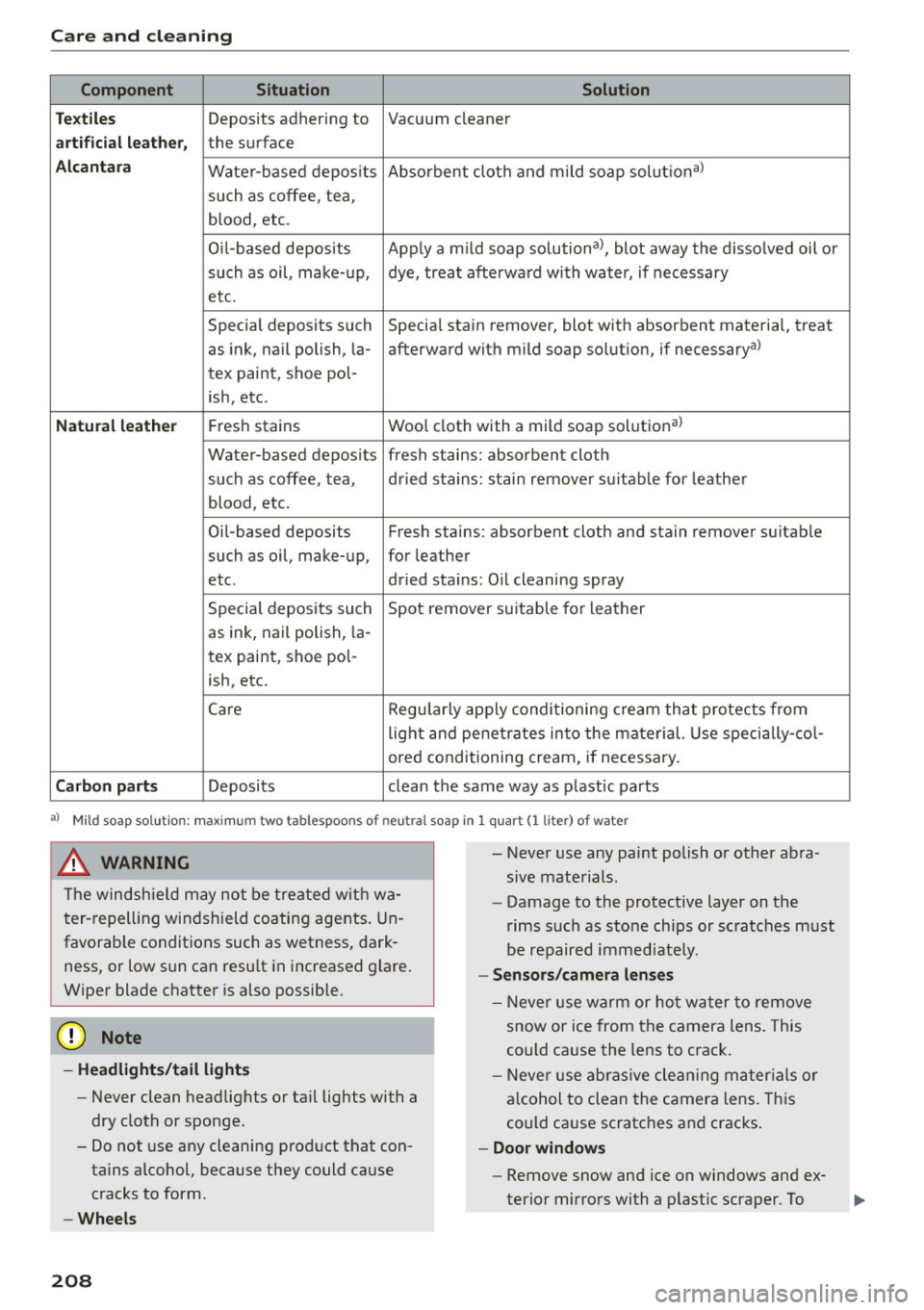
Component S ituation Solution
Te xtiles
Deposits adhering to Vacuum cleaner
arti ficial leath er, the surface
Alca ntara Wate r-based depos its Absorben
t cloth and mild soap solutional
such as coffee, tea,
blood, etc.
Oil-based deposits Apply am ild soap solutional, blot away the disso lved oil or
such as oil, make-up, dye, treat afterwa rd with water, if necessary
etc.
Special deposits such Special stain remover, blot w ith absorbent materia l, treat
as ink, na il polish, la- afterward with mild soap so lution, if necessaryal
tex paint, shoe pol-
ish, etc.
Natural leather Fres h stains Wool cloth with a mild soap solut ional
Wate r-based depos its fresh stains: absorbent clot h
such as coffee, tea, d ried stains: stain remover suitable for leathe r
blood, etc.
Oil-based deposits Fresh stains: absorbent cloth and stain remover suitab le
such as oil, make- up, for leather
etc. dried stains: Oil cleaning spray
Special deposits such Spot remover sui table for leather
as ink, nai l polish, la -
tex paint, shoe pol-
ish, etc.
Care Regularly app ly condi tioning cream that protects from
lig ht and penet rates in to the mate rial. Use specially -col -
ored conditioning cream, if necessary.
Carbon part s Deposits clean the same way as plastic parts
al Mild soap sol ution: maxim um two tablespoons of neutral soap in 1 quar t (1 liter ) of water
_& WARNING
The windshie ld may not be tre ate d wit h wa
t er- repelling win dsh ield co ating agents. Un
favorab le conditions such as wetness, dark
ness, or low s un can resu lt in increased glare.
Wiper blade chatter is also possible.
(D Note
- Headlights/tail light s
-Never clean headlights or ta il lights with a
dry cloth or sponge.
- Do not use any cleaning prod uct that con
tains alcohol, because they could cause cracks to form.
- Wheels
208
-
- Never use any paint polish or other abra
sive mate rials.
- Damage to the protective layer on the
rims such as sto ne chips or sc ratches must
be repaired immediately.
- Sensors /camera lenses
- N eve r use warm or ho t w at er to remove
snow or ice from the camera lens . This
could ca use the lens to crack.
- N eve r use abras ive cle an ing m ateria ls or
a lcohol to clea n the camera lens. This
could ca use scratches and cracks .
-Doo r windows
- Remove snow and ice on windows and ex-
terio r mirro rs with a p lastic scraper. To
Page 220 of 294
Checking and Fill in g
Checking and Filling
Hood
Releasing the engine hood
The engine hood is released from inside the vehi
cle.
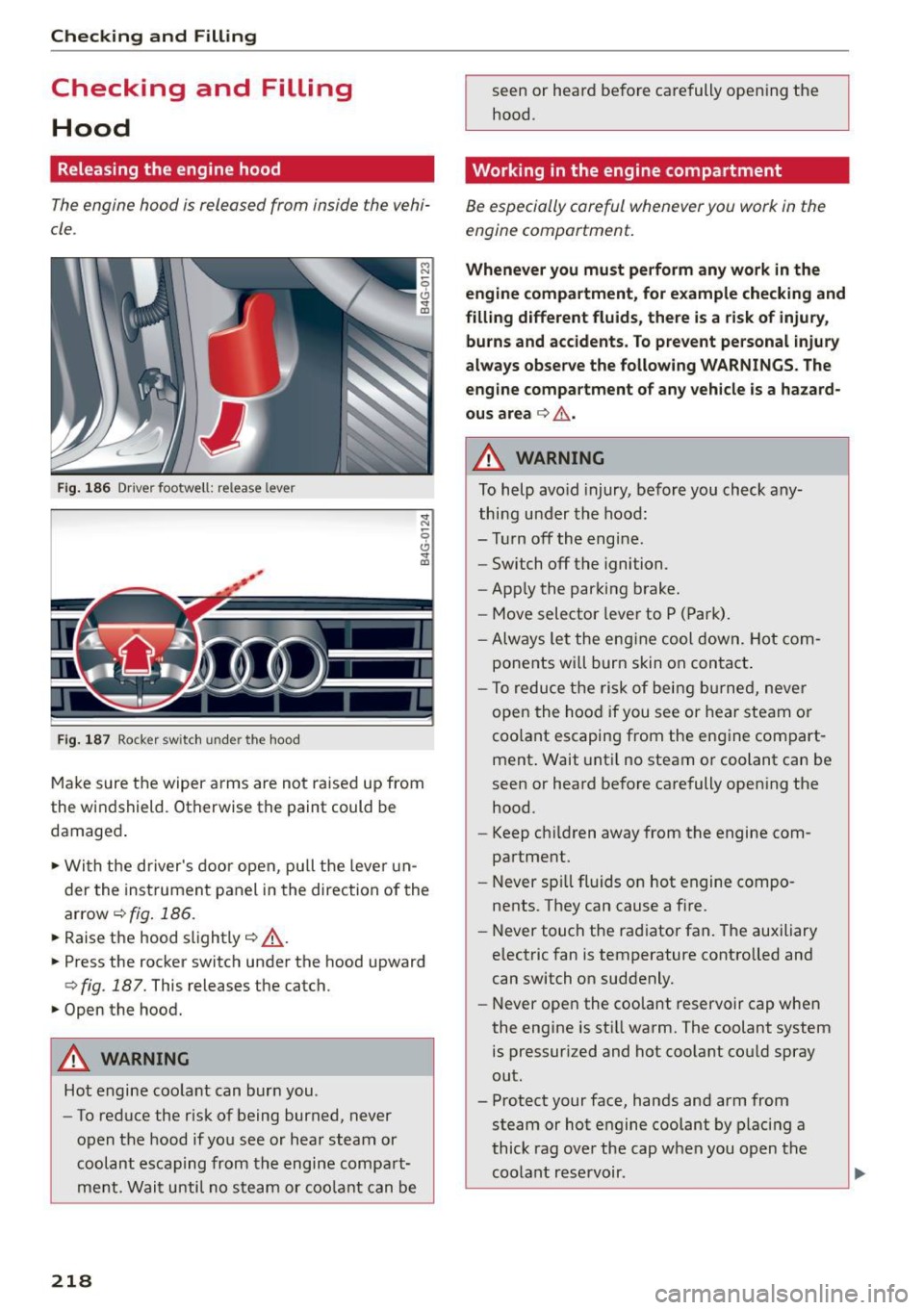
Fig. 1 86 Driver footwell: release lever
Fig. 187 Rocker sw itch under the hood
Make s ure the wiper arms are not ra ised up from
the windshield . Otherwise the paint could be
damaged .
.. Wi th the driver's door open, pu ll the lever un
der the instrument panel in the direction of the arrow
c::> fig. 186.
.. Raise the hood s lightly c::> _A .
.. Press the rocker switch under the hood upward
Q fig. 187. This releases the catch.
.. Open the hood.
A WARNING
Hot engine coo lant can burn you.
- To reduce the risk of being burned, never
open the hood if yo u see or hear steam or
coolant escap ing from the engine compa rt
me nt. Wait until no steam or coo lant can be
218
seen or heard before carefully open ing the
hood.
Working in the engine compartment
Be especially careful whenever you work in the
engine compartment.
Whenever you mu st perform any w ork in the
engine comp artment , for example checking and
filling d iff erent fluid s, the re i s a risk of injury ,
burns and accidents. To p revent pe rsonal injur y
alwa ys ob serv e the follow ing WARNING S. The
engi ne compartment o f an y vehicle is a h azard
ous are a
i::>_6 .
A WARNING
To help avo id injury, before you check any
thing under the hood:
- Turn off the engine.
- Switch off the ignition.
- App ly the parking brake.
- Move selector leve r to P (Park).
- Always le t the eng ine cool down. Hot com-
ponents wi ll burn skin on contact .
-
-To reduce the risk of bei ng bur ned, never
open the hood if you see or hear steam o r
coo lant escaping from the engine compart
ment . Wait unt il no steam o r coolant can be
seen or heard before carefully open ing the
hood.
- Keep c hildren away from the engine com
partment .
- Never sp ill fluids on hot engine compo
nents. They can cause a fire.
- Never touch the radiator fan. The auxiliary
electric fan is temperature cont ro lled and
can switch on suddenly.
- Never open the coolant reservoir cap when
the engine is sti ll warm. The coolant system
is pressur ized and hot coo lant co uld spray
out.
- Protect your face, hands and arm from
steam or hot engine coolant by placing a
thick rag ove r the cap w hen you open the
coo lant reservoir.
Page 222 of 294
Checking and Fill in g
Engine compartment
Engine compartment overview
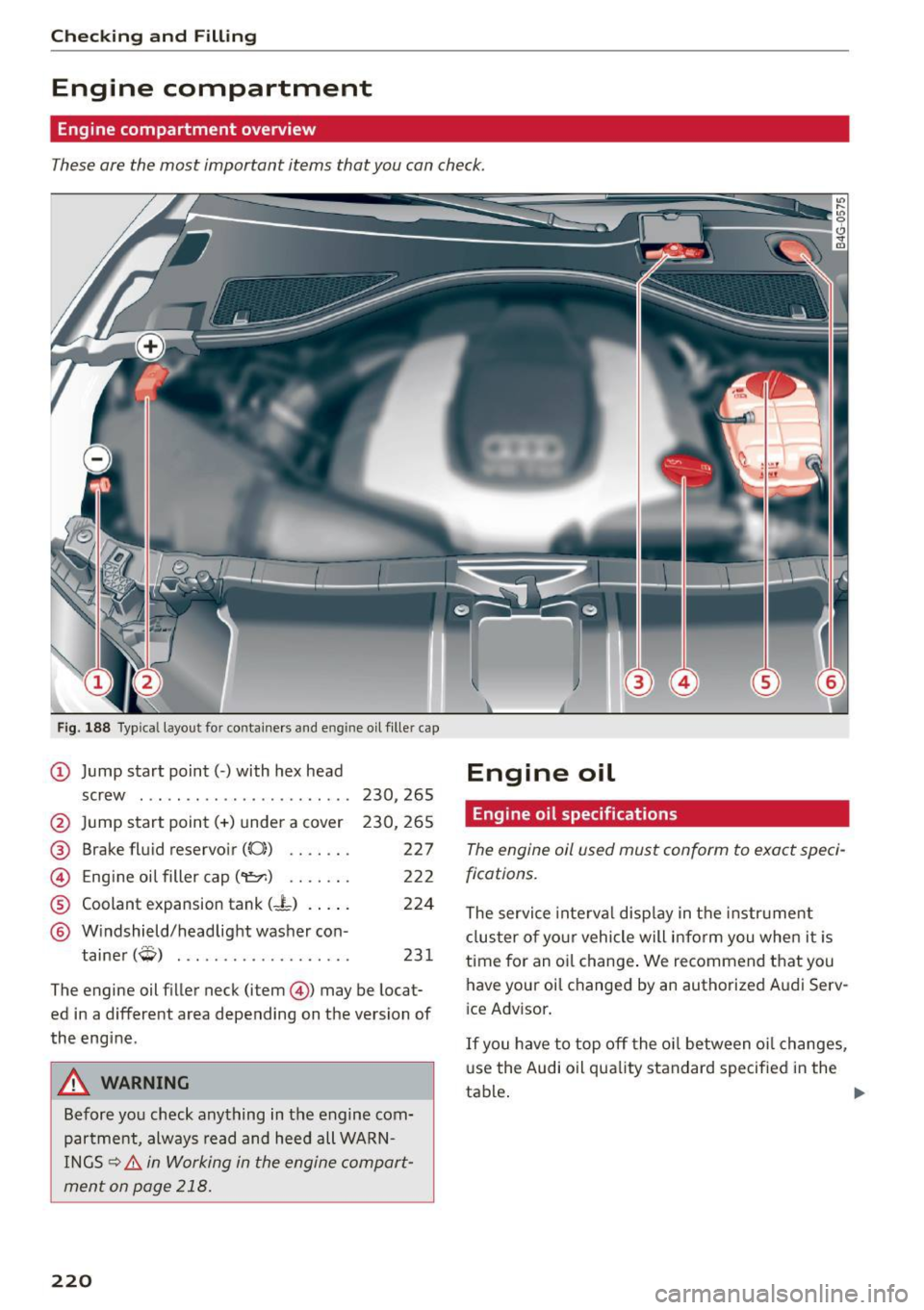
These are the most important items that you can check .
Fig. 188 Typica l layou t fo r con tainers and en gin e oil fille r cap
@ Jump start point( -) with hex head Engine oi L
screw . . . . . . . . . . . . . . . . . . . . . . . 230 , 265
@ Jump start point(+) under a cover
@ Brake fluid reservoir (0)) ...... .
@ Eng ine oil filler cap
('t::71) .. .. .. .
® Coolant expansion tank (-L) .... .
@ Windshield/headlight washer con -
t .
(~ ) amer ~ ................. . .
230,265
227
222
224
231
The engine oil filler neck (item @) may be locat
ed in a different area depending on the version of
the engine .
A WARNING
Before you check anything in the engine com
partment, always read and heed all WARN
INGS~.&.
in Working in the engine compart
ment on page 218.
220
Engine oil specifications
The engine oil used must conform to exact speci
fications.
The service inte rval disp lay in the instr ument
cl us ter of your vehicle will inform you whe n it i s
time for an oi l change . We recommend that you
have your oil changed by an authorized A ud i Serv
i ce Advisor .
If you have to top off the o il between oi l changes,
use the Audi oil quality standard specifie d in the
table . ..,.
Page 227 of 294
M N <( (.J
'SI: ,...., \!) 1.1'1
N \!) ,....,
~ Park your vehicle on a level surface.
~ Switch off the ignition .
~ Read the eng ine coolant leve l from the coolant
expansion tank
c> fig. 191, c> page 220,
fig. 188.
With a cold engine, the coolant level
should be between the "min" and "max" mark
i ngs. When the engine is warm, the level may
be s light ly above the "max" marking.
The location of the coolant expans ion tank can be
seen in the engine compartment illustrat ion
i=>page220.
To obtain an accurate reading, the engine must
be sw itched
off.
The expansion tank in you r vehicle is equipped
with an electric coolant level sensor.
When the coo lant level is too low, the warning
light in the Auto-Check System
c:> page 15 wi ll il
l uminate unti l you a dd coolant and the level has
been restored to norma l. Even though there is an
e lectric coolant level sensor, we still recommend
you check the coolant level from time to time.
Coolant loss
Coolant loss may i ndicate a leak in the coo ling
system . In the event of coo lant loss , the cooling
system should be inspected immed iate ly by your
author ized Audi dealer. It is not enough merely
to add coolant .
In a
sealed system, losses can occur only if the
boiling point of the coo lant is exceeded as a re
sult of overheat ing.
A WARNING
The cooling system is under pressure and can
get very hot. Reduce the risk of scalding from
hot coolant by following thes e steps.
- Turn off the engine and allow it to coo l
dow n.
- Protect yo ur face, hands and arms from es
caping fluid and steam by cove ring the cap
with a la rge, th ick rag.
- Turn the cap slowly and ve ry carefu lly in a
counte r-clockw ise direct io n wh ile a pplying
light, downwa rd pr essur e on the top of the
c ap.
Checking and Fillin g
-To avo id being burned, do not sp ill anti
freeze o r coolant on the exha ust system or
hot engine parts. Under certa in cond itions,
the ethylene glyco l in engi ne coo lant can
ca tch fire.
(D Note
Do not add any type o f radiator leak sea lant
to you r vehicle 's engi ne coolant . Add ing radia
tor repair fluid may adversely affect the func
tion and pe rformance of your coo ling system
and could r esult in damag e not cover ed by
your New Veh icle Limited Warranty.
Adding coolant
Be very careful when adding engine coolant.
Before you check a nyth ing in the eng ine compart
me nt,
always read and heed all WARNINGS
c> .&. in Working in the engine compartment on
page 218.
~ Requirement: T here must be a residua l amount
of coolant in the expansion tank
c:> (D .
~Tu rnoff the engi ne.
~ Le t the eng ine cool down.
~ Place a thick rag ove r the coo lan t expansion
t ank
c:>page 224, fig. 191 and carefully tw ist
t he cap coun ter- clockwise
c:> .&, .
~ Ad d coo lant mixed in the correc t ra tio
c:> page 224, Coolant up to the MAX marking .
~ Make sure that the fl uid leve l remains stab le.
Add more coo lant if necessary.
~ Twist the cap o n again tightly.
Rep lacement engine coo lant must confo rm to ex
act specifications
c> page 224, Coolant.
We recommend using only coo lant add it ive G1 2+
+ , G 13 or in an emergency G12+. Do
not use a
different additive. In an emergency use p lain wa
ter unt il you can get the correct add itive and can
restore the correct ratio. This should be done as
soon as possib le.
If you have lost a considerab le amou nt of cool
ant, then you shou ld add cold antifreeze and co ld
water only whe n the eng ine is co ld.
Always use
new engine coo lant w hen refilling.
225