instrument panel AUDI TT 2013 Owner´s Manual
[x] Cancel search | Manufacturer: AUDI, Model Year: 2013, Model line: TT, Model: AUDI TT 2013Pages: 262, PDF Size: 65.91 MB
Page 126 of 262
124 Airbag sys te m
about the same height in the instrument pan
e l underneath the glove compartment.
The knee a irbag offers add it iona l pro tect ion
to the driver's and passenger 's knees and up
per and lower thigh areas and supp lements
the protection by the safety be lts .
I f the front airbags deploy , the knee airbags
a lso deploy in frontal co llisions when the de
p loyment thresho ld stored in the cont rol unit
is met ¢
page 117, More important things to
know about front airbags .
In addi tion to their normal safety function,
safety belts he lp keep the driver or front pas
senger in position in a frontal collisio n so that
the airbags can prov ide supplemental protec
tion.
The airbag system is not a s ubstitute for yo ur
safety be lt . Rather, it is part of the overall oc
cupant restraint system in your veh icle. Al
ways remember that the airbag system can
only help to protect you if you are wearing
your safety belt and wear ing it properly . Th is
i s why you shou ld always wear you r safety
be lt, not just because the law requires you to
do so ¢
page 100, General notes.
The safety belt buck le for the dr iver and front
seat passenger have switches that te ll the a ir
bag control module if the safety belt is being
used or not. If the safety belt is being used,
the knee airbag will deploy at a slightly highe r
rate of deceleration than if the belt is not be
ing used . Therefore, in a partic ular collision , it
is possible that an airbag will not deploy at a
seating position where the safety belt is being used but will inflate at the position where the
safety belt is not be ing used.
Remembe r too, airbags will deploy only once
and on ly in certain kinds of accidents -your
safety belts are always there to offer protec
tion in those acc idents in which airbags are
n ot supposed to deploy or when they have a l
ready deployed, fo r example whe n your veh i
cle str ikes or is struck by another after the
fi rs t collis io n. This is
just one of the reasons why an airbag is
not a s ubstitute for the safety be lt. The airbag
system works most effect ively when used with
the safety belts. Therefore, always wear yo ur
safety belts correct ly.
It is important to remember that w hil e the
s u pplementa l knee airbag system is designed
to reduce the likelihood of ser ious injuries,
other injur ies, for example, swelling, bru is ing,
minor abrasions and friction bu rns can a lso
occur when an airbag inflates.
The knee airbag system basically consi sts
of:
- The e lectronic control module
- Two inflatable a irbags (a irbag and gas gen-
erator), one for the driver and one for the
front passenge r
- The a irbag ind icator light in the instrument
panel
The knee airbag sy ste m w ill not depl oy :
- when the ignition is t urned off
- in frontal collisions when the deceleration
measured by the contro l unit is too low
- in side co llisions
- in rea r-end co llisions
- in rollove rs
- in the event of a system malfunction (warn -
ing/ind icator light is on)
¢ page 15.
A WARNING
-Safety belts and th e airbag system can
only provide pro te ction when occupa nts
a re in the proper se ating posi tion
<=:>page 117.
- If the airbag ind icator light come s when
the vehicle is be ing used, have the sys
tem inspected immediate ly by yo ur au
thor ized A udi dealer.
-
Page 127 of 262
How knee airbags work
The risk of injury to the leg area con be re
duced by fully inflated knee airbags.
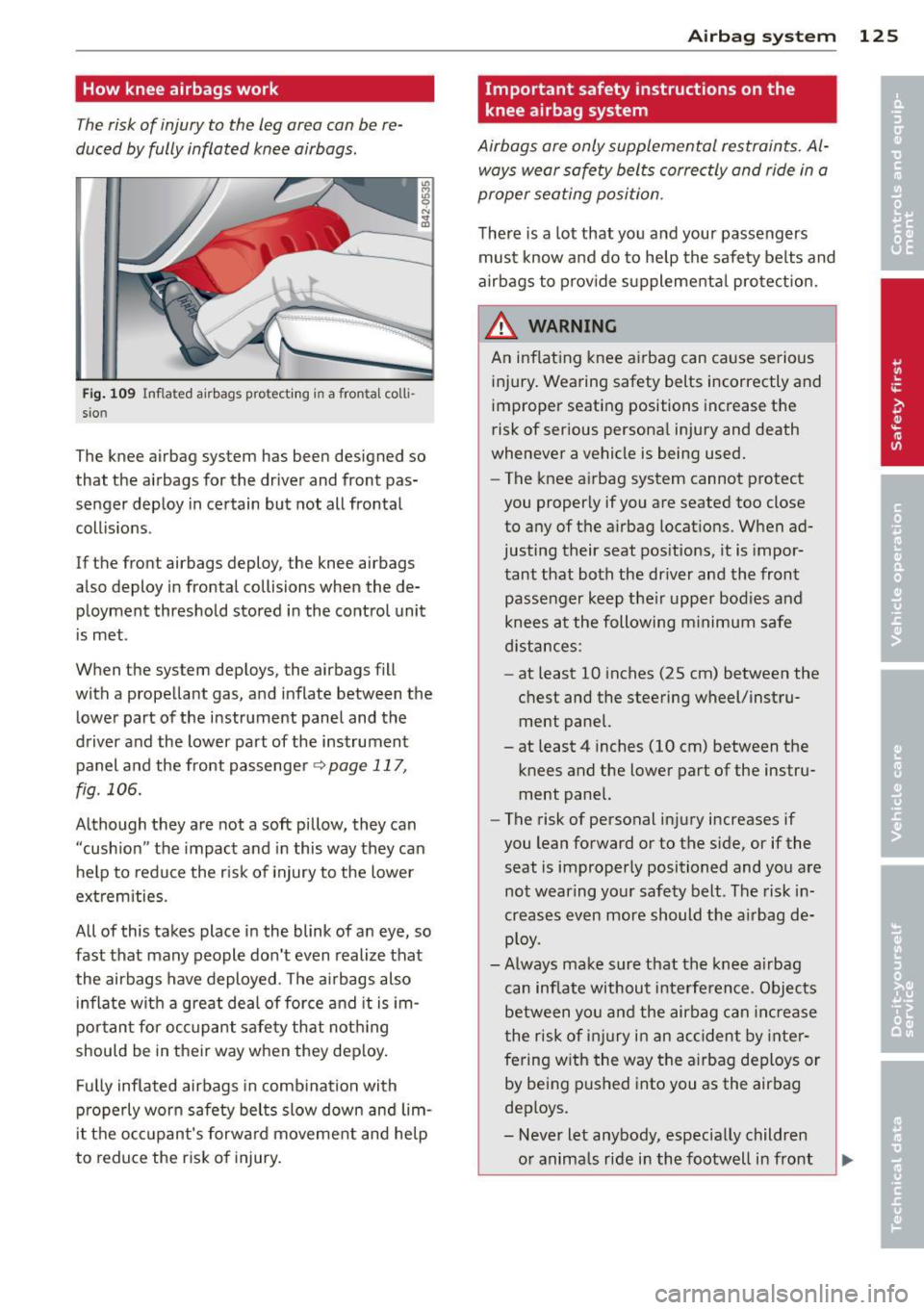
Fig. 109 Inflated airbags protecting in a fro ntal coll i
sio n
The knee airbag system has been designed so
that the airbags for the driver and front pas
senger deploy in certain but not all frontal
collisions .
If the front airbags deploy, the knee airbags
also deploy in frontal collisions when the de
ployment threshold stored in the control unit
is met .
When the system deploys, the airbags fill
with a propellant gas, and inflate between the
lower part of the instrument panel and the
driver and the lower part of the instrument
panel and the front passenger~
page 117,
fig . 106.
Although they are not a soft pillow, they can
"cush ion" the impact and in this way they can
help to reduce the risk of injury to the lower
extremities.
All of this takes place in the blink of an eye, so
fast that many people don't even realize that
the airbags have deployed . The airbags also
inflate with a great deal of force and it is im
portant for occupant safety that nothing
should be in their way when they deploy.
Fully inflated airbags in combination with
properly worn safety belts slow down and lim
it the occupant's forward movement and help
to reduce the risk of injury.
Airbag system 125
Important safety instructions on the
knee airbag system
Airbags ore only supplemental restraints . Al
ways wear safety belts correctly and ride in a
proper seating position .
There is a lot that you and your passengers
must know and do to help the safety belts and
airbags to provide supplemental protection.
_& WARNING
An inflating knee airbag can cause serious injury. Wearing safety belts incorrectly and
improper seating positions increase the
risk of serious personal injury and death
whenever a vehicle is being used.
- The knee airbag system cannot protect
you properly if you a re seated too close
to any of the airbag locations. When ad
justing their seat positions, it is impor
tant that both the driver and the front
passenger keep their upper bodies and
knees at the following minimum safe
distances:
- at least 10 inches (25 cm) between the
chest and the steering wheel/instru
ment panel.
- at least 4 inches (10 cm) between the
knees and the lower part of the instru
ment panel.
- The risk of personal injury increases if
you lean forward or to the side, or if the
seat is improperly positioned and you are not wearing your safety belt. The risk in
creases even more should the airbag de ploy.
- Always make sure that the knee airbag
can inflate without interference. Objects
between you and the airbag can increase
the risk of injury in an accident by inter
fering with the way the airbag deploys or
by being pushed into you as the airbag
deploys.
- Never let anybody, especially children
or animals ride in the footwell in front
Page 133 of 262
-Always install rear-facing child safety
seats on the rear seat.
- If you must install a rearward facing
child safety seat on the front passenger
seat in exceptional circumstances and
the
PASSENGER AIR BAG OFF light does
not come on and stay on, immediately
install the rear-facing child safety seat in
a rear seating position and have the air
bag system inspected immediately by
your Audi dealer.
_& WARNING
If, in exceptional circumstances, you must
install a forward-facing child restraint on
the front passenger's seat:
- Always make sure the forward-facing
seat has been designed and certified by its manufacturer for use on a front seat
with a passenger front and side airbag.
- Always follow the manufacturer's in
structions provided with the child safety
seat or carrier.
- Always move the passenger seat into its
rearmost position in the seat's fore and
aft adjustment range, as far away from
the airbag as possible before installing
the child restraint. The backrest must be adjusted to an upright position .
- Always make sure that the
PASSENGER
AIR BAG OFF
light comes on and stays
on all the time whenever the ignition is
switched on.
(D Tips
Always replace child restraints that were
installed in a vehicle during a crash. Dam
age to a child restraint that is not visible
could cause it to fail in another collision
situation.
Advanced front airbag system and children
Your vehicle is equipped with an "Advanced
Airbag System" in compliance with United
States Federal Motor Vehicle Safety Standard
Child Safety 131
(FMVSS) 208 as applicable at the time your
vehicle was manufactured.
The Advanced Airbag system in your vehicle
has been certified to meet the "low-risk" re
quirements for 3- and 6-year old children on
the passenger side and small adults on the driver side. The low risk deployment criteria
are intended to reduce the risk of injury
through interaction with the airbag that can
occur, for example, by being too close to the
steering wheel and instrument panel when
the airbag inflates . In addition, the system
has been certified to comply with the "sup
pression" requirements of the Safety Stand
ard, to turn off the front airbag for infants up
to 12 months who are restrained on the front
passenger seat in child restraints that are list
ed in the Standard.
Even though your vehicle is equipped with an
Advanced Airbag system, all children, espe cially those 12 years and younger, should al
ways ride in the back seat properly restrained
for their age and si ze. The airbag on the pas
senger side makes the front seat a potentially dangerous place for a child to ride . The front
seat is not the safest place for a child in a for
ward-facing child safety seat. It can be a very
dangerous place for an infant or a larger child
in a rearward-facing seat .
Advanced Airbags and the weight
sensing mat in the front seat
The Advanced Airbag System in your vehicle
detects the presence of an infant or child in a
child restraint on the front passenger seat us
ing the weight -sensing mat in the seat cush
ion and the sensor below the safety belt latch
on the front passenger seat that measures the
tension on the safety belt.
The weight -sensing mat measures total
weight of the child and the child safety seat
and a child blanket on the front passenger seat. The weight on the front passenger seat
is related to the design of the child restraint
and its "footprint", the size and shape of the
bottom of the child restraint as it sits on the ..,.
•
•
Page 173 of 262
(D Note
To avoid scratching the display, you should never clean it dry.
Aluminum trim
Use only neutral -pH products to remove spots
and depos its from alum inum surfaces.
Chrome care products and alkaline cleaners
will attack alum inum su rfaces and can dam
age them ove r time.
A WARNING
Always read and heed a ll WARNINGS and
t he information<=>
page 164.
Fabrics and fabric coverings
Fabrics and fabric coverings (e .g. seats, door
trim panels, etc.) should be cleaned at regular
interva ls with a vacuum cleaner. T his removes
surface dirt particles which could become em
bedded in the fabr ic through use. Steam
cleaners should not be used, because the
steam tends to push the dirt deeper into the
fabric and lock it there.
Norm al cleaning
Generally, we recommend using a soft sponge
or a lint-free microfiber cloth to the clean fab
ric. Brushes should only be used for carpets
and floor mats, s ince other fabric surfaces
could be harmed by b rushes .
Normal surface sta ins can be cleaned using a
commercially available foam cleaner . Spread
the foam on the surface of the fabric with a
soft sponge and work it in gently . Do not satu
rate the fabric. Then pat the foam d ry using
absorbent, dry cloths (e.g. microfibe r clo th)
and vacuum it afte r it has dr ied comp lete ly.
Cl eaning stains
Stains caused by beve rages (e .g. coffee, fruit
juice, etc.) can be t reated with a mild deter
gent solution. App ly the dete rgent so lution
wi th a sponge. In the case of s tubbor n stains,
a detergent paste can be applied directly to
Cleaning and protec tion 17 1
the stain and worked into the fabric. After
wards, use copious amounts of clean water to remove the rema in ing detergent. Apply the
water with a damp cloth or sponge and pat
the fabric dry with an absorbent, dry cloth.
Stains from choco late or makeup should have
detergent paste (e.g . ox-gall soap) rubbed in
to them. Afterwards, remove the soap with
water (damp sponge).
A lcohol can be used to treat stains from
grease, o il, lipstick or a ballpoint pen. Melted
grease or dye must be patted off using ab
sorbent mater ial. It may be necessary to re
treat the areas with detergent paste and wa
te r.
In the case of genera l soiling of the uphols
tery and cover material, we recommend hir ing
a specia list that has the equipment to clean
t h e seat covers and othe r fabr ic surfaces by
shampooing and spray extraction .
A WARNING
Always read and heed all WARNINGS and
the info rmation
<=> page 164.
@ Tips
Open Velcro fasteners on your clothing can
damage the seat cover. Please make sure
that Ve lcro fasteners are closed.
Plastic parts and instrument panel
A lways use a clean clo th moistened in clea r
water to clean these areas . For pe rsistent d irt
u se an Aud i approved
solvent-free p lastic
clea ner/protectant.
A WARNING
Solvents can change the properties of
some p lastics and make it harder for the
a irbag to deploy.
-
- Never clean the instrument panel or the
surface of Airbag modu les with cleaning
products that co nta in solvents .
- Products containing solvents will make
the surface of this part porous. •
•
Page 182 of 262
180 Checking and filling
Checking and filling
Engine hood
Releasing the engine hood
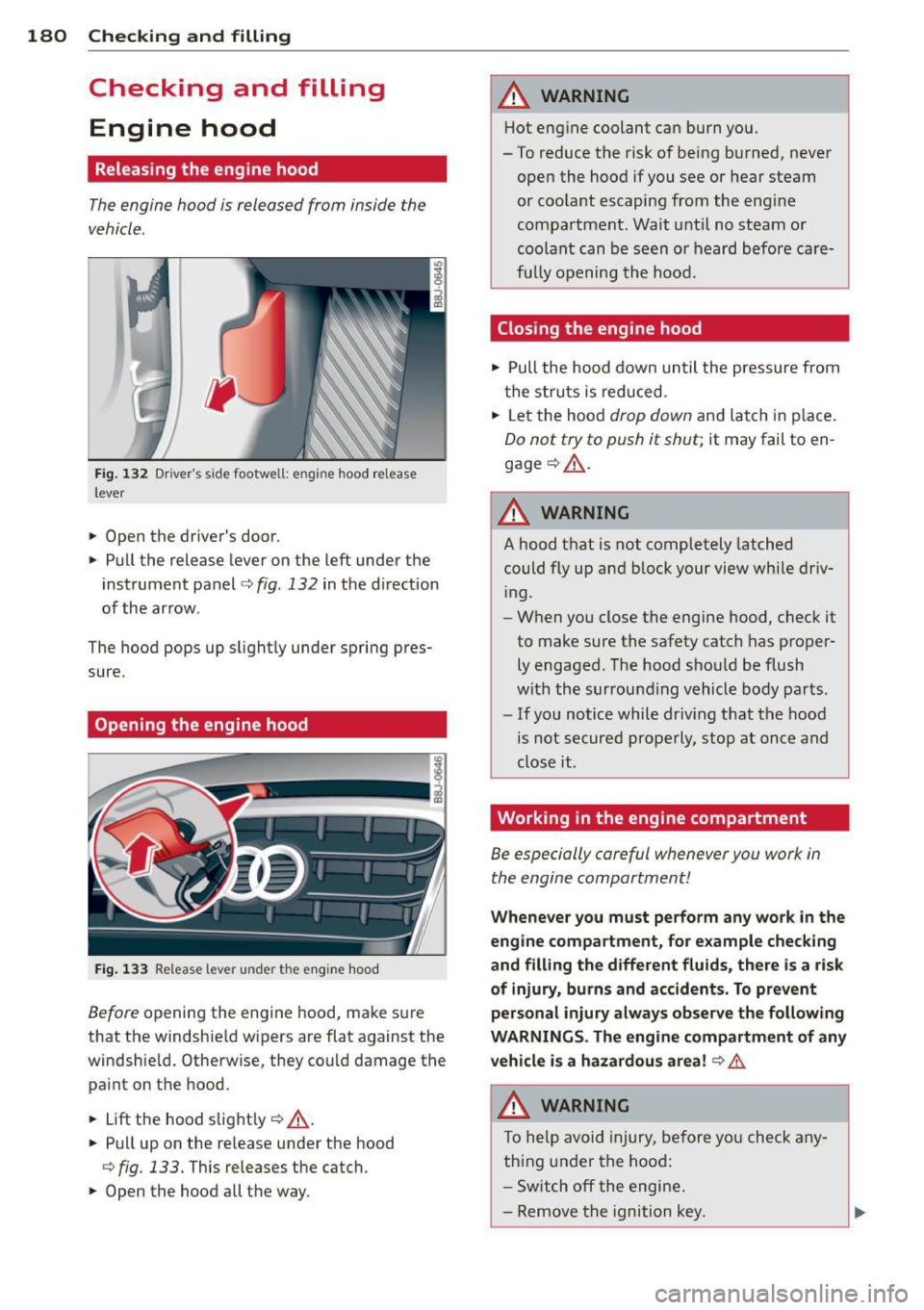
The engine hood is released from inside the
vehicle.
Fi g. 132 Dr iver's side footwell: engine hood re lease
lever
.. Open the driver's door.
.. Pull the release lever on the left under the
instrument panel
c> fig. 132 in the direction
of the arrow .
The hood pops up slight ly under spring pres
sure.
Opening the engine hood
Fig . 133 Re lease lever under the engine hood
Before opening the engine hood, make sure
that the windshie ld wipers are flat against the
windshie ld. Otherwise, they cou ld damage the
pa int on the hood.
.. Lift the hood s light ly
c> _& .
.. Pull up on the release under the hood
¢ fig. 133. This releases the catch.
.. Open the hood all the way.
A WARNING
-Hot engine coolant can burn you.
- To reduce the risk of being burned, never
open the hood if you see or hear steam
or coo lant escaping from the eng ine
compartment. Wait unt il no steam or
coolant can be seen o r heard before care
fu lly opening the hood.
Closing the engine hood
.. Pull the hood down until the pressure from
the struts is reduced .
.. Let the hood
drop down and latch in p lace.
Do not try to push it shut; it may fail to en
gage
c> _& .
A WARNING
--
A hood that is not completely latched
could fly up and b lock your view while dr iv
i ng.
- When you close the engine hood, check it
to make sure the safety catch has proper
ly engaged . The hood should be flush
with the surrounding vehicle body parts.
- If you notice while dr iv ing that the hood
is not secured properly, stop at once and
close it.
Working in the engine compartment
Be especially careful whenever you work in
the engine compartment!
Wheneve r you must pe rform any wo rk in the
eng ine compartment, for e xample chec king
and filling the different fluids, ther e is a risk
of injury, burns and a ccident s. To prevent
p ers onal injury al ways obs erv e the following
WARNINGS. The eng in e c ompartm ent of an y
vehicl e is a hazardou s area!
c> .&.
A WARNING
To he lp avoid injury, before yo u check any
thing under the hood:
- Sw itch off the engine .
- Remove the ignition key.
Page 230 of 262
228 Fuses and bulbs
Fuses and bulbs
Electrical fuses
Replacing fuses
Fuses that have blown will have metal strips
that have burned through .
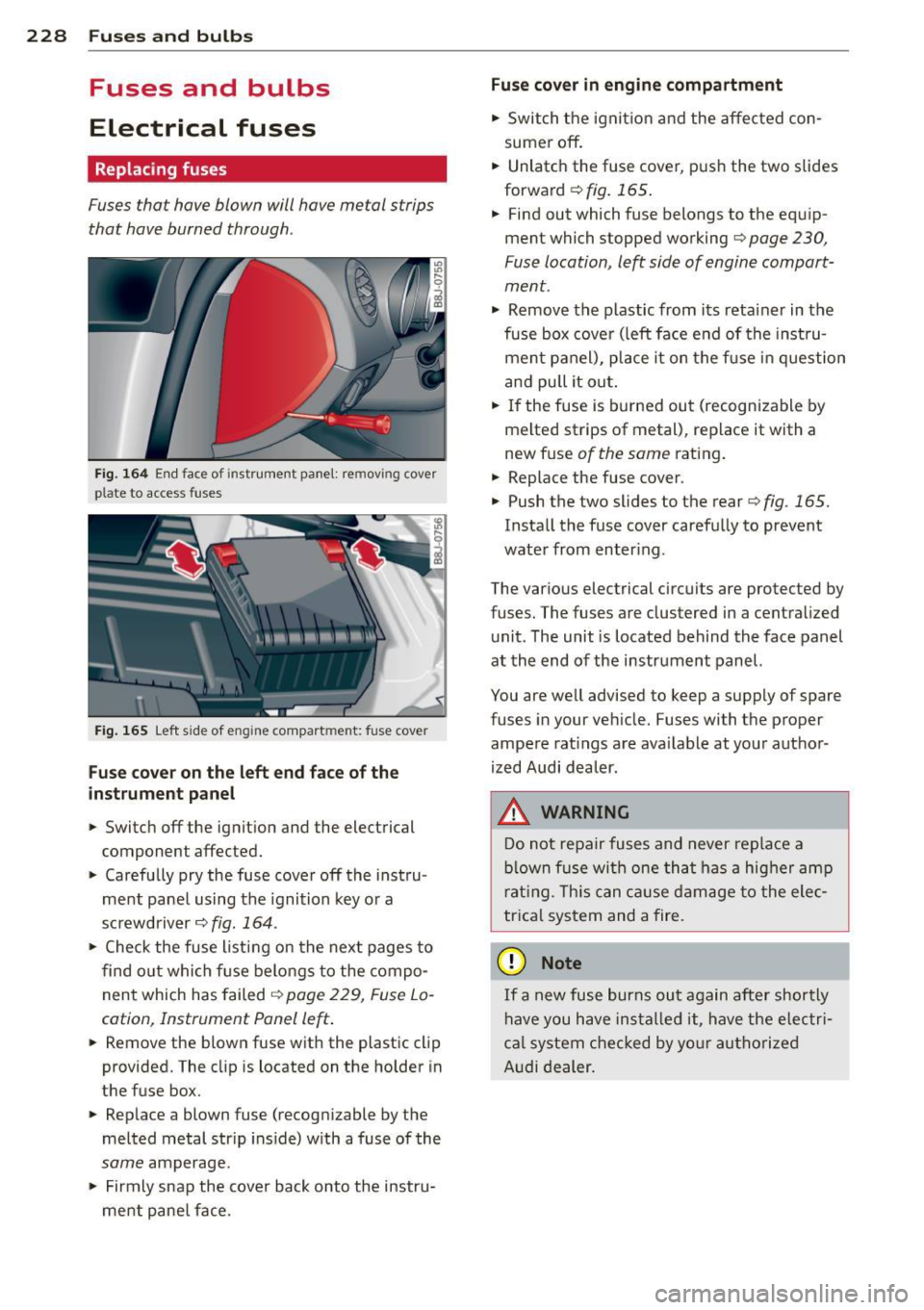
Fig. 164 End face of instrument panel: rem ov ing cover
p la te to access fuses
Fig. 165 Left side of eng ine compart men t: fuse cove r
Fuse cover on the left end face of the
inst rument pane l
.. Switch off the ignition and the electrical
component affected.
.. Carefully pry the fuse cover off the instru
ment panel using the ignition key or a
screwdriver~
fig. 164 .
.. Check the fuse listing on the next pages to
find out which fuse belongs to the compo
nent which has failed
~ page 229, Fuse Lo
cation, Instrument Panel left .
.. Remove the blown fuse with the plastic clip
provided. The cl ip is located on the holder in
the fuse box .
.. Replace a blown fuse (recognizable by the
melted metal str ip inside) with a fuse of the
same amperage .
.. Firmly snap the cover back onto the instru
ment panel face .
Fuse cover in engine compartment
.. Switch the ignition and the affected con
sumer off .
.. Unlatch the fuse cover, push the two slides
forward
~ fig. 165.
.. Find out which fuse belongs to the equip
ment which stopped working~
page 230,
Fuse location , le~ side of engine compart
ment .
.. Remove the plastic from its retainer in the
fuse box cover (left face end of the instru
ment panel), place it on the fu se in question
and pull it out .
.. If the fuse is burned out (recognizable by
melted strips of metal), replace it with a
new fuse
of the same rating.
.. Replace the fuse cover.
.. Push the two slides to the rear~
fig. 165.
Install the fuse cover carefully to prevent
water from enter ing .
The various electrical circuits are protected by
fuses. The fuses are clustered in a centralized unit. The unit is located behind the face panel
at the end of the instrument panel.
You are well advised to keep a supply of spare
fuses in your vehicle. Fuses with the proper
ampere rat ings are ava ilable at your author
ized Audi dealer.
A WARNING -
Do not repa ir fuses and never replace a
blown fuse with one that has a higher amp
rating. This can cause damage to the elec
trica l system and a fire.
(D Note
If a new fuse burns out again after shortly
have you have installed it, have the electri
ca l system checked by your authorized
Audi dealer.
Page 231 of 262
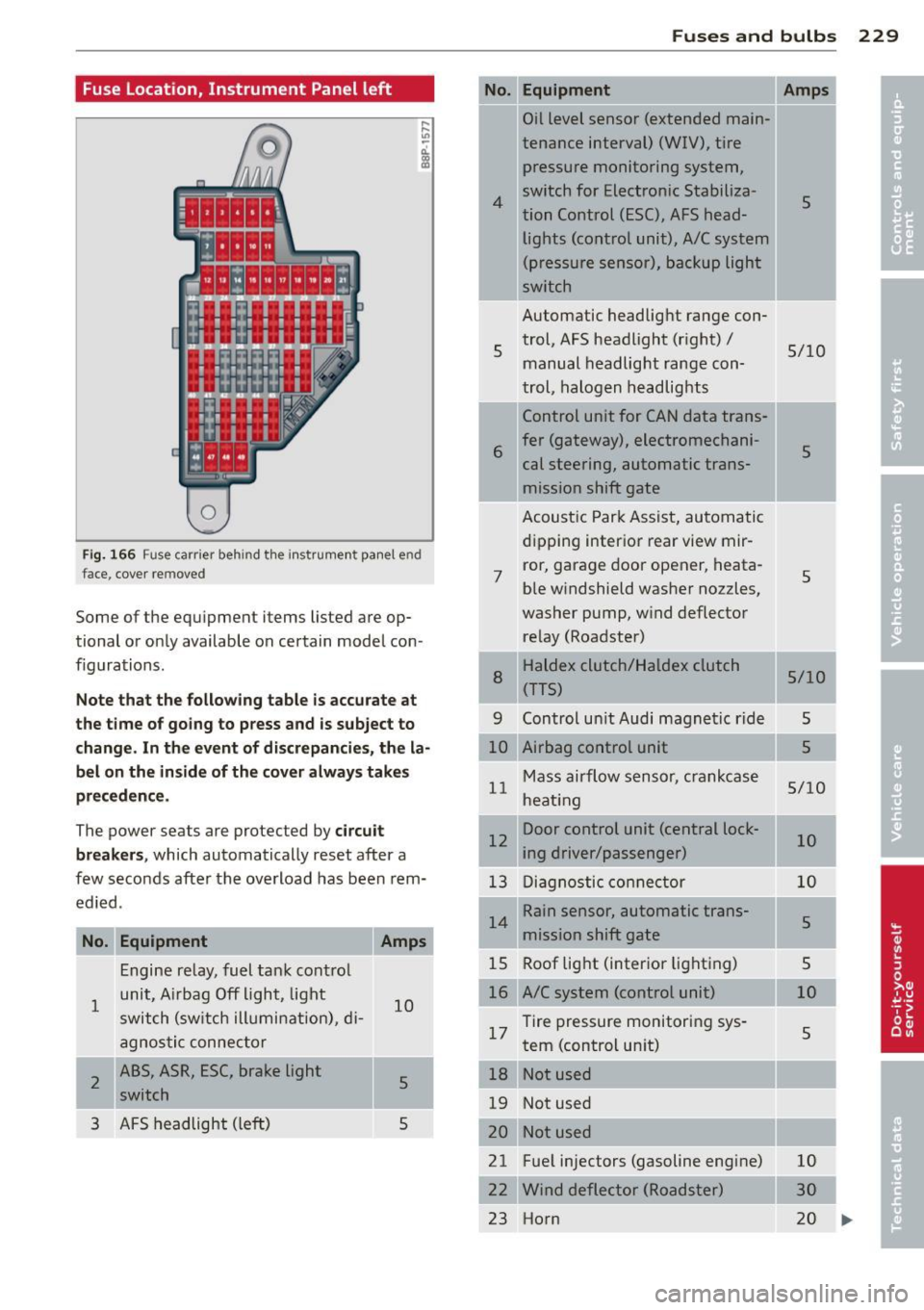
Fuse Location, Instrument Panel left
0
Fig. 166 Fu se ca rrier behin d th e in strum en t pane l end
fa ce, cover re move d
Some of the equipmen t items lis ted a re op
tional or only available on certain model con
f igurations.
N ote th at the foll ow ing table is ac curate at
the t ime of go in g to press and is subje ct to
c hang e. In t he event of d iscr epan cies, the la
b el on the in side of th e cove r alw ay s take s
precedence .
The power sea ts are pro te ct ed by circu it
break ers,
which automatically reset after a
few seconds after the overload has been rem
ed ied .
No. Equipment
1
2
3
Engine relay, fuel tank contro l
unit, A irbag Off light , light
switch (sw itch illumi nation), di -
agnosti c connector
ABS, ASR, ESC, brake light switch
AFS headlight (le ft)
Amps
10
5
5
Fu se s and bulb s 229
No.
4
5
Equipment
Oil level sensor (extended main-
tenance interval) (WIV), tire
pressure monitoring system,
switch for Electronic Stabiliza-
tion Control (ESC), AFS head-lights (control unit), A/C system
(pressure sensor), backup light
switch
Automatic headlight range con trol, AFS headlight (right) /
manual headlight range con
trol, halogen headlights
Control unit for CAN data trans-
6 fer (gateway), electromechani cal steering, automatic trans
mission shift gate
7 Acoust
ic Park Assist, automatic
dipping interior rear view mir-
ror, garage door opener, heata
ble windshield washer nozzles,
washer pump, w ind deflector
re lay (Roadster)
--r-HaldeX clutch/Haldex clutch
(TTS)
8
Amps
5
5/10
5
5
5/10
9 Control un it Audi magnetic ride 5
----10 Airbag control unit 5
Mass airflow sensor, crankcase
11 heat ing
Door control unit (central lock-
12 ing driver/passenger)
13 Diagnostic conne ctor
Rain sensor, automatic trans-
14 mission shift gate
15 Roof light (inter ior lighting)
16 A/C system (control unit)
17 Tire pressure monitoring sys
tem (control un it)
--~-18 Not used
19 Not used 5/10
10
10
5
5
10
5
I
I
I
20 -------21 Fuel injectors (gasoline engine) 10
22 Wind deflecto r (Roadster) 30
23 Horn 20
IIJ>,
Page 254 of 262
252 Index
H
Headlig hts . .. .. .. ..... ... .. .. .... .. 42
adaptive light .. .. ..... ... .. .. .... .. 43
defect ive . . . . . . . . . . . . . . . . . . . . . . . . . . 20
Front fog lights .................... 44
Sw itching off ............ .... .... .. 42
Sw itch ing on ....................... 42
Washer system . . . . . . . . . . . . . . . . . . . . . SO
Xenon headlights .......... .... ..... 42
H ead restraints . . . . . . . . . . . . . . . . . . . . . . 94
Ad justing ......................... 94
H eated
exterior mirrors ....... ... .. .. .... .. 4 7
front seats (climate control) . . . . . . . . . . 70
rear window . . . . . . . . . . . . . . . . . . . . . . . 70
H ea ted seats . . . . . . . . . . . . . . . . . . . . . . . . 70
H eated washer jets
W iper and washer system ............ 48
Heating ..... ... .. ..... ... .. .. .... .. 66
H igh beam . . . . . . . . . . . . . . . . . . . . . . 42, 4 4
H igh voltage warn ing label ...... .. .. . 238
Hill Descent Assist .... ... .. .. .. .... .. 83
H ill hold ass ist
Starting on hills ........ .. .. .. .. .. . . 74
H omelink ® universal remote control
H ood
Opening .... .. .. ..... ... .. .. .... .
Release lever
. . . ...... ... .. .. .. ' . .
87
180 180
H orn
. . . . . . . . . . . . . . . . . . . . 8 ...........
H ow are c hild restra int system anchors re
lated to child safety . . . . . . . . . . . . . . . . . 143
H ow many airbags does my vehicle have? 115
H ow often shou ld I check my t ire pres-
sures? .. .. ............... .. .. .. .. . 203
H ow safety belt pretensioners work .... 106
Hydroplaning . .. . ...... ... .. .. .... . 207
I
Ignition key . . . . . . . . . . . . . . . . . . . . . . . . . 71
Ignition key safety lock . . . . . . . . . . . . . . . 72
Ignition lock . . . . . . . . . . . . . . . . . . . . . . . . 71
I gnition lock pos itions . . . . . . . . . . . . . . . . 7 1
Immobilizer .............. .. .. ...... 12
I mpor tant things to do before driving . . . 90
Imp roperly worn safety belts ...... .... 106 Ind
icator light
Airbag system ... .. ... ..... ... .. .. 119
Audi magnet ic r ide . .. .. ..... ... .. .. . 21
Clutch overheat ing ............. ..... 8S
PASSENGER AIR BAG OFF ........... 119
Ind icator lights
Red symbols in the center display . . . . . . 13
Ye llow symbo ls in the center display . .. 13
also refer to Warning/ind icator lights . . 12
Infan t seats .. ................. .. .. 135
Installing child safety seats
Safety belts . . . . . . . . . . . . . . . . . . . . . . 140
Installing the upper tether strap on the
anchorage .. ................... .... 148
Instrument clus ter and con trols ... .. .. . 10
Instr ument panel illumination .. .. .. .. . 46
Instruments and controls General illustration . . . . . . . . . . . . . . . . . . 8
Interior lights ..... ............. ..... 45
Luggage compartment .... ... .. .. .. . 46
Interlock switch . . . . . . . . . . . . . . . . . . . . . 17
J
Jump-starting
232
Jumper cables ..... ... .. ..... .... . .. 233
K
Key ................................ 32
Battery replacement . . . . . . . . . . . . . . . . 33
Check light .... .. ... .. ..... ... .. .. . 32
Convenience opening and closing of win-
dows . .... .... .. ................. . 40
Emergency key ... ............. ..... 32
Key replacement . . . . . . . . . . . . . . . . . . . 32
Master key . . . . . . . . . . . . . . . . . . . . . . . . 32
Valet key . . . . . . . . . . . . . . . . . . . . . . . . . . 32
Keyless entry remote control ........... 33
Ki ck-down · · .. .. .. ............. .. ... 85
Knee a irbags .. .. .. .. ... ....... ... .. 123
D .. escrrpt1on .. .. ............ ....... 123
How they work . .... .............. . 125
Important sa fety instru ctions ........ 125
L
Lap timer ....... ............ ........ 29
Page 255 of 262
-----------------------------~I~ n~ d~ e~x 253
LA T CH . ..... .. ............ .... .... 143
Description ................. ... ... 144
Guidance f ixtures for lower anchorages 145
Installing a child restraint .. .... .. ... 146
Location
144
Mounting and releasing the anchorage
hook .. .. .. .. ........ ... .. ... ... . 146
Launch Control Program . . . . . . . . . . . . . . 85
L eather . . . . . . . . . . . . . . . . . . . . . . . . . . . 172
C leaning . .. ............. .. .. .. .. . 173
Leaving home ................ .... ... 43
Lifting jack .. ................ ... ... 225
Lifting vehicle ............. .. .. .. .. . 237
Light/rain sensor defective .. .. .. .. .. .. 21
Lights . ..... .. ................ ..... 42
Coming/Leaving home ........... .. .. 43
Emergency flasher .................. 45
Exterior lighting .......... .... .. .. .. 43
Front fog lights .......... .. .. .. .. .. 44
Headlights ............... ... ... ... 42
High beam . . . . . . . . . . . . . . . . . . . . 42, 44
Instrument panel illumination .. . ... .. 46
Side marker lights ........ .. .. .. .. .. 42
Turn signals .. ........... .. .. .. .... 44
Xenon headlights ......... .. .. .. .. .. 42
Loading the luggage compartment ...... 96
Loading the roof rack .......... ... .. .. 61
L ocking
Power locking switch ........ .. .. .. .. 36
Rear lid/trunk lid . . . . . . . . . . . . . . . . . . . 3 7
Remote master key .......... ... .. .. 35
Using the key .................. .... 36
L ower universal anchorage ba rs (Canada) 143
Lower universal anchorages (Canada) 143
L uggage compartment
Cover . ... .. .. ................ ..... 60
Expanding . . . . . . . . . . . . . . . . . . . . . . . . 59
Fastening eyelets ......... .. .. .. .. .. 59
Light .. ... . .... ............. .. .. .. 46
Loading . ... ... .. .. ...... .. .. .. .. .. 96
M
Maintenance . ............. .... .. ... 243
Malfunction Indicator Lamp (MIL) . . 19, 30
Manual transmission ............ .... . 80
Gearshift lever ... .. ...... .. .. .. .. .. 80 Master key ...
..... .................. 33
Battery replacement . . . . . . . . . . . . . . . . 33
Matte finish paint .. ................. 166
Menu button .. .. .. ................. . 25
Menu display . . . . . . . . . . . . . . . . . . . . . . . . 24
Mirrors Activating the dig ita l compass ...... .. 52
Adjusting the exterior mirrors .... .. .. . 47
dimming .. .. .. .. ... .. .......... .. . 47
Monitoring the Advanced Airbag System 119
N
Natural leather .. .. ................. 172
New tires and wheels
NHTSA 207
Contacting ...... .. ................ 98
Number of seats . .. .... ............. 100
0
Occupant seating positions .......... .. 91
Octane rating ... .. .... ........... . .
Odometer
.. .. .. .. ..................
Oil 176
12
refer to Engine oil ................ . 182
On-Board Diagnostic System (OBD)
Data Link Connector (DLC) ....... .. .. . 30
Electronic speed limiter ......... .. .. . 31
Malfunction Indicator Lamp (MIL) ... .. 30
Open door or front lid warn ing ....... .. 22
Operate your vehicle economically and
minimize pollution . ................. 161
Optional eq uipment
Marked with an asterisk . . . . . . . . . . . . . . . 6
Other equipment (efficiency program) .. . 27
Outlets ...... .. ...... ............. . 63
Outs ide mirrors
refer to Exterior mirrors ............. 47
Outs ide temperature display . . . . . . . . . . . 22
Owner's manual How the Owner's Manual is organized . .. 6
p
Paint
Touch-up ... ... .... ............... 168
Pa int No . 238
•
•