instrument panel AUDI TT 2013 Owner´s Manual
[x] Cancel search | Manufacturer: AUDI, Model Year: 2013, Model line: TT, Model: AUDI TT 2013Pages: 262, PDF Size: 65.91 MB
Page 44 of 262
42 Clear vision
Clear vision Lights
Switching the headlights on and off
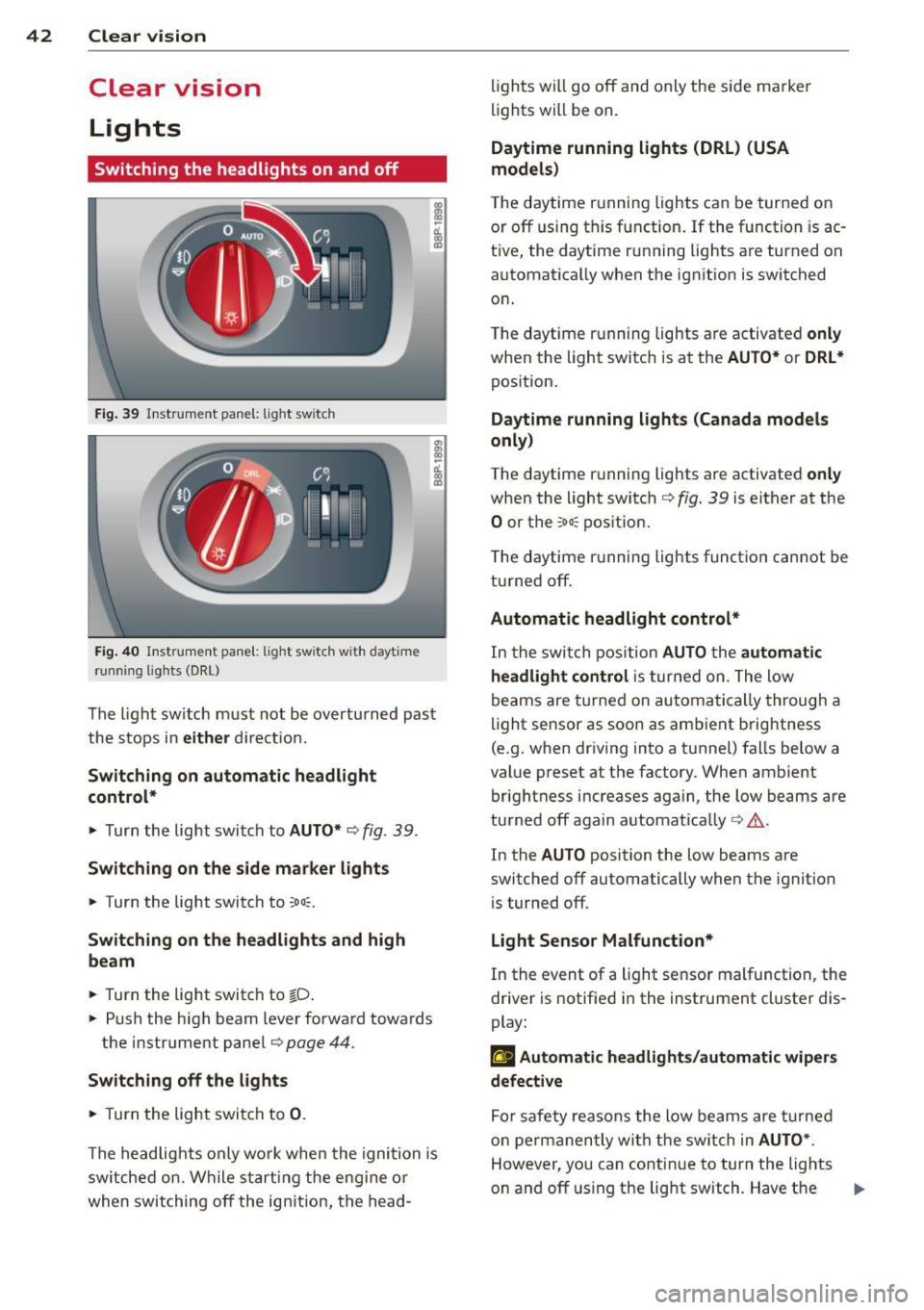
Fig . 39 Instr ument panel: l ight sw itch
Fig. 40 Instr ument pane l: ligh t switch w ith dayti me
running lights (DR L)
The light switch must not be overturned past
the stops in
either direct ion.
Switching on automatic headlight
control*
• Turn the light switch to AUTO* ¢ fig. 39.
Switching on the side marker lights
• Turn the light switch to :;oo:.
Switching on the headlights and high
beam
• Turn the light switch to tD .
• Push the high beam lever forward towards
the instrument panel¢
page 44.
Switching off the lights
• Turn the light switch to 0.
The head lights only work when the ignition is
switched on. While start ing the engine or
when switching off the ignition, the head- lights
will go off and only the side ma rker
lights will be on.
Daytime running lights (DRL) (USA
models)
T he daytime running lights can be turned on
or off using this function. If the function is ac
tive, the daytime ru nning lights are turned on
automatica lly when the ign it ion is switched
on.
T he daytime running lights are activated
only
when the light switch is at the AUTO* or DRL *
position.
Daytime running lights (Canada models
only)
The daytime running lights are activated only
when the light switch ¢ fig. 39 is either at the
0 or the :;oo: pos ition.
T he daytime r unning lights funct ion cannot be
turned off.
Automatic headlight control*
In the switch position AUTO the automatic
headlight control
is turned on. The low
beams are turned on automatically through a
light sensor as soon as amb ient b rightness
(e .g. when driving into a tunnel) falls below a
value preset at the factory. When ambient
brightness increases aga in, the low beams are
turned off again automatically ¢.&..
In the
AUTO position the low beams are
switched off automatically when the ignition
is turned off .
Light Sensor Malfunction*
In the event of a light sensor malfunction, the
driver is notified in the instrument cluster dis
play:
El Automatic headlights/automatic wipers
defective
For safe ty reasons the low beams are turned
on permanently with the switch in
AUTO* .
However , you can conti nue to turn the lights
on and off using the light switch. Have the
Ill>-
Page 48 of 262
46 Clear vision
The brightness of the lights is controlled au
tomatically by a dimmer when they are
switched on and
off.
Instrument panel illumination
The illumination of the instruments , displays
and the center console can be adjusted.
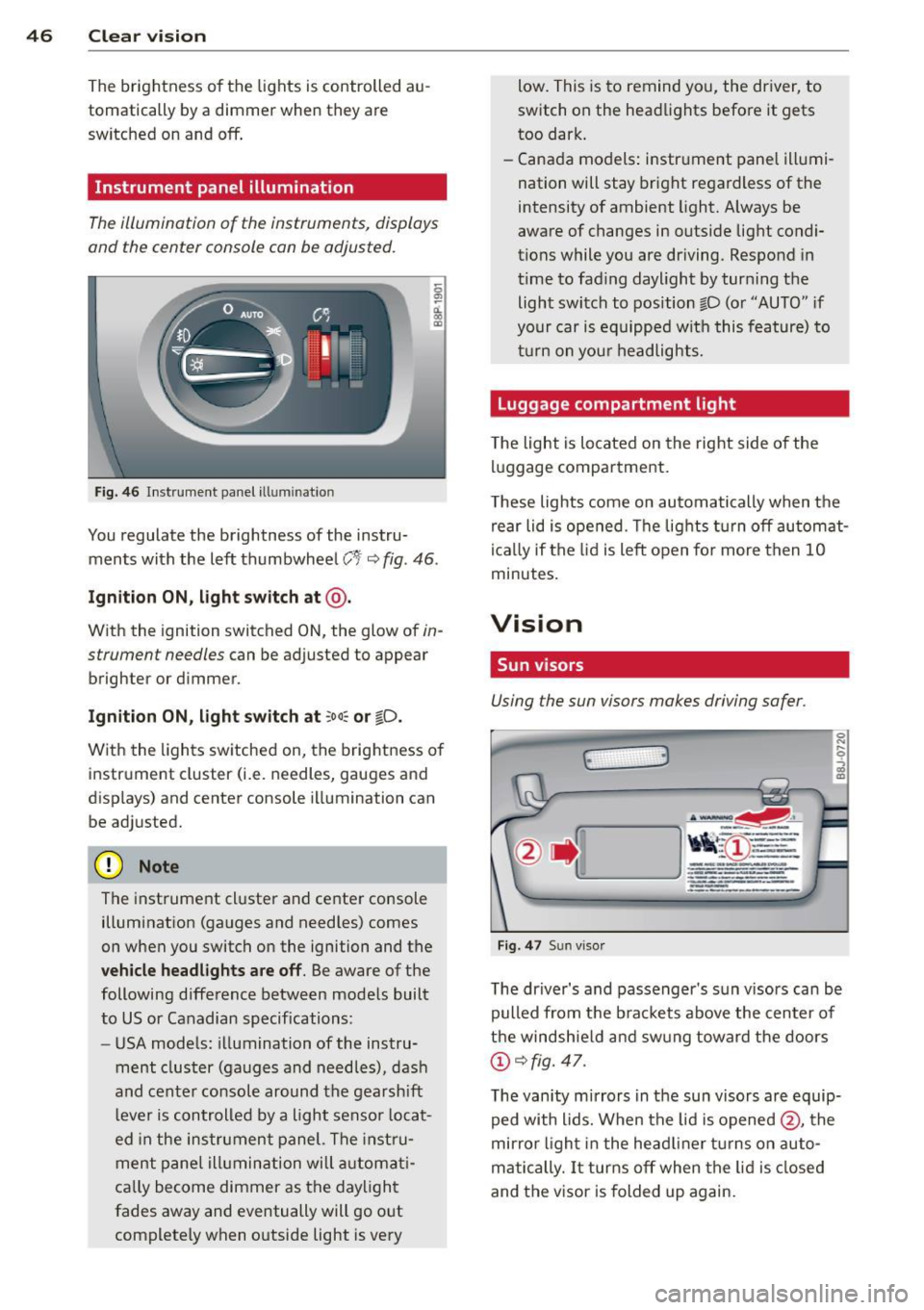
Fig. 46 Instrument panel ill um inat io n
0 ~ d. 00 m
You regulate the brightness of the instru
ments with the left thumbwheel
C t<=:> fig . 46 .
Ignition ON, light switch at@ .
With the ignition switched ON, the glow of in
strument needles
can be adjusted to appear
brighter or dimmer.
Ignition ON, light switch at ~oo:c or io.
With the lights switched on, the brightness of
instrument cluster (i.e. needles, gauges and
displays) and center console illumination can
be adjusted.
(D Note
The instrument cluster and center console
illumination (gauges and needles) comes
on when you switch on the ignition and the
vehicle headlights are off. Be aware of the
following difference between models built
to US or Canadian specifications :
- USA models: illumination of the instru
ment cluster (gauges and needles), dash
and center console around the gearshift
lever is controlled by a light sensor locat
ed in the instrument panel. The instru
ment panel illumination will automati
cally become dimmer as the daylight
fades away and eventually will go out
completely when outside light is very low.
This is to remind you, the driver, to
switch on the headlights before it gets
too dark.
- Canada models: instrument panel illumi
nation will stay brig ht regardless of the
intensity of ambient light. Always be
aware of changes in outside light condi
tions while you are driving. Respond in
time to fading daylight by turning the
light switch to position fD (or "AUTO" if
your car is equipped with this feature) to
turn on your headlights.
Luggage compartment light
The light is located on the right side of the
luggage compartment.
These lights come on automatically when the
rear lid is opened. The lights turn
off automat
ically if the lid is left open for more then 10
minutes.
Vision
, Sun visors
Using the sun visors makes driving safer .
(· 3
Fig. 47 Sun visor
The driver's and passenger's sun visors can be
pulled from the brackets above the center of
the windshield and swung toward the doors
(!)<=:>fig. 47.
The vanity mirrors in the sun visors are equip
ped with lids. When the lid is opened
@, the
mirror light in the headliner turns on auto
matically. It turns
off when the lid is closed
and the visor is folded up again.
Page 56 of 262

54 Seat s a nd s tor ag e
Seats and storage
General recommen
dations
Why is your seat adjustment so
important?
The safety belts and the airbag system can
only provide maximum protection if the front
seats are correctly adjusted.
There are various ways of adjust ing the front
seats to provide safe and comfortable support
for the driver and the front passenger . Adjust
your seat properly so that :
- you can easily and quick ly reach all the
switches and controls in the instrument
panel
-your body is prope rly supported thus reduc
ing physical stress and fatigue
- the safety be lts and airbag system can offer
maximum protection
¢ page 108 .
In the following sec tions, you will see exactly
how you can best adjust you r seats .
There are special regulations and instructions
for insta lling a child safety seat on the front
passenger's seat. Always heed the informa
tion rega rd ing child safety provided in
~ page 130, Child Safety.
A WARNING
Incorrect seating position of the driver and
all other passengers can result in serious
personal in jury.
- Always keep your feet on the floor when
the vehicle is in motion -never p ut your
feet on top of the instrument panel, out
of the w indow or on top of the seat cush
ion! This applies espec ially to the passen
gers .
If your seating position is incorrect
yo u increase the r isk of injury in the case
of sudden braking or an acc ident.
If the
airbag infla tes and the seating position
is incorrect this could result in personal
injury or even death.
- It is import ant for bo th the driver and
front passenger to keep a distance of at least 10 inches (25 cm) between them
selves and the steering wheel and/or in
strument panel. If you're s itting any
closer than th is, the a irbag system can
not protect you properly . In addition to
this, the front seats and head restra ints
must be adjusted to your body height so
that they can give you max imum protec
tion.
- Always try to keep as much distance as
possible between yourself and the s teer
ing wheel or instrument pane l.
- Do not adjust the driver's o r fron t pa s
senger's seat whi le the vehicle is moving.
Your seat may move unexpected ly, caus
ing sudden loss of vehicle contro l and
personal injury . If you ad just yo ur seat
while the veh icle is moving, you are out
of posit ion.
Driver's seat
The correct seat position is important for safe
and relaxed driving.
We recommend that you adjust the driver's
seat in the fo llowing manner:
.,. Adjust the seat in fore and aft direction so
t ha t you can easily p ush the peda ls to the
floor wh ile keeping your knee slightly bent
~ A in Why is your seat adjustment so im
portant? on page 54 .
.,. Adjust the seatback so that when you sit
w ith your back against the seatback, you can
still grasp the top of the steering wheel.
.,. Posit ion the head restraint accord ing to the
occupant 's height~
page 57 . For maxi
mum protection, t he top of the head re
s t raint shou ld be a t least at eye level, pref
erably higher and idea lly level with the top
of the head
¢ page 94, fig. 92.
A WARNING "--
Never place any objects in the dr iver's foot-
well. An object could get into the pedal
area and interfere with pedal function. In
case of sudden braking or an acc ident, you
would not be able to brake or accelerate!
Page 94 of 262
92 Driving Safely
• Always keep both feet in the footwell so
that you are in control of the vehicle at all
times.
For detailed information on how to adjust the
driver's seat, see
c::> page 55.
A WARNING
Drivers who are unbelted, out of position
or too close to the airbag can be seriously
injured by an airbag as it deploys. To help
reduce the risk of serious personal injury:
- Always adjust the driver's seat and the
steering wheel so that there are at least
10 inches (25 cm) between your breast
bone and the steering wheel.
- Always adjust the driver's seat and the
steering wheel so that there are at least
4 inches (10 cm) between the knees and
the lower part of the instrument panel.
- Always hold the steering wheel on the
outside of the steering wheel rim with
your hands at the 9 o'clock and 3 o'clock positions to help reduce the risk of per
sonal injury if the driver's airbag inflates.
- Never hold the steering wheel at the
12 o'clock position or with your hands at
other positions inside the steering wheel
rim or on the steering wheel hub. Hold
ing the steering wheel the wrong way
can cause serious injuries to the hands,
arms and head if the driver's airbag in
flates
- Pointing the steering wheel toward your
face decreases the ability of the supple
mental driver's airbag to protect you in a
collision.
- Always sit in an upright position and nev
er lean against or place any part of your
body too close to the area where the air
bags are located.
- Before driving, always adjust the front
seats and head restraints properly and
make sure that all passengers are prop
erly restrained.
- Never adjust the seats while the vehicle
is moving. Your seat may move unexpect- edly and you could lose control of the ve
hicle .
- Never drive with the backrest reclined or
tilted far back! The farther the backrests
are tilted back, the greater the risk of in
jury due to incorrect positioning of the safety belt and improper seating posi
tion .
- Children must always ride in child seats
c::> page 130. Special precautions apply
when installing a child seat on the front passenger seat¢
page 108.
Proper seating position for the front
passenger
The proper front passenger seating position
is important for safe, relaxed driving .
For your own safety and to reduce the risk of
injury in the event of an accident, we recom
mend that you adjust the seat for the front
passenger to the following position :
• Adjust the angle of the seatback so that it is
in an upright position and your back comes in full contact with it whenever the vehicle is
moving.
• Adjust the head restraint so that the upper
edge is as even with the top of your head as
possible but not lower than eye level and so
that it is as close to the back of your head as
possible
c::> page 94.
• Keep both feet flat on the floor in front of
the front passenger seat.
• Fasten and wear safety belts correctly
c::>page 104.
For detailed information on how to adjust the
front passenger's seat, see
c::> page 54 .
A WARNING
-
Front seat passengers who are unbelted,
out of position or too close to the airbag
can be seriously injured or killed by the air
bag as it unfolds. To help reduce the risk of
serious personal injury:
Page 95 of 262
-Passengers must always sit in an upright
position and never lean against or place
any part of their body too close to the
area where the airbags are located.
- Passengers who are unbelted, out of po
sition or too close to the airbag can be
seriously injured by an airbag as it un
folds with great force in the blink of an
eye .
- Always make sure that there are at least
10 inches (25 cm) between the front
passenger's breastbone and the instru
ment panel.
- Always make sure that there are at least
4 inches (10 cm) between the front pas
senger 's knees and the lower part of the
instrument panel.
- Each passenger must always sit on a seat
of their own and properly fasten and
wear the safety belt belonging to that
seat.
- Before driving , always adjust the front
passenger seat and head restraint prop
erly.
- Always keep your feet on the floor in
front of the seat. Never rest them on the
seat, instrument panel, out of the win
dow, etc. The airbag system and safety
belt will not be able to protect you prop
erly and can even increase the risk of in
jury in a crash .
- Never drive with the backrest reclined or
tilted far back! The farther the backrests are tilted back , the greater the risk of in
jury due to incorrect positioning of the
safety belt and improper seating posi
tion.
- Children must always ride in child seats
¢
page 130. Special precautions apply
when installing a child seat on the front
passenger seat¢
page 108.
Driving Safely 93
Proper seating positions for passengers
in rear seats
Rear seat passengers must sit upright with
both feet on the floor consistent with their
physical size and be properly restrained
whenever the vehicle is in use.
To reduce the risk of injury caused by an incor
rect seating position in the event of a sudden
braking maneuver or an accident, your pas
sengers on the rear bench seat must always
observe the following:
.,. Make sure that the seatback is securely
latched in the upright position¢
page 59.
.,. Keep both feet flat in the footwell in front
of the rear seat.
.,. Fasten and wear safety belts properly
¢page 104.
.,. Make sure that children are always properly
restrained in a child restraint that is appro
priate for their size and age¢
page 130.
A WARNING
Passengers who are improperly seated on
the rear seat can be seriously injured in a
crash.
- Each passenger must always sit on a seat
of their own and properly fasten and
wear the safety belt belonging to that
seat.
- Safety belts only offer maximum protec
tion when the seatback is securely latch
ed in the upright position and the safety
belts are properly positioned on the
body. By not sitting upright, a rear seat
passenger increases the risk of personal
injury from improperly positioned safety
belts!
•
•
Page 96 of 262
94 Driving Safel y
Proper adjustment of head restraints
Correctly adjusted head restraints are an im
portant part of your vehicle's occupant re
straint system and can help to reduce the risk of injuries in accident situations.
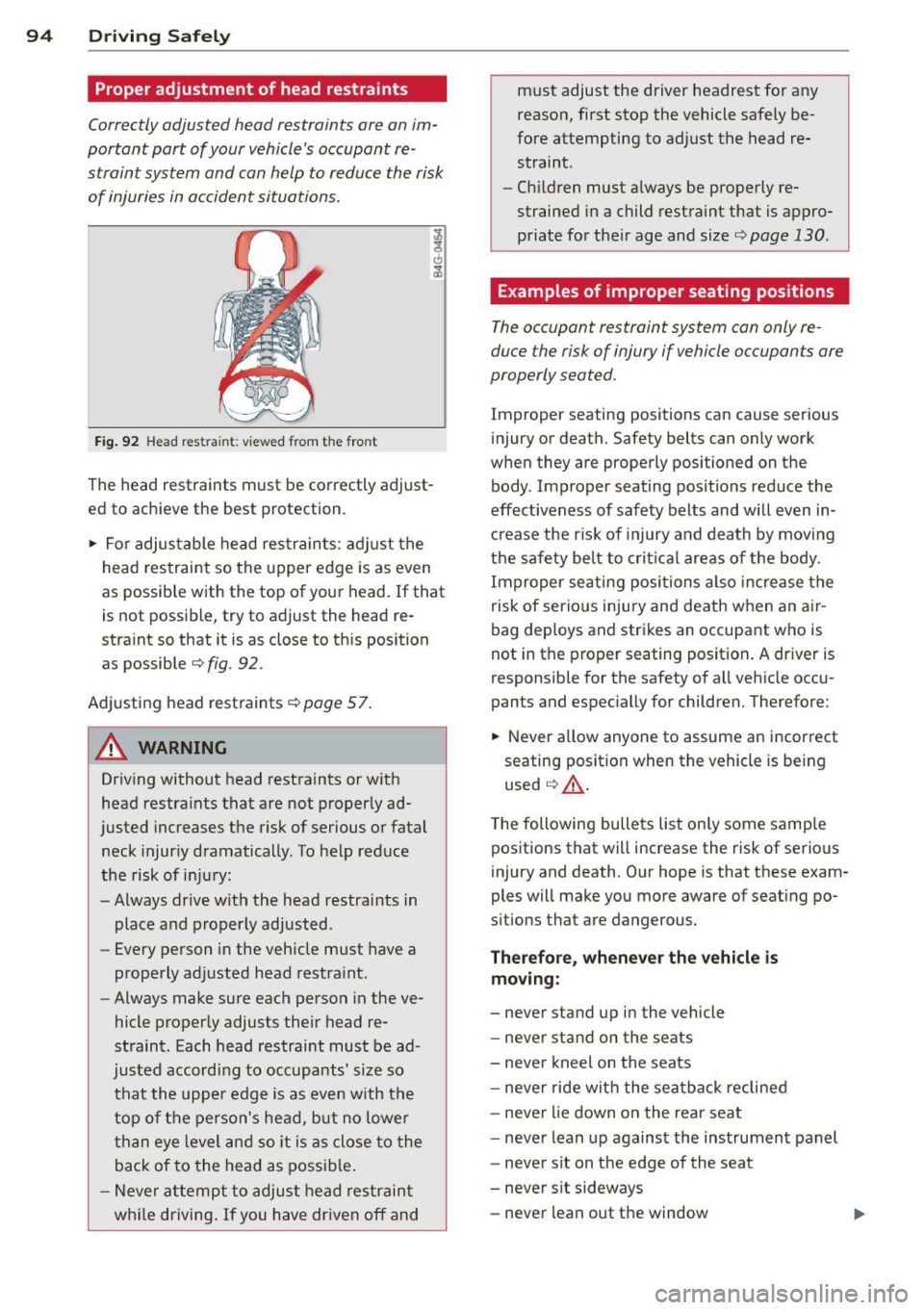
Fig. 92 Head restra int : viewed from t he fro nt
The head restraints must be correctly adjust
ed to achieve the best protection.
~ For adjustable head restraints: adjust the
head restraint so the upper edge is as even
as possible with the top of your head. If that is not possible, try to adjust the head re
straint so that it is as close to this position as possible
r:::> fig. 92 .
Adjusting head restraints r:::> page 57.
&_ WARNING
Driving without head restraints or with
head restraints that are not properly ad
justed increases the risk of serious or fatal
neck injuriy dramatically. To help reduce
the risk of injury:
- Always drive with the head restra ints in
place and properly adjusted.
- Every person in the vehicle must have a
properly adjusted head restraint.
- Always make sure each person in the ve
hicle properly adjusts their head re
straint. Each head restraint must be ad
justed according to occupants' size so
that the upper edge is as even w ith the
top of the person's head, but no lower
th an eye level and so it is as close to the
back of to the head as possible.
- Never attempt to adjust head restraint
wh ile driving. If you have driven
off and must adjust the driver headrest for any
reason, first stop the vehicle safely be
fore attempting to adjust the head re straint .
- Ch ildren must always be properly re
strained in a child restraint that is appro
priate for their age and size
c:> page 130.
· Examples of improper seating positions
The occupant restraint system can only re
duce the risk of injury if vehicle occupants are
properly seated .
Improper seating positions can cause serious
injury or death. Safety belts can only work
when they are properly positioned on the body . Improper seating positions reduce the
effectiveness of safety belts and will even in
crease the risk of injury and death by moving
the safety belt to critical areas of the body.
Improper seating posi tions also increase the
risk of serious injury and death when an air
bag deploys and strikes an occupant who is
not in the proper seating position . A dr iver is
responsible for the safety of all vehicle occu
pants and especially for children. Therefore :
~ Never allow anyone to assume an incorrect
seating position when the vehicle is being
used
c::> _& .
The following bullets list only some sample
positions that will increase the risk of serious
injury and death. Our hope is that these exam
ples will make you more aware of seating po
sitions that are dangerous.
Therefore , whenever the vehicle is
moving:
- never stand up in the vehicle
- never stand on the seats
- never kneel on the seats
- never ride with the seatback reclined
- never lie down on the rear seat
- never lean up against the instrument panel
- never s it on the edge of the seat
- never sit sideways
- never lean out the window
Page 97 of 262
-never put you r feet out the window
- never put your feet on the instrument panel
- never rest your feet on the seat cushion o r
back of the seat
- never ride in the footwe ll
- never ride in the cargo area
A WARNING
Imprope r seat ing positions increase the
r is k of se rious personal injury and death
whenever a veh icle is being used .
- Always make sure that all vehicle occu
pants stay in a proper seating pos it ion
and are properly restra ined whenever the
vehicle is be ing used .
Driver and passenger
side footwell
Important safety instructions
A WARNING
Always make sure that the knee airbag can
inflate without interference. Objects be
tween yourse lf and the airbag can increase
the risk of injury in an acc ident by interfer
ing w ith the way the a irbag deploys or by
being p ushed into you as the airbag de
ploys.
- No persons (ch ild ren) or animals should
ride in the footwell in front of the pas
senger seat. If the airbag deploys, t his
c an res ult in serious or fat al inju ries.
- No objects of any k ind shou ld be carried
in t he footwe ll area in front of the driv
er's or passenger's seat. Bul ky objec ts
(shopping bags, for example) can ham
per or prevent p roper deployment of the
airbag. Small objects can be thrown
thro ugh the vehicle if the airbag deploys
and injure you or your passengers.
-
Dr iving Safel y 95
Pedal area
Pedals
The pedals must always be free to move and
must never be interfered with by a floor mat
or any other object.
Make sure that a ll peda ls move free ly without
interfe rence and that nothing prevents them
from return ing to their orig inal positions .
Only use floor mats t hat Leave t he pedal area
free and can be secured with floor mat fasten ers .
If a brake circ uit fai ls, increased brake pedal
trave l is required to b ring the vehicle to a f ull
stop.
A WARNING
Pedals that cannot move free ly can cause
Loss of vehicle control and increase the risk
of ser ious injury.
- Never p lace any objects in the driver's
footwell. An object cou ld get into the
pe dal area and inte rfe re with pedal func
tion. In case of sudden brak ing o r an ac
cident, yo u wo uld not be able to b rake or
accelerate!
- Always ma ke sure tha t no thing can f all
or move into the driver's footwel l.
Floor mats on the driver side
Always use floor mats that can be securely
attached to the floor mat fasteners and do
not in terfere with the free movement of the
pedals.
"' Ma ke su re that the floor mats are prope rly
secured and cannot move and in terfere with
t he peda ls ¢ ..&_ .
U se only floor mats that leave the peda l area
u nobst ructed and th at are firmly secu re d so
that they c annot slip o ut o f posi tion. You c an
obta in suitab le floor mats from yo ur aut ho r
ized Audi Dealer.
Floor mat fastene rs a re in sta lled in your Aud i.
1111>
•
•
Page 99 of 262
A WARNING ,~
Heavy loads will influence the way your ve
hicle handles. To help reduce the r isk of a
loss of control leading to ser ious personal
injury:
-Always keep in m ind when transporting
heavy objects, that a change in the cen
ter of g ravity can also cause changes in
vehicle handling:
- Always distribute the load as even ly as
possible.
- Place heavy objects as far forward in
the luggage compartment as possible.
- Never exceed the Gross Ax le Weight Rat
ing or the Gross Vehicle Weight Rating
specified on the safety compliance stick
er on the left door jamb. Exceeding per missible we ight standards can cause the
vehicle to slide and handle differently .
- Please observe information on safe driv
ing
i:> page 90.
A WARNING
To help prevent poisonous exhaust gas
from be ing drawn into the veh icle, always
keep the rear lid closed while dr iving.
- Never transport objects larger than those fitting completely into the luggage
area because the rear lid cannot be fully
cl osed.
- If you absolutely must drive with the rear
lid open, observe the follow ing notes to
reduce the risk of poisoning:
- Close all windows,
- Open all air outlets in the instrument
panel,
- Sw itch off the air recircu lation,
- Set the fresh ai r fan to the h ighes t
speed .
A WARNING
Always make sure that the doors, all win
dows and the rear lid are securely closed
and locked to reduce the risk of injury
when the veh icle is not being used.
Dr iving S afel y 97
-After closing the rear lid, always make
sure that it is properly closed and locked.
- Never leave your vehicle unattended es
pecially with the rear lid left open. A
child could crawl into the vehicle through
the luggage compartment and close the
rear lid becoming trapped and unable to
get o ut. Being trapped in a vehicle can
lead to serious personal injury.
- Never let ch ildren play i n or around the
veh icle .
- Never let passengers ride in the luggage
compartment. Vehicle occupants must
always be prope rly restra ined in one of
the vehicle 's seating pos it ions .
(D Tips
- Air circulation helps to reduce window
fogging. Stale a ir escapes to the outside
through vents in the trim panel, on the
left side of the luggage compartment. Be sure to keep these s lots free and
open.
- The tire pressure m ust correspond to the
load. The tire pressure is shown on the
tire pressure label. The tire pressure la
bel is located on the driver's side B-pillar.
The tire pressure label lists the recom
mended co ld tire inflation pressures for
the vehicle at its maximum capacity
we ight and the tires that were on your
vehicle at the t ime it was manufactured .
For recommended tire pressures for nor
ma l load cond itions, please see chapter
i=>page 200.
Tie-downs
The luggage compartment is equipped with
four tie-downs to secure luggage and other
items.
Use the t ie-downs to secure your cargo prop
erly
c> page 96, Loading the luggage com
partment .
In a collision, the laws of physics mean that
even smaller items that are loose in the vehi-
cle w ill become heavy missiles that can cause .,.
•
•
Page 104 of 262
102 Safet y belt s
What happens to occupants not wearing
safety belts?
In crashes unbelted occupants cannot stop
themselves from flying forward and being in
jured or killed. Always wear your safety belts!
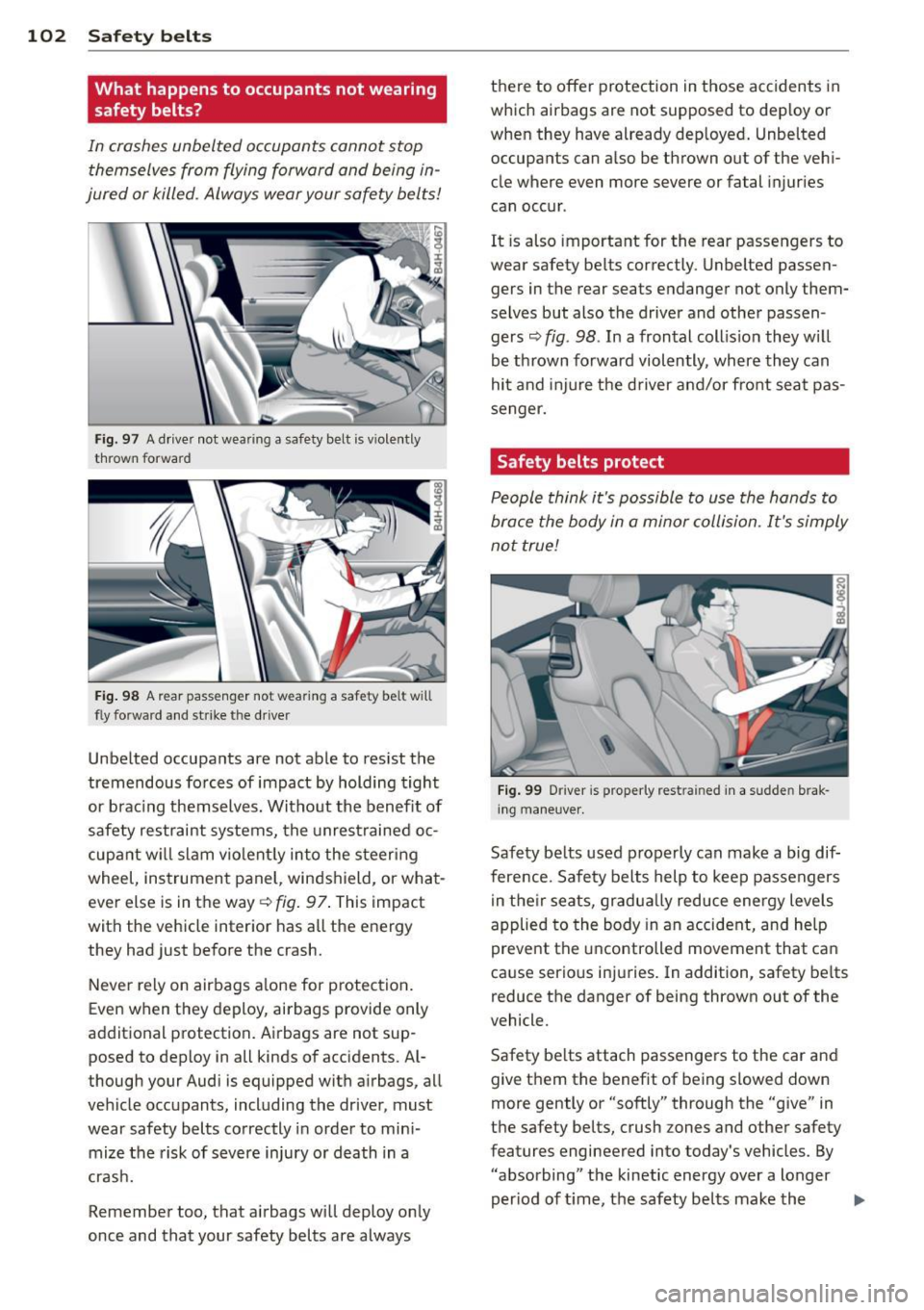
F ig . 97 A driver not wearing a safety belt is violently
thrown forward
F ig. 98 A rear passenger not wearing a safety belt will
fly forward a nd strike the d river
Unbelted occupants are not able to res ist the
tremendous fo rces of impact by holding tight
or brac ing thems elves. Without the benefit of
safety restraint systems, the unres trained o c
cupa nt w ill slam vio lent ly into the steering
wheel, instrument panel, winds hield, or what
ever else is in the way
q fig . 97 . This impact
with the vehicle interior has all the energy
they had just before the crash.
Neve r rely on airbags a lone for p rotection .
Even when they deploy, airbags provide only
addit ional protection . Airbags are not sup
posed to deploy in all kinds of accidents. Al
though your Audi is equipped with a irbags, all
vehicle occupants, including the driver, must
wear safety belts correctly in order to min i
mize the risk of severe inju ry or death in a
crash.
Remember too, that a irbags will deploy on ly
once and that your safety belts are always there to offe
r protection in those accidents in
which airbags are not supposed to dep loy or
when they have already dep loyed . Unbelted
occupa nts can also be thrown o ut of the ve hi
cle where even more severe or fatal injuries
can occur .
It is also important for the rear passengers to
wear safety belts correctly. Unbelted passen
gers in the rear seats endanger not only them
se lves but also the driver and othe r passen
gers¢
fig. 98 . In a frontal coll is ion they w ill
be th rown forward violently, where they can
hi t and i njur e the d river a nd/or fro nt sea t pas
senger.
Safety belts protect
People think it's possible to us e the hands to
brace the body in a minor collision. It 's simply
not true!
Fig. 9 9 Driver is proper ly restrained in a sudden brak
in g maneuve r.
Safety be lts used p roperly can make a big dif
fere nce. Safe ty belts help to keep passengers
in the ir seats, gradua lly reduce energy leve ls
applied to the body in an accident, and he lp
prevent the uncontrolled movement that ca n
ca use serio us inju ries . In addition, safety be lts
reduce the danger of being thrown out of the
vehicle.
S afety be lts attach passenge rs to the car and
give them the benefit of being slowed down
more gently or "softly" through the "give" in
the safety belts, crush zones and other safety
features engineered into today's vehicles. By
"absorbing" the kinetic energy over a longer
per iod of t i me, the safety be lts make th e
lilJJ,
Page 105 of 262
forces on the body more "tolerable" and less likely to cause injury.
Although these examples are based on a fron
tal collision , safety belts can also substantial
ly reduce the risk of injury in other kinds of
crashes. So, whether you're on a long trip or
just going to the corner store, always buckle
up and make sure others do, too. Accident sta
tistics show that vehicle occupants properly
wearing safety belts have a lower risk of being
injured and a much better chance of surviving
an accident . Properly using safety belts also
greatly increases the ability of the supplemen
tal airbags to do their job in a collision. For
this reason, wearing a safety belt is legally re
quired in most countries including much of
the United States and Canada.
Although your Audi is equipped with airbags ,
you still have to wear the safety belts provid
ed. Front airbags, for example, are activated
only in some frontal collisions. The front air
bags are not activated in all frontal collisions,
in side and rear collisions, in roll overs or in
cases where there is not enough deceleration
through impact to the front of the vehicle .
The same goes for the other airbag systems in
your Audi. So, always wear your safety belt
and make sure everybody in your vehicle is
properly restrained!
Important safety instructions about
safety belts
Safety belts must always be properly posi
tioned across the strongest bones of your
body.
.,. Always wear safety belts as illustrated and
described in this chapter.
.,. Make sure that your safety belts are always
ready for use and are not damaged.
A WARNING
Not wearing safety belts or wearing them
improperly increases the risk of serious
personal injury and death. Safety belts can
work only when used correctly .
Safety belts 103
-Always fasten your safety belts correctly
before driving off and make sure all pas
sengers are properly restrained.
- For maximum protection, safety belts
must always be positioned correctly on
the body .
- Never strap more than one person, in cluding small children, into any single
safety belt.
- Never place a safety belt over a child sit
ting on your lap.
-Always keep feet in the footwell in front
of the seat while the vehicle is being driv
en.
- Never let any person ride with feet on
the instrument panel or sticking out the
window or on the seat.
- Never remove a safety belt while the ve
hicle is moving . Doing so will increase
your risk of being injured or killed .
- Never wear belts twisted.
- Never wear belts over rigid or breakable objects in or on your clothing, such as
eye glasses, pens, keys, etc., as these
may cause injury .
- Never wear the shoulder part of the belt
under your arm or otherwise out of posi
tion .
- Several layers of heavy clothing may in
terfere with correct positioning of belts and reduce their effectiveness .
- Always keep belt buckles free of anything
that may prevent the buckle from latch
ing securely.
- Never use comfort clips or devices that
create slack in the shoulder belt. Howev
er, special clips may be required for the
correct use of some child restraint sys
tems .
- Never allow safety belts to become dam
aged by being caught in door or seat
hardware.
- Torn or frayed safety belts can tear and
damaged belt hardware can break in an
accident. Inspect belts regularly. If web-
bing, bindings, buckles, or retractors are .,..
L,_ _______________ _J
•
•