ESP AUDI TT COUPE 2017 Repair Manual
[x] Cancel search | Manufacturer: AUDI, Model Year: 2017, Model line: TT COUPE, Model: AUDI TT COUPE 2017Pages: 322, PDF Size: 79.73 MB
Page 225 of 322
co
co
.... N
" N .... 0
0
Vl c:o
rear seating position and have the airbag
system inspected by your authorized Audi
dealer.
- Always buckle the child seat firmly in
place even if a child is not sitting in it. A
loose child seat can fly around during a
sudden stop or in a collision.
- Always read and heed all WARNINGS
whenever using a child restraint in a vehi
cle
c!;> page 189, Safety belts, c!;> page 197,
Airbag system
and c!;> page 221, Impor
tant information.
{D) Tips
Always replace child restraints that were in
stalled in a vehicle dur ing a crash. Damage to
a child restraint that is not visible could cause
it to fail in another collision situation.
Advanced front airbag system and children
Your vehicle is equipped with a front "Advanced
Ai rbag System" in compliance with United States
F edera l Motor Vehicle Safety Standard ( FMVSS)
208 as applicable at the time your vehicle was manufactured.
The Advanced Airbag system in your vehi cle has
been certified to meet the "low-risk" require
ments for 3- and 6-year old children on the pas
senger side and small adults on the driver side.
The low risk deployment criteria are intended to
reduce the risk of injury through interaction with
the airbag that can occur, for example, by being
too close to the steering wheel and instrument
panel when the airbag inflates. In addition, the
system has been certified to comply with the
"s uppress io n " req uiremen ts of the Safety Stand
ard, to turn of f the front airbag for infants up to
12 months who are restrained on the front pas
senger seat in chi ld restraints that are listed in
the Standard.
E ven though your vehicle is equipped with an Ad
vanced Ai rbag system, all children, especially
those 12 years and younger, should always r ide
in the back seat properly restrained for their age
and size. The airbag on the passenger side makes
the front seat a potentially dangerous place for a
Child safety
child to ride. The front seat is not the safest place
for a chi ld in a forward-facing chi ld safety seat . It
can be a very dangerous place for an infant or a
larger ch ild in a rearward-facing seat.
T he vehicle's Advanced A irbag System has a ca
pacitive passenger detection system in the front
passenger seat cushion that can detect the pres
ence of a baby or a ch ild in a child restraint sys
tem on this seat.
The capacitive passenger detection system regis
ters the changes that result in an electrical field
when a child, a child restraint, and a baby b lanket
are on the front passenger seat. The change in
the measured capacitance due to the presence of
a child, a ch ild restraint, and a baby blanket on
the front passenger seat is related to the child
restraint system resting on the seat . Th e meas
ur ed capacitance of a child restraint system var
ies depending on the type of system and specific
make and mode l.
T he elect rical capacitance of the various types,
makes, and models of child restra in ts specified
by the U.S .National Highway Traff ic Safety Ad
ministration (NHTSA) in the relevant safety
standard are stored in the Advanced Airbag Sys
tem control unit together with the capacitances
typ ica l of infants and a 1-year old child. When a
child restraint is used on the front passenger
seat w ith a typical 1 year -old infant, the Ad
vanced Airbag System compares the capacitance measured by the capacitive passenge r detection
system with the data stored in the electronic con
trol unit.
Child restraints and Advanced front airbag
system
Regardless of the ch ild restraint that you use,
make sure that it has been certified to meet Unit
ed States Federal Motor Vehicle Safety Standards
and has been certified by its manufacturer for
use with an a irbag. Always be sure that the child
r estra int is properly installed at one of the rear
seating positions.
If in except ional circumstances
you must use it on the front passenger seat, care
f ully read all of the information on child safety
and Advanced Airbags and heed all of the .,.
223
Page 227 of 322
co
co
.... N
" N .... 0
0
Vl c:o
@ Tips
The chi ld seats listed in categories A to C have
been statically tested by Audi only for the Ad
vanced Airbag function .
Important safety instructions for using
child safety seats
Correct use of child safety seats substantially re
duces the risk of injury in an accident!
As the driver, you are responsible for the safety
of everybody in the vehicle, especially children:
~ Always use the right child safety seat for each
child and a lways use it properly~
page 22 7.
~ Always carefully follow the child safety seat
manufacturer's instructions on how to route
the safety belt properly through the child safe
ty seat .
~ When using the vehicle safety be lt to install a
child safety seat , you must first activate the
convertible locking retractor on the safety be lt
to prevent the child safety seat from moving
~ page 232.
~ Push the child safety seat down w ith your full
weight to get the safety be lt rea lly t ight so that
the seat cannot move forward and sideways more than 1 in (2 .5 cm).
~ Secure unused safety belts on the rear seat
~ page 227.
Always remember: Even though your vehicle is
equipped with an Advanced Airbag system, all
children, especially those 12 years and younger,
should always ride in the back seat properly re
stra ined for their age and size.
_&, WARNING
Not using a ch ild safety seat , using the w rong
child sa fety seat or imp roperly installing a
child restraint increases the risk of serious
personal injury and death.
- All vehicle occupants and especia lly children
must be restrained properly whenever riding
in a vehicle . An unrestrained or improperly
restrained child could be injured by striking
the interior or by being ejected from the ve hicle during a sudden maneuver or impact.
Ch ild safety
An unrestrained or improperly restrained
child is also at greater r isk of injury or death
through contact with an inf lating airbag.
- Commercially available child safety seats
are required to comply with U.S . Federal
Motor Vehicle Safety Standard (FMVSS) 213
(in Canada CMVSS 213) .
- When buying a child restra int, select one
that fits your chi ld and the vehicle.
- Only use child restraint systems that fully
contact the flat portion of the seat cush
ion . The child restraint must not tip or
lean to either side. Audi does not recom
mend using child safety seats that rest on
legs or tube-like frames. They do not pro
vide adequate contact with the seat.
- Always heed all lega l requirements per
ta ining to the insta llation and use of child
safety seats and carefully follow the in
structions provided by the manufacturer
of the seat you are using .
- Never allow children under 4 ft
9 in (57 in/
1.45 m) to wear a normal safety belt . H ow
eve r, the rear seat in the TT Coupe is de
signed to permit children who are between
4 ft 3 in (1.3 m) and 4
ft 9 in (57 in/1.45 m)
tall to use the available three-point lap and
shoulder safety belts.
- Never let more than one child occupy a chi ld
safety seat .
- Never let babies or o lder children ride in a
veh icle while sitting on the lap of another
passenger.
- Holding a child in your arms is never a sub
stitute for a child restraint system .
- The strongest person cou ld not ho ld the
ch ild with the forces that exist in an acci
dent . The child will strike the interior of
the vehicle and can also be struck by the passenger.
- The child and the passenger can also in
jure each other in an accident.
- Never install rear-fac ing child safety seats
or infant car riers on the front passenger
seat. A child w ill be seriously injured and
can be killed when the passenger a irbag in
flates -even with an Advanced Airbag Sys
tem .
225
Page 229 of 322
CD
CD
.... N
" N .... 0
0
Ill co
Secure unused safety belts on the rear seat
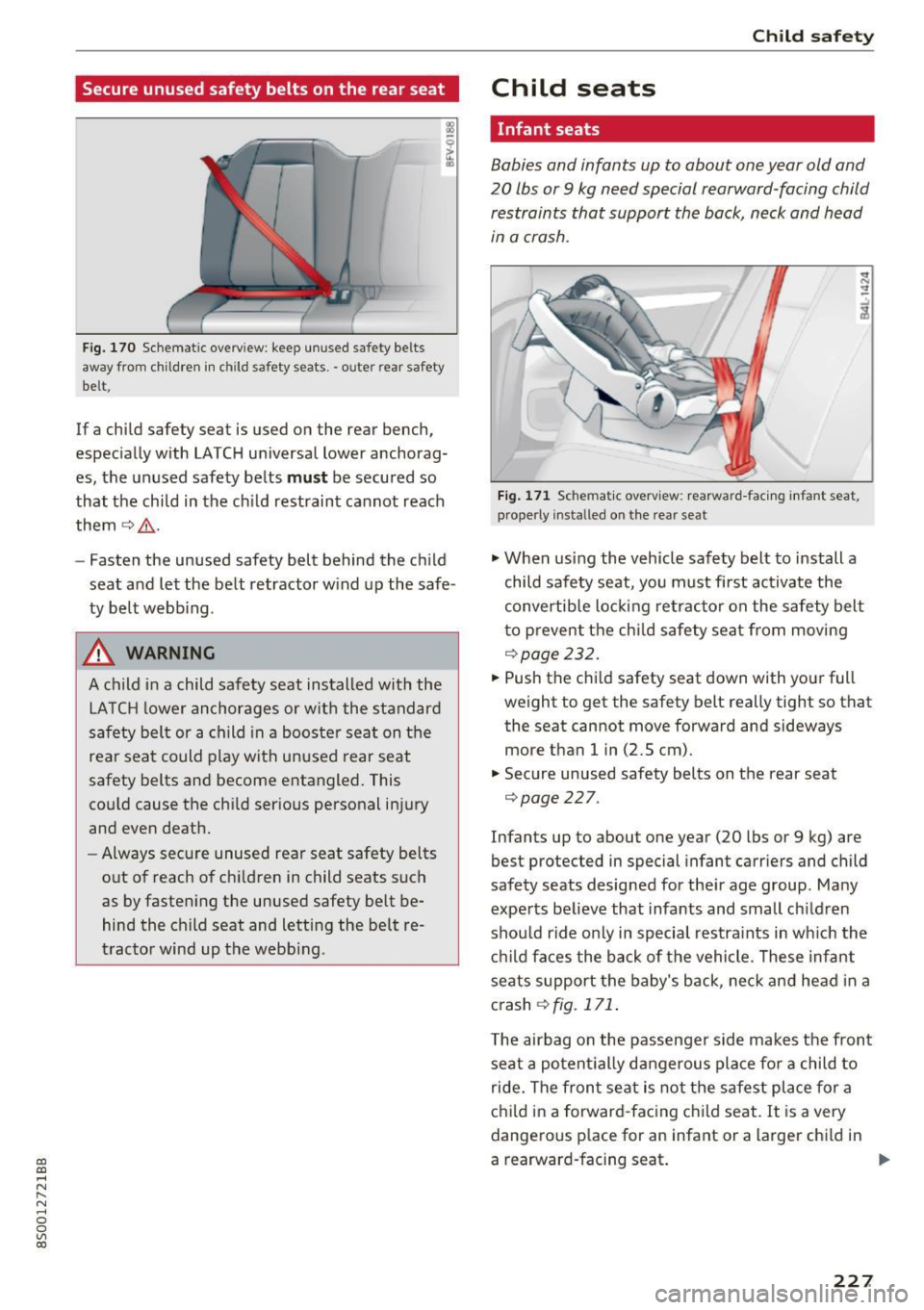
Fig. 170 Sche matic overview : keep unu sed sa fety belt s
away from c hildre n in c hild safety seats .· outer rear safety
belt,
If a child safety seat is used on the rear bench,
especially with LATCH universal lower anchorag
es, the unused safety belts
mu st be secured so
that the child in the ch ild restraint cannot reach
them 9&, .
- Fasten the unused safety belt behind the child
seat and let the be lt retractor w ind up the safe
ty be lt webbing.
.,&. WARNING
A child in a child safe ty seat ins talled with the
LA TC H l ower anchorages or w ith the standard
safety belt or a ch ild in a booste r seat on the
rear seat could play with u nused rear seat
safety belts and become entangled. This
co uld cause the chi ld serious personal in jury
and even death.
- Always secure unused rear seat safety belts
out of reach of chi ldren in child seats such
as by fastening the unused safety belt be
hind the child seat and letting the belt re·
tractor wind up the webb ing .
Ch ild sa fety
Child seats
Infant seats
Babies and infants up to about one year old and
20 lbs or
9 kg need special rearward -facing child
restraints that support the back , neck and head
in a crash .
Fig . 17 1 Schem atic overv ie w : rearward -fac ing in fan t seat,
p rope rly i nsta lled o n the rea r sea t
.,. When using the vehicle safety belt to install a
child safety seat, yo u must first activate the
convertib le loc king re tractor on the safety belt
to p revent the ch ild safety seat from moving
9 page232 .
.,. Push the ch ild safety seat down with your full
weight to g et the saf ety belt really tight so that
the seat cannot move forward and sideways
more than 1 in (2.5 cm) .
"' Secure unused safety belts on the rear seat
~ page 227.
Infants up to about one yea r (20 lbs or 9 kg) a re
best protected in special infant carr iers and child
safety seats designed for the ir age group. Many
expe rts believe that infants and small ch ild ren
shou ld ride o nly in special restra ints in wh ich the
ch ild fa ces the back of the vehicle. These infant
seats support the baby's back, neck and head in a
crash
~ fig. 171 .
The airbag on the passenge r side makes the front
sea t a potent ially dangerous place for a child to
ride. The fron t seat is not the safest place for a
c h ild in a forward -fac ing ch ild seat. It is a
very
dange rous p lace for an infant or a larger chi ld in
a rearward-fac ing seat . .,..
227
Page 233 of 322
co
co
.... N
" N .... 0
0
Vl c:o
fastened snugly and as low as possible around
the pelvis. Never let the lap belt portion of the
safety belt pass over the child's stomach or abdo
men .
I n a crash, a irbags must inflate within a blink of
an eye and with considerable force. In order to do its job, the airbag needs room to inflate so that it
will be there to protect the occupant as the occu
pant moves forward into the a irbag.
A vehicle occupant who is out of position and too
close to the airbag gets in the way of an inflating
airbag. When an occupant is too close, he or she
will be struck v iolently and will receive ser ious or
possibly even fatal injury .
In order for the airbag to offer protection, it is important that all vehicle occupants, especially
any children, who must be in the front seat be
cause of exceptional circumstances, be properly restrained and as far away from the airbag as
possible . By keep ing room between the child's
body and the front of the passenger compart
ment, the airbag can inflate comp letely and pro
vide supp lemental prote ct ion in certain frontal
collisions .
A WARNING
Not using a booster seat, us ing the booster
seat improperly, incorrectly insta lling a boos
ter seat or using the vehicle safety belt im properly increases the risk of serious personal
injury and death in a collision or other emer
gency situat ion. To help reduce the risk of se
r ious personal inju ry and/or death:
- The shoulder belt must lie as close to the
center of the child 's collar bone as possible
and must lie flat and snug on the uppe r
body .
It must neve r lie across the th roat or
neck. The lap belt must lie across the pelv is
and never across the stomach or abdomen.
Make sure that the belt lies flat and snug .
Pull on the belt to tighten if necessary.
- Failure to proper ly route safety belts over a
child's body will cause severe injuries in an
acc ident or other emergency situation
9 page 189 .
Ch ild safety
- The rear side of the ch ild safety seat should
be positioned as close as possible to the
backrest on the veh icle seat.
- Ch ildren on the front seat of any car, even
with Advanced Airbags, can be seriously in
jured or even k illed when an airbag inflates.
- Never let a chi ld stand or kneel on any seat,
for example the front seat.
- Never let a chi ld r ide in the cargo area of
your veh icle.
- Always remember that a chi ld leaning for
ward, sitt ing sideways or o ut of pos ition in
any way du ring an accident can be struck by
a dep loying airbag. Th is w ill resu lt in serious
pe rsonal injury or death.
- If you must install a booster seat on the
front passenger seat because of exceptiona l
circumstances the
PASSENGER AIR BAG
OFF ~;
light must come on and stay on,
wheneve r the ignit ion is swit ched on.
- If the PASSENGER AIR BAG OFF~; light
does not come on and stay on, perform the
checks desc ribed
9 page 209, Monitoring
the Advanced Airbag System.
- T ake the child restra int off the front passen
ge r seat and install it prope rly a t one of the
rear sea t positions i f the
PASSENGER AIR
BAG OFF~;
light does not stay on whenever
the ignition is switched on .
- Always read and heed all WARNINGS when
ever using a child restrained in a vehicle is
being used
¢ page 189, Safety belts,
¢ page 197 , Airbag system and
¢ page 221, Important information.
Booster seats on the rear seat
Children who are about 7 years and older, who
weigh more than 55 lbs (25 kg) and are not tal ler
than 4 ft 9 in (57 in/1.45 m) are best protected
whe n properly restrained on t he rear seat.
Due to limited rear seat head clearance children
4
ft 3 in (51 in/1.30 m) and taller must not use
booster seats o n the rea r seat of your Audi TT
Co upe . The rea r seat of you r Audi TT Coupe has
been specially des igned to pe rm it children who
are between 4 ft 3 in (51 in/1.30 m) and 4
ft 9 in
(57 in/1.45 m) tall (abo ut 7 to 12 years o ld) to ..,.
231
Page 234 of 322
Child safet y
use the available th ree -point lap and shoulder
safety belts .
A WARNING
-The rear seat area is too small to safe ly
transport passengers taller than 4 ft 9 in
(57 in/1.45 m).
-
- Persons taller than 4 ft 9 in (57 in/1.45 m) as well as children in booster seats who are
too close to the rear window and roof can
suffer severe head and neck injur ies when
the rear lid is closed o r in a crash.
- The m inimum clearance betwee n the pas
sengers' heads and the rear window must
never - under any circumstances - be less
than 1 in ( 2.5 cm) whe n the passenge rs s its
f ully up right .
- Always make sure tha t the rear seat passen
gers canno t be str uck when the rear lid is
cl osed.
Booster seats on the front seat
Ch ild ren aged about 7 years and older and weigh
ing more than 55 lbs (25 kg) who are between
4 ft 3 in (5 1 in/1.30 m) and 4 ft 9 in (57 in/
1.45 m) tall may in exceptional circumstances
ride on the front passenger's seat. Children less
than 4 ft 9 in (57 in/1.45 m) tall must s it on a
certified booster seat and properly wear the vehi
cle 's three-poin t lap and shoulder safety be lt .
Always securely latch the passenger seat at t he
very rear of its fore and aft adjustment range.
The bac krest must be adjusted to an upr ight po
sition .
A WARNING
If you must insta ll a booster seat ch ild re
st raint o n the fro nt passenger sea t:
- Make s ure the booster seat has been de
s igned and certified by its manufa ctu rer for
use on a front seat wit h a pas senge r fr ont
and side air bag.
- Alw ays follow the m anuf act urer's instruc
ti on s prov ided with the boos ter sea t.
232
- Always move the passenger seat to the very
rear o f its fore and aft adjustment range, as
far away from the airbag as possib le.
- Always make sure that the passenger seat is
secure ly latched in place before instal ling
the booster seat. The backrest must be ad
justed to an upr ight position .
- If the passenger seat cannot be secu rely
latched in the very rear of its fore and aft
ad justment range , then t he passenger front
airbag must be turned off with the ON / OFF
s w itch.
Securing child seats
Securing a child safety seat using a safety
belt
Safety belts for the rear seats and the front pas
senger can be locked with the convertible locking
retractor to properly secure child safety seats.
The safety belts emergency lock ing retractors for
the rear seats safety be lts and for the front pas
senger's seat safety be lt have a convert ible lock
i ng retractor for child restra ints. The safety belt
must be locked so t hat be lt webb ing ca nnot un
r eel. The retractor ca n be act ivated to lock the
safe ty belt and prevent the safety belt webbing
from loosening up dur ing no rm al driv ing. A chi ld
s a fe ty se at can on ly be prope rly insta lled when
the safety be lt is locked so that the ch ild and
c hi ld safety seat will stay in place .
Always remembe r: E ven thoug h your veh icle is
equipped wi th an Advan ced Airba g system, all
c hi ldren, especially those 12 yea rs and younger,
shou ld always ride in the back seat proper ly re
strained for their age and size .
A WARNING
Improperly installed child safety seats in
crease the r isk of serious personal injury and
death in a co llision .
-
-Always make sure that the safety be lt re
tractor is locked when installing a c hild
safety seat. An unlocked safety be lt retrac
to r cannot hold the ch ild safety seat in place
during normal d riving or in a c rash.
Page 236 of 322
Child safety
-Make sure that the PASSENGER AIR BAG
OFF 11;; light comes on and stays on all the
time whenever the ignition is switched on.
_&. WARNING
Rearward-facing child restraints:
-A child in a rearward-facing child safety seat installed on the front passenger seat will be
seriously injured and can be killed if the
front airbag inflates - even with an Ad
vanced Airbag System.
- The inflating airbag will hit the child safety
seat or infant carrier with great force and
will smash the child safety seat and child
against the backrest, center armrest, door
or roof.
-Always be especially careful if you must in
stall a rearward facing child safety seat on
the front passenger seat in exceptional cir
cumstances.
- Make sure that the
PASSENGER AIR BAG
OFF 11;; light comes on and stays on all the
time whenever the ignition is switched on.
-If the PASSENGER AIR BAG OFF~; light
does not come on and stay on, immediately
install the rear-facing child safety seat in a
rear seating position and have the airbag
system inspected by your Audi dealer.
Activating the convertible locking retractor
Use the convertible locking retractor to secure a
child restraint.
Always heed the child safety seat manufacturer's
instructions when installing a child restraint in
your vehicle. To activate the convertible locking
retractor:
.,. Place the child restraint on a seat, preferably
on the rear seat.
.,. Slowly pull the belt
all the way out.
.,. Route it around or through the child restraint
belt path
¢ _A .
.,. Push the child safety seat down with your full
weight to get the safety belt really tight .
.,. Insert the belt tongue into the buckle for that
seating position .
234
.,. Guide the safety belt back into the retractor un
til the belt lies flat and snug on the child safety
seat.
.,. You should hear a "clicking" noise as the belt
winds back into the inertia reel. Test the con
vertible locking retractor by pulling on the belt .
You should no longer be able to pull the belt
out of the retractor. The convertible locking re
tractor is now activated.
.,. Make sure that the red release button is facing
away from the child restraint so that it can be
unbuckled quickly.
.,. Pull on the belt to make sure the safety belt is
properly tight and fastened so that the seat
cannot move forward and sideways more than
1 in (2.5 cm).
_&. WARNING
Using the wrong child restraint or an improp
erly installed child restraint can cause serious
personal injury or death in a crash.
- Always make sure that the safety belt re
tractor is locked when installing a child
safety seat. An unlocked safety belt retrac
tor cannot hold the child safety seat in place
during normal driving or in a crash.
-Always buckle the child safety seat firmly in
place even if a child is not sitting in it. A
loose child safety seat can fly around during
a sudden stop or in a crash.
- Always make sure the seat backrest to which
the child restraint is installed is in an up
right position and securely latched into
place and cannot fold forward. Otherwise,
the seatback with the child safety seat at
tached to it could fly forward in the event of
an accident or other emergency situation .
- Always read and heed all WARNINGS when
ever using a child restrained in a vehicle is
being used
¢ page 221. Special precautions
apply when installing a child safety seat on
the front passenger seat
¢ page 198, Child
restraints on the front seat -some impor
tant things to know.
Page 241 of 322
co
co
.... N
" N .... 0
0
Vl c:o
~ Guide the upper tether strap into the rear cargo
area
r::!>fig. 181.
~ Slide the tether strap hook over the anchor
bracket.
~Pullon the tether strap hook so that the spring
catch of the hook engages .
~ Tighten the tether strap firmly follow ing the
child restraint manufacturer's instruct ions .
Releasing the tether strap
~ Loosen the tension following the child restraint
manufacturer's instructions.
~ Depress the spring catch on the hook and re
lease it from the anchorage .
(D Note
If you leave the child restraint with the tether
strap firmly installed for several days, this
could leave a mark on the upholstery on the
seat cushion and backrest in the area where
the tethe r strap was installed. The upholstery
wou ld also be permanently stretched around
the tether strap. This applies especially to
leather seats.
Using tether straps on rearward-facing
child restraints
Currently, few rear -facing child restraint systems
come w ith a tether . Please read and heed the
child restraint system manufacturer's instruc
tions carefully to determine how to properly in
stall the tether.
_& WARNING
A child in a rearward -facing chi ld safety seat
installed on the front passenger seat will be
seriously injured and can be killed if the front
airbag inflates - even w ith an Advanced A irbag
System.
- The inflating airbag wi ll hit the child safety
seat or infant carrier with great force and
will smash the ch ild safety seat and chi ld
against the backrest, center armrest, or
doo r.
- If you must install a rearward fac ing ch ild
safety seat on the front passenger seat be
cause of except ional circumstances and the
Child safety
PASSENGER AIR BAG OFF~; light does not
come on and stay on, immediately install
the rear-facing child safety seat in a rear
seating position and have the a irbag system
inspected by your Audi dealer.
Additional information
Sources of information about child
restraints and their use
There are a number of sources of additional in
format ion about ch ild restraint selection, instal
lation and use :
NHTSA advises that the best child safety seat is
the one that fits your child and fits in your vehi cle, and that you will use correctly and consis
tently .
Try before yo u buy!
U.S National Highway Traffic Safety Administra
tion
Tel.: 1 (888) 327-4236 (TTY: 1 (800) 424-9153)
www .nhtsa .gov
National SAFE KIDS Campaign
T el.: 1 (202) 662-0600
www.safekids.org
Safety BeltSafe U.S .A
Tel.: 1 (800) 745-SAFE (English)
T el.: 1 (800) 747-SANO (Spanish)
www.carseat.org
Transport Canada Information Centre
Tel.: 1 (800) 333-0371 or call 1 (613) 998-8616
if you are in the Ottawa area
http://www.tc.gc.ca/ eng/ roadsafety/men u. htm
Audi Customer Relations
Tel.: 1 (800) 822-2834
239
Page 242 of 322
Check ing and F illing
Checking and Filling
Fuel
Gasoline grade
The correct gasoline grade is stated on the inside
of the fuel filler door .
The vehicle is equipped with a catalytic converter
and must only be driven w ith
unleaded gasoline .
Audi recommends using TOP TIER Detergent Gas
oline. Additional information on TOP TIER Deter
gent Gasoline can be found on the offic ial web
site (www .toptiergas.com) .
The individua l gasoline grades are differentiated
by
octane ratings . This value is given with (R +M)/
2 equating to AKI or in RON.
The fo llow ing headings match the correspond ing
sticker in the fue l filler door.
UNLEADED FUEL ONLY MIN. (R+M) /2 87
Regula r/ MIN. RON
91 Regular
Use regu la r gaso line with minim um 87 AKI/
91
RON ~ 0 .
The max imum eng ine powe r is only reached if
p rem ium gaso line 91 A KI/ 95 RON is used.
UNLEADED FUEL ONLY PREMIUM MIN . (R
+M)/2
91 / SUPER MIN. RON 95
Using premium gasoline with m inim um 91 AKI/
95 RON is recommende d.
If premium gasoline is not available, you can also
use reg ula r gaso line 87 A KI/ 91 RON . Howeve r
this does reduce t he e ngine powe r slight ly.
(D Note
- Fill ing the tank just one time with leaded
fuel or other meta llic additives will cause
permanent de te riorat io n to the catalyt ic
conve rter func tion.
- Whe n gasol ine with an oc tane r ati ng that is
too low is used, high speeds o r heavy engi ne
l o ad can lead to engi ne d amage.
240
(D Tips
The vehicle may be filled with fuel that has a
h igher octane rating than what is requi red by
the eng ine.
Blended gasoline
Use of gasoline containing alcohol or MTBE (methyl tertiary butyl ether)
You may use unleaded gasoline blended with al
cohol o r MT BE (commonly referred to as oxygen
ates) if the blended m ix tu re meets t he fo llow ing
c rit er ia:
Blend of gasoline m ethano l (wood alcohol or
methyl alcohol)
- Anti-knock index must be 87 AKI or h igher.
- Blend must contain no more than 3% metha-
nol.
- Blend must contain more tha n 2% co-solvents.
Blend of gasoline and ethanol (grain alcohol or
ethyl alcohol)
- Anti-k noc k index mus t be 87 AK I or higher.
- Blend must not conta in mo re than 15% etha-
nol.
Blend of gasoline and MTBE
- Anti -knock index must be 87 AKI or higher.
- Blend mus t contain no t mo re than 15% MT BE.
Seasonally adjusted gasoline
Many gasoline grades are blended to perform es
pecially well for w inter or s umme r dr iv ing . Dur
i ng seasonal change-ove r, we s ugges t that yo u
fill up a t busy gas stat ions w here the seasona l
adjus tment is mo re li kely to be made in t ime .
(D Note
-Metha nol fuels which do not meet these re
quirements may cause cor rosion and dam
age to plas tic and rubber com ponen ts i n t he
fue l system.
- Do not use f ue ls that fa il to meet the speci
fie d cr iteri a in th is chap ter.
Page 243 of 322
co
co
.... N
" N .... 0
0
Vl c:o
-If you are unable to determine whether or
not a particular fuel blend meets the speci
ficat ions, ask your service station or its fuel
supplier.
- Do not use fuel for which the contents can
not be identified.
- Fuel system damage and performance prob
lems resulting from the use of fue ls diffe r
ent from those specified are not the respon
s ibility of Audi and are not covered under
the New Veh icle or the Emiss ion Control
System Warrant ies .
- If you experience a loss of fue l economy or
driveability and pe rformance problems due
to the use of one of these fuel blends, we r ecommend that you switch to unblended
fuel.
Gasoline additives
A ma jor concern among many auto manufactur
ers is carbon deposit build-up ca used by the type
of gasoline yo u use.
A lt hough gasoline grades d iffer from one manu
facturer to another, they have cer tain things in
common . A ll gasoline grades contain substances
that can cause deposits to collect on vita l engine
parts, such as fue l injectors and intake valves. Al
though most gasoline brands include additives to
keep engine and fuel systems clean, they are not
equally effective .
Aud i recommends using TOP TIER Detergent Gas
oline. For more informat ion on TOP TIER Dete r
gent Gasoline, please go to the official website
(www.toptiergas .com) .
After an extended period of using inadequate
fuels, carbon deposit build-ups can rob your en
g ine of peak performance.
CD Note
Damage or malfunction due to poor fuel q ual
ity is not covered by the Aud i New Vehicle
Limited Warranty.
Ch eck ing and Filling
Refueling
Fuel filler neck
The fue l filler neck is located on the rig ht rea r
s ide panel behind the fuel fille r flap .
If the power lock ing system shou ld fail, yo u can
st ill open the flap manually -fo r detailed instruc
tio ns see
9 page 243.
You can find the fuel tank capacity of your vehicle
i n
c::;, page 299.
The label on the inside of the f uel fi ller flap tells
you the correct fuel for your vehicle. For more in
f ormat ion about fuel spec ificat ions, see
9 page 240.
Your vehicle fuel tank has an onboard refue lling
vapor recovery system. This feature helps to pre
vent fuel vapors from escaping from the tank and
polluting the environme nt wh ile you refue l yo ur
vehicle . In order to fill the tank p roper ly w hile
pro tect ing t he e nvir onment, p lease follow t his
r efue ling p rocedure ca refully.
_& WARNING
Un der normal opera ting co nd it io ns, neve r car
r y additional f uel con tainers in your car. Gas
canisters and other containers used to trans
port fue l can be dange rous. Such containe rs,
f ull or empty, may leak and could cause a fire
i n a co llision. If you must transpo rt fuel to
use for your lawn mower, snow blower, etc .,
be ve ry careful and always observe local and
sta te laws rega rding the use, transportation
and storage of su ch f uel con tainers. Make cer
t ai n t he co ntain er meets industry standards
(ANSI/AS TM F8S2 -86).
CD Note
Neve r drive your veh icle until the fue l tank is
complete ly empty. The irreg ular s upply of
f u el can cause misfiring. Gasol in e c ould enter
the e xhaust sys tem an d damage the cat aly tic
conve rter.
241
Page 246 of 322
Check ing and F illing
Engine compartment
Working in the engine compartment
Special care is required if you are working in the
engine compartment
Fo r wo rk in th e engine compa rtmen t su ch as
c h ec kin g and filli ng flu id s, th ere is a risk of in
j u ry, sc aldin g, ac cide nts, a nd b urn s. For this
rea son, foll ow all the warning s and gener al
s a fe ty p recaution s pr ov ided in the f ollow ing in·
f o rm ation . Th e en gine c omp artmen t is a dan
ger ous are a.
¢ ,&.
_& WARNING
- T urn the engine off.
- Switch the ign ition off .
- Set the parking brake .
- Place the selector lever in the P pos ition.
- let the engine cool down.
- Never open the hood when there is steam or coolant escaping from the engine compart
ment, because there is a risk that you could
be burned . Wait until no steam or coolant is
escaping .
- Keep ch ildren away from the engine com
partment .
- Never spill flu ids on a hot engine. These flu
ids (such as the freeze protection contained
in the coolant) can catch fire .
- Avoid short circu its in the electrical system,
especially to the battery .
- When working in the engine compartment,
remember that the rad iator fan can sw itch
on even if the ign ition is switched off, which
increases the risk of pe rsonal injury .
- Never open the cap on the coolant expan sion tank when the eng ine is warm. The
cooling system is under pressu re .
- To protect your face, hands, and arms from
hot steam or coolant, cover the cap with a
large cloth when opening.
- Do not remove the engine cover under any
circumstances. This increases the risk of
burns.
- If tests need to be performed w ith the en
gine running, there is additional danger d ue
244
to moving components (such as the ribbed
be lt, alternator and rad iator fan) and from
the high voltage ignition system.
- Do not press the acce lerator pedal inadver
tently if a gear is selected when the vehicle
is stationary and the engine is running. Oth
erwise, the vehicle will start to move imme
diately and this could result in an accident .
- Pay attent ion to the following warnings list
ed when work on the fuel system or on the
electrical equipment is required.
- Do not smoke .
- Never work near open flames .
- Always have a working fire extinguisher
nearby
- All work on the battery or elect rical system
in your vehicle can result in injuries, chemi
cal b urns, acc idents or burns . Because of
this, all work must be performed
onl y by an
authorized Audi dealer or authorized Audi
Service Facility.
- To reduce the risk o f electric shock and in
jury, never touch the following components
when the engine is running or is being start•
ed:
- Ign ition cable
- Other components in the electronic high -
vo ltage ign ition system
- If you must check or perform work on the
engine while it is running:
- Set the parking brake and place the selec
tor lever in the P (park) position first .
- Always proceed w ith extreme caution so
that clothing, jewelry or long hair do not
become caught in the radiator fan, fan
belt or other moving components or do
not come into contact with hot compo
nents. Tie back long hair before beginn ing
work and do not wear clothing that can hang down into the engine .
- Lim it your exposure to exhaust and chemi
cals to as short a time as possible
¢ .&. .
A WARNING
California Proposition 65 Warning: