lock AUDI TT ROADSTER 2011 Repair Manual
[x] Cancel search | Manufacturer: AUDI, Model Year: 2011, Model line: TT ROADSTER, Model: AUDI TT ROADSTER 2011Pages: 260, PDF Size: 64.11 MB
Page 165 of 260
Automatic car wash
The vehicle can be washed in almost any
modern automatic car wash .
The vehicle paint is so durable that the vehicle
can normally be washed without problems in
an automatic car wash. However, the effect on
the paint depends to a large extent on the de
sig n of the fac ility, the filte ring of the wash
water, the type of wash and care mater ial , etc.
If the paint has a dull appearance afte r go ing
through the car wash or is scratched, bring
this to the attention of the operator immedi
ately. If necessary, use a different car wash.
The power top does not require special pre
cautions be fore passing through a car wash.
Howe ver, the car mu st not be tre ated with
hot w ax after the wa sh cy cle!
The wax could
adversely affect the power top and
even dam
age the fabric
over a period of time.
The power top does not have to be washed
ev
ery time you use a car wash. The power top
can be spared if the car wash facility is equip
ped with manually adjustable roof brushes or
rollers .
Before going through a car wash, be sure to
take the usual precaut ions such as clos ing the
windows . Remove antenna if applicable .
If yo u have installed additional accessories on
the vehicle -such as spoilers, etc. -it is best to
ask the car wash operator if these should be
removed .
A WARNING
Always read and heed all WARNINGS and
the information
Qpage 162.
Washing the vehicle by hand
A lot of water is needed when washing a vehi
cle by hand.
~ Before you start washing, make sure you
have read and understood the WARNINGS
9 A in General informa tion on page 162 .
~ First soak all dried dirt until it is soft, then
rinse it off.
Cleaning and protec tion 163
~ As yo u clean yo ur vehicle , start with the roo f
and work your way down to the bottom, us
ing a sponge, a sponge g love or a clean
brush.
~ Rinse the sponge or the sponge glove often,
flushing it clean each time.
~ Use spec ial car shampoo only for very persis
tent d irt .
~ Rinse the ca r tho roughly with water .
~ Use a chamois leather to gently w ipe the ex-
ter ior dry .
U se a separate sponge for cleaning the
whee ls , door s ills and othe r regions exposed
to road dirt. In this way, yo u will no t scratch
the paint with coarse particles imbedded in
the sponge the next time you wash the car .
A WARNING
-Do not clean the underside of the chas
sis, fenders, wheel covers, or other hard
to reach parts without protect ing your
hands and arms . You may cut yourself on
sharp-edged metal parts .
- Always read and heed all WARNINGS and
other information
9 page 162 .
(D Note
-Never try to remove dirt, mud or dust if
the surface of the veh icle is dry. Never
use a dry cloth or sponge, s ince this
cou ld scratch your vehicle's paint or win
dows .
- Never wash your car in bright sunlight.
Drops of wate r act as mag nifying lenses
and may damage yo ur paint .
- When you wash your car in the winter: if you rinse you r vehicle with a hose, be
carefu l not to aim the stream of water
directly at locks, or at doo r or hatch
openings -they can freeze sh ut.
- Never use sponges designed to
remove
insects, or any k itche n sco uring sponges
or s imilar p rod ucts. They can damage
your paint finish .
- Yo u should remove debris (such as in
sects) from the headlight lenses on a •
•
Page 171 of 260
(D Note
To avoid scratching the display, you should never clean it dry.
Aluminum trim
Use only neutr al- pH products to remove spots
and depos its from alum inum surfaces.
Chrome care products and alkaline cleaners
will attack alum inum su rfaces and can dam
age them over time.
A WARNING
Always read and heed a ll WARNINGS and
t he information<=>
page 162.
Fabrics and fabric coverings
Fabrics and fabric coverings (e .g. seats, door
trim panels, etc.) should be cleaned at regular
interva ls with a vacuum cleaner. T his removes
surface dirt particles which could become em
bedded in the fabr ic through use. Steam
cleaners should not be used, because the
steam tends to push the dirt deeper into the
fabric and lock it there.
Norm al cleaning
Generally, we recommend using a soft sponge
or a lint-free microfiber cloth to the clean fab
ric. Brushes should only be used for carpets
and floor mats, s ince other fabric surfaces
could be harmed by b rushes .
Normal surface sta ins can be cleaned using a
commercially available foam cleaner . Spread
the foam on the surface of the fabric with a
soft sponge and work it in gently . Do not satu
rate the fabric. Then pat the foam d ry using
absorbent, dry cloths (e.g. microfibe r clo th)
and vacuum it afte r it has dr ied comp lete ly.
Cl eaning stains
Stains caused by beve rages (e .g. coffee, fruit
juice, etc.) can be t reated with a mild deter
gent solution. App ly the dete rgent so lution
wi th a sponge. In the case of s tubbor n stains,
a detergent paste can be applied directly to
Cleaning and protec tion 169
the stain and worked into the fabric. After
wards, use copious amounts of clean water to
remove the rema in ing detergent. Apply the
water with a damp cloth or sponge and pat
the fabric dry with an absorbent, dry cloth.
Stains from choco late or makeup should have
detergent paste (e.g . ox-gall soap) rubbed in
to them. Afterwards, remove the soap with
water (damp sponge).
A lcohol can be used to treat stains from
grease, o il, lipstick or a ballpoint pen. Melted
grease or dye must be patted off using ab
sorbent mater ial. It may be necessary to re
treat the areas with detergent paste and wa
te r.
In the case of genera l soiling of the uphols
tery and cover material, we recommend hir ing
a specia list that has the equipment to clean
t h e seat covers and othe r fabr ic surfaces by
shampooing and spray extraction .
A WARNING
Always read and heed all WARNINGS and
the info rmation
<=> page 162.
@ Tips
Open Velcro fasteners on your clothing can
damage the seat cover. Please make sure
that Ve lcro fasteners are closed.
Plastic parts and instrument panel
A lways use a clean clo th moistened in clea r
water to clean these areas . For pe rsistent d irt
u se an Aud i approved
solvent-free p lastic
clea ner/protectant.
A WARNING
Solvents can change the properties of
some plastics and make it harder for the
a irbag to deploy.
-
- Never clean the instrument panel or the
surface of Airbag modu les with cleaning
products that co nta in solvents .
- Products containing solvents will make
the surface of this part porous. •
•
Page 172 of 260
170 Cleaning and protection
-Serious injuries can result if plastic parts
come loose when the airbag is deployed.
- Always read and heed all WARNINGS and
the information
¢page 162.
(D Note
Cleaning agents containing solvents will
attack the material and can change the
way it behaves.
Instrument cluster glass
~ Clean the glass with a soft, damp cloth .
In order to preserve the anti-glare properties
of the instrument cluster glass, it should only
be cleaned with a soft, damp cloth.
Natural leather
Applies to vehicles: with natural leather
Audi makes great efforts to maintain the
properties , natural look and feel of interior
leather.
General
We offer many different types of leather on
our vehicles. Most are different types of nappa
leather, which has a smooth surface and
comes in various colors .
The intensity of the color determines the visu
al characterist ics and appearance. If the sur
face of the leather has a typical natural look,
then the leather is a nappa leather that has
been left in a relatively natural condition. This
leather offers par ticularly good com fort and
breathes well . Fine veins, closed grains , insect
bites, skin folds , and subtle variations in color
remain visible. These characteristics demon
strate that the material is natural.
Natural nappa leather is not covered by a col
or finish .
It is therefore more sensitive to soil
ing and wear, which is something you need to
consider if children, animals or other factors
might prove to be particularly hard on the
leather.
By contrast, leather types that are covered by
a colored finish layer are more durable. This has a positive effect on the leather's resist
ance to wear and soiling in daily us
e. On the
other hand, the typical characteristics of natu
ral leather are barely or not apparent. Howev
er, this does not mean that the leather itself
is of inferior quality .
Care and handling
Because of the exclusive nature of the types of
leather that Audi uses and their unique prop
erties (such as sensitivity to oils, grease, soil
ing, etc.), you will need to be somewhat care
ful with these leathers, and a certain type of care is required. For example, dark clothing
materials can discolor leather seats (especial
ly if such clothing is damp and was not dyed
correctly) . Dust and dirt particles in pores,
folds, and seams can have an abrasive effect
and can damage the leather surface as well as
weaken seams.
The leather should be cleaned regularly as
needed. After having been used for a relatively
long time, your leather seats will acquire a
rich aged finish. This is a characteristic of nat
ural leather and a sign of true quality .
In order to maintain the value of this natural
product over the life of your vehicle, you
should follow the recommendations below:
(D Note
- To keep your leather from bleaching out,
do not allow it to be exposed to bright
sunlight for long periods of time. If you
have to leave the vehicle parked outside
for long periods, cover the leather to
protect it from direct exposure to sun
light .
- Sharp objects on clothing, such as zip
pers, rivets or sharp pieces on belts can
leave permanent scratches or scrape
marks on the surface of the leather.
(l) Tips
-After each time you clean the leather and
at regular intervals, use a leather preser
vative creme that contains UV-blockers
and that works into the leather. This
Page 174 of 260
172 Cleaning and protection
• Once the stain is no longer visib le, use a soft
dry cloth or tissu e to soak up the moisture .
Do not use leather cleaning produc ts on Al
cantara .
You may use a suitable shampoo fo r remov ing
dust and dirt.
Dust and grit in the pores and seams can
scratch and damage the surface . If the car is
l eft stand ing i n the sun fo r long pe riods, the
A lcantara should be p rotected against direc t
sun light to preven t it from f ad ing. Slig ht color
va ria tions will develop in normal use an d are
not an indication of material deterioration .
CI) Note
-Never use chemi cal solven ts (e.g. lighter
fl uid , turpentine), waxes, shoe po lish or
s imilar products on Alcantara ® sur faces.
- To avoid damage, have stubborn stains
r emoved by a commerc ia l cleaning spe
cia list.
- Do no t use br ushes, st iff sponges or sim
ilarly abrasive cleaning a ids.
Safety belts
Only well-maintained safety belts work relia
bly when ne eded .
Heavily soiled safety belts may not retr act
p rope rly.
• Keep be lts clean.
• For cleaning, use a m ild soap and wate r sol
u tio n. Le t be lts d ry thoro ughly and away
from direct s unli gh t.
• Do no t all ow ine rtia reel safety be lts to re
t ract before they are completely d ry .
• Check the condition of your safety belts
reg
ularly.
A WARNING
Damaged safety belts can break in a crash.
1l Use o nly th e co rrec t cle anin g so lu ti on s. Ne ver use gas
oli ne or d ie se l fuel.
- Anyth ing that might damage yo ur sa fety
be lts could mean that you and your pas
sengers would not be adequate ly pro
tected in an accident .
- Safety belt performance depends on co r
rect insta llation. Never remove be lts
from the veh icle to clean them .
- Do not use chemical clea ning agents,
b leach or dyes . They have corrosive prop
ert ies which wea ken the webb ing .
- When clean ing your safety be lts, inspect
them for damage . If you discover dam
age, see your Audi dea ler .
'
-Always read a nd heed a ll WARNINGS and
the information
<=;> page 162 .
Engine compartment
Be especially careful when cleaning the en
gine compar tment.
Always switch off the ignition before clean
ing the engine<=;>.&, .
Plenum panel
Remove leaves from the plenum panel in front
of the w indshield under the eng ine hood . This
preve nts the water drain holes from becomin g
block ed, and it prevents debris from enter ing
the ve hicle interio r thr ough the heating and
ventilat ion duc ts.
Corrosion protection
T he eng ine compartment and transmission
have been corrosion -protected at the factory .
G ood anti- corrosio n treatmen t is very impor
tant, par ticul arly in the w inter.
If the vehi cle
is frequently driven on salt t reated roads, the
entire engine compa rtment an d plen um panel
sho uld be thoro ughly cleaned at the end of
winter and retreated to prevent salt damage.
At the same time, the unde rside of the vehicle
shou ld be washed as well.
If the engine compa rtment is cleaned at any
time with grease remov ing solutions
1> , or if ..,.
Page 177 of 260
-Blend must contain not more than 15%
MTBE.
Seasonally adjusted gasoline
Many gasoline grades are blended to perform
espec ially we ll for winter or summer driving.
During seasonal change-over, we suggest that
you fill up at busy gas stat ions where the sea
sonal adjustment is more likely to be made in
time .
(D Note
-Methanol fuels which do not meet these
requirements may cause corrosion and
damage to plastic and rubber compo
nents in the fuel system .
- Do not use fue ls that fail to meet the
specified criter ia in this chapter.
- If you are unable to determine whether
or not a particular fue l blend meets the
specifications, ask your service station or
its fuel supp lier.
- Do not use fuel for which the contents
cannot be identified.
- Fuel system damage and performance
problems resulting from the use of fuels
different from those specified are not
the responsibility of Audi and are not
covered under the New Vehicle or the Emission Control System Warranties.
- If you experience a loss of fuel economy
or driveability and performance prob l ems due to the use of one of these fuel
blends, we recommend that you switch
to unblended fuel.
Gasoline additives
A major concern among many auto manufac
turers is carbon deposit build- up caused by
the type of gasoline you use.
Although gasoline grades differ from one manufacturer to another , they have certain
things in common. All gasoline grades contain
substances that can cause deposits to collect
on vital engine parts, such as fuel injectors
and intake valves. Although most gasoline brands include additives to keep engine and
Fuel supply and filling your fuel tank 175
fuel systems clean, they are not equally effec
tive .
A udi recommends using TOP TIER Detergent
Gasoline. For more information on TOP TIER
Detergent Gasoline, please go to the official
website (www.toptiergas.com).
After an extended period of using inadequate
fuels, built-up carbon deposits can rob yo ur
engine of peak performance.
Q) Note
Damage or malfunction due to poor fue l
quality is not covered by the Aud i New Ve
hicle Limited Warranty.
Fuel tank
Fuel filler neck
The fuel filler neck is located on the right rear
side panel behind the fuel fille r flap.
If the unlocking system should fail, you can
still open the flap manually -for detailed in
structions see ¢
page 177.
You can find the fuel tank capacity of your ve
hicle in
Technical Data ¢ page 239.
The label on the inside of the fuel fi ller flap
tells you the correct fue l for your vehicle. For
more information about fuel specifications,
see ¢
page 174.
Your vehicle fue l tank has an on -board refue l
li ng vapor recovery system. This feature helps
to prevent fuel vapors from escaping from the
tank and polluting the environment while you refuel your vehicle . In order to fill the tank
properly while protecting the environment,
please fo llow this refueling procedure careful
ly.
_&. WARNING
Under normal operating conditions, never
carry additional fue l conta iners in yo ur car.
Gas canisters and other containers used to
transport f uel can be dangero us. Such con
tainers, full or empty, may leak and could
cause a fire in a collision. If you must
•
•
Page 178 of 260
1 76 Fuel supply and filling your fuel tank
transport fuel to use for your lawn mower,
snow blower, etc., be very careful and al
ways observe local and state laws regard
ing the use, transportation and storage of
such fuel containers. Make certain the con
tainer meets industry standards (ANSI/
ASTM F852 - 86).
(D Note
Never drive your vehicle until the fuel tank
is completely dry. The irregular supply of
fuel can cause misfiring. Gasoline could
enter into the exhaust system and damage
the catalytic converter.
Refuelling
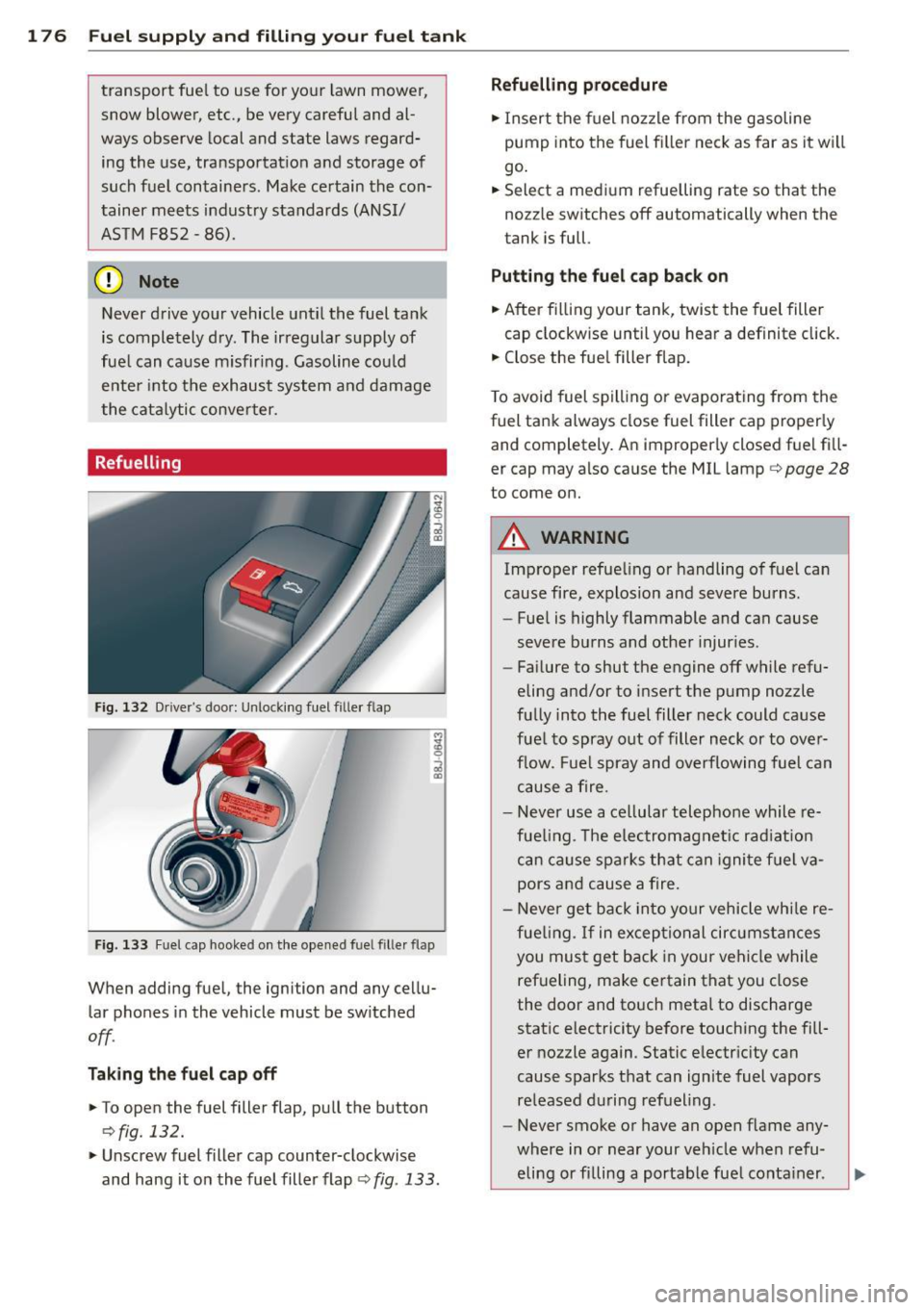
Fig. 132 Driver's door: Un locking fuel filler flap
Fig. 133 Fuel cap hooked on the opened fue l filler flap
When adding fue l, the ignition and any ce llu
lar phones in the vehicle must be switched
off .
Taking the fuel cap off
• To open the fuel filler flap, pull the button
9fig. 132.
• Unscrew fuel filler cap counter-clockwise
and hang it on the fuel filter flap¢
fig. 133 .
Refuelling procedure
• Insert the fuel nozzle from the gasoline
pump into the fuel filler neck as far as it will
go.
• Select a medium refuelling rate so that the
nozzle switches off automatically when the
tank is full.
Putting the fuel cap back on
• After filling your tank, twist the fuel filter
cap clockwise until you hear a definite click.
• Close the fuel filler flap.
To avoid fuel spilling or evaporating from the
fuel tank always close fuel filler cap properly and completely. An improperly closed fuel fill
er cap may also cause the MIL lamp¢
page 28
to come on.
A WARNING
Improper refueling or handling of fuel can
cause fire, explosion and severe burns.
- Fue l is highly flammable and can cause
severe burns and other injuries.
- Failure to shut the engine off while refu
eling and/or to insert the pump nozzle
fully into the fuel filter neck could cause
fuel to spray out of filler neck or to over
flow. Fuel spray and overflowing fuel can
cause a fire.
- Never use a cellular telephone while re
fueling. The electromagnetic radiation
can cause sparks that can ignite fuel va
pors and cause a fire.
- Never get back into your vehicle while re
fueling.
If in exceptional circumstances
you must get back in your vehicle while
refueling, make certain that you close
the door and touch metal to discharge
static electricity before touching the fill
er nozzle again. Static electricity can
cause sparks that can ignite fuel vapors
released during refueling .
- Never smoke or have an open flame any
where in or near your vehicle when refu
eling or filling a portable fuel container.
Page 179 of 260
-For your safety, we strongly recommend
that you do not travel with a portable
fuel container in your vehicle. The con
tainer, full or empty may leak and could
cause a fire, especially in a crash.
- If, under exceptional circumstances, you
must transport a portable fuel container,
please observe the following:
- Never fill a portable fuel container
while it is anywhere in or on the vehicle (for example, in the luggage compart
ment, or on the trunk) . Static electrici
ty can build up while filling and can ig
nite fuel vapors causing a fire.
- Always place a portable fuel container
on the ground before filling .
-Always keep the filler nozzle complete
ly inside the portable container before
and during filling.
- If filling a portable container made of
metal, the filler nozzle must always be
in contact with the container. This will
help prevent static electricity from dis
charging and cause a fire.
- Never spill fuel inside the vehicle or
luggage compartment. Fuel vapors are
highly flammable.
- Always observe local and state/provin
cial laws regarding the use, storage
and transportation of fuel containers
- Make certain the fuel container meets
industry standards (ANSI/ ASTM
F852-86).
(D Note
If any fuel has spilled onto the car, it
should be removed immediately to prevent
damage to the paint.
@ For the sake of the environment
As soon as the correctly operated nozzle switches off automatically for the first
time, the tank is full. Do not try to add
more fuel because fuel may spill out. In
addition, the expansion space in the fuel
tank will be filled -causing the fuel to
Fuel supply and filling your fuel tank 177
overflow when it becomes warm and pol
lute the environment.
a) Tips
- Running your engine while refuelling
may cause vapors to escape or even fuel
to spill out of the tank. This would then
shut off the fuel nozzle before the tank
is full.
- Do not refuel your vehicle with the igni
tion switched on. The fuel gauge may
otherwise not indicate the correct fuel
level after refuelling.
Unlocking the fuel filler flap
by hand
You can open the fuel filler flap by hand if the
power locking system should fail .
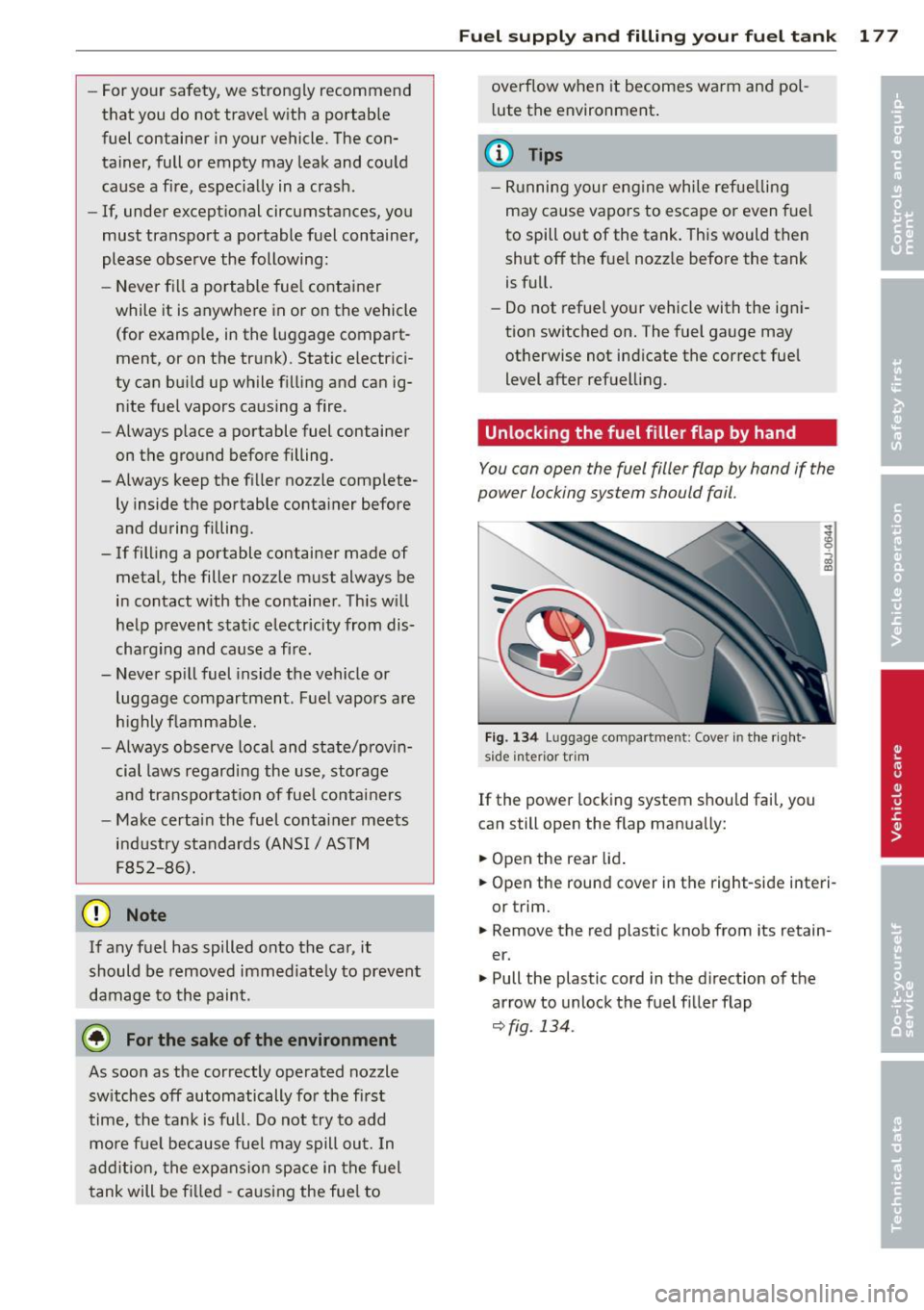
Fig. 134 Lu ggage compartment: Cover in the right
side interior trim
If the power locking system should fail, you
can still open the flap manually:
.. Open the rear lid.
.. Open the round cover in the right-side interi
or trim .
.. Remove the red plastic knob from its retain
er.
.. Pull the plastic cord in the direction of the
arrow to unlock the fuel filler flap
~fig. 134 .
Page 180 of 260
1 78 Che cking and filling
Checking and filling
Engine hood
Releasing the engine hood
The engine hood is released from inside the
vehicle .
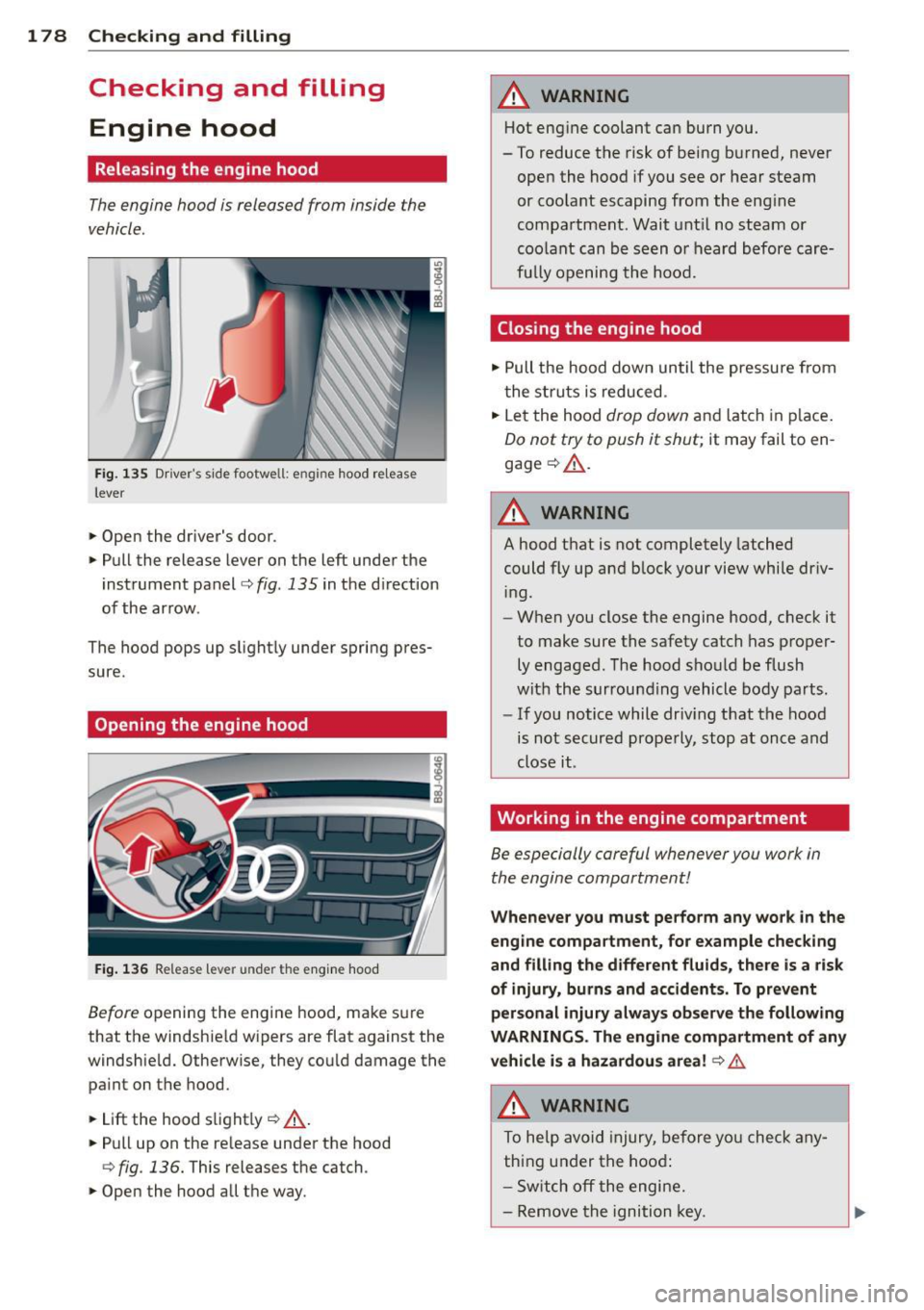
Fig . 135 Dr iver's side footwe ll: e ngin e hood re lease
lever
.. Open the driver's door .
.. Pull the release lever on the left under the
inst rument panel
c> fig . 135 in the direction
of the arrow .
The hood pops up s light ly under spring pres
sure.
Opening the engine hood
Fi g. 136 Release lever under the eng ine hood
Before opening the engine hood, make s ure
that the windshie ld wipers are flat against the
windshie ld. Otherwise, they co uld damage the
pa in t on the hood.
.. Lift the hood slight ly
c> .&, .
.. Pul l up on the release under the hood
c> fig . 136. This releases the catch .
.. Open the hood all the way.
A WARNING
-Hot eng ine coolant can burn you.
- To reduce the risk of being b urned, never
open the hood if you see or hear steam
or coo la nt escaping from the eng ine
compa rtment . Wait unt il no steam or
coo lant can be seen o r heard before care
fu lly openi ng the hood.
Closing the engine hood
.. Pull the hood down until the pressu re from
the struts is reduced .
.. Le t t he hood
drop down and latch in p lace .
Do not try to push it shut; it may fail to en
gage
c> .&, .
A WARNING
--
A hood that is not completely latched
could fly up and b lock your view while dr iv
i ng.
- W hen you close the engine hood, check it
to make sure the safety catch has p roper
ly engaged . The hood sho uld be flush
wit h the surrou nding vehicle body parts.
- If you notice while dr iv ing that the hood
is not s ecured properly, stop at once and
close it .
Working in the engine compartment
Be especially careful whenever you work in
the engine compartment!
Whenever you must perform an y wo rk in the
eng ine compartment, for example checking
and filling the different fluids, there is a risk
of injury, burns and a ccidents. To prevent
per sonal injury alway s obs erve the following
WARNINGS. The engin e compartm ent of an y
vehicle is a hazardou s area!
c> .&.
A WARNING
To he lp avo id injury, before yo u check any
thing under the hoo d:
- Sw itch off the engi ne .
- Remove the igni tion key.
Page 188 of 260

186 Checking and filling
Before you check anything in the engine com
partment,
alwa ys r ea d and heed all WARN
INGS ¢ A in Working in the engine
comportment on page 178.
• Switch the ignition off .
• Read the coo lant level at the coolant expan
s ion tank ¢
fig. 141 . With a co ld engine, it
must be above the "min" mark. W ith a hot
engine, it can be a little above the indicated
range.
The location of the coolant expansion tank
can be seen in the engine compartment illus
tration .
To obtain an accurate reading , the engine
must be switched
off.
The expansion tank in you r vehicle is equipped
with an e lectric coolant level sensor .
When the coolant level is too low, the warning light in the Auto- Check System ¢
page 31 will
blink until you add coo lant and the level has
been restored to no rma l. Even though there is
an electric coolant level sen sor, we still rec
ommend you check the coolant leve l from
time to time.
Coolant loss
Coolant loss may indicate a leak in the cooling
system . In the event of coolant loss, the cool
ing system should be inspected immediately
by your authorized A udi dealer. It is not
enough merely to add coolant .
In a
sealed system, losses can occur only if
the boiling point of the coolant is exceeded as
a result of overheating.
@ Note
Do not add any type of ra diator leak seal
ant to yo ur vehicle's eng ine coolant. Add
ing radiator repair f luid may adversely af
fect the function and performance of your
cooling system and could result in damage
not covered by your New Vehicle Limited
Warranty.
Adding coolant
Be very careful when adding engine coolant.
Before you check anyth ing in the engine com
partment,
always read and heed all WARN
INGS ¢ A in Working in the engine comport
ment on page 178 .
•Turnoff the engine.
• Let the eng ine cool down.
• Place a thick rag ove r the coolant expansion
tank
¢ page 185, fig . 141 and carefully
tw ist the cap counter-clockwise ¢&_ .
• Add coolant.
• Twis t the cap o n aga in
tightly.
Replacement engine coolant must conform to
exact spec ificat ions
¢ page 185, Coolant.
E ven in a n emerge ncy, if coo lant addi -
t ive G1 2++, G12+ or G12 is not ava ilable , do
not use a d ifferen t addit ive. Use plain water
instead unti l you can get the cor rect additive
and can restore the correct ratio . This sho uld
be done as soon as possible .
If you have los t a considerab le amo unt o f
coolant , then you sho uld add cold ant ifreeze
and co ld wate r on ly w hen the engine is cold.
Always use
new engine coo la nt whe n refilling .
Do not fill coola nt above the "MAX" mark. Ex
cess coo la nt wi ll be fo rced o ut through the
pressure relief valve in t he cap w hen the en
gine becomes hot.
,&. WARNING ~ -
- T he cooling system is under pressure and
can get very hot. Reduce the risk of
scalding from hot coolant by followi ng
these steps.
- T urn
off the engine and allow it to coo l
down.
- Protect you r face, hands and a rms from
esca ping fluid and steam by covering
the cap w ith a large, t hick rag.
- T urn the cap slowly a nd ve ry carefully
in a counter-clo ckwise direction while
applying light, downward pres sure on
the top o f the cap.
Page 190 of 260
188 Checking and filling
If the brake fluid level falls considerably be
l ow the "MIN" mark, the brake warning/indi
cator light (U .S . mode ls: . , Canadian
models: .) will come on
¢ page 16 and
¢ page 30. Do not continue to operate the ve
h icle . The complete brake system shou ld be
thoroughly checked by an authorized A ud i
dea ler o r othe r qualified facility and t he cause
corrected. If the bra ke fluid level is too low,
the bra ke warning/ind ic a tor ligh t will illum i
nate . Contact an authorized Aud i dea ler
im
mediatel y.
Changing brake fluid
Hove the broke fluid changed by on experi
enced technician.
B rake fl uid abso rbs mois ture from the a ir. If
the water content in the b ra ke fluid i s too
h igh, corros ion in the brake sys tem may result
after a period of t ime . The boi ling point o f the
b rake fluid wi ll also decrease considerab ly and
decrease braking per formance.
T herefore, the brake flu id mus t be changed
every two year s. Always use new b rake fluid
which conforms to Fede ral Motor Vehicle
Standard "FMVSS 116 DOT 4".
T he brake flu id rese rvoi r can be difficul t to
reach, therefo re, we recommend that yo u
have the brake f luid changed by yo ur autho r
ized
Audi dealer . Your dealer has the correct
too ls, the right b rake f luid and the know-how
to do this for you.
A WARNING
- B rake fluid is poiso nous . It mus t be stor
ed only in th e closed orig inal con tainer
o ut of the reac h of children!
- Brake fa ilure can result from old o r inap
propriate b ra ke fluid. Observe these pre
c aut ions:
- Use o nly brake fluid t hat meets SAE
specif ication
J 1703 and confo rms to
Federal Motor Vehicle Standard 116.
Always check with your a uthorized Audi
dealer to make s ure you are using the
correct brake fl uid. T he correct type of brake flu
id is also ind icate d on the
brake f lu id rese rvoir.
- The brake fl uid must be new . Heavy use
of the brakes can cause a vapo r lock if
the brake fluid is left in the system too
long . This can se riously affect the effi
c iency of t he brakes as well as your
safe ty. This co uld resu lt in a n accide nt.
([) Note
Brake fluid will damage the paint of your
vehicle.
@ For the sake of the environment
Because o f the prob lem of prope r disposal
of brake fluid as well as t he spec ial too ls
required and the necessary expertise, we
recomme nd t hat yo u have th e brake flu id
cha nged by yo ur autho rize d Au di dea le r.
Battery
General information
Your ve hicl e is equipped with a specia l bat
tery, an
ACM battery. This battery is located
in t he luggage compartment and must be re
placed with an origina l equipment battery.
U nder normal opera ting condit ions, the bat
te ry is
maintenance-fr ee .
Have the battery checked when you take your
vehicle in for se rv ice . You a re well advised to
replace a battery that is o lde r th an 5 years .
Disconnecting the battery terminals
Some vehicle functions (power window reg u
lators, for example) are lost if the battery te r
mina ls are disconnected. T hese functions have
to be relearned after the battery termina ls are
connected aga in . T o prevent t his, t he battery
shou ld only b e disconne cted from the ve hicle
ele ct ric al sy stem w hen abso lutely ne cessary
f o r rep air s.
Vehicles not driven for long periods
If you are go ing to let your vehicle stand for a
long time a nd not drive it, you should remem
ber there are elect rical components which a re
Ill-