weight AUDI TT ROADSTER 2015 Owners Manual
[x] Cancel search | Manufacturer: AUDI, Model Year: 2015, Model line: TT ROADSTER, Model: AUDI TT ROADSTER 2015Pages: 244, PDF Size: 60.74 MB
Page 5 of 244
Knee airbags . . . . . . . . . . . . . . . . . . . . . 123
Side airbags . . . . . . . . . . . . . . . . . . . . . 125
Child Safety . . . . . . . . . . . . . . . . . . . 129
Important things to know ......... .
Child safety seats ................ .
Instal ling a chi ld safety seat .. .. .. . .
Additional Information ........... .
Vehicle operation ............ .
Intelligent technology .. .. .. . .
Notice about data recorded by vehicle
control modules .............. ... .
Electronic Stabilization Control (ESC) .
Rear spoiler ................ ... . .
Braking ........................ .
E lect ro-me chan ical power assis t ... . .
D riving w ith your quattro ......... .
Energy management ............. .
Driving and environment .....
The first 1,000 miles (1,500 km) and
afterwards .............. .. .. .. . .
Avoid damaging the vehicle ........ .
Driving through water on roads ... . .
Catalytic converter ............... .
Shutting down vehicle ............ .
Operate your vehicle economically and
minimize pollution ............... . 129
134
137
140
141
141
141
14 1
143
144
145
1 46
146
1 4 9
149
150
150 150
151
15 1
Tra iler towing . . . . . . . . . . . . . . . . . . . . 153
Vehicle care . . . . . . . . . . . . . . . . . . . 154
Vehicle care and cleaning . . . . . 154
General information . . . . . . . . . . . . . . 154
Car washes . . . . . . . . . . . . . . . . . . . . . . 154
Cleaning and care information . . . . . . 155
Fuel supply and filling your
fuel tank . . . . . . . . . . . . . . . . . . . . . . .
160
Gasoline . . . . . . . . . . . . . . . . . . . . . . . . 160
Fuel tank. . . . . . . . . . . . . . . . . . . . . . . . 161
Checking and filling . . . . . . . . . . . 164
Engine hood . . . . . . . . . . . . . . . . . . . . . 164
Eng ine oil . . . . . . . . . . . . . . . . . . . . . . . 166
Eng ine cooling system ............. 171
Brake fluid ...................... 174
Table of contents 3
Battery . . . . . . . . . . . . . . . . . . . . . . . . . 175
Windshield/headlight washer
container . . . . . . . . . . . . . . . . . . . . . . . 179
Tires and wheels ........... .. .
Tires ..... .. .... .. . .. .......... .
Tire pressure monitoring system ... .
Run-flat tire s .. .. ............... .
Do-it-yourself service ........ .
What do I do now? ........... .
Trunk escape handle ............. .
Vehicle tool kit .... .............. .
T ire repai r .... ... .. ............. .
What should I be aware of when
h . t
' 7 c angmg a ire .................. .
Fuses and bulbs .. .. .. ..... ... .
El ectr ical fuses . .. .. ............. .
Bulbs .......................... .
Emergency situations ........ .
General ........................ .
Starting by pushing or towing ...... .
Starting with jumper cables ....... .
U se of jump er cables ............. .
Emergency towing with commercia l
tow truck ...................... .
Lifting vehicle .. .. ............... . 180
180
198
201
204
204
204
204
205
208
212
212
215
2 16
216
216
216
217
218
221
Technical data . . . . . . . . . . . . . . . . . 222
Technical Data . . . . . . . . . . . . . . . . . 222
Vehicle identification . . . . . . . . . . . . . . 222
Weights . . . . . . . . . . . . . . . . . . . . . . . . 222
Dimensions . . . . . . . . . . . . . . . . . . . . . . 223
Capacities . . . . . . . . . . . . . . . . . . . . . . . 223
Gasoline engines . . . . . . . . . . . . . . . . . 224
Consumer Information . . . . . . . 225
Warranty coverages . . . . . . . . . . . . . . . 225
Operating your vehicle outside the
U.S. A. or Canada . . . . . . . . . . . . . . . . . 225
Audi Service Repair Manuals and
Literature . . . . . . . . . . . . . . . . . . . . . . . 225
Maintenance. . . . . . . . . . . . . . . . . . . . . 225
Additional accessories, modifications
and parts rep lacement . . . . . . . . . . . . 227
•
•
Page 62 of 244
60 Seats and stor age
Front passenger's seat
Always move the front passenger seat into
the rearmost position .
To avoid contact with the airbag while it is de
p loying, do not sit any closer to the instru
ment panel tha n necessary and always wear
the three-point safety belt provided ad justed
correctly . We recommend that you adjust the
passenger's seat i n the follow ing ma nner:
• Bring the back rest up to an (a lmost) upr ight
pos it ion.
Do not r ide w ith the seat reclined .
• The idea l position fo r the head restra int is
with the upper edge of the rest ra in t l eve l
with the top o f your head
¢ page 62. You
sho uld
not lower the top o f the restra int be
l ow the level of your eyes .
• Place your feet on the floor in front of the
passenger's seat .
Adjusting front seats
manually
Adjustment controls
Applies to vehicles: with manual seat adjustment
Various controls on the manual seats provide
a wide range for individual adjustments.
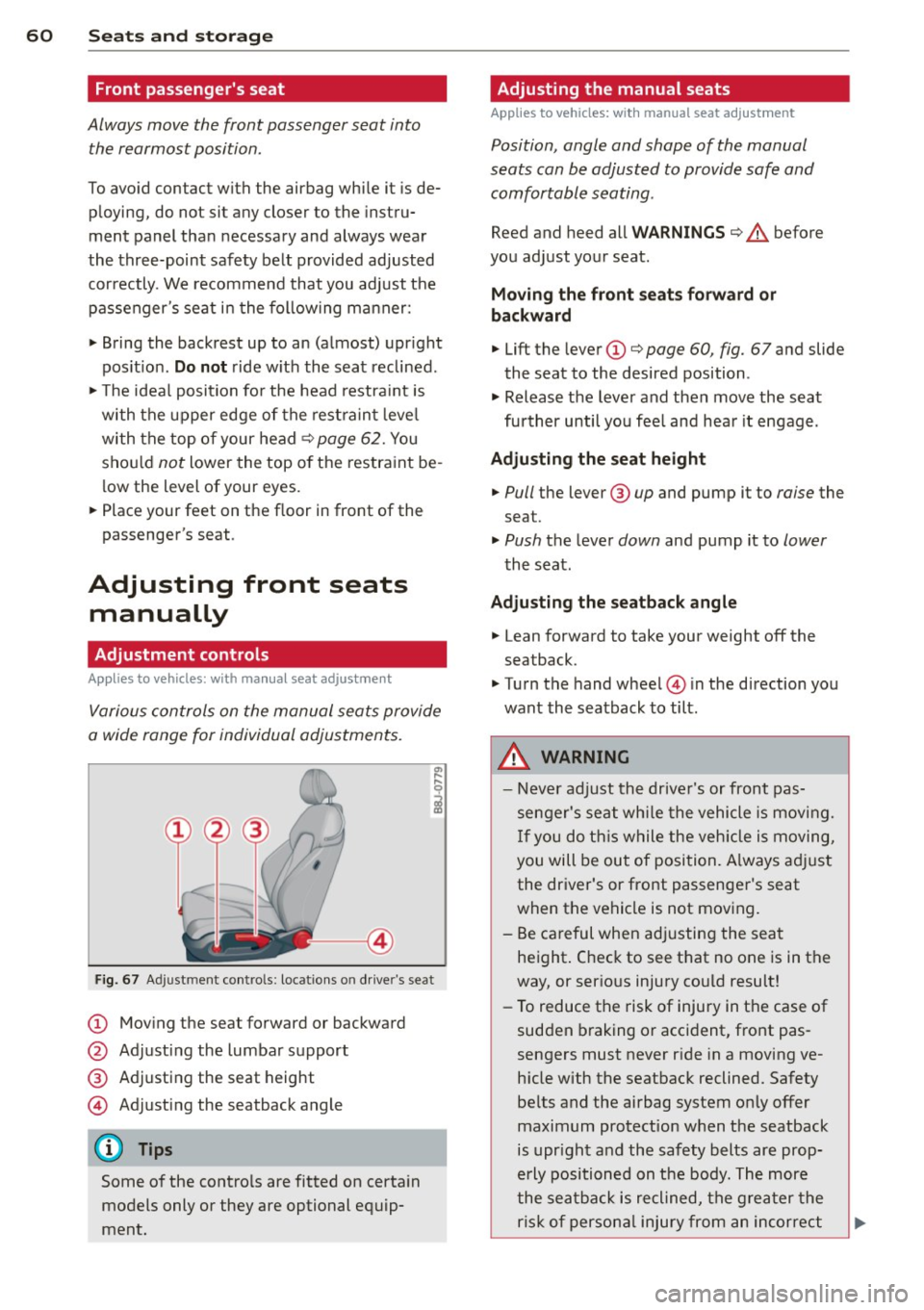
Fig . 67 Adj ust ment contro ls : locat ions o n dr ive r's seat
CD Mov ing the seat forward or backward
@ Ad justing the lumbar support
® Adjusting the seat height
© Adjusting the seatback angle
Some of the contro ls are fitted on certa in
models only or they are optional equip
ment.
Adjusting the manual seats
Applies to vehicles: with manual seat adjustment
Position, angle and shape of the manual
seats can be adjusted to provide safe and
comfortable seating .
Reed and heed all WARNINGS¢.&. before
you adjust your seat.
Moving the front seats forward or
backward
• Lift the leve r CD¢ page 60 , fig. 67 and slide
the seat to the desired position .
• Release the lever and then move the seat
fu rther until you fee l and hea r it engage.
Adjusting the seat height
• Pull the lever ® up and pump it to raise the
seat.
• Push the lever down and pump it to lower
the seat .
Adjusting the seatback angle
• Lean forward to take your weight off the
seatback.
• Turn the hand wheel © in the d irection you
want the seatback to tilt.
,&. WARNING ,--
- Never adjust the drive r's or front pas
senger's seat whi le the vehicle is moving.
If you do th is w hile the veh icle is moving,
you will be out of posi tion. A lways ad just
the dr iver's or front passenger's seat
when the vehicle is not moving.
- Be ca reful when adjustin g the seat
height . Check to see that no one is in the
way, or ser ious injury cou ld result!
- To reduce the risk of injury in the case of
sudden b raking o r accident, front pas
sengers must never r ide in a moving ve
h icle with the seatback reclined. Safety
be lts and the airbag system only offer
maximum protection when the seatback
is upr ight and the safety belts are prop
erly positioned on the body. The more
the sea tba ck is reclined, the gre ater the
risk of person al injury from a n incorrect
Page 80 of 244
78 On the road
the distance between your vehicle and
other vehicles.
- For safety reasons, the cruise control
should not be used in the city, in stop
and-go traff ic, on twist ing roads and
when road conditions are poor (such as
ice, fog, gravel, heavy rain and hydro
planing) -risk of accident .
- Turn off the cruise control temporarily
when entering turn lanes, highway exit
lanes or in construction zones.
- Please note that inadvertently "resting" your foot on the accelerator pedal causes
the cruise control not to brake. This is
because the cruise control is overridden
by the driver's acceleration.
({) Tips
The cruise control cannot maintain a con
stant speed when driving downhill. The ve
hicle will accelerate under its own weight. Downshift to a lower gear or use the
brakes to slow down .
Changing speed
.. Press leve r in the 0 or O direction
¢ page 77, fig. 85 to increase or decrease
your speed.
.. Release the lever to save that speed.
You can also press the accelerator pedal down
to increase your speed, e.g. if you want to
pass someone. The speed you saved earlier
will resume as soon as you release the acceler
ator pedal.
If, however, you exceed your saved speed by
5 mph (10 km/h) for longer than 5 minutes,
the cruise control will turn off temporarily .
The symbol will go out but the saved speed
will be retained .
Presetting your speed
You con preset your desired speed while the
vehicle is not moving .
.. Turn on the ignition . ..
Pull lever into position
(D ¢ page 77,
fig. 85.
.. Press the lever in the 0 or O direction to
increase or decrease your speed.
.. Release the lever to save that speed.
This function makes it possible, for example,
to save the speed you want before driving on
the highw ay. Once on the highway, activate
the cruise control by pulling the lever toward
(D.
· Switching the system off
Temporary deactivation
.. Press the brake pedal, or
.. Press the lever into position @(not clicked
into place)
¢ page 77, fig . 85 , or
.. Drive for longer than 5 minutes at more
than 5 mph (10 km/h) above the stored
speed.
Switching off completely
.. Press lever into position @ (clicked into
place), or
.. Switch the ignition
off.
The system retains the saved speed if you de
activate the cruise control temporarily. To re
sume the saved speed, release the brake ped
al and pull the leve r to position
(D .
Switching the ignition off erases the saved
speed.
_& WARNING
You should only return to the saved speed
if it is not too fast for the current traffic
conditions -risk of an accident!
Page 99 of 244
~ Distribute the load evenly in the luggage
compartment.
~ Always place and properly secure heavy items in the luggage compartment as far
forward as possible.
& WARNING
Improperly stored luggage or other items
can fly through the vehicle causing serious
personal injury in the event of hard brak
ing or an accident. To help reduce the risk
of serious personal injury :
- Always put objects, for example, luggage
or other heavy items in the luggage com
partment.
- Always secure objects in the luggage
compartment using the tie-down eyelets
and suitable straps.
& WARNING , ~
Heavy loads will influence the way your ve
hicle handles. To help reduce the risk of a
loss of control leading to serious personal
injury:
- Always keep in mind when transporting
heavy objects, that a change in the cen
ter of gravity can also cause changes in
vehicle handling:
- Always distribute the load as evenly as
possible.
- Place heavy objects as far forward in
the luggage compartment as possible.
- Never exceed the Gross Axle Weight Rat
ing or the Gross Vehicle Weight Rating
specified on the safety compliance stick
er on the left door jamb. Exceeding per
missible weight standards can cause the
vehicle to slide and handle differently.
- Please observe information on safe driv
ing
~ page 91.
& WARNING
To help prevent poisonous exhaust gas
from being drawn into the vehicle, always
keep the rear lid closed while driving.
- Never transport objects larger than
-
those fitting completely into the luggage
Driving Safely 97
area because the rear lid cannot be fully
closed.
- If you absolutely must drive with the rear
lid open, observe the following notes to
reduce the risk of poisoning:
- Close all windows,
- Close the convertible top,
- Open all air outlets in the instrument
panel,
- Switch off the air recirculation,
- Set the fresh air fan to the highest
speed.
& WARNING ~
Always make sure that the doors, all win-
dows, the convertible top and the rear lid
are securely closed and locked to reduce
the risk of injury when the vehicle is not
being used.
- After closing the rear lid, always make
sure that it is properly closed and locked .
- Never leave your vehicle unattended es
pecially with the rear lid left open . A
child could crawl into the vehicle through
the luggage compartment and close the
rear lid becoming trapped and unable to
get out. Being trapped in a vehicle can
lead to serious personal injury.
- Never let children play in or around the
vehicle.
- Never let passengers ride in the luggage
compartment. Vehicle occupants must
always be properly restrained in one of
the vehicle's seating positions.
(D Tips
- Air circulation helps to reduce window
fogging. Stale air escapes to the outside
through vents in the trim panel, on the
left side of the luggage compartment. Be sure to keep these slots free and
open.
- The tire pressure must correspond to the
load. The tire pressure is shown on the
tire pressure label. The tire pressure la
bel is located on the driver's side B-pillar .
The tire pressure label lists the ..,_ •
•
Page 100 of 244
98 Driving Safely
recommended co ld tir e in flat io n pr es
s ur es for the ve h icle at its maxim um c a
p acity weight a nd t he tires t hat we re o n
you r vehicl e at t he time it was ma nufac
tur ed. For r ecomm ended tire pre ss ure s
f o r nor mal load co nd itio ns, pl eas e see
ch ap ter
~pag e 184 .
Reporting Safety
Defects
Applicable to U.S.A.
If you believe that your vehicle
has a defect which could cause
a crash or could cause injury or
death, you should immediately
inform the National Highway
Traffic Safety Administration (NHTSA) in addition to notify
ing Audi of America, Inc.
If NHTSA receives similar com
plaints, it may open an investi
gation, and if it finds that a
safety defects exists in a group
of vehicles, it may order a recall
and remedy campaign. Howev
er, NHTSA cannot become in
volved in individual problems between you, your dealer, or
Audi of America, Inc .
To contact NHTSA, you may call
the Vehicle Safety Hotline toll
free at:
Tel.: 1-888-327-4236 (TTY: 1-800-424-9153) or
1-800-424-9 3 9 3 or you may write to:
Administrator NHTSA 1200 New Jersey Avenue, SE
Washington, D .C. 20590
You can also obtain other infor mation about motor vehicle
safety from :
http://www.safercar .gov
Applicable to Canada
If you live in Canada and you
believe that your vehicle has a
defect that could cause a crash
,
injury or death , you should im
mediately inform Transport
Canada, Defect Investigations
and Recalls. You should also no
tify Volkswagen Group Canada, Inc.
Canadian customers who wish
to report a safety-related de
fect to Transport Canada, De
fe ct Investigation s and Recalls,
may either call Transport Cana
da toll-free at:
Tel.: 1-800-333-0510 or
Tel.: 1-819-994-3328 (Ottawa region and from other coun
tries)
TTY for hearing impaired: Tel.: 1-888-67 5-6863
Page 103 of 244
Why safety belts?
Frontal collisions and the law of physics
Frontal crashes create very strong forces for
people riding in vehicles .
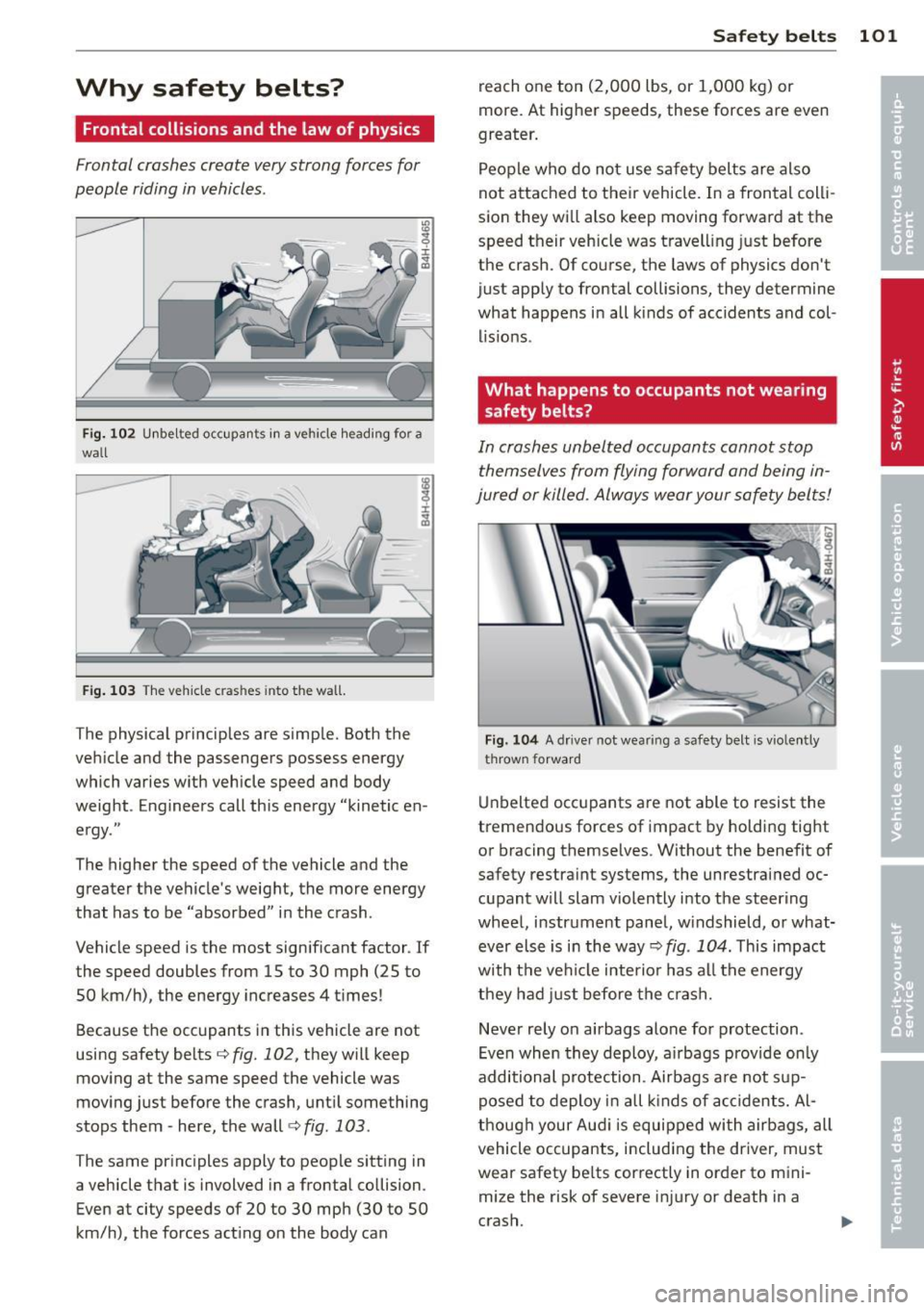
Fig. 102 Unbelted occupants in a ve hicle heading for a
wall
Fig. 103 The vehicle c ras hes into the wall.
The physical principles are simple. Both the
vehicle and the passengers possess energy
which varies with vehicle speed and body
weight . Engineers call this energy "kinetic en
ergy ."
The higher the speed of the vehicle and the greater the vehicle 's weight, the more energy
that has to be "absorbed" in the crash .
Vehicle speed is the most significant factor . If
the speed doubles from 15 to 30 mph (25 to
50 km/h) , the energy increases 4 times!
Because the occupants in this vehicle are not
using safety belts
r::;, fig. 102, they will keep
moving at the same speed the vehicle was
moving just before the crash, until something
stops them -here, the wall
c:> fig . 103 .
The same principles apply to people sitting in
a vehicle that is involved in a frontal collision .
Even at city speeds of 20 to 30 mph (30 to 50
km/h), the forces acting on the body can
Safety belts 101
reach one ton (2,000 lbs, or 1,000 kg) or
more. At higher speeds, these forces are even
greater.
People who do not use safety belts are also
not attached to their vehicle. In a frontal colli
sion they will also keep moving forward at the
speed their vehicle was travelling just before
the crash. Of course, the laws of physics don't
just apply to frontal collisions, they determine what happens in all kinds of accidents and col
lisions .
What happens to occupants not wearing
safety belts?
In crashes unbelted occupants cannot stop
themselves from flying forward and being in
jured or killed. Always wear your safety belts!
Fig. 104 A driver not wear ing a safety belt is v io len tly
thrown forward
Unbelted occupants are not able to resist the
tremendous forces of impact by holding tight
or bracing themselves . Without the benefit of
safety restraint systems, the unrestrained oc cupant will slam violently into the steering
wheel, instrument panel, windshield, or what
ever else is in the way r::;, fig . 104 . This impact
with the vehicle interior has all the energy
they had just before the crash.
Never rely on airbags alone for protection .
Even when they deploy , airbags provide only
additional protection . Airbags are not sup
posed to deploy in all kinds of accidents. Al
though your Audi is equipped with airbags, all
vehicle occupants, including the driver, must
wear safety belts correctly in order to mini
mize the risk of severe injury or death in a
crash.
Page 112 of 244
110 Airbag sys te m
Safety Standard 208 as applicable at the time
your vehicle was manufactured.
The Standard requires the front a irbag on t he
passenger side to be turned off ("sup
pressed") if a child up to about one year of
age restrained in one of the rear-facing or for
ward -facing infant restra ints listed in Federal
Motor Vehicle Safety Standard 208 with which
the Advanced A irbag System in your vehicle
was certified has been installed on the front passenger seat . For a listing of the child re
straints that were used to certify compliance
with the US Safety Standard¢
page 131.
The PASSENG ER AIR BAG OFF light in the in
strument panel tells you when the front Ad
vanced A irbag on the passenger side has been
turned off by the e lectronic control unit.
Each t ime you turn on the ignition, the
PAS
SENGER AIR BA G OFF
light w ill come on for a
few seconds and:
- will stay on if the front passenger seat is not
occupied,
- will stay on if there is a small child or child
restraint on the front passenger seat,
- wi ll go off if the front passenger seat is oc
cupied by an adult as registered by the
weight-sensing mat
¢ page 118, Monitor
ing the Advanced Airbag System .
The PASSEN GER AIR BAG OFF light comes on
when the control un it detects a total weight
on the front passenger seat that requires the
front airbag to be turned off .
If the tota l weight on the front passenger
seat is more than that of a typical 1 year-old
child but less than the weight of a small
adult, t he front airbag on the passenger s ide
can dep loy (the
PAS SENGER AIR BAG OFF
light does not come o n). If the PASSENGER
AIR BAG OFF
l igh t does not come on , the
front airbag on the passenger side has not
been turned off by the electronic control unit
and can dep loy if the control unit senses an
impact that meets the conditions stored in its
memory .
For example , the airb ag ma y depl oy if :
- a small ch ild tha t is heav ier than a typical 1
year-old chi ld is on the front passenger seat
(regard less of whether the child is in one of
the child safety seats listed
¢ page 131), or
- a child who has outgrown child restraints is
on the front passenger seat.
If the front passenger airbag is turned off, the
PASSENGER AIR BAG OFF light comes on in
t h e instr ument pane l and stays on.
T he front airbag on the passenge r side may
not dep loy (the PASSENGER AIR BAG OFF
li ght does not illum inate and stay lit) even if a
small adult or teenager, or a passenger who is
not sitt ing upright w ith their back against a
non-recl ined backrest w it h their feet on the
vehicle floor in front of the seat is on the front
passenger seat¢
page 92, Proper seating po
sition for the driver .
If the front passenger airbag deploys, the
Federal Standard requ ires the airbag to meet
the "low risk" deployment cr iteria to reduce
the risk of injury th rough interact ion w ith the
airbag. "Low risk" deployment occurs in those
crashes that ta ke pla ce at lower dece le rat io ns
as de fined in t he electronic control uni t
¢ page 119, PASSENGER AIR BAG OFF light.
Always remember, a child safety seat or infant
ca rrier in stalled on the fron t seat may be
stru ck and knoc ked out of posit ion by the rap
idly in flat ing passenger 's airbag in a fronta l
collision. The a irbag co uld great ly red uce the
effectiveness of the ch ild restraint and even
seriously in jure the chi ld during inflation .
A WARNING
-
A child in a rearward-fac ing ch ild safety
seat installed on the front passenger seat
will be serious ly injured and can be killed if
the front airbag inflates -even with an Ad
van ced A irbag System.
- The inflating airbag will h it the ch ild
safety seat or infant carrie r with great
for ce and will smash the child safety seat
a nd child ag ai nst t he backrest, door or
roof.
Page 113 of 244
-Never install a rearward facing child
safety seat on the front passenger seat
unless the
PAS SEN GER AIR BAG OFF
light comes on and stays on. If the PA S
SEN GER AIR BA G OFF
light does not
com e on an d stay on th e inflating airbag
will hit the child safety seat or inf ant ca r
rier with great force and will smash the
child safety seat and child against the
backrest, door or roof . Have the airbag
system inspected immediately by your
authorized Audi dealer .
- Forward-facing chi ld safety seats instal
led on the front passenger's seat may in
terfere with the deployment of the air bag and cause serious personal injury to
the ch ild.
A WARNING
If, in exceptional c ircumstances, you must
install a forward-facing child restra int on
the front passenger's seat:
- Always make sure the forward-fac ing
seat has been des igned and certified by
its manufacturer for use on a front seat
with a passenger front and side airbag.
- Never put the forward-facing child re
straint up aga inst or very near the instru
ment pane l.
- Always move the passenger seat into its
rearmost position in the seat's fore and
aft adjus tment range, as far away from
the a irbag as poss ible be fore installing
the forward -facing child restraint. The
backrest m ust be adjusted to an upright
posit ion.
- Make sure that the
PASSENGER AIR BAG
OFF
light comes on and stays on all the
t ime whenever the ignition is switched
on.
A WARNING
To reduce the risk of serious injury, make sure that the
PASSENGER AIR BAG OFF
light will be d isplayed whenever a ch ild re
st raint is installed on the front passenger
seat and the ig nit io n is switched on.
A irbag system 11 1
-If the PASSENGER AIR BAG OF F light
does not stay on, perform the checks de
scribed
c> page 118, Monitoring the Ad
vanced Airbag System .
-Have the airbag system inspected by
your Aud i dea ler immediately.
-Always carefully follow instructions from
child restraint manufacturers when in
stalling ch ild restra ints .
A WARNING
--=
If, in except ional circumstances, you must
install a forward o r rearward-facing child
restra int on the front passenger's seat:
- Improper installation of ch ild restraints
can reduce their effectiveness or even prevent them from providing any protec
tion.
- An improperly installed ch ild restra int
can interfere with the airbag as it de
ploys and seriously inj ure o r even kill the
child -even with an Advanced Airbag
System.
- Always carefu lly follow the manu fact ur
er 's ins truc tions p rov ided with the chi ld
safety seat or carrier .
- Never p lace ad dition al items on the seat
that can increase the total weight reg is
tered by the weight-sensing mat and can cause injury in a crash.
•
•
Page 115 of 244
States Federal Motor Vehicle Safety Standard
208 as applicable at the time your vehicle was
manufactured.
The front Advanced A irbag System supp le
ments the safety belts to provide additiona l
protection for the driver's and front passeng
er's heads and upper bodies in fronta l crashes.
The airbags inflate only in frontal impacts
when the vehicle deceleration is high enough.
The front Advanced Airbag System for the
front seat occupants is not a substitute for
your safety belts. Rather, it is part of the over all occupant restraint system in your veh icle.
Always remember that the airbag system can
only help to protect you, if you are s itting up
right, wearing your safety belt and wea ring it
prope rly. This is why you and you r passenge rs
must always be properly restr ained , not just
because the law requires yo u to be.
The Advanced Airbag System in your veh icle
h as been certified to meet the "low ris k" re
qu irements for
3 and 6 year-o ld childre n on
the passenger side and very small adu lts on
the driver side. The low risk dep loyment crite
ria are intended to he lp reduce the risk of in
jury through interaction with the front airbag that can occur, for example, by be ing too
close to the steer ing wheel and instrument
panel when the airbag inflates.
In addition, the system has been certif ied to
comply w ith the "suppression" requ irements
of the Safety Standard, to turn
off the front
airbag for infants
12 months old and younger
who are restra ined o n the front passenger
seat in c hild restra ints that a re listed in the
Standa rd
¢page 131, Child restraints and
Advanced Airbags.
"Suppression" requires the front airbag on the passenger side to be turned
off i f:
- a ch ild up to about one year of age is re
stra ined on the front passenger seat in one
of the rear-facing or forward-fac ing infant
rest raints listed in Federa l Motor Veh icle
Safe ty S tanda rd 208 w it h which t he Ad
vanced Airbag System in your vehicle was certified . For a listing of the child rest raints
A irbag system 113
that were used to certify your vehicle's com
pliance with the US Safety Standard
¢ page 131,
-weight less than a thresho ld level stored in
the control unit is detected on the front pas
senger seat.
When a person is detected on the front pas
senger seat, weighing more than the total
weight of a chi ld that is about
1 year old re
stra ined in one of the rear-facing or forward
facing infant restraints (listed in Federal Mo
tor Vehicle Safety Standard 208 w ith which
the Advanced A irbag System in your vehicle
was certified), the front airbag on the passen ger side may or may not deploy.
The
PAS SENGER AIR BAG OFF lig ht comes on
when the electron ic contro l unit detects a to
ta l we ight on the front passenger seat that re
quires the front airbag to be tu rned
off. If the
PASSENGER AIR BAG OFF light does no t
come on, the fron t ai rbag on the passe nger
s ide has not been t urned
off by the contro l
u nit and can dep loy if the control unit senses
an impact that meets the cond itions stored in
its memory.
If the total weight on the front passenge r
seat is more than that of a typical
1 year-o ld,
but less than the we ight of a small ad ult, the
front a irbag on the passenger side may dep loy
(the
PASSENGER AIR BAG OFF light does not
come on) .
For example , the airb ag m ay deploy if:
- a small ch ild that is heav ier t han a typical 1
year -old chi ld is on the front passenger seat
(regard less of whether the child is in one of
the child safety seats listed
¢page 131),
-a child who has outgrown chi ld restraints is
on the front passenger seat .
If the fron t passenger airbag is turned
off, the
PASSENGER AIR BAG OFF light in the cen ter
of the instrument panel will come on and stay
on .
T he front airbag on the passenge r side may
not deploy (the PASSENGER AIR BAG OFF
light does not illuminate and stay lit) i f:
•
•
Page 116 of 244
114 Airbag sys te m
- a small adu lt or teenager is on the front pas
senger seat
- a passenger who is not sitting upright with
their back against a non-reclined backrest
with their feet on the vehicle floor in front
of the seat is on the front passenger seat.
I f the front passenger airbag deploys, the
Federal Standard requires the airbag to meet
the " low risk" deployment criteria to help re
duce the risk of in jury through interaction
with the airbag . "Low risk" deployment occurs
in those cr ashes that take place at lower de
celerations as defined in the electronic control un it
Q page 118 .
Always rem ember : Please be sure to read the
impor tant informa tion in the sections tha t
follow and be sure to heed all of the WARN
INGS .
A WARNING
To reduce the r isk of injury when an airbag
inf lates , a lways wear safety belts prope rly.
- If you are unrestrained, lean ing forward,
sitting sideways or out of position in any
way, your risk of in jury is much higher.
- You w ill also receive serious inju ries and
cou ld even be killed if you are up against
the a irbag or too close to it whe n it in
flates - even with an Advanced Airbag
Q page 108.
A WARNING
-
A child in a rearward-facing child safety
seat insta lled on the front passenger seat
w ill be seriously injured and can be k illed if
the front a irbag inflates - even with an Ad
vanced Airbag System .
- Although the Advanced A irbag System in
your vehicle is designed to turn off the
front a irbag when a rearward -fac ing
child restraint has been installed on the
front passenger seat, nobody can abso l u te ly guarantee that deployment is im
poss ible in a ll conce ivable situations th at
may happen d uring the useful life of your
vehicle. -
The inflating airbag will h it the ch ild
safety seat or infant carrier with great
force and will smash the child safety seat and child aga inst the backrest, door, or
roof.
- If you must install a rearward fac ing
child safety seat on the front passenger
seat because of exceptiona l circumstan
ces and t he
PASSENGER AIR BAG OFF
light does not come on and s tay on have
the airbag system inspecte d by your Audi
dealer.
A WARNING
--=
If, in exceptiona l circumstances, you m ust
i nstall a forward -facing child restraint on
the front passenger's seat:
- Always make sure the forward- facing
seat has been designed and certified by
its manufacturer for use on a front seat
wit h a passenger front and s ide a irbag.
- Never p ut the fo rward-facing chi ld re
straint up against or very near the instru
ment panel.
- Always move the passenger seat into its
rea rmost pos ition in the seat's fore and
aft ad justment range, as far away from
the airbag as possible, before install ing
the forward-fac ing ch ild restra int . The
backrest must be ad justed to an up right
position.
- Make sure that the
PASSENGER AIR BAG
OFF
li ght comes on a nd stays o n all the
time wheneve r the ignit ion is switched
on .
Advanced Airbag System components
The front passenge r seat in yo ur vehicle has a
lot of very important parts of the Advanced
Airbag System in it . These parts i nclude the
weight-sensing mat, sensors, wiring, brack ets, and more. The funct ion of the system in
the front passenger seat is checked by the electron ic control unit when the ignition is on .
The cont rol unit monito rs the Advanced A ir
bag System and turns the airbag indicato r
li ght on w hen a malfun ct io n in t he system