check engine AUDI TT ROADSTER 2018 Owner's Manual
[x] Cancel search | Manufacturer: AUDI, Model Year: 2018, Model line: TT ROADSTER, Model: AUDI TT ROADSTER 2018Pages: 310, PDF Size: 46.95 MB
Page 241 of 310
Cl 00 .-< N r-N .-< 0 r-Vl 00
lubricating properties of oil diminish gradually
during normal vehicle use.
Unde r some c ircu mstances the eng ine o il should
be changed more frequently . Change oil mo re of
ten if you drive most ly short distances, ope rate
the vehicle in dusty areas or under predominant ly
stop-and -go traffic condit ions, or have your vehi
cle where temperatures remain below free zing
for extended periods.
Detergent additives in the oil will make fresh oil
l ook dark after the engine has been running for a
short time. Th is is normal and is not a reason to
change the oil more often than recommended.
Because of the problem of proper disposa l, along
with the special tools and necessary expertise re
qu ired, we strongly recommend that you have
your oil changed by an authorized
A ud i de ale r or
a qualified service station .
If you c hoo se to change your o il y our self , please
note the following important information:
A WARNING
To reduce the risk of personal injury if you
must change the engine oil in your veh icle
yourself:
- Wear eye protection .
- To reduce the risk of burns from hot engine oil, let the eng ine cool down to the touch.
-
- When removing the o il drain plug with your
fingers, stay as far away as poss ible. A lways
keep your forearm paralle l to the ground to
help prevent hot o il from runn ing down your
arm .
- Drai n the oil into a container designed for
this pu rpose, one large enough to hold at
least the total amount of oil in your e ng ine .
- Engine oil is poisonous . Keep it well out of
the reach of ch ild ren .
- Cont inuous contact w ith used eng ine oi l is
harmful to your sk in. A lways protect your
sk in by washing oil off thoroug hly w ith soap
and water.
@ Note
Never mix oil addit ives with your engine o il.
These additives ca n damage your eng ine and
Ch eck ing and F illing
adverse ly affect yo ur Audi Limited New Vehi
cle Warranty.
@ For the sake of the environment
- Before chang ing yo ur oil, first make sure
you know where you can proper ly d ispose o f
the used oi l.
- Always dispose of used engine o il properly.
Do not dump it on garden soil, wooded
areas, into open streams or down sewage
drains.
- Recycle used engine oi l by taking it to a used
engine oi l collection faci lity in you r area, or
contact a service station .
Cooling system
Coolant
The eng ine cooling system is fi lled w it h a m ixtu re
of purified water and coo lant additive at the fac
tory . This coolant must not be not c hanged.
T he coo lant level is mo nitored th ro ugh
the . in
dicator light
<:!) page 12. However, we do recom
mend occasionally checking the coolant leve l
manua lly.
If you must add coolant, use a mixture of wate r
and coolant additive . Mix ing t he coo lant add it ive
with dis tilled water is recommended.
Coolant additive
T he coolant add itive is made of anti-free zing and
cor rosion protect ion agents. On ly use the follow
i ng coolant additives . These add itives may be
mixed wi th ea ch o the r.
Coolant additive Specification
G 13 TL 774 J
G12++ TL 774 G
The amount of coolant additive that needs to be
mixed with water depends on the cl imate where
the vehicle w ill be oper ated. If the coo lant add i
t ive percentage is too low, the coolant can freeze
and damage the eng ine .
.,.
239
Page 242 of 310
Checking and Filling
Coolant Freeze protec-
tion
additi ve
Warm min. 40% min. -13 °F
regions (- 25 °C)
max . 45%
Cold min. 50% max. -40 °F
regions (-40 °C)
max. 55%
@ Note
- Before the start of winter, have an author ized Audi dealer or authorized Audi Service
Facility check if the coolant additive in your
vehicle matches the percentage appropriate
for the climate. Th is is especially important
when driving in co lder climates.
- If the appropriate coolant additive is not
available in an emergency, do not add any
other additive . You cou ld damage the en
gine.
If t his happens, only use wate r and re
store the correct mixture ratio with the
specified coolant additive as soon as possi
ble .
- Only refill with new coo lant.
- Radiato r sealant must not be mixed w ith
the coo lant .
Adding coolant
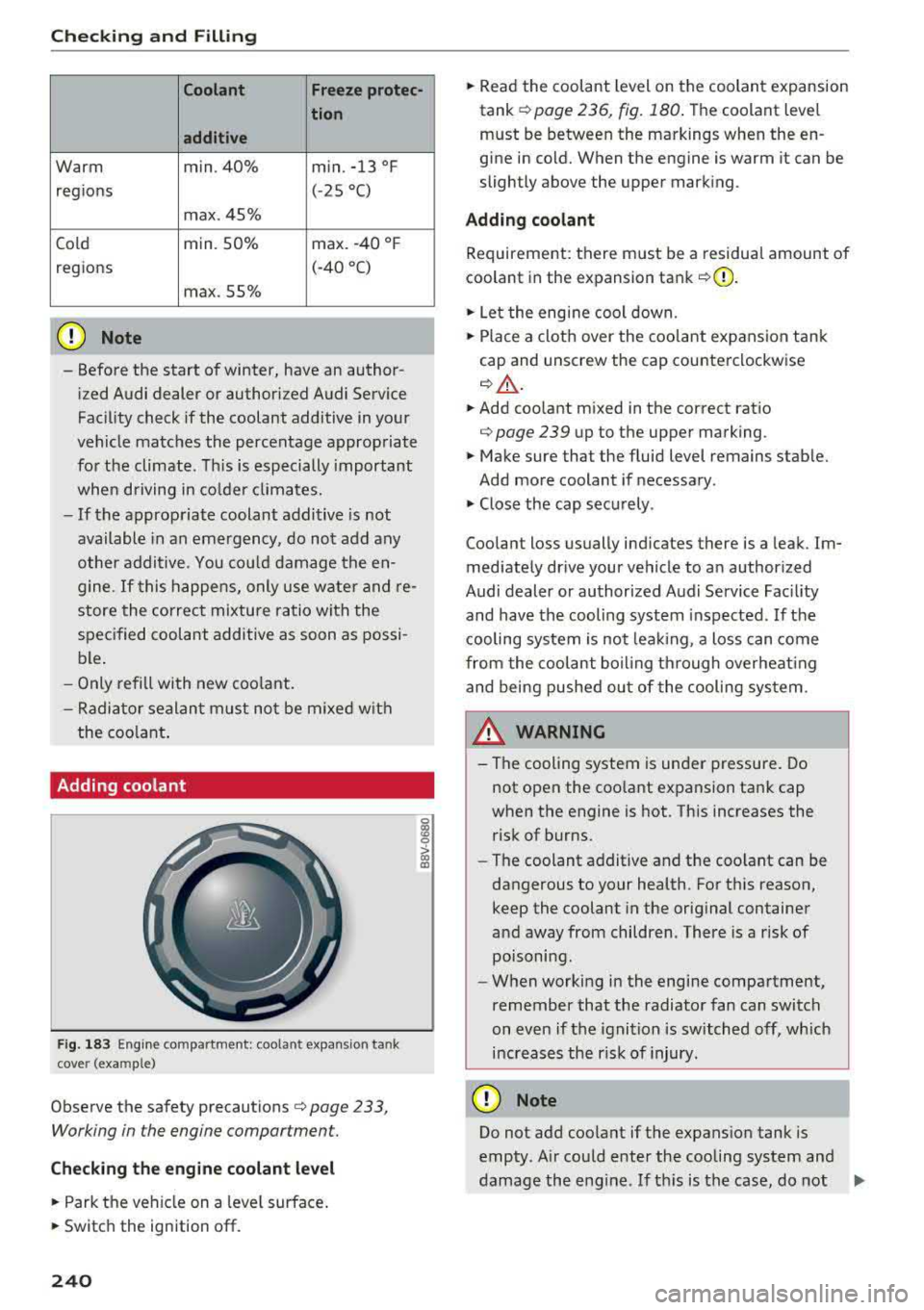
Fig . 183 Eng ine co mpartment : coo lant expans ion ta nk
cove r (exa mple)
Observe the safety precautions c:::> page 233 ,
Working in the engine compar tment.
Che cking the engin e coolant l evel
.. Park the vehicle on a level surface .
.. Switch the ignition off .
240
~ 0 > 00 ID
.. Read the coolant level on the coolant expansion
tank
c:::> page 236, fig. 180 . The coolant level
must be between the markings when the en
gine in cold. When the engine is warm it can be
slightly above the upper mark ing .
Adding coo lant
Requirement : there must be a residual amount of
coolant in the expansion tank
c:::> @ .
.. Let the engine cool down.
.. Place a clot h over the coolant expansion tank
cap and unscrew the cap counterclockwise
c:::> ,A .
.. Add coo lant mixed in the correct rat io
c:::> page 239 up to the upper marking .
.. Make sure that the fluid level remains stable.
Add more coolant if necessary .
.. Close the cap securely .
Coolant loss usually ind icates there is a leak. Im
mediate ly dr ive your vehicle to a n author ized
Audi dealer or author ized Audi Service Fac il ity
and have the cooling system inspected. If the
cooling system is not lea king , a loss can come
from the coolant boiling through overheat ing
and being pushed ou t of the cooling system .
Lil WARNING
- The cooling system is under pressure. Do
not open the coo lant expansion tank cap
when the engine is hot. This increases the risk of burns.
-The coolant additive and the coolant can be dangerous to your health. For this reason ,
keep the coolant in the original container
and away from children. There is a risk of
poisoning.
-When working in the engine compartment,
remember that the radiator fan can switch
on even if the ignition is switched
off, wh ich
increases the r is k of injury.
@ Note
Do not add coolant if the expans ion tank is
empty . A ir could enter the cooling system and
-
damage the eng ine . If this is the case, do not ..,.
Page 243 of 310
Cl co .... N ,....
N .... 0 ,....
Vl co
continue driving. See an authorized A udi deal
er or authorized Audi Service Facility for
assistance.
Brake fluid
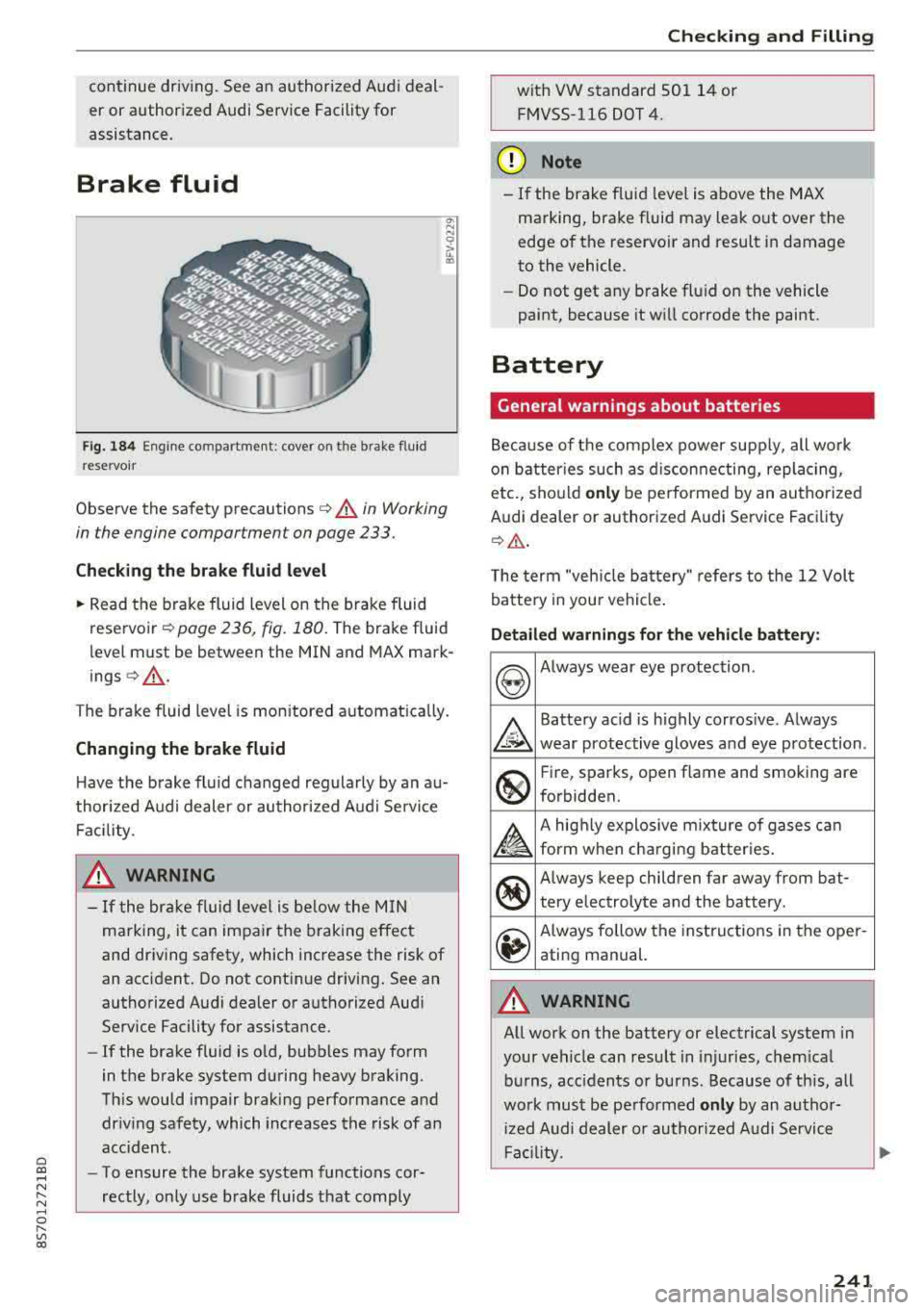
F ig . 18 4 Engine co mpar tment : cove r on the brake flu id
r eservo ir
Observe the safety precautions c:> .&. in Working
in the engine compar tmen t on page 233.
Checking th e brake f luid l ev el
.,. Read the brake fluid level on the brake fluid
reservoir
i:> page 236, fig. 180. The bra ke fluid
l ev el must be between the MI N and MAX mark
ings
c:> ,&. .
The brake flu id level is mon itored a utomat ica lly.
Changing the brake fluid
H ave the b rake flu id changed regularly by an a u
thor ized Audi dealer or au thor ized A udi Se rvice
F acility .
A WARNING
-If the br ake f luid level is be low the M IN
marking, it can impair the braking effect
and dr iv ing safety, which increase the risk of
an acc ident. Do not cont inue driving . See an
authorized Audi dealer or authorized Audi
Service Facility for assistance .
- If the brake f luid is o ld, bubbles may form
in the brake system du ring heavy braking.
Th is would impair brak ing performance and
dr iv ing safety, which increases the risk of an
acc ident.
- To ensure the brake system functions cor
rectly, only use brake fluids that comply
Chec king and Filling
wit h VW standard 501 14 or
FMVSS-116 DOT 4.
(D Note
- If the brake f lu id leve l is a bove the MA X
marking, bra ke f luid may leak o ut over the
edge of the reservo ir and result i n damage
to the vehicle.
- Do not get any b rake fl uid on the vehicle
paint, because it w ill corrode the paint .
Battery
General warnings about batteries
Bec au se of t he complex power sup ply, all wo rk
o n batter ies such as d iscon necti ng, replac ing,
etc., sho uld
onl y be performed by an au thorized
Audi dealer or authorized A udi Service Facility
c:> &_ .
The term "veh icle ba ttery" refe rs to the 12 Volt
battery in you r vehicle .
Detailed warnings for the vehicle battery :
~
Always wear eye protection .
&
Battery acid is highly corros ive . A lways
wear protective gloves a nd eye p rotection .
®
Fire, sparks , open flame and smok ing are
forbidden.
£
A hig hly explos ive m ix ture of gases ca n
for m when ch arging b att er ies.
®
Always keep children far away from bat-
tery electrolyte and the battery.
~
Always follow the instruct ions in the oper-
ating manual.
A WARNING ,.__ -All work on the battery or electrical system in
your vehicle can result in injuries, chem ica l
burns, acc idents or burns . Because of this, all
work must be pe rformed
only by an author
iz ed Audi dealer or authorized A udi Service
F ac ility.
..,.
241
Page 244 of 310
Checking and Filling
A WARNING
California Proposit ion 65 Warning:
- Battery posts, terminals and related acces sories contain lead and lead compounds, chemicals known to the State of California
to cause cancer and reproductive problems .
Wash hands after handling .
Q) Note
If the vehicle will be parked for long periods
of t ime, protect it against the cold so that it
w ill not be destroyed by "freezing"
~page 242 .
Vehicle battery
The term "vehicle battery " refers to the 12 Volt
battery in your vehicle .
Not running the vehicle for long p eriods of
t ime
If you do not drive your vehicle for several days or
weeks, electrical equipment is gradually scaled
back or switched off . This reduces energy use and
ensures the veh icle w il l be able to sta rt after long
pe riods of time
i:::> page 91. Some convenience
functions, such as interior light ing or power sea t
adjustment, may not be available under certain
circumstances . These convenience functions will
be avai lab le again once you switch the ignition on
and start the engine.
Even when electrical equipment is switched off ,
the equipment can still drain the vehicle battery if the vehicle is not driven for long periods of
time. Deep draining results in a chemical reaction
that destroys the inside of the vehicle battery.
The vehicle battery must be charged every month to reduce the risk of this happen ing
i:::> page 242.
Contact an author ized Audi dealer or authorized
Aud i Serv ice Facility for more information.
Winter operati on
Cold weather places higher demands on the vehi
cle battery . This results in reduced start ing abili
ty . Have the vehicle battery checked by an au
thori zed Audi dealer or authorized Audi Service
Facility before the co ld time of year.
242
Charging the vehicle battery
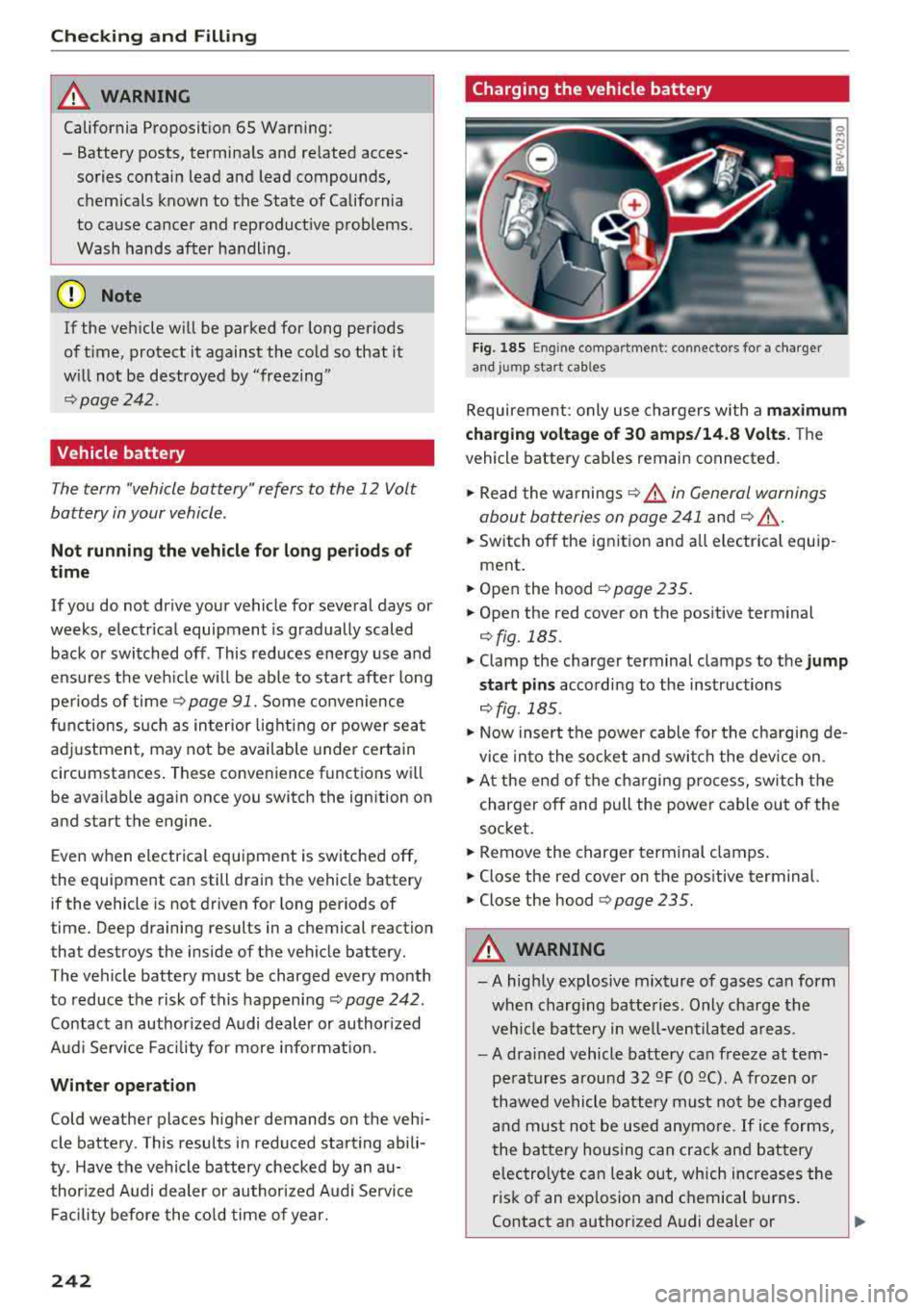
Fig. 18 5 En g in e compartmen t: co nn ectors fo r a cha rger
a n d jum p start cab les
Requireme nt: only use chargers with a maximum
charging volt age of 30 amp s/14.8 Volts.
The
vehicle battery cables remain connected.
... Read the wa rnings i:::> ,& in General warnings
about batteries on page 241
and i:::> ,& .
... Switch off the ignition and all electrica l equip
ment .
... Open the hood i:::> page 235 .
... Open the red cover on the positive terminal
¢fig. 185.
... Clamp the charger terminal clamps to the jump
s ta rt pins
according to the instructions
c::> fig . 185 .
... Now insert the power cable for the cha rging de
vice into the socket and switch the device on .
... At the end of the charging process, switch the
charger off and pull the power cable out of the
socket .
... Remove the charger terminal clamps.
... Close the red cover on the pos itive terminal.
... Close the hood i:::> page 235.
A WARNING
-A highly explosive m ixture of gases can form
when charg ing batteries . Only charge the
veh icle battery in well-ventilated areas.
-A drained vehicle battery can freeze at tem
peratures around 32
QF (0 QC) . A frozen or
thawed vehicle battery must not be charged
and must not be used anymore. If ice forms,
the battery housing can crack and battery
electrolyte can leak out, which increases the
risk of an explosion and c hemical burns .
Contact an authorized Audi dealer or
..,_
Page 245 of 310
Cl 00 .-< N r-N .-< 0 r-Vl 00
authorized Audi Service Facility for more in
formation.
- Do not connect or disconnect the charging
cable while charging because this increases
the risk of an exp losion.
(D Tips
- Only charge the vehicle battery through the
connections in the engine compartment.
- Read all of the manufacturer's instructions
for the charger before charging the vehicle
battery.
Windshield washer system
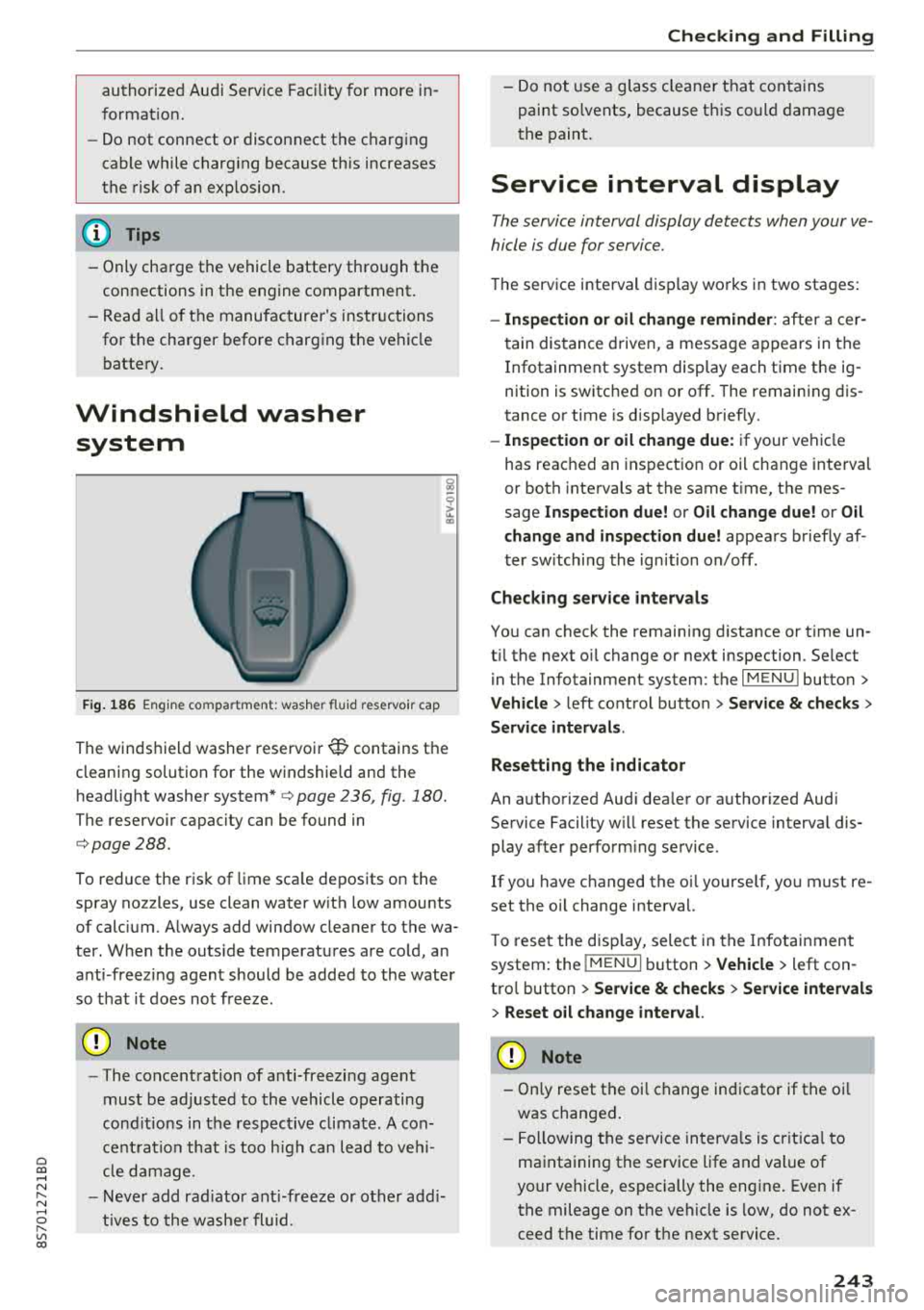
Fig. 186 Engine compa rtment: washer flu id reservo ir cap
The windshield washer reservoir W contains the
cleaning solution for the windshie ld and the
headlight washer
system* ¢ page 236, fig . 180.
The reservoir capacity can be found in
¢page 288.
To reduce the risk of lime sca le deposits on the
spray nozzles, use clean water with low amounts
of calc ium. A lways add window cleaner to the wa
ter. When the outs ide temperatures are cold, an
anti -freezing agent should be added to the water
so that it does not freeze.
@ Note
-The concentration of anti-freezing agent
must be adjusted to the vehicle operating
cond itions in the respective climate. A con
ce ntrat ion that is too high can lead to vehi
cl e damage.
- Never add radiator anti-freeze or other addi
tives to the washer fluid.
Checking and Filling
- Do not use a glass cleaner that contains
paint so lvents, because t his could damage
the paint.
Service interval display
The service interval display detects when your ve
hicle is due for service .
The service interval display works in two stages:
-Inspection or oil change reminder : after a cer-
tain distance driven, a message appears in the
In fotainment system display each time the ig
nition is switched on or off. The remaining dis
tance or time is disp layed briefly.
- Inspection or oil change due: if your vehicle
has reached an inspection or oil change interval
or both intervals at the same t ime, the mes
sage
Inspection due! or Oil change due! or Oil
change and inspection due!
appears briefly af
ter switching the ignition on/off .
Checking service intervals
You can check the remaining distance or time un
t il the next oil change or next inspection. Se lect
in the Infotainment system: the
I MENU I button>
Vehicle > left control button > Service & checks >
Service intervals .
Resetting the indicator
An authorized Audi dea ler or authorized Audi
Service Facility w ill reset the service interval dis
play after performing service.
If you have ch anged the oi l yourse lf, you must re
set the oil change interval.
T o reset the disp lay, select in the Infotainment
system: the
I MENUI button> Vehicle> left con
trol button >
Service & checks > Service intervals
> Reset oil change interval.
@ Note
-Only reset the oil change indicator if the oi l
was changed.
- Following the service intervals is crit ica l to
maintaining the service life and value of
your vehicle, especially the engi ne. Even if
the mileage on the vehicle is low, do not ex
ceed the time for the next service.
243
Page 266 of 310
Wheels
Displaying tire pressures/temperatures
Applies to: vehicles with tire pressure monitoring system
Requirement: you must be d rivi ng the veh icle .
"'Se lect in the Infotainment system: IMENU I but
ton
> Service & checks > Tire pre ssur e monitor
ing > Di splay tire pressure.
- Green:
the current tire pressure and the speci
fied t ire pressure are approximately the same .
-Yellow: the current tire pressure is too low
compared to the specified tire pressure .
The specified tire press ure is the last tire pres
sure that was stored
c> page 264.
Note that t he tire p ressure also de pends on the
temperature of the tire . The tire press ure in
creases as the engine becomes wa rmer whi le
driving.
A WARNING
Read and follow the important information
and notes
c> page 263.
(D Tips
The tire pressure or temperature is not d is
played while the veh icle is stationary and in
adaptation mode. Dashes --.--are shown in
place of the pressu re and temperature.
(D Tire pressure loss
Applies to: vehicles with tire pressure monitoring system
-
If the Rt] indicato r light turns on, the p ressure in
at least one t ire is too low o r new sensors we re
not adapted :
[I] indicator lights turns on after turning the
ignition on
The tire pressure is too low compared to the
specified p ressure.
"' Check and store the t ire pressure(s) the next
time it is poss ible
c> page 264 .
[I] indicator light turns on while dri ving
Wheels with new sensors were not adapted or
the t ire pressure has reached a critical leve l com
pared to the specified pressure .
264
"'Avoid unnecessary steering and brak ing maneu -
vers .
"'Adapt your dr iving sty le to the s ituation.
"' Stop as soon as possible and check the tire(s).
"'If it is possib le to continue driv ing, see an au-
thorized Audi dealer or authorized Aud i Service
Facility immediately and have your tire(s) re
pa ired o r rep laced .
A WARNING
Read and fo llow the impo rtant info rmation
and n otes
c>page 263.
Storing new tire pressures
Applies to: vehicles with tire pressure monitoring system
Correctly stored tire pressure specifications are
necessary for reliable tire pressure monitoring.
-
It is always necessary to store the t ire pressures
whe n the t ire pressu res a re modified, fo r exam
ple d ue to a change in load . o r when new senso rs
a re installed.
"' Before storing the t ire pressures, make su re the
tire pressures of all four t ires meet the spec i
fied va lues and are adapted to t he load
c::> page 254, fig. 190 . Only correct and store
the pressure in tires whose temperature is ap
proximate ly the same as the ambient tempera
t u re . If the temperature of the tire is higher
than the ambient air temperature, the tire pressure must be increased approximately
3.0 PSI (0.2 bar) above the value on the st icker.
"' Switch the ignit ion on .
"'Select in the Infotainment system : IMENU! but
ton
> Service & checks > Tire pressure monitor
ing > Store tire pre ssure > Ye s, store now .
Af
ter storing the t ire pressures, the t ire press ure
mon itor ing system measures the c urrent pres
sures while driving and stores them as the new
specified pressures .
"'If the changed tire pressures are not displayed
in the Infotainment system, drive the vehicle
for approximately 10 minutes so that the sen sor signa l from the wheels is received again .
During this adaptation phase, -- .- - is d isplayed
for the pressure and temperature and the tire pressure monitoring system is on ly partially
Page 279 of 310
Cl co .... N ,....
N ...... 0 ,....
Vl co
-To reduce the risk of injury, support the ve
hicle securely with suitab le stands if work is
to be performed underneath the vehicle.
- To help prevent injury to yourself and your
passengers:
- Do not ra ise the vehicle until you are sure
the jack is securely engaged .
- Passengers must not remain in the vehicle
when it is jacked up.
- Make sure that passengers wait in a safe
p lace away from the vehicle a nd well away
from the road and t raffic.
- Make sure jack posit ion is correct, adjust
as necessary and then cont inue to raise
the jack.
- If work has to be done under the v ehicle,
ensure that it is safely s upported on su ita
b le stands
-risk of inju ry!
- Never start the engine when the vehicle is
on the jac k
-risk of accident!
(D Note
Do not lift the vehicle by the sill . Position the
veh icle jack* only at the des ignated mounting
points on the side s il l. Otherwise, yo ur vehicle
w ill be damaged.
Removing and mounting a wheel
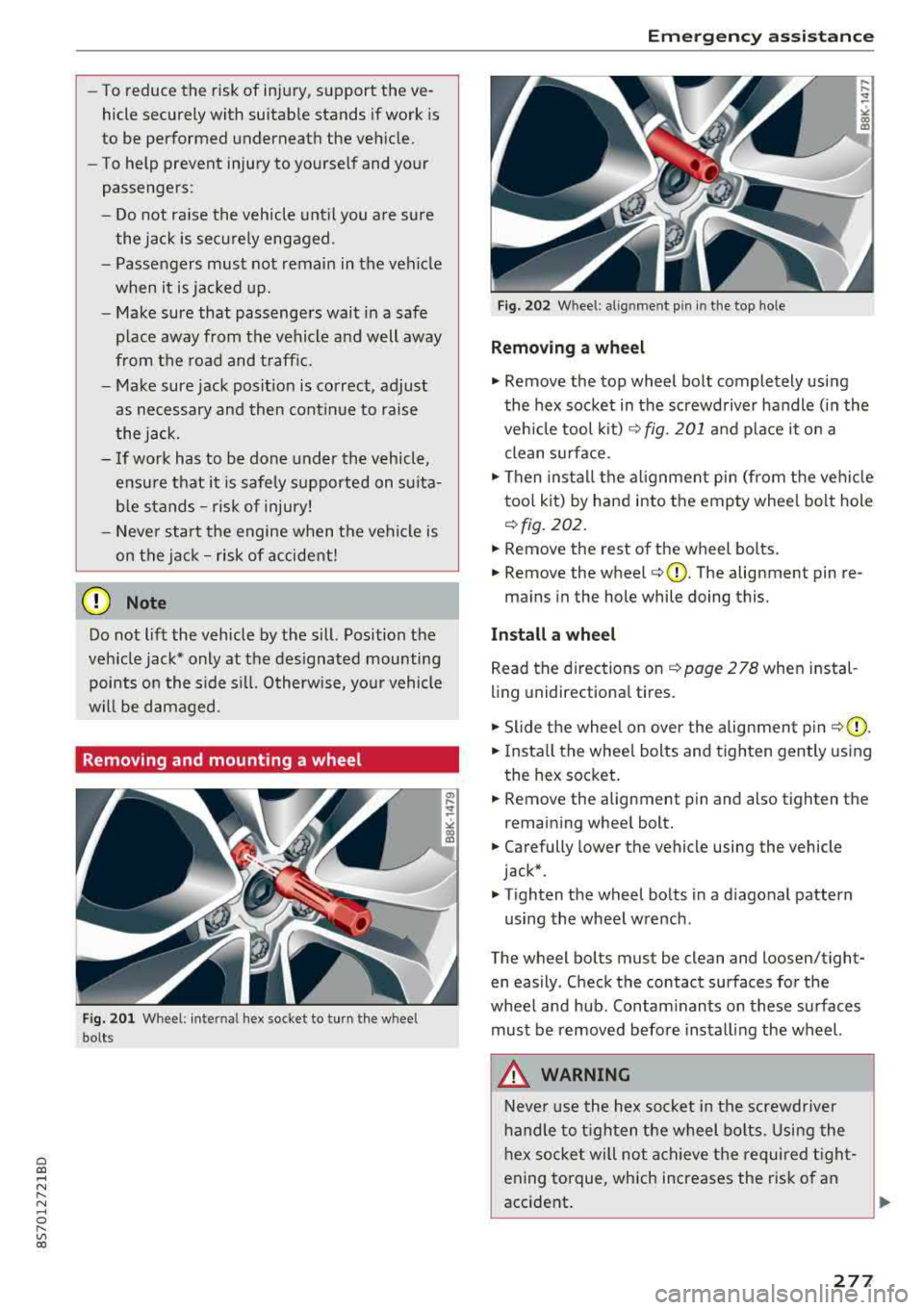
Fi g. 2 01 Wheel : internal hex socket to turn the wheel
bolts
Em ergen cy as sis tanc e
Fig. 202 Whee l: alignment pin in the top ho le
Removing a wheel
.,. Remove the top wheel bolt completely using
the hex socket in th e screwdriver handle (in the
ve hicle tool kit) ¢
fig. 201 and p lace it on a
clean s urface.
.,. Then insta ll the alignment pin (from the ve hicl e
too l kit) by hand into the empty wheel bolt hole
<=> fig . 202.
.,. Remove the rest of the wheel bo lts.
.,. Remove the wheel <=>CD. The alignment pin re-
mains in the hole while doing this.
Install a wheel
Read the directions on <=> page 2 78 when in stal
ling unidirectiona l tires.
.,. Slide the wheel on over the alignment pin ¢ (D .
.,. Insta ll the whee l bolts and tighten gently us ing
t he hex socket .
.,. Remove the alignment pin and also tighten the
remain ing whee l bolt .
.,. Carefully lower the vehicle using the vehicle
jack* .
.,. Tighten the wheel bolts in a d iagonal pattern
using the wheel wrench .
The wheel bolts must be clean and loosen/tight
en easily . Check the contact surfaces for the
whee l and hub. Contam inants on these su rfaces
must be removed before installing the wheel.
_&. WARNING
Neve r use the hex socke t in the screwd river
handle to t igh ten the wheel bo lts . Using the
h ex socket will not ac hieve the required t ight
ening torque, which increases the risk of an
accident .
..,.
277
Page 282 of 310
Fuses and bulbs
Fuses and bulbs
Electrical fuses
Replacing fuses
A fuse that has blown will have metal strips that
have burned through.
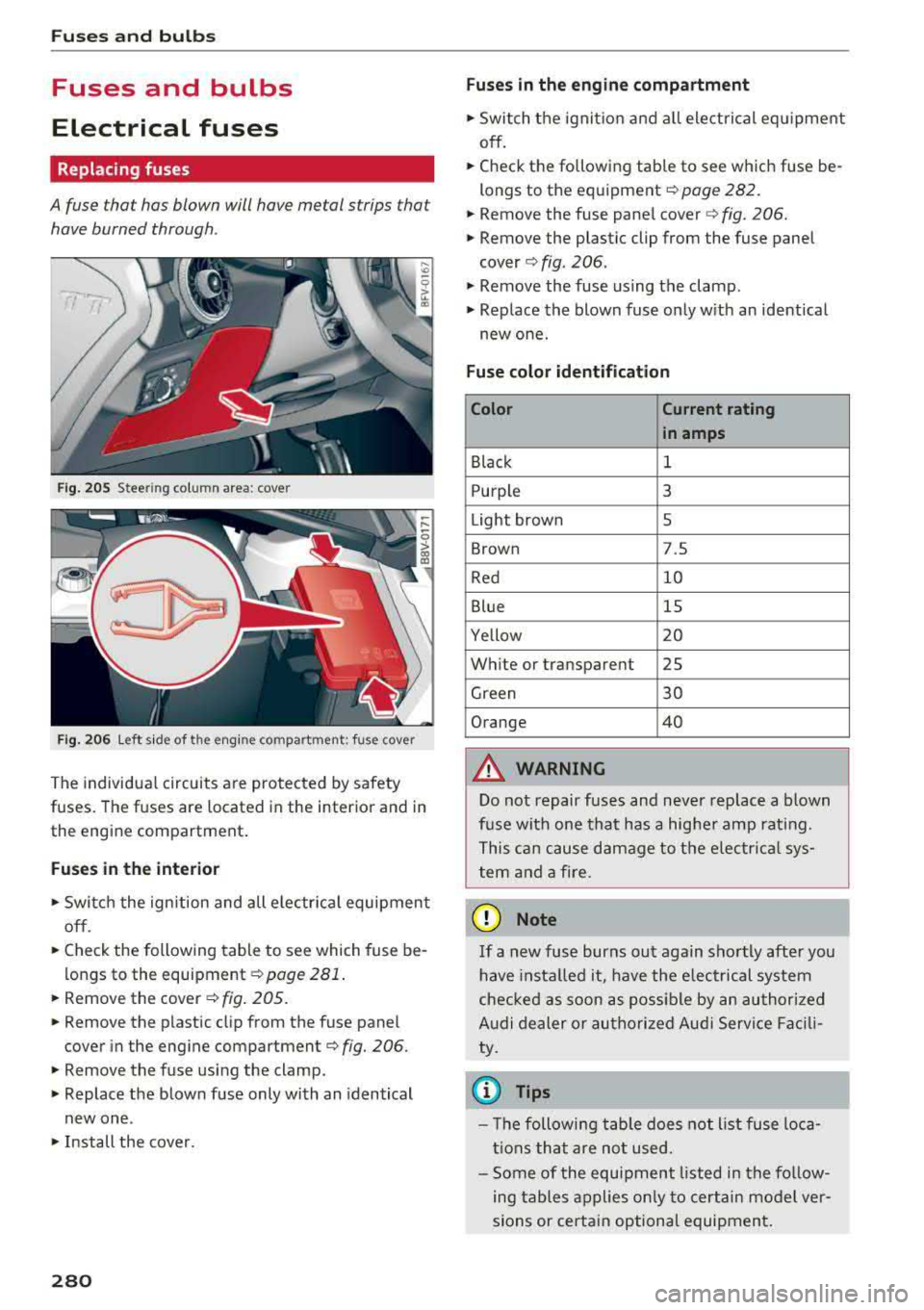
Fig. 20 5 Steering column area: cover
F ig. 20 6 Left side of the e ngine compartment: fuse cover
The individu al circuits are pro tec ted by safety
fuses. The fuses are located in the inter ior and in
the engine compartment .
Fuses in the interior
., Switch the ignition and all e lectr ica l equipment
off.
.. Check the following table to see which fuse be
l ongs to the
equipment ¢ page 281.
.. Remove the cover ¢ fig. 205.
.. Remove the plastic cl ip from the fuse panel
cover in the engine
compartment¢ fig. 206 .
.. Remove the fuse using the clamp.
., Replace the blow n fu se only with an identical
new one .
., Install the cover.
280
Fuses in the engine compartment
.. Switch the ignit io n and all electrical eq uipment
off .
.. Check the following table to see which fuse be
longs to th e eq uipment
¢page 282.
.. Remove the fuse pane l cover c> fig . 206.
.. Remove the plastic clip from the fuse panel
cover ¢ fig. 206 .
., Remove the fuse us ing the clamp .
.. Replace the blown fuse on ly w ith an ident ical
new one.
Fuse color identification
Color Current rating
in amps
Black 1
Purple 3
Light brown 5
Brown 7.S
Red
10
Blue 15
Yellow 20
Wh ite or transparent 25
Green 30
Orange 40
A WARNING
D o not repair fuses and neve r rep lace a blown
f u se with one tha t has a hig her amp rat ing.
T his ca n ca use damage to the e lectr ica l sys
tem and a fire .
(D Note
If a new fuse burns out again sho rtly after you
h ave insta lled it, have the e lectrical system
che cked as soon as possible by an au thori zed
A udi de aler or au tho riz ed Audi Service Fac ili
ty .
0) Tips
- Th e followi ng t able does not list fuse loca
t ions tha t are not used.
- Some of the e quipment listed in the fo llow
ing tables applies on ly to certain mo del ver
sions or certa in option al equipmen t.
Page 285 of 310
Cl 00 .-< N r--N .-< 0 r--Vl 00
Emergency situations
General
This chapter is intended for trained emergency
crews and working personnel who have the nec
essary tools and equipment to perform these
operations.
Starting by pushing or
towing
~ Note
Vehicles with an automatic transmission can
not be started by pushing or towing.
Starting with jumper
cables
If necessary, the engine can be started by con
necting it to the battery of another vehicle .
If the engine should fail to start because of a dis
charged or weak battery, the battery can be con
nected to the battery of
another vehicle, using a
pair of jumper cables to start the engine.
Jumper cables
Use only jumper cables of sufficiently large cross
section
to carry the starter current safely. Refer
to the manufacturer's specifications.
Use only jumper cables with
insulated terminal
clamps which are distinctly marked :
plus(+) cable in most cases colored red
minus(-) cable
in most cases colored black.
A WARNING -
Batteries contain electricity, acid, and gas.
Any of these can cause very serious or fatal in
jury. Follow the instructions below for safe
handling of your vehicle's battery .
-Always shield your eyes and avoid leaning
over the battery whenever possible.
-A dead battery can freeze at temperatures
around 32 °F (0 °C) . If the vehicle battery is
frozen, you must thaw it before connecting
the jump start cables. If you do not, this in-
Emergency situations
creases the risk of an explosion and chemi
cal burns. After jump starting the vehicle,
drive to an authorized Audi dealer or author ized Audi Service Facility immediately to
have the vehicle battery checked.
- Do not allow battery acid to contact eyes or
skin . Flush any contacted area with water
immediately.
- Improper use of a booster battery to start a
vehicle may cause an explosion .
- Vehicle batteries generate explosive gases .
Keep sparks, flame and lighted cigarettes
away from batteries.
- Do not try to jump start any vehicle with a
low acid level in the battery .
- The voltage of the booster battery must also
have a 12-Volt rating . The capacity (Ah) of
the booster battery should not be lower
than that of the discharged battery. Use of
batteries of different voltage or substantial
ly different "Ah " rating may cause an explo
sion and personal injury.
- Never charge a frozen battery. Gas trapped
in the ice may cause an explosion.
- Never charge or use a battery that has been
frozen. The battery case may have be weak
ened.
- Use of batteries of different voltage or sub
stantially different capacity (Ah) rating may
cause an explosion and injury. The capacity
(Ah) of the booster battery should not be
lower than that of the discharged battery.
- Before you check anything in the engine
compartment, always read and heed all
WARNINGS
c>page 233.
@ Note
- Applying a higher voltage booster battery
will cause expensive damage to sensitive
electronic components, such as control
units, relays, radio, etc.
- There must be no electrical contact between
the vehicles as otherwise current could al
ready start to flow as soon as the positive
( + ) terminals are connected.
283
Page 287 of 310
-When connecting jumper cables, make sure
that they cannot get ca ught in any mov ing
parts in the engine compartment.
- Do not bend over the batteries - danger of
chem ica l burns!
- The battery cell lock ing screws must be
t ightened sec ure ly.
- Be fore you check anything in the e ngine
compartment, a lways read and hee d all
WAR NINGS
q page 233 .
(D Note
Impro per hook -up of jum pe r cables can r uin
the gene rato r.
- Always connect POSITI VE (+ ) to POS ITIV E
( + ), and NEGATIVE( -) to NEGAT IVE( -)
g roun d post of t he battery mana ger contro l
u nit.
- Check that a ll sc rew p lugs on t he battery
cells are screwed in firmly. I f not, t ighten
plugs prior to connecting clamp on negative
batte ry terminal.
- Please note that the procedure fo r con nect
i ng a jumper cab le as desc ribed above ap
p lies specifica lly to the case of yo ur vehicle
being jump starte d. When you are giv ing a
ju mp s ta rt to anothe r vehicle, do
not con
n ect the neg ative (-) cab le to the neg ative
(-) t ermin al on the di sch arged b attery @
q fig. 210. In ste ad , securely connec t the
nega tive ( -) cab le to either a solid me tal
com ponent that is f irm ly bolted to the e n
gine block o r to the engine bloc k itself. If
the battery that is be ing cha rge d does not
vent to the outs ide, escap ing battery gas
could ignite and exp lode!
Towing with a tow truck
General hints
Your Audi requires special handling for towi ng .
The fo llow ing information is to be used by com
mercia l tow tr uck operators who know how to op-
a e rate the ir equip ment safe ly. co ....
~ - Never tow your Audi. Towing will cause dam-
"' 8 age to the engine and transmission . r--Vl co
Emergency situations
-Never wrap the safety chains or winch cables
around the brake lines .
- To prevent unnecessa ry damage , your Audi
must be transported with a flatbed truck.
- To load the vehicle on to the flatbed, use the
towing loop found in the vehicle tools and at
tach to the front or rear anchorage
¢ page 285 and ¢ page 286 .
A WARNING
-A veh icle being towed is not safe for passen-
ge rs. Neve r allow anyone to ride in a vehicle
b eing towed, fo r any r eason.
Front towing loop
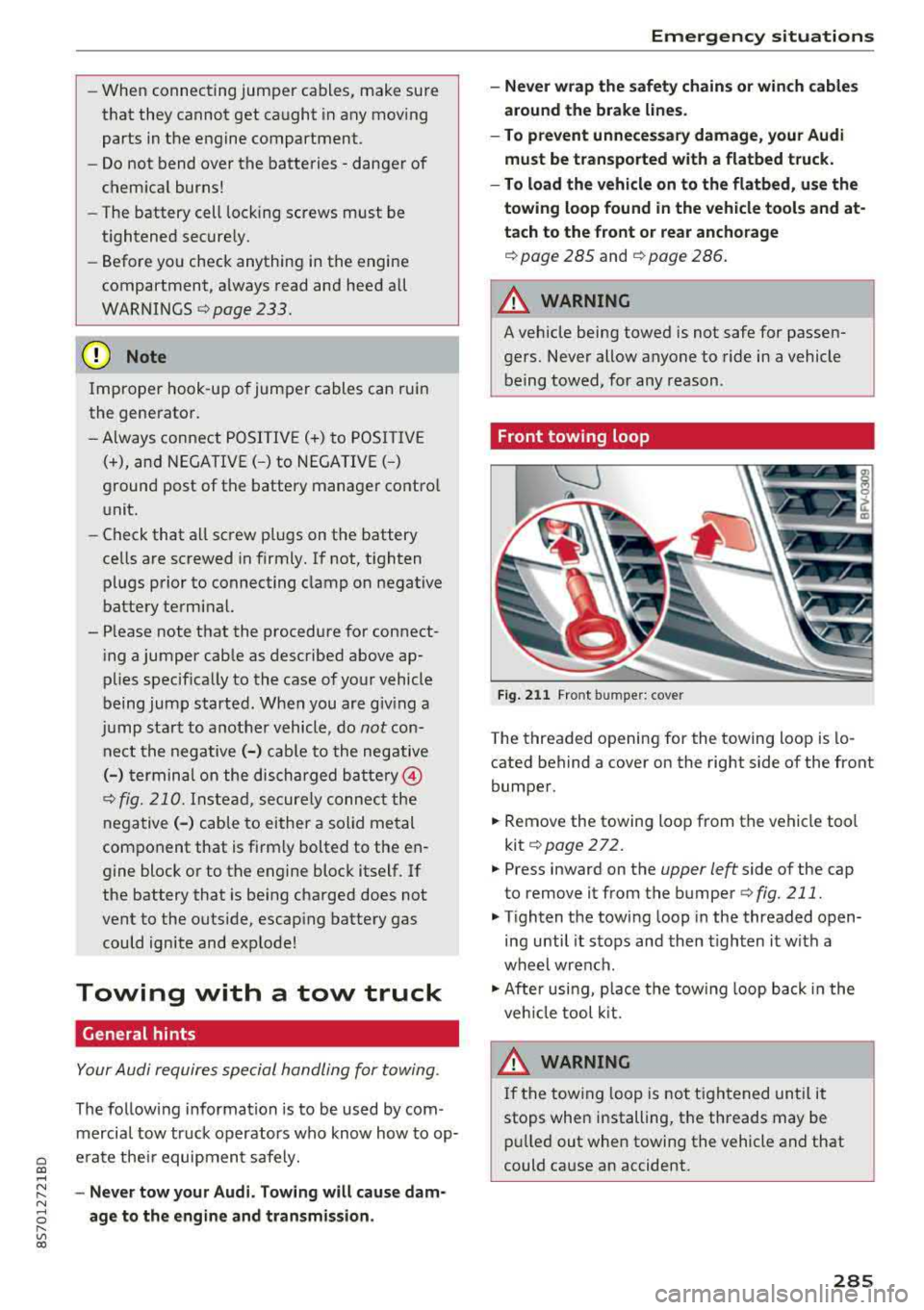
Fig. 2 11 Front bumper: cover
-
The threaded opening for the towing loop is lo
cated behind a cover on the right side of the front
bumper.
.,. Remove the towing loop from the vehicle too l
kit
¢ page 272.
.,. Press inward on the upper left side of the cap
to remove it from the bumper
¢fig. 211.
.,. Tighten the tow ing loop in the threaded open
ing until it sto ps and then tighten it w ith a
whe el wrench .
.,. After usi ng, p lace the tow ing loop b ack i n the
ve hicl e tool kit.
WARNING
If the towing loop is not ti ghtened until it
stops whe n installing, t he threads may be
pull ed out when towing the vehicle a nd that
could ca use an accident.
285