battery CADILLAC DTS 2010 1.G Owner's Manual
[x] Cancel search | Manufacturer: CADILLAC, Model Year: 2010, Model line: DTS, Model: CADILLAC DTS 2010 1.GPages: 480, PDF Size: 17.56 MB
Page 286 of 480

Radio Reception
Frequency interference and static can occur duringnormal radio reception if items such as cell phonechargers, vehicle convenience accessories, and externalelectronic devices are plugged into the accessorypower outlet. If there is interference or static, unplug theitem from the accessory power outlet.
AM
The range for most AM stations is greater than for FM,especially at night. The longer range can cause stationfrequencies to interfere with each other. For better radioreception, most AM radio stations boost the power levelsduring the day, and then reduce these levels during thenight. Static can also occur when things like storms andpower lines interfere with radio reception. When thishappens, try reducing the treble on the radio.
FM Stereo
FM signals only reach about 10 to 40 miles(16 to 65 km). Although the radio has a built-in electroniccircuit that automatically works to reduce interference,some static can occur, especially around tall buildings orhills, causing the sound to fade in and out.
XM™ Satellite Radio Service
XM Satellite Radio Service gives digital radio receptionfrom coast-to-coast in the 48 contiguous United States,and in Canada. Just as with FM, tall buildings or hills caninterfere with satellite radio signals, causing the sound tofade in and out. In addition, traveling or standing underheavy foliage, bridges, garages, or tunnels may causeloss of the XM signal for a period of time.
Cellular Phone Usage
Cellular phone usage may cause interference with thevehicle’s radio. This interference may occur whenmaking or receiving phone calls, charging the phone’sbattery, or simply having the phone on. This interferencecauses an increased level of static while listening tothe radio. If static is received while listening to the radio,unplug the cellular phone and turn it off.
4-120
Page 305 of 480

Repeat this until help arrives but only when you feelreally uncomfortable from the cold. Moving aboutto keep warm also helps.
If it takes some time for help to arrive, now and thenwhen you run the engine, push the acceleratorpedal slightly so the engine runs faster than the idlespeed. This keeps the battery charged to restartthe vehicle and to signal for help with the headlamps.Do this as little as possible to save fuel.
If Your Vehicle is Stuck in Sand,
Mud, Ice, or Snow
Slowly and cautiously spin the wheels to free thevehicle when stuck in sand, mud, ice, or snow. SeeRocking Your Vehicle to Get It Out on page 5-17.
If the vehicle has a traction system, it can often help tofree a stuck vehicle. Refer to the vehicle’s tractionsystem in the Index. If stuck too severely for the tractionsystem to free the vehicle, turn the traction system offand use the rocking method.
{WARNING:
If the vehicle’s tires spin at high speed, they can
explode, and you or others could be injured.
The vehicle can overheat, causing an engine
compartment fire or other damage. Spin the
wheels as little as possible and avoid going above
55 km/h (35 mph) as shown on the speedometer.
For information about using tire chains on the vehicle,seeTire Chains on page 6-70.
Rocking Your Vehicle to Get It Out
Turn the steering wheel left and right to clear the areaaround the front wheels. Turn off any traction or stabilitysystem. Shift back and forth between R (Reverse) and aforward gear, spinning the wheels as little as possible.To prevent transmission wear, wait until the wheels stopspinning before shifting gears. Release the acceleratorpedal while shifting, and press lightly on the acceleratorpedal when the transmission is in gear. Slowly spinningthe wheels in the forward and reverse directions causes arocking motion that could free the vehicle. If that does notget the vehicle out after a few tries, it might need to betowed out. If the vehicle does need to be towed out, seeTowing Your Vehicle on page 5-24.
5-17
Page 321 of 480

Service. . . . . . . . . . . . . . . . . . . . . . . . . . . . . . . . . . . . . . . . . . . . . . . . . . . . . . . . . . . .6-3Accessories and Modifications . . . . . . . . . . . . . . . . . . . . . . . . . .6-3California Proposition 65 Warning . . . . . . . . . . . . . . . . . . . . .6-4California Perchlorate Materials Requirements . . . . .6-4Doing Your Own Service Work . . . . . . . . . . . . . . . . . . . . . . . . .6-4Adding Equipment to the Outsideof the Vehicle . . . . . . . . . . . . . . . . . . . . . . . . . . . . . . . . . . . . . . . . . . . . .6-5
Fuel. . . . . . . . . . . . . . . . . . . . . . . . . . . . . . . . . . . . . . . . . . . . . . . . . . . . . . . . . . . . . . . .6-5Gasoline Octane . . . . . . . . . . . . . . . . . . . . . . . . . . . . . . . . . . . . . . . . . . . .6-5Gasoline Specifications . . . . . . . . . . . . . . . . . . . . . . . . . . . . . . . . . . . .6-6California Fuel . . . . . . . . . . . . . . . . . . . . . . . . . . . . . . . . . . . . . . . . . . . . . . .6-6Additives . . . . . . . . . . . . . . . . . . . . . . . . . . . . . . . . . . . . . . . . . . . . . . . . . . . . . . .6-6Fuels in Foreign Countries . . . . . . . . . . . . . . . . . . . . . . . . . . . . . . .6-7Filling the Tank . . . . . . . . . . . . . . . . . . . . . . . . . . . . . . . . . . . . . . . . . . . . . .6-8Filling a Portable Fuel Container . . . . . . . . . . . . . . . . . . . . .6-10
Checking Things Under the Hood. . . . . . . . . . . . . . . . . . . .6-10Hood Release . . . . . . . . . . . . . . . . . . . . . . . . . . . . . . . . . . . . . . . . . . . . . .6-11Engine Compartment Overview . . . . . . . . . . . . . . . . . . . . . . .6-12Engine Oil . . . . . . . . . . . . . . . . . . . . . . . . . . . . . . . . . . . . . . . . . . . . . . . . . . .6-13Engine Oil Life System . . . . . . . . . . . . . . . . . . . . . . . . . . . . . . . . . .6-16Engine Air Cleaner/Filter . . . . . . . . . . . . . . . . . . . . . . . . . . . . . . . .6-17Automatic Transmission Fluid . . . . . . . . . . . . . . . . . . . . . . . . .6-19Cooling System . . . . . . . . . . . . . . . . . . . . . . . . . . . . . . . . . . . . . . . . . . . .6-22Engine Coolant . . . . . . . . . . . . . . . . . . . . . . . . . . . . . . . . . . . . . . . . . . . . .6-23Engine Overheating . . . . . . . . . . . . . . . . . . . . . . . . . . . . . . . . . . . . . . .6-27
Overheated Engine ProtectionOperating Mode . . . . . . . . . . . . . . . . . . . . . . . . . . . . . . . . . . . . . . . .6-29Power Steering Fluid . . . . . . . . . . . . . . . . . . . . . . . . . . . . . . . . . . . . .6-30Windshield Washer Fluid . . . . . . . . . . . . . . . . . . . . . . . . . . . . . . . .6-31Brakes . . . . . . . . . . . . . . . . . . . . . . . . . . . . . . . . . . . . . . . . . . . . . . . . . . . . . . . .6-32Battery . . . . . . . . . . . . . . . . . . . . . . . . . . . . . . . . . . . . . . . . . . . . . . . . . . . . . . . .6-34Jump Starting . . . . . . . . . . . . . . . . . . . . . . . . . . . . . . . . . . . . . . . . . . . . . . .6-36
Headlamp Aiming. . . . . . . . . . . . . . . . . . . . . . . . . . . . . . . . . . . . . . . . . . .6-40
Bulb Replacement. . . . . . . . . . . . . . . . . . . . . . . . . . . . . . . . . . . . . . . . . .6-43High Intensity Discharge (HID) Lighting . . . . . . . . . . . .6-43
Windshield Wiper Blade Replacement. . . . . . . . . . . . . .6-44
Tires. . . . . . . . . . . . . . . . . . . . . . . . . . . . . . . . . . . . . . . . . . . . . . . . . . . . . . . . . . . . . .6-46Tire Sidewall Labeling . . . . . . . . . . . . . . . . . . . . . . . . . . . . . . . . . . .6-47Tire Terminology and Definitions . . . . . . . . . . . . . . . . . . . . .6-52Inflation - Tire Pressure . . . . . . . . . . . . . . . . . . . . . . . . . . . . . . . . .6-54High-Speed Operation . . . . . . . . . . . . . . . . . . . . . . . . . . . . . . . . . . .6-56Tire Pressure Monitor System . . . . . . . . . . . . . . . . . . . . . . . . .6-57Tire Pressure Monitor Operation . . . . . . . . . . . . . . . . . . . . .6-58Tire Inspection and Rotation . . . . . . . . . . . . . . . . . . . . . . . . . . .6-62When It Is Time for New Tires . . . . . . . . . . . . . . . . . . . . . . .6-64Buying New Tires . . . . . . . . . . . . . . . . . . . . . . . . . . . . . . . . . . . . . . . . .6-64Different Size Tires and Wheels . . . . . . . . . . . . . . . . . . . . . .6-66Uniform Tire Quality Grading . . . . . . . . . . . . . . . . . . . . . . . . . .6-67Wheel Alignment and Tire Balance . . . . . . . . . . . . . . . . . .6-68Wheel Replacement . . . . . . . . . . . . . . . . . . . . . . . . . . . . . . . . . . . . . .6-68
Section 6 Service and Appearance Care
6-1
Page 354 of 480

Properly torqued wheel nuts are necessary to helpprevent brake pulsation. When tires are rotated, inspectbrake pads for wear and evenly tighten wheel nuts inthe proper sequence to torque specifications inCapacities and Specifications on page 6-109.
Brake linings should always be replaced as completeaxle sets.
Brake Pedal Travel
See your dealer/retailer if the brake pedal does notreturn to normal height, or if there is a rapid increase inpedal travel. This could be a sign that brake servicemight be required.
Brake Adjustment
Every time the brakes are applied, with or without thevehicle moving, the brakes adjust for wear.
Replacing Brake System Parts
The braking system on a vehicle is complex. Its manyparts have to be of top quality and work well together ifthe vehicle is to have really good braking. The vehiclewas designed and tested with top-quality brake parts.When parts of the braking system are replaced — forexample, when the brake linings wear down and newones are installed — be sure to get new approvedreplacement parts. If this is not done, the brakes mightnot work properly.
For example, if someone puts in brake linings that arewrong for the vehicle, the balance between the front andrear brakes can change — for the worse. The brakingperformance expected can change in many other ways ifthe wrong replacement brake parts are installed.
Battery
Refer to the replacement number on the original batterylabel when a new battery is needed.
{DANGER:
Battery posts, terminals, and related accessories
contain lead and lead compounds, chemicals
known to the State of California to cause cancer
and reproductive harm. Wash hands after
handling.
The battery is under the rear seat cushion. To accessthe battery, seeRear Underseat Fuse Block onpage 6-104. Access to the battery is not necessary tojump start the vehicle. SeeJump Starting on page 6-36.
6-34
Page 355 of 480
{WARNING:
A battery that is not properly vented can let
sulfuric acid fumes into the area under the rear
seat cushion. These fumes can damage the rear
seat safety belt systems. You might not be able to
see this damage and the safety belts might not
provide the protection needed in a crash. If a
replacement battery is ever needed, it must be
vented in the same manner as the original battery.
Always make sure that the vent hose is properly
reattached before reinstalling the seat cushion.
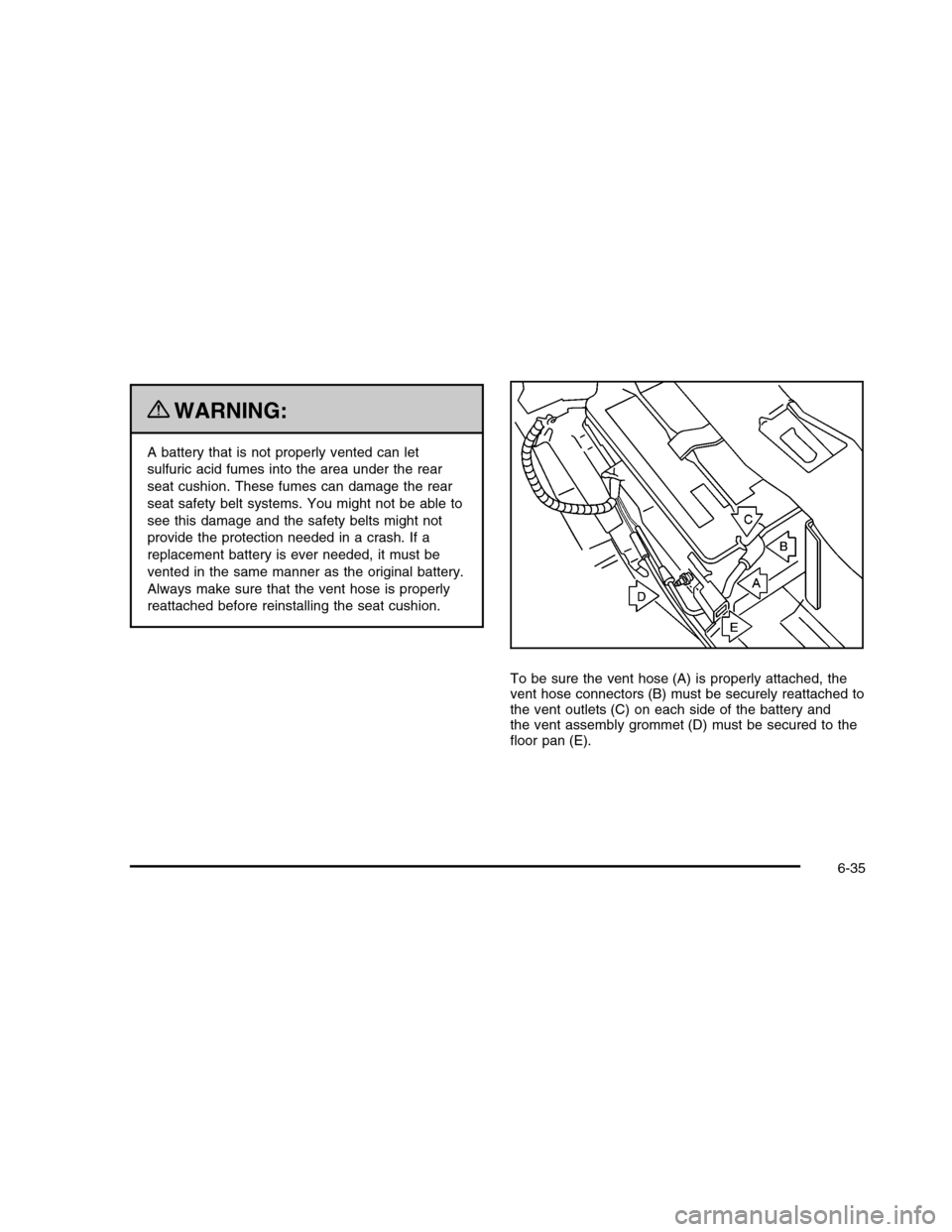
To be sure the vent hose (A) is properly attached, thevent hose connectors (B) must be securely reattached tothe vent outlets (C) on each side of the battery andthe vent assembly grommet (D) must be secured to thefloor pan (E).
6-35
Page 356 of 480

Vehicle Storage
{WARNING:
Batteries have acid that can burn you and gas that
can explode. You can be badly hurt if you are not
careful. SeeJump Starting on page 6-36for tips
on working around a battery without getting hurt.
Infrequent Usage: Remove the black, negative (!) cablefrom the battery to keep the battery from running down.
Extended Storage: Remove the black, negative (!) cablefrom the battery or use a battery trickle charger.
Jump Starting
If the vehicle’s battery has run down, you may want touse another vehicle and some jumper cables to startyour vehicle. Be sure to use the following steps to doit safely.
{WARNING:
Batteries can hurt you. They can be dangerous
because:
•They contain acid that can burn you.
•They contain gas that can explode or ignite.
•They contain enough electricity to burn you.
If you do not follow these steps exactly, some orall of these things can hurt you.
Notice:Ignoring these steps could result in costlydamage to the vehicle that would not be coveredby the warranty.
Trying to start the vehicle by pushing or pulling itwill not work, and it could damage the vehicle.
1. Check the other vehicle. It must have a 12-voltbattery with a negative ground system.
Notice:If the other vehicle’s system is not a 12-voltsystem with a negative ground, both vehicles canbe damaged. Only use vehicles with 12-volt systemswith negative grounds to jump start your vehicle.
6-36
Page 358 of 480

You will not see the battery of your vehicle underthe hood. It is located under the rear passenger’sseat. You will not need to access the batteryfor jump starting. The remote terminals are forthat purpose.
{WARNING:
An electric fan can start up even when the engine
is not running and can injure you. Keep hands,
clothing and tools away from any underhood
electric fan.
{WARNING:
Using a match near a battery can cause battery
gas to explode. People have been hurt doing this,
and some have been blinded. Use a flashlight if
you need more light.
Be sure the battery has enough water. You do not
need to add water to the battery installed in your
new vehicle. But if a battery has filler caps, be
sure the right amount of fluid is there. If it is low,
add water to take care of that first. If you do not,
explosive gas could be present.
Battery fluid contains acid that can burn you. Do
not get it on you. If you accidentally get it in your
eyes or on your skin, flush the place with water
and get medical help immediately.
6-38
Page 359 of 480

{WARNING:
Fans or other moving engine parts can injure you
badly. Keep your hands away from moving parts
once the engine is running.
5. Check that the jumper cables do not have loose ormissing insulation. If they do, you could get ashock. The vehicles could be damaged too.
Before you connect the cables, here are somebasic things you should know. Positive (+) will go topositive (+) or to a remote positive (+) terminal ifthe vehicle has one. Negative (!) will go to a heavy,unpainted metal engine part or to a remotenegative (!) terminal if the vehicle has one.
Do not connect positive (+) to negative (!) or youwill get a short that would damage the batteryand maybe other parts too. And do not connect thenegative (!) cable to the negative (!) terminal onthe dead battery because this can cause sparks.
6. Connect the red positive (+) cable to the remotepositive (+) terminal location on the vehicle withthe dead battery. Use a remote positive (+) terminalif the vehicle has one.
7. Do not let the other end touch metal. Connect it tothe positive (+) terminal location of the vehicle withthe good battery. Use a remote positive (+)terminal if the vehicle has one.
8. Now connect the black negative (!) cable to thenegative (!) terminal location of the vehicle withthe good battery. Use a remote negative (!) terminalif the vehicle has one.
Do not let the other end of the cable touch anythinguntil the next step. The other end of the negative (!)cable does not go to the dead battery. It goes toa heavy, unpainted metal engine part or to a remotenegative (!) terminal on the vehicle with thedead battery.
9. Connect the other end of the negative (!) cable tothe negative (!) terminal location on the vehicle withthe dead battery. Your vehicle has a remotenegative (!) terminal marked GND (!).
10. Now start the vehicle with the good battery and runthe engine for a while.
11. Try to start the vehicle that had the dead battery.If it will not start after a few tries, it probablyneeds service.
6-39
Page 360 of 480

Notice:If the jumper cables are connected orremoved in the wrong order, electrical shorting mayoccur and damage the vehicle. The repairs wouldnot be covered by the vehicle warranty. Alwaysconnect and remove the jumper cables in the correctorder, making sure that the cables do not toucheach other or other metal.
A. Heavy, Unpainted Metal Engine Part or RemoteNegative (!) Terminal (GND)
B. Good Battery or Remote Positive (+) and RemoteNegative (!) Terminals
C. Dead Battery or Remote Positive (+) Terminal
To disconnect the jumper cables from both vehicles, dothe following:
1. Disconnect the black negative (!) cable from thevehicle that had the dead battery.
2. Disconnect the black negative (!) cable from thevehicle with the good battery.
3. Disconnect the red positive (+) cable from thevehicle with the good battery.
4. Disconnect the red positive (+) cable from the othervehicle.
5. Return the remote positive (+) terminal cover to itsoriginal position.
Headlamp Aiming
The vehicle has a visual optical headlamp aimingsystem. The aim has been preset at the factory andshould need no further adjustment.
However, if the vehicle is damaged in a crash, theheadlamp aim may be affected and adjustment may benecessary.
If oncoming vehicles flash their high beams at you, thismay also mean the vertical aim needs to be adjusted.
Jumper Cable Removal
6-40
Page 420 of 480

Service Parts Identification Label
This label, on the spare tire cover, has the followinginformation:
•Vehicle Identification Number (VIN)
•Model designation
•Paint information
•Production options and special equipment
Do not remove this label from the vehicle.
Electrical System
Add-On Electrical Equipment
Notice:Do not add anything electrical to thevehicle unless you check with your dealer/retailerfirst. Some electrical equipment can damagethe vehicle and the damage would not be coveredby the vehicle’s warranty. Some add-on electricalequipment can keep other components fromworking as they should.
Add-on equipment can drain the vehicle battery, even ifthe vehicle is not operating.
The vehicle has an airbag system. Before attempting toadd anything electrical to the vehicle, seeServicingYour Airbag-Equipped Vehicle on page 2-72andAddingEquipment to Your Airbag-Equipped Vehicle onpage 2-73.
Headlamp Wiring
The headlamp wiring system has four individual fuses.An electrical overload will cause the lamps to go onand off, or in some cases to remain off. If this happens,have the headlamp wiring checked right away.
Windshield Wiper Fuses
The windshield wiper motor is protected by an internalcircuit breaker. If the wiper motor overheats due toheavy snow, the wipers will stop until the motor coolsand will then restart.
A fuse powers the wiper motor. If the fuse blows, thereis an electrical problem. Be sure to have it fixed.
6-100