CADILLAC FLEETWOOD 1994 Owner's Manual
FLEETWOOD 1994
CADILLAC
CADILLAC
https://www.carmanualsonline.info/img/23/57706/w960_57706-0.png
CADILLAC FLEETWOOD 1994 Owner's Manual
Page 52 of 398
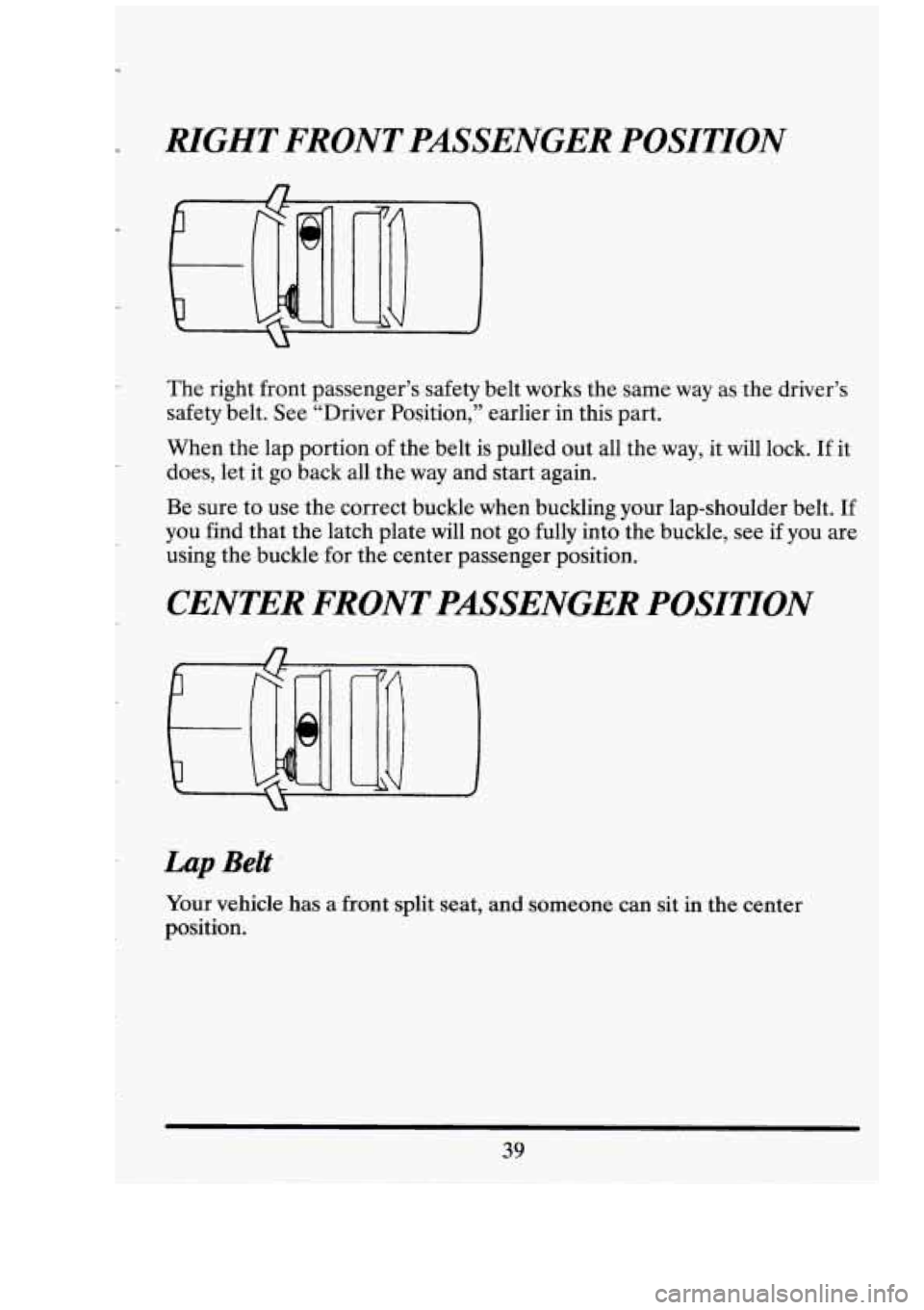
RIGHT FRONT PASSENGER POSITION
The right front passenger’s safety belt works the same way as the driver’s
safety belt. See “Driver Position,” earlier in this part.
When the lap portion of the belt is pulled out all the way, it
will lock. If it
does, let it go back all the way and start -again.
Be sure to use the correct buckle when buckling your lap-shoulder belt. If
you find that the latch plate will not go fully into the buckle, see if you are
using the buckle for the center passenger position.
CENTER- FRONT PASSENGER POSITION
Lap Belt
Your vehicle has a- front split seat, and someone can sit -in the center
position.
Page 53 of 398
I
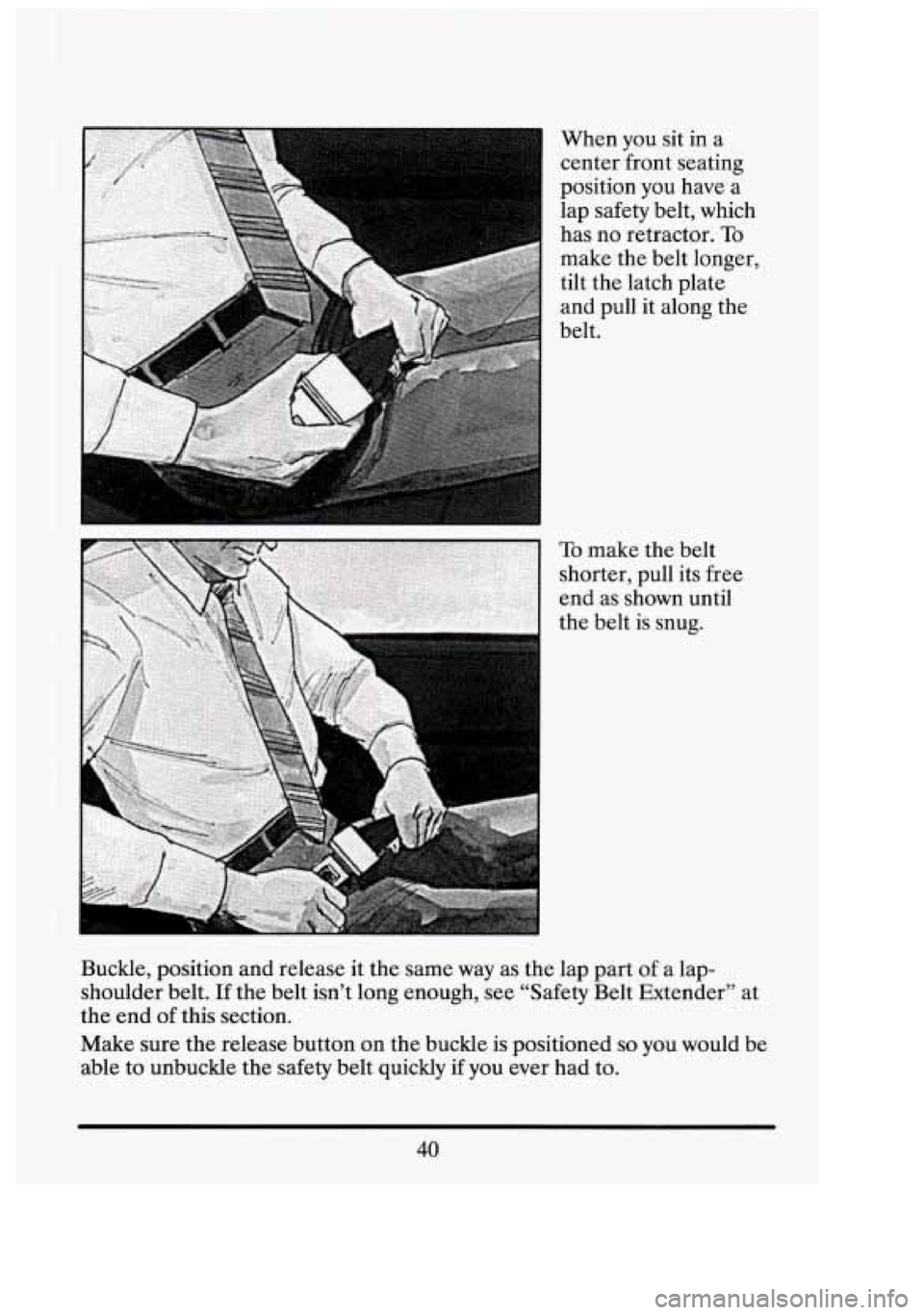
When you sit in a
center front seating
position
you have a
lap safety belt, which
has no retractor.
To
make the belt longer.
tilt the latch plate
and pull it along the
belt.
To make the belt
shorter, pull its free
end as shown until
the belt is snug.
Buckle, position and release it the same way as the lap part of a lap-
shoulder belt.
If the belt isn’t long enough, see “Safety Belt Extender” at
the end
of this section.
Make sure the release button on the buckle is positioned
so you would be
able to unbuckle the safety belt quickly
if you ever had to.
3‘ I I
-I
I
I
I .4
40
Page 54 of 398
Lap Belt
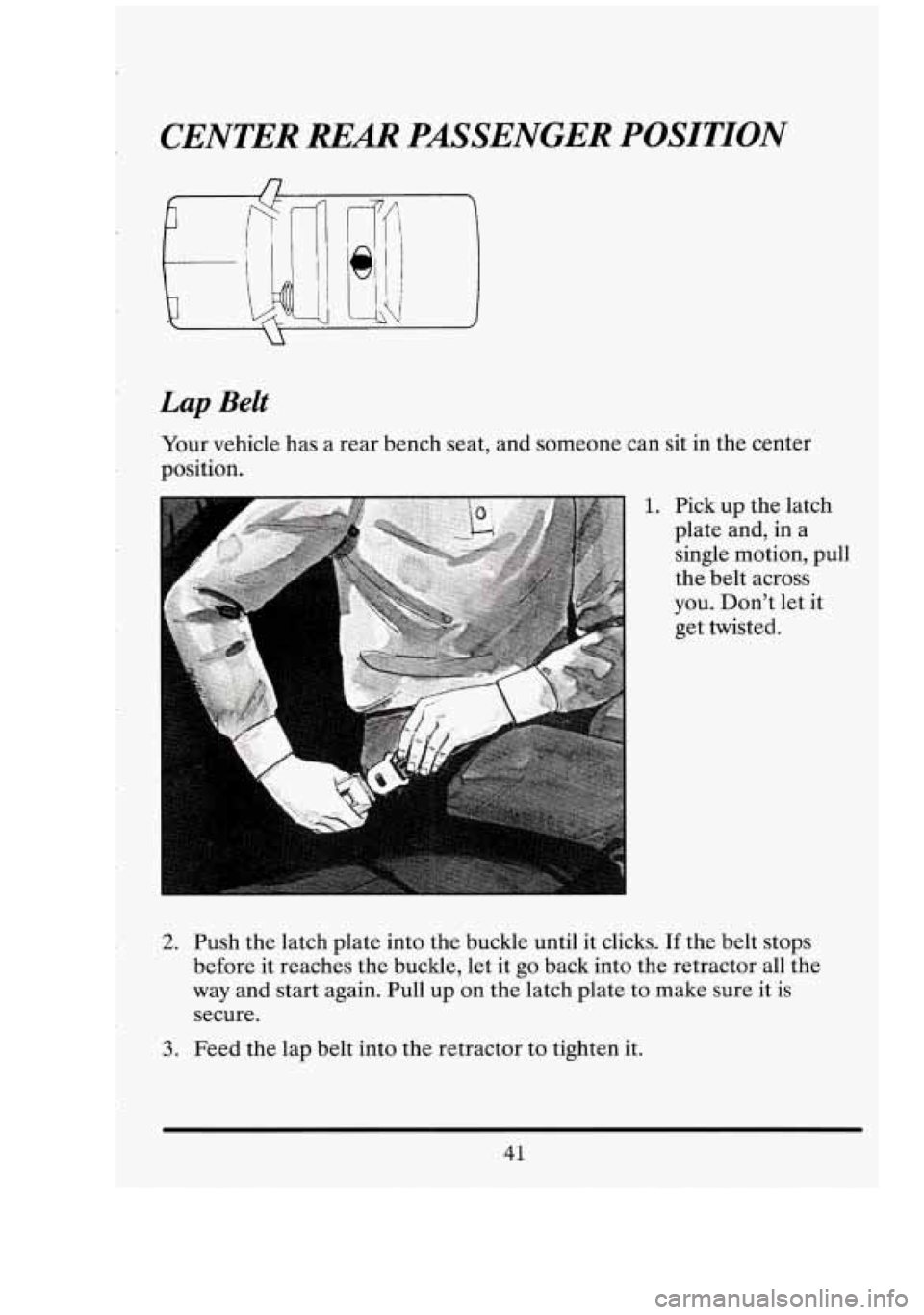
Your vehicle has a rear bench seat, and someone can sit in the center
position.
1. Pick up the latch
plate and, in a
single motion, pull
the belt across
you. Don't let it
get twisted.
2. Push the latch plate into the buckle until it clicks. If the belt stops
before it reaches the buckle, let it go back into the retractor all the
way and start again. Pull up on the latch plate to make sure it is
secure.
3. Feed the lap belt into the retractor to tighten it.
41
Page 55 of 398
r ..
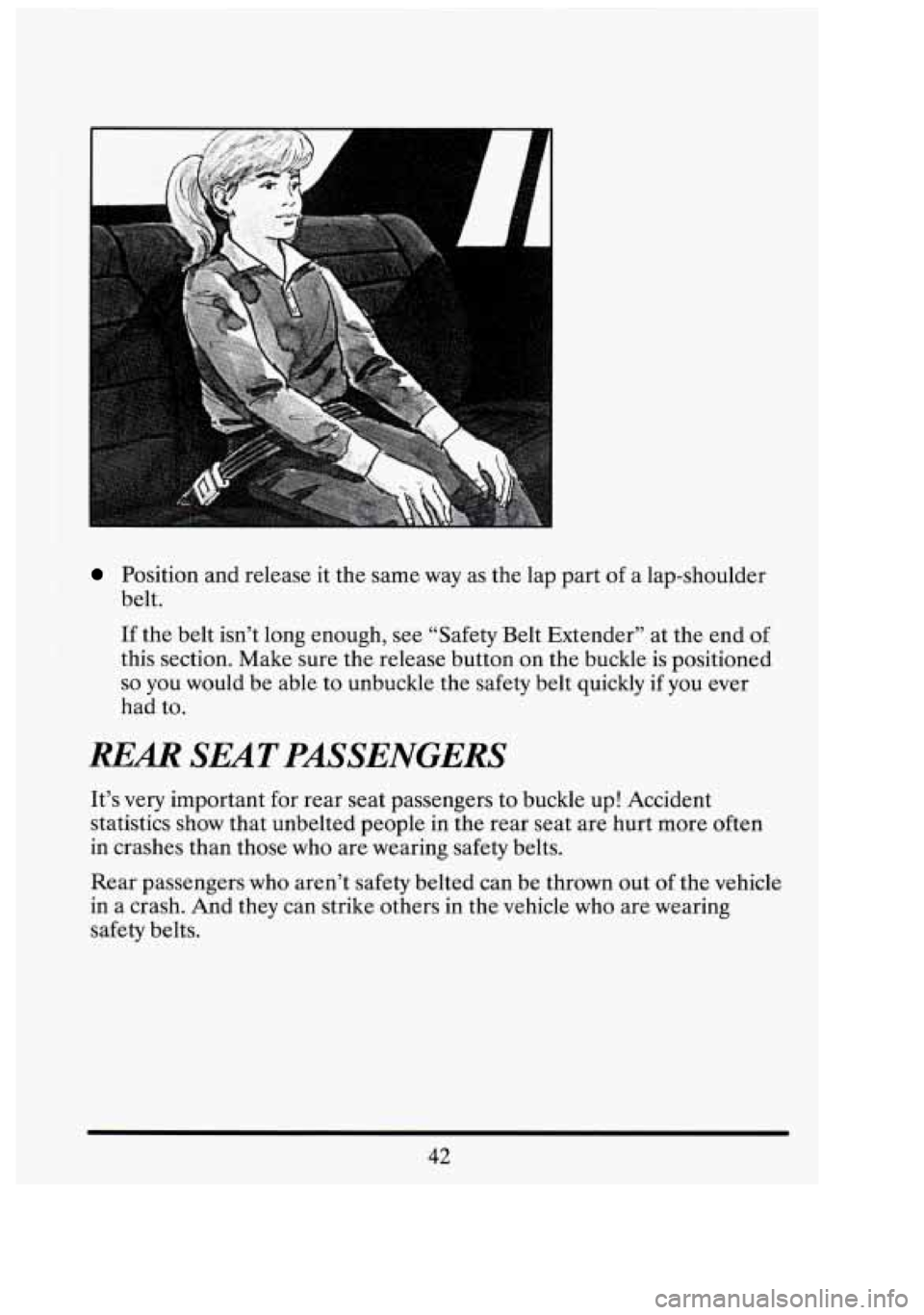
Position and release it the same way as the lap part of a lap-shoulder
belt.
If the belt isn’t long enough, see “Safety Belt Extender’’ at the end of
this section. Make sure the release button on the buckle is positioned
so you would be able to unbuckle the safety belt quickly if you ever
had to.
REAR SEAT PASSENGERS
It’s very important for rear seat passengers to buckle up! Accident
statistics show that unbelted people in the rear seat are hurt more often
in crashes than those who are wearing safety belts.
Rear passengers who aren’t safety belted can be thrown out of the vehicle
in a crash. And they can strike others
in the vehicle who are wearing
safety belts.
3‘ I
-1
42
Page 56 of 398
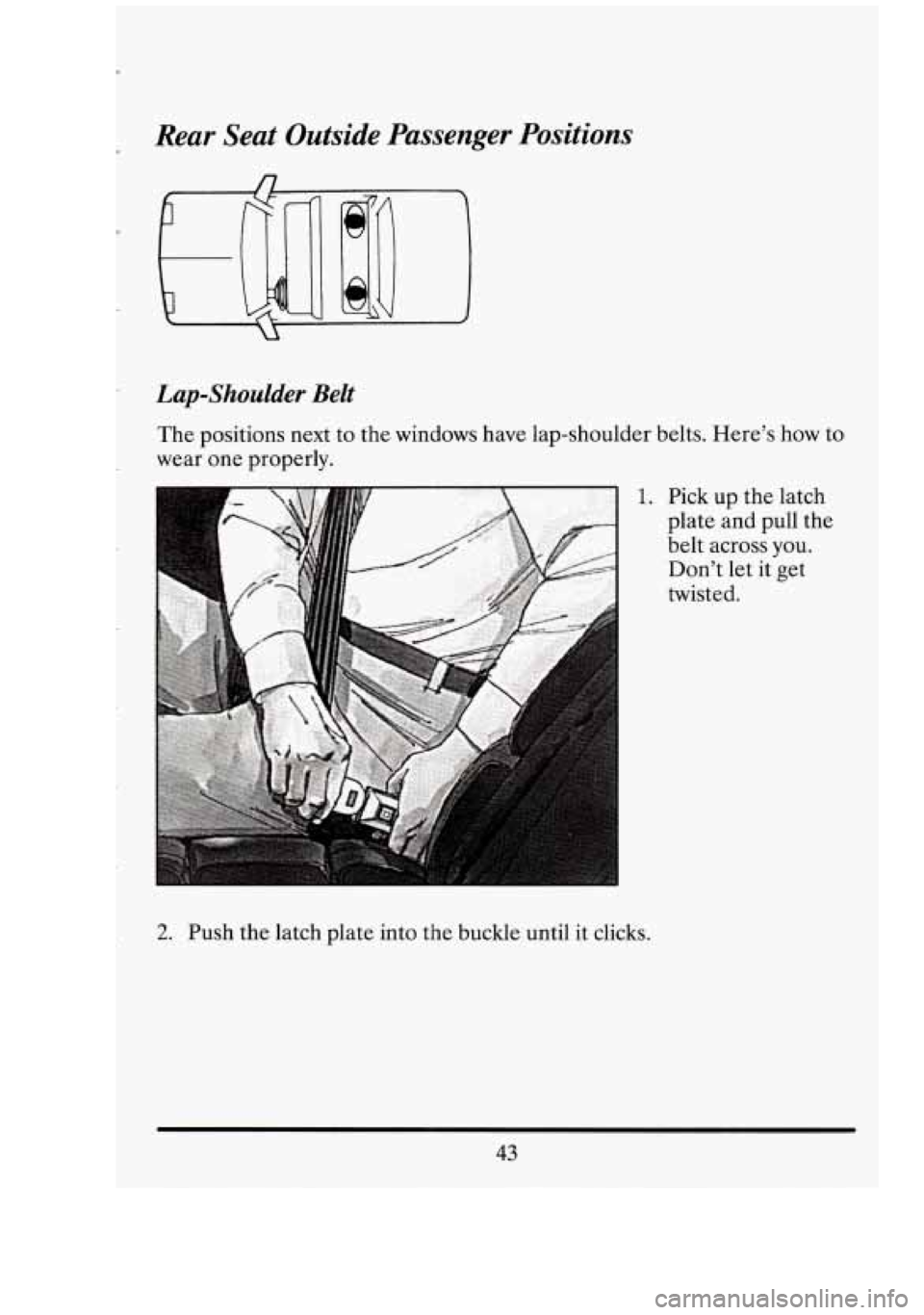
Rear Seat Outside Passenger Positions
Lap-Shoulder Belt
The positions next to the windows have lap-shoulder belts. Here’s how to
wear one properly.
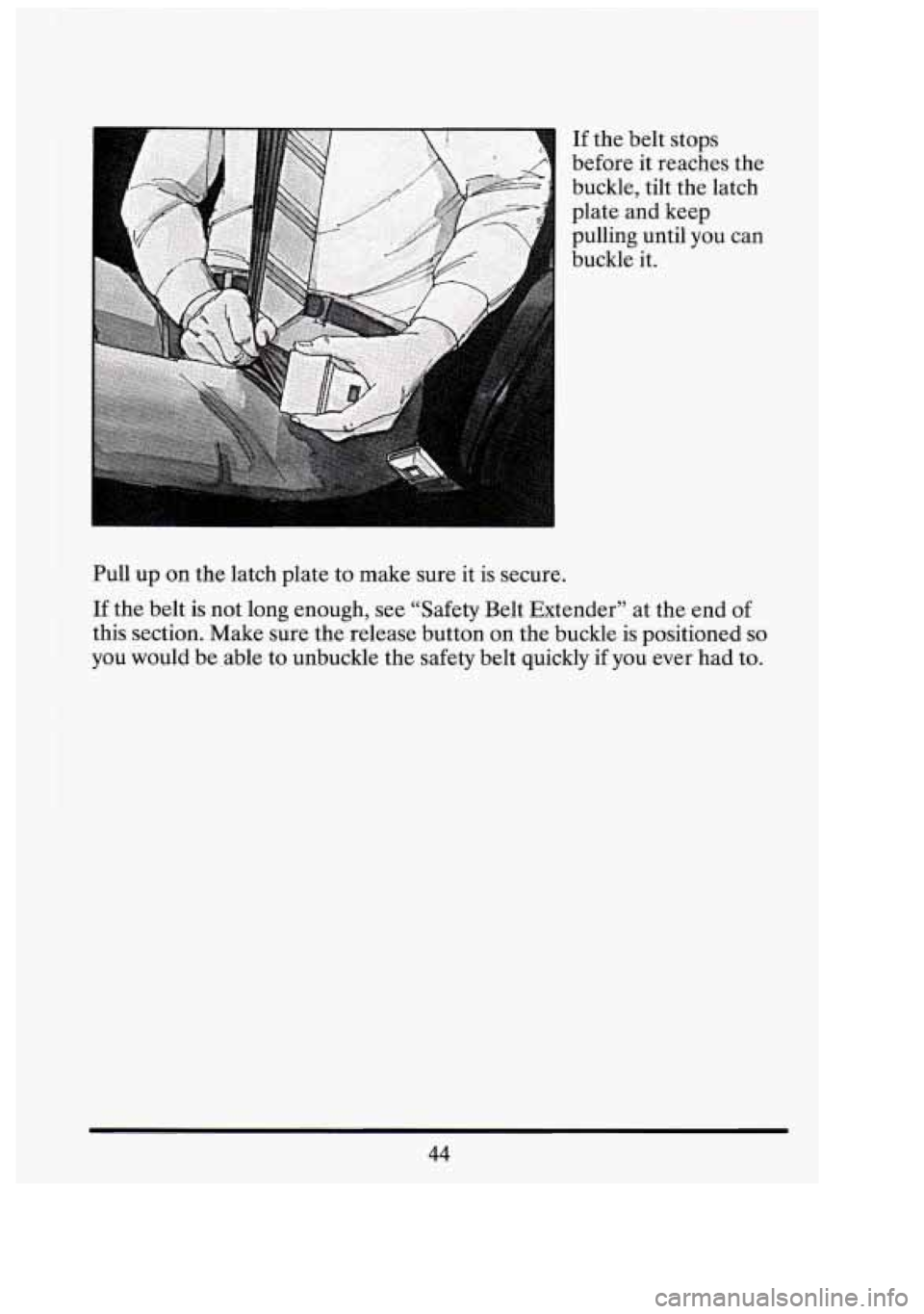
1.
2. Push the latch plate into the buckle until it clicks. Pick
up the latch
plate and pull the
belt across you.
Don’t let it get
twisted.
43
Page 57 of 398
I
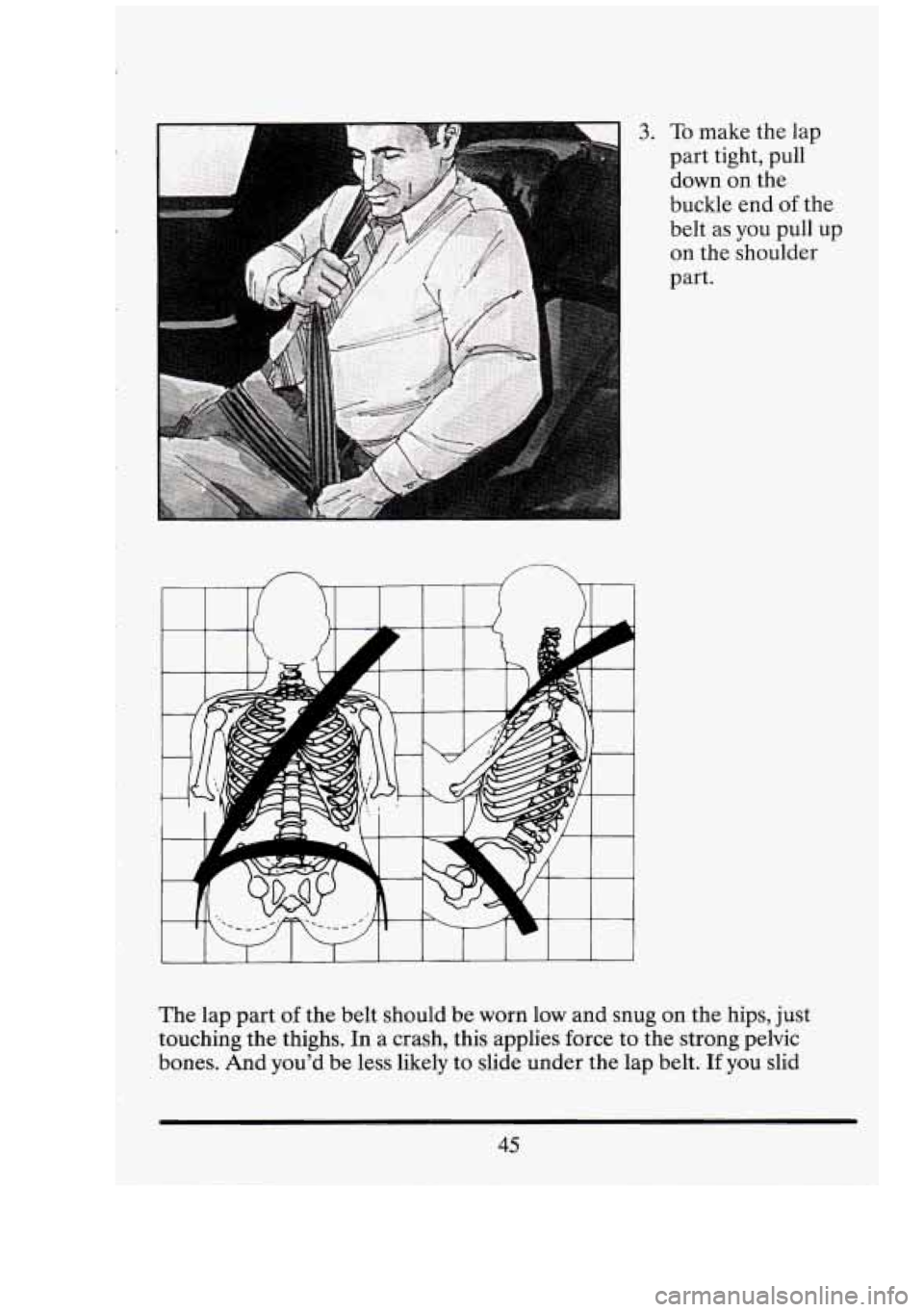
If the belt stops
before it reaches the
buckle, tilt the latch
plate and keep
pulling until you can
buckle it.
Pull up on the latch plate to make sure it is secure.
If the belt
is not long enough, see “Safety Belt Extender” at the end of
this section. Make sure the release button on the buckle is positioned
so
you would be able to unbuckle the safety belt quickly if you ever had to.
44
3
Page 58 of 398
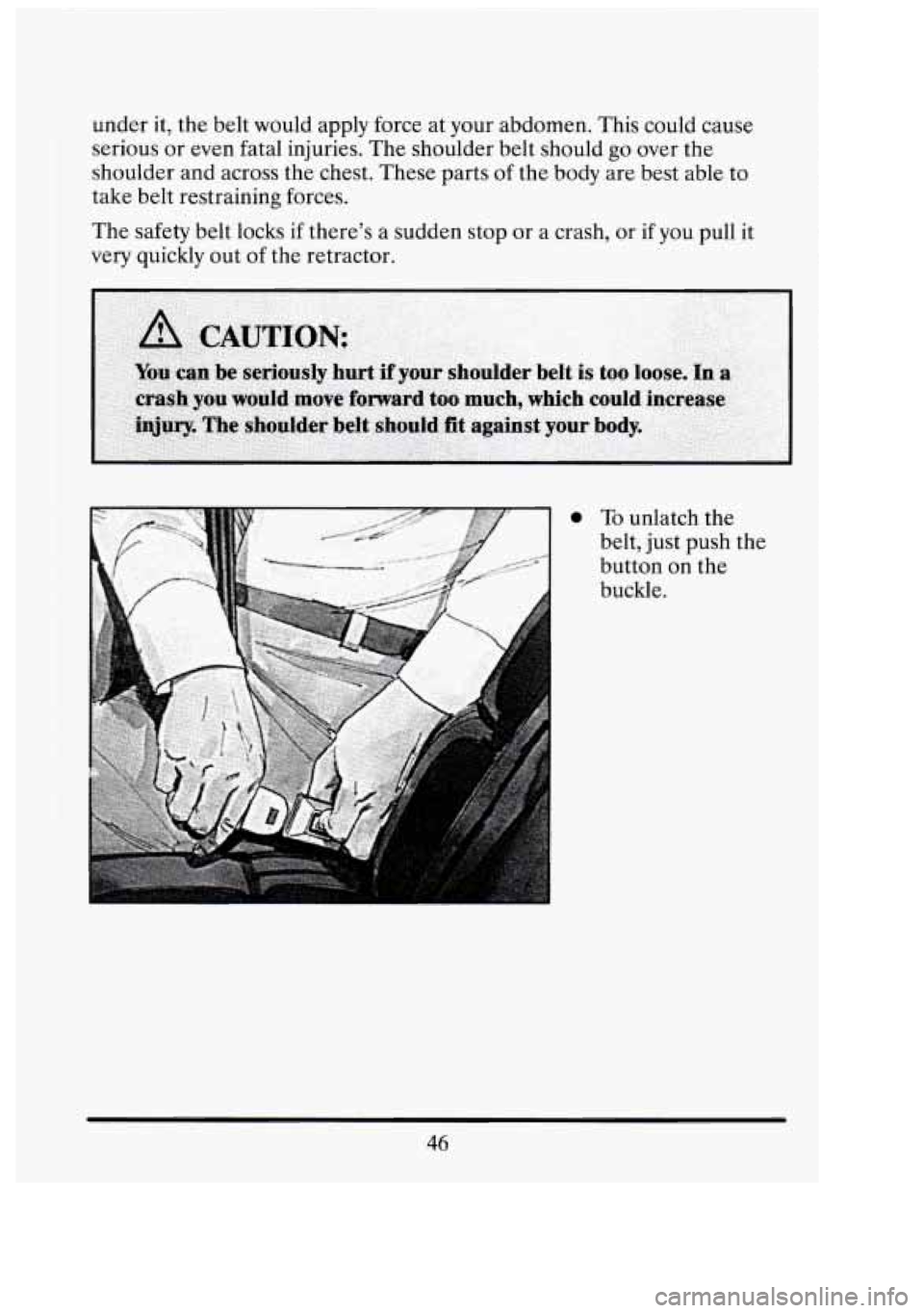
3. To make the lap
part tight, pull
down on the
buckle end
of the
belt as you pull up
on the shoulder
part.
The lap part
of the belt should be worn low and snug on the hips, just
touching the thighs. In a crash, this applies force to the strong pelvic
bones.
And you’d be less likely to slide under the lap belt. If you slid
45
Page 59 of 398
under it, the belt would apply force at your abdomen. This could cause
serious or even fatal injuries. The shoulder belt should go over the
shoulder and across the chest. These parts
of the body are best able to
take belt restraining forces.
The safety belt locks
if there's a sudden stop or a crash, or if you pull it
very quickly out
of the retractor.
0 To unlatch the
belt, just push
button
on the
buckle. the
46
I
Page 63 of 398
- !
CHILD RESTUNTS
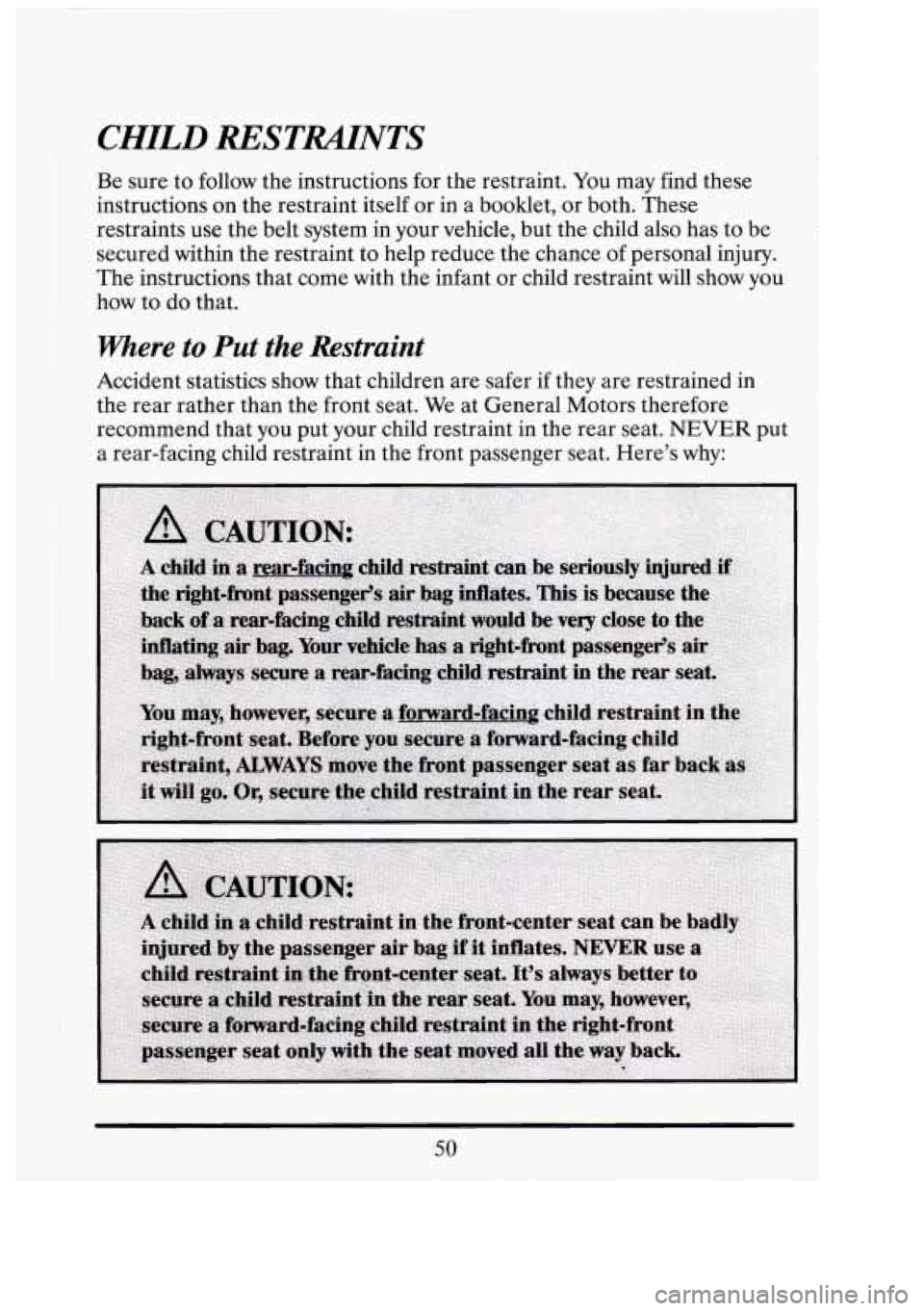
Be sure to follow the instructions for the restraint. You may find these
instructions on the restraint itself or in a booklet, or both. These
restraints use the belt system in your vehicle, but the child also has to be
secured within the restraint to help reduce the chance of personal injury.
The instructions that come with the infant or child restraint
will show you
how to do that.
Where to Put the Restraint
Accident statistics show that children are safer if they are restrained in
the rear rather than the front seat. We at General Motors therefore
recommend that you put your child restraint
in the rear seat. NEVER put
a rear-facing child restraint in the front passenger seat. Here’s
why:
I
El
51 I
50
Page 65 of 398
1’
I
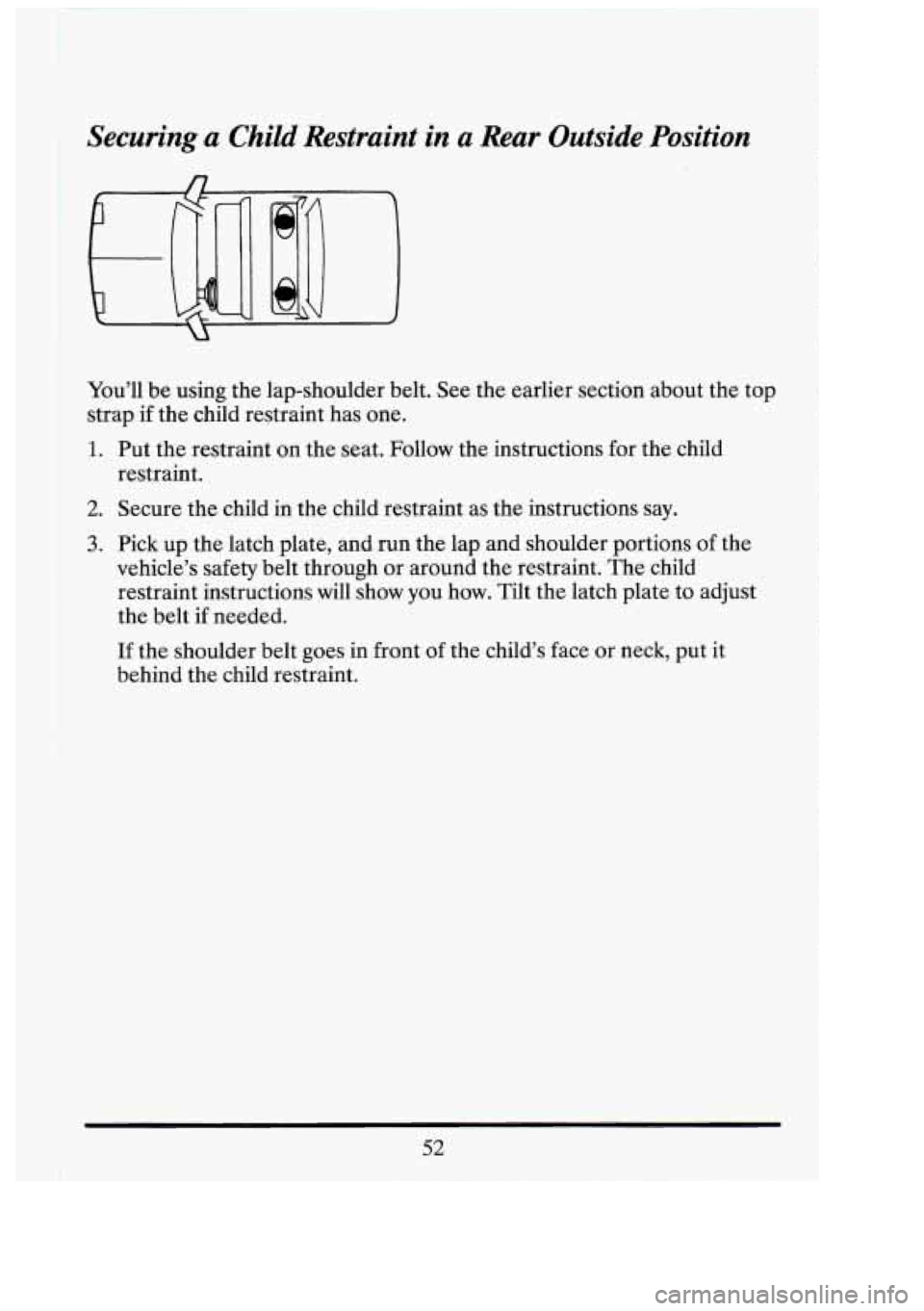
Securing a Child Restraint in a Rear Outside Position
You’ll be using the lap-shoulder belt. See the earlier section about the top
strap if the child restraint has one.
1. Put the restraint on the seat. Follow the instructions for the child
restraint.
2. Secure the child in the child restraint as the instructions say.
3. Pick up the latch plate, and run the lap and shoulder portions of the
vehicle’s safety belt through or around the restraint. The child
restraint instructions will show you how. Tilt the latch plate to adjust
the belt if needed.
If the shoulder belt goes
in front of the child’s face or neck, put it
behind the child restraint.
52
Ll
I
1
LEI
-