check engine light CADILLAC SEVILLE 2004 5.G User Guide
[x] Cancel search | Manufacturer: CADILLAC, Model Year: 2004, Model line: SEVILLE, Model: CADILLAC SEVILLE 2004 5.GPages: 410, PDF Size: 2.64 MB
Page 222 of 410
Braking
Braking action involvesperception timeand
reaction time.
First, you have to decide to push on the brake pedal.
That isperception time.Then you have to bring up your
foot and do it. That isreaction time.
Averagereaction timeis about 3/4 of a second. But that is
only an average. It might be less with one driver and as
long as two or three seconds or more with another. Age,
physical condition, alertness, coordination and eyesight
all play a part. So do alcohol, drugs and frustration. But
even in 3/4 of a second, a vehicle moving at 60 mph
(100 km/h) travels 66 feet (20 m). That could be a lot of
distance in an emergency, so keeping enough space
between your vehicle and others is important.
And, of course, actual stopping distances vary greatly
with the surface of the road (whether it is pavement
or gravel); the condition of the road (wet, dry, icy); tire
tread; the condition of your brakes; the weight of
the vehicle and the amount of brake force applied.
Avoid needless heavy braking. Some people drive in
spurts — heavy acceleration followed by heavy
braking — rather than keeping pace with traffic. This is
a mistake. Your brakes may not have time to cool
between hard stops. Your brakes will wear out much
faster if you do a lot of heavy braking. If you keep pacewith the traffic and allow realistic following distances,
you will eliminate a lot of unnecessary braking.
That means better braking and longer brake life.
If your engine ever stops while you are driving, brake
normally but do not pump your brakes. If you do,
the pedal may get harder to push down. If your engine
stops, you will still have some power brake assist.
But you will use it when you brake. Once the power
assist is used up, it may take longer to stop and
the brake pedal will be harder to push.
Anti-lock Brake System (ABS)
Your vehicle has anti-lock brakes. ABS is an advanced
electronic braking system that will help prevent a
braking skid.
When you start your engine and begin to drive away,
your anti-lock brake system will check itself. You
may hear a momentary motor or clicking noise while
this test is going on, and you may even notice that your
brake pedal moves a little. This is normal.
If there is a problem with
the anti-lock brake system,
this warning light will stay
on. SeeAnti-Lock Brake
System Warning Light on
page 3-44.
4-6
Page 237 of 410
Once you are moving on the freeway, make certain you
allow a reasonable following distance.
Expect to move slightly slower at night.
When you want to leave the freeway, move to the
proper lane well in advance. If you miss your exit, do
not, under any circumstances, stop and back up. Drive
on to the next exit.
The exit ramp can be curved, sometimes quite sharply.
The exit speed is usually posted. Reduce your speed
according to your speedometer, not to your sense
of motion. After driving for any distance at higher
speeds, you may tend to think you are going slower
than you actually are.
Before Leaving on a Long Trip
Make sure you are ready. Try to be well rested. If you
must start when you are not fresh — such as after
a day’s work — do not plan to make too many miles that
first part of the journey. Wear comfortable clothing
and shoes you can easily drive in.Is your vehicle ready for a long trip? If you keep it
serviced and maintained, it is ready to go. If it needs
service, have it done before starting out. Of course, you
will find experienced and able service experts in GM
dealerships all across North America. They will be ready
and willing to help if you need it.
Here are some things you can check before a trip:
•Windshield Washer Fluid:Is the reservoir full? Are
all windows clean inside and outside?
•Wiper Blades:Are they in good shape?
•Fuel, Engine Oil, Other Fluids:Have you checked
all levels?
•Lamps:Are they all working? Are the lenses clean?
•Tires:They are vitally important to a safe,
trouble-free trip. Is the tread good enough for
long-distance driving? Are the tires all inflated to the
recommended pressure?
•Weather Forecasts:What is the weather outlook
along your route? Should you delay your trip a
short time to avoid a major storm system?
•Maps:Do you have up-to-date maps?
4-21
Page 243 of 410
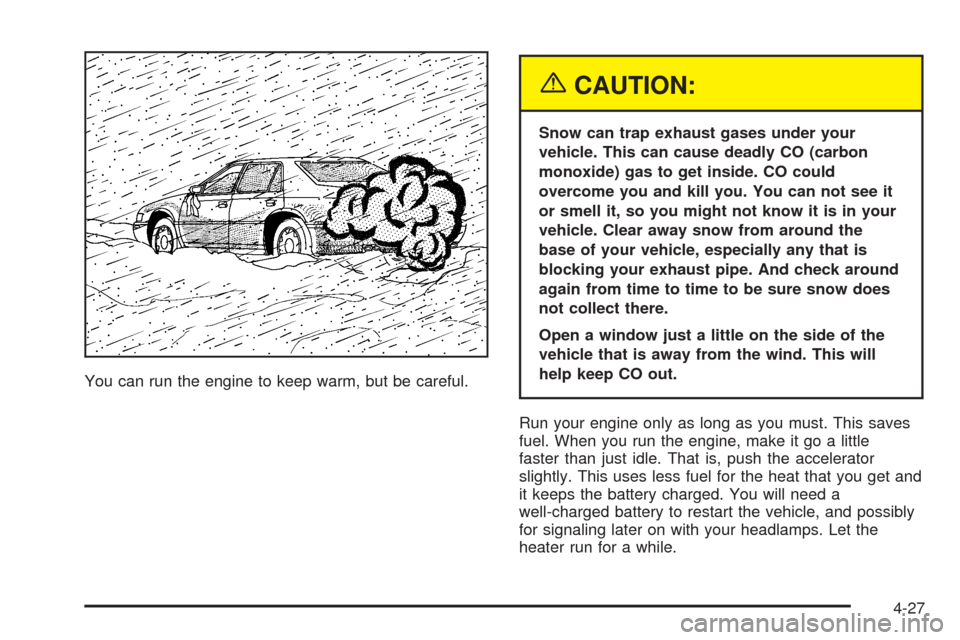
You can run the engine to keep warm, but be careful.
{CAUTION:
Snow can trap exhaust gases under your
vehicle. This can cause deadly CO (carbon
monoxide) gas to get inside. CO could
overcome you and kill you. You can not see it
or smell it, so you might not know it is in your
vehicle. Clear away snow from around the
base of your vehicle, especially any that is
blocking your exhaust pipe. And check around
again from time to time to be sure snow does
not collect there.
Open a window just a little on the side of the
vehicle that is away from the wind. This will
help keep CO out.
Run your engine only as long as you must. This saves
fuel. When you run the engine, make it go a little
faster than just idle. That is, push the accelerator
slightly. This uses less fuel for the heat that you get and
it keeps the battery charged. You will need a
well-charged battery to restart the vehicle, and possibly
for signaling later on with your headlamps. Let the
heater run for a while.
4-27
Page 261 of 410
Service............................................................5-3
Doing Your Own Service Work.........................5-3
Adding Equipment to the Outside of Your
Vehicle......................................................5-4
Fuel................................................................5-4
Gasoline Octane............................................5-4
Gasoline Specifications....................................5-5
California Fuel...............................................5-5
Additives.......................................................5-6
Fuels in Foreign Countries...............................5-6
Filling Your Tank............................................5-7
Filling a Portable Fuel Container.....................5-10
Checking Things Under the Hood....................5-10
Hood Release..............................................5-11
Engine Compartment Overview.......................5-12
Engine Oil...................................................5-13
Engine Air Cleaner/Filter................................5-18
Automatic Transaxle Fluid..............................5-20
Engine Coolant.............................................5-23
Coolant Surge Tank Pressure Cap..................5-26
Engine Overheating.......................................5-26
Cooling System............................................5-29
Power Steering Fluid.....................................5-36
Windshield Washer Fluid................................5-37Brakes........................................................5-38
Battery........................................................5-41
Jump Starting...............................................5-43
Headlamp Aiming...........................................5-49
Headlamp Horizontal Aiming...........................5-51
Headlamp Vertical Aiming..............................5-51
Bulb Replacement..........................................5-53
High Intensity Discharge (HID) Lighting............5-53
Halogen Bulbs..............................................5-54
Headlamps..................................................5-54
Front Turn Signal Lamps...............................5-57
Center High-Mounted
Stoplamp (CHMSL)....................................5-58
Taillamps and Turn Signal Lamps...................5-58
Replacement Bulbs.......................................5-59
Windshield Wiper Blade Replacement..............5-60
Tires..............................................................5-61
Inflation - Tire Pressure.................................5-68
Tire Pressure Monitor Operation.....................5-69
Tire Inspection and Rotation...........................5-71
When It Is Time for New Tires.......................5-72
Buying New Tires.........................................5-73
Uniform Tire Quality Grading..........................5-74
Section 5 Service and Appearance Care
5-1
Page 284 of 410
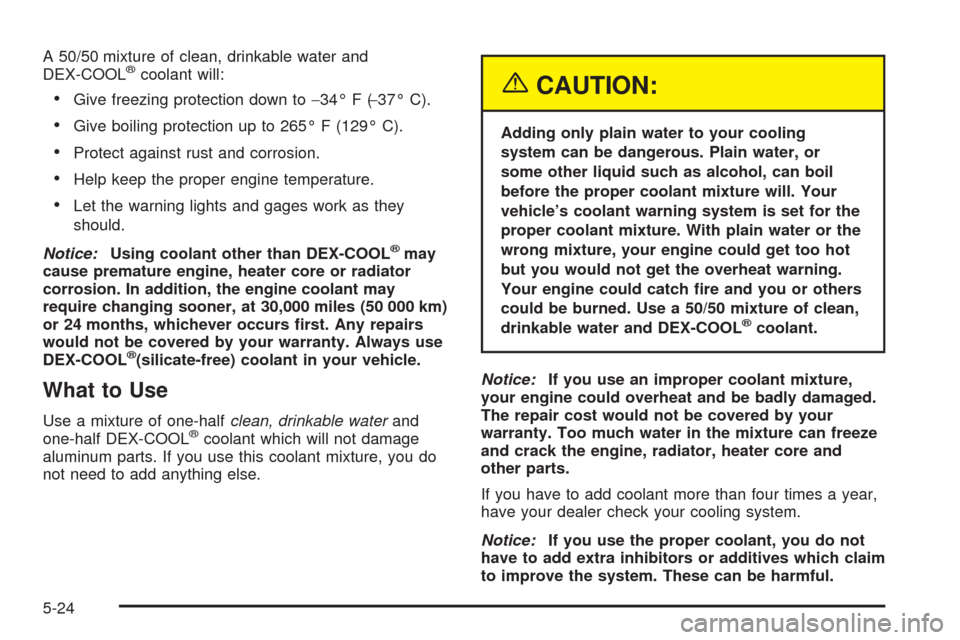
A 50/50 mixture of clean, drinkable water and
DEX-COOL®coolant will:
•Give freezing protection down to−34° F (−37° C).
•Give boiling protection up to 265° F (129° C).
•Protect against rust and corrosion.
•Help keep the proper engine temperature.
•Let the warning lights and gages work as they
should.
Notice:Using coolant other than DEX-COOL
®may
cause premature engine, heater core or radiator
corrosion. In addition, the engine coolant may
require changing sooner, at 30,000 miles (50 000 km)
or 24 months, whichever occurs first. Any repairs
would not be covered by your warranty. Always use
DEX-COOL
®(silicate-free) coolant in your vehicle.
What to Use
Use a mixture of one-halfclean, drinkable waterand
one-half DEX-COOL®coolant which will not damage
aluminum parts. If you use this coolant mixture, you do
not need to add anything else.
{CAUTION:
Adding only plain water to your cooling
system can be dangerous. Plain water, or
some other liquid such as alcohol, can boil
before the proper coolant mixture will. Your
vehicle’s coolant warning system is set for the
proper coolant mixture. With plain water or the
wrong mixture, your engine could get too hot
but you would not get the overheat warning.
Your engine could catch fire and you or others
could be burned. Use a 50/50 mixture of clean,
drinkable water and DEX-COOL
®coolant.
Notice:If you use an improper coolant mixture,
your engine could overheat and be badly damaged.
The repair cost would not be covered by your
warranty. Too much water in the mixture can freeze
and crack the engine, radiator, heater core and
other parts.
If you have to add coolant more than four times a year,
have your dealer check your cooling system.
Notice:If you use the proper coolant, you do not
have to add extra inhibitors or additives which claim
to improve the system. These can be harmful.
5-24
Page 305 of 410
{CAUTION:
Using a match near a battery can cause battery
gas to explode. People have been hurt doing
this, and some have been blinded. Use a
flashlight if you need more light.
Be sure the battery has enough water. You do
not need to add water to the ACDelco
®battery
installed in your new vehicle. But if a battery
has filler caps, be sure the right amount of
fluid is there. If it is low, add water to take care
of that first. If you do not, explosive gas could
be present.
Battery fluid contains acid that can burn you.
Do not get it on you. If you accidentally get it
in your eyes or on your skin, flush the place
with water and get medical help immediately.
{CAUTION:
Fans or other moving engine parts can injure
you badly. Keep your hands away from moving
parts once the engine is running.
5. Check that the jumper cables do not have loose or
missing insulation. If they do, you could get a
shock. The vehicles could also be damaged, too.
Before you connect the cables, here are some basic
things you should know. Positive (+) will go to
positive (+) or to a remote positive (+) terminal if the
vehicle has one. Negative (−) will go to a heavy,
unpainted metal engine part or to a remote
negative (−) terminal if the vehicle has one.
Do not connect positive (+) to the negative (−)or
you will get a short that would damage the battery
and maybe other parts, too. And do not connect
the negative (−) cable to negative (−) terminal on the
dead battery because this can cause sparks.
5-45
Page 396 of 410
B
Backing Up....................................................4-42
Battery..........................................................5-41
Battery Load Management...............................3-23
Battery Replacement......................................... 2-8
Before Leaving on a Long Trip.........................4-21
Brake
Parking......................................................2-31
System Warning and Parking Brake
Indicator Light..........................................3-43
Brake Adjustment............................................5-40
Brake Fluid....................................................5-38
Brake Pedal Travel.........................................5-40
Brake Wear...................................................5-40
Brakes..........................................................5-38
Braking........................................................... 4-6
Braking in Emergencies..................................... 4-8
Break-In, New Vehicle.....................................2-24
Bulb Replacement...........................................5-53
Center High-Mounted Stoplamp (CHMSL)........5-58
Front Turn Signal Lamps..............................5-57
Halogen Bulbs............................................5-54
Headlamp Aiming........................................5-49
Headlamps.................................................5-54
High Intensity Discharge (HID) Lighting...........5-53
Replacement Bulbs......................................5-59
Taillamps and Turn Signal Lamps..................5-58
Buying New Tires...........................................5-73
C
Cadillac Owner Privileges™............................... 7-6
California Fuel.................................................. 5-5
Canada – Customer Assistance.......................... 7-4
Canadian Owners................................................ ii
Capacities and Specifications..........................5-104
Carbon Monoxide...................4-24, 4-37, 2-13, 2-35
Care of
Safety Belts................................................5-90
Your Cassette Tape Player..........................3-101
Your CD Player.........................................3-102
Your CDs .................................................3-102
Cassette Tape Messages.................................3-92
Cassette Tape Player Service............................. 6-9
CD Changer, Console-Mounted.........................3-95
CD Messages................................3-82, 3-94, 3-98
Cellular Phone Usage....................................3-101
Cellular Telephone, Storage Area......................2-49
Center Console Storage Area...........................2-49
Center High-Mounted Stoplamp (CHMSL)...........5-58
Chains, Tires..................................................5-77
Charging System Light....................................3-42
Check
Engine Light...............................................3-46
Checking Coolant............................................5-25
Checking Engine Oil........................................5-13
Checking Things Under the Hood......................5-10
Checking Your Restraint Systems......................1-50
2
Page 399 of 410
Driving (cont.)
Hill and Mountain Roads..............................4-22
In Rain and on Wet Roads...........................4-16
Winter........................................................4-24
Driving on Grades...........................................4-43
Driving on Snow or Ice....................................4-25
Driving Through Deep Standing Water...............4-18
Driving Through Flowing Water.........................4-18
Driving with a Trailer.......................................4-41
Dual Climate Control System............................3-28
E
Electrical System
Add-On Equipment......................................5-96
Fuses and Circuit Breakers...........................5-97
Headlamp Wiring.........................................5-96
Power Windows and Other Power Options......5-96
Removing the Rear Seat Cushion..................5-99
Windshield Wiper Fuses...............................5-96
Emergency Trunk Release Handle.....................2-15
Emissions Inspection and Maintenance
Programs...................................................3-48
Engine
Air Cleaner/Filter.........................................5-18
Battery.......................................................5-41
Check and Service Engine Soon Light............3-46Engine (cont.)
Coolant......................................................5-23
Coolant Heater............................................2-27
Coolant Temperature Gage...........................3-45
Coolant Temperature
Warning Light..........................................3-45
Drive Belt Routing.......................................6-13
Engine Compartment Overview......................5-12
Exhaust.....................................................2-35
Oil .............................................................5-13
Overheating................................................5-26
Starting......................................................2-26
Engine Cooling When Trailer Towing..................4-44
Engine Oil Additives........................................5-16
Engine Speed Limiter......................................3-41
English Metric Display.....................................3-40
Entering Feature Programming..........................3-63
Entry Lighting.................................................3-23
Erasing HomeLink
®Buttons..............................2-48
Event Data Records (EDR)..............................7-10
Exiting Feature Programming............................3-74
Express-Down Window....................................2-17
Express-Up Window........................................2-17
Extender, Safety Belt.......................................1-21
Exterior Lamps...............................................3-16
Exterior Lighting Battery Saver..........................3-21
Exterior Lights at Unlock..................................3-68
5
Page 401 of 410
H
Hazard Warning Flashers................................... 3-6
Headlamp
Aiming.......................................................5-49
Horizontal Aiming.........................................5-51
Vertical Aiming............................................5-51
Headlamp High/Low-Beam Changer...................3-10
Headlamp Wiring............................................5-96
Headlamps....................................................5-54
Bulb Replacement.......................................5-53
Front Turn Signal Lamps..............................5-57
Halogen Bulbs............................................5-54
High Intensity Discharge (HID) Lighting...........5-53
Heated Seats................................................... 1-3
Highway Hypnosis...........................................4-22
Hill and Mountain Roads..................................4-22
Hitches..........................................................4-40
HomeLink
®Transmitter....................................2-44
HomeLink®Transmitter, Programming................2-45
Hood
Checking Things Under................................5-10
Release.....................................................5-11
Horn............................................................... 3-7
Horn Sounds at Lock......................................3-68
How the System Works...................................3-25
How to Add Coolant to the Coolant
Surge Tank.................................................5-31
How to Add Fluid............................................5-23How to Check........................................5-21, 5-69
How to Check Power Steering Fluid..................5-36
How to Reset the Transaxle Fluid Change
Indicator.....................................................5-23
How to Use This Manual...................................... ii
How to Wear Safety Belts Properly...................1-11
Hydroplaning..................................................4-18
I
If No Steam Is Coming From Your Engine..........5-28
If Steam Is Coming From Your Engine...............5-27
If the Light Is Flashing.....................................3-47
If the Light Is On Steady.................................3-47
If You Are Caught in a Blizzard.........................4-26
If You Are Stuck in Sand, Mud, Ice
or Snow.....................................................4-28
If You Do Decide To Pull A Trailer.....................4-38
Ignition Positions.............................................2-25
Inadvertent Power Battery Saver.......................3-24
Infants and Young Children, Restraints...............1-25
Inflation - Tire Pressure...................................5-68
Instrument Panel
Cluster.......................................................3-38
Overview..................................................... 3-4
Instrument Panel Brightness.............................3-22
Interior Lamps................................................3-22
Interior Lamps Control.....................................3-22
7
Page 404 of 410
O
Odometer......................................................3-39
Off-Road Recovery..........................................4-12
Oil
Engine.......................................................5-13
Life Indicator...............................................3-74
Pressure Light.............................................3-49
Older Children, Restraints................................1-22
Online Owner Center........................................ 7-3
OnStar
®Personal Calling.................................2-43
OnStar®Services............................................2-42
OnStar®Steering Wheel Controls......................2-43
OnStar®System.............................................2-42
OnStar®Virtual Advisor....................................2-43
Other Warning Devices...................................... 3-7
Outlet Adjustment............................................3-33
Outside
Automatic Dimming Mirror.............................2-40
Convex Mirror.............................................2-41
Curb View Assist Mirror................................2-41
Heated Mirrors............................................2-41
Power Mirrors.............................................2-40
Overheated Engine Protection Operating Mode.....5-26
Overseas – Customer Assistance........................ 7-5
Owner Checks and Services.............................. 6-8
Owners, Canadian............................................... ii
Owner’s Information........................................7-13
P
Parade Dimming.............................................3-23
Park Aid........................................................3-24
Park (P)
Shifting Into................................................2-32
Shifting Out of............................................2-34
Parking
Assist........................................................3-24
Brake........................................................2-31
Brake Indicator Light....................................3-43
Over Things That Burn.................................2-34
Parking on Hills..............................................4-43
Passenger Compartment Air Filter.....................3-35
Passing.................................................4-12, 4-41
PASS-Key
®III ................................................2-22
PASS-Key®III Operation..................................2-22
Personalization, Climate Controls......................3-36
Plan Ahead When Possible................................ 7-8
Playing a Cassette Tape..................................3-91
Playing a CD.........................................3-81, 3-93
Playing the Radio...................................3-76, 3-84
Power
Accessory Outlets........................................3-26
Door Locks.................................................2-10
Electrical System.........................................5-96
Lumbar Controls........................................... 1-2
Seat............................................................ 1-2
10