clutch CHEVROLET CAMARO 1967 1.G Chassis User Guide
[x] Cancel search | Manufacturer: CHEVROLET, Model Year: 1967, Model line: CAMARO, Model: CHEVROLET CAMARO 1967 1.GPages: 659, PDF Size: 114.24 MB
Page 60 of 659
HEATER AND AIR CONDITIONING 1A-37
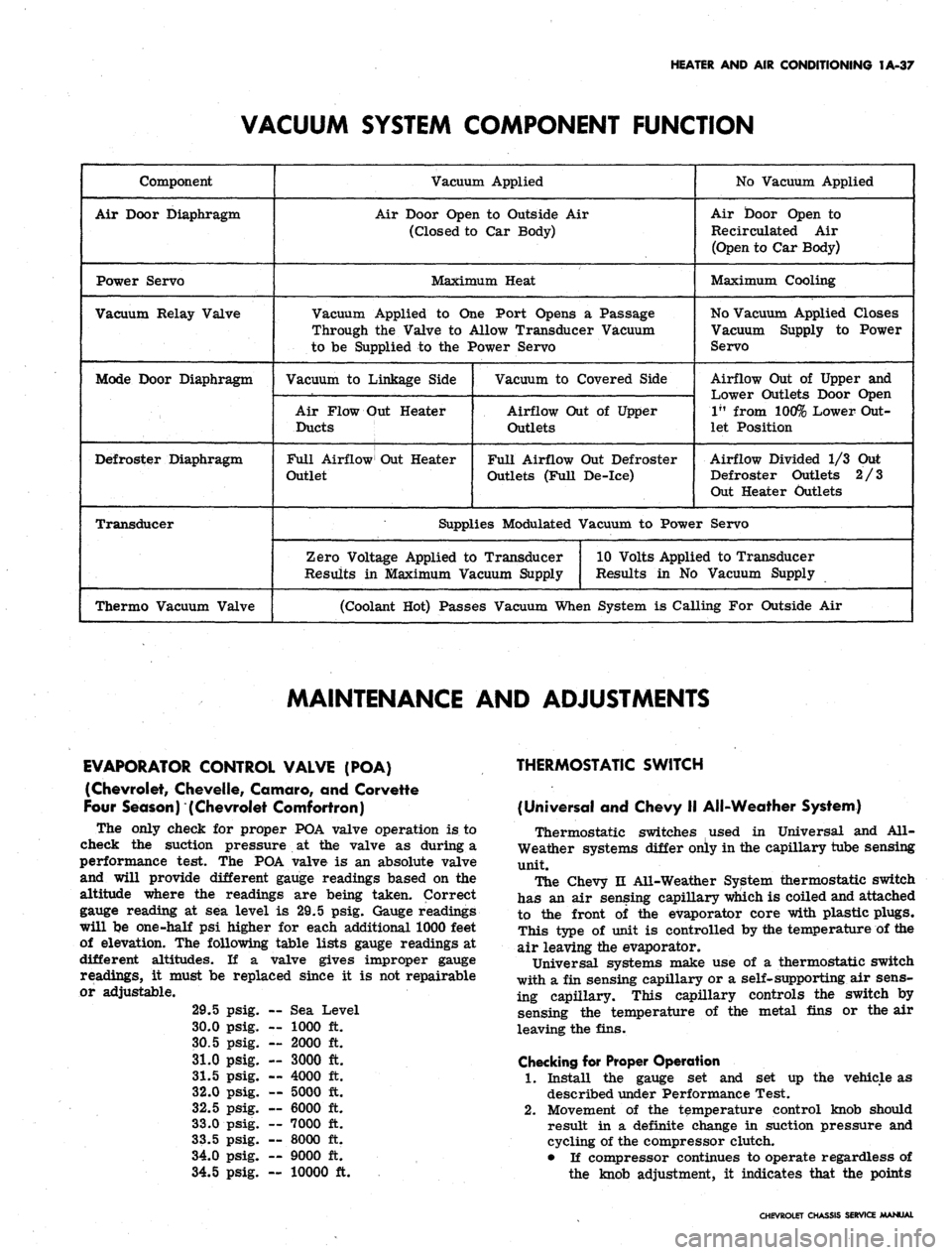
VACUUM SYSTEM COMPONENT FUNCTION
Component
Air Door Diaphragm
Power Servo
Vacuum Relay Valve
Mode Door Diaphragm
Defroster Diaphragm
Transducer
Thermo Vacuum Valve
Vacuum Applied
Air Door Open to Outside Air
(Closed to Car Body)
Maximum Heat
Vacuum Applied to One Port Opens a Passage
Through the Valve to Allow Transducer Vacuum
to be Supplied to the Power Servo
Vacuum to Linkage Side
Air Flow Out Heater
Ducts
Full Airflow Out Heater
Outlet
Vacuum to Covered Side
Airflow Out of Upper
Outlets
Full Airflow Out Defroster
Outlets (Full De-ice)
No Vacuum Applied
Air Door Open to
Re circulated Air
(Open to Car Body)
Maximum Cooling
No Vacuum Applied Closes
Vacuum Supply to Power
Servo
Airflow Out of Upper and
Lower Outlets Door Open
1"
from 100% Lower Out-
let Position
Airflow Divided 1/3 Out
Defroster Outlets 2/3
Out Heater Outlets
Supplies Modulated Vacuum to Power Servo
Zero Voltage Applied to Transducer
Results in Maximum Vacuum Supply
10 Volts Applied to Transducer
Results in No Vacuum Supply
(Coolant Hot) Passes Vacuum When System is Calling For Outside Air
MAINTENANCE AND ADJUSTMENTS
EVAPORATOR CONTROL VALVE (POA)
(Chevrolet, Chevelle, Comoro, and Corvette
Four Season) (Chevrolet Comfortron)
The only check for proper POA valve operation is to
check the suction pressure at the valve as during a
performance test. The POA valve is an absolute valve
and will provide different gauge readings based on the
altitude where the readings are being taken. Correct
gauge reading at sea level is 29.5 psig. Gauge readings
will be one-half psi higher for each additional 1000 feet
of elevation. The following table lists gauge readings at
different altitudes. If a valve gives improper gauge
readings, it must be replaced since it is not repairable
or adjustable.
29.5
30.0
30.5
31.0
31.5
32.0
32.5
33.0
33.5
34.0
34.5
psig.
psig.
psig.
psig.
psig.
psig.
psig.
psig.
psig.
psig.
psig.
— Sea 1
— 1000
— 2000
— 3000
— 4000
— 5000
— 6000
— 7000
— 8000
— 9000
Level
ft.
ft.
ft.
ft.
ft.
ft.
ft.
ft.
ft.
— 10000 ft.
THERMOSTATIC SWITCH
(Universal and Chevy II All-Weather System)
Thermostatic switches used in Universal and All-
Weather systems differ only in the capillary tube sensing
unit.
The Chevy n All-Weather System thermostatic switch
has an air sensing capillary which is coiled and attached
to the front of the evaporator core with plastic plugs.
This type of unit is controlled by the temperature of the
air leaving the evaporator.
Universal systems make use of a thermostatic switch
with a fin sensing capillary or a self-supporting air sens-
ing capillary. This capillary controls the switch by
sensing the temperature of the metal fins or the air
leaving the fins.
Checking for Proper Operation
1.
Install the gauge set and set up the vehicle as
described under Performance Test.
2.
Movement of the temperature control knob should
result in a definite change in suction pressure and
cycling of the compressor clutch.
• If compressor continues to operate regardless of
the knob adjustment, it indicates that the points
CHEVROLET CHASSIS SERVICE MANUAL
Page 91 of 659
HEATER AND AIR CONDITIONING 1A-68
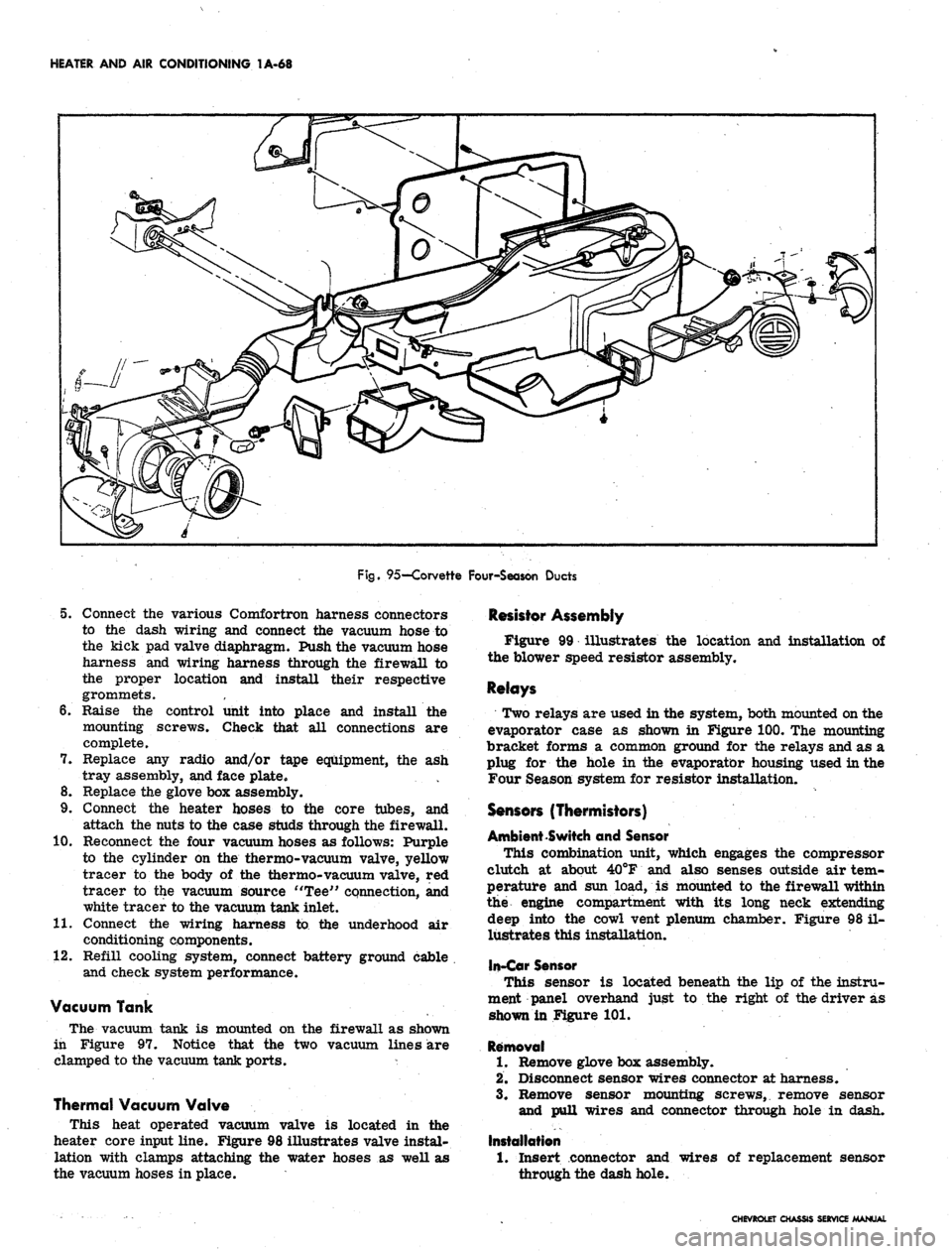
Fig.
95—Corvette Four-Season Ducts
5. Connect the various Comfortron harness connectors
to the dash wiring and connect the vacuum hose to
the kick pad valve diaphragm. Push the vacuum hose
harness and wiring harness through the firewall to
the proper location and install their respective
grommets.
6. Raise the control unit into place and install the
mounting screws. Check that all connections are
complete.
7. Replace any radio and/or tape equipment, the ash
tray assembly, and face plate.
8. Replace the glove box assembly.
9. Connect the heater hoses to the core tubes, and
attach the nuts to the case studs through the firewall.
10.
Reconnect the four vacuum hoses as follows: Purple
to the cylinder on the thermo-vacuum valve, yellow
tracer to the body of the thermo-vacuum valve, red
tracer to the vacuum source "Tee" connection, and
white tracer to the vacuum tank inlet.
11.
Connect the wiring harness to the underhood air
conditioning components.
12.
Refill cooling system, connect battery ground cable
and check system performance.
Vacuum Tank
The vacuum tank is mounted on the firewall as shown
in Figure 97. Notice that the two vacuum lines are
clamped to the vacuum tank ports. *
Thermal Vacuum Valve
This heat operated vacuum valve is located in the
heater core input line. Figure 98 illustrates valve instal-
lation with clamps attaching the water hoses as well as
the vacuum hoses in place.
Resistor Assembly
Figure 99 illustrates the location and installation of
the blower speed resistor assembly.
Relays
Two relays are used in the system, both mounted on the
evaporator case as shown in Figure 100. The mounting
bracket forms a common ground for the relays and as a
plug for the hole in the evaporator housing used in the
Four Season system for resistor installation.
Sensors (Thermistors)
Ambient Switch and Sensor
This combination unit, which engages the compressor
clutch at about 40°F and also senses outside air tem-
perature and sun load, is mounted to the firewall within
the engine compartment with its long neck extending
deep into the cowl vent plenum chamber. Figure 98 il-
lustrates this installation,
In-Car Sensor
This sensor is located beneath the lip of the instru-
ment panel overhand just to the right of the driver as
shown in Figure 101.
Removal
1.
Remove glove box assembly.
2.
Disconnect sensor wires connector at harness.
3.
Remove sensor mounting screws, remove sensor
and pull wires and connector through hole in dash.
Installation
1.
Insert connector and
through the dash hole.
wires of replacement sensor
CHEVROLET CHASSIS SERVICE MANUAL
Page 94 of 659
HEATER AND AIR CONDITIONING 1A-71
SUN-AMBIENT
SENSOR AND COMPRESSOR
CLUTCH SWITCH
HIGH BLOWER
DELAY RELAY
THERMAL
VACUUM
VALVE
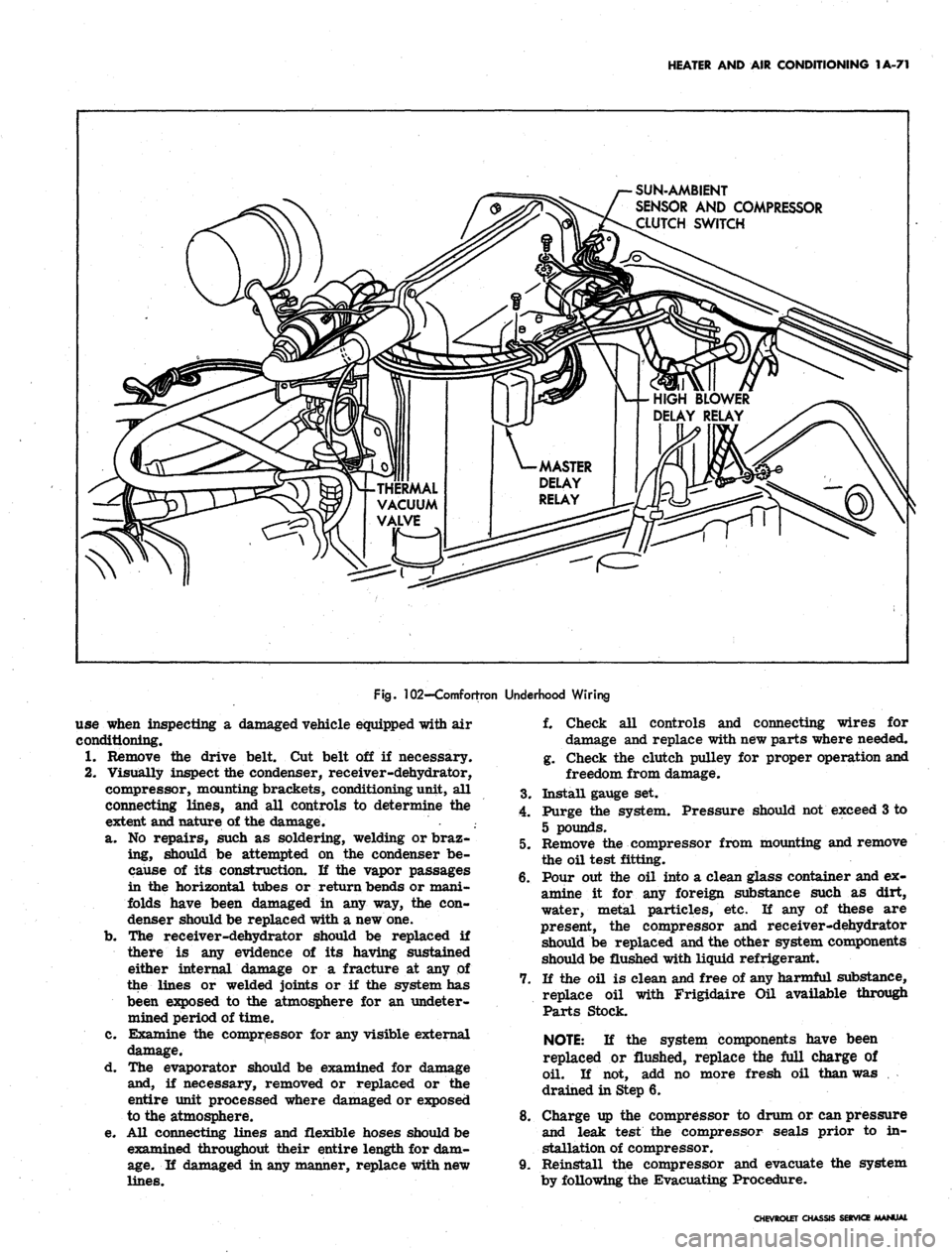
Fig.
102-Comfortron Underhood Wiring
use when inspecting a damaged vehicle equipped with air
conditioning.
1.
Remove the drive belt. Cut belt off if necessary.
2.
Visually inspect the condenser, receiver-dehydrator,
compressor, mounting brackets, conditioning unit, all
connecting lines, and all controls to determine the
extent and nature of the damage.
a. No repairs, such as soldering, welding or braz-
ing, should be attempted on the condenser be-
cause of its construction. If the vapor passages
in the horizontal tubes or return bends or mani-
folds have been damaged in any way, the con-
denser should be replaced with a new one.
b.
The receiver-dehydrator should be replaced if
there is any evidence of its having sustained
either internal damage or a fracture at any of
the lines or welded joints or if the system has
been exposed to the atmosphere for an undeter-
mined period of time.
c. Examine the compressor for any visible external
damage.
d. The evaporator should be examined for damage
and, if necessary, removed or replaced or the
entire unit processed where damaged or exposed
to the atmosphere.
e. All connecting lines and flexible hoses should be
examined throughout their entire length for dam-
age.
If damaged in any manner, replace with new
lines.
f. Check all controls and connecting wires for
damage and replace with new parts where needed.
g. Check the clutch pulley for proper operation and
freedom from damage.
3.
Install gauge set.
4.
Purge the system. Pressure should not exceed 3 to
5 pounds.
5. Remove the compressor from mounting and remove
the oil test fitting.
6. Pour out the oil into a clean glass container and ex-
amine it for any foreign substance such as dirt,
water, metal particles, etc. If any of these are
present, the compressor and receiver-dehydrator
should be replaced and the other system components
should be flushed with liquid refrigerant.
7. If the oil is clean and free of any harmful substance,
replace oil with Frigidaire Oil available through
Parts Stock.
NOTE:
If the system components have been
replaced or flushed, replace the full charge of
oil. If not, add no more fresh oil than was
drained in Step 6.
8. Charge up the compressor to drum or can pressure
and leak test the compressor seals prior to in-
stallation of compressor.
9. Reinstall the compressor and evacuate the system
by following the Evacuating Procedure.
CHEVROLET CHASSIS SERVICE MANUAL
Page 99 of 659
HEATER AND AIR CONDITIONING 1A-76
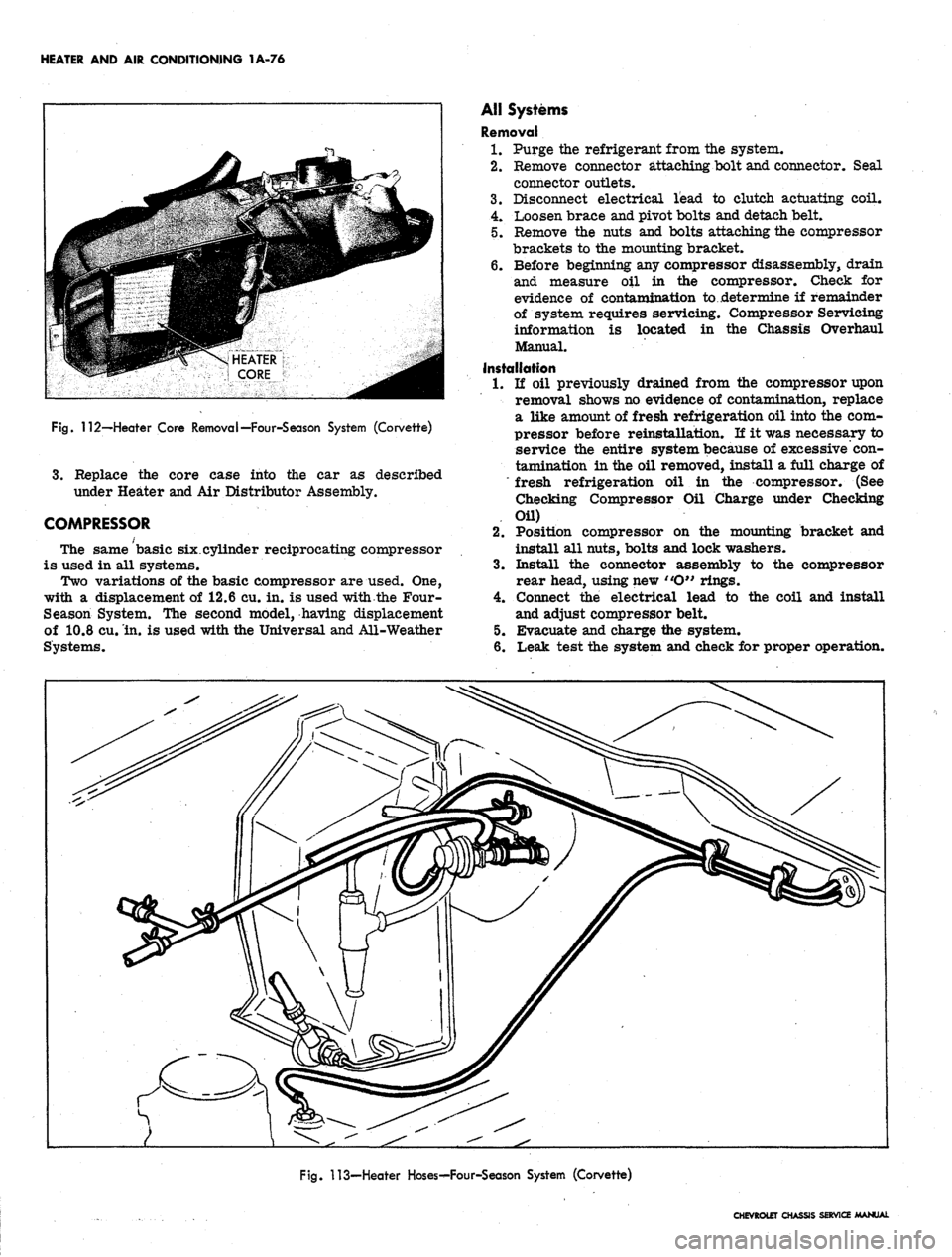
Fig.
112—-Heater Core Removal—Four-Season System (Corvette)
3.
Replace the core case into the car as described
under Heater and Air Distributor Assembly.
COMPRESSOR
The same basic six.cylinder reciprocating compressor
is used in all systems.
Two variations of the basic compressor are used. One,
with a displacement of 12.6 cu. in. is used with the Four-
Season System. The second model, having displacement
of 10.8 cu. in. is used with the Universal and All-Weather
Systems.
AH Systems
Removal
1.
Purge the refrigerant from the system.
2.
Remove connector attaching bolt and connector. Seal
connector outlets.
3.
Disconnect electrical lead to clutch actuating coil.
4.
Loosen brace and pivot bolts and detach belt.
5. Remove the nuts and bolts attaching the compressor
brackets to the mounting bracket.
6. Before beginning any compressor disassembly, drain
and measure oil in the compressor. Check for
evidence of contamination to ..determine if remainder
of system requires servicing. Compressor Servicing
information is located in the Chassis Overhaul
Manual.
Installation
1.
li oil previously drained from the compressor upon
removal shows no evidence of contamination, replace
a like amount of fresh refrigeration oil into the com-
pressor before reinstallatLon. If it was necessary to
service the entire system because of excessive con-
tamination in the oil removed, install a full charge of
"fresh refrigeration oil in the compressor. (See
Checking Compressor Oil Charge under Checking
Oil)
2.
Position compressor on the mounting bracket and
install all nuts, bolts and lock washers.
3.
Install the connector assembly to the compressor
rear head, using new "O" rings.
4.
Connect the electrical lead to the coil and install
and adjust compressor belt.
5. Evacuate and charge the system.
6. Leak test the system and check for proper operation.
Fig.
113—Heater Hoses^-Four-Season System (Corvette)
CHEVROLET CHASSIS SERVICE MANUAL
Page 101 of 659

^\
16B
—>
-COMPRESSOR
Clutch Coil
•To battery pos")
HEATER AND AIR CONDITIONING 1A-78
WIRING DIAGRAMS
Blower
Motor
Resistor
•
Asm
EVAPORATOR—v
ASM.
\
-Diode
(Arc I
suppressor)
^\
16B
—>
-COMPRESSOR
Clutch Coil
•To battery positive
(+) terminal
No vacuum
in hose
#3
Blower
intake
air
Outside
air entry
Valve
by vacuum
in
hose
#3
Valve
normally
closed (spring
held)
Inside
car
air
(Recirc.)
AIR INLET
VALVE
POSITION:
Outside
air
intake
Recirc. air'intake
CONTROL ASM
TEMP CONTROL LEVER
(Operates temp valve
cable
&
equipment
in
chart shown below)
Compressor
Sw.
(Normally closed
Temp valve
begins
to
open
valveV
cable
arm
•Fan Speed Selector Switch
Switch
lever
position
Off
Low
Med
High
Contacts
made
B
to
None
BtoL
B to L
&
M
B to
L
& H
Fan
speed
Low
Low
Med
High
Resistance
in series with
Bio Motor
Hi
Rl
(RiR2)/(Rl+R2)
None
•Blower switch contacts must
be
dosed
before
fan
switch will
be
operable.
COLD
(O.
A.)
COLD a.A.)
Blower
H
y—low
switch
M/
-med
(Norm,
closed
contacts)
Fan speed switch
(See chart
at
left)
To vacuum,
tank
EXTENSION—vy
Horn relay "Bat" WIRE
ASM
X
harness
terminal
V
.**-__.. ;_
1 I panel
Legend:
___. —
Production wiring
Wire
is
part
of
equip.
•—————* Air
conditioning
wrg.
| i
T Agn. sw.
accsy
I term.
I
Temp
Control
Lever
Position
OFF
VENT.
COLD(I.A.)
COLEKO.AJ
HOT
Blower
(Master)
switch
contacts
Open
Closed
Closed
Closed
Closed
Vac switch
connects
vac source
to hose
#
#2
#2
&
#3
None
#3
#2
&
#3
Compressor
switch
contacts:
Open
Open
Closed
Closed
Open
Blower
intake
air
Outside
car air
intake used
Inside
car air
recirculated
Outside
car air
intake used
.Outside
car air
intake used
Fig. 114—Chevrolet—Four-Season Wiring Diagram
CHEVROLET CHASSIS SERVICE MANUAL
Page 103 of 659

HEATER
AND AIR
CONDITIONING
1A-80
EVAPORATOR ASM.
Blower
Motor
INSIDE VALVE
(Normally closed
-spring held)
PLENUM VALVE
(Normally open
-spring held)
Actuator
(Vacuum
operated)
Inside car air (Recirc*
CONTROL ASM
TEMP CONTROL LEVER
•(Operates temp valve
cable
&
equipment in
hart shown below)
Temp valve
begins to
16DG
Fuse (In-line^
COMPRESSOR
Clutch Coil DASH-
PANEL
•Fan Speed Selector Switch
Switch
lever
position
Off
Low
"HeST
High
Contacts
B to
None
BtoL
B to L b U
BtoL&H
Fan
speed
Low
Low
Med
High
Resistance
in series with
Bio Motor
Rl
Rl
RlR2)/(Rl+R2)
None
•Blower switch contacts must be closed
before fan switch will be operable.
-To battery positive
(-0 terminal
•
Horn relay
terminal"
"Batf
To vacuum
tank
EXTENSION
WIRE
ASM
(Normally closed
contacts-*vac
operated)
7
*- Fan speed switch
(See chart at left)
•/-Wire is
\ part of
I inst panel
harness
Legend:
— Production wiring
————
Wire Is part of equip.
•mmmmmmmmmmmmmm*
AIT
Conditioning
WTg*
Temp
Control
Lever
Position
OFF
VENT
COLD
a.A.)
COLD
(O.A.)
HOT
Blower
(Master)
switch
contacts
Open
Closed
Closed
Closed
Closed
Vac switch
connects
vac source
to hose #
#2
&
#3
#2
#3
None
#2
Compressor
switch
contacts^
Open
Open
Closed
Closed
Open
Blower
intake air
Outside car air
intake used
Inside car air
recir culated
Outside car air
intake used
Outside car air
intake used
Fig.
116—Camaro—Four-Season Wiring Diagram
CHEVROLET CHASSIS SERVICE
Page 105 of 659
HEATER AND AIR CONDITIONING 1A-82
•BATTERY
(POS)
CABLE
NOTE
When
control
switch*
is !TOFF"
&
Air
Cond
is
"ON"
(Control
knob
pulled
but) the
blower
fan'will
run at low
speed.
CONTROL
SWITCH
CONNECTIONS
OFF
LOW
MED
HIGH
B
TO
NONE
B
TO L
BTOL&M
B
TO L
&
H
COMPRESSOR
GROUND
WIRE
ASM
BATTERY
(NEGATIVE)
CABLE
COMPRESSOR
ASM
DASHPAJSTEL
GROMMET
16DG
CONTROL
SWITCH
RESISTOR
ASM
14LBL
14BRN
CLUTCH
COIL
EXTENSION
WIRE
ASM
-14BRN--N
JUNC
BLOCKi
OSTATIC
SWITCH
CONTACTS
NORMALLY
CLOSED
STARTING
MOTOR
SOLENOID
BLOWER
MOTOR
AIR
COND
CONTROL
(PUSH-PULL)
KNOB
DOOR
SWITCH
(PUSH
BUTTON
NORMALLY
CLOSED)
RELAY
ASM
HORN
RELAY
DIVERTER
DOOR CABLE
FUSE
PANEL
EVAPORATOR
ASM
IGNITION SWITCH-
ACCESSORY TERMINAL)
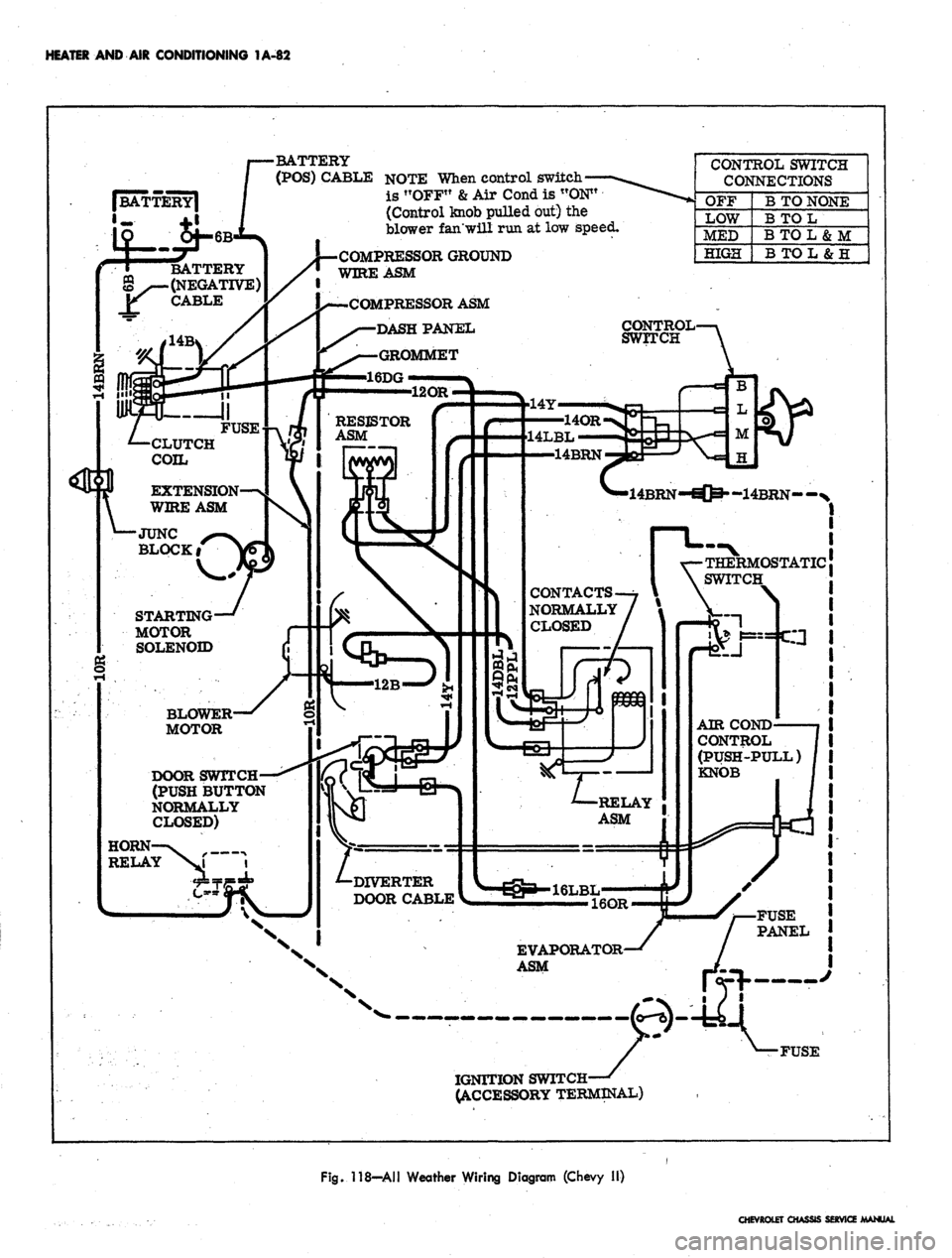
Fig. 118—All Weather Wiring Diagram (Chevy II)
CHEVROLET CHASSIS SERVICE MANUAL
Page 106 of 659
HEATER AND AIR CONDITIONING 1A-83
DIVERTER DOOR
CRANK POSITIONS:
AIR COND "ON"
AIR COND "OFF*
AIR COND SWITCH
(PUSH BUTTON,
NORMALLY CLOSED
CONTACTS)
BLOWER MOTOR
CONTACTS
NORMALLY
4D
16
16B/Y
COMPRESSOR
GROUND WIRE
ASM
BAT.
TERMINAL
ON STARTING
MOTOR SOLENOID
' BATTERY
CABLE ASM:
NEGATIVE
POSITIVE—*
- CONTROL SWITCH
SET AT:
•OFF
LOW
MED
HIGH
CONTACTS:
BTOBL
BTOL
BTOM
BT0M6B,
CLUTCH
HOUSING
liOli: WHEN CONTROL
SWITCH IS AT "OFF" &
AIR COND. IS "ON", FAN
WILL RUN AT LOW SPEED.
"AIR COND-PULL"
KNOB (SHOWN IN "ON"
POSITION)
TO REGULATOR
HORN
RELAY
16 BRN-BODY WIRING
HARNESS-837
14BRN
I
^
IA^RN
* IGNITION SWITCH
« 12R ACCESSORY TERMINAL
12R f
AMMETER
LEGEND:
AIR COND WIRING (PART OF
ENGINE WIRING HARNESS)
WIRING IS PART OF EQUIP
REG PRODUCTION WIRING
Fig.
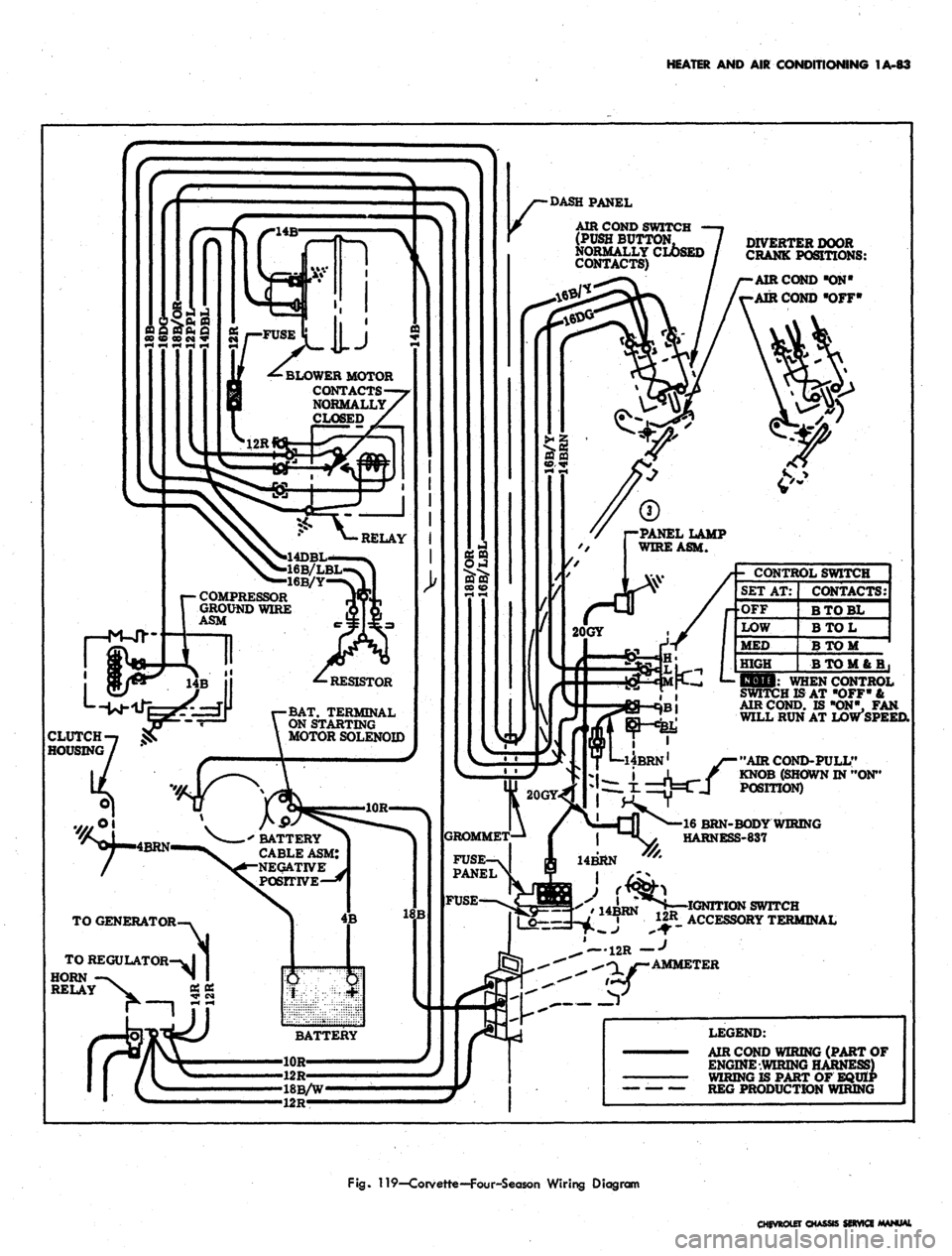
119—Corvette—Four-Season Wiring Diagram
CHEVROLET CHASSIS SERVICE MANUAL
Page 107 of 659
HEATER
AND AIR
CONDITIONING
1A-84
SPECIAL TOOLS
18
19 20 21 23 24
28
30
32
Fig.
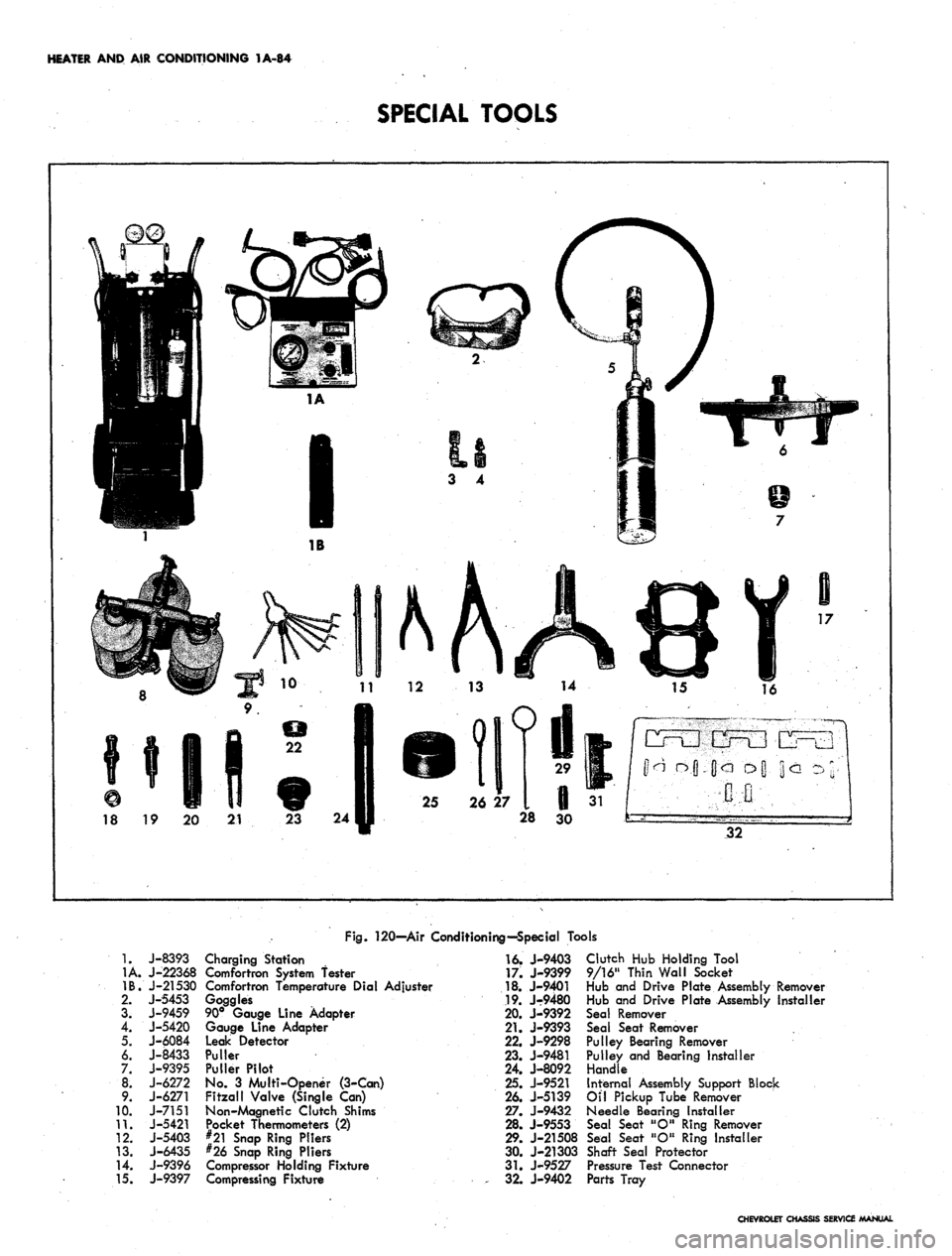
120—Air Conditioning—Special Tools
1.
1A.
IB.
2.
3.
4.
5.
6.
7.
00*
9.
10.
11.
12.
13.
14.
15.
J-8393
J-22368
J-21530
J-5453
J-9459
J-5420
J-6084
J-8433
J-9395
J-6272
J-6271
J-7151
J-5421
J-5403
J-6435
J-9396
J-9397
Charging Station
Comfortron System fester
Comfortron Temperature Dial Adjuster
Goggles
90° Gauge Line Adapter
Gauge Line Adapter
Leak Detector
Puller
Puller Pilot
No.
3
Multi-Opener (3-Can)
Fitzall Valve (Single
Can)
Non-Magnetic Clutch Shims
Pocket Thermometers
(2)
#21 Snap Ring Pliers
#26 Snap Ring Pliers
Compressor Holding Fixture
Compressing Fixture
16.
J-9403
17.
J-9399
18.
J-9401
19.
J-9480
20.
J-9392
21.
J-9393
22.
J-9298
23.
J-9481
24.
J-8092
25.
J-9521
26.
J-5139
27.
J-9432
28.
J-9553
29.
J-21508
30.
J-21303
31.
J-9527
,
32.
J-9402
Clutch
Hub
Holding Tool
9/16" Thin Wall Socket
Hub
and
Drive Plate Assembly Remover
Hub
and
Drive Plate Assembly Installer
Seal Remover
Seal Seat Remover
Pulley Bearing Remover
Pulley and Bearing installer
Handle
Internal Assembly Support Block
Oil Pickup Tube Remover
Needle Bearing Installer
Seal Seat "O" Ring Remover
Seal Seat "O" Ring Installer
Shaft Seal Protector
Pressure Test Connector
Parts Tray
CHEVROLET CHASSIS SERVICE MANUAL
Page 248 of 659
BRAKES 5-15
Brake Shoes
Refer to parking brake shoe service procedures under
Disc Brakes in this section.
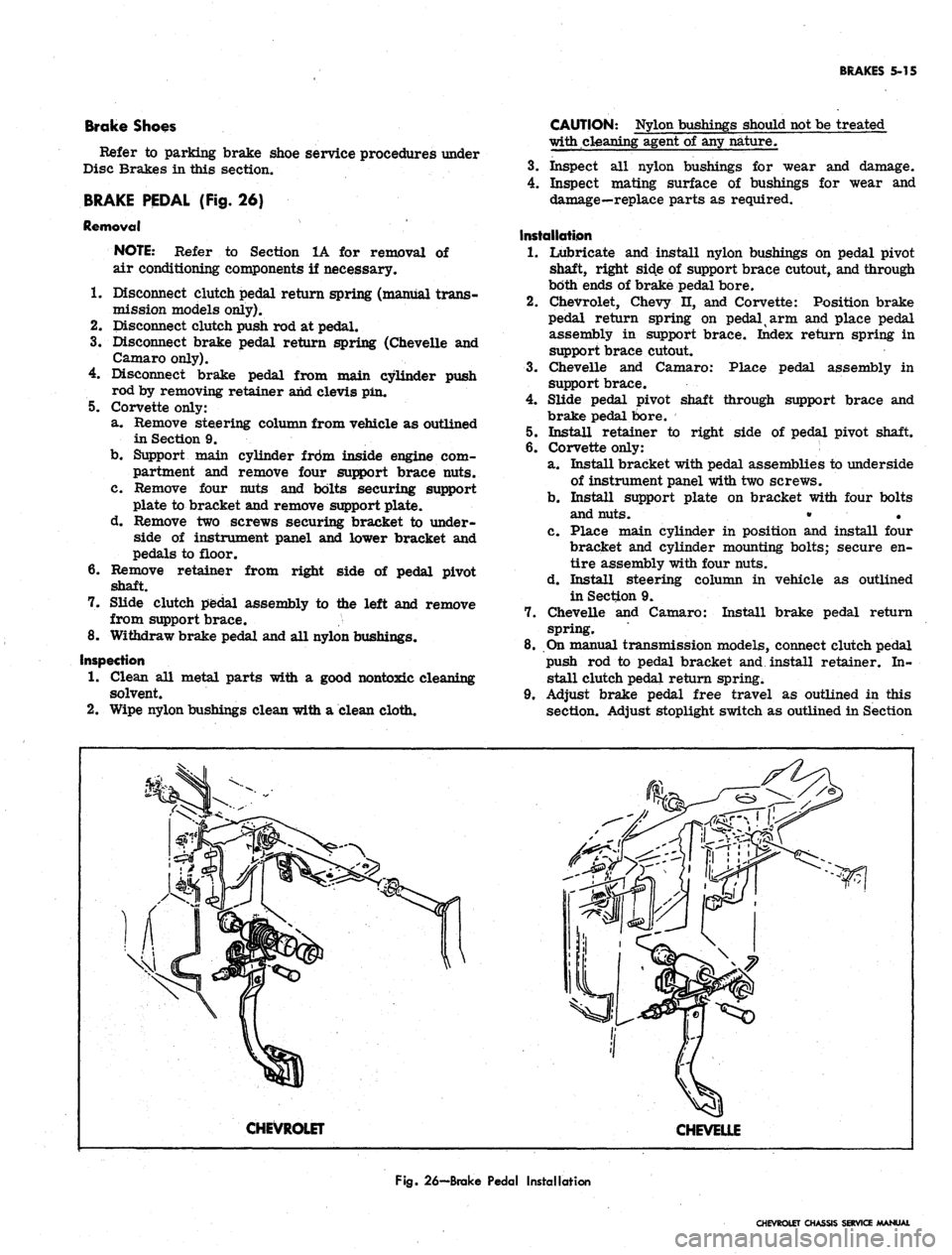
BRAKE PEDAL (Fig. 26)
Removal
NOTE: Refer to Section 1A for removal
air conditioning components if necessary.
of
1.
5.
b.
c.
Disconnect clutch pedal return spring (manual trans-
mission models only).
Disconnect clutch push rod at pedal.
Disconnect brake pedal return spring (Chevelle and
Camaro only).
Disconnect brake pedal from main cylinder push
rod by removing retainer and clevis pin.
Corvette only:
a. Remove steering column from vehicle as outlined
in Section 9.
Support main cylinder frdm inside engine com-
partment and remove four support brace nuts.
Remove four nuts and bolts securing support
plate to bracket and remove support plate.
d. Remove two screws securing bracket to under-
side of instrument panel and lower bracket and
pedals to floor.
Remove retainer from right side of pedal pivot
shaft.
7.
Slide clutch pedal assembly to the left and remove
from support brace.
8. Withdraw brake pedal and all nylon bushings.
Inspection
1.
Clean all metal parts with a good nontoxic cleaning
solvent.
2.
Wipe nylon bushings clean with a clean cloth.
6
CAUTION: Nylon bushings should not be treated
with cleaning agent of any nature.
3.
Inspect all nylon bushings for wear and damage.
4.
Inspect mating surface of bushings for wear and
damage—replace parts as required.
Installation
1.
Lubricate and install nylon bushings on pedal pivot
shaft, right side of support brace cutout, and through
both ends of brake pedal bore.
2.
Chevrolet, Chevy n, and Corvette: Position brake
pedal return spring on pedal arm and place pedal
assembly in support brace. Index return spring in
support brace cutout.
3.
Chevelle and Camaro: Place pedal assembly in
support brace.
4.
Slide pedal pivot shaft through support brace and
brake pedal bore.
5.
Install retainer to right side of pedal pivot shaft.
6. Corvette only:
a. Install bracket with pedal assemblies to underside
of instrument panel with two screws.
b.
Install support plate on bracket with four bolts
and nuts. • • ' •
c. Place main cylinder in position and install four
bracket and cylinder mounting bolts; secure en-
tire assembly with four nuts.
d. Install steering column in vehicle as outlined
in Section 9.
7.
Chevelle and Camaro: Install brake pedal return
spring.
8. On manual transmission models, connect clutch pedal
push rod to pedal bracket and install retainer. In-
stall clutch pedal return spring.
9. Adjust brake pedal free travel as outlined in this
section. Adjust stoplight switch as outlined in Section
CHEVROLET
CHEVELLE
Fig.
26—Brake Pedal Installation
CHEVROLET CHASSIS SERVICE MANUAL