lock CHEVROLET CAMARO 1982 Repair Guide
[x] Cancel search | Manufacturer: CHEVROLET, Model Year: 1982, Model line: CAMARO, Model: CHEVROLET CAMARO 1982Pages: 875, PDF Size: 88.64 MB
Page 552 of 875
GM – CAMARO 1982-1992 – Repair Guide (Checked by WxMax) 552
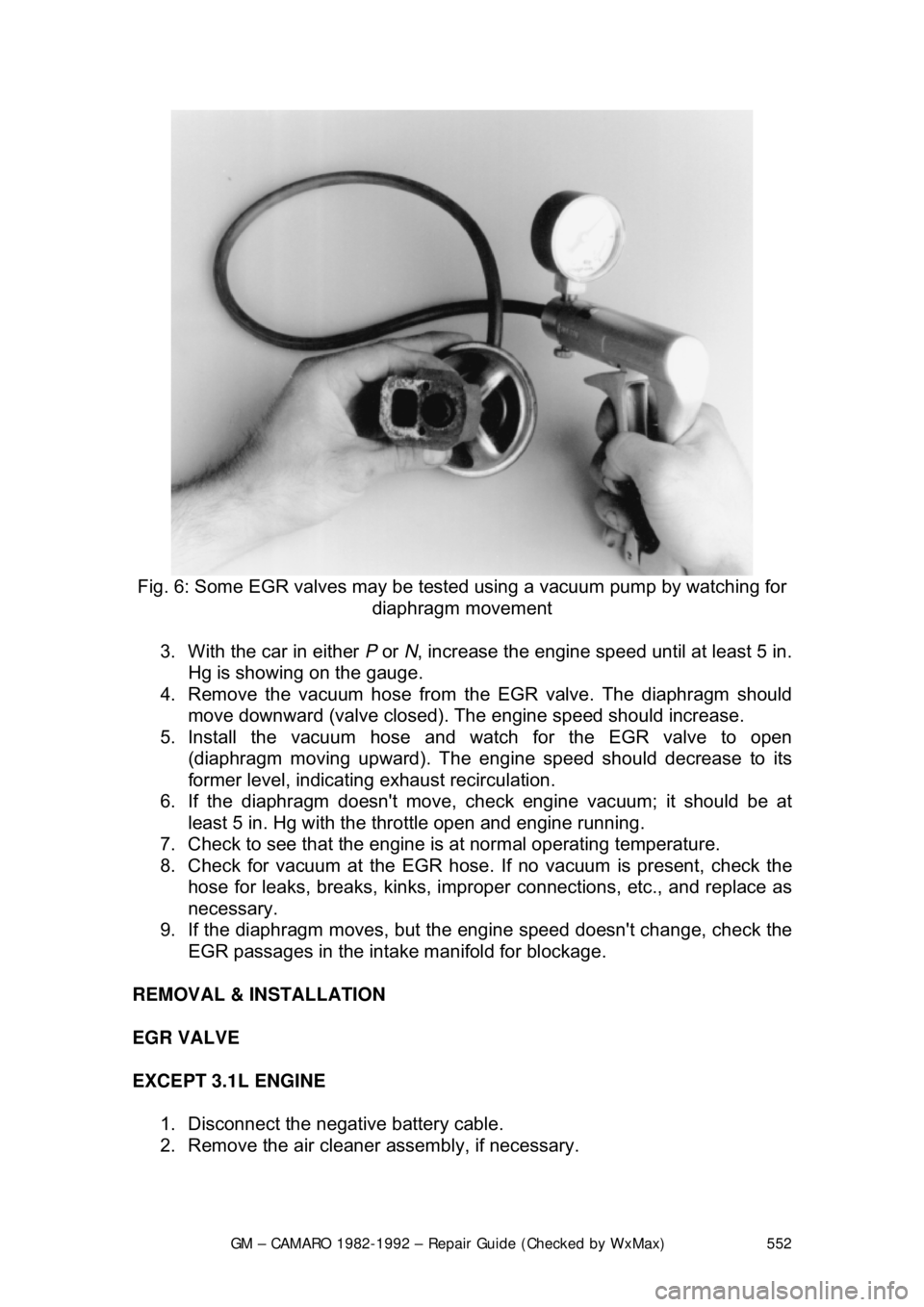
Fig. 6: Some EGR valves may be test ed using a vacuum pump by watching for
diaphragm movement
3. With the car in either P or N, increase the engine speed until at least 5 in.
Hg is showing on the gauge.
4. Remove the vacuum hose from t he EGR valve. The diaphragm should
move downward (valve closed). The engine speed should increase.
5. Install the vacuum hose and watch for the EGR valve to open (diaphragm moving upward). The engine speed should decrease to its
former level, indicating exhaust recirculation.
6. If the diaphragm doesn't move, c heck engine vacuum; it should be at
least 5 in. Hg with the throttle open and engine running.
7. Check to see that the engine is at normal operating temperature.
8. Check for vacuum at the EGR hose. If no vacuum is present, check the
hose for leaks, breaks, kinks, improper connections, etc., and replace as
necessary.
9. If the diaphragm move s, but the engine speed doesn't change, check the
EGR passages in the intake manifold for blockage.
REMOVAL & INSTALLATION
EGR VALVE
EXCEPT 3.1L ENGINE 1. Disconnect the negative battery cable.
2. Remove the air cleaner assembly, if necessary.
Page 567 of 875
GM – CAMARO 1982-1992 – Repair Guide (Checked by WxMax) 567
3. Installation is in the reverse order of removal.
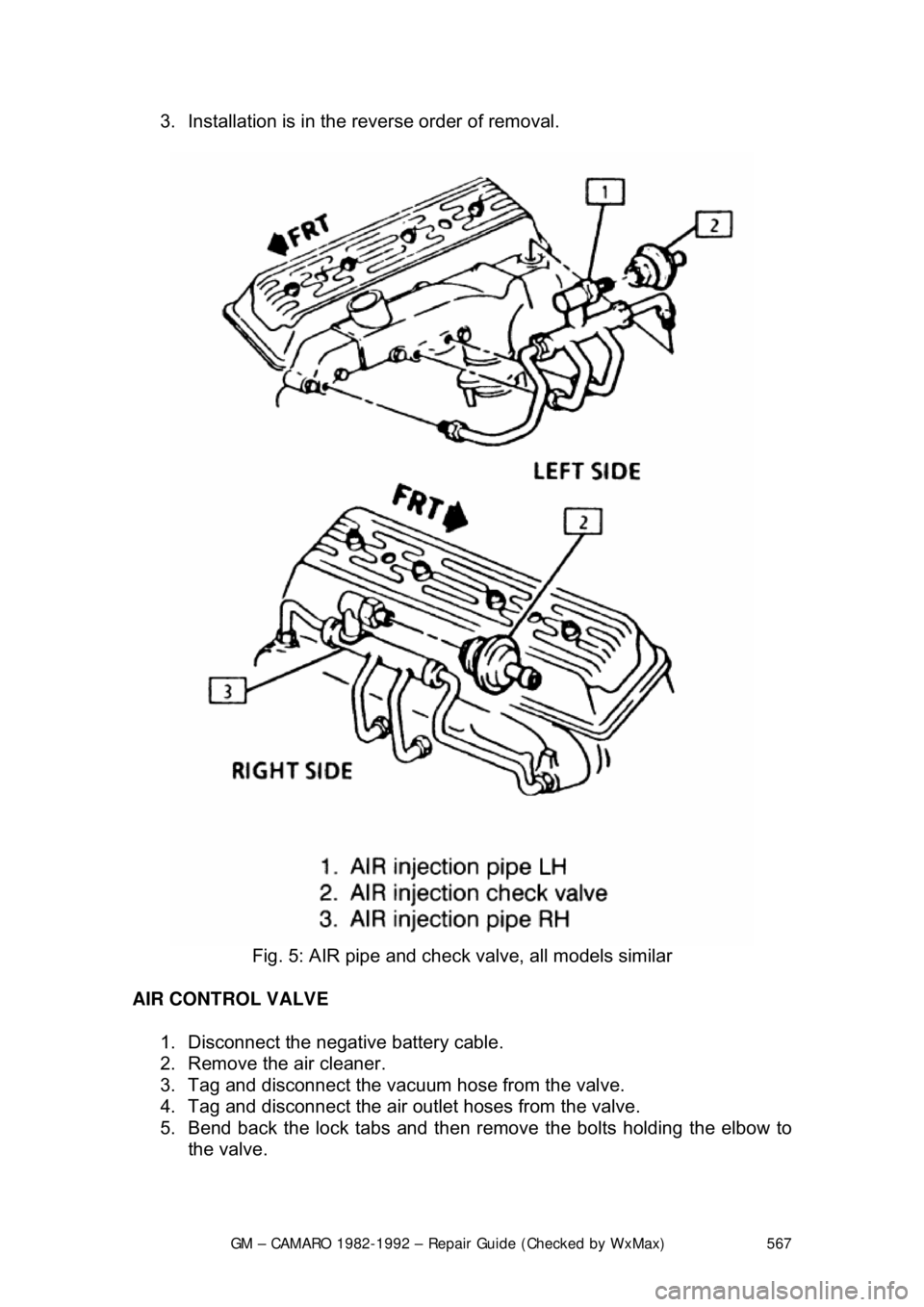
Fig. 5: AIR pipe and check valve, all models similar
AIR CONTROL VALVE 1. Disconnect the negative battery cable.
2. Remove the air cleaner.
3. Tag and disconnect the vacuum hose from the valve.
4. Tag and disconnect the air outle t hoses from the valve.
5. Bend back the lock tabs and then remo ve the bolts holding the elbow to
the valve.
Page 568 of 875
GM – CAMARO 1982-1992 – Repair Guide (Checked by WxMax) 568
6. Tag and disconnect any electrical
connections at the valve and then
remove the valve from the elbow.
To install: 7. Position the valve into the elbow.
8. Connect any electrical c onnections at the valve.
9. Install the bolts holding the elbow to the valve and bend the lock tabs.
10. Connect the air outlet hoses to the valve.
11. Connect the vacuum hose to the valve.
12. Install the air cleaner.
13. Connect the negative battery cable.
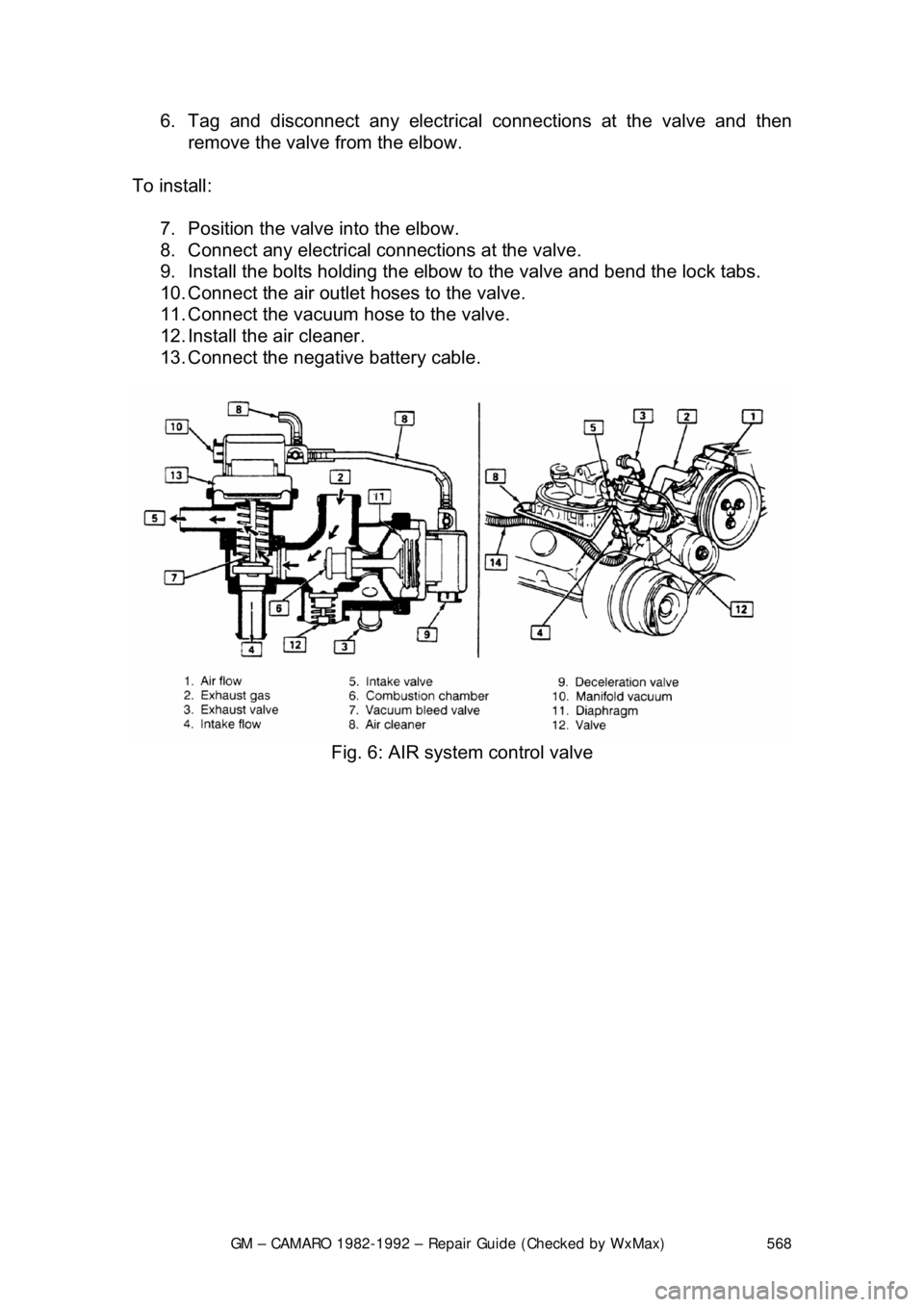
Fig. 6: AIR system control valve
Page 575 of 875
GM – CAMARO 1982-1992 – Repair Guide (Checked by WxMax) 575
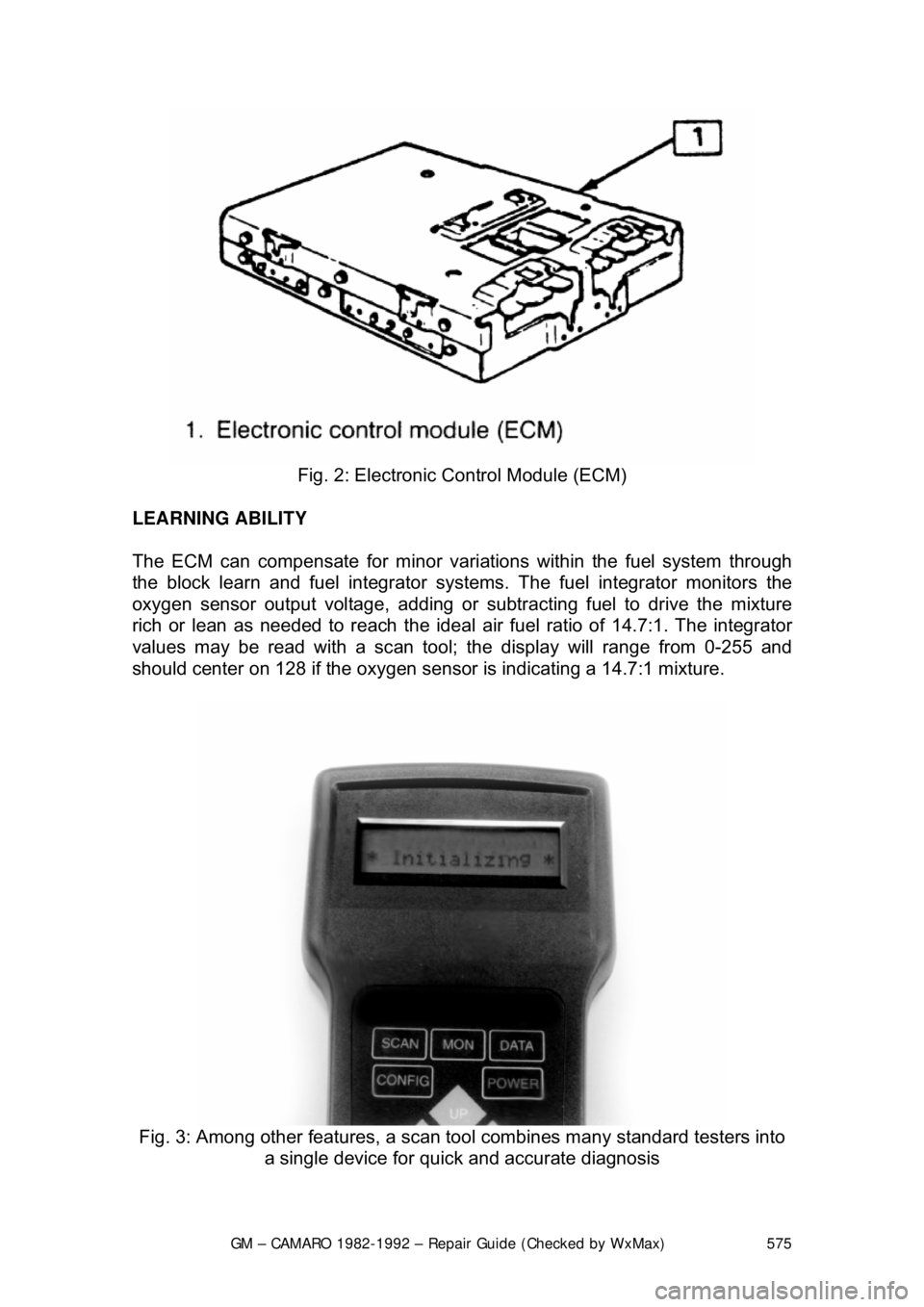
Fig. 2: Electronic Control Module (ECM)
LEARNING ABILITY
The ECM can compensate for minor variations within the fuel system through
the block learn and fuel in tegrator systems. The fuel integrator monitors the
oxygen sensor output voltage, adding or subtracting fuel to drive the mixture
rich or lean as needed to reach the ideal air fuel ratio of 14.7:1. The integrator
values may be read with a scan tool; the display will range from 0-255 and
should center on 128 if the oxygen sens or is indicating a 14.7:1 mixture.
Fig. 3: Among other features, a scan tool combines many standard testers into
a single device for quick and accurate diagnosis
Page 576 of 875
GM – CAMARO 1982-1992 – Repair Guide (Checked by WxMax) 576
The temporary nature
of the integrator's control is expanded by the block learn
function. The name is derived from the fact that the entire engine operating
range (load vs. rpm) is divided into sect ions or blocks. Within each memory
block is stored the correct fuel delivery value for that combination of load and
engine speed. Once the operating range enters a certain block, that stored
value controls the fuel delivery unless th e integrator steps in to change it. If
changes are made by the integrator, t he new value is memorized and stored
within the block. As the block learn makes the correction, the integrator
correction will be reduced until the integrator returns to 128; the block learn then
controls the fuel delivery with the new value.
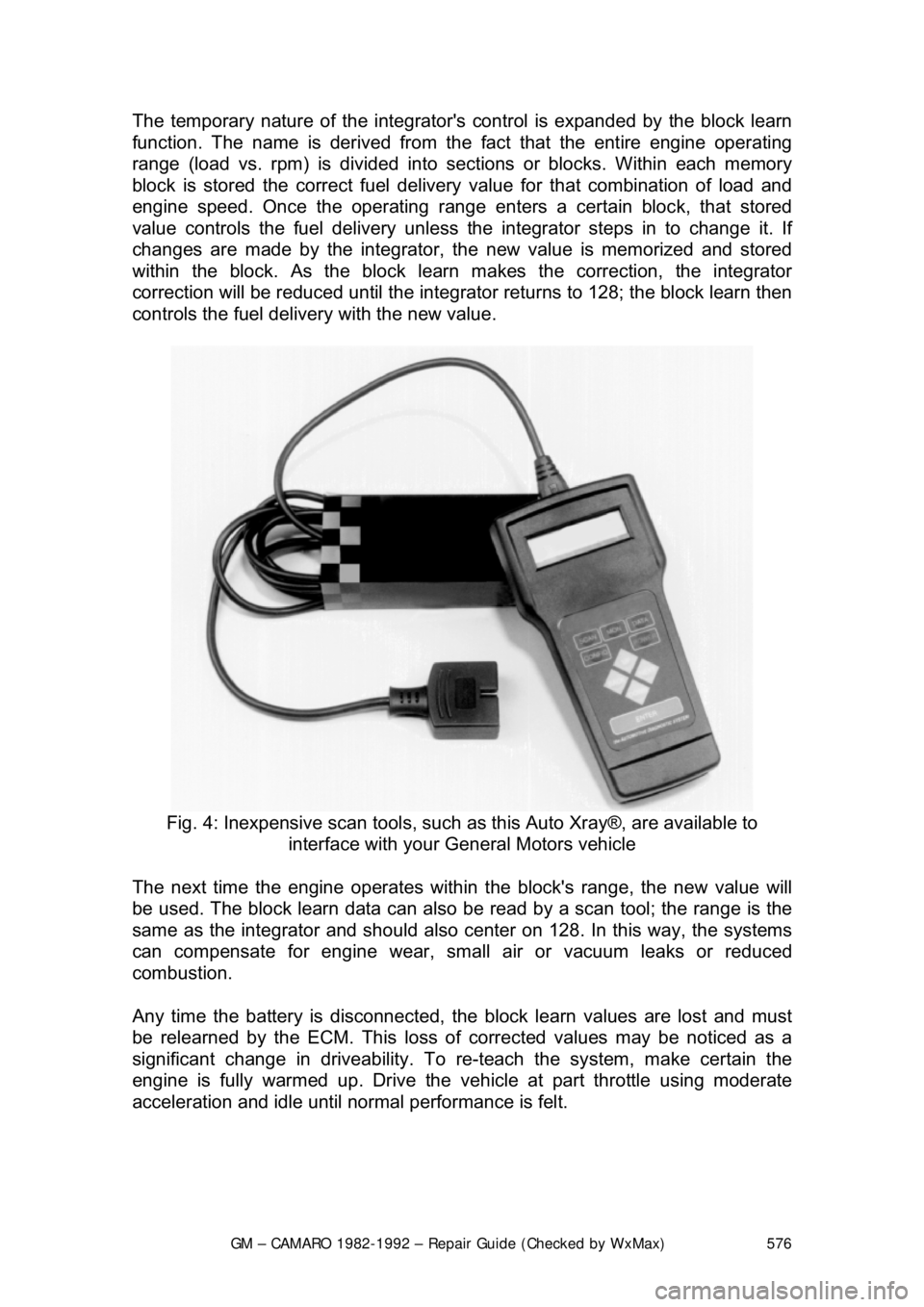
Fig. 4: Inexpensive scan tools, such as this Auto Xray®, are available to
interface with your General Motors vehicle
The next time the engine operates within the block's range, the new value will
be used. The block learn data can also be read by a scan tool; the range is the
same as the integrator and should also center on 128. In this way, the systems
can compensate for engine wear, small air or vacuum leaks or reduced
combustion.
Any time the battery is disconnected, the block learn values are lost and must
be relearned by the ECM. This loss of corrected values may be noticed as a
significant change in driveab ility. To re-teach the system, make certain the
engine is fully warmed up. Drive the v ehicle at part throttle using moderate
acceleration and idle until normal performance is felt.
Page 582 of 875

GM – CAMARO 1982-1992 – Repair Guide (Checked by WxMax) 582
REMOVAL & INSTALLATION
On some models it may be necessary
to remove the air inlet assembly.
1. Disconnect the negative battery cable. Disconnect the IAC valve
electrical wiring.
2. Remove the IAC valve by performing the following: a. On thread-mounted units, use a 1
1/4 inch (32mm) wrench.
b. On flange-mounted units, remove the mounting screw assemblies.
3. Remove the IAC valve ga sket or O-ring and discard.
To install: 4. Clean the mounting surfaces by performing the following:
a. If servicing a thread-mounted valve, remove the old gasket material from the surf ace of the throttle body to ensure proper
sealing of the new gasket.
b. If servicing a flange-mounted valve, clean the IAC valve surfaces on the throttle body to assure pr oper seal of the new O-ring and
contact of the IAC valve flange.
5. If installing a new IAC valve, meas ure the distance between the tip of the
IAC valve pintle and the mounting flange. If the distance is greater than
1.102 inch (28mm), use finger pressure to slowly retract the pintle. The
force required to retract the pintle of a new valve will not cause damage
to the valve. If reinstalling the origin al IAC valve, do not attempt to adjust
the pintle in this manner.
6. Install the IAC valve into the thro ttle body by performing the following:
a. With thread-mounted valves, in stall with a new gasket. Using a
1
1/4 inch (32mm) wrench, tighten to 13 ft. lbs. (18 Nm).
b. With flange-mounted valves, lubricate a new O-ring with
transmission fluid and install on the IAC valve. Install the IAC
valve to the throttle body. Inst all the mounting screws using a
suitable thread locking compound. Tight en to 28 inch lbs. (3 Nm).
7. Connect the IAC valve electrical wiring.
8. Connect the negative battery cable.
9. No physical adjustment of the IAC valve assembly is required after installation. Reset the IAC valve pintle position by performing the
following:
a. Depress the accelerator pedal slightly.
b. Start the engine and run for 5 seconds.
c. Turn the ignition switch to the OFF position for 10 seconds.
d. Restart the engine and check for proper idle operation.
Page 585 of 875
GM – CAMARO 1982-1992 – Repair Guide (Checked by WxMax) 585
MANIFOLD ABSOLUTE PRESSURE SENSOR
OPERATION
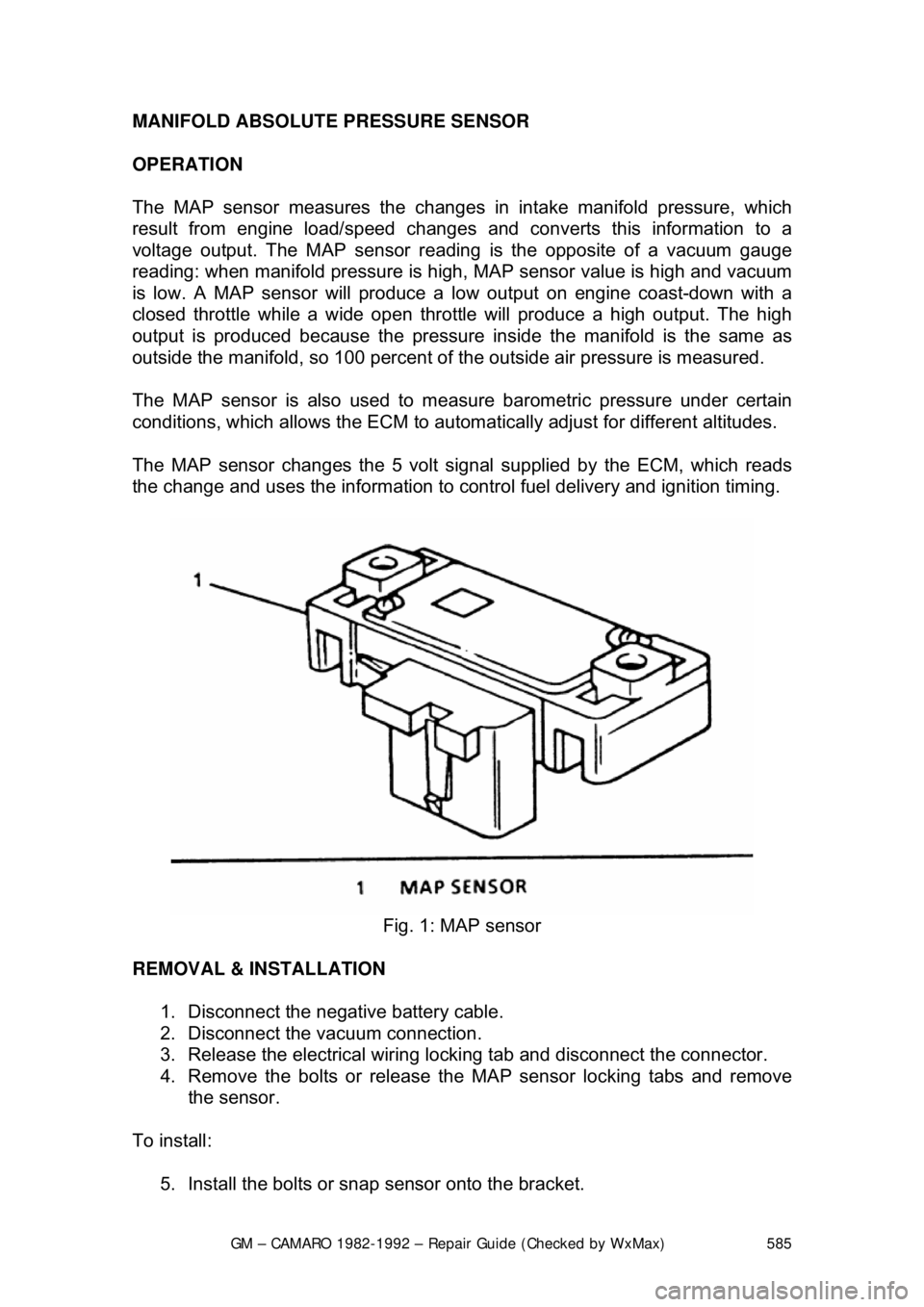
The MAP sensor measures the changes in
intake manifold pressure, which
result from engine load/ speed changes and converts this information to a
voltage output. The MAP sensor reading is the opposite of a vacuum gauge
reading: when manifold pressu re is high, MAP sensor value is high and vacuum
is low. A MAP sensor will produce a low output on engine coast-down with a
closed throttle while a wide open throttle will produce a high output. The high
output is produced because the pressure inside the manifold is the same as
outside the manifold, so 100 percent of t he outside air pressure is measured.
The MAP sensor is also used to meas ure barometric pressure under certain
conditions, which allows the ECM to autom atically adjust for different altitudes.
The MAP sensor changes the 5 volt signal supplied by the ECM, which reads
the change and uses the information to cont rol fuel delivery and ignition timing.
Fig. 1: MAP sensor
REMOVAL & INSTALLATION 1. Disconnect the negative battery cable.
2. Disconnect the vacuum connection.
3. Release the electrical wiring lo cking tab and disconnect the connector.
4. Remove the bolts or release the MAP sensor locking tabs and remove
the sensor.
To install: 5. Install the bolts or snap sensor onto the bracket.
Page 586 of 875
GM – CAMARO 1982-1992 – Repair Guide (Checked by WxMax) 586
6. Connect the MAP sensor
electrical wiring.
7. Connect the MAP sensor vacuum harness connector.
8. Connect the negative battery cable.
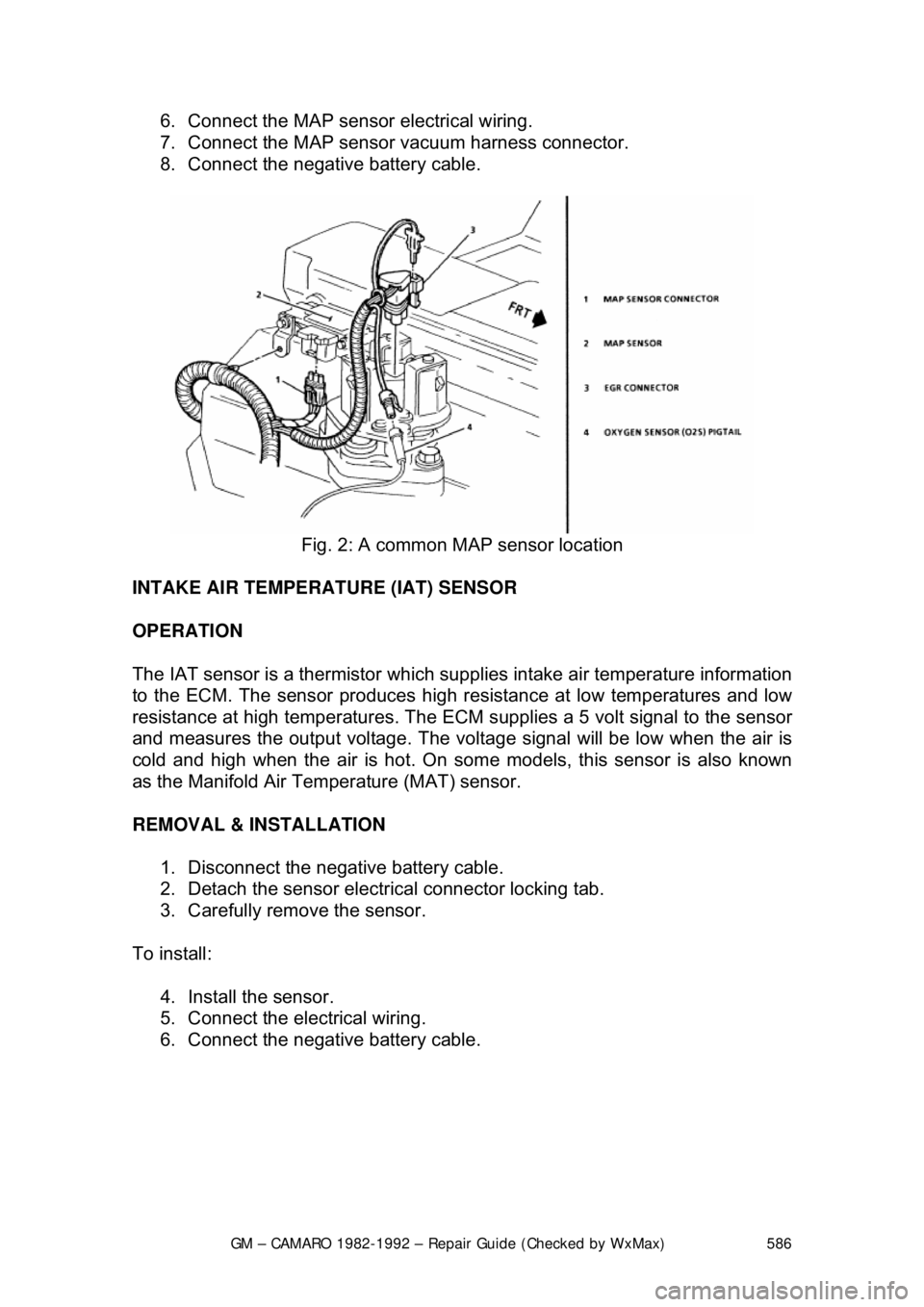
Fig. 2: A common MAP sensor location
INTAKE AIR TEMPERATURE (IAT) SENSOR
OPERATION
The IAT sensor is a thermistor which su pplies intake air temperature information
to the ECM. The sensor produces high re sistance at low temperatures and low
resistance at high temperatures. The ECM supplies a 5 volt signal to the sensor
and measures the output voltage. The vo ltage signal will be low when the air is
cold and high when the air is hot. On so me models, this sensor is also known
as the Manifold Air Tem perature (MAT) sensor.
REMOVAL & INSTALLATION 1. Disconnect the negative battery cable.
2. Detach the sensor electr ical connector locking tab.
3. Carefully remove the sensor.
To install: 4. Install the sensor.
5. Connect the electrical wiring.
6. Connect the negative battery cable.
Page 592 of 875
GM – CAMARO 1982-1992 – Repair Guide (Checked by WxMax) 592
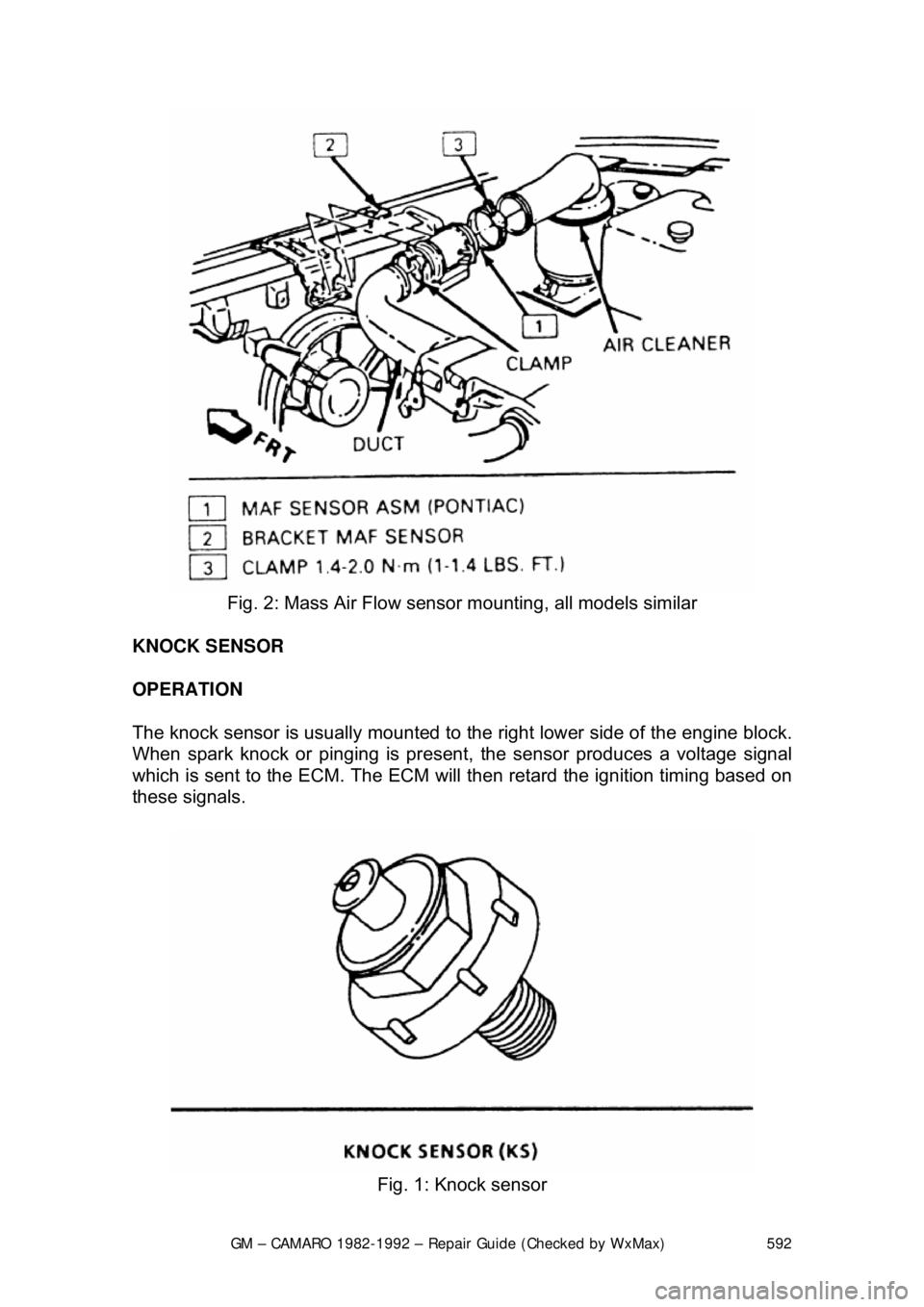
Fig. 2: Mass Air Flow sensor mounting, all models similar
KNOCK SENSOR
OPERATION
The knock sensor is usually mounted to the right lower side of the engine block.
When spark knock or pinging is present, the sensor produces a voltage signal
which is sent to the ECM. The ECM will then retard the ignition timing based on
these signals.
Fig. 1: Knock sensor
Page 593 of 875
GM – CAMARO 1982-1992 – Repair Guide (Checked by WxMax) 593
REMOVAL & INSTALLATION
1. Disconnect the negative battery cable.
2. Drain the engine coolant.
3. Raise and properly support the vehicle.
4. Disconnect the knock sensor wiring harness.
5. Remove the knock sensor from the engine block.
CAUTION - The knock sensor is mounted in the engine block cooling passage.
Engine coolant in the block will dr ain when the sensor is removed.
6. Installation is the reverse of remova l. Tighten the sensor to 14 ft. lbs (19
Nm).
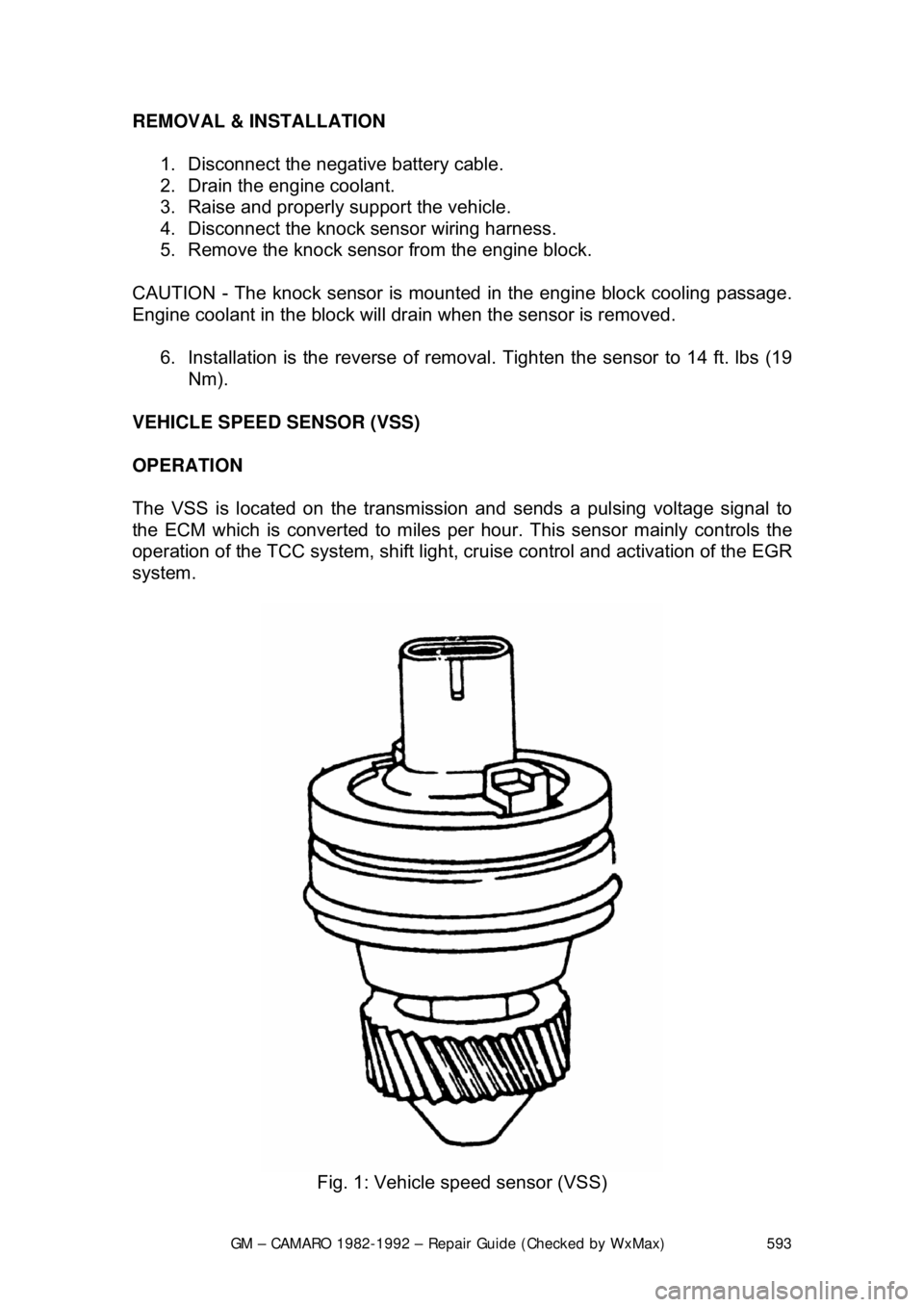
VEHICLE SPEED SENSOR (VSS)
OPERATION
The VSS is located on the transmission and sends a pulsing voltage signal to
the ECM which is converted to miles per hour. This sensor mainly controls the
operation of the TCC system, shift light, cr uise control and activation of the EGR
system.
Fig. 1: Vehicle speed sensor (VSS)