cooling CHEVROLET KODIAK 2009 User Guide
[x] Cancel search | Manufacturer: CHEVROLET, Model Year: 2009, Model line: KODIAK, Model: CHEVROLET KODIAK 2009Pages: 376, PDF Size: 5.39 MB
Page 251 of 376
If you get the overheat warning with no sign of steam,
try this for a minute or so:
1. In heavy traffic, let the engine idle in N (Neutral)
while stopped. If it is safe to do so, pull off the
road, shift to P (Park) or N (Neutral) and let
the engine idle.
2. Turn on your heater to full hot at the highest fan
speed and open the windows as necessary.
3. If climbing a hill, downshift to raise engine and fan
speeds.
If you no longer have the overheat warning, you can
drive. Just to be safe, drive slower for about 10 minutes.
If the warning does not come back on, you can drive
normally.
If the warning continues and you have not stopped, pull
over, stop, and park your vehicle right away.
If there is still no sign of steam, you can push down the
accelerator until the engine speed is about twice as
fast as normal idle speed for at least three minutes while
you are parked. If you still have the warning, turn off
the engine and get everyone out of the vehicle until it
cools down.
You may decide not to lift the hood but to get service
help right away.Engine Fan Noise
Your vehicle has a clutched engine cooling fan. When
the clutch is engaged, the fan spins faster to provide
more air to cool the engine. In most everyday driving
conditions, the clutch is not fully engaged. This improves
fuel economy and reduces fan noise. Under heavy
vehicle loading, trailer towing and/or high outside
temperatures, the fan speed increases when the clutch
engages. So you may hear an increase in fan noise.
This is normal and should not be mistaken as the
transmission slipping or making extra shifts. It is merely
the cooling system functioning properly. The fan will
slow down when additional cooling is not required and
the clutch disengages.
You may also hear this fan noise when you start the
engine. It will go away as the fan clutch disengages.
Power Steering Fluid
SeeScheduled Maintenance on page 6-5to determine
when to check your power steering fluid.
5-49
Page 287 of 376
Using wheels and tires with higher load-carrying limits
than the original wheels and tires does not change
the Gross Axle Weight Rating (GAWR) or the Gross
Vehicle Weight Rating (GVWR) of your vehicle.
SeeLoading the Vehicle on page 4-20for more
information.
Notice:The wrong wheel can cause trouble in
bearing life, brake cooling, speedometer/odometer
calibration, headlamp aim, bumper height, vehicle
ground clearance, stopping distance and tire
clearance to the body and chassis. You could also
have other problems like a tire air-out.
Used Replacement Wheels
{CAUTION:
Putting a used wheel on the vehicle is dangerous.
You cannot know how it has been used or how far
it has been driven. It could fail suddenly and
cause a crash. If you have to replace a wheel, use
a new GM original equipment wheel.
If a Tire Goes Flat
It is unusual for a tire to blowout while you are driving,
especially if you maintain your tires properly. If air
goes out of a tire, it is much more likely to leak out
slowly. But if you should ever have a blowout, here are
a few tips about what to expect and what to do:
If a front tire fails, the flat tire will create a drag that
pulls the vehicle toward that side. Take your foot off the
accelerator pedal and grip the steering wheel firmly.
Steer to maintain lane position, and then gently brake to
a stop well out of the traffic lane.
A rear blowout, particularly on a curve, acts much like a
skid and may require the same correction you would
use in a skid. In any rear blowout, remove your foot from
the accelerator pedal. Get the vehicle under control
by steering the way you want the vehicle to go. It may
be very bumpy and noisy, but you can still steer. Gently
brake to a stop –– well off the road if possible.
5-85
Page 304 of 376
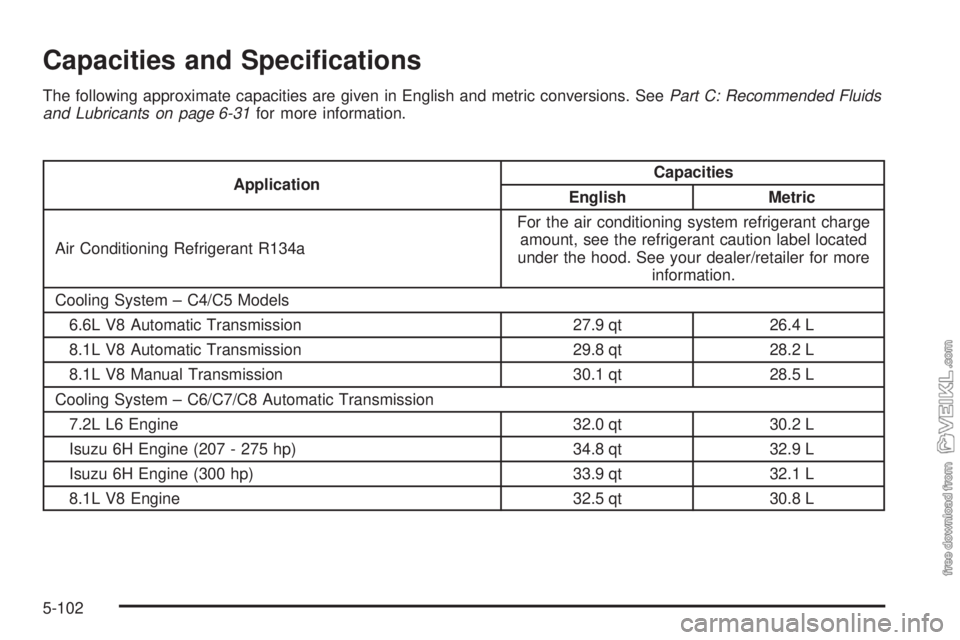
Capacities and Specifications
The following approximate capacities are given in English and metric conversions. SeePart C: Recommended Fluids
and Lubricants on page 6-31for more information.
ApplicationCapacities
English Metric
Air Conditioning Refrigerant R134aFor the air conditioning system refrigerant charge
amount, see the refrigerant caution label located
under the hood. See your dealer/retailer for more
information.
Cooling System – C4/C5 Models
6.6L V8 Automatic Transmission 27.9 qt 26.4 L
8.1L V8 Automatic Transmission 29.8 qt 28.2 L
8.1L V8 Manual Transmission 30.1 qt 28.5 L
Cooling System – C6/C7/C8 Automatic Transmission
7.2L L6 Engine 32.0 qt 30.2 L
Isuzu 6H Engine (207 - 275 hp) 34.8 qt 32.9 L
Isuzu 6H Engine (300 hp) 33.9 qt 32.1 L
8.1L V8 Engine 32.5 qt 30.8 L
5-102
Page 305 of 376
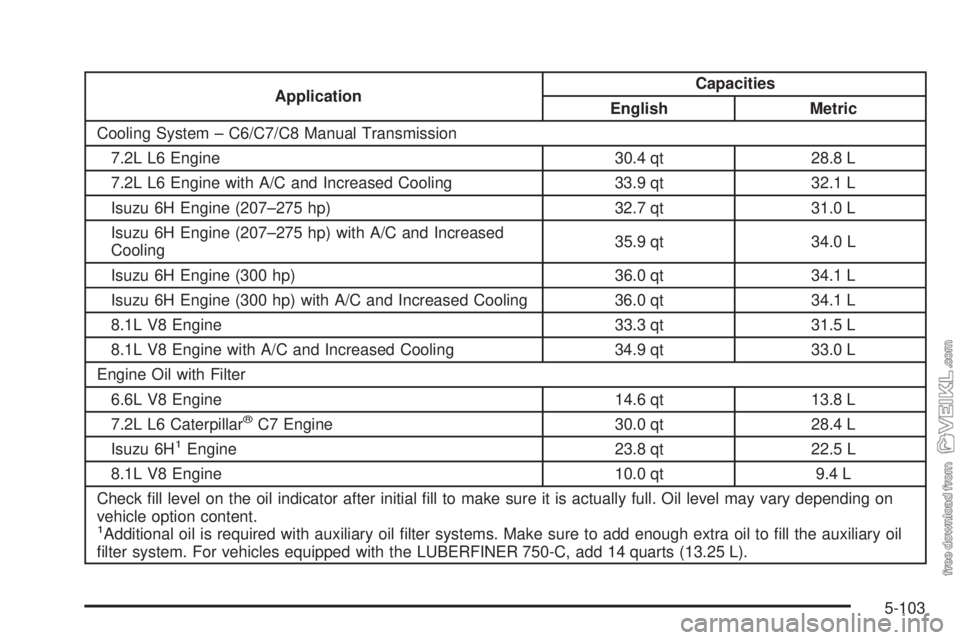
ApplicationCapacities
English Metric
Cooling System – C6/C7/C8 Manual Transmission
7.2L L6 Engine 30.4 qt 28.8 L
7.2L L6 Engine with A/C and Increased Cooling 33.9 qt 32.1 L
Isuzu 6H Engine (207–275 hp) 32.7 qt 31.0 L
Isuzu 6H Engine (207–275 hp) with A/C and Increased
Cooling35.9 qt 34.0 L
Isuzu 6H Engine (300 hp) 36.0 qt 34.1 L
Isuzu 6H Engine (300 hp) with A/C and Increased Cooling 36.0 qt 34.1 L
8.1L V8 Engine 33.3 qt 31.5 L
8.1L V8 Engine with A/C and Increased Cooling 34.9 qt 33.0 L
Engine Oil with Filter
6.6L V8 Engine 14.6 qt 13.8 L
7.2L L6 Caterpillar
®C7 Engine 30.0 qt 28.4 L
Isuzu 6H
1Engine 23.8 qt 22.5 L
8.1L V8 Engine 10.0 qt 9.4 L
Check fill level on the oil indicator after initial fill to make sure it is actually full. Oil level may vary depending on
vehicle option content.
1Additional oil is required with auxiliary oil filter systems. Make sure to add enough extra oil to fill the auxiliary oil
filter system. For vehicles equipped with the LUBERFINER 750-C, add 14 quarts (13.25 L).
5-103
Page 321 of 376

❑Air brake service (or every 6 months, whichever
occurs first).(32)
❑Air brake automatic slack adjuster service (or every
500 hours, whichever occurs first).(33)
❑Check air brake relay valve operation and check for
leaks (or every month, or every 300 hours, whichever
occurs first).
❑Clean air brake application valve (or every 3 months,
or every 300 hours, whichever occurs first). Lubricate
linkage.
❑Air brake chamber service (or every 2 months,
whichever occurs first).(34)
❑Air compressor dry element pleated paper air strainer
service (or every 2 months, or every 800 hours,
whichever occurs first).
❑Thermostatically controlled engine cooling fan
service.(3) (19)
❑Shields and underhood insulation service.(3) (4) (20)
❑Gasoline Engine: Air compressor remote mounted air
filter dry element pleated paper air strainer service (or
every 6 months or every 1800 hours, whichever
occurs first).22,500 Miles (36 000 km)
❑Gasoline Engine Only: Check engine oil life system. If
engine oil and filter are changed, reset system. See
“Engine Oil (Gasoline Engine)” in the Index.(2) (8)
❑Check fluid levels (or every 3 months, whichever
occurs first).(1) (5)
❑Chassis lubrication service (or every 6 months,
whichever occurs first).(11)
❑Inspect door hinge pins and bushings and replace as
necessary.
❑Cooling system service. Clean the cooling system filter
cap with clean water, clean the core, pressure test the
cap and the system for proper pressure capability, and
inspect condition of cooling and heater hoses and
clamps. Replace hoses if cracked, swollen, or
damaged.
❑Wheels and tires service.(14)
❑Hydraulic brake service (or every 6 months, whichever
occurs first).(6) (36)
❑Parking brake service (or every 6 months, whichever
occurs first).(21)
6-7
Page 323 of 376

❑Diesel Engine: Inspect engine air cleaner filter change
indicator. If necessary, replace the filter. If vehicle is
driven in dusty/dirty conditions, inspect filter change
indicator at every engine oil change. SeeEngine Air
Cleaner/Filter on page 5-38for more information.
❑Diesel Only: Replace fuel filter (or every 750 hours of
engine operation, whichever occurs first).
❑Chassis lubrication service (or every 6 months,
whichever occurs first).(11)
❑Gasoline Engine Only: Replace fuel filter(s) (or every
12 months, whichever occurs first).(2)
❑Check restraint system.(40)
❑Steering system service.(12)
❑Front and rear suspension service.(13)
❑Spring-to-axle U-bolts and shackle bolts service.(15)
❑Exhaust system service (or every 6 months, whichever
occurs first).(2) (3) (16)
❑Wheel bearing (grease type) service (and whenever
hubs are removed).(22) (36)
❑Wheels and tires service.(14)
❑Hydraulic brake service (or every 6 months, whichever
occurs first).(6) (36)
❑Parking brake service (or every 6 months, whichever
occurs first).(21)❑Air brake service (or every 6 months, whichever
occurs first).(32)
❑Air brake automatic slack adjuster service (or every
500 hours, whichever occurs first).(33)
❑Check air brake relay valve operation and check for
leaks (or every month, or every 300 hours, whichever
occurs first).
❑Clean air brake application valve (or every 3 months,
or every 300 hours, whichever occurs first). Lubricate
linkage.
❑Air brake chamber service (or every 2 months,
whichever occurs first).(34)
❑Air compressor dry element pleated paper air strainer
service (or every 2 months, or every 800 hours,
whichever occurs first).
❑C600, C700, and C800 Gasoline Engines Only:
Engine drive belts service (or every 12 months,
whichever occurs first.)(17)
❑Thermostatically controlled engine cooling fan
service.(3) (19)
❑Shields and underhood insulation service.(3) (4) (20)
❑Gasoline Engine: Air compressor remote mounted air
filter dry element pleated paper air strainer service (or
every 6 months or every 1800 hours, whichever
occurs first).
6-9
Page 325 of 376

❑Cooling system service. Clean the cooling system filler
cap with clean water, clean the core, pressure test the
cap and the system for proper pressure capability, and
inspect condition of cooling and heater hoses and
clamps. Replace hoses if cracked, swollen, or
damaged.
❑Inspect door hinge pins and bushings and replace as
necessary.
❑Steering system service.(12)
❑Front and rear suspension service.(13)
❑Spring-to-axle U-bolts and shackle bolts service.(15)
❑Exhaust system service (or every 6 months, whichever
occurs first).(2) (3) (16)
❑Wheels and tires service.(14)
❑Hydraulic brake service (or every 6 months, whichever
occurs first).(6) (36)
❑Parking brake service (or every 6 months, whichever
occurs first).(21)
❑Air brake service (or every 6 months, whichever
occurs first).(32)
❑Air brake automatic slack adjuster service (or every
500 hours, whichever occurs first).(33)
❑Check air brake relay valve operation and check for
leaks (or every month, or every 300 hours, whichever
occurs first).❑Clean air brake application valve (or every 3 months,
or every 300 hours, whichever occurs first). Lubricate
linkage.
❑Air brake chamber service (or every 2 months,
whichever occurs first).(34)
❑Air brake system valve service (or every 3 months, or
every 900 hours, whichever occurs first).(37)
❑Air compressor dry element pleated paper air strainer
service (or every 2 months, or every 800 hours,
whichever occurs first).
❑Thermostatically controlled engine cooling fan
service.(3) (19)
❑Shields and underhood insulation service.(3) (4) (20)
❑Rear axle air shift motor service.(10)
❑Air intake system service (or every 24 months,
whichever occurs first).(3) (4) (23)
❑Evaporative Control System service, if equipped, (or
every 24 months, whichever occurs first).(2) (24) †
❑Gasoline Engine: Air compressor remote mounted air
filter dry element pleated paper air strainer service (or
every 6 months or every 1800 hours, whichever
occurs first).
6-11
Page 328 of 376
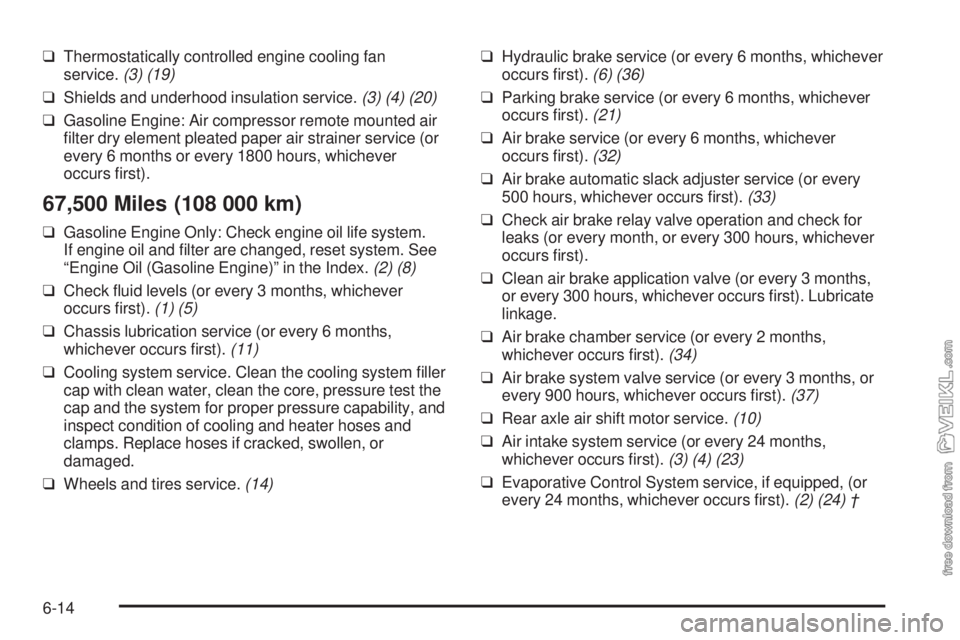
❑Thermostatically controlled engine cooling fan
service.(3) (19)
❑Shields and underhood insulation service.(3) (4) (20)
❑Gasoline Engine: Air compressor remote mounted air
filter dry element pleated paper air strainer service (or
every 6 months or every 1800 hours, whichever
occurs first).
67,500 Miles (108 000 km)
❑Gasoline Engine Only: Check engine oil life system.
If engine oil and filter are changed, reset system. See
“Engine Oil (Gasoline Engine)” in the Index.(2) (8)
❑Check fluid levels (or every 3 months, whichever
occurs first).(1) (5)
❑Chassis lubrication service (or every 6 months,
whichever occurs first).(11)
❑Cooling system service. Clean the cooling system filler
cap with clean water, clean the core, pressure test the
cap and the system for proper pressure capability, and
inspect condition of cooling and heater hoses and
clamps. Replace hoses if cracked, swollen, or
damaged.
❑Wheels and tires service.(14)❑Hydraulic brake service (or every 6 months, whichever
occurs first).(6) (36)
❑Parking brake service (or every 6 months, whichever
occurs first).(21)
❑Air brake service (or every 6 months, whichever
occurs first).(32)
❑Air brake automatic slack adjuster service (or every
500 hours, whichever occurs first).(33)
❑Check air brake relay valve operation and check for
leaks (or every month, or every 300 hours, whichever
occurs first).
❑Clean air brake application valve (or every 3 months,
or every 300 hours, whichever occurs first). Lubricate
linkage.
❑Air brake chamber service (or every 2 months,
whichever occurs first).(34)
❑Air brake system valve service (or every 3 months, or
every 900 hours, whichever occurs first).(37)
❑Rear axle air shift motor service.(10)
❑Air intake system service (or every 24 months,
whichever occurs first).(3) (4) (23)
❑Evaporative Control System service, if equipped, (or
every 24 months, whichever occurs first).(2) (24) †
6-14
Page 330 of 376
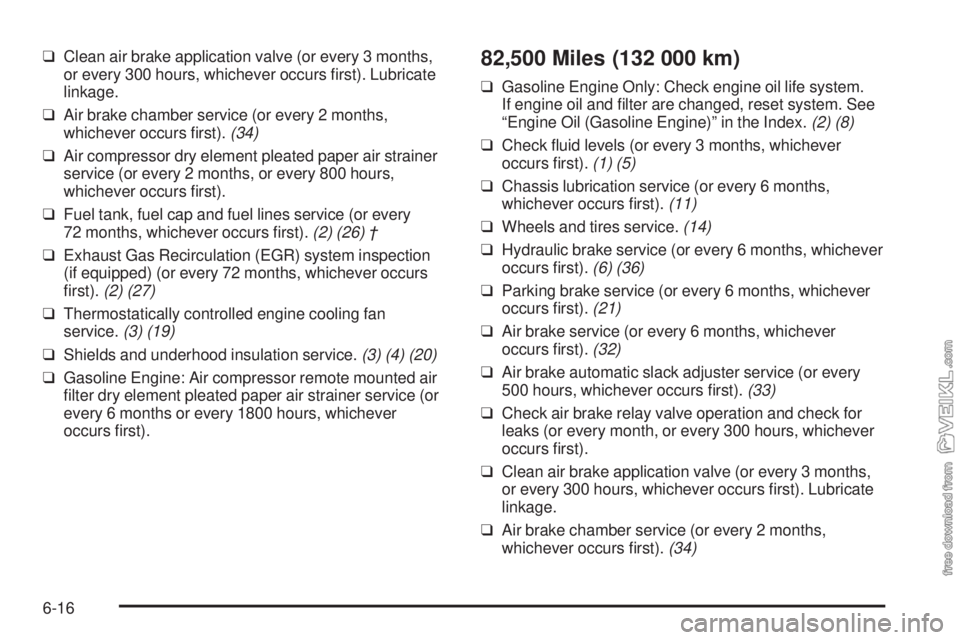
❑Clean air brake application valve (or every 3 months,
or every 300 hours, whichever occurs first). Lubricate
linkage.
❑Air brake chamber service (or every 2 months,
whichever occurs first).(34)
❑Air compressor dry element pleated paper air strainer
service (or every 2 months, or every 800 hours,
whichever occurs first).
❑Fuel tank, fuel cap and fuel lines service (or every
72 months, whichever occurs first).(2) (26) †
❑Exhaust Gas Recirculation (EGR) system inspection
(if equipped) (or every 72 months, whichever occurs
first).(2) (27)
❑Thermostatically controlled engine cooling fan
service.(3) (19)
❑Shields and underhood insulation service.(3) (4) (20)
❑Gasoline Engine: Air compressor remote mounted air
filter dry element pleated paper air strainer service (or
every 6 months or every 1800 hours, whichever
occurs first).82,500 Miles (132 000 km)
❑Gasoline Engine Only: Check engine oil life system.
If engine oil and filter are changed, reset system. See
“Engine Oil (Gasoline Engine)” in the Index.(2) (8)
❑Check fluid levels (or every 3 months, whichever
occurs first).(1) (5)
❑Chassis lubrication service (or every 6 months,
whichever occurs first).(11)
❑Wheels and tires service.(14)
❑Hydraulic brake service (or every 6 months, whichever
occurs first).(6) (36)
❑Parking brake service (or every 6 months, whichever
occurs first).(21)
❑Air brake service (or every 6 months, whichever
occurs first).(32)
❑Air brake automatic slack adjuster service (or every
500 hours, whichever occurs first).(33)
❑Check air brake relay valve operation and check for
leaks (or every month, or every 300 hours, whichever
occurs first).
❑Clean air brake application valve (or every 3 months,
or every 300 hours, whichever occurs first). Lubricate
linkage.
❑Air brake chamber service (or every 2 months,
whichever occurs first).(34)
6-16
Page 331 of 376
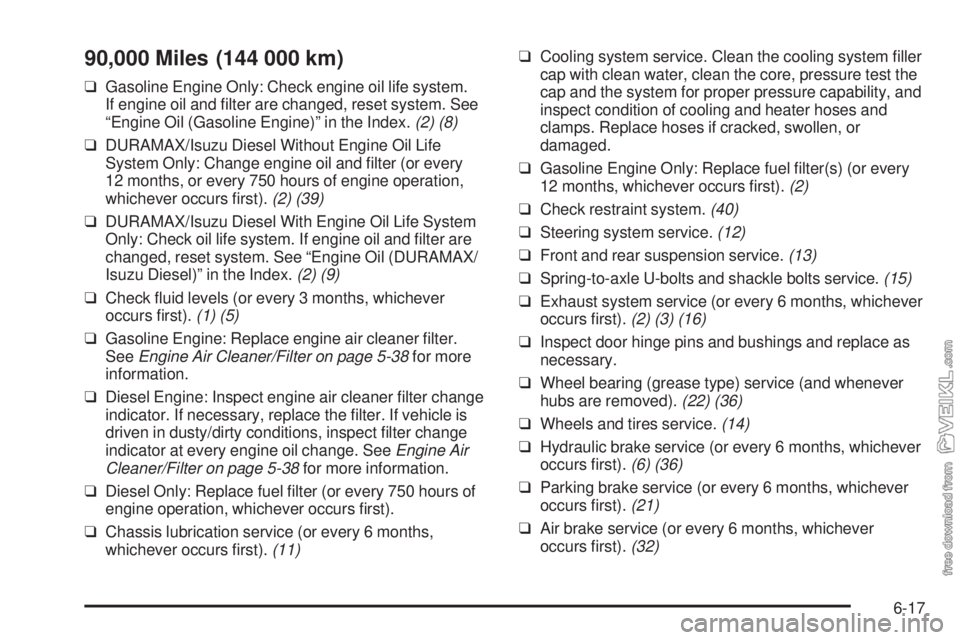
90,000 Miles (144 000 km)
❑Gasoline Engine Only: Check engine oil life system.
If engine oil and filter are changed, reset system. See
“Engine Oil (Gasoline Engine)” in the Index.(2) (8)
❑DURAMAX/Isuzu Diesel Without Engine Oil Life
System Only: Change engine oil and filter (or every
12 months, or every 750 hours of engine operation,
whichever occurs first).(2) (39)
❑DURAMAX/Isuzu Diesel With Engine Oil Life System
Only: Check oil life system. If engine oil and filter are
changed, reset system. See “Engine Oil (DURAMAX/
Isuzu Diesel)” in the Index.(2) (9)
❑Check fluid levels (or every 3 months, whichever
occurs first).(1) (5)
❑Gasoline Engine: Replace engine air cleaner filter.
SeeEngine Air Cleaner/Filter on page 5-38for more
information.
❑Diesel Engine: Inspect engine air cleaner filter change
indicator. If necessary, replace the filter. If vehicle is
driven in dusty/dirty conditions, inspect filter change
indicator at every engine oil change. SeeEngine Air
Cleaner/Filter on page 5-38for more information.
❑Diesel Only: Replace fuel filter (or every 750 hours of
engine operation, whichever occurs first).
❑Chassis lubrication service (or every 6 months,
whichever occurs first).(11)❑Cooling system service. Clean the cooling system filler
cap with clean water, clean the core, pressure test the
cap and the system for proper pressure capability, and
inspect condition of cooling and heater hoses and
clamps. Replace hoses if cracked, swollen, or
damaged.
❑Gasoline Engine Only: Replace fuel filter(s) (or every
12 months, whichever occurs first).(2)
❑Check restraint system.(40)
❑Steering system service.(12)
❑Front and rear suspension service.(13)
❑Spring-to-axle U-bolts and shackle bolts service.(15)
❑Exhaust system service (or every 6 months, whichever
occurs first).(2) (3) (16)
❑Inspect door hinge pins and bushings and replace as
necessary.
❑Wheel bearing (grease type) service (and whenever
hubs are removed).(22) (36)
❑Wheels and tires service.(14)
❑Hydraulic brake service (or every 6 months, whichever
occurs first).(6) (36)
❑Parking brake service (or every 6 months, whichever
occurs first).(21)
❑Air brake service (or every 6 months, whichever
occurs first).(32)
6-17