engine coolant CHEVROLET KODIAK 2009 User Guide
[x] Cancel search | Manufacturer: CHEVROLET, Model Year: 2009, Model line: KODIAK, Model: CHEVROLET KODIAK 2009Pages: 376, PDF Size: 5.39 MB
Page 112 of 376

Manual Cleaning Procedure
{CAUTION:
During DPF self cleaning, the exhaust system and
exhaust gases are very hot. Stay clear of the
tailpipe area and do not park over things that burn.
You or others could be burned or the vehicle could
catch fire. SeeParking Over Things That Burn on
page 2-44.
If the yellow or red DPF indicator is on, you can clean
the DPF by performing a manual cleaning.When it is safe to do so, stop the vehicle. Perform DPF
manual cleaning in a well ventilated area. DPF Manual
cleaning must be performed outdoors, as follows. Once
manual cleaning is started, complete the manual cleaning
in a single operation if possible. If manual cleaning is not
completed, as indicated by the green DPF indicator going
off, and the yellow or red indicator light remains on, self
cleaning might not be allowed until the vehicle is stopped
and manual cleaning is performed until completed.
1. Check engine oil and engine coolant levels to be
sure they are at proper operating levels.
2. To prevent running out of fuel during manual
cleaning, make sure there is at least a quarter of a
tank of fuel.
3. Check to make sure the area near the exhaust
tailpipe and under the exhaust system are clear
of any materials that could catch fire. Keep people
away from the area of the exhaust system and
exhaust gases.
2-48
Page 113 of 376
4. Fully set the parking brake.
5. Shift the transmission to P (Park) or N (Neutral).
6. Idle the engine. If you used the idling control knob to
increase the engine speed, restore it all the way to
the left to reduce the engine speed.
7. If the vehicle has a Power Take Off (PTO), turn the
PTO off. SeePower Take-Off (PTO) on page 2-30.
8. Press the DPF switch in the instrument panel
switchbank. SeeInstrument Panel Switchbank
on page 3-18. The green DPF indicator light comes
on, the exhaust gas control valve operates,
engine idle speed automatically increases, and DPF
cleaning begins. Do not leave the vehicle
unattended during manual cleaning.9. When both the green and the yellow or red DPF
indicator lights go off, cleaning is completed.
Manual cleaning is normally completed in about
30 minutes.
Under certain operating conditions, manual cleaning
might not be able to be performed, even if the soot level
in the DPF requires cleaning. This can occur because of
low coolant temperature, low battery voltage, high
exhaust temperature or immediately after starting the
vehicle. When manual cleaning is requested and coolant
temperature is low, an engine warm-up cycle is started.
The green indicator light will come on, the exhaust gas
control valve operates, and engine rpm increases to help
raise engine coolant temperature. When operating
conditions allow, cleaning will begin.
2-49
Page 119 of 376
Instrument Panel Overview...............................3-4
Hazard Warning Flashers................................3-6
Horn .............................................................3-6
Tilt Wheel.....................................................3-6
Turn Signal/Multifunction Lever.........................3-7
Turn and Lane-Change Signals........................3-7
Headlamp High/Low-Beam Changer..................3-8
Windshield Wipers..........................................3-8
Windshield Washer.........................................3-9
Cruise Control..............................................3-10
Exterior Lamps.............................................3-14
Headlamps on Reminder................................3-14
Daytime Running Lamps (DRL).......................3-15
Marker Lamps..............................................3-16
Instrument Panel Brightness...........................3-16
Dome Lamps ...............................................3-16
Entry Lighting...............................................3-17
Reading Lamps............................................3-17
Instrument Panel Switchbank..........................3-18
Accessory Power Outlet(s).............................3-19
Ashtray(s) and Cigarette Lighter......................3-19Climate Controls............................................3-20
Climate Control System.................................3-20
Outlet Adjustment.........................................3-22
Rear Heating System....................................3-23
Warning Lights, Gages, and Indicators............3-23
Instrument Panel Cluster................................3-24
Speedometer and Odometer...........................3-25
Trip Odometer..............................................3-25
Tachometer.................................................3-25
Engine Speed Limiter....................................3-25
Safety Belt Reminders...................................3-26
Airbag Readiness Light..................................3-27
Airbag Off Light............................................3-28
Charging System Light
..................................3-29
Voltmeter Gage............................................3-30
Service Transmission Warning Light................3-30
Range Inhibit Warning Indicator......................3-31
Brake System Warning Light..........................3-31
Antilock Brake System (ABS) Warning Light........3-33
Trailer Antilock Brake System Warning Light.......3-34
Engine Coolant Temperature Gage..................3-34
Section 3 Instrument Panel
3-1
Page 120 of 376
Low Coolant Warning Light............................3-35
Wait to Start Light........................................3-35
Malfunction Indicator Lamp.............................3-36
Oil Pressure Gage........................................3-38
Low Oil Level Light.......................................3-39
Change Engine Oil Light................................3-39
Engine Overspeed Warning Light....................3-40
Engine Shutdown Warning Light.....................3-40
Transmission Temperature Gage.....................3-40
Exhaust Brake Indicator Light.........................3-41
Differential Lock Indicator Light.......................3-41
Reduced Engine Power Light.........................3-42
Highbeam On Light.......................................3-42
Daytime Running Lamps (DRL)
Indicator Light...........................................3-42
Low Washer Fluid Warning Light.....................3-43
Power Take-Off Light (PTO)...........................3-43Check Gages Warning Light...........................3-43
Fuel Gage...................................................3-44
Water in Fuel Warning Light...........................3-45
Change Fuel Filter Warning Light....................3-45
Diesel Particulate Filter Warning Light..............3-46
Air Filter Restriction Indicator..........................3-46
Air Pressure Gage........................................3-47
Hourmeter Gage...........................................3-47
Audio System(s).............................................3-48
Setting the Clock..........................................3-48
Radio(s)......................................................3-49
Theft-Deterrent Feature..................................3-57
Radio Reception...........................................3-58
Fixed Mast Antenna......................................3-58
Chime Level Adjustment................................3-58
Section 3 Instrument Panel
3-2
Page 152 of 376
Trailer Antilock Brake System
Warning Light
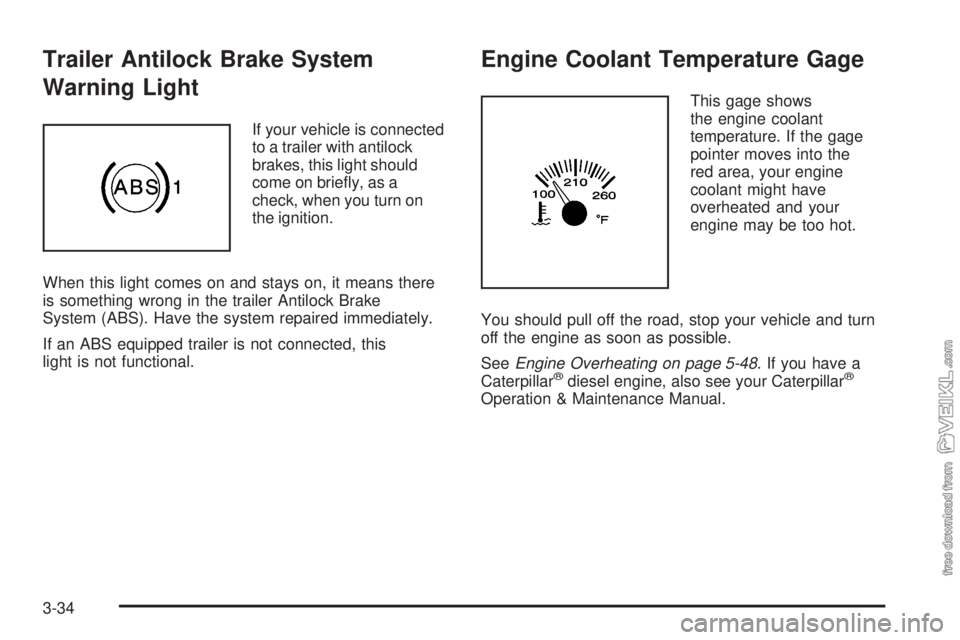
If your vehicle is connected
to a trailer with antilock
brakes, this light should
come on briefly, as a
check, when you turn on
the ignition.
When this light comes on and stays on, it means there
is something wrong in the trailer Antilock Brake
System (ABS). Have the system repaired immediately.
If an ABS equipped trailer is not connected, this
light is not functional.
Engine Coolant Temperature Gage
This gage shows
the engine coolant
temperature. If the gage
pointer moves into the
red area, your engine
coolant might have
overheated and your
engine may be too hot.
You should pull off the road, stop your vehicle and turn
off the engine as soon as possible.
SeeEngine Overheating on page 5-48. If you have a
Caterpillar
®diesel engine, also see your Caterpillar®
Operation & Maintenance Manual.
3-34
Page 153 of 376
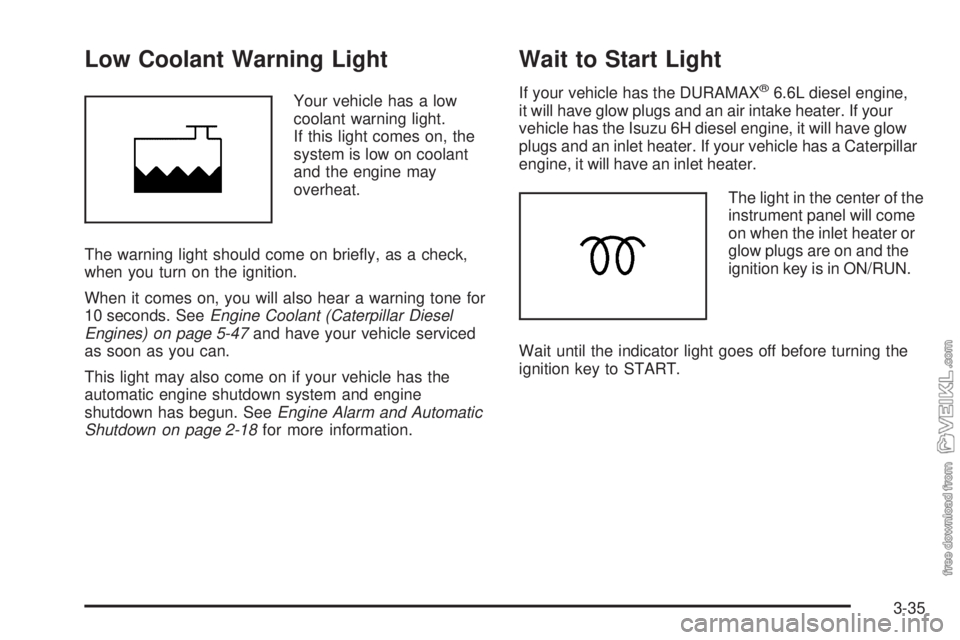
Low Coolant Warning Light
Your vehicle has a low
coolant warning light.
If this light comes on, the
system is low on coolant
and the engine may
overheat.
The warning light should come on briefly, as a check,
when you turn on the ignition.
When it comes on, you will also hear a warning tone for
10 seconds. SeeEngine Coolant (Caterpillar Diesel
Engines) on page 5-47and have your vehicle serviced
as soon as you can.
This light may also come on if your vehicle has the
automatic engine shutdown system and engine
shutdown has begun. SeeEngine Alarm and Automatic
Shutdown on page 2-18for more information.
Wait to Start Light
If your vehicle has the DURAMAX®6.6L diesel engine,
it will have glow plugs and an air intake heater. If your
vehicle has the Isuzu 6H diesel engine, it will have glow
plugs and an inlet heater. If your vehicle has a Caterpillar
engine, it will have an inlet heater.
The light in the center of the
instrument panel will come
on when the inlet heater or
glow plugs are on and the
ignition key is in ON/RUN.
Wait until the indicator light goes off before turning the
ignition key to START.
3-35
Page 161 of 376
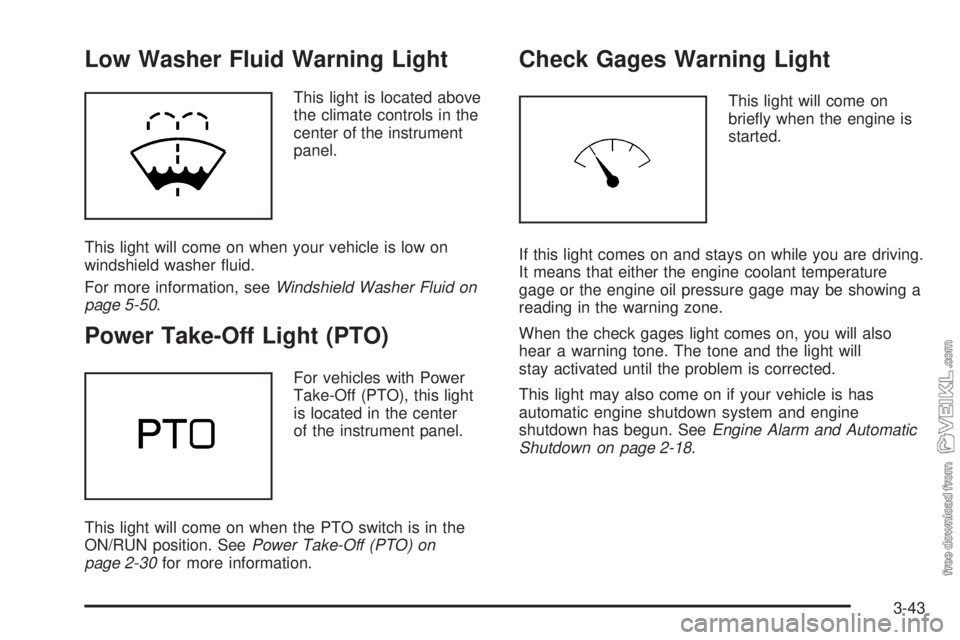
Low Washer Fluid Warning Light
This light is located above
the climate controls in the
center of the instrument
panel.
This light will come on when your vehicle is low on
windshield washer fluid.
For more information, seeWindshield Washer Fluid on
page 5-50.
Power Take-Off Light (PTO)
For vehicles with Power
Take-Off (PTO), this light
is located in the center
of the instrument panel.
This light will come on when the PTO switch is in the
ON/RUN position. SeePower Take-Off (PTO) on
page 2-30for more information.
Check Gages Warning Light
This light will come on
briefly when the engine is
started.
If this light comes on and stays on while you are driving.
It means that either the engine coolant temperature
gage or the engine oil pressure gage may be showing a
reading in the warning zone.
When the check gages light comes on, you will also
hear a warning tone. The tone and the light will
stay activated until the problem is corrected.
This light may also come on if your vehicle is has
automatic engine shutdown system and engine
shutdown has begun. SeeEngine Alarm and Automatic
Shutdown on page 2-18.
3-43
Page 203 of 376
Service............................................................5-3
Accessories and Modifications..........................5-3
California Proposition 65 Warning.....................5-4
California Perchlorate Materials Requirements.....5-4
Doing Your Own Service Work.........................5-5
Engine Fan Breakage.....................................5-6
Fuel................................................................5-6
Gasoline Octane............................................5-6
Gasoline Specifications....................................5-7
Additives.......................................................5-7
Diesel Engine Fuel.........................................5-8
What Fuel to Use...........................................5-8
Very Cold Weather Operation.........................5-11
Water in Fuel...............................................5-11
Running Out of Fuel.....................................5-17
Fuel Filter Replacement.................................5-18
Fuels in Foreign Countries.............................5-19
Filling the Tank............................................5-20
Filling a Portable Fuel Container.....................5-22
Checking Things Under the Hood....................5-22
Hood Latches...............................................5-23
Engine Oil (DURAMAX Diesel Engine).............5-24
Engine Oil (Caterpillar Diesel Engine)..............5-27
Engine Oil (Isuzu Diesel Engine).....................5-28
Engine Oil (Gasoline Engine)..........................5-32
Engine Oil Life System (Gasoline Engine)........5-35Engine Oil Life System (DURAMAX/Isuzu
Diesel Engines).........................................5-36
Engine Oil Life System (Caterpillar
Diesel Engine)..........................................5-38
Engine Air Cleaner/Filter................................5-38
Automatic Transmission Fluid.........................5-42
Manual Transmission Fluid.............................5-42
Cooling System............................................5-43
Engine Coolant (Caterpillar Diesel Engines)......5-47
Coolant Surge Tank Pressure Cap..................5-47
Engine Overheating.......................................5-48
Engine Fan Noise.........................................5-49
Power Steering Fluid.....................................5-49
Windshield Washer Fluid................................5-50
Brakes........................................................5-52
Battery........................................................5-61
Jump Starting...............................................5-62
Rear Axle.......................................................5-67
Rear Axle Shift Motor....................................5-68
Four-Wheel Drive............................................5-68
Front Axle......................................................5-69
Noise Control System.....................................5-70
Tampering with Noise Control System
Prohibited.................................................5-70
Bulb Replacement..........................................5-71
Section 5 Service and Appearance Care
5-1
Page 224 of 376
Filling a Portable Fuel Container
{CAUTION:
Never fill a portable fuel container while it is in the
vehicle. Static electricity discharge from the
container can ignite the fuel vapor. You can be
badly burned and the vehicle damaged if this
occurs. To help avoid injury to you and others:
•Dispense fuel only into approved containers.
•Do not fill a container while it is inside a
vehicle, in a vehicle’s trunk, pickup bed, or on
any surface other than the ground.
•Bring the fill nozzle in contact with the inside
of the fill opening before operating the nozzle.
Contact should be maintained until the filling
is complete.
•Do not smoke while pumping fuel.
•Do not use a cellular phone while
pumping fuel.
Checking Things Under
the Hood
{CAUTION:
Things that burn can get on hot engine parts and
start a fire. These include liquids like fuel, oil,
coolant, brake fluid, windshield washer and other
fluids, and plastic or rubber. You or others could
be burned. Be careful not to drop or spill things
that will burn onto a hot engine.
5-22
Page 243 of 376
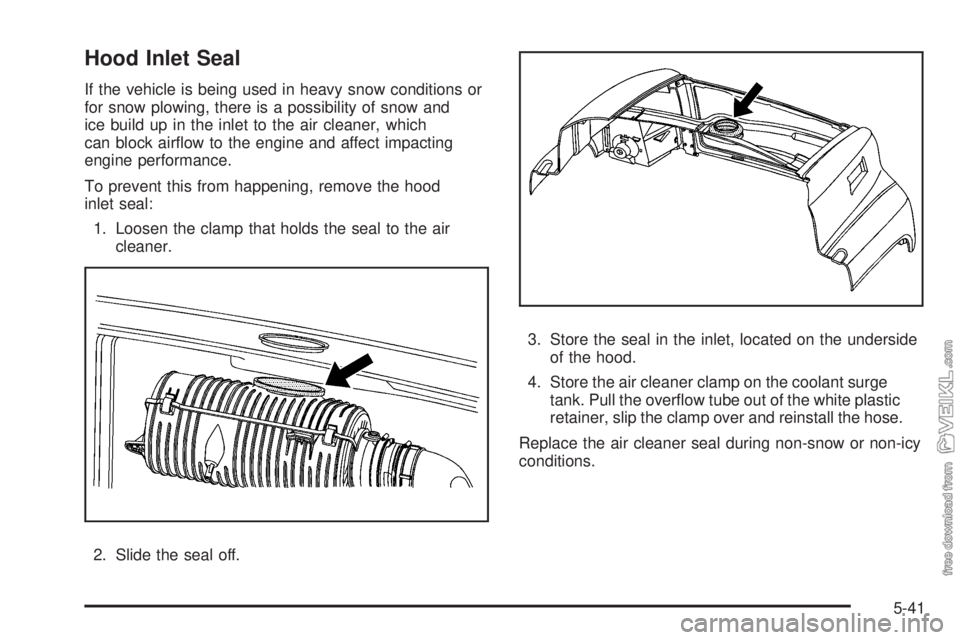
Hood Inlet Seal
If the vehicle is being used in heavy snow conditions or
for snow plowing, there is a possibility of snow and
ice build up in the inlet to the air cleaner, which
can block airflow to the engine and affect impacting
engine performance.
To prevent this from happening, remove the hood
inlet seal:
1. Loosen the clamp that holds the seal to the air
cleaner.
2. Slide the seal off.3. Store the seal in the inlet, located on the underside
of the hood.
4. Store the air cleaner clamp on the coolant surge
tank. Pull the overflow tube out of the white plastic
retainer, slip the clamp over and reinstall the hose.
Replace the air cleaner seal during non-snow or non-icy
conditions.
5-41