shaft FIAT 500 1973 1.G Repair Manual
[x] Cancel search | Manufacturer: FIAT, Model Year: 1973, Model line: 500, Model: FIAT 500 1973 1.GPages: 128, PDF Size: 9.01 MB
Page 73 of 128
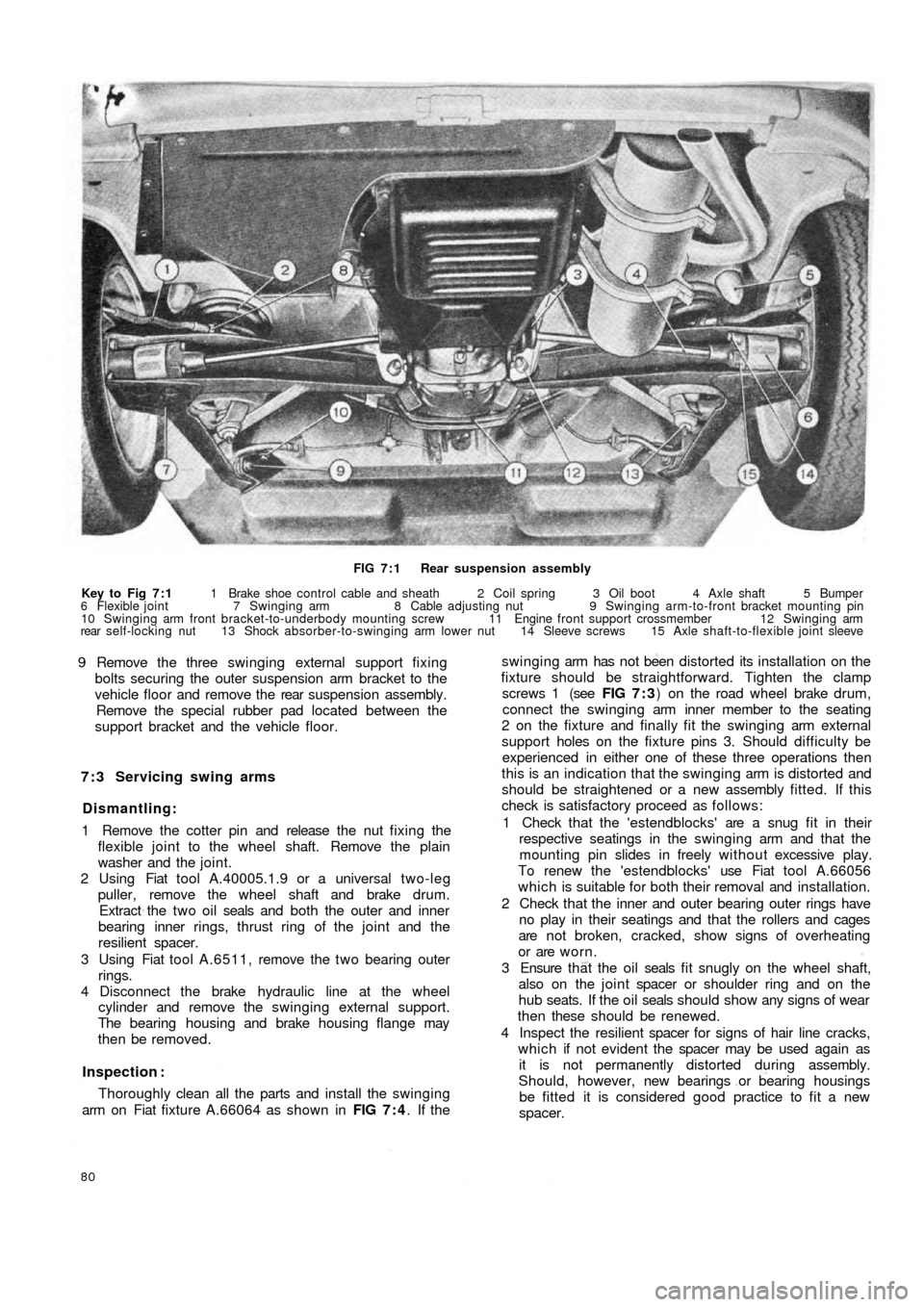
FIG 7 : 1 Rear suspension assembly
Key to Fig 7 : 1 1 Brake shoe control cable and sheath 2 Coil spring 3 Oil boot 4 Axle shaft 5 Bumper
6 Flexible joint 7 Swinging arm 8 Cable adjusting nut 9 Swinging arm-to-front bracket mounting pin
10 Swinging arm front bracket-to-underbody mounting screw 11 Engine front support crossmember 12 Swinging arm
rear self-locking nut 13 Shock absorber-to-swinging arm lower nut 14 Sleeve screws 15 Axle shaft-to-flexible joint sleeve
9 Remove the three swinging external support fixing
bolts securing the outer suspension arm bracket to the
vehicle floor and remove the rear suspension assembly.
Remove the special rubber pad located between the
support bracket and the vehicle floor.
7 : 3 Servicing swing arms
Dismantling:
1 Remove the cotter pin and release the nut fixing the
flexible joint to the wheel shaft. Remove the plain
washer and the joint.
2 Using Fiat tool A.40005.1.9 or a universal two-leg
puller, remove the wheel shaft and brake drum.
Extract the t w o oil seals and both the outer and inner
bearing inner rings, thrust ring of the joint and the
resilient spacer.
3 Using Fiat tool A.6511, remove the t w o bearing outer
rings.
4 Disconnect the brake hydraulic line at the wheel
cylinder and remove the swinging external support.
The bearing housing and brake housing flange may
then be removed.
Inspection :
Thoroughly clean all the parts and install the swinging
arm on Fiat fixture A.66064 as shown in FIG 7 : 4. If the
80
swinging arm has not been distorted its installation on the
fixture should be straightforward. Tighten the clamp
screws 1 (see FIG 7 : 3) on the road wheel brake drum,
connect the swinging arm inner member to the seating
2 on the fixture and finally fit the swinging arm external
support holes on the fixture pins 3. Should difficulty be
experienced in either one of these three operations then
this is an indication that the swinging arm is distorted and
should be straightened or a new assembly fitted. If this
check is satisfactory proceed as follows:
1 Check that the 'estendblocks' are a snug fit in their
respective seatings in the swinging arm and that the
mounting pin slides in freely w it h ou t excessive play.
To renew the 'estendblocks' use Fiat tool A.66056
which is suitable for both their removal and installation.
2 Check that the inner and outer bearing outer rings have
no play in their seatings and that the rollers and cages
are not broken, cracked, show signs of overheating
or are worn.
3 Ensure t h a t the o i l seals f i t snugly on the wheel shaft,
also on the joint spacer or shoulder ring and on the
hub seats. If the oil seals should show any signs of wear
then these should be renewed.
4 Inspect the resilient spacer for signs of hair line cracks,
which if not evident the spacer may be used again as
it is not permanently distorted during assembly.
Should, however, new bearings or bearing housings
be fitted it is considered good practice to fit a new
spacer.
Page 74 of 128
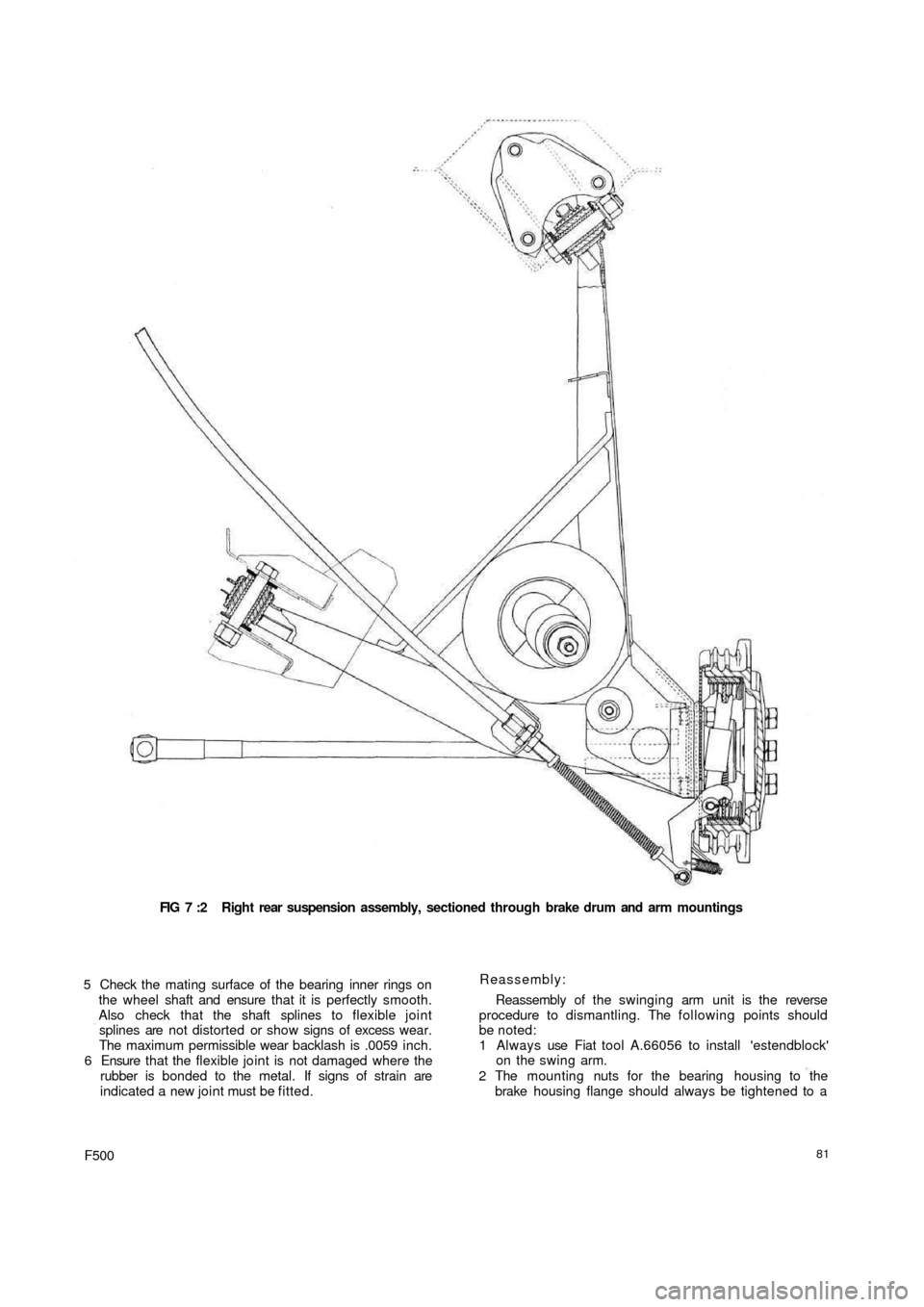
FIG 7 :2 Right rear suspension assembly, sectioned through brake drum and arm mountings
5 Check the mating surface of the bearing inner rings on
the wheel shaft and ensure that it is perfectly smooth.
Also check that the shaft splines to flexible joint
splines are not distorted or show signs of excess wear.
The maximum permissible wear backlash is .0059 inch.
6 Ensure that the f l e xible joint is not damaged where the
rubber is bonded to the metal. If signs of strain are
indicated a new joint must be fitted.
F50081
Reassembly:
Reassembly of the swinging arm unit is the reverse
procedure to dismantling. The following points should
be noted:
1 Always use Fiat tool A.66056 to install 'estendblock'
on the swing arm.
2 The mounting nuts for the bearing housing to the
brake housing flange should always be tightened to a
Page 75 of 128
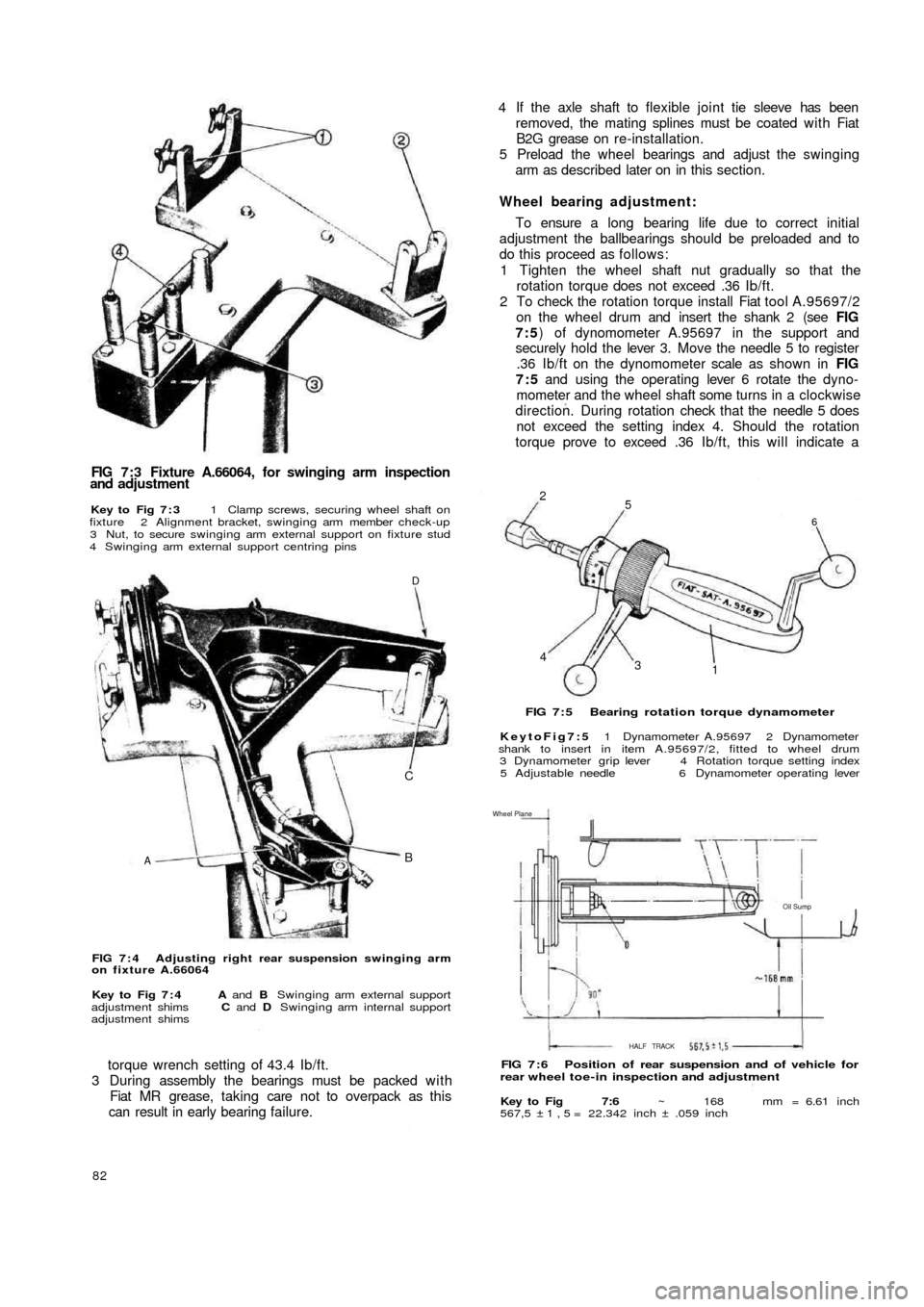
FIG 7 : 3 Fixture A.66064, for swinging arm inspection
and adjustment
Key to Fig 7 : 3 1 Clamp screws, securing wheel shaft on
fixture 2 Alignment bracket, swinging arm member check-up
3 Nut, to secure swinging arm external support on fixture stud
4 Swinging arm external support centring pins
AB C
D
FIG 7 : 4 Adjusting right rear suspension swinging arm
on fixture A.66064
Key to Fig 7 : 4 A and B Swinging arm external support
adjustment shims C and D Swinging arm internal support
adjustment shims
torque wrench setting of 43.4 Ib/ft.
3 During assembly the bearings must be packed w i t h
Fiat MR grease, taking care not to overpack as this
can result in early bearing failure.
82
4 If the axle shaft to flexible joint tie sleeve has been
removed, the mating splines must be coated w i t h Fiat
B2G grease on re-installation.
5 Preload the wheel bearings and adjust the swinging
arm as described later on in this section.
Wheel bearing adjustment:
To ensure a long bearing life due to correct initial
adjustment the ballbearings should be preloaded and to
do this proceed as follows:
1 Tighten the wheel shaft nut gradually so that the
rotation torque does not exceed .36 Ib/ft.
2 To check the rotation torque install Fiat tool A.95697/2
on the wheel drum and insert the shank 2 (see FIG
7:5) of dynomometer A.95697 in the support and
securely hold the lever 3. Move the needle 5 to register
.36 Ib/ft on the dynomometer scale as shown in FIG
7:5 and using the operating lever 6 rotate the dyno-
mometer and the wheel shaft some turns in a clockwise
direction. During rotation check that the needle 5 does
not exceed the setting index 4. Should the rotation
torque prove to exceed .36 Ib/ft, this will indicate a
4
3
1
6
5 2
FIG 7 : 5 Bearing rotation torque dynamometer
KeytoFig7:5 1 Dynamometer A.95697 2 Dynamometer
shank to insert in item A.95697/2, fitted to wheel drum
3 Dynamometer grip lever 4 Rotation torque setting index
5 Adjustable needle 6 Dynamometer operating lever
Oil Sump Wheel Plane
HALF TRACK
FIG 7 : 6 Position of rear suspension and of vehicle for
rear wheel toe-in inspection and adjustment
Key to Fig 7:6 ~ 168 mm = 6.61 inch
567,5 ±1,5= 22.342 inch ± .059 inch
Page 76 of 128
high bearing preload. To reset remove the wheel shaft
and fit a new resilient spacer. Repeat the rotation
torque test.
Swinging arm adjustment:
To adjust the swinging arm use Fiat fixture A.66064 as
shown in FIG 7 : 3 and proceed as follows:
1 At points A and B as indicated in FIG 7 : 4 between the
'estendblock' and the swinging arm to body front
mounting bracket fit three shims on each side. To
ensure that the shims are correctly centred use Fiat
alignment bar A.66057.
2 Whilst removing the alignment bar, carefully slip in the
mounting pin and screw on the nut. Once the rear
wheel geometry adjustment has been completed this
nut should be tightened to a torque wrench setting
of 43.4 to 50.6 Ib ft.
3 At points C and D (see FIG 7 : 4) , insert the number of
shims required to fill in the gap between the 'estend-
block' and the two fixture shoulders. Having deter-
mined the number of shims required both at locations
C and D, these must later be fitted between the
'estendblock' and the shoulders on the swinging arm
to body mounting bracket.
7 : 4 Coil springs
The coil springs should be thoroughly cleaned and all
traces of rust removed. Inspect the spring coils for hair
line cracks, which if evident, a new pair of springs must
be fitted to ensure correct vehicle height and stability.
Check the free
height and the height under loading of
the coil springs and these must correspond to the figures
quoted in Technical Data.
7:5 Installation of rear suspension assembly
To replace the rear suspension assembly proceed as
follows:
1 Insert the swinging arm inner end in the mounting
bracket which is welded onto the body floor. Place
between the 'estendblock' and bracket the number of
adjustment shims as previously determined using Fiat
fixture A.66064 as shown in FIG 7 : 4. Insert the Fiat
alignment bar A.66057 through 'estendblock' and
shims, aligning them with the holes in the mounting
bracket. Firmly hold the entire assembly using a garage
hydraulic jack if necessary, and carefully remove the
alignment bar and at the same time ease in t h e
mounting pin. Secure the nut which once the rear
wheels geometry has been checked must be tightened
to a torque wrench setting of 43.4 to 50.6 Ib/ft.
2 Screw in finger tight the three swinging arm external
bracket to body floor mounting screws together w i t h
the plain and spring washers. The screws will have to
be tightened to a torque wrench setting of 28.9 to
36.2 Ib/ft once the rear wheel geometry has been
adjusted.
3 Carefully insert the coil spring, lower insulator ring
onto the swinging arm, insert the spring on the shock
absorber which should be previously secured to the
arm and position the spring onto its seat on the arm.
Place the upper insulator ring onto the spring, raise the
suspension assembly using a garage hydraulic jack and
insert the spring onto its seating under the body floor.
F50083 4 Ensure that the shock absorber to floor rubber ring has
been correctly fitted and extend the shock absorber
until its upper mounting pin protrudes into the vehicle
through the hump in the floor panel. Secure the shock
absorber by its mounting nut and lockwasher having
first inserted the rubber ring and plain washer.
5 Refit the rear wheel housing in place, reconnect the
brake line to the connection on body floor and remove
the plug from the output hole in the brake fluid
reservoir. Bleed the hydraulic brake system as
described in Chapter 10.
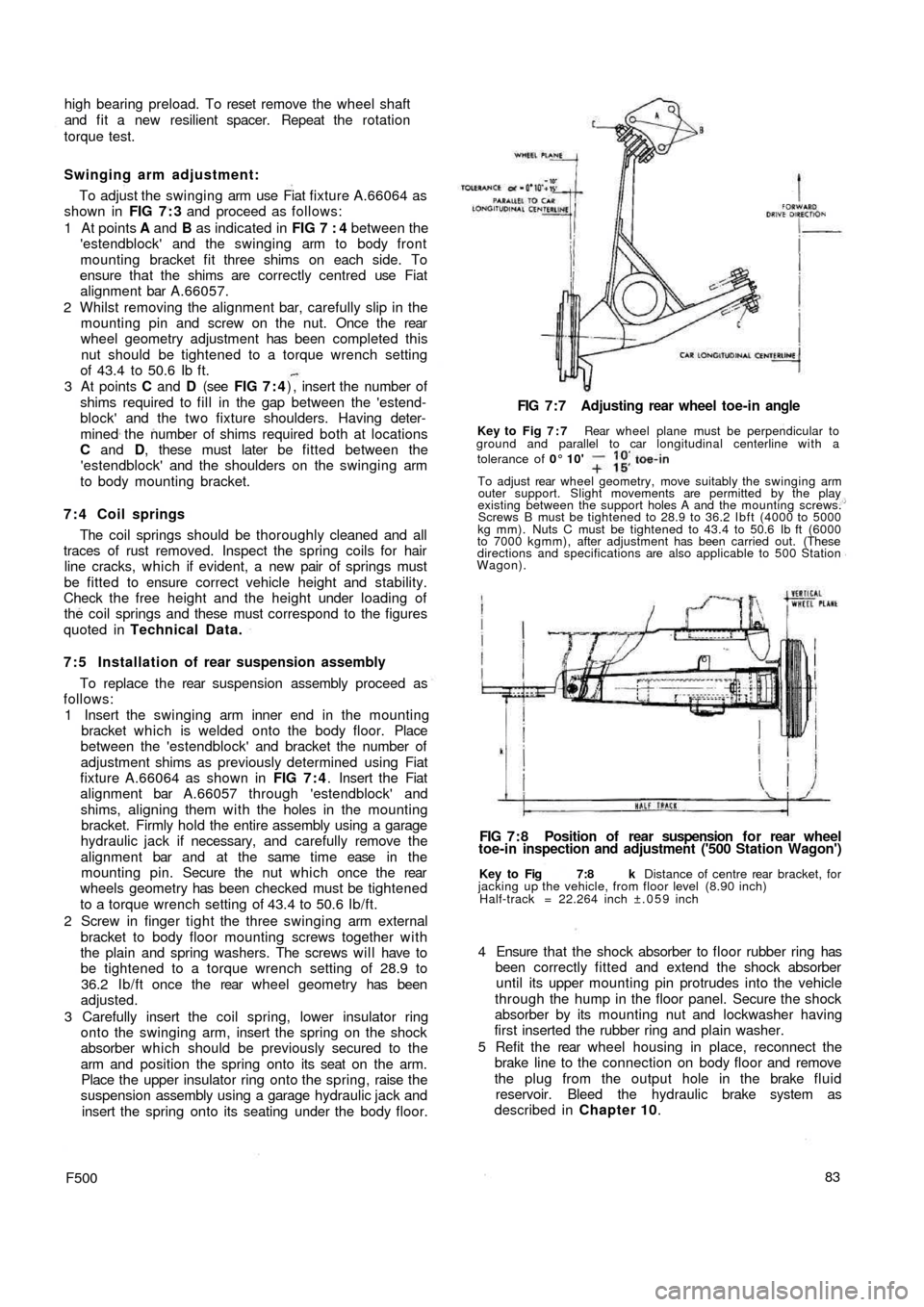
Key to Fig 7:8 k Distance of centre rear bracket, for
jacking up the vehicle, from floor level (8.90 inch)
Half-track = 22.264 inch ±.059 inch
FIG 7 : 8 Position of rear suspension f o r rear wheel
toe-in inspection and adjustment ('500 Station Wagon') FIG 7 : 7 Adjusting rear wheel toe-in angle
Key to Fig 7 : 7 Rear wheel plane must be perpendicular to
ground and parallel to car longitudinal centerline with a
tolerance of 0° 10'
To adjust rear wheel geometry, move suitably the swinging arm
outer support. Slight movements are permitted by the play
existing between the support holes A and the mounting screws.
Screws B must be tightened to 28.9 to 36.2 Ibft (4000 to 5000
kg mm). Nuts C must be tightened to 43.4 to 50.6 Ib ft (6000
to 7000 kgmm), after adjustment has been carried out. (These
directions and specifications are also applicable to 500 Station
Wagon).
Page 77 of 128
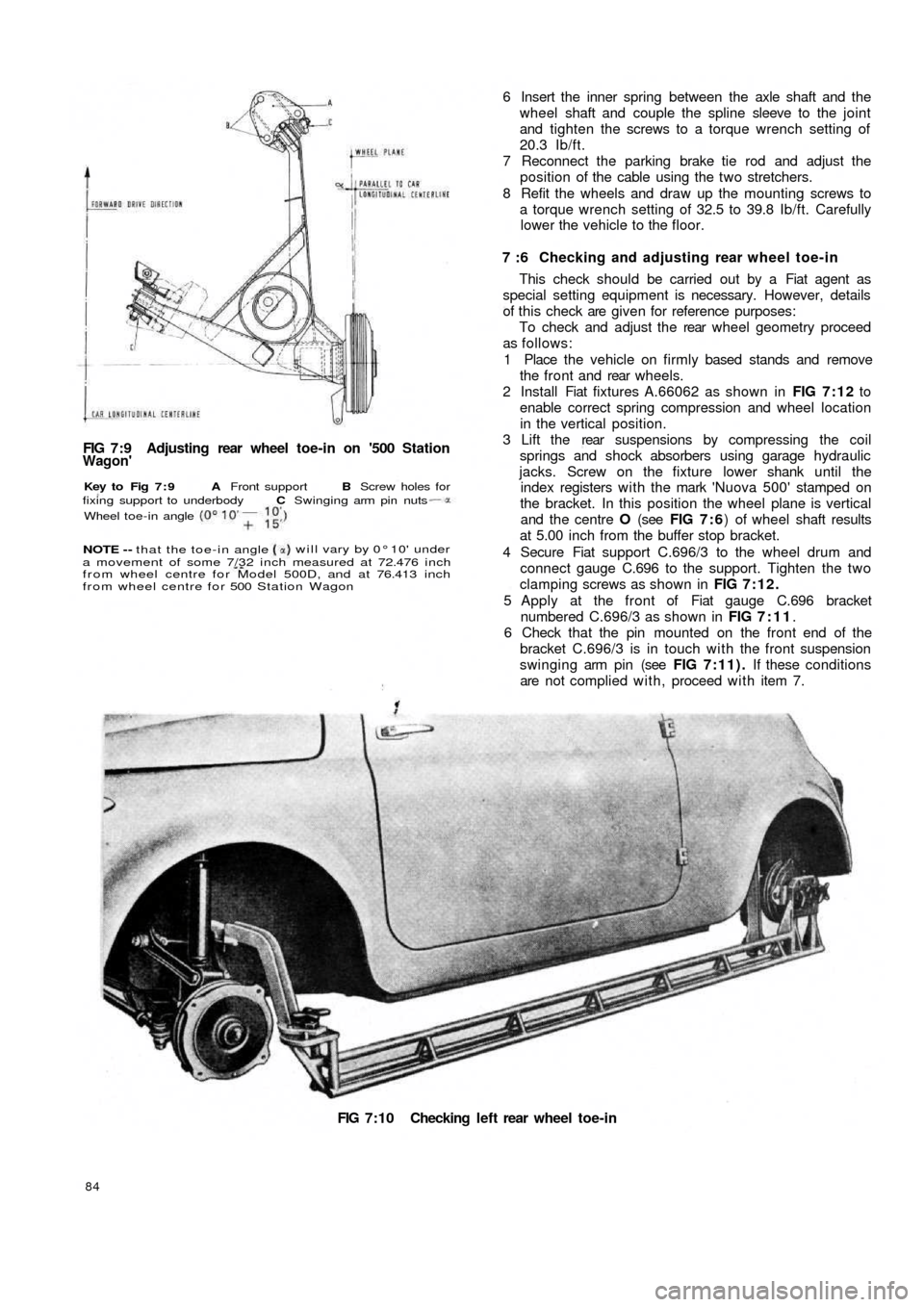
FIG 7:9 Adjusting rear wheel toe-in on '500 StationWagon'
FIG 7:10 Checking left rear wheel toe-in
84
6 Insert the inner spring between the axle shaft and the
wheel shaft and couple the spline sleeve to the joint
and tighten the screws to a torque wrench setting of
20.3 Ib/ft.
7 Reconnect the parking brake tie rod and adjust the
position of the cable using the two stretchers.
8 Refit the wheels and draw up the mounting screws to
a torque wrench setting of 32.5 to 39.8 Ib/ft. Carefully
lower the vehicle to the floor.
7 :6 Checking and adjusting rear wheel toe-in
This check should be carried out by a Fiat agent as
special setting equipment is necessary. However, details
of this check are given for reference purposes:
To check and adjust the rear wheel geometry proceed
as follows:
1 Place the vehicle on firmly based stands and remove
the front and rear wheels.
2 Install Fiat fixtures A.66062 as shown in FIG 7:12 to
enable correct spring compression and wheel location
in the vertical position.
3 Lift the rear suspensions by compressing the coil
springs and shock absorbers using garage hydraulic
jacks. Screw on the fixture lower shank until the
index registers with the mark 'Nuova 500' stamped on
the bracket. In this position the wheel plane is vertical
and the centre O (see FIG 7 : 6) of wheel shaft results
at 5.00 inch from the buffer stop bracket.
4 Secure Fiat support C.696/3 to the wheel drum and
connect gauge C.696 to the support. Tighten the two
clamping screws as shown in FIG 7:12.
5 Apply at the front of Fiat gauge C.696 bracket
numbered C.696/3 as shown in FIG 7:11.
6 Check that the pin mounted on the front end of the
bracket C.696/3 is in touch with the front suspension
swinging arm pin (see FIG 7:11). If these conditions
are not complied with, proceed with item 7.
Wheel toe-in angle
will vary by 0° 10' under
a movement of some 7/32 inch measured at 72.476 inch
from wheel centre for Model 500D, and at 76.413 inch
from wheel centre for 500 Station Wagon NOTE - - that the toe-in angle
Key to Fig 7 : 9 A Front support B Screw holes for
fixing support to underbody C Swinging arm pin nuts
Page 78 of 128
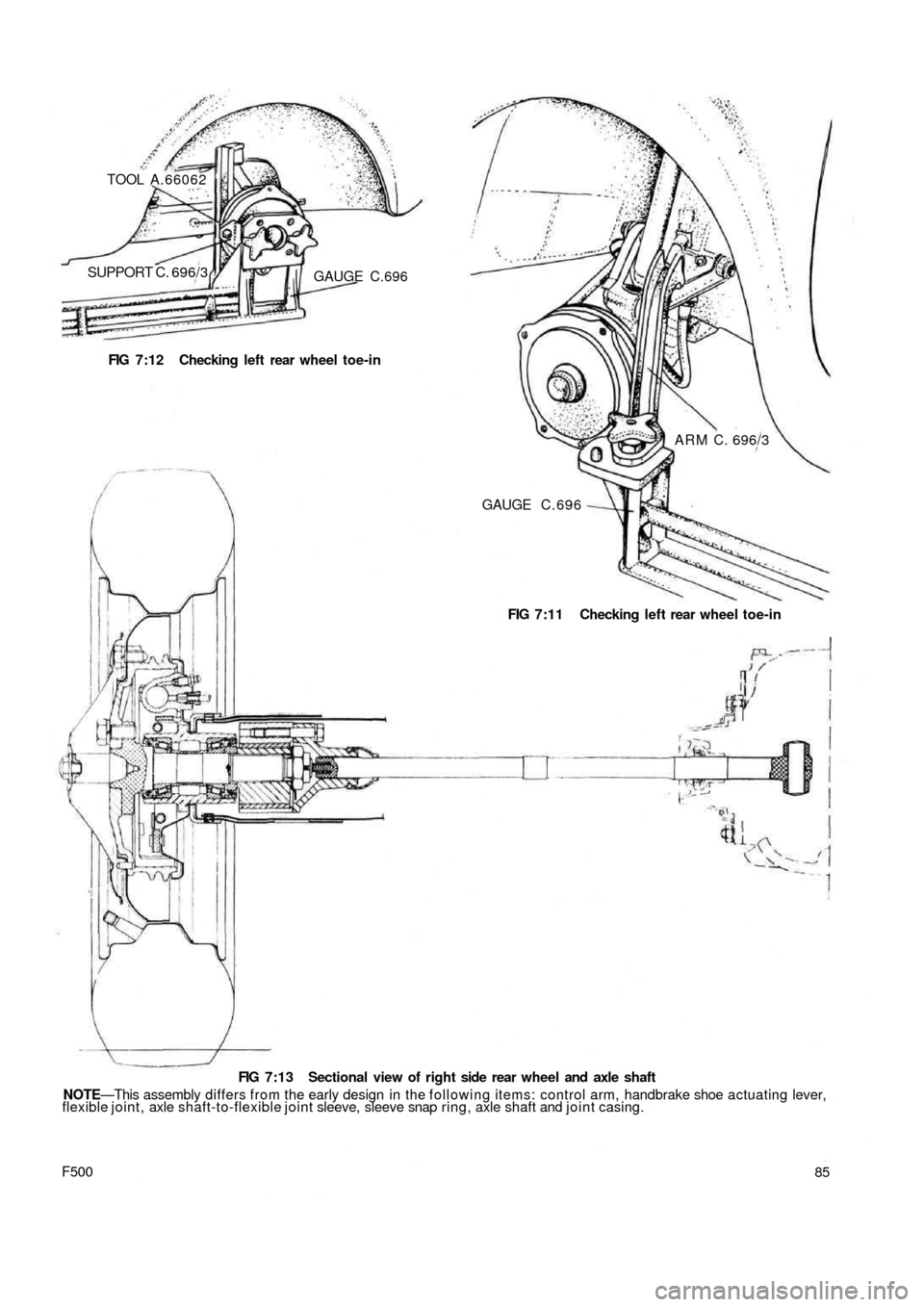
TOOL A.66062
SUPPORT C. 696/3GAUGE C.696
FIG 7:12 Checking left rear wheel toe-in
ARM C. 696/3
GAUGE C . 6 9 6
FIG 7:11 Checking left rear wheel toe-in
F500
FIG 7:13 Sectional view of right side rear wheel and axle shaft
NOTE—This assembly differs from the early design in the following items: control arm, handbrake shoe actuating lever,
flexible joint, axle shaft-to-flexible joint sleeve, sleeve snap ring, axle shaft and joint casing.
85
Page 90 of 128
CHAPTER 9
THE STEERING SYSTEM
9 : 5 Relay lever and support
9 : 6 Steering rods
9 : 7 Front wheel toe-in
9 : 8 Fault diagnosis 9:1 Description
9 : 2 Steering wheel removal and refitting
9 : 3 Steering box removal and refitting
9 : 4 Steering box dismantling and reassembly
9:1 Description
The steering gear fitted to the new 500 range of
vehicles is of the worm screw and sector type with a
steering ratio of 1:13. The steering gearbox is located on
the front lefthand side of the dash wall on the scuttle as
shown in FIG 9:1. The steering gear comprises a pitman
arm and relay lever pivoting on a pin supported on the
body. A central track rod connects the pitman arm to the
relay lever. T w o track rods connect the pitman arm and
relay lever to the knuckle arms.
9:2 Steering wheel removal and refitting
To remove the steering wheel proceed as follows:
1 Disconnect the battery positive terminal clamp and
remove the horn control from the steering wheel.
2 Remove the cable from the push button seating and the
cable insulation sleeve.
3 Using a suitably sized box spanner or Fiat wrench
A.8279 unscrew the steering wheel to shaft nut as
shown in FIG 9:2.
4 Using the palm of the hands against the back of the
steering wheel rim gently tap the steering wheel
forwards so releasing it from the inner shaft.
F50097 5 Reassembly is the reverse procedure to dismantling.
Care should be taken to ensure that the front wheels
are located in the straight ahead position when the
steering wheel is being replaced otherwise the steering
wheel spokes will not be correctly positioned.
9 : 3 Steering box removal and refitting
To remove the steering box from the vehicle proceed
as follows:
1 From inside the vehicle remove the steering column
clamp bolt 6 (see FIG 9 : 3) after flattening the lock-
washer 7.
2 From the underside of the vehicle remove the t w o
tie rod locking nuts from the pitman arm and then using
Fiat tool A.46006 or a suitable t w o leg puller withdraw
the pins from the seats.
3 Remove the three nuts holding the steering box to the
body panel. Ease out the worm screw from the
steering shaft and lift away the steering box.
4 To refit the steering box is the reverse procedure to
dismantling. The steering box to body mounting nuts
should be tightened to a torque wrench setting of
14 Ib/ft to 18 Ib/ft.
Page 91 of 128
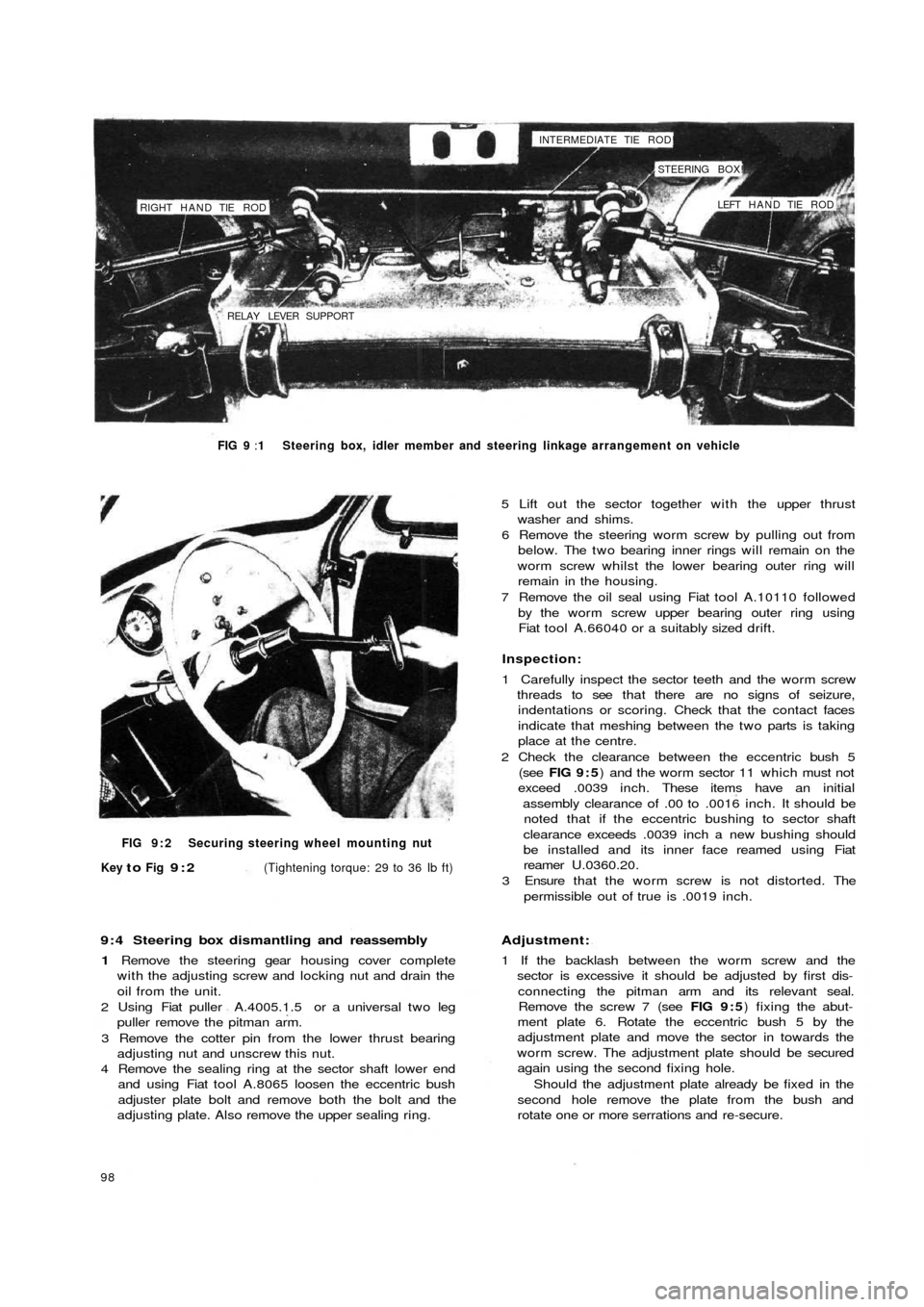
RIGHT HAND TIE ROD
RELAY LEVER SUPPORTINTERMEDIATE TIE ROD!
STEERING BOX!
LEFT HAND TIE ROD
FIG 9 :1 Steering box, idler member and steering linkage arrangement on vehicle
FIG 9 : 2 Securing steering wheel mounting nut
Key
to Fig 9:2(Tightening torque: 29 to 36 Ib ft)
9 : 4 Steering box dismantling and reassembly
1 Remove the steering gear housing cover complete
with the adjusting screw and locking nut and drain the
oil from the unit.
2 Using Fiat puller A.4005.1.5 or a universal t w o leg
puller remove the pitman arm.
3 Remove the cotter pin from the lower thrust bearing
adjusting nut and unscrew this nut.
4 Remove the sealing ring at the sector shaft lower end
and using Fiat tool A.8065 loosen the eccentric bush
adjuster plate bolt and remove both the bolt and the
adjusting plate. Also remove the upper sealing ring.
98
5 Lift out the sector together with the upper thrust
washer and shims.
6 Remove the steering worm screw by pulling out from
below. The two bearing inner rings will remain on the
worm screw whilst the lower bearing outer ring will
remain in the housing.
7 Remove the oil seal using Fiat tool A.10110 followed
by the worm screw upper bearing outer ring using
Fiat tool A.66040 or a suitably sized drift.
Inspection:
1 Carefully inspect the sector teeth and the worm screw
threads to see that there are no signs of seizure,
indentations or scoring. Check that the contact faces
indicate that meshing between the two parts is taking
place at the centre.
2 Check the clearance between the eccentric bush 5
(see FIG 9 : 5) and the worm sector 11 which must not
exceed .0039 inch. These items have an initial
assembly clearance of .00 to .0016 inch. It should be
noted that if the eccentric bushing to sector shaft
clearance exceeds .0039 inch a new bushing should
be installed and its inner face reamed using Fiat
reamer U.0360.20.
3 Ensure that the worm screw is not distorted. The
permissible out of true is .0019 inch.
Adjustment:
1 If the backlash between the worm screw and the
sector is excessive it should be adjusted by first dis-
connecting the pitman arm and its relevant seal.
Remove the screw 7 (see FIG 9 : 5) fixing the abut-
ment plate 6. Rotate the eccentric bush 5 by the
adjustment plate and move the sector in towards the
worm screw. The adjustment plate should be secured
again using the second fixing hole.
Should the adjustment plate already be fixed in the
second hole remove the plate from the bush and
rotate one or more serrations and re-secure.
Page 92 of 128
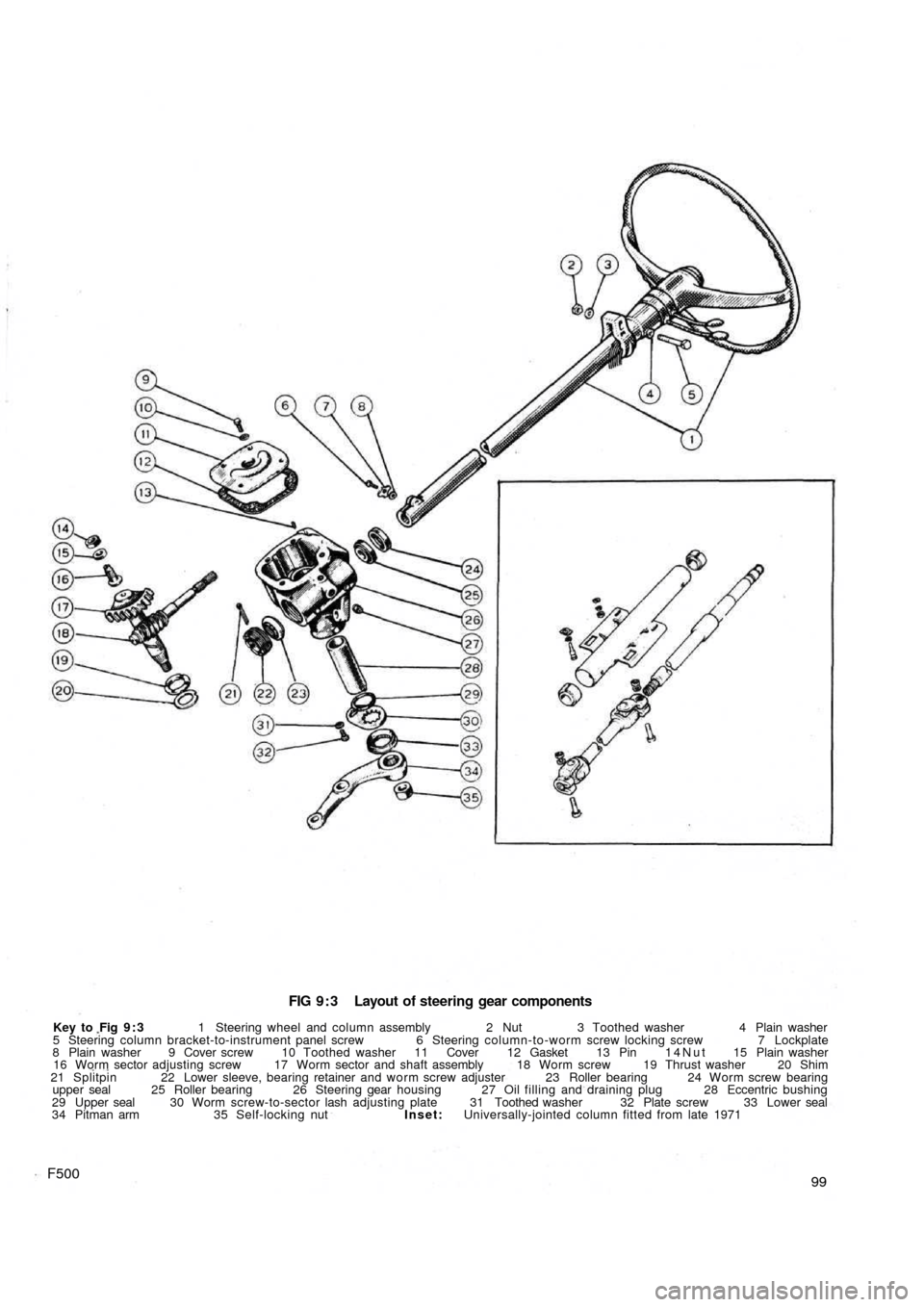
FIG 9 : 3 Layout of steering gear components
Key to Fig 9 : 3 1 Steering wheel and column assembly 2 Nut 3 Toothed washer 4 Plain washer
5 Steering column bracket-to-instrument panel screw 6 Steering column-to-worm screw locking screw 7 Lockplate
8 Plain washer 9 Cover screw 10 Toothed washer 11 Cover 12 Gasket 13 Pin 14Nut 15 Plain washer
16 Worm sector adjusting screw 17 Worm sector and shaft assembly 18 Worm screw 19 Thrust washer 20 Shim
21 Splitpin 22 Lower sleeve, bearing retainer and worm screw adjuster 23 Roller bearing 24 Worm screw bearing
upper seal 25 Roller bearing 26 Steering gear housing 27 Oil filling and draining plug 28 Eccentric bushing
29 Upper seal 30 Worm screw-to-sector lash adjusting plate 31 Toothed washer 32 Plate screw 33 Lower seal
34 Pitman arm 35 Self-locking nut Inset: Universally-jointed column fitted from late 1971
99F500
Page 94 of 128
reassembling and during assembly liberally lubricated
using Fiat W90/M oil (SAE90 EP).
2 The pitman arm nut should be correctly positioned on
reassembly to the sector shaft and both are marked
with notches or a master tooth on the sector will mate
with a double tooth on the pitman arm which will
prevent incorrect reassembly.
3 The pitman arm nut must be tightened to a torque
wrench setting of 72 Ib/ft.
4 Fill the box up to the level and filler plug with SAE90 EP
gear oil.
Refitting the steering box:
To refit the steering box to the vehicle proceed as
follows:
1 Engage the w o r m screw f r o m the steering shaft by
gently manipulating the steering box.
2 Replace the steering box to body nuts and tighten to a
torque wrench setting of 14 to 18 Ib/ft.
3 Replace the t w o track rod pins in their seatings in the
pitman arm and tighten the self-locking nuts to a
torque wrench setting of 18 to 21 Ib/ft.
4 Replace the steering shaft to worm screw mounting
bolt, lock washer and nut.
9 :5 Relay lever and support
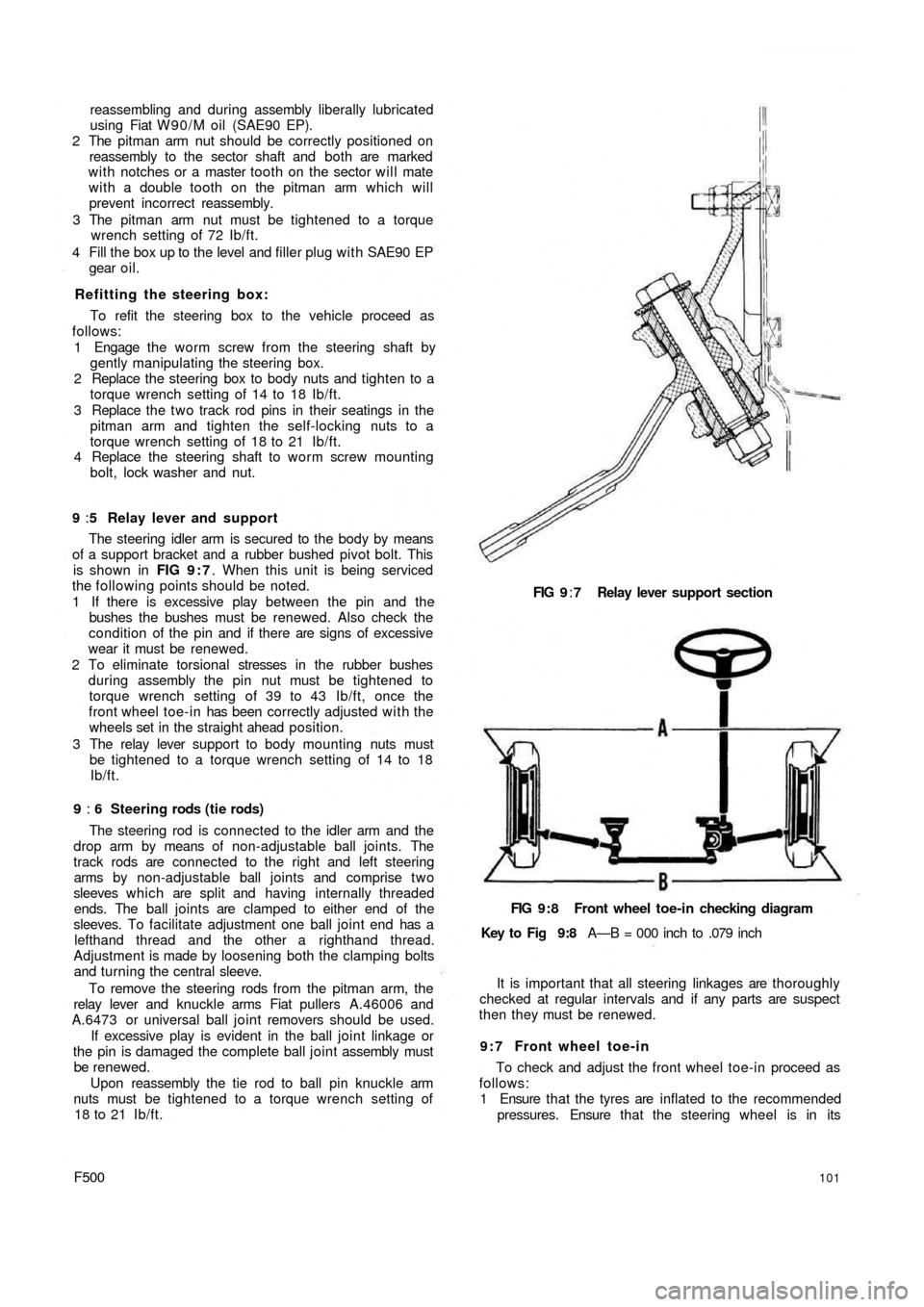
The steering idler arm is secured to the body by means
of a support bracket and a rubber bushed pivot bolt. This
is shown in FIG 9 : 7. When this unit is being serviced
the following points should be noted.
1 If there is excessive play between the pin and the
bushes the bushes must be renewed. Also check the
condition of the pin and if there are signs of excessive
wear it must be renewed.
2 To eliminate torsional stresses in the rubber bushes
during assembly the pin nut must be tightened to
torque wrench setting of 39 to 43 Ib/ft, once the
front wheel toe-in has been correctly adjusted w i t h the
wheels set in the straight ahead position.
3 The relay lever support to body mounting nuts must
be tightened to a torque wrench setting of 14 to 18
Ib/ft.
9 : 6 Steering rods (tie rods)
The steering rod is connected to the idler arm and the
drop arm by means of non-adjustable ball joints. The
track rods are connected to the right and left steering
arms by non-adjustable ball joints and comprise t w o
sleeves which are split and having internally threaded
ends. The ball joints are clamped to either end of the
sleeves. To facilitate adjustment one ball joint end has a
lefthand thread and the other a righthand thread.
Adjustment is made by loosening both the clamping bolts
and turning the central sleeve.
To remove the steering rods from the pitman arm, the
relay lever and knuckle arms Fiat pullers A.46006 and
A.6473 or universal ball joint removers should be used.
If excessive play is evident in the ball joint linkage or
the pin is damaged the complete ball joint assembly must
be renewed.
Upon reassembly the tie rod to ball pin knuckle arm
nuts must be tightened to a torque wrench setting of
18 to 21 Ib/ft.
F500101
FIG 9:7 Relay lever support section
FIG 9:8 Front wheel toe-in checking diagram
Key to Fig 9:8 A—B = 000 inch to .079 inch
It is important that all steering linkages are thoroughly
checked at regular intervals and if any parts are suspect
then they must be renewed.
9 : 7 Front wheel toe-in
To check and adjust the front wheel toe-in proceed as
follows:
1 Ensure that the tyres are inflated to the recommended
pressures. Ensure that the steering wheel is in its