service FIAT FREEMONT 2014 1.G Workshop Manual
[x] Cancel search | Manufacturer: FIAT, Model Year: 2014, Model line: FREEMONT, Model: FIAT FREEMONT 2014 1.GPages: 388, PDF Size: 4.13 MB
Page 344 of 388
Master Cylinder – Brake Fluid Level Check
Check the fluid level in the master cylinder immediately
if the “Brake Warning Light” indicates system failure.
Check the fluid level in the master cylinder when
performing underhood services.
Clean the top of the master cylinder area before
removing the cap. If necessary, add fluid to bring the
fluid level up to the requirements described on the
brake fluid reservoir.
Overfilling of fluid is not recommended because it may
cause leaking in the system.
Fluid level can be expected to fall as the brake pads
wear. Brake fluid level should be checked when pads are
replaced. However, low fluid level may be caused by a
leak and a checkup may be needed.
NOTE:If your vehicle is equipped with a manual
transmission, the brake fluid reservoir supplies fluid
to both the brake system and the clutch release sys-
tem. The two systems are separated in the reservoir,
and a leak in one system will not affect the other
system. The manual transmission clutch release
system should not require fluid replacement during the
life of the vehicle. If the brake fluid reservoir is low and
the brake system does not indicate any leaks or other
problems, it may be a result of a leak in the hydraulic clutch release system. See your local authorized dealer
for service.
Use only manufacturer's recommended brake fluid.
Refer to “Fluids, Lubricants, and Genuine Parts” in
“Technical Specifications” for further information.
WARNING!
• Use only manufacturer's recom-
me n
ded brake fluid. Refer to “Fluids, Lu-
bricants, and Genuine Parts” in “Technical Speci-
fications” for further information. Using the
wrong type of brake fluid can severely damage
your brake system and/or impair its perfor-
mance. The proper type of brake fluid for your
vehicle is also identified on the original factory
installed hydraulic master cylinder reservoir.
• To avoid contamination from foreign matter or
moisture, use only new brake fluid or fluid that
has been in a tightly closed container. Keep the
master cylinder reservoir cap secured at all
times. Brake fluid in a open container absorbs
moisture from the air resulting in a lower boiling
point . This may cause it to boil unexpectedly
during hard or prolonged braking, resulting in
sudden brake failure. This could result in a acci-
dent .
(Continued)
338
KNOWINGYOUR
VEHICLE
SAFETY
STARTING AND
DRIVING
WARNING LIGHTSAND
MESSAGES
IN AN
EMERGENCY
SERVICING AND CARE
TECHNICAL
SPECIFICATIONS
CONTENTS
Page 346 of 388
Fluid Level Check - Six-Speed Transmission
The fluid level is preset at the factory and does not
require adjustment under normal operating conditions.
Routine fluid level checks are not required, therefore
the transmission filler tube is capped and no dipstick is
provided. Your authorized dealer can check your trans-
mission fluid level using a special service dipstick. If you
notice fluid leakage or transmission malfunction, visit
your authorized dealer immediately to have the trans-
mission fluid level checked. Operating the vehicle with
an improper fluid level can cause severe transmission
damage.
If a transmission fluid leak occurs, visit
your authorized dealer immediately.
Severe transmission damage may occur.
Your authorized dealer has the proper tools to
adjust the fluid level accurately.
Car maintenance should be done at a
FIAT Dealership. For routine and minor
maintenance operations you wish to
carry out yourself, we do recommend you have
the proper equipment , genuine FIAT spare parts
and the necessary fluids; do not however carry out
these operations if you have no experience. Fluid Level Check – Four-Speed Automatic
Use the following procedure to check the transmission
fluid level properly:
1. Park the vehicle on level ground.
2. Run the engine at normal idle speed for at least
60 seconds, and leave the engine running for the rest
of this procedure.
3. Fully apply the parking brake, and press the brake pedal.
4. Place the shift lever momentarily into each gear position (allowing time for the transmission to fully
engage in each position), ending with the transmis-
sion in PARK.
5. Wipe the area around the dipstick clean to prevent dirt from entering the transmission.
6. Remove the dipstick and determine if the fluid is hot or cold. Hot fluid is approximately 82° C, which
is the normal operating temperature after the ve-
hicle is driven at least 24 km. Hot fluid cannot be
held comfortably between the fingertips. Cold fluid
is at a temperature of approximately 27° C.
340
KNOWING YOUR
VEHICLE
SAFETY
STARTING AND
DRIVING
WARNING LIGHTSAND
MESSAGES
IN AN
EMERGENCY
SERVICING AND CARE
TECHNICAL
SPECIFICATIONS
CONTENTS
Page 353 of 388
VEHICLE STORAGE
If you will not be using your vehicle for more than
21 days you may want to take steps to preserve your
battery. You may:
• Disconnect the battery negative cable.
• Anytime you store your vehicle, or keep it out ofservice (i.e., vacation) for two weeks or more, run
the air conditioning system at idle for about five
minutes in the fresh air and high blower setting. This
will ensure adequate system lubrication to minimize
the possibility of compressor damage when the sys-
tem is started again.
TIRE ROTATION
RECOMMENDATIONS
Tires on the front and rear axles of vehicles operate at
different loads and perform different steering, driving,
and braking functions. For these reasons, they wear at
unequal rates.
These effects can be reduced by timely rotation of
tires. The benefits of rotation are especially worth-
while with aggressive tread designs such as those on all
season type tires. Rotation will increase tread life, help
to maintain mud, snow and wet traction levels, and
contribute to a smooth, quiet ride.
NOTE: Rotate tires at the first sign of irregular
wear.
347
KNOWING
YOUR
VEHICLE
SAFETY
STARTING
AND
DRIVING
WARNING
LIGHTS
AND
MESSAGES
IN AN
EMERGENCY
SERVICING
AND CARE
TECHNICAL
SPECIFICATIONS
CONTENTS
Page 357 of 388

Radial Ply Tires
WARNING!
Combining radial ply tires with other
types of t
ires on your vehicle will cause
your vehicle to handle poorly. The instability
could cause a collision. Always use radial ply tires
in sets of four. Never combine them with other
types of tires.
Tire Repair
If your tire becomes damaged, it may be repaired if it
meets the following criteria:
• The tire has not been driven on when flat.
• The damage is only on the tread section of your tire (sidewall damage is not repairable).
• The puncture is no greater than 6 mm.
Consult an authorized tire dealer for tire repairs and
additional information.
Damaged Run Flat tires, or Run Flat tires that have
experienced a loss of pressure should be replaced
immediately with another Run Flat tire of identical size
and service description (Load Index and Speed Code). Tire Types
All Season Tires (for versions/markets, where
provided)
All Season tires provide traction for all seasons (spring,
summer, fall and winter). Traction levels may vary
between different all season tires. All season tires can
be identified by the M+S, M&S, M/S or MS designation
on the tire sidewall. Use all season tires only in sets of
four; failure to do so may adversely affect the safety and
handling of your vehicle.
Summer Or Three Season Tires
(for versions/markets, where provided)
Summer tires provide traction in both wet and dry
conditions, and are not intended to be driven in snow
or on ice. If your vehicle is equipped with summer tires,
be aware these tires are not designed for winter or cold
driving conditions. For more information, contact a
authorized dealer. Summer tires do not contain the all
season designation or mountain/snowflake symbol on
the tire sidewall.
Use summer tires only in sets of four; failure to do so
may adversely affect the safety and handling of your
vehicle.
351
KNOWING
YOUR
VEHICLE
SAFETY
STARTING
AND
DRIVING
WARNING
LIGHTS
AND
MESSAGES
IN AN
EMERGENCY
SERVICING
AND CARE
TECHNICAL
SPECIFICATIONS
CONTENTS
Page 361 of 388
Tread Wear Indicators
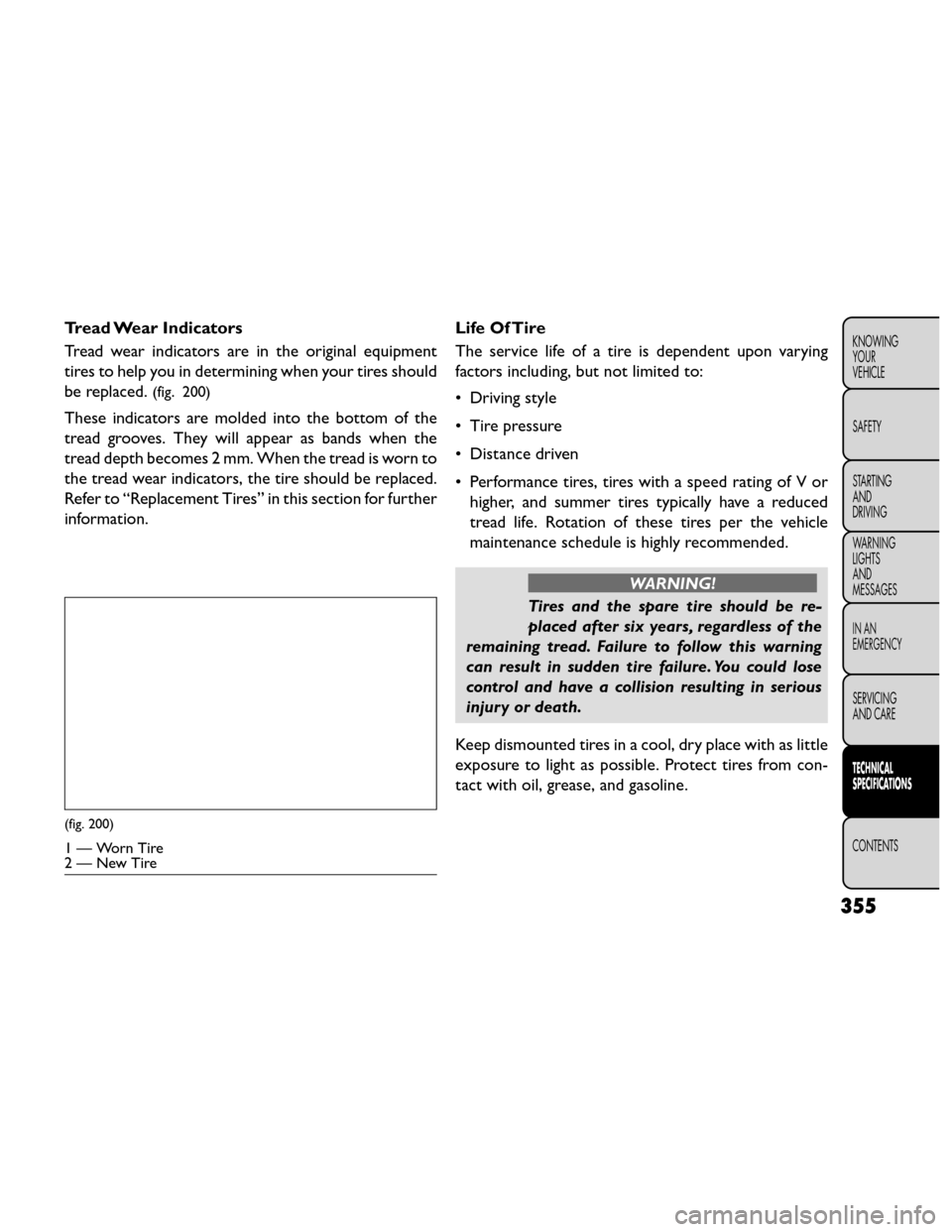
Tread wear indicators are in the original equipment
tires to help you in determining when your tires should
be replaced.
(fig. 200)
These indicators are molded into the bottom of the
tread grooves. They will appear as bands when the
tread depth becomes 2 mm. When the tread is worn to
the tread wear indicators, the tire should be replaced.
Refer to “Replacement Tires” in this section for further
information.Life Of Tire
The service life of a tire is dependent upon varying
factors including, but not limited to:
• Driving style
• Tire pressure
• Distance driven
• Performance tires, tires with a speed rating of V or
higher, and summer tires typically have a reduced
tread life. Rotation of these tires per the vehicle
maintenance schedule is highly recommended.
WARNING!
Tires and the spare tire should be re-
placed af ter
six years, regardless of the
remaining tread. Failure to follow this warning
can result in sudden tire failure. You could lose
control and have a collision resulting in serious
injury or death.
Keep dismounted tires in a cool, dry place with as little
exposure to light as possible. Protect tires from con-
tact with oil, grease, and gasoline.
(fig. 200)
1 — Worn Tire
2—NewTire
355
KNOWING
YOUR
VEHICLE
SAFETY
STARTING
AND
DRIVING
WARNING
LIGHTS
AND
MESSAGES
IN AN
EMERGENCY
SERVICING
AND CARE
TECHNICAL
SPECIFICATIONS
CONTENTS
Page 364 of 388
FUEL REQUIREMENTS — GASOLINE
ENGINE
All engines are designed to meet all emissions regula-
tions and provide excellent fuel economy and perfor-
mance when using high quality unleaded gasoline with a
minimum Research Octane Number (RON) of 91.
Light spark knock at low engine speeds is not harmful
to your engine. However, continued heavy spark knock
at high speeds can cause damage and immediate service
is required. Poor quality gasoline can cause problems
such as hard starting, stalling, and hesitations. If you
experience these symptoms, try another brand of
gasoline before considering service for the vehicle.
Over 40 auto manufacturer's world wide have issued
and endorsed consistent gasoline specifications (the
Worldwide Fuel Charter, WWFC) which define fuel
properties necessary to deliver enhanced emissions,
performance, and durability for your vehicle. The
manufacturer recommends the use of gasoline that
meets the WWFC specifications if they are available.Methanol
(Methyl) is used in a variety of concentrations when
blended with unleaded gasoline. You may find fuels
containing 3% or more methanol along with other
alcohols called cosolvents. Problems that result from
using methanol/gasoline are not the responsibility of
the manufacturer. While MTBE is an oxygenate made
from Methanol, it does not have the negative effects of
Methanol.
Do not use gasolines containing Metha-
nol. Use of these blends may result in
starting and drivability problems and
may damage critical fuel system components.
Ethanol
The manufacturer recommends that your vehicle be
operated on fuel containing no more than 10% ethanol.
Purchasing your fuel from a reputable supplier may
reduce the risk of exceeding this 10% limit and/or of
receiving fuel with abnormal properties. It should also
be noted that an increase in fuel consumption should
be expected when using ethanol-blended fuels, due to
358
KNOWING YOUR
VEHICLE
SAFETY
STARTING AND
DRIVING
WARNING LIGHTSAND
MESSAGES
IN AN
EMERGENCY
SERVICING AND CARE
TECHNICAL
SPECIFICATIONS
CONTENTS
Page 371 of 388
ARRANGEMENTS FOR DEALING WITH THE VEHICLE AT THE END OF ITS LIFE
FIAT has been committed for many years to safeguarding the environment through the constant improvement of its
production processes and manufacturing products that are increasingly “eco-compatible”.
To give customers the best possible service in terms of respecting environmental laws and in response to European
Directive 2000/53/EC governing vehicles at the end of their life, FIAT is offering its customers the opportunity of handing
over their vehicle* at the end of its life without incurring any additional costs.
The European Directive sets out that when the vehicle is handed over the last keeper or owner should not incur any
expenses as a result of it having a zero or negative market value.
In all European Union countries, until 1st January 2007, only vehicles registered after 1st July 2002 were collected free of
charge, while since 2007 collection has been free of charge irrespective of the year of registration as long as the vehicle
contains its basic components (in particular, the engine and bodywork) and has no additional waste.
To hand your vehicle over at the end of its life without extra cost, go to one of our Dealerships or FIAT-authorized
collection and scrapping centres.
These centres have been carefully chosen to offer high quality service for the collection, treatment and recycling of unused
vehicles with respect to the environment.
You can find further information on these collection and scrapping centres either from a FIAT or FIAT Commercial Vehicle
Dealership or by calling the freephone number 00800 3428 0000 or by going on the FIAT website.
(*) Vehicle for transporting passengers with a maximum of nine seats and a total permitted weight of 3.5 t
365
Page 377 of 388
Exterior Folding Mirrors......................65
Exterior Lighting ...........................86
Exterior Lights ............................228
Fabric Care ..............................345
Filler Location Fuel .........................185
Filters Air Cleaner ...........................326
Air Conditioning .....................85, 328
Engine Oil ............................362
Engine Oil Disposal ......................326
Flashers Hazard Warning ........................101
Turn Signal ......................88, 228, 265
Flash-To-Pass .............................89
Flooded Engine Starting ......................231
Floor Console ............................102
Fluid Capacities ...........................361
Fluid Leaks ..............................228
Fluid Level Checks Automatic Transmission ...................340
Brake ...............................338
Cooling System .........................334
Engine Oil ............................324
Power Steering .........................144
Fluids, Lubricants and Genuine Parts .............362
Fog Lights ......................87, 265, 293, 294
Fog Light Service .......................293, 294
Fog Lights, Rear ........................269, 294
Folding Rear Seat ........................54, 58
Freeing A Stuck Vehicle ......................304
Fuel ................................ 358, 360
Adding ..............................185 Additives
.............................359
Conserving ............................27
Diesel ............................360, 362
Ethanol ..............................358
Filler Cap (Gas Cap) .....................185
Gasoline ............................ .358
Gauge .................................7
Light .................................23
Oct
ane Rating ......................358, 362
Requirements ..........................358
SaverMode ............................27
Specifications ..........................362
Tank Capacity ..........................361
Fueling .................................185
Fuel Optimizer ............................27
Fuel Saver ................................27
Fuel System Caution ........................185
Fuses ..................................298
Gas Cap (Fuel Filler Cap) .................143, 185
Gas Gauge (Fuel Gauge) .......................7
Gasoline, Clean Air ........................359
Gasoline (Fuel) ...........................358
Conserving ............................27
Gauges Coolant Temperature ......................8
Fuel ..................................7
Speedometer ............................7
Tachometer .............................7
Gear Ranges .............................241
Gear Select Lever Override ...................303
General Information ...................12, 15, 152
General Maintenance .......................323
371
KNOWING
YOUR
VEHICLE
SAFETY
STARTING
AND
DRIVING
WARNING
LIGHTS
AND
MESSAGES
IN AN
EMERGENCY
SERVICING
AND CARE
TECHNICAL
SPECIFICATIONS
CONTENTS
Page 379 of 388
Knee Bolster.............................216
Lane Change and Turn Signals ..................88
Lane Change Assist .........................88
Lap/Shoulder Belts .........................188
Latches .................................228
Hood ...............................131
Latch Plate ..............................189
Lead Free Gasoline .........................358
Leaks, Fluid ..............................228
Leveling, Headlight ..........................90
LifeofTires..............................355
Liftgate.................................125
Liftgate Window Wiper/Washer .................94
Light Bulbs ...........................228, 291
Lights ...............................86, 228
Airbag .....................221, 224, 227, 264
Anti-Lock ............................136
Anti-Lock Warning ......................269
Automatic Headlights .....................86
Back-Up .............................295
Brake Assist Warning .....................140
Brake Warning .........................268
Bulb Replacement .......................292
Courtesy/Reading ........................90
Dimmer Switch, Headlight ..................88
Electronic Stability Program (ESP) Indicator ......140
Exterior ..............................228
Fog ...........................87, 265, 293
Hazard Warning Flasher ...................101
Headlight Leveling ........................90
Headlights ..........................86, 292
Headlights On Reminder ...................87 Headlights On With Wipers
.................86
Headlight Switch .........................86
High Beam ......................88, 265, 292
High Beam Indicator .....................265
High Beam/Low Beam Select .................88
Illuminated Entry ........................91
Instrument Cluster ....................86, 264
Intensity Control ........................89
Interior ...............................89
License ..............................297
Lights On Reminder ......................
87
Low Fuel ............................7,23
LowTire .............................266
Malfunction Indicator (Check Engine) ..........264
Map Reading ...........................90
Parade Mode (Daytime Brightness) ............90
Park ................................292
Passing ...............................89
Reading ...............................90
RearFog ..........................269, 294
Rear Servicing ..........................295
RearTail .............................295
Seat Belt Reminder ......................267
Service ...........................291, 292
Service Engine Soon (Malfunction Indicator) ......264
Side Marker ...........................292
Side Repeater ..........................295
Tire Pressure Monitoring (TPMS) .........145, 266
Traction Control ........................140
Turn Signal ...............88, 228, 265, 292, 295
Vanity Mirror ...........................65
Warning (Instrument Cluster Description) .......264
Load Floor, Cargo .........................127
373
KNOWING
YOUR
VEHICLE
SAFETY
STARTING
AND
DRIVING
WARNING
LIGHTS
AND
MESSAGES
IN AN
EMERGENCY
SERVICING
AND CARE
TECHNICAL
SPECIFICATIONS
CONTENTS
Page 382 of 388
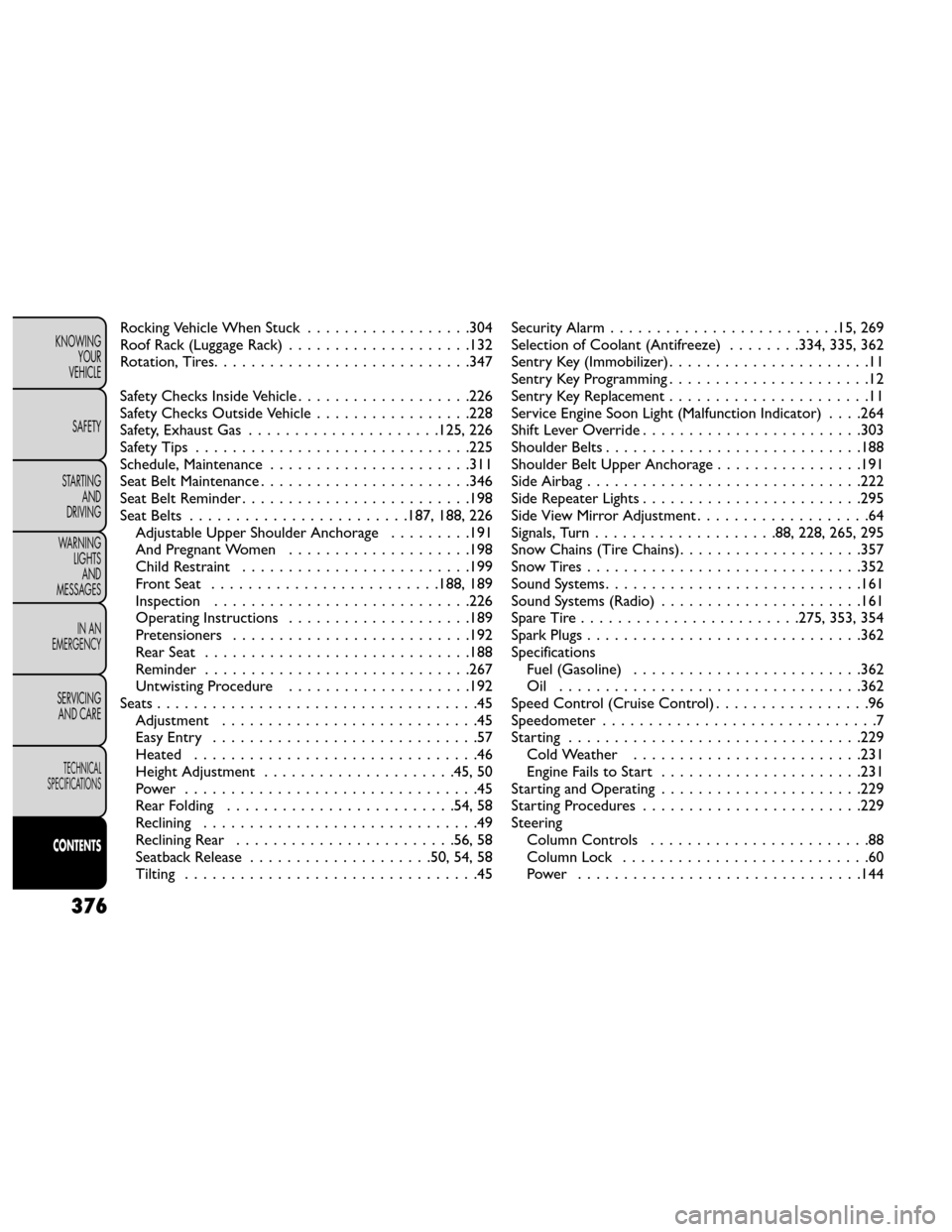
Rocking Vehicle When Stuck..................304
Roof Rack (Luggage Rack) ....................132
Rotation, Tires ............................347
Safety Checks Inside Vehicle ...................226
Safety Checks Outside Vehicle .................228
Safety, Exhaust Gas .....................125, 226
Safety Tips ..............................225
Schedule, Maintenance ......................311
Seat Belt Maintenance .......................346
Seat Belt Reminder .........................198
Seat Belts ........................ 187, 188, 226
Adjustable Upper Shoulder Anchorage .........191
And Pregnant Women ....................198
Child Restraint .........................199
Front Seat .........................188, 189
Inspection ............................226
Operating Instructions ....................189
Pretensioners ..........................192
Rear Seat .............................188
Reminder .............................267
Untwisting Procedure ....................192
Seats ...................................45
Adjustment ............................45
Easy Entry .............................57
Heated ...............................46
Height Adjustment .....................45, 50
Power ................................45
Rear Folding .........................54, 58
Reclining ..............................49
Reclining Rear ........................56, 58
Seatback Release ....................50, 54, 58
Tilting ................................45 Security Alarm
.........................15, 269
Selection of Coolant (Antifreeze) ........334, 335, 362
Sentry Key (Immobilizer) ......................11
Sentry Key Programming ......................12
Sentry Key Replacement ......................11
Service Engine Soon Light (Malfunction Indicator) ....264
Shift Lever Override ........................303
Shoulder Belts ............................188
Shoulder Belt Upper Anchorage ................191
Side Airbag ..............................22
2
Side Repeater Lights ........................295
Side View Mirror Adjustment ...................64
Signals, Turn ....................88, 228, 265, 295
Snow Chains (Tire Chains) ....................357
SnowTires..............................352
Sound Systems ............................161
Sound Systems (Radio) ......................161
Spare Tire ........................275, 353, 354
Spark Plugs ..............................362
Specifications Fuel (Gasoline) .........................362
Oil .................................362
Speed Control (Cruise Control) .................96
Speedometer ..............................7
Starting ................................229
Cold Weather .........................231
Engine Fails to Start ......................231
Starting and Operating ......................229
Starting Procedures ........................229
Steering Column Controls ........................88
Column Lock ...........................60
Power ...............................144
376
KNOWING YOUR
VEHICLE
SAFETY
STARTING AND
DRIVING
WARNING LIGHTSAND
MESSAGES
IN AN
EMERGENCY
SERVICING AND CARE
TECHNICAL
SPECIFICATIONS
CONTENTS