service FORD FESTIVA 1991 Manual PDF
[x] Cancel search | Manufacturer: FORD, Model Year: 1991, Model line: FESTIVA, Model: FORD FESTIVA 1991Pages: 454, PDF Size: 9.53 MB
Page 371 of 454
whichever occurs first.
POWERTRAIN WARRANTY
Under this warranty, certain parts of the engine, transmission, axle and driveline are warranted against defects in materials and workmanship
for either 4 years/50,000 or 6 years/60,000 miles, depending on the model year. This coverage begins after 12 months or 12,000 miles. See
copy of warranty for specific components covered and length of coverage.
BUMPER-TO-BUMPER COVERAGE
All 1992-93 vehicles have complete warranty coverage against defects in materials and workmanship for 3 years or 36,000 miles, whichever
occurs first. There is no deductible with this warranty. Items not covered include tires and parts that are subject to normal wear and tear, such
as windshield wiper blades, brake linings, brake pads, clutch linings and scheduled maintenance items. There is no extended powertrain
coverage included in this warranty.
BATTERY COVERAGE
Begins at warranty start date and lasts up to 3 years or 36,000 miles, whichever occurs first. For the first 12 months in service (less than
36,000 miles), battery will be replaced at no charge. After that, battery will be replaced on a customer-participation basis: For the 13th-24th
month in service, Ford will pay 50%; for the 25th-36th month, Ford will pay 25%. Labor is covered for 3 years or 36,000 miles, whichever
occurs first.
SAFETY RESTRAINT SYSTEM COVERAGE
Begins at warranty start date and lasts for 5 years or 50,000 miles, whichever occurs first. Covers safety restraint problems not related to
comfort or appearance. Coverage for model years earlier than 1990 is 3 years with unlimited miles.
CORROSION COVERAGE
Begins at warranty start date and lasts for 6 years or 60,000 miles, whichever occurs first. 1992-93 models are covered for 6 years or 100,000
miles, whichever occurs first. Covers any holes in body sheet metal caused by corrosion.
EMISSIONS DEFECT & PERFORMANCE WARRANTIES (EXCEPT CALIFORNIA)
Defect Warranty ensures that vehicle meets applicable EPA regulations and that vehicle's emission control system is free from defects in
materials and workmanship for a period of 5 years or 50,000 miles, whichever occurs first.
The Performance Warranty covers all costs of repairing or adjusting any components or parts as needed for the vehicle to pass a Federally
required state or local emissions test.
Other emission control parts related to these components are covered by the Performance Warranty, where applicable. If another part fails due
to the failure of one of these components, both parts are covered. See customer's copy of warranty information for specific items co vered .
Performance Warranty coverage is limited to fewer components after 2 years or 24,000 miles.
EMISSIONS PERFORMANCE WARRANTY (CALIFORNIA)
If vehicle fails a Smog Check inspection, all necessary repairs and adjustments will be made by manufacturer to ensure that vehicle passes the
inspection. Warranty begins at warranty start date and lasts for a period of 3 years or 50,000 miles, whichever occurs first.
EMISSIONS DEFECT WARRANTY (CALIFORNIA)
If any emission-related part on the vehicle is defective, the part will be repaired or replaced by manufacturer. Warranty begins at warranty start
date and lasts for a period of 3 years or 50,000 miles, whichever occurs first.
Some emission-related parts are warranted for 7 years or 70,000 miles whichever occurs first, and will be repaired or replaced by manufacturer
if found to be defective in material or workmanship. See customer's copy of warranty information for specific items covered.
FUSES & FUSIBLE LINKS
FUSE PANEL & FUSIBLE LINK BLOCK LOCATIONS
The vehicle has a fuse block with fusible links and a fuse panel with circuit fuses. The fuse panel is located behind the instrument panel, left o
f
the steering column. The fuse block is located under the hood.
FUSE PANEL IDENTIFICATION NOTE:Powertrain Warranty varies in coverage length (4 years/50,000 m iles or 6 years/60,000 m iles) depending
on model year.
Page 7 of 9 MITCHELL 1 ARTICLE - MAINTENANCE INFORMATION 1988-93 MAINTENANCE Ford Motor Co. Maintenance Inform...
3/10/2009 http://www.eautorepair.net/app/PrintItems.asp?S0=2097152&S1=0&SG=%7B9B990D68%2D660A%2D45E9%2D8F46%2DE
...
Page 374 of 454
Back To Article
SERVICE INDICATOR & WARNING LIGHTS
1988-92 MAINT ENANCE Ford Motor Co. Service Indicator & Warning Lights
SERVICE INDICATOR & WARNING LIGHTS
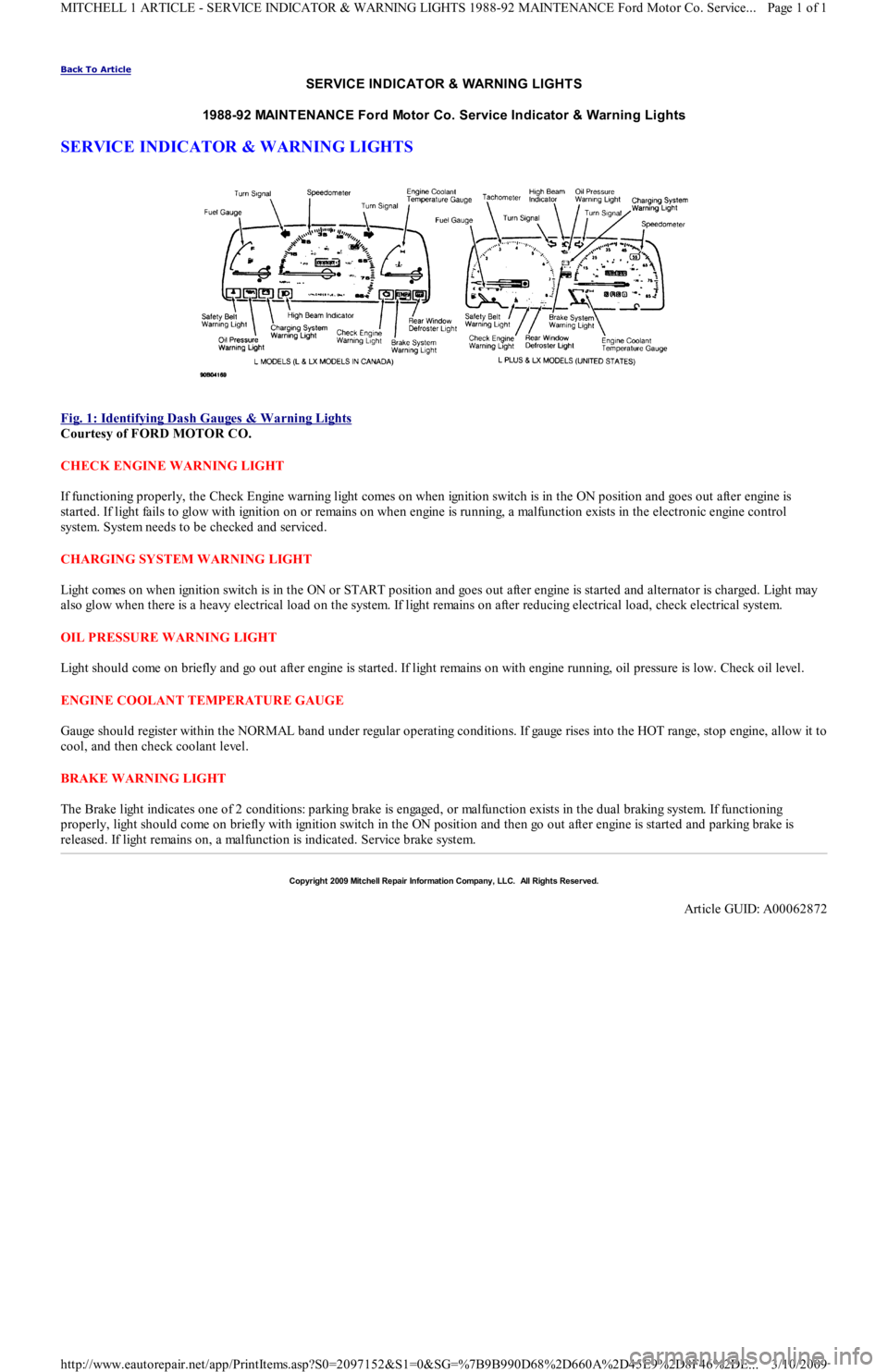
Fig. 1: Identifying Dash Gauges & W arning Lights
Courtesy of FORD MOTOR CO.
CHECK ENGINE WARNING LIGHT
If functioning properly, the Check Engine warning light comes on when ignition switch is in the ON position and goes out after engine is
started. If light fails to glow with ignition on or remains on when engine is running, a malfunction exists in the electronic engine control
system. System needs to be checked and serviced.
CHARGING SYSTEM WARNING LIGHT
Light comes on when ignition switch is in the ON or START position and goes out after engine is started and alternator is charged. Light may
also glow when there is a heavy electrical load on the system. If light remains on after reducing electrical load, check electrical system.
OIL PRESSURE WARNING LIGHT
Light should come on briefly and go out after engine is started. If light remains on with engine running, oil pressure is low. Check oil level.
ENGINE COOLANT TEMPERATURE GAUGE
Gauge should register within the NORMAL band under regular operating conditions. If gauge rises into the HOT range, stop engine, allow it to
cool, and then check coolant level.
BRAKE WARNING LIGHT
The Brake light indicates one of 2 conditions: parking brake is engaged, or malfunction exists in the dual braking system. If functioning
properly, light should come on briefly with ignition switch in the ON position and then go out after engine is started and parking brake is
released. If light remains on, a malfunction is indicated. Service brake system.
Copyr ight 2009 Mitchell Repair Information Company, LLC. All Rights Reserved.
Article GUID: A00062872
Page 1 of 1 MITCHELL 1 ARTICLE - SERVICE INDICATOR & WARNING LIGHTS 1988-92 MAINTENANCE Ford Motor Co. Service
...
3/10/2009 http://www.eautorepair.net/app/PrintItems.asp?S0=2097152&S1=0&SG=%7B9B990D68%2D660A%2D45E9%2D8F46%2DE
...
Page 377 of 454
WHEEL ALIGNMENT
After performing appropriate service procedures, refer to WHEEL ALIGNMENT SPECIFICATIONS & PROCEDURES article in the WHEEL
ALIGNMENT section.
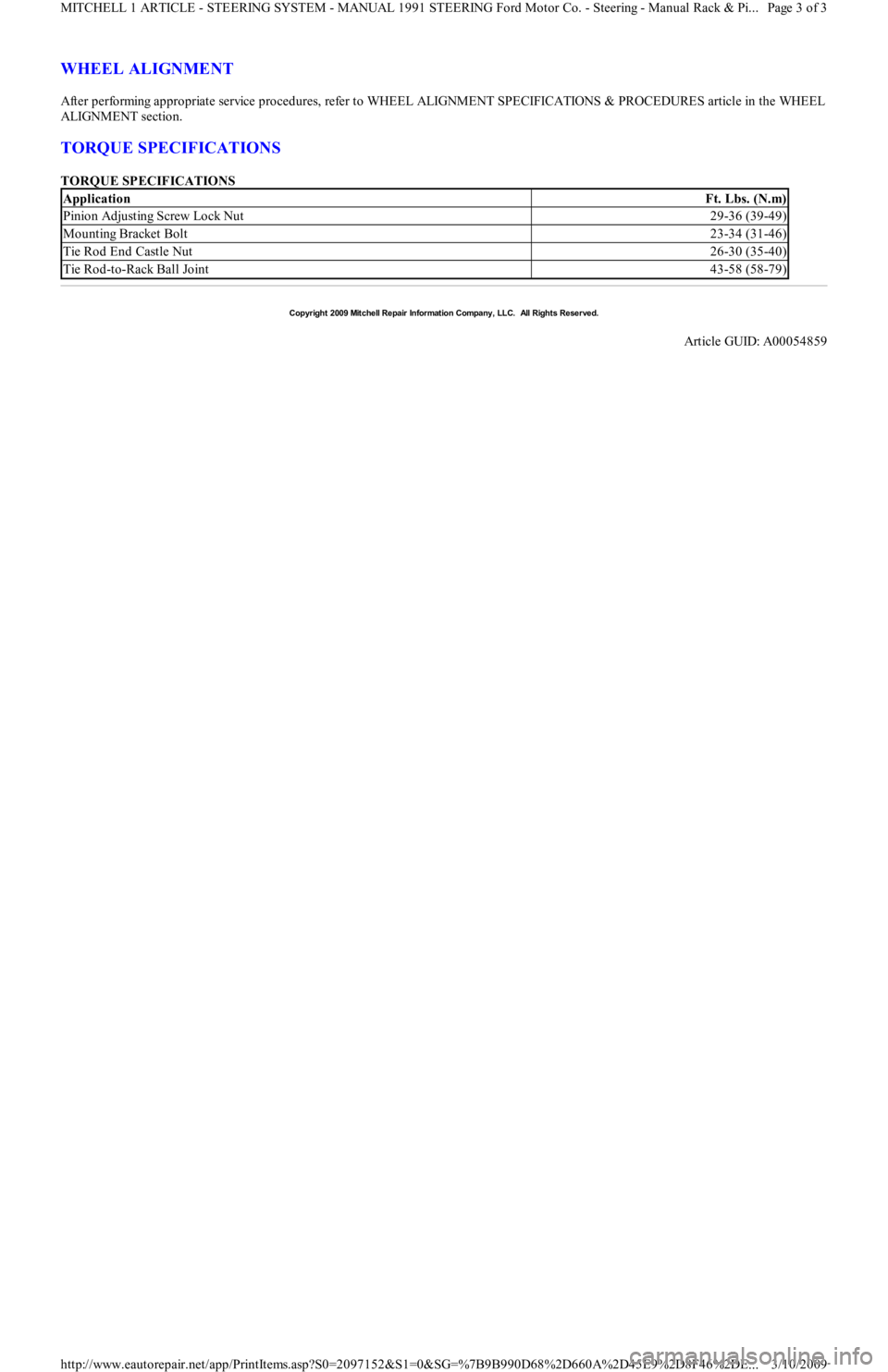
TORQUE SPECIFICATIONS
TORQUE SPECIFICATIONS
ApplicationFt. Lbs. (N.m)
Pinion Adjusting Screw Lock Nut29-36 (39-49)
Mounting Bracket Bolt23-34 (31-46)
Tie Rod End Castle Nut26-30 (35-40)
Tie Rod-to-Rack Ball Joint43-58 (58-79)
Copyr ight 2009 Mitchell Repair Information Company, LLC. All Rights Reserved.
Article GUID: A00054859
Page 3 of 3 MITCHELL 1 ARTICLE - STEERING SYSTEM - MANUAL 1991 STEERING Ford Motor Co. - Steering - Manual Rack & Pi
...
3/10/2009 http://www.eautorepair.net/app/PrintItems.asp?S0=2097152&S1=0&SG=%7B9B990D68%2D660A%2D45E9%2D8F46%2DE
...
Page 385 of 454
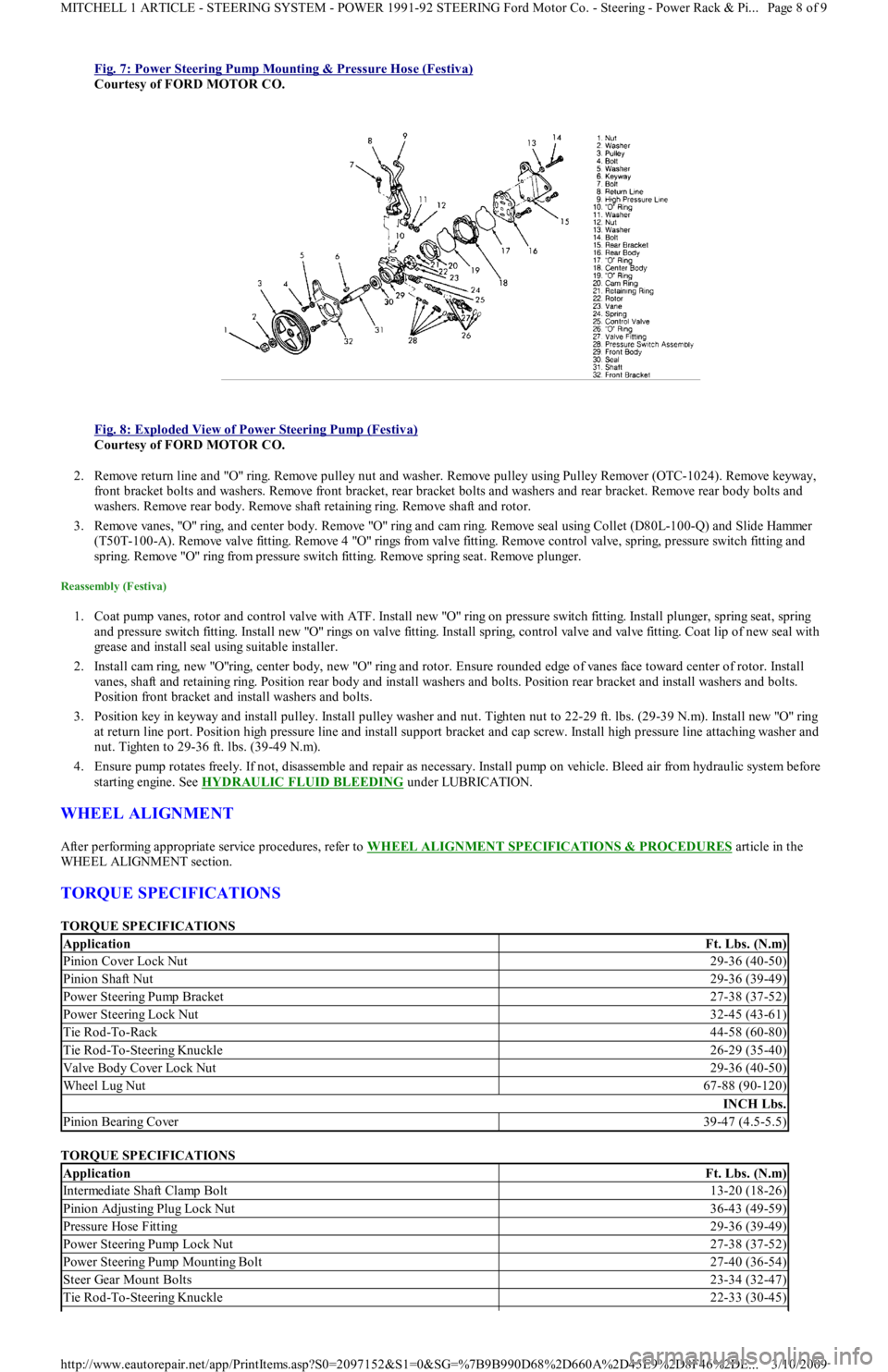
Fig. 7: Power Steering Pump Mounting & Pressure Hose (Festiva)
Courtesy of FORD MOTOR CO.
Fig. 8: Exploded View of Power Steering Pump (Festiva)
Courtesy of FORD MOTOR CO.
2. Remove return line and "O" ring. Remove pulley nut and washer. Remove pulley using Pulley Remover (OTC-1024). Remove keyway,
front bracket bolts and washers. Remove front bracket, rear bracket bolts and washers and rear bracket. Remove rear body bolts and
washers. Remove rear body. Remove shaft retaining ring. Remove shaft and rotor.
3. Remove vanes, "O" ring, and center body. Remove "O" ring and cam ring. Remove seal using Collet (D80L-100-Q) and Slide Hammer
( T5 0 T- 1 0 0 - A) . R e mo ve va l ve fit t in g. R e mo ve 4 "O" r in gs fr o m va l ve fit t in g. R e mo ve c o n t r o l va l ve , sp r in g, p r e ssu r e swit c h fit t ing a n d
spring. Remove "O" ring from pressure switch fitting. Remove spring seat. Remove plunger.
Reassembly (Festiva)
1. Coat pump vanes, rotor and control valve with ATF. Install new "O" ring on pressure switch fitting. Install plunger, spring seat, spring
and pressure switch fitting. Install new "O" rings on valve fitting. Install spring, control valve and valve fitting. Coat lip of new seal with
grease and install seal using suitable installer.
2. Install cam ring, new "O"ring, center body, new "O" ring and rotor. Ensure rounded edge of vanes face toward center of rotor. In st al l
vanes, shaft and retaining ring. Position rear body and install washers and bolts. Position rear bracket and install washers and bolts.
Position front bracket and install washers and bolts.
3. Position key in keyway and install pulley. Install pulley washer and nut. Tighten nut to 22-29 ft. lbs. (29-39 N.m). Install new "O" ring
at return line port. Position high pressure line and install support bracket and cap screw. Install high pressure line attaching washer and
nut. Tighten to 29-36 ft. lbs. (39-49 N.m).
4. Ensure pump rotates freely. If not, disassemble and repair as necessary. Install pump on vehicle. Bleed air from hydraulic system before
starting engine. See HYDRAULIC FLUID BLEEDING
under LUBRICATION.
WHEEL ALIGNMENT
After performing appropriate service procedures, refer to WHEEL ALIGNMENT SPECIFICATIONS & PROCEDURES article in the
WHEEL ALIGNMENT section.
TORQUE SPECIFICATIONS
TORQUE SPECIFICATIONS
TORQUE SPECIFICATIONS
ApplicationFt. Lbs. (N.m)
Pinion Cover Lock Nut29-36 (40-50)
Pinion Shaft Nut29-36 (39-49)
Power Steering Pump Bracket27-38 (37-52)
Power Steering Lock Nut32-45 (43-61)
Tie Rod-To-Rack44-58 (60-80)
Tie Rod-To-Steering Knuckle26-29 (35-40)
Valve Body Cover Lock Nut29-36 (40-50)
Wheel Lug Nut67-88 (90-120)
INCH Lbs.
Pinion Bearing Cover39-47 (4.5-5.5)
ApplicationFt. Lbs. (N.m)
Intermediate Shaft Clamp Bolt13-20 (18-26)
Pinion Adjusting Plug Lock Nut36-43 (49-59)
Pressure Hose Fitting29-36 (39-49)
Power Steering Pump Lock Nut27-38 (37-52)
Power Steering Pump Mounting Bolt27-40 (36-54)
Steer Gear Mount Bolts23-34 (32-47)
Tie Rod-To-Steering Knuckle22-33 (30-45)
Page 8 of 9 MITCHELL 1 ARTICLE - STEERING SYSTEM - POWER 1991-92 STEERING Ford Motor Co. - Steering - Power Rack & Pi
...
3/10/2009 http://www.eautorepair.net/app/PrintItems.asp?S0=2097152&S1=0&SG=%7B9B990D68%2D660A%2D45E9%2D8F46%2DE
...
Page 393 of 454
Removal
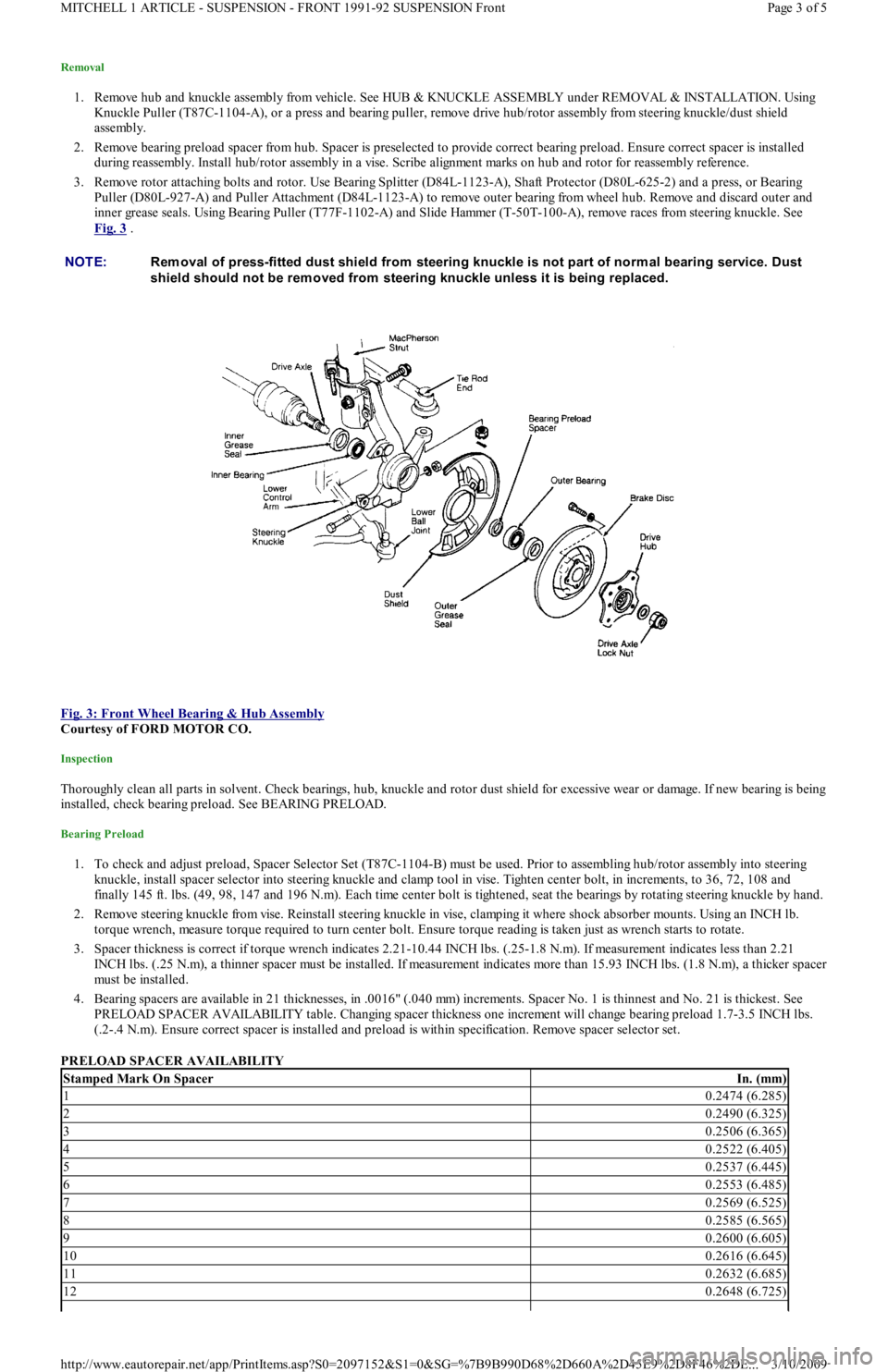
1. Remove hub and knuckle assembly from vehicle. See HUB & KNUCKLE ASSEMBLY under REMOVAL & INSTALLATION. Using
Knuckle Puller (T87C-1104-A), or a press and bearing puller, remove drive hub/rotor assembly from steering knuckle/dust shield
assembly.
2. Remove bearing preload spacer from hub. Spacer is preselected to provide correct bearing preload. Ensure correct spacer is installed
during reassembly. Install hub/rotor assembly in a vise. Scribe alignment marks on hub and rotor for reassembly reference.
3. Remove rotor attaching bolts and rotor. Use Bearing Splitter (D84L-1123-A), Shaft Protector (D80L-625-2) and a press, or Bearing
Puller (D80L-927-A) and Puller Attachment (D84L-1123-A) to remove outer bearing from wheel hub. Remove and discard outer and
inner grease seals. Using Bearing Puller (T77F-1102-A) and Slide Hammer (T-50T-100-A), remove races from steering knuckle. See
Fig. 3
.
Fig. 3: Front Wheel Bearing & Hub Assembly
Courtesy of FORD MOTOR CO.
Inspection
Thoroughly clean all parts in solvent. Check bearings, hub, knuckle and rotor dust shield for excessive wear or damage. If new bearing is being
installed, check bearing preload. See BEARING PRELOAD.
Bearing Preload
1. To check and adjust preload, Spacer Selector Set (T87C-1104-B) must be used. Prior to assembling hub/rotor assembly into steering
knuckle, install spacer selector into steering knuckle and clamp tool in vise. Tighten center bolt, in increments, to 36, 72, 108 and
finally 145 ft. lbs. (49, 98, 147 and 196 N.m). Each time center bolt is tightened, seat the bearings by rotating steering knuckle by hand.
2. Remove steering knuckle from vise. Reinstall steering knuckle in vise, clamping it where shock absorber mounts. Using an INCH lb.
torque wrench, measure torque required to turn center bolt. Ensure torque reading is taken just as wrench starts to rotate.
3. Spacer thickness is correct if torque wrench indicates 2.21-10.44 INCH lbs. (.25-1.8 N.m). If measurement indicates less than 2.21
INCH lbs. (.25 N.m), a thinner spacer must be installed. If measurement indicates more than 15.93 INCH lbs. (1.8 N.m), a thicker spacer
must be installed.
4. Bearing spacers are available in 21 thicknesses, in .0016" (.040 mm) increments. Spacer No. 1 is thinnest and No. 21 is thickest. See
PRELOAD SPACER AVAILABILITY table. Changing spacer thickness one increment will change bearing preload 1.7-3.5 INCH lbs.
(.2-.4 N.m). Ensure correct spacer is installed and preload is within specification. Remove spacer selector set.
PRELOAD SPACER AVAILABILITY NOTE:Rem oval of press-fitted dust shield from steering knuckle is not part of norm al bearing service. Dust
shield should not be rem oved from steering knuckle unless it is being replaced.
Stamped Mark On SpacerIn. (mm)
10.2474 (6.285)
20.2490 (6.325)
30.2506 (6.365)
40.2522 (6.405)
50.2537 (6.445)
60.2553 (6.485)
70.2569 (6.525)
80.2585 (6.565)
90.2600 (6.605)
100.2616 (6.645)
110.2632 (6.685)
120.2648 (6.725)
Page 3 of 5 MITCHELL 1 ARTICLE - SUSPENSION - FRONT 1991-92 SUSPENSION Front
3/10/2009 http://www.eautorepair.net/app/PrintItems.asp?S0=2097152&S1=0&SG=%7B9B990D68%2D660A%2D45E9%2D8F46%2DE
...
Page 409 of 454
Back To Article
1988-94 AUT OMAT IC T RANSMISSIONS
Ford ATX Overhaul
APPLICATION
APPLICATION
DESCRIPTION
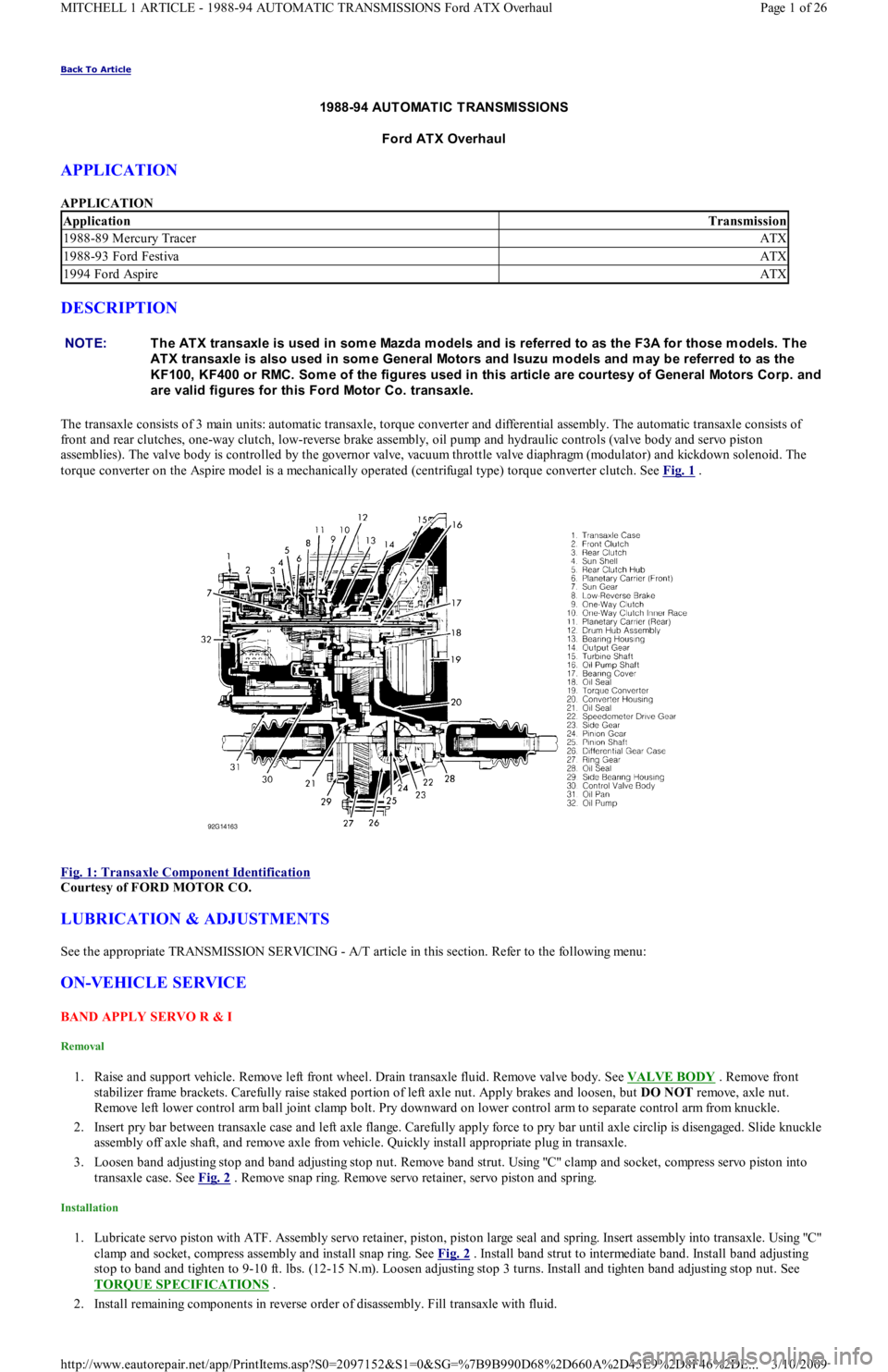
The transaxle consists of 3 main units: automatic transaxle, torque converter and differential assembly. The automatic transaxle consists of
front and rear clutches, one-way clutch, low-reverse brake assembly, oil pump and hydraulic controls (valve body and servo piston
assemblies). The valve body is controlled by the governor valve, vacuum throttle valve diaphragm (modulator) and kickdown solenoid. The
torque converter on the Aspire model is a mechanically operated (centrifugal type) torque converter clutch. See Fig. 1
.
Fig. 1: Transaxle Component Identification
Courtesy of FORD MOTOR CO.
LUBRICATION & ADJUSTMENTS
See the appropriate TRANSMISSION SERVICING - A/T article in this section. Refer to the following menu:
ON-VEHICLE SERVICE
BAND APPLY SERVO R & I
Removal
1. Raise and support vehicle. Remove left front wheel. Drain transaxle fluid. Remove valve body. See VALVE BODY . Remove front
stabilizer frame brackets. Carefully raise staked portion of left axle nut. Apply brakes and loosen, but DO NOT remove, axle nut.
Remove left lower control arm ball joint clamp bolt. Pry downward on lower control arm to separate control arm from knuckle.
2. Insert pry bar between transaxle case and left axle flange. Carefully apply force to pry bar until axle circlip is disengaged. Slide knuckle
assembly off axle shaft, and remove axle from vehicle. Quickly install appropriate plug in transaxle.
3. Loosen band adjusting stop and band adjusting stop nut. Remove band strut. Using "C" clamp and socket, compress servo piston into
transaxle case. See Fig. 2
. Remove snap ring. Remove servo retainer, servo piston and spring.
Installation
1. Lubricate servo piston with ATF. Assembly servo retainer, piston, piston large seal and spring. Insert assembly into transaxle. Usin g "C"
clamp and socket, compress assembly and install snap ring. See Fig. 2
. Install band strut to intermediate band. Install band adjusting
stop to band and tighten to 9-10 ft. lbs. (12-15 N.m). Loosen adjusting stop 3 turns. Install and tighten band adjusting stop nut. See
TORQUE SPECIFICATIONS
.
2. Install remaining components in reverse order of disassembly. Fill transaxle with fluid.
ApplicationTransmission
1988-89 Mercury TracerATX
1988-93 Ford FestivaATX
1994 Ford AspireATX
NOTE:T he AT X transaxle is used in som e Mazda m odels and is referred to as the F3A for those m odels. T he
AT X transaxle is also used in som e General Motors and Isuzu m odels and m ay be referred to as the
KF100, KF400 or RMC. Som e of the figures used in this article are courtesy of General Motors Corp. and
are valid figures for this Ford Motor Co. transaxle.
Page 1 of 26 MITCHELL 1 ARTICLE - 1988-94 AUTOMATIC TRANSMISSIONS Ford ATX Overhaul
3/10/2009 http://www.eautorepair.net/app/PrintItems.asp?S0=2097152&S1=0&SG=%7B9B990D68%2D660A%2D45E9%2D8F46%2DE
...
Page 410 of 454
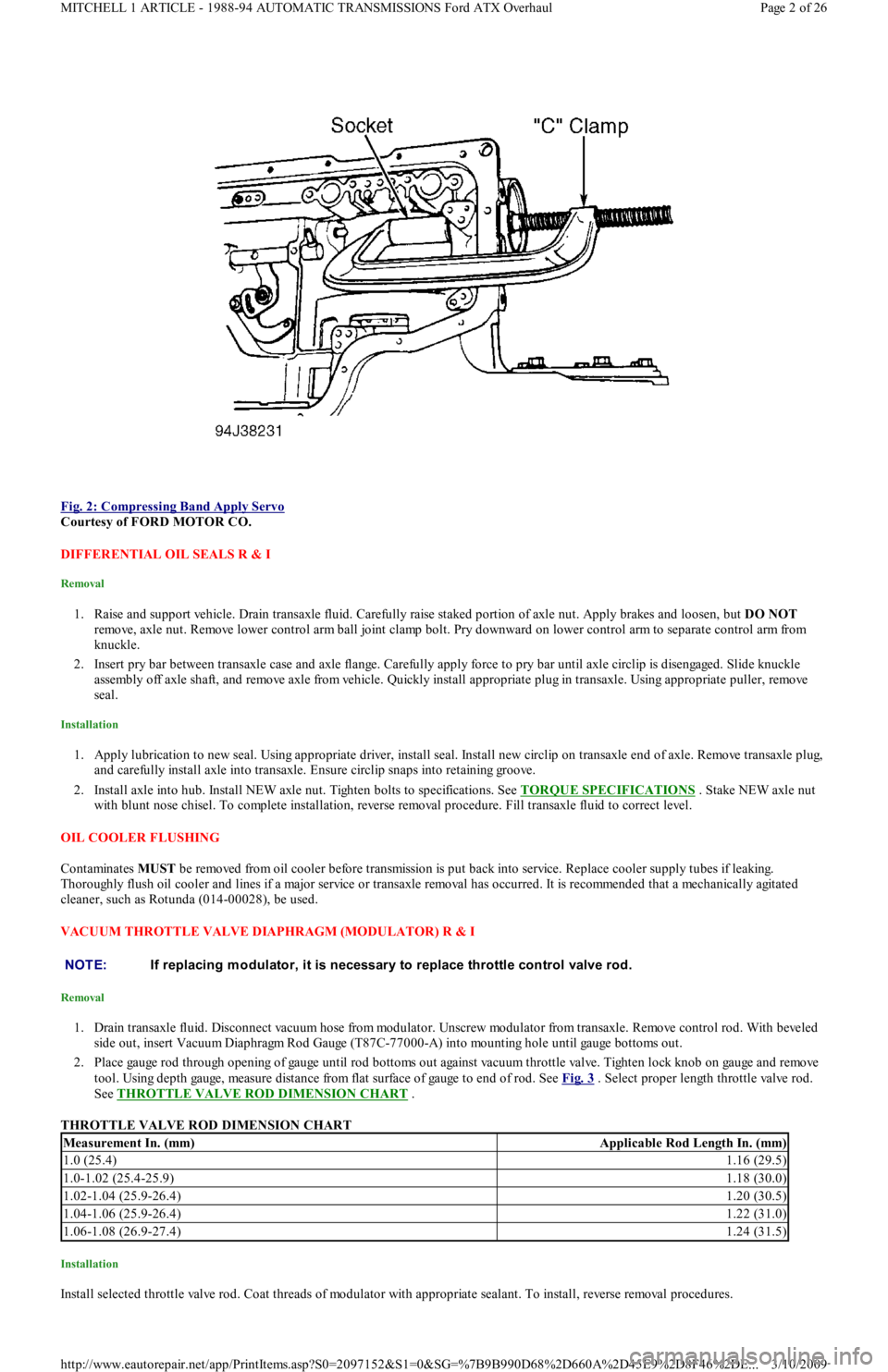
Fig. 2: Compressing Band Apply Servo
Courtesy of FORD MOTOR CO.
DIFFERENTIAL OIL SEALS R & I
Removal
1. Raise and support vehicle. Drain transaxle fluid. Carefully raise staked portion of axle nut. Apply brakes and loosen, but DO NOT
remove, axle nut. Remove lower control arm ball joint clamp bolt. Pry downward on lower control arm to separate control arm from
knuckle.
2. Insert pry bar between transaxle case and axle flange. Carefully apply force to pry bar until axle circlip is disengaged. Slide knuckle
assembly off axle shaft, and remove axle from vehicle. Quickly install appropriate plug in transaxle. Using appropriate puller, remove
seal.
Installation
1. Apply lubrication to new seal. Using appropriate driver, install seal. Install new circlip on transaxle end of axle. Remove transaxle plug,
and carefully install axle into transaxle. Ensure circlip snaps into retaining groove.
2. Install axle into hub. Install NEW axle nut. Tighten bolts to specifications. See TORQUE SPECIFICATIONS
. Stake NEW axle nut
with blunt nose chisel. To complete installation, reverse removal procedure. Fill transaxle fluid to correct level.
OIL COOLER FLUSHING
Contaminates MUST be removed from oil cooler before transmission is put back into service. Replace cooler supply tubes if leaking.
Thoroughly flush oil cooler and lines if a major service or transaxle removal has occurred. It is recommended that a mechanically agitated
cleaner, such as Rotunda (014-00028), be used.
VACUUM THROTTLE VALVE DIAPHRAGM (MODULATOR) R & I
Removal
1. Drain transaxle fluid. Disconnect vacuum hose from modulator. Unscrew modulator from transaxle. Remove control rod. With beveled
side out, insert Vacuum Diaphragm Rod Gauge (T87C-77000-A) into mounting hole until gauge bottoms out.
2. Place gauge rod through opening of gauge until rod bottoms out against vacuum throttle valve. Tighten lock knob on gauge and remove
tool. Using depth gauge, measure distance from flat surface of gauge to end of rod. See Fig. 3
. Select proper length throttle valve rod.
See THROTTLE VALVE ROD DIMENSION CHART
.
THROTTLE VALVE ROD DIMENSION CHART
Installation
Install selected throttle valve rod. Coat threads of modulator with appropriate sealant. To install, reverse removal procedures.
NOTE:If replacing m odulator, it is necessary to replace throttle control valve rod.
Measurement In. (mm)Applicable Rod Length In. (mm)
1.0 (25.4)1.16 (29.5)
1.0-1.02 (25.4-25.9)1.18 (30.0)
1.02-1.04 (25.9-26.4)1.20 (30.5)
1.04-1.06 (25.9-26.4)1.22 (31.0)
1.06-1.08 (26.9-27.4)1.24 (31.5)
Page 2 of 26 MITCHELL 1 ARTICLE - 1988-94 AUTOMATIC TRANSMISSIONS Ford ATX Overhaul
3/10/2009 http://www.eautorepair.net/app/PrintItems.asp?S0=2097152&S1=0&SG=%7B9B990D68%2D660A%2D45E9%2D8F46%2DE
...
Page 416 of 454
See STALL SPEED SPECIFICATIONS .
Testing Procedures
1. With engine at normal operating temperature, tachometer installed and parking and service brakes applied, perform transaxle stall test in
"D", "2", "1" and "R" ranges at full throttle and note maximum RPM obtained. Correct stall speed should occur at specified RPM. See
the STALL SPEED SPECIFICATIONS
.
STALL SPEED SPECIFICATIONS
2. If stall speed is too high in all shift ranges, the following components may be faulty:
Worn Oil Pump.
Oil leakage from oil pump, valve body or transaxle case.
Sticking pressure regulator valve.
3. If stall speed is too high in "D", "2" and "1", the following component may be faulty:
Slipping rear clutch.
4. If stall speed is too high in "D", the following component may be faulty:
Slipping one-way clutch.
5. If stall speed is too high in "2", the following components may be faulty:
Slipping intermediate band.
6. If stall speed is too high in "R", the following components may be faulty:
Slipping Low/Reverse Clutch.
Slipping Front Clutch.
7. If stall speed is too low in all shift ranges, the following components may be faulty:
Slipping torque converter one-way clutch.
ROAD TEST
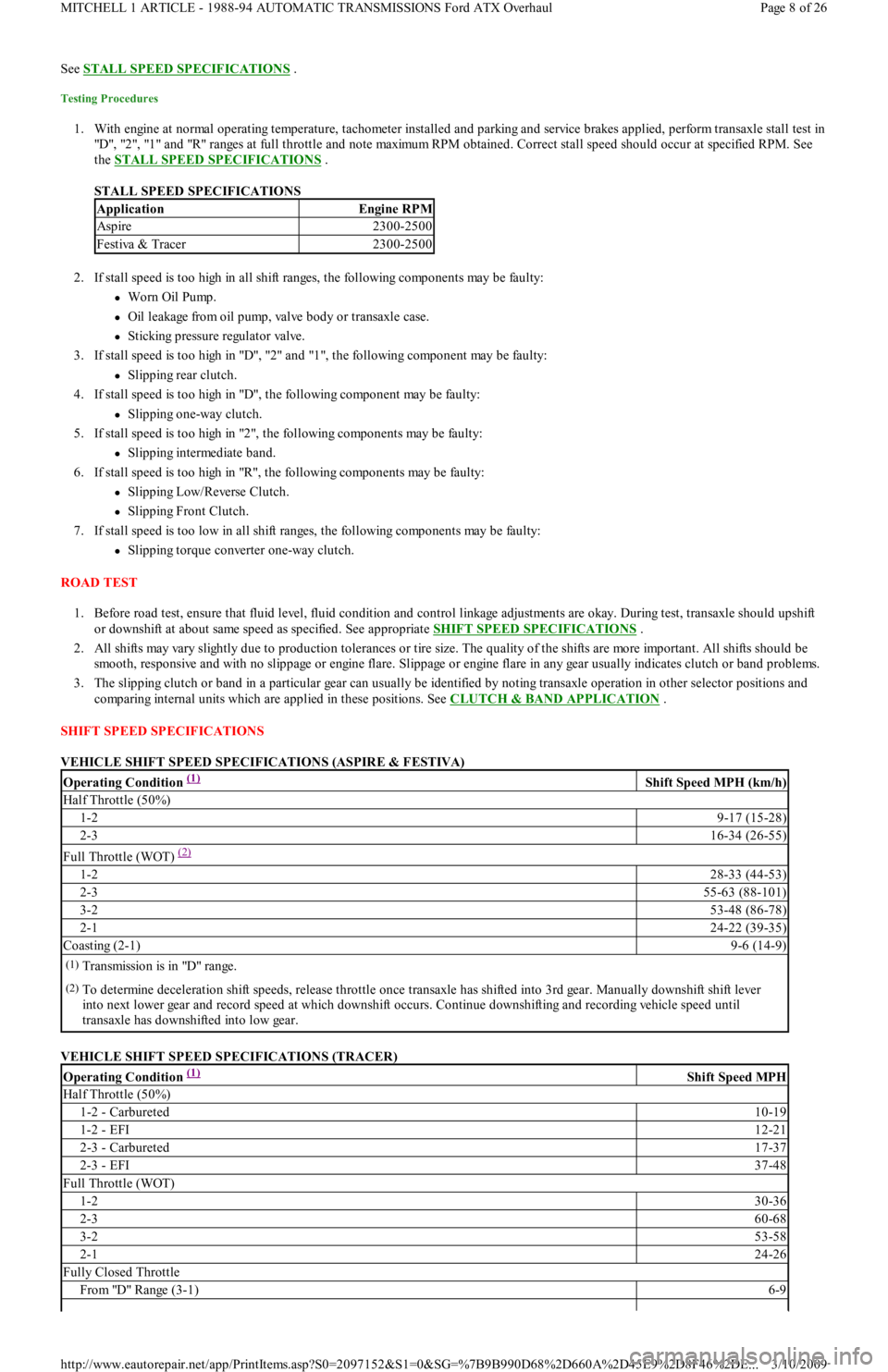
1. Before road test, ensure that fluid level, fluid condition and control linkage adjustments are okay. During test, transaxle should upshift
or downshift at about same speed as specified. See appropriate SHIFT SPEED SPECIFICATIONS
.
2. All shifts may vary slightly due to production tolerances or tire size. The quality of the shifts are more important. All shifts should be
smooth, responsive and with no slippage or engine flare. Slippage or engine flare in any gear usually indicates clutch or band problems.
3. The slipping clutch or band in a particular gear can usually be identified by noting transaxle operation in other selector positions and
comparing internal units which are applied in these positions. See CLUTCH & BAND APPLICATION
.
SHIFT SPEED SPECIFICATIONS
VEHICLE SHIFT SPEED SPECIFICATIONS (ASPIRE & FESTIVA)
VEHICLE SHIFT SPEED SPECIFICATIONS (TRACER)
ApplicationEngine RPM
Aspire2300-2500
Festiva & Tracer2300-2500
Operating Condition (1) Shift Speed MPH (km/h)
Half Throttle (50%)
1-29-17 (15-28)
2-316-34 (26-55)
Full Throttle (WOT) (2)
1-228-33 (44-53)
2-355-63 (88-101)
3-253-48 (86-78)
2-124-22 (39-35)
Coasting (2-1)9-6 (14-9)
(1)Transmission is in "D" range.
(2)To determine deceleration shift speeds, release throttle once transaxle has shifted into 3rd gear. Manually downshift shift lever
into next lower gear and record speed at which downshift occurs. Continue downshifting and recording vehicle speed until
transaxle has downshifted into low gear.
Operating Condition (1) Shift Speed MPH
Half Throttle (50%)
1-2 - Carbureted10-19
1-2 - EFI12-21
2-3 - Carbureted17-37
2-3 - EFI37-48
Full Throttle (WOT)
1-230-36
2-360-68
3-253-58
2-124-26
Fully Closed Throttle
Fro m "D" Ran ge (3 -1 )6-9
Page 8 of 26 MITCHELL 1 ARTICLE - 1988-94 AUTOMATIC TRANSMISSIONS Ford ATX Overhaul
3/10/2009 http://www.eautorepair.net/app/PrintItems.asp?S0=2097152&S1=0&SG=%7B9B990D68%2D660A%2D45E9%2D8F46%2DE
...
Page 418 of 454
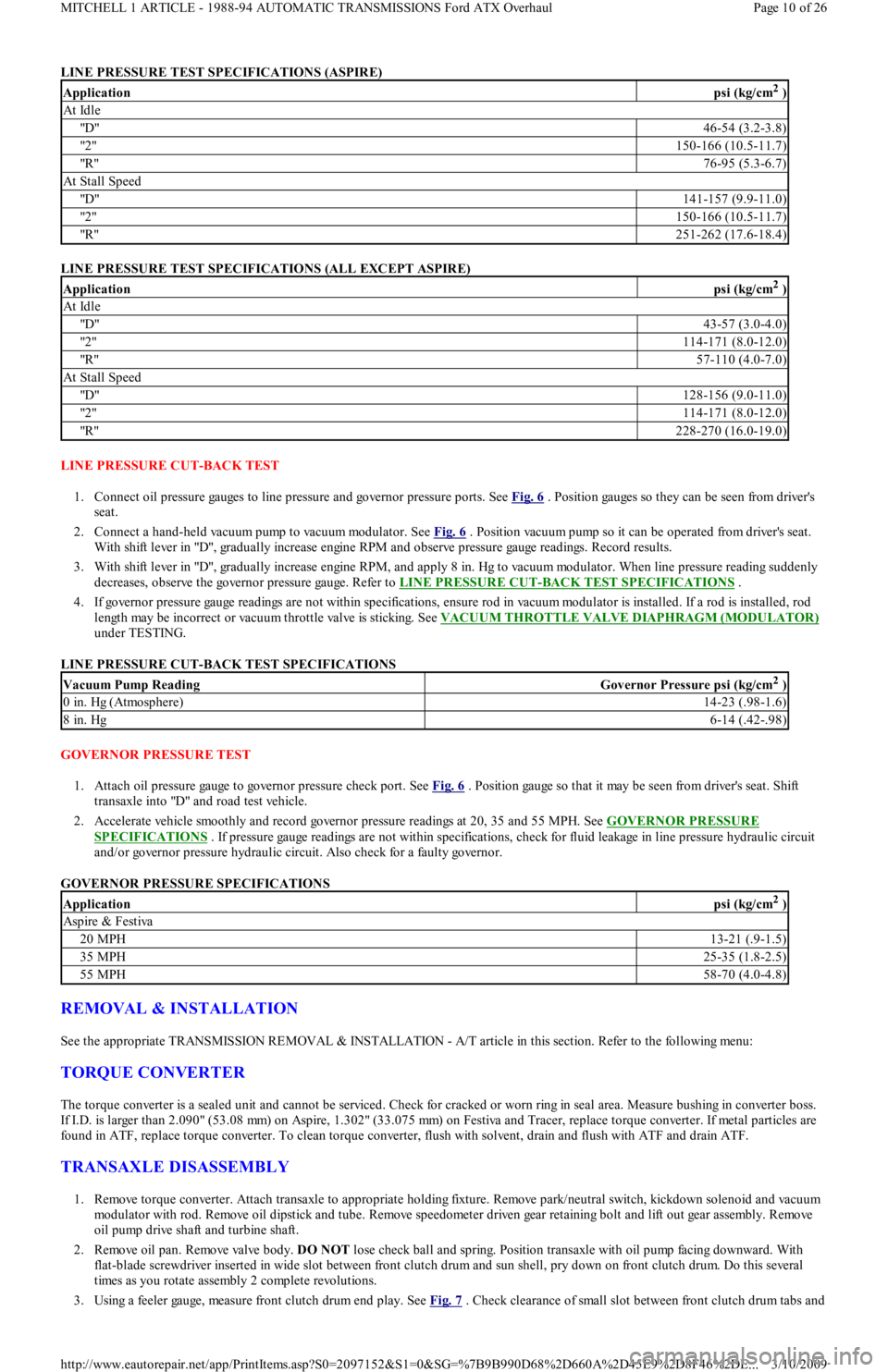
LINE PRESSURE TEST SPECIFICATIONS (ASPIRE)
LINE PRESSURE TEST SPECIFICATIONS (ALL EXCEPT ASPIRE)
LINE PRESSURE CUT-BACK TEST
1. Connect oil pressure gauges to line pressure and governor pressure ports. See Fig. 6
. Position gauges so they can be seen from driver's
seat.
2. Connect a hand-held vacuum pump to vacuum modulator. See Fig. 6
. Position vacuum pump so it can be operated from driver's seat.
With shift lever in "D", gradually increase engine RPM and observe pressure gauge readings. Record results.
3. With shift lever in "D", gradually increase engine RPM, and apply 8 in. Hg to vacuum modulator. When line pressure reading suddenly
decreases, observe the governor pressure gauge. Refer to LINE PRESSURE CUT
-BACK TEST SPECIFICATIONS .
4. If governor pressure gauge readings are not within specifications, ensure rod in vacuum modulator is installed. If a rod is installed, rod
length may be incorrect or vacuum throttle valve is sticking. See VACUUM THROTTLE VALVE DIAPHRAGM (MODULATOR)
under TESTING.
LINE PRESSURE CUT-BACK TEST SPECIFICATIONS
GOVERNOR PRESSURE TEST
1. Attach oil pressure gauge to governor pressure check port. See Fig. 6
. Position gauge so that it may be seen from driver's seat. Shift
transaxle into "D" and road test vehicle.
2. Accelerate vehicle smoothly and record governor pressure readings at 20, 35 and 55 MPH. See GOVERNOR PRESSURE
SPECIFICATIONS . If pressure gauge readings are not within specifications, check for fluid leakage in line pressure hydraulic circuit
and/or governor pressure hydraulic circuit. Also check for a faulty governor.
GOVERNOR PRESSURE SPECIFICATIONS
REMOVAL & INSTALLATION
See the appropriate TRANSMISSION REMOVAL & INSTALLATION - A/T article in this section. Refer to the following menu:
TORQUE CONVERTER
The torque converter is a sealed unit and cannot be serviced. Check for cracked or worn ring in seal area. Measure bushing in converter boss.
If I.D. is larger than 2.090" (53.08 mm) on Aspire, 1.302" (33.075 mm) on Festiva and Tracer, replace torque converter. If metal particles are
found in ATF, replace torque converter. To clean torque converter, flush with solvent, drain and flush with ATF and drain ATF.
TRANSAXLE DISASSEMBLY
1. Remove torque converter. Attach transaxle to appropriate holding fixture. Remove park/neutral switch, kickdown solenoid and vacuum
modulator with rod. Remove oil dipstick and tube. Remove speedometer driven gear retaining bolt and lift out gear assembly. Remove
oil pump drive shaft and turbine shaft.
2. Remove oil pan. Remove valve body. DO NOT lose check ball and spring. Position transaxle with oil pump facing downward. With
flat-blade screwdriver inserted in wide slot between front clutch drum and sun shell, pry down on front clutch drum. Do this seve r a l
times as you rotate assembly 2 complete revolutions.
3. Using a feeler gauge, measure front clutch drum end play. See Fig. 7
. Check clearance of small slot between front clutch drum tabs and
Applicationpsi (kg/cm2 )
At Idle
"D"46-54 (3.2-3.8)
"2 "150-166 (10.5-11.7)
"R"76-95 (5.3-6.7)
At Stall Speed
"D"141-157 (9.9-11.0)
"2 "150-166 (10.5-11.7)
"R"251-262 (17.6-18.4)
Applicationpsi (kg/cm2 )
At Idle
"D"43-57 (3.0-4.0)
"2 "114-171 (8.0-12.0)
"R"57-110 (4.0-7.0)
At Stall Speed
"D"128-156 (9.0-11.0)
"2 "114-171 (8.0-12.0)
"R"228-270 (16.0-19.0)
Vacuum Pump ReadingGovernor Pressure psi (kg/cm2 )
0 in. Hg (Atmosphere)14-23 (.98-1.6)
8 in. Hg6-14 (.42-.98)
Applicationpsi (kg/cm2 )
Aspire & Festiva
20 MPH13-21 (.9-1.5)
35 MPH25-35 (1.8-2.5)
55 MPH58-70 (4.0-4.8)
Page 10 of 26 MITCHELL 1 ARTICLE - 1988-94 AUTOMATIC TRANSMISSIONS Ford ATX Overhaul
3/10/2009 http://www.eautorepair.net/app/PrintItems.asp?S0=2097152&S1=0&SG=%7B9B990D68%2D660A%2D45E9%2D8F46%2DE
...
Page 432 of 454
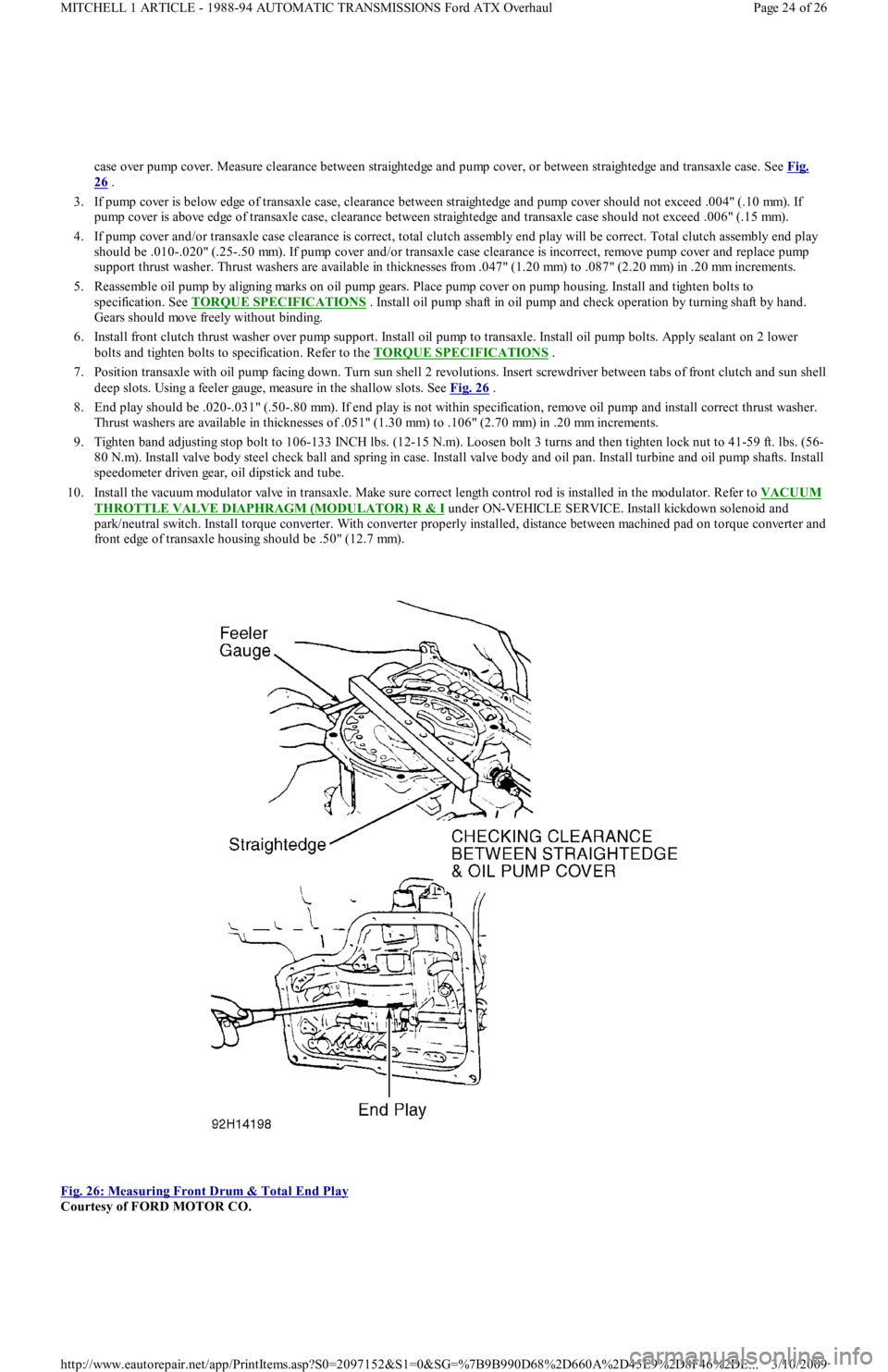
case over pump cover. Measure clearance between straightedge and pump cover, or between straightedge and transaxle case. See Fig.
26 .
3. If pump cover is below edge of transaxle case, clearance between straightedge and pump cover should not exceed .004" (.10 mm). If
pump cover is above edge of transaxle case, clearance between straightedge and transaxle case should not exceed .006" (.15 mm).
4. If pump cover and/or transaxle case clearance is correct, total clutch assembly end play will be correct. Total clutch assembly end play
should be .010-.020" (.25-.50 mm). If pump cover and/or transaxle case clearance is incorrect, remove pump cover and replace pump
support thrust washer. Thrust washers are available in thicknesses from .047" (1.20 mm) to .087" (2.20 mm) in .20 mm increments.
5. Reassemble oil pump by aligning marks on oil pump gears. Place pump cover on pump housing. Install and tighten bolts to
specification. See TORQUE SPECIFICATIONS
. Install oil pump shaft in oil pump and check operation by turning shaft by hand.
Gears should move freely without binding.
6. Install front clutch thrust washer over pump support. Install oil pump to transaxle. Install oil pump bolts. Apply sealant on 2 lower
bolts and tighten bolts to specification. Refer to the TORQUE SPECIFICATIONS
.
7. Position transaxle with oil pump facing down. Turn sun shell 2 revolutions. Insert screwdriver between tabs of front clutch and sun shell
deep slots. Using a feeler gauge, measure in the shallow slots. See Fig. 26
.
8. End play should be .020-.031" (.50-.80 mm). If end play is not within specification, remove oil pump and install correct thrust washer.
Thrust washers are available in thicknesses of .051" (1.30 mm) to .106" (2.70 mm) in .20 mm increments.
9. Tighten band adjusting stop bolt to 106-133 INCH lbs. (12-15 N.m). Loosen bolt 3 turns and then tighten lock nut to 41-59 ft. lbs. (56-
80 N.m). Install valve body steel check ball and spring in case. Install valve body and oil pan. Install turbine and oil pump sh aft s. In st al l
speedometer driven gear, oil dipstick and tube.
10. Install the vacuum modulator valve in transaxle. Make sure correct length control rod is installed in the modulator. Refer to VACUUM
THROTTLE VALVE DIAPHRAGM (MODULATOR) R & I under ON-VEHICLE SERVICE. Install kickdown solenoid and
park/neutral switch. Install torque converter. With converter properly installed, distance between machined pad on torque converter and
front edge of transaxle housing should be .50" (12.7 mm).
Fig. 26: Measuring Front Drum & Total End Play
Courtesy of FORD MOTOR CO.
Page 24 of 26 MITCHELL 1 ARTICLE - 1988-94 AUTOMATIC TRANSMISSIONS Ford ATX Overhaul
3/10/2009 http://www.eautorepair.net/app/PrintItems.asp?S0=2097152&S1=0&SG=%7B9B990D68%2D660A%2D45E9%2D8F46%2DE
...