auto hold GENESIS GV80 2021 Owner's Guide
[x] Cancel search | Manufacturer: GENESIS, Model Year: 2021, Model line: GV80, Model: GENESIS GV80 2021Pages: 632, PDF Size: 9.37 MB
Page 565 of 632
Maintenance
9-24
WIPER BLADES
Blade Inspection
Contamination of either the windshield
or the wiper blades with foreign matter
can reduce the effectiveness of the
windshield wipers.
Common sources of contamination are
insects, tree sap, and hot wax treatments
used by some commercial car washes. If
the blades are not wiping properly, clean
both the window and the blades with a
good cleaner or mild detergent, and rinse
thoroughly with clean water.
NOTICE
To prevent damage to the wiper blades,
arms or other components, do not:
• Use gasoline, kerosene, paint
thinner, or other solvents on or near
them.
• Attempt to move the wipers
manually.
• Use non-specified wiper blades.
Information
Commercial hot waxes applied by
automatic car washes have been known to
make the windshield difficult to clean.
Information
Wiper blades are consumable items.
Normal wear of the wipers may not be
covered by your vehicle warranty.
Blade Replacement
When the wipers no longer clean
adequately, the blades may be worn or
cracked, and require replacement.
NOTICE
• In order to prevent damage to the
hood and the wiper arms, the wiper
arms should only be lifted when in
the top wiping position.
• Always return the wiper arms to the
windshield before driving.
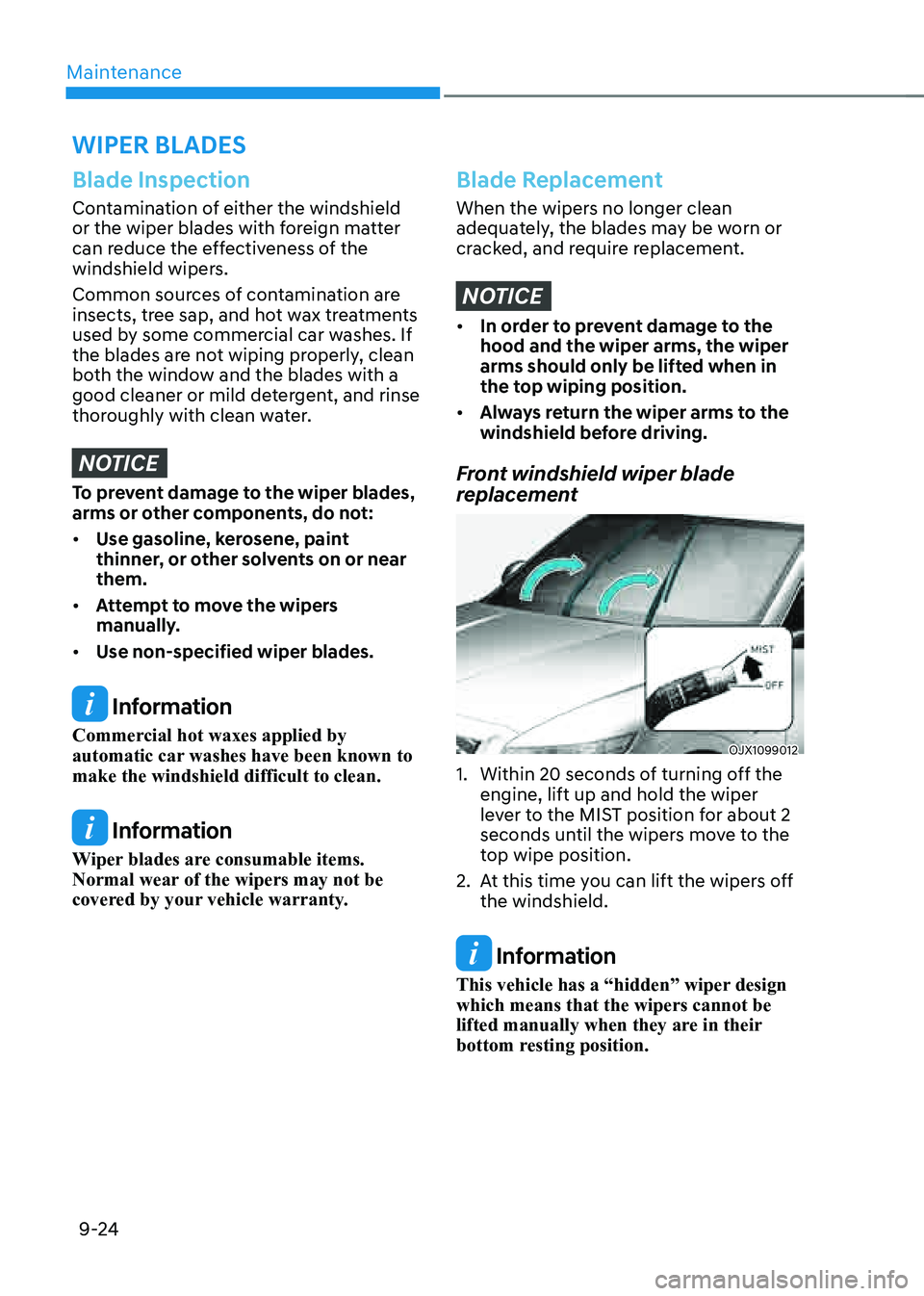
Front windshield wiper blade
replacement
OJX1099012OJX1099012
1. Within 20 seconds of turning off the
engine, lift up and hold the wiper
lever to the MIST position for about 2
seconds until the wipers move to the
top wipe position.
2. At this time you can lift the wipers off
the windshield.
Information
This vehicle has a “hidden” wiper design
which means that the wipers cannot be
lifted manually when they are in their
bottom resting position.
Page 579 of 632

Maintenance
9-38
Temperature - A, B & C
The temperature grades are A (the
highest), B and C representing the
tire’s resistance to the generation
of heat and its ability to dissipate
heat when tested under controlled
conditions on a specified indoor
laboratory test wheel.
Sustained high temperature can
cause the material of the tire to
degenerate and reduce tire life,
and excessive temperature can
lead to sudden tire failure. Grades
B and A represent higher levels of
performance on the laboratory test
wheel than the minimum required
by law.
WARNING
The temperature grade for this tire is
established for a tire that is properly
inflated and not overloaded.
Excessive speed, under-inflation,
over-inflation, or excessive loading,
either separately or in combination,
can cause heat build-up and
possible sudden tire failure. This
may cause loss of vehicle control
resulting in an accident.
Tire Terminology and Definitions
Air pressure
The amount of air inside the tire
pressing outward on the tire. Air
pressure is expressed in pounds per
square inch (psi) or kilopascal (kPa).
Accessory weight
This means the combined weight
of optional accessories. Some
examples of optional accessories
are automatic transmission, power
seats, and air conditioning.
Aspect ratio
The relationship of a tire’s height to
its width.
Belt
A rubber coated layer of cords that
is located between the plies and the
tread. Cords may be made from steel
or other reinforcing materials.
Bead
The tire bead contains steel wires
wrapped by steel cords that hold the
tire onto the rim.
Page 621 of 632

I
I-3
B
Battery
........................................................................\
.........................................9-27
Battery Recharging
........................................................................\
..................9-28
Battery Usage Recommendations
...................................................................9-28
Reset Items
........................................................................\
..............................9-29
Before Driving
........................................................................\
...............................6-5
Before Entering the Vehicle
........................................................................\
......6-5
Before Starting
........................................................................\
..........................6-5
Blind-Spot Collision-Avoidance Assist (BCA)
..................................................7-32
System Malfunction and Limitations
..............................................................7-40
System Operation
........................................................................\
....................7-36
System Settings
........................................................................\
.......................7-34
Blind-Spot View Monitor (BVM)
.......................................................................7-67
System Malfunction
........................................................................\
................7-68
System Operation
........................................................................\
....................7-68
System Settings
........................................................................\
.......................7-68
Brake Fluid
........................................................................\
..................................9-20
Checking the Brake Fluid Level
.....................................................................9-20
Braking System
........................................................................\
............................6-22
Anti-lock Brake System (ABS)
.......................................................................6-31
Auto Hold
........................................................................\
................................6-27
Disc Brakes Wear Indicator
........................................................................\
.....6-22
Downhill Brake Control (DBC)
......................................................................6-36
Electronic Parking Brake (EPB)
.....................................................................6-23
Electronic Stability Control (ESC) .................................................................. 6-32
Good Braking Practices ........................................................................\
........... 6-39
High Performance Brake
........................................................................\
.........6-23
Hill-Start Assist Control (HAC)
......................................................................6-36
Power-Assist Brakes
........................................................................\
...............6-22
Vehicle Stability Management (VSM)
............................................................6-35
Bulb Wattage
........................................................................\
..................................2-9