First (manual transmission),
then
turn the engine off. See
that any passengers carefully
get
out and clear of the vehicle,
then go get help.
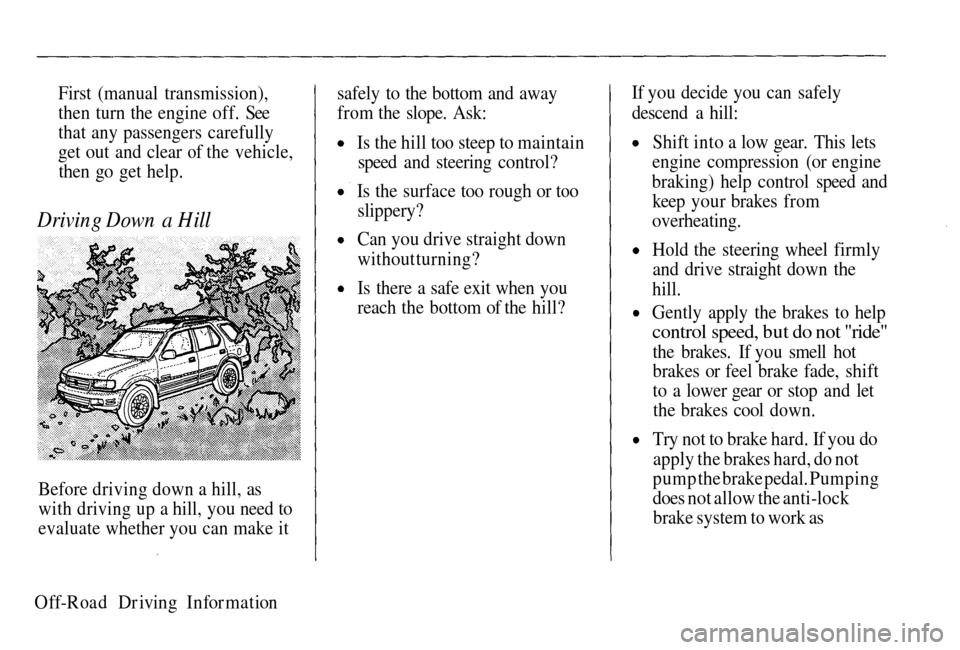
Before
driving down a hill, as
wit
h driving up a hill, you need to
evaluate whether you can
make it safely to the bottom and away
from the slope. Ask:
Is the hill too steep to maintainspeed
and steering control?
Is the surface too rough or too slippery?
Ca
n you drive straight down
withou
t turning?
Is there a safe exit when you
reach
the bottom of the hill? If you decide you can safely
descend a hill:
Shift
into a low gear. This lets
engine compression (or engine
braking) help control speed and keep your brakes from
overheating.
Hol
d the steering wheel firmly
and
drive straight down the
hill.
Gentl
y apply the brakes to help
control speed, but do not "ride"
the brakes. If you smell hotbrakes
or feel brake fade, shift
to a lower gear or stop and let the
brakes cool down.
Try not to brake hard. If you do apply
the brakes hard, do not
pump
the brake pedal. Pumping
does
not allow the anti-lock
brake system to work as
Driving
Down a Hill
Off-Road Driving Information
Crossing a Stream
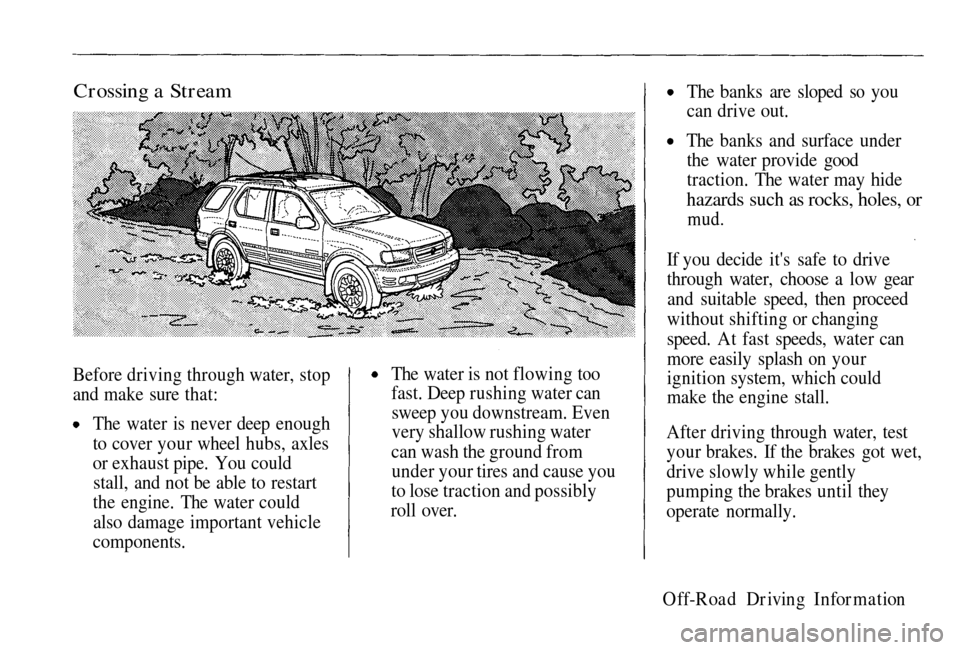
Before driving through water, stop
and
make sure that:
The water is never deep enough
to cover your wheel hubs, axles
or exhaust pipe. You could stall
, and not be able to restart
the engine. The water could
also
damage important vehicle
components. The water is not flowing too
fast. Deep rushing water can
sweep
you downstream. Even
very
shallow rushing water
can wash the ground from under
your tires and cause you
to lose traction and possibly
roll
over. The banks are sloped so you
can
drive out.
The
banks and surface under
the water provide good
traction.
The water may hide
hazards such as rocks, holes, or
mud.
If you decide it's safe to drive
through
water, choose a low gear
and suitable speed, then proceed
without shifting or changing
speed. At fast speeds, water can
more easily splash on your
ignition system, which could
make the engine stall.
After driving through water, test
your brakes. If the brakes got wet,
drive
slowly while gently
pumping
the brakes until they
operate
normally. Off-Road Driving Information
Driving in Bad Weather
Driving in light rain should cause
no special driving problems. But heavy
rain can impair visibility,
make off-road surfaces slippery,
swell streams and cause flooding.
Avoid
streambeds and canyons
whenever rain is heavy or there are
thunderstorms in flash-flood
areas. Find a safe place to stop if
you can't continue driving safely. Driving
in snow can also impair
visibility. As snow covers the
ground, it can conceal rocks, ruts,
ditches
and other hazards. Snow
can make it impossible to follow a trail
or choose a safe path. If snow
threatens
to become heavy, we
recommend
that you leave the
area
as soon as possible and return
to pavement. Should you need to
stop
while it's snowing, do not let
the engine idle for a prolonged
time
unless you have good
ventilation.
Carbon monoxide can
collect in the vehicle and cause illness
or death. Off-Road Driving Information