fuel HYUNDAI COUPE 2016 Workshop Manual
[x] Cancel search | Manufacturer: HYUNDAI, Model Year: 2016, Model line: COUPE, Model: HYUNDAI COUPE 2016Pages: 475, PDF Size: 14.78 MB
Page 447 of 475
Maintenance
78
7
Finish damage repair
Deep scratches or stone chips in the
painted surface must be repaired
promptly. Exposed metal will quickly
rust and may develop into a major
repair expense.
✽ ✽
NOTICE
If your vehicle is damaged and
requires any metal repair or
replacement, be sure the body shop
applies anti-corrosion materials to
the parts repaired or replaced.
Bright-metal maintenance
To remove road tar and insects,
use a tar remover, not a scraper or
other sharp object.
To protect the surfaces of bright- metal parts from corrosion, apply a
coating of wax or chrome preser-
vative and rub to a high luster.
During winter weather or in coastal areas, cover the bright metal parts
with a heavier coating of wax or
preservative. If necessary, coat the
parts with non-corrosive petroleum
jelly or other protective compound.
Underbody maintenance
Corrosive materials used for ice and
snow removal and dust control may
collect on the underbody. If these
materials are not removed, acceler-
ated rusting can occur on underbody
parts such as the fuel lines, frame,
floor pan and exhaust system, even
though they have been treated with
rust protection.
Thoroughly flush the vehicle under-
body and wheel openings with luke-
warm or cold water once a month,
after off-road driving and at the end of
each winter. Pay special attention to
these areas because it is difficult to
see all the mud and dirt. It will do
more harm than good to wet down the
road grime without removing it. The
lower edges of doors, rocker panels,
and frame members have drain holes
that should not be allowed to clog with
dirt; trapped water in these areas can
cause rusting.
procarmanuals.com
Page 452 of 475
783
Maintenance
EMISSION CONTROL SYSTEM
The emission control system of your
vehicle is covered by a written limited
warranty. Please see the warranty
information contained in the Owner’s
Handbook & Warranty Information
booklet in your vehicle.
Your vehicle is equipped with an
emission control system to meet all
applicable emission regulations.
There are three emission control
systems, as follows.
(1) Crankcase emission control sys-tem
(2) Evaporative emission control sys- tem
(3) Exhaust emission control system
In order to assure the proper function
of the emission control systems, it is
recommended that you have your
car inspected and maintained by an
authorized HYUNDAI dealer in
accordance with the maintenance
schedule in this manual. Caution for the Inspection and
Maintenance Test (With Electronic
Stability Control (ESC) system)
To prevent the vehicle from mis-
firing during dynamometer test-
ing, turn the Electronic Stability
Control (ESC) system off by
pressing the ESC switch.
After dynamometer testing is completed, turn the ESC system
back on by pressing the ESC
switch again.1. Crankcase emission control system
The positive crankcase ventilation
system is employed to prevent air
pollution caused by blow-by gases
being emitted from the crankcase.
This system supplies fresh filtered air
to the crankcase through the air
intake hose. Inside the crankcase,
the fresh air mixes with blow-by
gases, which then pass through the
PCV valve into the induction system.
2. Evaporative emission con-trol (including ORVR:
Onboard Refueling Vapor
Recovery) system
The Evaporative Emission Control
System is designed to prevent fuel
vapors from escaping into the atmos-
phere.
(The ORVR system is designed to
allow the vapors from the fuel tank to
be loaded into a canister while refu-
eling at the gas station, preventing
the escape of fuel vapors into the
atmosphere.)
procarmanuals.com
Page 453 of 475
Maintenance
84
7
Canister
Fuel vapors generated inside the fuel
tank are absorbed and stored in the
onboard canister. When the engine is
running, the fuel vapors absorbed in
the canister are drawn into the surge
tank through the purge control sole-
noid valve.
Purge Control Solenoid Valve
(PCSV)
The purge control solenoid valve is
controlled by the Engine Control
Module (ECM); when the engine
coolant temperature is low during
idling, the PCSV closes so that evap-
orated fuel is not taken into the
engine. After the engine warms-up
during ordinary driving, the PCSV
opens to introduce evaporated fuel to
the engine.
3. Exhaust emission control
system
The Exhaust Emission Control
System is a highly effective system
which controls exhaust emissions
while maintaining good vehicle per-
formance.
Vehicle modifications
This vehicle should not be modified.
Modification of your vehicle could
affect its performance, safety or
durability and may even violate gov-
ernmental safety and emissions reg-
ulations.
In addition, damage or performance
problems resulting from any modifi-
cation may not be covered under
warranty.
If you use unauthorized electronic
devices, it may cause the vehicle to
operate abnormally, wire damage,
battery discharge and fire. For your
safety, do not use unauthorized
electronic devices.
Engine exhaust gas precautions
(carbon monoxide)
Carbon monoxide can be present with other exhaust fumes.
Therefore, if you smell exhaust
fumes of any kind inside your vehi-
cle, have it inspected and repaired
immediately. If you ever suspect
exhaust fumes are coming into
your vehicle, drive it only with all
the windows fully open. Have your
vehicle checked and repaired
immediately.
Do not operate the engine in con- fined or closed areas (such as
garages) any more than what is
necessary to move the vehicle in or
out of the area.
When the vehicle is stopped in an open area for more than a short
time with the engine running,
adjust the ventilation system (as
needed) to draw outside air into the
vehicle.
Never sit in a parked or stopped vehicle for any extended time with
the engine running.
procarmanuals.com
Page 455 of 475
Maintenance
86
7
Your vehicle is equipped with a cat-
alytic converter emission control
device.
Therefore, the following precautions
must be observed:
Use only UNLEADED FUEL for
gasoline engines.
Do not operate the vehicle when there are signs of engine malfunc-
tion, such as misfire or a noticeable
loss of performance.
Do not misuse or abuse the engine. Examples of misuse are
coasting with the ignition off and
descending steep grades in gear
with the ignition off.
Do not operate the engine at high idle speed for extended periods (5
minutes or more).
Do not modify or tamper with any part of the engine or emission con-
trol system. All inspections and
adjustments must be made by an
authorized HYUNDAI dealer. Avoid driving with a very low fuel
level. If you run out of gasoline, it
could cause the engine to misfire
and result in excessive loading of
the catalytic converter.
Failure to observe these precautions
could result in damage to the catalyt-
ic converter and to your vehicle.
Additionally, such actions could void
your warranties. Perchlorate Material-special handling
may apply, See www.dtsc.ca.gov/
hazardouswaste/perchlorate.
Notice to California Vehicle
Dismantlers :
Perchlorate containing materials,
such as air bag inflators, seatbelt
pretensioners and keyless remote
entry batteries, must be disposed of
according to Title 22 California Code
of Regulations Section 67384.10 (a).
CALIFORNIA PERCHLORATE
NOTICE
procarmanuals.com
Page 459 of 475
Specifications, Consumer information, Reporting safety defects
48
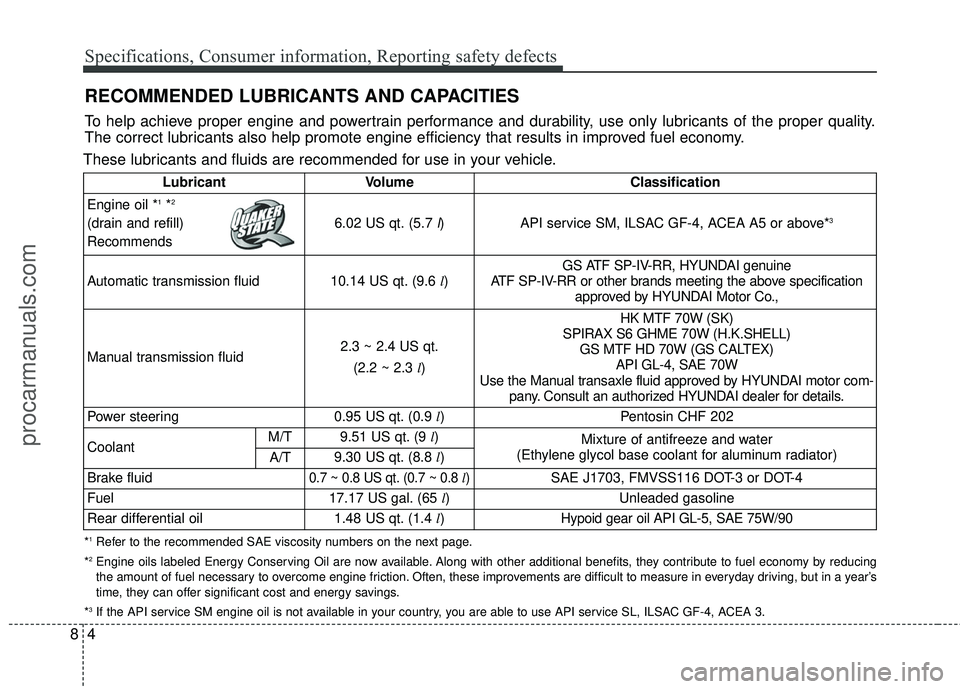
RECOMMENDED LUBRICANTS AND CAPACITIES
These lubricants and fluids are recommended for use in your vehicle.
*1Refer to the recommended SAE viscosity numbers on the next page.
*2Engine oils labeled Energy Conserving Oil are now available. Along with other additional benefits, they contribute to fuel econo my by reducing
the amount of fuel necessary to overcome engine friction. Often, these improvements are difficult to measure in everyday driving, but in a year’s
time, they can offer significant cost and energy savings.
*
3If the API service SM engine oil is not available in your country, you are able to use API service SL, ILSAC GF-4, ACEA 3.
To help achieve proper engine and powertrain performance and durability, use only lubricants of the proper quality.
The correct lubricants also help promote engine efficiency that results in improved fuel economy.
LubricantVolumeClassification
Engine oil *1*2
(drain and refill)
Recommends6.02 US qt. (5.7 l)API service SM, ILSAC GF-4, ACEA A5 or above*3
Automatic transmission fluid10.14 US qt. (9.6 l)
GS ATF SP-IV-RR, HYUNDAI genuine
ATF SP-IV-RR or other brands meeting the above specification approved by HYUNDAI Motor Co.,
Manual transmission fluid2.3 ~ 2.4 US qt.
(2.2 ~ 2.3 l)
HK MTF 70W (SK)
SPIRAX S6 GHME 70W (H.K.SHELL) GS MTF HD 70W (GS CALTEX) API GL-4, SAE 70W
Use the Manual transaxle fluid approved by HYUNDAI motor com- pany. Consult an authorized HYUNDAI dealer for details.
Power steering0.95 US qt. (0.9 l)Pentosin CHF 202
CoolantM/T9.51 US qt. (9 l) Mixture of antifreeze and water
(Ethylene glycol base coolant for aluminum radiator)
A/T9.30 US qt. (8.8 l)
Brake fluid0.7 ~ 0.8 US qt. (0.7 ~ 0.8 l )SAE J1703, FMVSS116 DOT-3 or DOT-4
Fuel17.17 US gal. (65 l)Unleaded gasoline
Rear differential oil1.48 US qt. (1.4 l)Hypoid gear oil API GL-5, SAE 75W/90
procarmanuals.com
Page 460 of 475
Recommended SAE viscosity
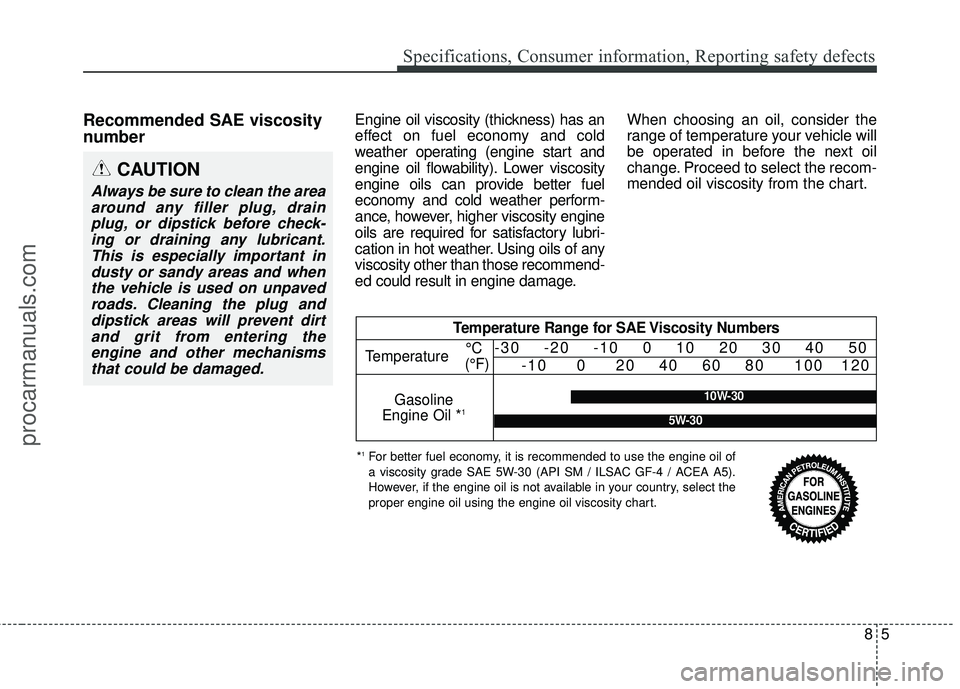
number Engine oil viscosity (thickness) has an
effect on fuel economy and cold
weather operating (engine start and
engine oil flowability). Lower viscosity
engine oils can provide better fuel
economy and cold weather perform-
ance, however, higher viscosity engine
oils are required for satisfactory lubri-
cation in hot weather. Using oils of any
viscosity other than those recommend-
ed could result in engine damage.When choosing an oil, consider the
range of temperature your vehicle will
be operated in before the next oil
change. Proceed to select the recom-
mended oil viscosity from the chart.
CAUTION
Always be sure to clean the area
around any filler plug, drainplug, or dipstick before check-ing or draining any lubricant.This is especially important industy or sandy areas and whenthe vehicle is used on unpavedroads. Cleaning the plug anddipstick areas will prevent dirtand grit from entering theengine and other mechanismsthat could be damaged.
85
Specifications, Consumer information, Reporting safety defects
Temperature Range for SAE Viscosity Numbers
Temperature
Gasoline
Engine Oil *
1
°C
(°F)-30 -20 -10 0 10 20 30 40 50
-10 0 20 40 60 80 100 120
10W-30
5W-30
*1For better fuel economy, it is recommended to use the engine oil of
a viscosity grade SAE 5W-30 (API SM / ILSAC GF-4 / ACEA A5).
However, if the engine oil is not available in your country, select the
proper engine oil using the engine oil viscosity chart.
procarmanuals.com
Page 468 of 475
··················\
··········4-117
Defroster (Front window) Front windshield deicer ··················\
······")
Index
4I
Defogging logic (Windshield)··················\
··········4-117
Defroster (Front window) Front windshield deicer ··················\
···············4-91
Defroster (Rear window) ··················\
················ ·4-91
Defrosting (Windshield) ··················\
·················4-114
Digital clock ··················\
··················\
··········· ·4-124
Dimensions ··················\
··················\
·················8-2
Display illumination, see instrument panel illumination · · ·4-46
Displays, see instrument cluster ··················\
·········4-45
Door locks ··················\
··················\
··············· ·4-16
Central door lock switch ··················\
··············4-18
Speed sensing door lock system ··················\
·····4-19
Drinks holders, see cup holders ··················\
········4-122
Driver's 3-point seat belt ··················\
················· ·3-18
Driver's and passenger's front air bag ··················\
···3-48
Driving at night ··················\
··················\
········· ·5-44
Driving in flooded areas ··················\
················· ·5-46
Driving in the rain ··················\
··················\
······ ·5-45
Driving off-road ··················\
··················\
········· ·5-46
DRL ··················\
··················\
··················\
···· ·4-83
Economical operation ··················\
··················\
·· ·5-41
Electric chromic mirror (ECM) ··················\
··········4-35
Electronic stability program (ESC) ··················\
·····5-31
Emergency fuel filler lid release ··················\
·········4-29 Emergency starting
Jump starting ··················\
··················\
·········· ·6-4
Push starting ··················\
··················\
··········· ·6-5
Emergency while driving ··················\
················· ·6-2
Emission control system ··················\
················· ·7-83
Crankcase emission control system ··················\
··7-83
Evaporative emission control System ·················7-83
Exhaust emission control system ··················\
····7-84
Engine compartment ··················\
················· ·2-6, 7-3
Engine compartment fuse label ··················\
··········7-60
Engine compartment panel fuse ··················\
·········7-57
Engine coolant ··················\
··················\
·········· ·7-25
Engine coolcant temperature gauge ··················\
·····4-47
Engine number ··················\
··················\
··········· ·8-7
Engine oil ··················\
··················\
·················7-23
Engine overheats ··················\
··················\
········· ·6-6
Engine Specification ··················\
··················\
····· ·8-2
Engine start/stop button ··················\
··················\
· ·5-8
Engine will not start ··················\
··················\
····· ·6-3
Escort function ··················\
··················\
·········· ·4-83
Evaporative emission control system ··················\
···7-83
Exhaust emission control system ··················\
········7-84
Explanation of scheduled maintenance items ···········7-20
Exterior care ··················\
··················\
··············7-76
Exterior overview (front) ··················\
················· ·2-2
Exterior overview (rear) ··················\
··················\
· ·2-3
E
procarmanuals.com
Page 469 of 475

I5
Index
Flat tire··················\
··················\
··················\
· ·6-12
Jack and tools ··················\
··················\
·········6-12
Changing tires ··················\
··················\
······· ·6-13
Removing and storing the spare tire ··················\
·6-13
Jack label ··················\
··················\
··············6-20
Floor mat anchor(s) ··················\
··················\
··· ·4-125
Fluid Automatic tranmission fluid ··················\
··········7-30
Brakes/clutch fluid ··················\
··················\
·· ·7-28
Manual tranmission fluid ··················\
··············7-30
Power steering fluid ··················\
··················\
· ·7-29
Washer fluid ··················\
··················\
·········· ·7-30
Folding the outside rearviwe mirror · · · · · · · ···············4-44
Folding the rear seat ··················\
··················\
···· ·3-13
Front seat adjustment (manual) ··················\
···········3-4
Front seat adjustment (Power) ··················\
············3-5
Front windshield deicer ··················\
··················\
·4-92
Fuel additives ··················\
··················\
··············1-5
Fuel filler lid··················\
··················\
··············4-27 Emergency fuel filler lid release ··················\
·····4-29
Fuel gauge ··················\
··················\
··············· ·4-48
Fuel requirements ··················\
··················\
·········1-3
Alcohol and methanol ··················\
··················\
·1-4
Fuel additives ··················\
··················\
···········1-5
Fuse switch ··················\
··················\
·············· ·7-57Fuses
··················\
··················\
··················\
···· ·7-55
Engine compartment panel fuse ··················\
······7-57
Fuse switch··················\
··················\
··········· ·7-57
Fuse/relay panel description ··················\
··········7-58
Instrument panel fuse ··················\
················· ·7-55
Label ··················\
··················\
··················\
·7-58
Multi fuse ··················\
··················\
··············7-58
Gauge · · · · · · · · · · · · · · · · · · · · · · · · · · ··················\
··············4-46
Engine coolant temperature gauge ··················\
···4-47
Fuel gauge ··················\
··················\
············ ·4-48
Multi gauge ··················\
··················\
·········· ·4-71
GAW (Gross axle weight) ··················\
···············
·5-57
GA
WR (Gross axle weight rating) ··················\
······5-57
Glass antenna ··················\
··················\
·········· ·4-128
Glove box ··················\
··················\
·············· ·4-120
Glove box lamp ··················\
··················\
········· ·4-90
GVW (Gross vehicle weight) ··················\
············5-57
GVWR (Gross vehicle weight rating) ··················\
··5-57
Hazard warning flasher ··················\
··············4-81, 6-2
Hazardous driving conditions ··················\
············5-43
Headlamp welcome function ··················\
·············4-82
F
G
H
procarmanuals.com
Page 470 of 475

Index
6I
Headlight escort function··················\
················ ·4-82
Headrest ··················\
··················\
··················\
··3-7
Highway driving ··················\
··················\
·········5-46
HomeLink system ··················\
··················\
······ ·4-38
Hood ··················\
··················\
··················\
···· ·4-26
Horn ··················\
··················\
··················\
···· ·4-34
How to use this manual ··················\
··················\
··1-2
Immobilizer system ··················\
··················\
·······4-4
Indicator symbols on the instrument cluster ··············1-8
Indicators and warnings ··················\
················· ·4-61
Inside rearview mirror ··················\
··················\
· ·4-35
Instrument cluster ··················\
··················\
······· ·4-45
Engine coolant temperature gauge ··················\
···4-47
Fuel gauge ··················\
··················\
············ ·4-48
Instrument panel illumination ··················\
········4-46
LCD display warning ··················\
················· ·4-56
Odometer ··················\
··················\
··············4-49
Speedometer ··················\
··················\
········· ·4-46
Tachometer ··················\
··················\
··········· ·4-47
Trip computer ··················\
··················\
·········4-49
User setting mode ··················\
··················\
··· ·4-53
Warning and indicators ··················\
··············· ·4-61
Instrument panel fuse ··················\
··················\
·· ·7-56
Instrument panel fuse label ··················\
···············7-59 Instrument panel illumination
··················\
············4-46
Instrument panel overview ··················\
················ ·2-5
Interior care ··················\
··················\
·············· ·7-82
Interior features ··················\
··················\
·········4-121
Ashtray ··················\
··················\
·············· ·4-122
Aux, USB and iPod port ··················\
············ ·4-127
Cigarette lighter ··················\
··················\
···· ·4-121
Cup holder ··················\
··················\
·········· ·4-122
Digital clock ··················\
··················\
······· ·4-124
Floor mat anchor(s) ··················\
··················\
·4-125
Outside thermometer ··················\
················ ·4-125
Power outlet ··················\
··················\
·········4-124
Sunvisor ··················\
··················\
··············4-123
Interior light ··················\
··················\
··············4-89
Glove box lamp ··················\
··················\
······ ·4-90
Map lamp ··················\
··················\
··············4-89
T
runk room lamp ··················\
··················\
···· ·4-90
Vanity mirror lamp ··················\
··················\
·· ·4-90
Interior overview ··················\
··················\
········· ·2-4
IPOD ··················\
··················\
··················\
···4-170
Jack and tools ··················\
··················\
··········· ·6-12
Jump starting ··················\
··················\
·············· ·6-4
J
I
procarmanuals.com