air condition HYUNDAI ENTOURAGE 2007 Workshop Manual
[x] Cancel search | Manufacturer: HYUNDAI, Model Year: 2007, Model line: ENTOURAGE, Model: HYUNDAI ENTOURAGE 2007Pages: 398, PDF Size: 8.03 MB
Page 347 of 398
633
Maintenance
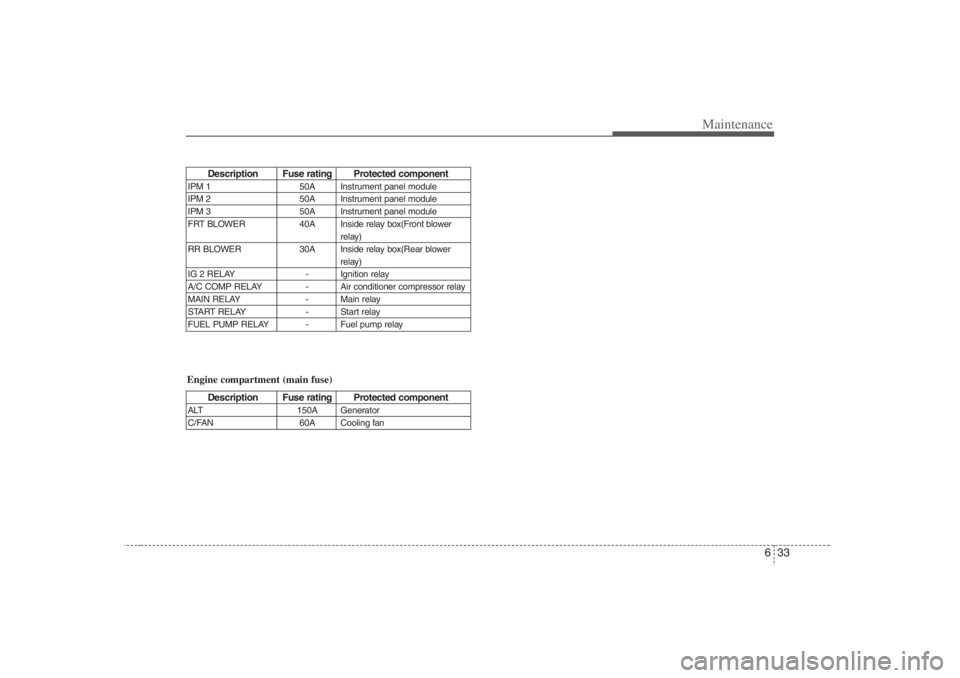
Description Fuse rating Protected component
IPM 1 50A Instrument panel module
IPM 2 50A Instrument panel module
IPM 3 50A Instrument panel module
FRT BLOWER 40A Inside relay box(Front blower
relay)
RR BLOWER 30A Inside relay box(Rear blower
relay)
IG 2 RELAY - Ignition relay
A/C COMP RELAY - Air conditioner compressor relay
MAIN RELAY - Main relay
START RELAY - Start relay
FUEL PUMP RELAY - Fuel pump relayEngine compartment (main fuse)
Description Fuse rating Protected component
ALT 150A Generator
C/FAN 60A Cooling fan
Page 360 of 398
Maintenance46 64. Tire ply composition and mate-
rialThe number of layers or plies of rub-
ber-coated fabric are in the tire. Tire
manufacturers also must indicate the
materials in the tire, which include
steel, nylon, polyester, and others.
The letter "R" means radial ply con-
struction; the letter "D" means diago-
nal or bias ply construction; and the
letter "B" means belted-bias ply con-
struction.
5. Maximum permissible inflation
pressureThis number is the greatest amount
of air pressure that should be put in
the tire. Do not exceed the maximum
permissible inflation pressure. Refer
to the Tire and Loading Information
label for recommended inflation
pressure.6. Maximum load ratingThis number indicates the maximum
load in kilograms and pounds that
can be carried by the tire. When
replacing the tires on the vehicle,
always use a tire that has the same
load rating as the factory installed
tire.7. Uniform tire quality grading The following information relates to
the tire grading system developed by
the National Highway Traffic Safety
Administration (NHTSA) for grading
tires by tread wear, traction and tem-
perature performance.Tread wear
The tread wear grade is a compara-
tive rating based on the wear rate of
the tire when tested under controlled
conditions on a specified govern-
ment test course. For example, a tire
graded 150 would wear one-and-a-
half times as well on the government
course as a tire graded 100.
The relative performance of tires
depends upon the actual conditions
of their use. However, performance
may differ from the norm because of
variations in driving habits, service
practices and differences in road
characteristics and climate.
These grades are molded on the
side-walls of passenger vehicle tires.
The tires available as standard or
optional equipment on Hyundai vehi-
cles may vary with respect to grade.
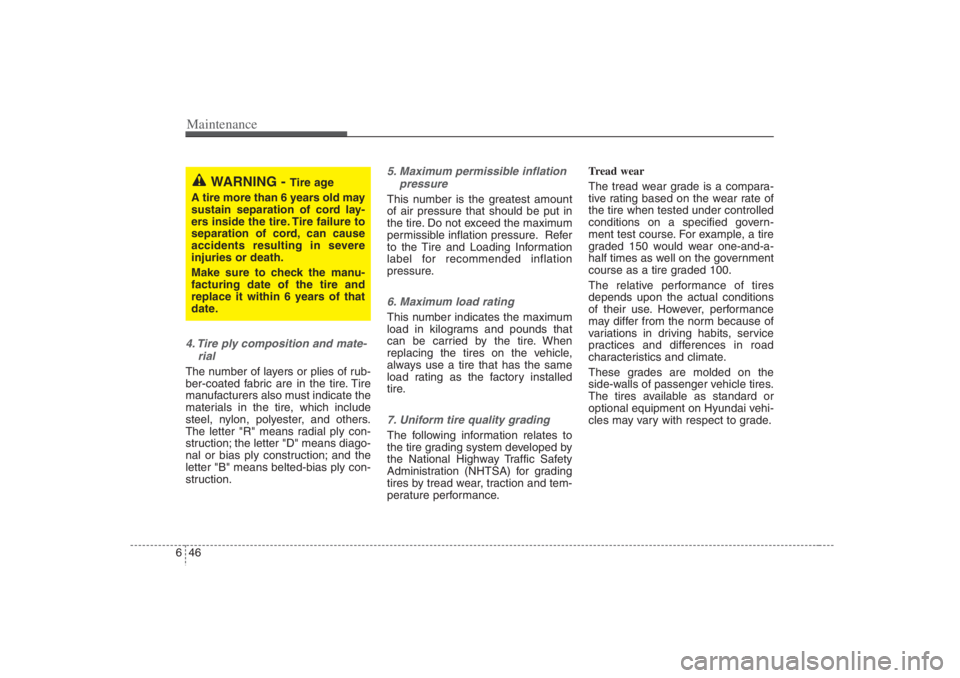
WARNING -
Tire age
A tire more than 6 years old may
sustain separation of cord lay-
ers inside the tire. Tire failure to
separation of cord, can cause
accidents resulting in severe
injuries or death.
Make sure to check the manu-
facturing date of the tire and
replace it within 6 years of that
date.
Page 361 of 398
647
Maintenance
Traction - AA, A, B & C
The traction grades, from highest to
lowest, are AA, A, B and C. The
grades represent the tires ability to
stop on wet pavement as measured
under controlled conditions on spec-
ified government test surfaces of
asphalt and concrete. A tire marked
C may have poor traction perform-
ance.
Temperature -A, B & C
The temperature grades are A (the
highest), B and C. The grades repre-
sent the tire’s resistance to the gen-
eration of heat and its ability to dissi-
pate heat when tested under con-
trolled conditions on a specified
indoor laboratory test wheel.
Sustained high temperature can
cause the material of the tire to degen-
erate and reduce tire life, and exces-
sive temperature can lead to sudden
tire failure. Grade C corresponds to a
level of performance which all passen-
ger vehicle tires must meet under the
Federal Motor Vehicle Safety
Standard No. 109. Grades A and B
represent higher levels of perform-
ance on the laboratory test wheel than
the minimum required by the law.
Tire terminology and defini-
tionsAir Pressure: The amount of air
inside the tire pressing outward on
the tire. Air pressure is expressed in
pounds per square inch (psi) or kilo-
pascal (kPa).
Accessory Weight: This means the
combined weight of optional acces-
sories. Some examples of optional
accessories are, automatic transmis-
sion, power seats, and air condition-
ing.
Aspect Ratio: The relationship of a
tire's height to its width.
Belt:A rubber coated layer of cords
that is located between the plies and
the tread. Cords may be made from
steel or other reinforcing materials.
Bead: The tire bead contains steel
wires wrapped by steel cords that
hold the tire onto the rim.
Bias Ply Tire: A pneumatic tire in
which the plies are laid at alternate
angles less than 90 degrees to the
centerline of the tread.
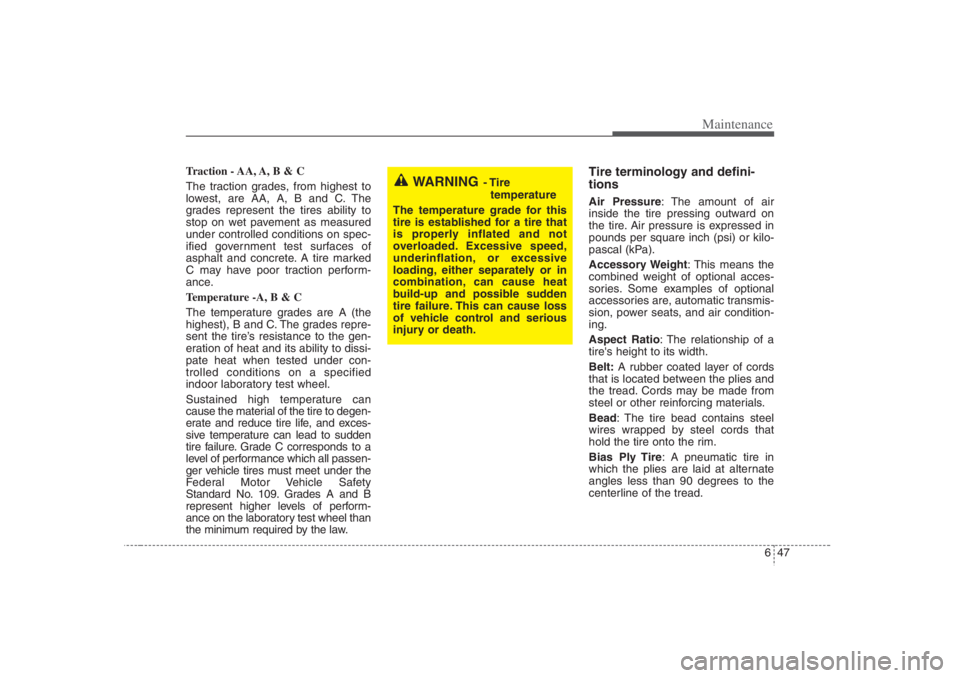
WARNING
- Tire
temperature
The temperature grade for this
tire is established for a tire that
is properly inflated and not
overloaded. Excessive speed,
underinflation, or excessive
loading, either separately or in
combination, can cause heat
build-up and possible sudden
tire failure. This can cause loss
of vehicle control and serious
injury or death.
Page 375 of 398
661
Maintenance
CORROSION PROTECTIONProtecting your Hyundai from
corrosionBy using the most advanced design and
construction practices to combat corro-
sion, Hyundai produces cars of the high-
est quality. However, this is only part of
the job. To achieve the long-term corro-
sion resistance your Hyundai can deliver,
the owner's cooperation and assistance
is also required.Common causes of corrosionThe most common causes of corrosion
on your car are:
Road salt, dirt and moisture that is
allowed to accumulate underneath the
car.
Removal of paint or protective coatings
by stones, gravel, abrasion or minor
scrapes and dents which leave unpro-
tected metal exposed to corrosion.
High-corrosion areasIf you live in an area where your car is
regularly exposed to corrosive materials,
corrosion protection is particularly impor-
tant. Some of the common causes of
accelerated corrosion are road salts,
dust control chemicals, ocean air and
industrial pollution.
Moisture breeds corrosionMoisture creates the conditions in which
corrosion is most likely to occur. For
example, corrosion is accelerated by
high humidity, particularly when tempera-
tures are just above freezing. In such
conditions, the corrosive material is kept
in contact with the car surfaces by mois-
ture that is slow to evaporate.
Mud is particularly corrosive because it is
slow to dry and holds moisture in contact
with the vehicle. Although the mud
appears to be dry, it can still retain the
moisture and promote corrosion.
High temperatures can also accelerate
corrosion of parts that are not properly
ventilated so the moisture can be dis-
persed. For all these reasons, it is par-
ticularly important to keep your car clean
and free of mud or accumulations of
other materials. This applies not only to
the visible surfaces but particularly to the
underside of the car.
Page 392 of 398
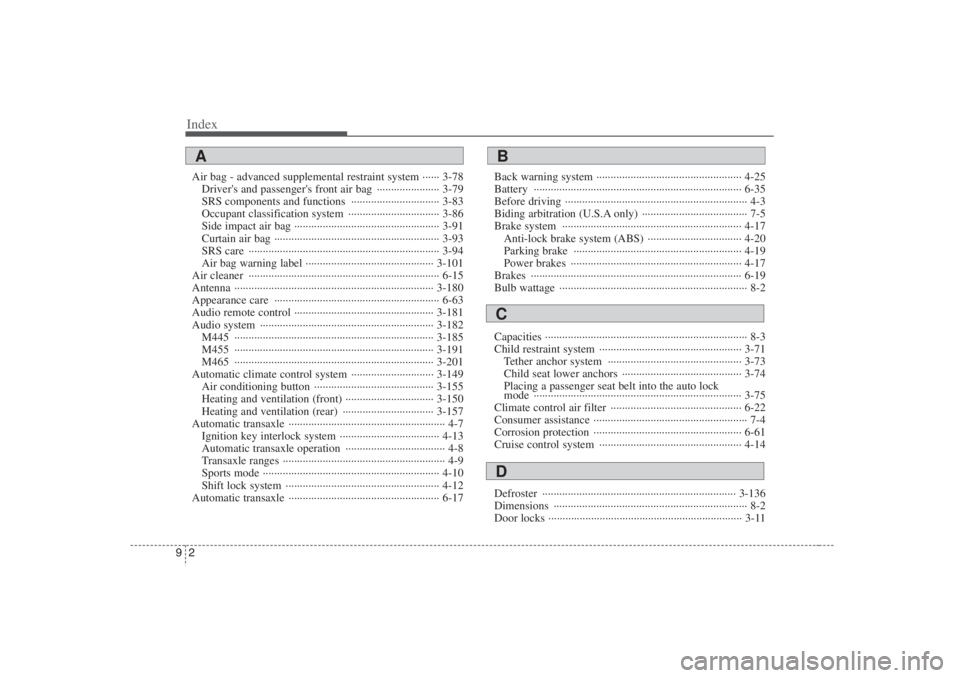
Index2 9Air bag - advanced supplemental restraint system ······ 3-78
Driver's and passenger's front air bag ······················ 3-79
SRS components and functions ······························· 3-83
Occupant classification system ································ 3-86
Side impact air bag ··················································· 3-91
Curtain air bag ·························································· 3-93
SRS care ··································································· 3-94
Air bag warning label ············································· 3-101
Air cleaner ··································································· 6-15
Antenna ······································································ 3-180
Appearance care ·························································· 6-63
Audio remote control ················································· 3-181
Audio system ····························································· 3-182
M445 ······································································ 3-185
M455 ······································································ 3-191
M465 ······································································ 3-201
Automatic climate control system ····························· 3-149
Air conditioning button ·········································· 3-155
Heating and ventilation (front) ······························· 3-150
Heating and ventilation (rear) ································ 3-157
Automatic transaxle ······················································· 4-7
Ignition key interlock system ··································· 4-13
Automatic transaxle operation ··································· 4-8
Transaxle ranges ························································· 4-9
Sports mode ······························································ 4-10
Shift lock system ······················································ 4-12
Automatic transaxle ····················································· 6-17Back warning system ··················································· 4-25
Battery ········································································· 6-35
Before driving ································································ 4-3
Biding arbitration (U.S.A only) ····································· 7-5
Brake system ······························································· 4-17
Anti-lock brake system (ABS) ································· 4-20
Parking brake ··························································· 4-19
Power brakes ···························································· 4-17
Brakes ·········································································· 6-19
Bulb wattage ·································································· 8-2
Capacities ······································································· 8-3
Child restraint system ·················································· 3-71
Tether anchor system ··············································· 3-73
Child seat lower anchors ·········································· 3-74
Placing a passenger seat belt into the auto lock
mode ········································································· 3-75
Climate control air filter ·············································· 6-22
Consumer assistance ······················································ 7-4
Corrosion protection ···················································· 6-61
Cruise control system ·················································· 4-14
Defroster ···································································· 3-136
Dimensions ···································································· 8-2
Door locks ···································································· 3-11A
BCD
Page 394 of 398
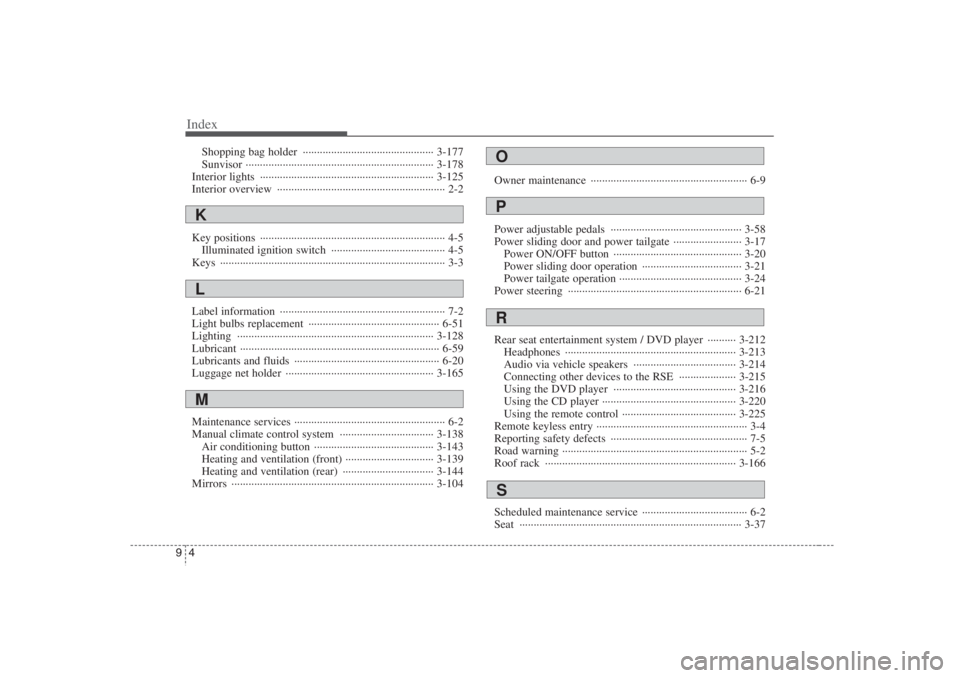
Index4 9
Shopping bag holder ·············································· 3-177
Sunvisor ·································································· 3-178
Interior lights ····························································· 3-125
Interior overview ··························································· 2-2
Key positions ································································· 4-5
Illuminated ignition switch ········································ 4-5
Keys ··············································································· 3-3
Label information ·························································· 7-2
Light bulbs replacement ·············································· 6-51
Lighting ····································································· 3-128
Lubricant ······································································ 6-59
Lubricants and fluids ··················································· 6-20
Luggage net holder ···················································· 3-165
Maintenance services ····················································· 6-2
Manual climate control system ································· 3-138
Air conditioning button ·········································· 3-143
Heating and ventilation (front) ······························· 3-139
Heating and ventilation (rear) ································ 3-144
Mirrors ······································································· 3-104Owner maintenance ······················································· 6-9
Power adjustable pedals ·············································· 3-58
Power sliding door and power tailgate ························ 3-17
Power ON/OFF button ············································· 3-20
Power sliding door operation ··································· 3-21
Power tailgate operation ··········································· 3-24
Power steering ····························································· 6-21
Rear seat entertainment system / DVD player ·········· 3-212
Headphones ···························································· 3-213
Audio via vehicle speakers ···································· 3-214
Connecting other devices to the RSE ···················· 3-215
Using the DVD player ··········································· 3-216
Using the CD player ··············································· 3-220
Using the remote control ········································ 3-225
Remote keyless entry ····················································· 3-4
Reporting safety defects ················································ 7-5
Road warning ································································· 5-2
Roof rack ··································································· 3-166
Scheduled maintenance service ····································· 6-2
Seat ·············································································· 3-37M
SOPR
KL