belt HYUNDAI IX20 2017 Repair Manual
[x] Cancel search | Manufacturer: HYUNDAI, Model Year: 2017, Model line: IX20, Model: HYUNDAI IX20 2017Pages: 456, PDF Size: 9.46 MB
Page 358 of 456
719
Maintenance
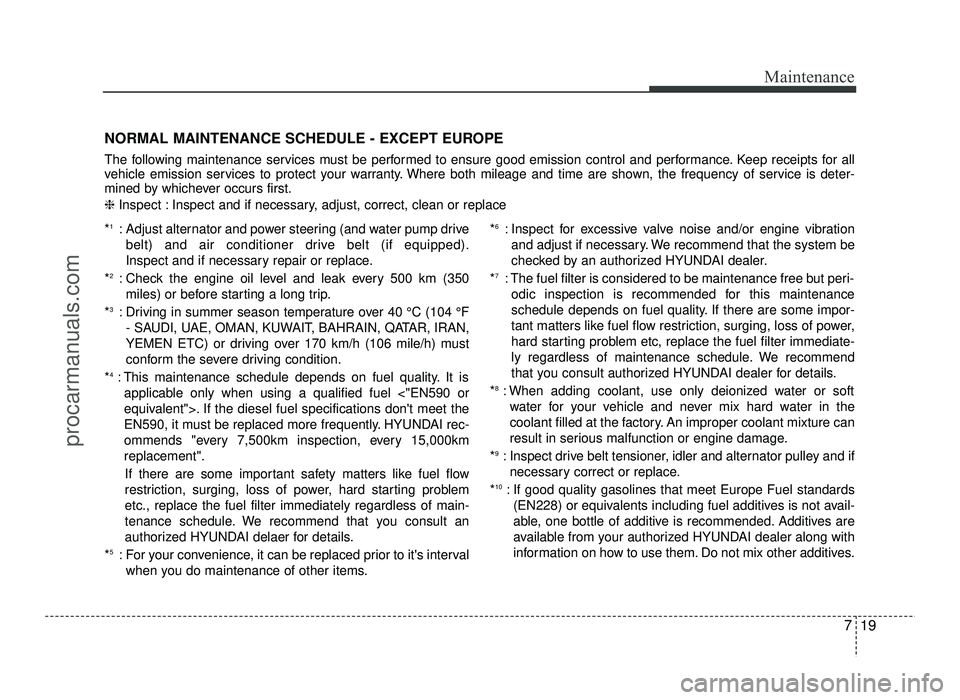
NORMAL MAINTENANCE SCHEDULE - EXCEPT EUROPE
The following maintenance services must be performed to ensure good emission control and performance. Keep receipts for all
vehicle emission services to protect your warranty. Where both mileage and time are shown, the frequency of service is deter-
mined by whichever occurs first. ❈Inspect : Inspect and if necessary, adjust, correct, clean or replace
* 1
: Adjust alternator and power steering (and water pump drive
belt) and air conditioner drive belt (if equipped).
Inspect and if necessary repair or replace.
* 2
: Check the engine oil level and leak every 500 km (350
miles) or before starting a long trip.
* 3
: Driving in summer season temperature over 40 °C (104 °F
- SAUDI, UAE, OMAN, KUWAIT, BAHRAIN, QATAR, IRAN,
YEMEN ETC) or driving over 170 km/h (106 mile/h) must
conform the severe driving condition.
* 4
: This maintenance schedule depends on fuel quality. It is
applicable only when using a qualified fuel <"EN590 or
equivalent">. If the diesel fuel specifications don't meet the
EN590, it must be replaced more frequently. HYUNDAI rec-
ommends "every 7,500km inspection, every 15,000kmreplacement".
If there are some important safety matters like fuel flow
restriction, surging, loss of power, hard starting problemetc., replace the fuel filter immediately regardless of main-
tenance schedule. We recommend that you consult an
authorized HYUNDAI delaer for details.
* 5
: For your convenience, it can be replaced prior to it's interval
when you do maintenance of other items. *
6
: Inspect for excessive valve noise and/or engine vibration
and adjust if necessary. We recommend that the system be
checked by an authorized HYUNDAI dealer.
* 7
: The fuel filter is considered to be maintenance free but peri-
odic inspection is recommended for this maintenance
schedule depends on fuel quality. If there are some impor-
tant matters like fuel flow restriction, surging, loss of power,
hard starting problem etc, replace the fuel filter immediate-
ly regardless of maintenance schedule. We recommend
that you consult authorized HYUNDAI dealer for details.
* 8
: When adding coolant, use only deionized water or soft
water for your vehicle and never mix hard water in the
coolant filled at the factory. An improper coolant mixture can
result in serious malfunction or engine damage.
* 9
: Inspect drive belt tensioner, idler and alternator pulley and if
necessary correct or replace.
* 10
: If good quality gasolines that meet Europe Fuel standards
(EN228) or equivalents including fuel additives is not avail-
able, one bottle of additive is recommended. Additives are
available from your authorized HYUNDAI dealer along with
information on how to use them. Do not mix other additives.
procarmanuals.com
Page 360 of 456
721
Maintenance
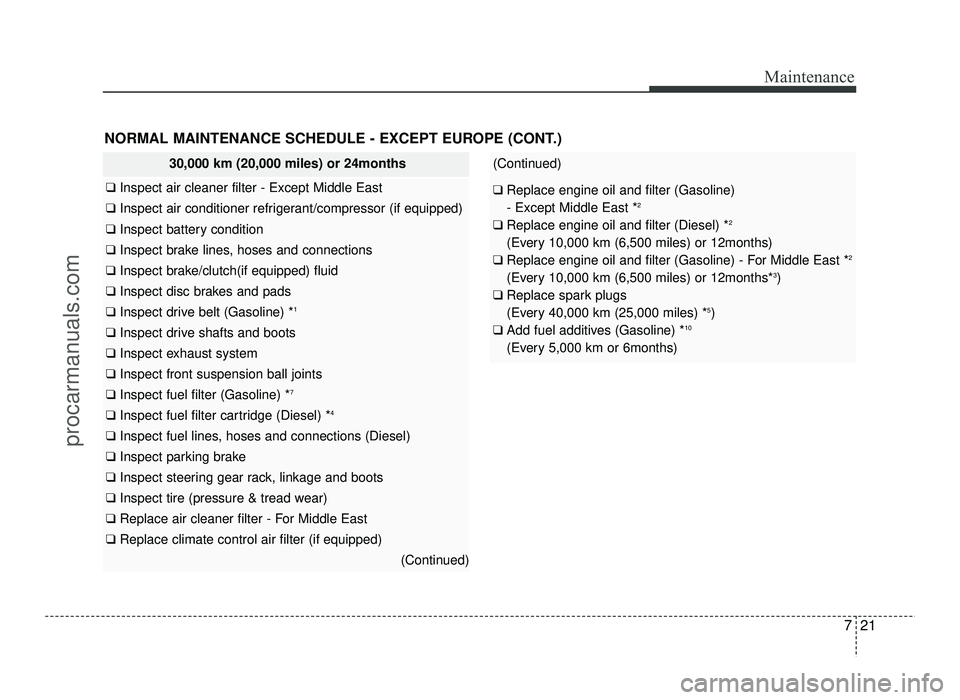
30,000 km (20,000 miles) or 24months
❑ Inspect air cleaner filter - Except Middle East
❑ Inspect air conditioner refrigerant/compressor (if equipped)
❑ Inspect battery condition
❑ Inspect brake lines, hoses and connections
❑ Inspect brake/clutch(if equipped) fluid
❑ Inspect disc brakes and pads
❑ Inspect drive belt (Gasoline) * 1
❑
Inspect drive shafts and boots
❑ Inspect exhaust system
❑ Inspect front suspension ball joints
❑ Inspect fuel filter (Gasoline) * 7
❑
Inspect fuel filter cartridge (Diesel) * 4
❑
Inspect fuel lines, hoses and connections (Diesel)
❑ Inspect parking brake
❑ Inspect steering gear rack, linkage and boots
❑ Inspect tire (pressure & tread wear)
❑ Replace air cleaner filter - For Middle East
❑ Replace climate control air filter (if equipped)
(Continued)
NORMAL MAINTENANCE SCHEDULE - EXCEPT EUROPE (CONT.)
(Continued)
❑ Replace engine oil and filter (Gasoline) - Except Middle East * 2
❑ Replace engine oil and filter (Diesel) * 2
(Every 10,000 km (6,500 miles) or 12months)
❑ Replace engine oil and filter (Gasoline) - For Middle East * 2
(Every 10,000 km (6,500 miles) or 12months* 3
)
❑ Replace spark plugs
(Every 40,000 km (25,000 miles) * 5
)
❑ Add fuel additives (Gasoline) * 10
(Every 5,000 km or 6months)
procarmanuals.com
Page 362 of 456
723
Maintenance
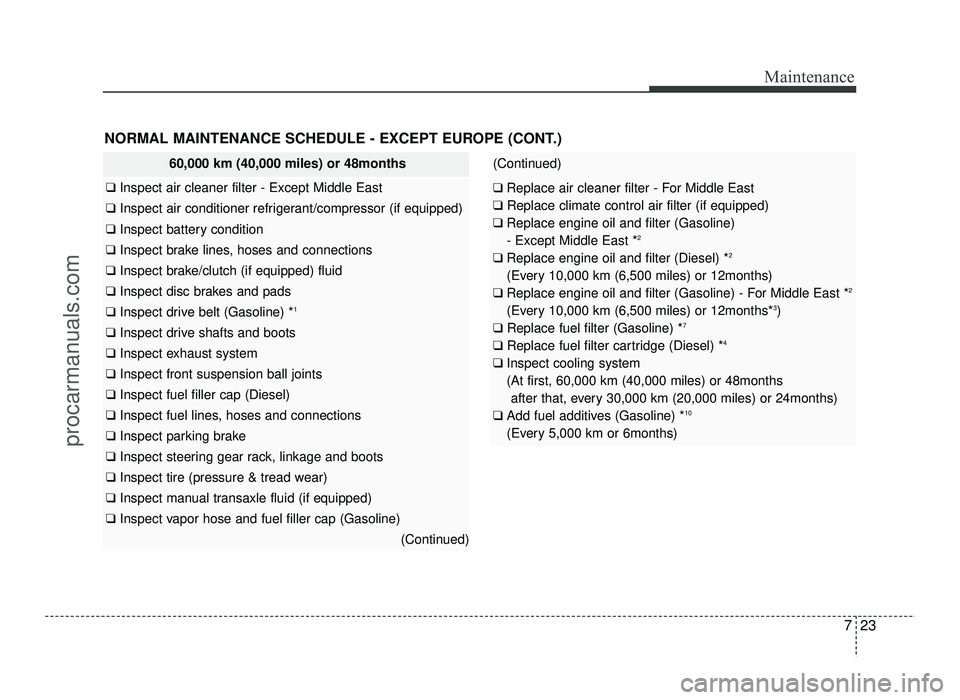
NORMAL MAINTENANCE SCHEDULE - EXCEPT EUROPE (CONT.)
60,000 km (40,000 miles) or 48months
❑ Inspect air cleaner filter - Except Middle East
❑ Inspect air conditioner refrigerant/compressor (if equipped)
❑ Inspect battery condition
❑ Inspect brake lines, hoses and connections
❑ Inspect brake/clutch (if equipped) fluid
❑ Inspect disc brakes and pads
❑ Inspect drive belt (Gasoline) * 1
❑
Inspect drive shafts and boots
❑ Inspect exhaust system
❑ Inspect front suspension ball joints
❑ Inspect fuel filler cap (Diesel)
❑ Inspect fuel lines, hoses and connections
❑ Inspect parking brake
❑ Inspect steering gear rack, linkage and boots
❑ Inspect tire (pressure & tread wear)
❑ Inspect manual transaxle fluid (if equipped)
❑ Inspect vapor hose and fuel filler cap (Gasoline)
(Continued)
(Continued)
❑ Replace air cleaner filter - For Middle East
❑ Replace climate control air filter (if equipped)
❑ Replace engine oil and filter (Gasoline) - Except Middle East * 2
❑ Replace engine oil and filter (Diesel) * 2
(Every 10,000 km (6,500 miles) or 12months)
❑ Replace engine oil and filter (Gasoline) - For Middle East * 2
(Every 10,000 km (6,500 miles) or 12months* 3
)
❑ Replace fuel filter (Gasoline) * 7
❑ Replace fuel filter cartridge (Diesel) * 4
❑ Inspect cooling system
(At first, 60,000 km (40,000 miles) or 48months
after that, every 30,000 km (20,000 miles) or 24months)
❑ Add fuel additives (Gasoline) * 10
(Every 5,000 km or 6months)
procarmanuals.com
Page 363 of 456
Maintenance
24
7
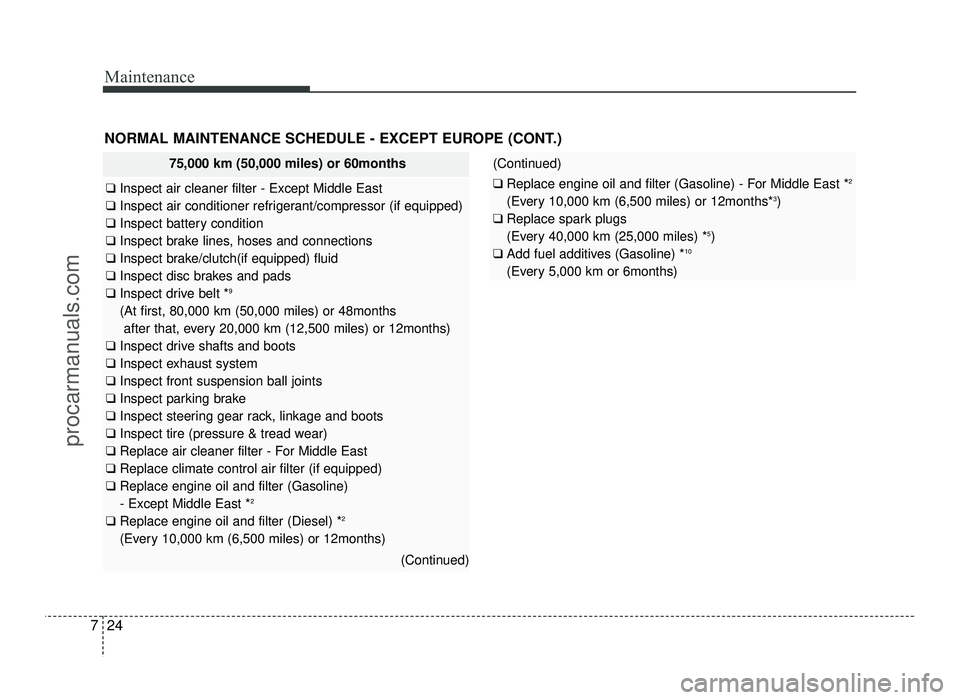
NORMAL MAINTENANCE SCHEDULE - EXCEPT EUROPE (CONT.)
(Continued)
❑ Replace engine oil and filter (Gasoline) - For Middle East * 2
(Every 10,000 km (6,500 miles) or 12months* 3
)
❑ Replace spark plugs
(Every 40,000 km (25,000 miles) * 5
)
❑ Add fuel additives (Gasoline) * 10
(Every 5,000 km or 6months)
75,000 km (50,000 miles) or 60months
❑ Inspect air cleaner filter - Except Middle East
❑ Inspect air conditioner refrigerant/compressor (if equipped)
❑ Inspect battery condition
❑ Inspect brake lines, hoses and connections
❑ Inspect brake/clutch(if equipped) fluid
❑ Inspect disc brakes and pads
❑ Inspect drive belt * 9
(At first, 80,000 km (50,000 miles) or 48months after that, every 20,000 km (12,500 miles) or 12months)
❑ Inspect drive shafts and boots
❑ Inspect exhaust system
❑ Inspect front suspension ball joints
❑ Inspect parking brake
❑ Inspect steering gear rack, linkage and boots
❑ Inspect tire (pressure & tread wear)
❑ Replace air cleaner filter - For Middle East
❑ Replace climate control air filter (if equipped)
❑ Replace engine oil and filter (Gasoline) - Except Middle East * 2
❑ Replace engine oil and filter (Diesel) * 2
(Every 10,000 km (6,500 miles) or 12months)
(Continued)
procarmanuals.com
Page 364 of 456
725
Maintenance
NORMAL MAINTENANCE SCHEDULE - EXCEPT EUROPE (CONT.)
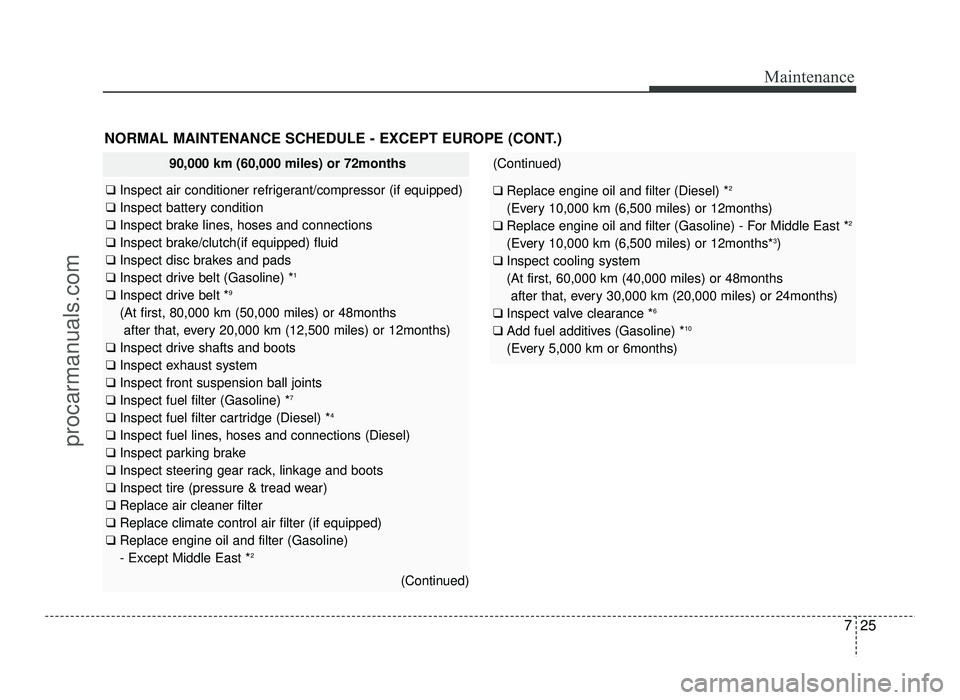
90,000 km (60,000 miles) or 72months
❑ Inspect air conditioner refrigerant/compressor (if equipped)
❑ Inspect battery condition
❑ Inspect brake lines, hoses and connections
❑ Inspect brake/clutch(if equipped) fluid
❑ Inspect disc brakes and pads
❑ Inspect drive belt (Gasoline) * 1
❑ Inspect drive belt * 9
(At first, 80,000 km (50,000 miles) or 48months after that, every 20,000 km (12,500 miles) or 12months)
❑ Inspect drive shafts and boots
❑ Inspect exhaust system
❑ Inspect front suspension ball joints
❑ Inspect fuel filter (Gasoline) * 7
❑ Inspect fuel filter cartridge (Diesel) * 4
❑ Inspect fuel lines, hoses and connections (Diesel)
❑ Inspect parking brake
❑ Inspect steering gear rack, linkage and boots
❑ Inspect tire (pressure & tread wear)
❑ Replace air cleaner filter
❑ Replace climate control air filter (if equipped)
❑ Replace engine oil and filter (Gasoline) - Except Middle East * 2
(Continued)
(Continued)
❑
Replace engine oil and filter (Diesel) * 2
(Every 10,000 km (6,500 miles) or 12months)
❑ Replace engine oil and filter (Gasoline) - For Middle East * 2
(Every 10,000 km (6,500 miles) or 12months* 3
)
❑ Inspect cooling system
(At first, 60,000 km (40,000 miles) or 48months
after that, every 30,000 km (20,000 miles) or 24months)
❑ Inspect valve clearance * 6
❑ Add fuel additives (Gasoline) * 10
(Every 5,000 km or 6months)
procarmanuals.com
Page 365 of 456
Maintenance
26
7
NORMAL MAINTENANCE SCHEDULE - EXCEPT EUROPE (CONT.)
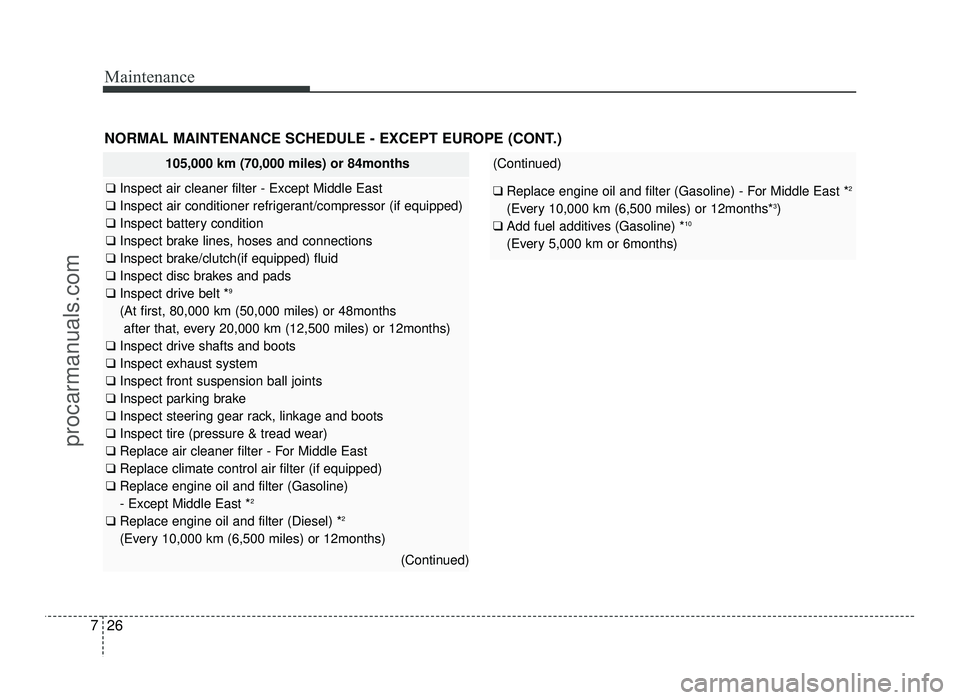
105,000 km (70,000 miles) or 84months
❑ Inspect air cleaner filter - Except Middle East
❑ Inspect air conditioner refrigerant/compressor (if equipped)
❑ Inspect battery condition
❑ Inspect brake lines, hoses and connections
❑ Inspect brake/clutch(if equipped) fluid
❑ Inspect disc brakes and pads
❑ Inspect drive belt * 9
(At first, 80,000 km (50,000 miles) or 48months after that, every 20,000 km (12,500 miles) or 12months)
❑ Inspect drive shafts and boots
❑ Inspect exhaust system
❑ Inspect front suspension ball joints
❑ Inspect parking brake
❑ Inspect steering gear rack, linkage and boots
❑ Inspect tire (pressure & tread wear)
❑ Replace air cleaner filter - For Middle East
❑ Replace climate control air filter (if equipped)
❑ Replace engine oil and filter (Gasoline) - Except Middle East * 2
❑ Replace engine oil and filter (Diesel) * 2
(Every 10,000 km (6,500 miles) or 12months)
(Continued)
(Continued)
❑ Replace engine oil and filter (Gasoline) - For Middle East * 2
(Every 10,000 km (6,500 miles) or 12months* 3
)
❑ Add fuel additives (Gasoline) * 10
(Every 5,000 km or 6months)
procarmanuals.com
Page 366 of 456
NORMAL MAINTENANCE SCHEDULE - EXCEPT EUROPE (CONT.)
727
Maintenance
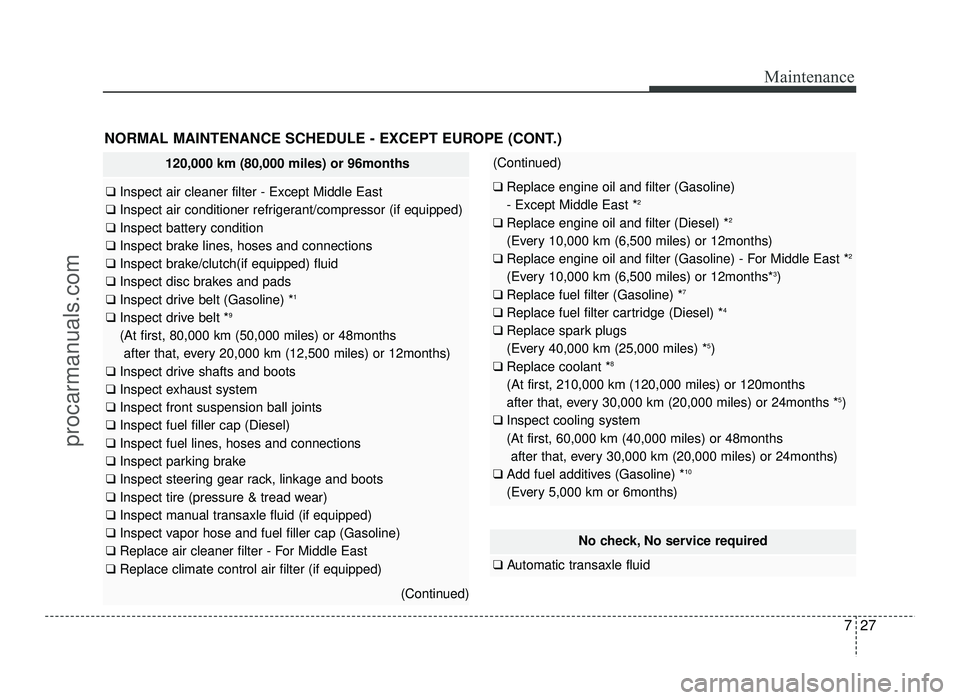
120,000 km (80,000 miles) or 96months
❑ Inspect air cleaner filter - Except Middle East
❑ Inspect air conditioner refrigerant/compressor (if equipped)
❑ Inspect battery condition
❑ Inspect brake lines, hoses and connections
❑ Inspect brake/clutch(if equipped) fluid
❑ Inspect disc brakes and pads
❑ Inspect drive belt (Gasoline) * 1
❑ Inspect drive belt * 9
(At first, 80,000 km (50,000 miles) or 48months after that, every 20,000 km (12,500 miles) or 12months)
❑ Inspect drive shafts and boots
❑ Inspect exhaust system
❑ Inspect front suspension ball joints
❑ Inspect fuel filler cap (Diesel)
❑ Inspect fuel lines, hoses and connections
❑ Inspect parking brake
❑ Inspect steering gear rack, linkage and boots
❑ Inspect tire (pressure & tread wear)
❑ Inspect manual transaxle fluid (if equipped)
❑ Inspect vapor hose and fuel filler cap (Gasoline)
❑ Replace air cleaner filter - For Middle East
❑ Replace climate control air filter (if equipped)
(Continued)
(Continued)
❑ Replace engine oil and filter (Gasoline) - Except Middle East * 2
❑ Replace engine oil and filter (Diesel) * 2
(Every 10,000 km (6,500 miles) or 12months)
❑ Replace engine oil and filter (Gasoline) - For Middle East * 2
(Every 10,000 km (6,500 miles) or 12months* 3
)
❑ Replace fuel filter (Gasoline) * 7
❑ Replace fuel filter cartridge (Diesel) * 4
❑ Replace spark plugs
(Every 40,000 km (25,000 miles) * 5
)
❑ Replace coolant * 8
(At first, 210,000 km (120,000 miles) or 120months
after that, every 30,000 km (20,000 miles) or 24months * 5
)
❑ Inspect cooling system
(At first, 60,000 km (40,000 miles) or 48months
after that, every 30,000 km (20,000 miles) or 24months)
❑ Add fuel additives (Gasoline) * 10
(Every 5,000 km or 6months)
No check, No service required
❑ Automatic transaxle fluid
procarmanuals.com
Page 369 of 456
Maintenance
30
7
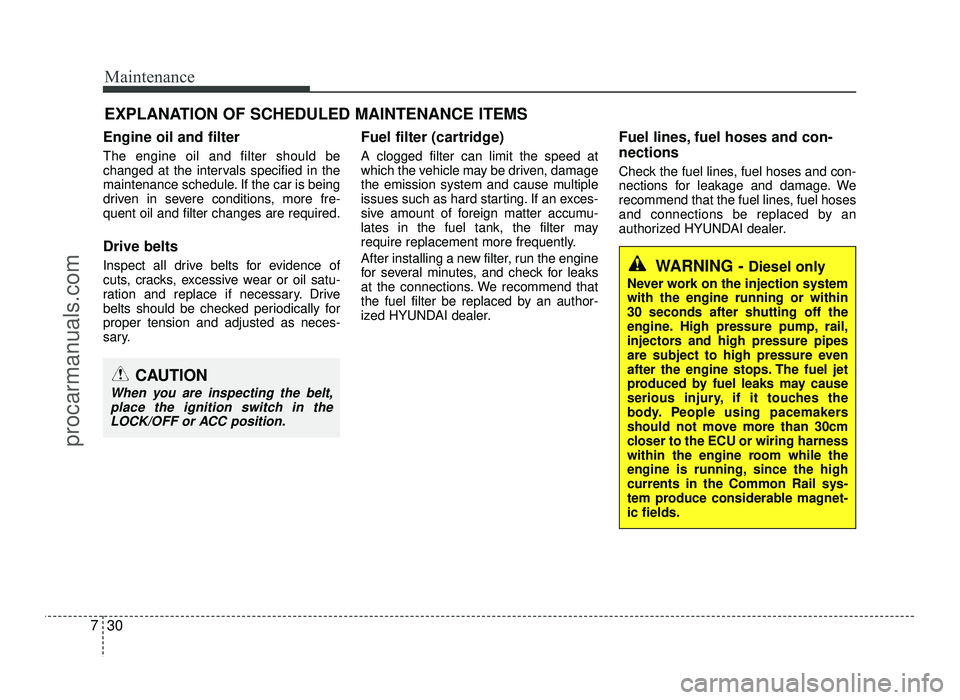
EXPLANATION OF SCHEDULED MAINTENANCE ITEMS
Engine oil and filter The engine oil and filter should be
changed at the intervals specified in the
maintenance schedule. If the car is being
driven in severe conditions, more fre-quent oil and filter changes are required. Drive belts
Inspect all drive belts for evidence of
cuts, cracks, excessive wear or oil satu-
ration and replace if necessary. Drive
belts should be checked periodically forproper tension and adjusted as neces-
sary. Fuel filter (cartridge) A clogged filter can limit the speed at
which the vehicle may be driven, damage
the emission system and cause multiple
issues such as hard starting. If an exces-
sive amount of foreign matter accumu-
lates in the fuel tank, the filter may
require replacement more frequently.
After installing a new filter, run the engine
for several minutes, and check for leaks
at the connections. We recommend that
the fuel filter be replaced by an author-
ized HYUNDAI dealer.
Fuel lines, fuel hoses and con- nections
Check the fuel lines, fuel hoses and con-
nections for leakage and damage. We
recommend that the fuel lines, fuel hoses
and connections be replaced by an
authorized HYUNDAI dealer.
WARNING -
Diesel only
Never work on the injection system with the engine running or within30 seconds after shutting off the
engine. High pressure pump, rail,
injectors and high pressure pipes
are subject to high pressure even
after the engine stops. The fuel jet
produced by fuel leaks may cause
serious injury, if it touches the
body. People using pacemakers
should not move more than 30cm
closer to the ECU or wiring harness
within the engine room while the
engine is running, since the highcurrents in the Common Rail sys-
tem produce considerable magnet-ic fields.
CAUTION
When you are inspecting the belt, place the ignition switch in the
LOCK/OFF or ACC position.
procarmanuals.com
Page 399 of 456
Maintenance
60
7
3. Checking tire life (TIN : Tire
Identification Number)
Any tires that are over 6 years old,
based on the manufacturing date,(including the spare tire) should be
replaced by new ones. You can find
the manufacturing date on the tire
sidewall (possibly on the inside of the
wheel), displaying the DOT Code.
The DOT Code is a series of num-
bers on a tire consisting of numbers
and English letters. The manufactur-
ing date is designated by the last four
digits (characters) of the DOT code.
DOT : XXXX XXXX OOOO
The front part of the DOT means a
plant code number, tire size and
tread pattern and the last four num-
bers indicate week and year manu-
factured.
For example:
DOT XXXX XXXX 1617 represents
that the tire was produced in the 16th
week of 2017.
4. Tire ply composition and material
The number of layers or plies of rub-
ber-coated fabric in the tire. Tire
manufacturers also must indicate the
materials in the tire, which include
steel, nylon, polyester, and others.
The letter "R" means radial ply con-
struction; the letter "D" means diago-
nal or bias ply construction; and theletter "B" means belted-bias ply con-
struction.
5. Maximum permissible inflation
pressure
This number is the greatest amount of air pressure that should be put in the
tire. Do not exceed the maximum per-
missible inflation pressure. Refer to
the Tire and Loading Information label
for recommended inflation pressure.
6. Maximum load rating
This number indicates the maximum
load in kilograms and pounds that can
be carried by the tire. When replacing
the tires on the vehicle, always use a
tire that has the same load rating as
the factory installed tire.
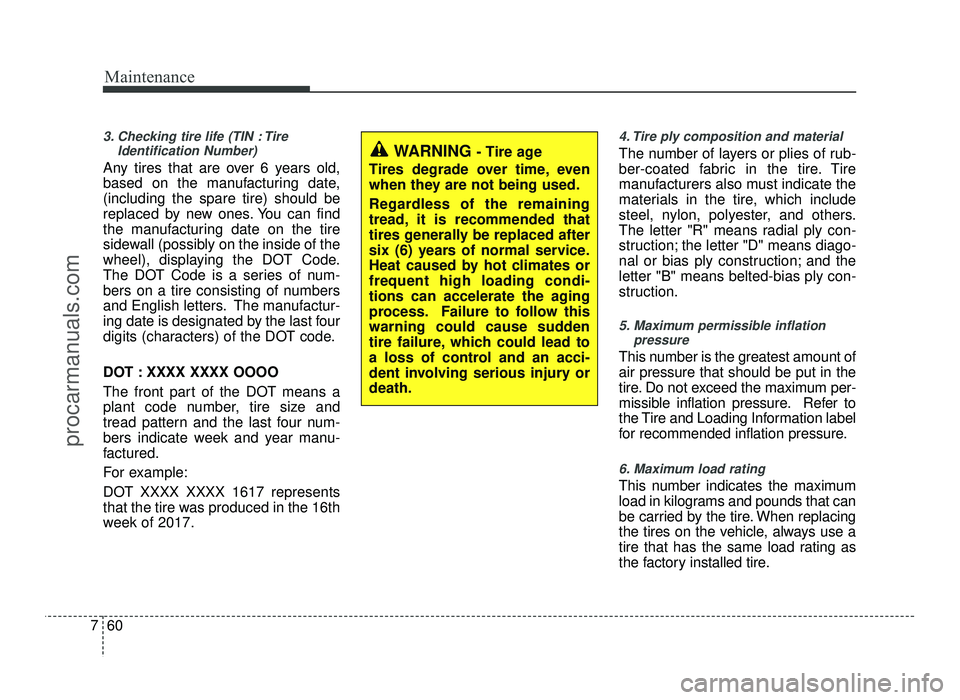
WARNING - Tire age
Tires degrade over time, even
when they are not being used.
Regardless of the remaining
tread, it is recommended that
tires generally be replaced after
six (6) years of normal service.
Heat caused by hot climates orfrequent high loading condi-
tions can accelerate the aging
process. Failure to follow this
warning could cause sudden
tire failure, which could lead to
a loss of control and an acci-
dent involving serious injury ordeath.
procarmanuals.com
Page 429 of 456
Maintenance
90
7
Caring for the leather seats
- Vacuum the seat periodically toremove dust and sand on the seat. It
will prevent abrasion or damage of
the leather and maintain its quality.
- Wipe the natural leather seat cover often with dry or soft cloth.
- Use of proper leather protective may prevent abrasion of the cover and
helps maintain the color. Be sure to
read the instructions and consult aspecialist when using leather coating
or protective agent.
- Light colored (beige, cream beige) leather is easily contaminated and
the stain is noticeable. Clean the
seats frequently.
- Avoid wiping with wet cloth. It may cause the surface to crack. Cleaning the leather seats
- Remove all contaminations instantly.Refer to instructions below for
removal of each contaminant.
- Cosmetic products (sunscreen, foun- dation, etc.)
Apply cleansing cream on a cloth and
wipe the contaminate spot. Wipe off
the cream with a wet cloth and
remove water with a dry cloth.
- Beverages (coffee, soft drink, etc.) Apply a small amount of neutraldetergent and wipe until contamina-
tions do not smear.
- Oil Remove oil instantly with absorbable
cloth and wipe with stain remover
used only for natural leather.
- Chewing gum Harden the gum with ice and remove
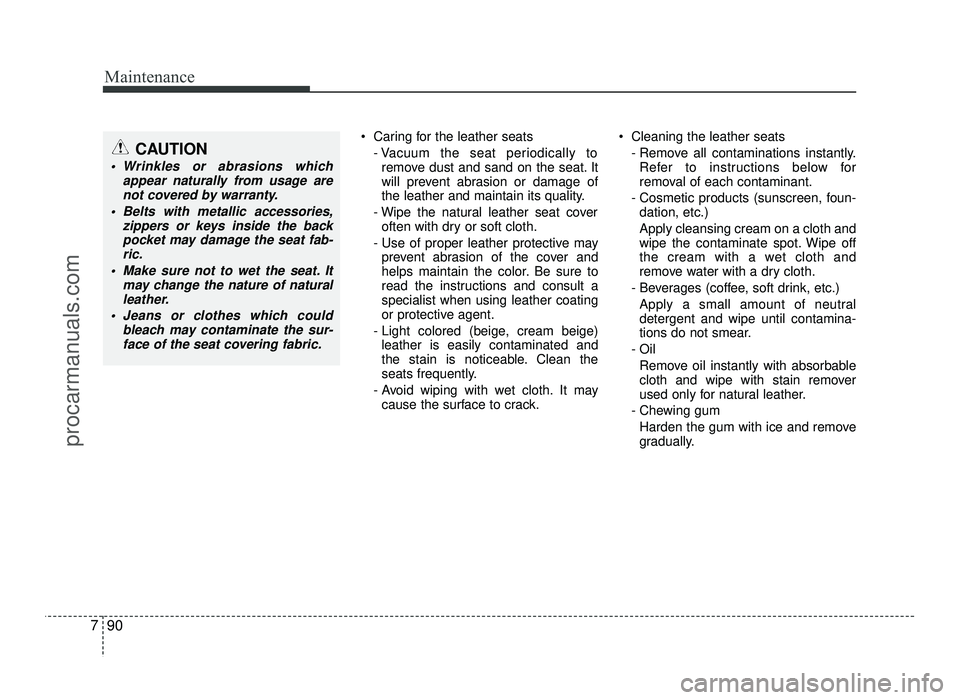
gradually.CAUTION
Wrinkles or abrasions which appear naturally from usage arenot covered by warranty.
Belts with metallic accessories, zippers or keys inside the backpocket may damage the seat fab-
ric.
Make sure not to wet the seat. It may change the nature of natural
leather.
Jeans or clothes which could bleach may contaminate the sur-
face of the seat covering fabric.
procarmanuals.com