brake Hyundai Sonata Hybrid 2015 Owners Manual
[x] Cancel search | Manufacturer: HYUNDAI, Model Year: 2015, Model line: Sonata Hybrid, Model: Hyundai Sonata Hybrid 2015Pages: 543, PDF Size: 25.53 MB
Page 521 of 543

Index
2I
Air bags··················\
··················\
··················\
·3-35
Air bag warning label ··················\
················· ·3-62
Air bag warning light ··················\
················· ·3-38
Curtain air bag ··················\
··················\
······· ·3-53
Driver's and passenger's front air bag ·················3-48
Occupant classification system ··················\
·······3-42
Side impact air bag ··················\
··················\
·· ·3-52
SRS components and functions ··················\
······3-39
Air cleaner ··················\
··················\
··············· ·7-29
Air conditioning ··················\
··················\
···········8-2
Antenna (glass) ··················\
··················\
·········4-125
Anti-lock brake system (ABS) ··················\
···········5-18
Appearance care ··················\
··················\
·········7-71
Exterior care ··················\
··················\
········· ·7-71
Interior care ··················\
··················\
·········· ·7-75
Armrest ··················\
··················\
··················\
· ·3-14
Audio system ··················\
··················\
·········· ·4-125
Glass antenna ··················\
··················\
······· ·4-125
Steering wheel audio control ··················\
········4-126
Automatic climate control system (Type A) ·············4-83
Air conditioning ··················\
··················\
····· ·4-90
Automatic heating and air conditioning ···············4-84
Climate control air filter ··················\
···············4-93
Manual heating and air conditioning ··················4-85Automatic climate control system (Type B)
·············4-94
Air conditioning ··················\
··················\
···· ·4-101
Automatic heating and air conditioning ···············4-95
Climate control air filter ··················\
············ ·4-104
Economy air conditioning ··················\
···········4-101
Manual heating and air conditioning ··················4-96
Automatic climate control system (Type C) ············4-105
Air conditioning ··················\
··················\
·····4-111
Automatic heating and air conditioning ·············4-106
Climate control air filter ··················\
············ ·4-115
Economy air conditioning ··················\
··········
·4-1
12
Manual heating and air conditioning ·················4-107
Automatic transaxle ··················\
··················\
······ ·5-9
Shift lock system ··················\
··················\
···· ·5-12
Aux, USB and iPod port ··················\
··············· ·4-124
Battery (12V) ··················\
··················\
······ ·7-34, 8-2
Battery saver function ··················\
··················\
·· ·4-71
Before driving ··················\
··················\
············ ·5-3
Blue drive mode ··················\
··················\
·········4-44
Bottle holders, see cup holders ··················\
·········4-121
Brake system ··················\
··················\
············ ·5-14
Anti-lock brake system (ABS) ··················\
·······5-18
Electronic stability control (ESC) ··················\
····5-19
Hill-start assist control (HAC) ··················\
·······5-22
Parking brake ··················\
··················\
·········5-16
Power brakes ··················\
··················\
········· ·5-14
A
B
Page 522 of 543

I3
Index
Brakes fluid··················\
··················\
·············· ·7-27
Bulb replacement ··················\
··················\
······· ·7-61
Bulb wattage ··················\
··················\
··············8-3
Button start/stop, see engine start/stop button ············5-5
California perchlorate notice ··················\
·············7-80
Camera (Rear view) ··················\
··················\
···· ·4-70
Capacities (Lubricants) ··················\
··················\
··8-5
Capacity/Weight ··················\
··················\
··········8-2
Care Exterior care ··················\
··················\
········· ·7-71
Interior care ··················\
··················\
·········· ·7-75
Tire care ··················\
··················\
·············· ·7-37
Cargo weight ··················\
··················\
············ ·5-43
Center console storage ··················\
··················\
·4-119
Central door lock switch ··················\
················· ·4-12
Certification label ··················\
··················\
······· ·5-41
Certification label ··················\
··················\
·········8-7
Chains Tire chains ··················\
··················\
············ ·5-35
Changing tires (with spare tire) ··················\
··········6-15
Checking tire inflation pressure ··················\
·········7-38
Child restraint system ··················\
··················\
·· ·3-27
Lower anchor system ··················\
················· ·3-33
Seat belt ··················\
··················\
··············· ·3-29
Tether anchor system ··················\
················· ·3-31Child-protector rear door lock
··················\
···········4-14
Climate control air filter ············4-93, 4-104, 4-115, 7-30
Clock (Digital) ··················\
··················\
········· ·4-123
Clothes hanger ··················\
··················\
········· ·4-123
Combined instrument, see instrument cluster ···········4-40
Compact spare tire (with spare tire) ··················\
·····6-15
Compact spare tire replacement ··················\
·········7-42
Components of the tire mobility kit ··················\
·····6-24
Consumer information ··················\
··················\
··· ·8-9
Coolant ··················\
··················\
··················\
· ·7-24
Cooling fluid, see engine coolant ··················\
·······7-24
Crankcase emission control system ··················\
·····7-77
Cruise control system ··················\
··················\
·· ·5-24
Cup holder ··················\
··················\
··············4-121
Curtain air bag ··················\
··················\
·········· ·3-53
Dashboard illumination,
see instrument panel illumination··················\
···· ·4-41
Dashboard, see instrument cluster ··················\
·······4-40
Defogging (Windshield) ··················\
················ ·4-116
Defogging logic (Windshield) ··················\
··········4-117
Defroster (Rear window) ··················\
················ ·4-81
Defrosting (Windshield) ··················\
················ ·4-116
Digital clock ··················\
··················\
··········· ·4-123
Dimensions ··················\
··················\
·················8-3
Display illumination, see instrument panel illumination · 4-41
C
D
Page 524 of 543

I5
Index
FluidBrakes fluid ··················\
··················\
·········· ·7-27
Washer fluid ··················\
··················\
·········· ·7-28
Front passenger and rear seat 3-point system with combination locking retractor ··················\
········3-19
Front seat adjustment ··················\
··················\
·····3-4
Fuel filler lid··················\
··················\
··············4-22
Fuel gauge ··················\
··················\
··············· ·4-43
Fuel requirements ··················\
··················\
·········1-3
Fuse/relay panel description ··················\
·············7-55
Fuses ··················\
··················\
··················\
···· ·7-51
Engine compartment fuse ··················\
·············7-53
Fuse/relay panel description ··················\
··········7-55
Instrument panel fuse ··················\
················· ·7-52
Memory fuse ··················\
··················\
········· ·7-52
Multi fuse ··················\
··················\
··············7-54
Gauge Engine temperature gauge ··················\
············4-42
Fuel gauge ··················\
··················\
············ ·4-43
Glass antenna ··················\
··················\
·········· ·4-125
Glove box ··················\
··················\
···············4-119 Hazard warning flasher
··················\
··················\
·4-70
Hazardous driving conditions ··················\
············5-30
Headlight bulb replacement ··················\
··············7-62
Headrest ··················\
··················\
············ ·3-7, 3-11
High voltage battery ··················\
··················\
···· ·7-80
Highway driving ··················\
··················\
·········5-33
Hill-start assist control (HAC) ··················\
···········5-22
Homelink mirror, see the Electric chromic mirror (ECM) with HomeLink system ··················\
······4-31
Hood ··················\
··················\
··················\
···· ·4-21
Horn ··················\
··················\
··················\
···· ·4-30
How to use this manual ··················\
··················\
· ·1-2
Hybrid HMC Hybrid system ··················\
··················\
···H2
Sonata hev energy flow ··················\
··········H4, 4-45
State of charge (SOC) ··················\
··················\
·H3
The air intake of hybrid battery ··················\
······H12
The componets of hybrid vehicle ··················\
······H7
The ECO GUIDE gauge ··················\
············· ·4-43
The ECO level ··················\
··················\
·· ·H2, 4-47
The EV
MODE ··················\
··················\
······ ·4-53
The READY indicator ··················\
················ ·4-41
The service indicator ··················\
··················\
·4-53
Hybrid electric vehicle ··················\
··················\
· ·4-45
G
H
Page 526 of 543

I7
Index
MaintenanceExplanation of scheduled maintenance items ········7-19
Maintenance services ··················\
··················\
··7-3
Maintenance under severe usage conditions ·········7-18
Normal maintenance schedule ··················\
·········7-8
Owner maintenance ··················\
··················\
···7-5
Scheduled maintenance service ··················\
········7-7
Tire maintenance ··················\
··················\
···· ·7-42
Maintenance schedule ··················\
··················\
····7-7
Maintenance under severe usage conditions ·········7-18
Normal maintenance schedule ··················\
·········7-8
Maintenance services ··················\
··················\
·····7-3
Memory fuse ··················\
··················\
············ ·7-52
Mirrors ··················\
··················\
··················\
· ·4-31
Day/night rearview mirror ··················\
············4-31
Electric chromic mirror (ECM) with Homelink system· ·4-31
Inside rearview mirror··················\
················ ·4-31
Outside rearview mirror ··················\
···············4-38
Multi box ··················\
··················\
··············· ·4-120
Multi fuse ··················\
··················\
·················7-54
Neck restraints, see headrest ··················\
········3-7, 3-11Occupant classification system
··················\
··········3-42
Odometer ··················\
··················\
·················4-41
Oil (Engine) ··················\
··················\
··············7-22
Outside rearview mirror ··················\
················· ·4-38
Overheats ··················\
··················\
··················\
·6-8
Owner maintenance ··················\
··················\
······ ·7-5
Panorama sunroof ··················\
··················\
······ ·4-25
Parking brake ··················\
··················\
············ ·5-16
Parking brake inspect ··················\
··················\
·· ·7-28
Passenger's front air bag ··················\
················· ·3-48
Power brakes ··················\
··················\
············ ·5-14
Power outlet ··················\
··················\
············ ·4-122
Power window lock button ··················\
···············4-20
Pre-tensioner seat belt ··················\
··················\
·· ·3-21
Push starting ··················\
··················\
·············· ·6-7
Rear seat ··················\
··················\
··················\
3-11
Rear view camera ··················\
··················\
······· ·4-70
Recommended cold tire inflation pressures ··············7-37
Recommended lubricants and capacities ··················8-5
Recommended SAE viscosity number ··················8-6
M
N
P
R
O
Page 534 of 543
H5
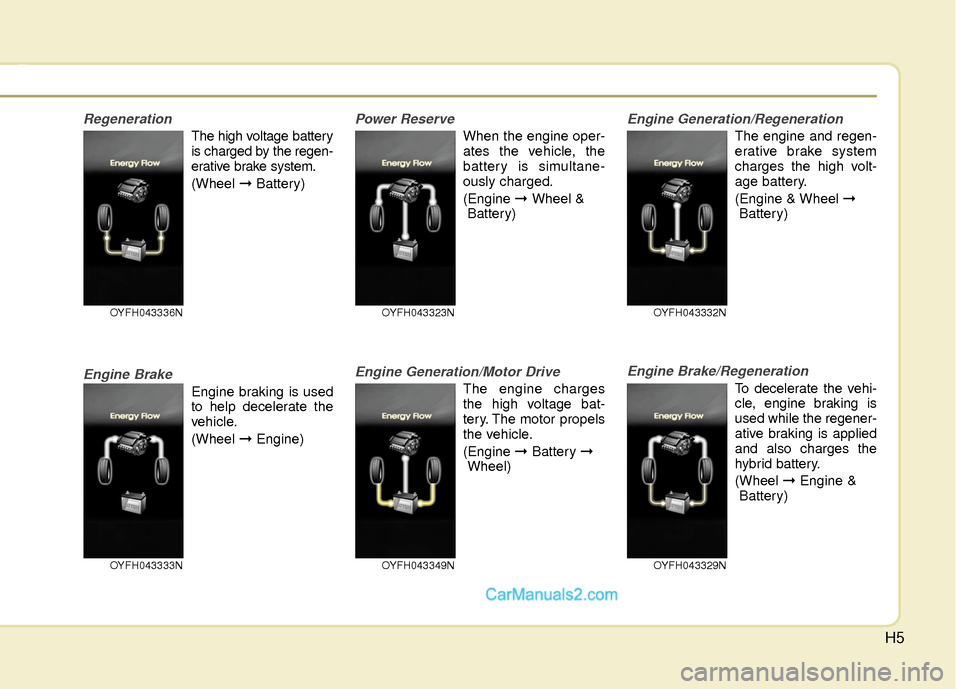
Regeneration
The high voltage battery
is charged by the regen-
erative brake system.
(Wheel ➞Battery)
Engine Brake
Engine braking is used
to help decelerate the
vehicle.
(Wheel ➞Engine)
Power Reserve
When the engine oper-
ates the vehicle, the
battery is simultane-
ously charged.
(Engine ➞ Wheel &
Battery)
Engine Generation/Motor Drive
The engine charges
the high voltage bat-
tery. The motor propels
the vehicle.
(Engine ➞Battery ➞
Wheel)
Engine Generation/Regeneration
The engine and regen-
erative brake system
charges the high volt-
age battery.
(Engine & Wheel ➞ Battery)
Engine Brake/Regeneration
To decelerate the vehi-
cle, engine braking is
used while the regener-
ative braking is applied
and also charges the
hybrid battery.
(Wheel ➞Engine &
Battery)
OYFH043336N
OYFH043333NOYFH043349N
OYFH043323N
OYFH043329N
OYFH043332N
Page 535 of 543
H6
Starting the engine
1. Carry the smart key or leave it insidethe vehicle.
2. Make sure the parking brake is firmly applied.
3. Place the shift lever in the P(Park) position. In N(Neutral) position, you
can not start the vehicle.
4. Depress the brake pedal.
5. Press the engine start/stop button.
6. In extremely cold weather or after the vehicle has not been operated for sev-
eral days, let the engine warm up with-
out depressing the accelerator.
Whether the engine is cold or warm, it
should be started without depressing
the accelerator.
if it is far away from you, the engine
may not start.
in the ACC or ON position, if any door
is open, the system checks for the
smart key. If the smart key is not in
the vehicle, the warning, "Key is not
in vehicle" will come on, and if all
doors are closed, the chime will also
sound for about 5 seconds. The indi-
cator will turn off while the vehicle is
moving. Keep the smart key in the
vehicle when using the ACC position
or if the vehicle engine is on. If the starting procedure is followed,
the "READY" symbol on the instru-
ment cluster will turn on. For more
details, please check Chapter 5.
ECONOMICAL and SAFE OPERA-
TION of Hybrid system
Drive smoothly. Accelerate at a moder-
ate rate and maintain a steady cruising
speed. Don't make "jack-rabbit" starts.
Don't race between stoplights.
Avoid heavy traffic whenever possible.
Always maintain a safe distance from
other vehicles so you can avoid unnec-
essary braking. This also reduces
brake wear.
The regenerative brake generates energy when the vehicle decelerates.
When the hybrid battery power is low, the hybrid system automatically
recharges the hybrid battery.
When the engine runs in "N" position, the hybrid system can not generate
electricity. The hybrid battery cannot
recharge in "N" position. Please check
Chapter 5.
✽ ✽ NOTICE
In the hybrid system, the engine auto-
matically runs and stops. If the hybrid
system operates, the "READY" symbol
is illuminated.
In the following situation, the engine
may operate automatically.
- When the engine is ready to run
- When the hybrid battery is charged
- Depending on the temperature condi-
tion of the hybrid battery
STARTING THE HYBRID VEHICLE (SMART KEY)
WARNING
To avoid serious injury, turn off
ignition and be sure "READY" lamp
is off before working under hood.
Engine may start unexpectedly.
Page 536 of 543
H7
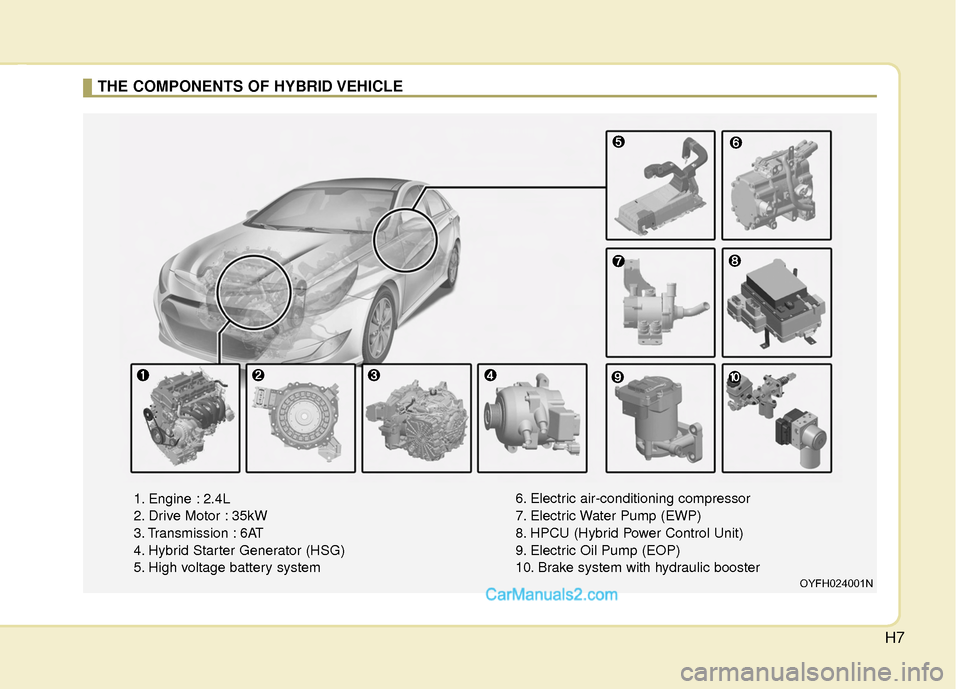
THE COMPONENTS OF HYBRID VEHICLE
OYFH024001N
1. Engine : 2.4L
2. Drive Motor : 35kW
3. Transmission : 6AT
4. Hybrid Starter Generator (HSG)
5. High voltage battery system6. Electric air-conditioning compressor
7. Electric Water Pump (EWP)
8. HPCU (Hybrid Power Control Unit)
9. Electric Oil Pump (EOP)
10. Brake system with hydraulic booster
Page 539 of 543
H10
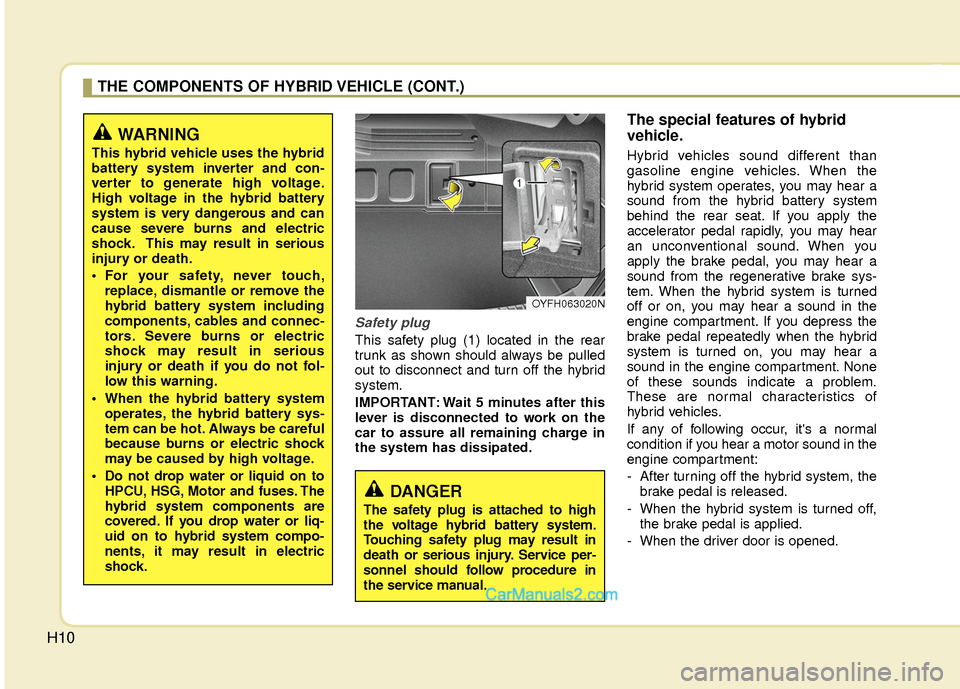
Safety plug
This safety plug (1) located in the rear
trunk as shown should always be pulled
out to disconnect and turn off the hybrid
system.
IMPORTANT: Wait 5 minutes after this
lever is disconnected to work on the
car to assure all remaining charge in
the system has dissipated.
The special features of hybrid
vehicle.
Hybrid vehicles sound different than
gasoline engine vehicles. When the
hybrid system operates, you may hear a
sound from the hybrid battery system
behind the rear seat. If you apply the
accelerator pedal rapidly, you may hear
an unconventional sound. When you
apply the brake pedal, you may hear a
sound from the regenerative brake sys-
tem. When the hybrid system is turned
off or on, you may hear a sound in the
engine compartment. If you depress the
brake pedal repeatedly when the hybrid
system is turned on, you may hear a
sound in the engine compartment. None
of these sounds indicate a problem.
These are normal characteristics of
hybrid vehicles.
If any of following occur, it's a normal
condition if you hear a motor sound in the
engine compartment:
- After turning off the hybrid system, thebrake pedal is released.
- When the hybrid system is turned off, the brake pedal is applied.
- When the driver door is opened.
THE COMPONENTS OF HYBRID VEHICLE (CONT.)
WARNING
This hybrid vehicle uses the hybrid
battery system inverter and con-
verter to generate high voltage.
High voltage in the hybrid battery
system is very dangerous and can
cause severe burns and electric
shock. This may result in serious
injury or death.
For your safety, never touch, replace, dismantle or remove the
hybrid battery system including
components, cables and connec-
tors. Severe burns or electric
shock may result in serious
injury or death if you do not fol-
low this warning.
When the hybrid battery system operates, the hybrid battery sys-
tem can be hot. Always be careful
because burns or electric shock
may be caused by high voltage.
Do not drop water or liquid on to HPCU, HSG, Motor and fuses. The
hybrid system components are
covered. If you drop water or liq-
uid on to hybrid system compo-
nents, it may result in electric
shock.
DANGER
The safety plug is attached to high
the voltage hybrid battery system.
Touching safety plug may result in
death or serious injury. Service per-
sonnel should follow procedure in
the service manual.
OYFH063020N
Page 542 of 543
H13
If An Accident Occurs
WARNING
After parking the vehicle, shift thetransmission into "P" position.
Turn off the hybrid system by
pushing the Engine Start/Stop
button.
For your safety, do not touch high voltage cables, connectors and
package modules. High Voltage
components are orange in color.
Exposed cables or wires may be visible inside or outside of the
vehicle. Never touch the wires or
cables, because an electrical
shock may occur causing injury
or death.
If a fire occurs, to extinguish a small high-voltage
battery fire, the following tech-
niques can be used:
- Dry chemical
- CO2
- Large amounts of water
- Regular foam
(Continued)
WARNING
If a vehicle accident occurs:
1. Stop the vehicle and shift thetransmission into "P" position.
And then depress the parking
brake.
2. Turn off the Hybrid system by pushing the Engine Start/Stop
button.
3. Evacuate to the safety place.
4. Call emergency services for help and let them know the vehicle is a
Hybrid vehicle.
Do not touch high voltage cables,
connectors and package modules.
High voltage components are
orange in color.
Exposed cables or wires may be
visible inside or outside of the vehi-
cle. Never touch the wires or
cables, because an electrical shock
may occur causing injury or death.
(Continued)
For a large high-voltage battery
fire, use these types of extinguish-
ing methods:
- Large amounts of water
- Fog
- Regular foam
If you need towing, refer to chapter 6.
Page 543 of 543
H14
When the hybrid vehicle shuts off
When the high voltage battery is dis-
charged, or the 12-volt battery is dis-
charged, or the fuel tank is empty, the
hybrid system may not operate while
driving. If the Hybrid system cannot oper-
ate, do the following:
1. Reduce the vehicle speed gradually.Pull your vehicle off the road in a safe
area.
2. Shift the transmission into "P" position.
3. Turn on the hazard warning flashers.
4. Set the start button at OFF, and try to start the Hybrid system by applying the
brake pedal and pushing the Engine
Start/Stop button.
5. If the Hybrid system will not operate, refer to "EMERGENCY STARTING" in
chapter 6.
If you try to jump start the vehicle, confirm
the fuel level and exact procedure of jump
start. For details, see the "EMERGENCY
STARTING" section in chapter 6. If the
fuel level is low, do not try to drive the
vehicle on battery power. The high volt-
age battery may be discharged and the
Hybrid system will turn off.
WARNING
If a fire occurs:
1. Stop the vehicle and shift the transmission in to "P" position,
and then depress the parking
brake. To ventilate smoke from a
fire, open the windows if possible.
2. Turn off the Hybrid system by pushing the Engine Start/Stop
button.
3. Leave the vehicle and evacuate to a safe place.
4. Call emergency services for help and let them know the vehicle is a
Hybrid vehicle.
If you have an extinguisher, extin-
guish a fire carefully.
Do not touch high voltage cables,
connectors and package modules.
High voltage components are
orange in color.
Exposed cables or wires may be
visible inside or outside of the vehi-
cle. Never touch the wires or
cables, because an electrical shock
may occur causing injury or death.
WARNING
If a submersion in water occurs:
If your vehicle was flooded and has
soaked carpeting or water on the
flooring, you should not try to start
the Hybrid system. Turn off the
hybrid system and leave the vehicle
with possession of the key. Never
touch the high voltage cables, con-
nectors and package modules,
because an electrical shock may
occur causing injury or death. High
Voltage cables are orange in color.
Have the car towed to an author-
ized HYUNDAI dealer.
THE COMPONENTS OF HYBRID VEHICLE (CONT.)