check Hyundai Sonata Turbo 2011 Owners Manual
[x] Cancel search | Manufacturer: HYUNDAI, Model Year: 2011, Model line: Sonata Turbo, Model: Hyundai Sonata Turbo 2011Pages: 390, PDF Size: 8.44 MB
Page 366 of 390
771
Maintenance
When cleaning underneath the car,give particular attention to the compo-
nents under the fenders and other
areas that are hidden from view. Do a
thorough job; just dampening the accu-
mulated mud rather than washing it
away will accelerate corrosion rather
than prevent it. Water under high pres-
sure and steam are particularly effec-
tive in removing accumulated mud and
corrosive materials.
When cleaning lower door panels, rocker panels and frame members, be
sure that drain holes are kept open so
that moisture can escape and not be
trapped inside to accelerate corrosion.
Keep your garage dry
Don't park your car in a damp, poorly
ventilated garage. This creates a favor-
able environment for corrosion. This is
particularly true if you wash your car in
the garage or drive it into the garage
when it is still wet or covered with snow,
ice or mud. Even a heated garage can
contribute to corrosion unless it is well
ventilated so moisture is dispersed. Keep paint and trim in good condition
Scratches or chips in the finish should be
covered with "touch-up" paint as soon as
possible to reduce the possibility of cor-
rosion. If bare metal is showing through,
the attention of a qualified body and paint
shop is recommended.
Bird droppings : Bird droppings are high-
ly corrosive and may damage painted
surfaces in just a few hours. Always
remove bird droppings as soon as possi-
ble.
Don't neglect the interior
Moisture can collect under the floor mats
and carpeting to cause corrosion. Check
under the mats periodically to be sure
the carpeting is dry. Use particular care if
you carry fertilizers, cleaning materials or
chemicals in the car.
These should be carried only in proper
containers and any spills or leaks should
be cleaned up, flushed with clean water
and thoroughly dried.
Interior careInterior general precautions Prevent caustic solutions such as per-
fume and cosmetic oil from contacting
the dashboard because they may cause
damage or discoloration. If they do con-
tact the dashboard, wipe them off imme-
diately. See the instructions that follow for
the proper way to clean vinyl.
CAUTION
Never allow water or other liquids
to come in contact with electri-cal/electronic components insidethe vehicle as this may damage them.
When cleaning leather products (steering wheel, seats etc.), useneutral detergents or low alcoholcontent solutions. If you use high alcohol content solutions oracid/alkaline detergents, the colorof the leather may fade or the sur- face may get stripped off.
YF HMA 7.qxp 8/24/2010 3:32 PM Page 71
Page 369 of 390
Maintenance74
7CanisterFuel vapors generated inside the fuel
tank are absorbed and stored in the
onboard canister. When the engine is
running, the fuel vapors absorbed in the
canister are drawn into the surge tank
through the purge control solenoid valve.G270202AUNPurge Control Solenoid Valve (PCSV)The purge control solenoid valve is con-
trolled by the Engine Control Module
(ECM); when the engine coolant temper-
ature is low during idling, the PCSV clos-
es so that evaporated fuel is not taken
into the engine. After the engine warms-
up during ordinary driving, the PCSV
opens to introduce evaporated fuel to the
engine.
3. Exhaust emission control
systemThe Exhaust Emission Control System is
a highly effective system which controls
exhaust emissions while maintaining
good vehicle performance.G270301AUNVehicle modifications This vehicle should not be modified.
Modification of your vehicle could affect
its performance, safety or durability and
may even violate governmental safety
and emissions regulations.
In addition, damage or performance
problems resulting from any modification
may not be covered under warranty.Engine exhaust gas precautions (car-
bon monoxide) Carbon monoxide can be present with other exhaust fumes. Therefore, if you
smell exhaust fumes of any kind inside
your vehicle, have it inspected and
repaired immediately. If you ever sus-
pect exhaust fumes are coming into
your vehicle, drive it only with all the
windows fully open. Have your vehicle
checked and repaired immediately.
WARNING
- Exhaust
Engine exhaust gases contain car-
bon monoxide (CO). Though color-
less and odorless, it is dangerous
and could be lethal if inhaled.
Follow the instructions on this
page to avoid CO poisoning.
CALIFORNIA PROPOSI-
TION 65 WARNING
Engine exhaust and a wide variety
of automobile components and
parts, including components found
in the interior furnishings in a vehi-
cle, contain or emit chemicals
known to the State of California to
cause cancer and birth defects and
reproductive harm. In addition, cer-
tain fluids contained in vehicles
and certain products of component
wear contain or emit chemicals
known to the State of California to
cause cancer and birth defects or
other reproductive harm.
YF HMA 7.qxp 8/24/2010 3:32 PM Page 74
Page 376 of 390
85
Specifications, Consumer information, Reporting safety defeccts
Recommended SAE viscosity
number
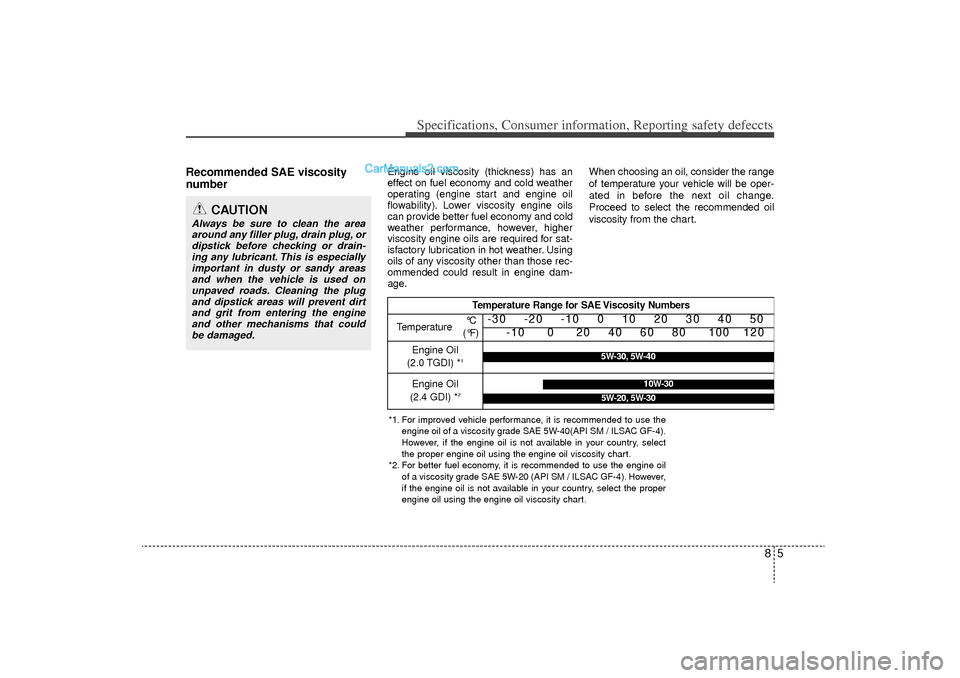
Engine oil viscosity (thickness) has an
effect on fuel economy and cold weather
operating (engine start and engine oil
flowability). Lower viscosity engine oils
can provide better fuel economy and cold
weather performance, however, higher
viscosity engine oils are required for sat-
isfactory lubrication in hot weather. Using
oils of any viscosity other than those rec-
ommended could result in engine dam-
age.When choosing an oil, consider the range
of temperature your vehicle will be oper-
ated in before the next oil change.
Proceed to select the recommended oil
viscosity from the chart.
CAUTION
Always be sure to clean the area
around any filler plug, drain plug, or dipstick before checking or drain-ing any lubricant. This is especiallyimportant in dusty or sandy areas and when the vehicle is used onunpaved roads. Cleaning the plugand dipstick areas will prevent dirtand grit from entering the engine and other mechanisms that couldbe damaged.
*1. For improved vehicle performance, it is recommended to use the
engine oil of a viscosity grade SAE 5W-40(API SM / ILSAC GF-4).
However, if the engine oil is not available in your country, select
the proper engine oil using the engine oil viscosity chart.
*2. For better fuel economy, it is recommended to use the engine oil of a viscosity grade SAE 5W-20 (API SM / ILSAC GF-4). However,
if the engine oil is not available in your country, select the proper
engine oil using the engine oil viscosity chart.
Temperature Range for SAE Viscosity Numbers
Temperature
-30 -20 -10 0 10 20 30 40 50
-10 0 20 40 60 80 100 120
Engine Oil
(2.0 TGDI) *
1
Engine Oil
(2.4 GDI) *
2
10W-30
5W-20, 5W-30
°C
(°F)
5W-30, 5W-40
YF HMA 8.QXP 8/23/2010 10:30 AM Page 5
Page 383 of 390
 ··················\
····")
I3
Index
California perchlorate notice ··················\
··················\
·····7-76
Capacities (Lubricants) ··················\
··················\
················8-4
CareExterior care ··················\
··················\
··················\
········7-67
Interior care ··················\
··················\
··················\
·········7-71
Tire care··················\
··················\
··················\
···············7-37
Cargo weight ··················\
··················\
··················\
············5-51
Center console storage ··················\
··················\
···············4-98
Central door lock switch··················\
··················\
············4-19
Certification label ··················\
··················\
···············5-49, 8-6
Changing tires ··················\
··················\
··················\
··········6-13
Chains Tire chains ··················\
··················\
··················\
···········5-43
Checking tire inflation pressure··················\
··················\
·7-38
Child restraint system ··················\
··················\
················3-29 Passenger seat belt ··················\
··················\
················3-31
Tether anchor system··················\
··················\
·············3-33
Lower anchor system ··················\
··················\
············3-35
Child-protector rear door lock ··················\
··················\
···4-21
Climate control system (Automatic) ··················\
···········4-91 Air conditioning ··················\
··················\
··················\
··4-94
Automatic heating and air conditioning··················\
··4-89
Manual heating and air conditioning ··················\
······4-90
Climate control system (Manual) ··················\
················4-79 Air conditioning ··················\
··················\
··················\
··4-85
Climate control air filter··················\
··················\
········4-87
Heating and air conditioning··················\
··················\
·4-80 Climate control air filter ··················\
··················\
············4-89
Climate control air filter ··················\
··················\
············7-30
Clock (Digital) ··················\
··················\
··················\
·······4-102
Clothes hanger ··················\
··················\
··················\
·······4-102
Combined instrument, see instrument cluster ···············4-46
Compact spare tire ··················\
··················\
··················\
···6-18
Compact spare tire replacement ··················\
··················\
7-42
Compass mirror, see the Electric chromic mirror (ECM)
with homeLink system and compass ··················\
······4-37
Consumer information ··················\
··················\
·················8-8
Coolant ··················\
··················\
··················\
··················\
···7-24
Cooling fluid, see engine coolant ··················\
················7-24
Crankcase emission control system ··················\
·············7-73
Cruise control system ··················\
··················\
················5-31
Cup holder ··················\
··················\
··················\
·············4-100
Curtain air bag ··················\
··················\
··················\
·········3-54
Dashboard, see instrument cluster ··················\
···············4-46
Dashboard illumination, see instrument panel illumination ··················\
··················\
··················\
·········4-47
Daytime running light··················\
··················\
················4-69
Defogging (Windshield) ··················\
··················\
············4-95
Defogging logic (Windshield) ··················\
··················\
···4-97
Defroster (Rear window) ··················\
··················\
···········4-78
Defrosting (Windshield) ··················\
··················\
············4-95
Digital clock··················\
··················\
··················\
···········4-102
Dimensions ··················\
··················\
··················\
················8-2C
D
YF HMA INDEX.QXP 8/24/2010 1:05 PM Page 3
Page 389 of 390

I9
Index
Sports mode ··················\
··················\
··················\
·············5-17
Starting difficulties, see engine will not start ··················\
6-3
Starting the engine··················\
··················\
················5-6, 5-9\
Steering wheel···············\
··················\
··················\
·············4-35Horn··················\
··················\
··················\
··················\
···4-36
Electric power steering··················\
··················\
··········4-35
Tilt steering ··················\
··················\
··················\
·········4-35
Steering wheel audio control ··················\
··················\
···4-104
Storage compartment ··················\
··················\
·················4-98\
Center console storage ··················\
··················\
··········4-98
Glove box ··················\
··················\
··················\
············4-98
Multi box ··················\
··················\
··················\
·············4-99
Sunglass holder ··················\
··················\
··················\
···4-99
Sunglass holder ··················\
··················\
··················\
········4-99
Sunroof··················\
··················\
··················\
··················\
···4-32
Sunvisor ··················\
··················\
··················\
·················4-10\
0
Tachometer··················\
··················\
··················\
···············4-47
Tether anchor system ··················\
··················\
·················3-33\
Theft-alarm system ··················\
··················\
··················\
··4-14
Tilt steering ··················\
··················\
··················\
··············4-35
Tire specification and pressure label ··················\
·············8-7
Tire chains··················\
··················\
··················\
················5-43
Tire pressure monitoring system (TPMS) ··················\
·····6-7 Tires and wheels ··················\
··················\
·················7-37\
, 8-3
Checking tire inflation pressure ··················\
··············7-38
Compact spare tire replacement ··················\
··············7-42
Recommended cold tire inflation pressures ··············7-37
Tire care··················\
··················\
··················\
···············7-37
Tire maintenance ··················\
··················\
··················\
·7-42
Tire replacement ··················\
··················\
··················\
··7-41
Tire rotation ··················\
··················\
··················\
·········7-39
Tire sidewall labeling ··················\
··················\
············7-43
Tire traction ··················\
··················\
··················\
·········7-42
Wheel alignment and tire balance ··················\
···········7-40
Wheel replacement ··················\
··················\
················7-42
Towing ··················\
··················\
··················\
··················\
···6-20
Trailer towing ··················\
··················\
··················\
··········5-52
Transaxle Automatic transaxle ··················\
··················\
··············5-14
Manual transaxle ··················\
··················\
··················\
·5-11
Trip computer ··················\
··················\
··················\
··········4-49
Trunk ··················\
··················\
··················\
··················\
······4-22
Vehicle break-in process ··················\
··················\
··············1-5
Vehicle certification label··················\
··················\
···5-49, 8-6
Vehicle data collection and event data recorders (EDR) ··················\
··················\
··················\
····1-6
Vehicle identification number (VIN) ··················\
·············8-6
Vehicle load limit ··················\
··················\
··················\
·····5-46 Certification label ··················\
··················\
··················\
5-49T
V
YF HMA INDEX.QXP 8/24/2010 1:05 PM Page 9