climate control KIA Carens 2011 2.G User Guide
[x] Cancel search | Manufacturer: KIA, Model Year: 2011, Model line: Carens, Model: KIA Carens 2011 2.GPages: 338, PDF Size: 6.51 MB
Page 158 of 338
479
Features of your vehicle
D250102AUN-EU
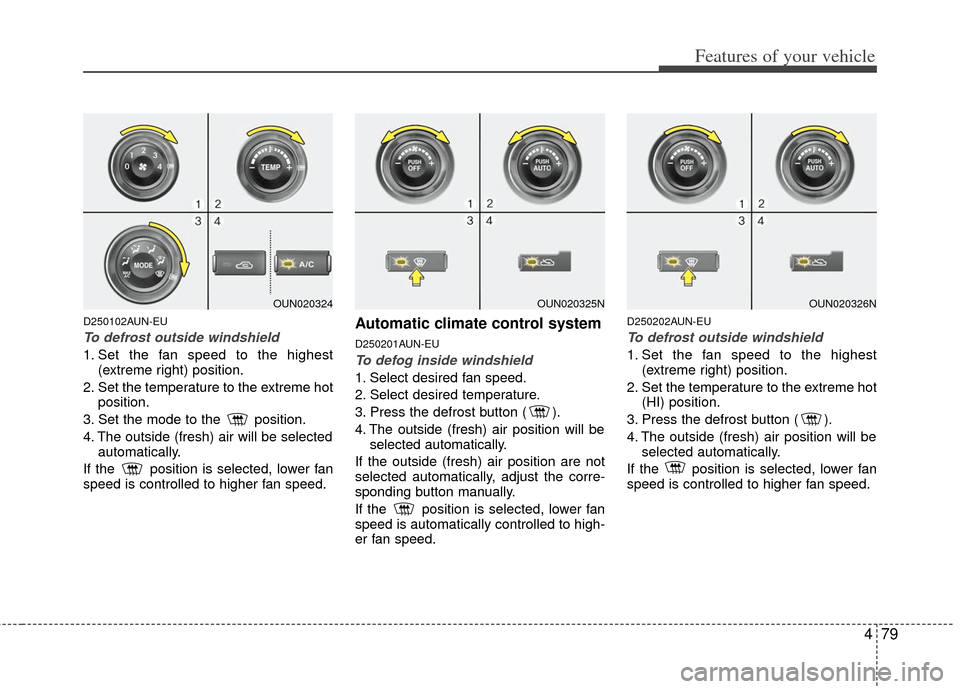
To defrost outside windshield
1. Set the fan speed to the highest(extreme right) position.
2. Set the temperature to the extreme hot position.
3. Set the mode to the position.
4. The outside (fresh) air will be selected automatically.
If the position is selected, lower fan
speed is controlled to higher fan speed.
Automatic climate control system
D250201AUN-EU
To defog inside windshield
1. Select desired fan speed.
2. Select desired temperature.
3. Press the defrost button ( ).
4. The outside (fresh) air position will be selected automatically.
If the outside (fresh) air position are not
selected automatically, adjust the corre-
sponding button manually.
If the position is selected, lower fan
speed is automatically controlled to high-
er fan speed.
D250202AUN-EU
To defrost outside windshield
1. Set the fan speed to the highest (extreme right) position.
2. Set the temperature to the extreme hot (HI) position.
3. Press the defrost button ( ).
4. The outside (fresh) air position will be selected automatically.
If the position is selected, lower fan
speed is controlled to higher fan speed.
OUN020325NOUN020326NOUN020324
Page 159 of 338
Features of your vehicle
80
4
D250300AUN-EU
Defogging logic
To reduce the probability of fogging up
the inside of the windshield, the air intake
is controlled automatically according to
certain conditions such as or
position. To cancel or return the defog-
ging logic, perform the following steps.
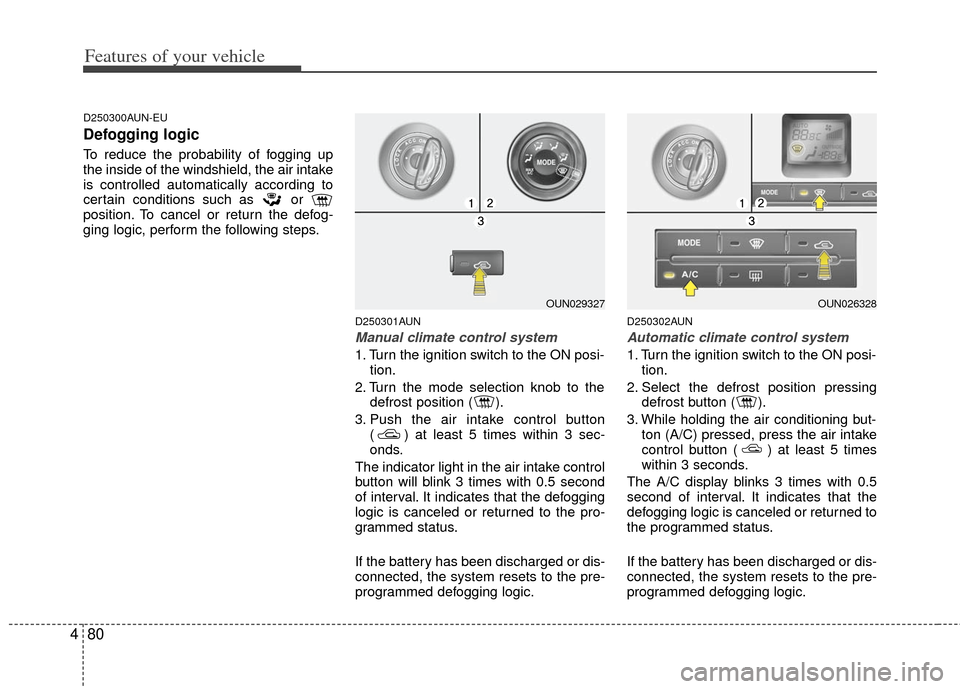
D250301AUN
Manual climate control system
1. Turn the ignition switch to the ON posi-
tion.
2. Turn the mode selection knob to the defrost position ( ).
3. Push the air intake control button ( ) at least 5 times within 3 sec-
onds.
The indicator light in the air intake control
button will blink 3 times with 0.5 second
of interval. It indicates that the defogging
logic is canceled or returned to the pro-
grammed status.
If the battery has been discharged or dis-
connected, the system resets to the pre-
programmed defogging logic.
D250302AUN
Automatic climate control system
1. Turn the ignition switch to the ON posi- tion.
2. Select the defrost position pressing defrost button ( ).
3. While holding the air conditioning but- ton (A/C) pressed, press the air intake
control button ( ) at least 5 times
within 3 seconds.
The A/C display blinks 3 times with 0.5
second of interval. It indicates that the
defogging logic is canceled or returned to
the programmed status.
If the battery has been discharged or dis-
connected, the system resets to the pre-
programmed defogging logic.
OUN029327OUN026328
Page 267 of 338
7
Engine compartment / 7-2
Maintenance services / 7-4
Owner maintenance / 7-6
Maintenance schedule / 7-8
Explanation of scheduled maintenance items / 7-12
Engine oil / 7-16
Engine coolant / 7-17
Brakes fluid / 7-20
Power steering fluid / 7-21
Automatic transaxle fluid / 7-22
Washer fluid / 7-24
Parking brake / 7-24
Air cleaner / 7-25
Climate control air filter / 7-25
Wiper blades / 7-26
Battery / 7-28
Tires and wheels / 7-31
Fuses / 7-44
Appearance care / 7-53
Emission control system / 7-59
Maintenance
Page 291 of 338
725
Maintenance
AIR CLEANER
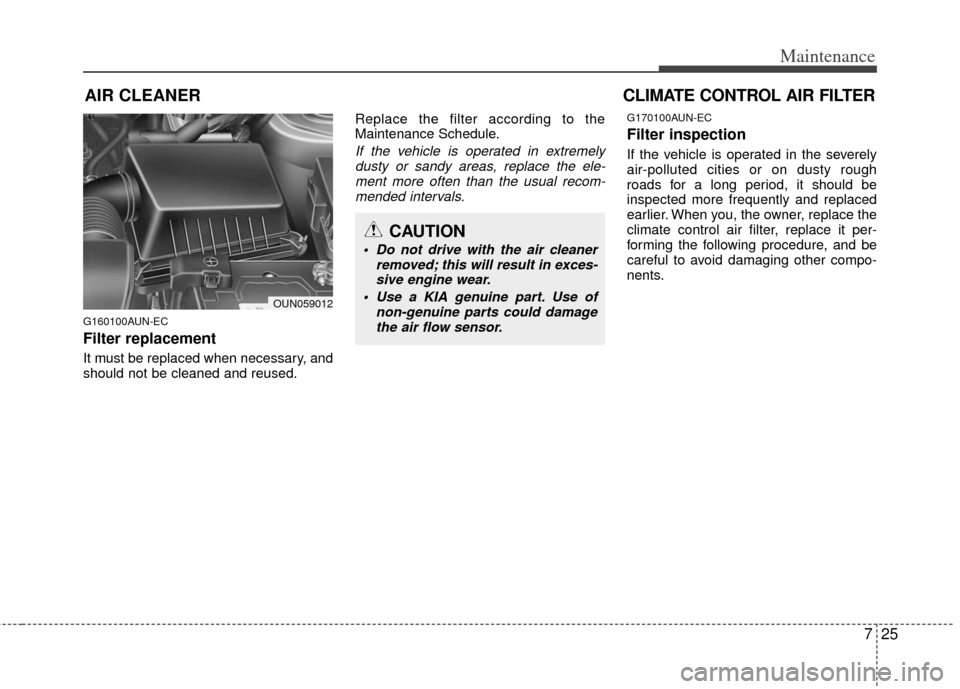
G160100AUN-EC
Filter replacement
It must be replaced when necessary, and
should not be cleaned and reused.Replace the filter according to the
Maintenance Schedule.
If the vehicle is operated in extremely
dusty or sandy areas, replace the ele-ment more often than the usual recom-mended intervals.
G170100AUN-EC
Filter inspection
If the vehicle is operated in the severely
air-polluted cities or on dusty rough
roads for a long period, it should be
inspected more frequently and replaced
earlier. When you, the owner, replace the
climate control air filter, replace it per-
forming the following procedure, and be
careful to avoid damaging other compo-
nents.
OUN059012
CAUTION
Do not drive with the air cleaner removed; this will result in exces-sive engine wear.
Use a KIA genuine part. Use of non-genuine parts could damagethe air flow sensor.
CLIMATE CONTROL AIR FILTER
Page 296 of 338
Maintenance
30
7
G190300AUN
Reset items
Items should be reset after the battery
has been discharged or the battery has
been disconnected.
Auto up/down window (See section 4)
Sunroof (See section 4)
Trip computer (See section 4)
Climate control system
(See section 4)
Clock (See section 4)
Audio (See section 4)
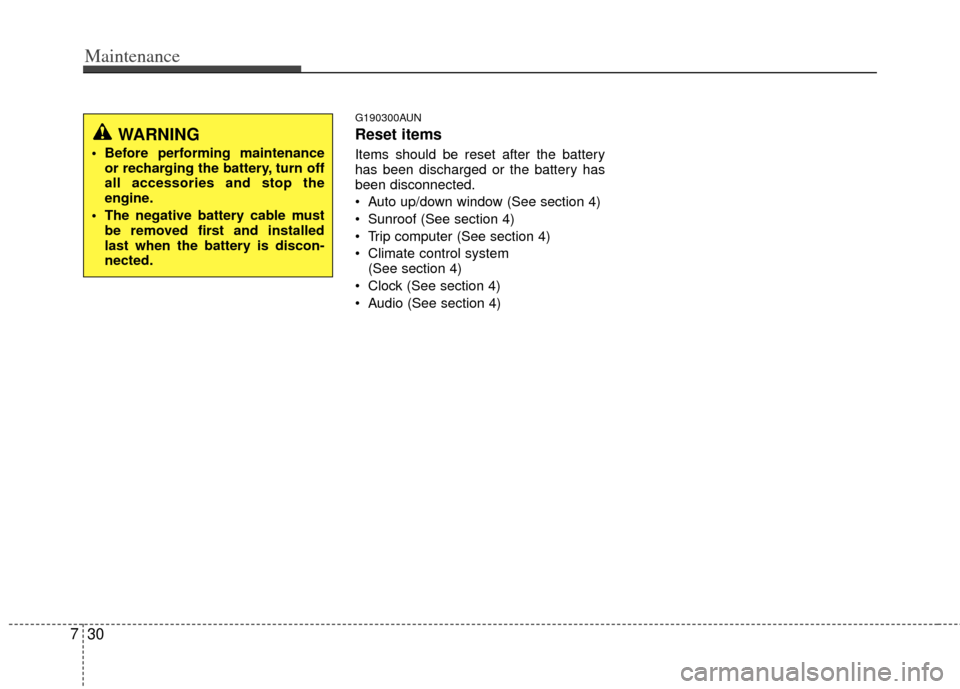
WARNING
Before performing maintenance or recharging the battery, turn off
all accessories and stop the
engine.
The negative battery cable must be removed first and installed
last when the battery is discon-
nected.
Page 304 of 338
Maintenance
38
7
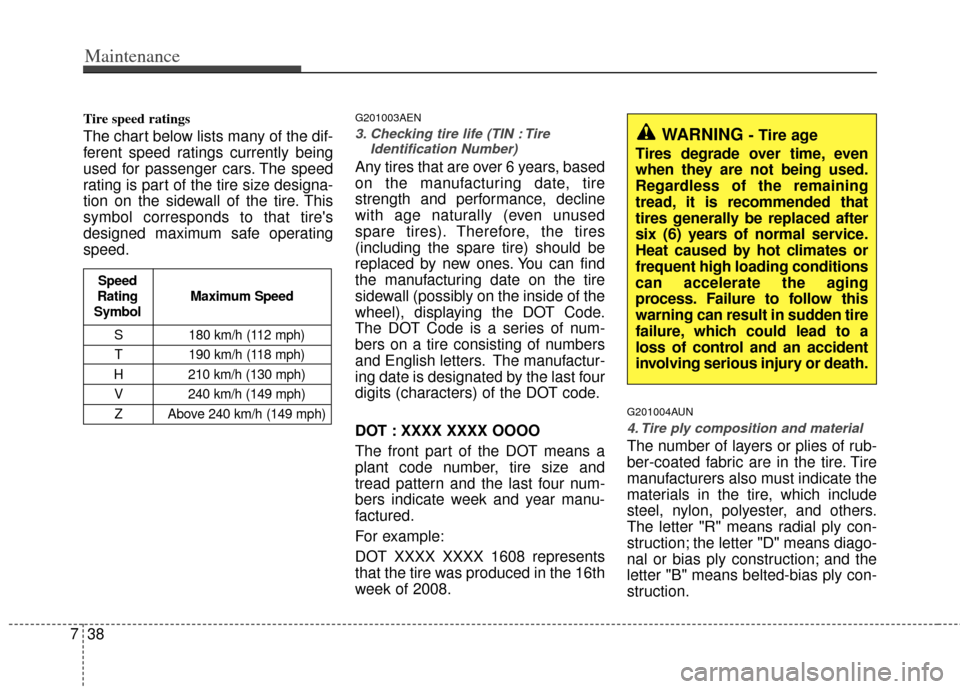
Tire speed ratings
The chart below lists many of the dif-
ferent speed ratings currently being
used for passenger cars. The speed
rating is part of the tire size designa-
tion on the sidewall of the tire. This
symbol corresponds to that tire's
designed maximum safe operating
speed.
G201003AEN
3. Checking tire life (TIN : Tire
Identification Number)
Any tires that are over 6 years, based
on the manufacturing date, tire
strength and performance, decline
with age naturally (even unused
spare tires). Therefore, the tires
(including the spare tire) should be
replaced by new ones. You can find
the manufacturing date on the tire
sidewall (possibly on the inside of the
wheel), displaying the DOT Code.
The DOT Code is a series of num-
bers on a tire consisting of numbers
and English letters. The manufactur-
ing date is designated by the last four
digits (characters) of the DOT code.
DOT : XXXX XXXX OOOO
The front part of the DOT means a
plant code number, tire size and
tread pattern and the last four num-
bers indicate week and year manu-
factured.
For example:
DOT XXXX XXXX 1608 represents
that the tire was produced in the 16th
week of 2008.
G201004AUN
4. Tire ply composition and material
The number of layers or plies of rub-
ber-coated fabric are in the tire. Tire
manufacturers also must indicate the
materials in the tire, which include
steel, nylon, polyester, and others.
The letter "R" means radial ply con-
struction; the letter "D" means diago-
nal or bias ply construction; and the
letter "B" means belted-bias ply con-
struction.
WARNING - Tire age
Tires degrade over time, even
when they are not being used.
Regardless of the remaining
tread, it is recommended that
tires generally be replaced after
six (6) years of normal service.
Heat caused by hot climates or
frequent high loading conditions
can accelerate the aging
process. Failure to follow this
warning can result in sudden tire
failure, which could lead to a
loss of control and an accident
involving serious injury or death.
S 180 km/h (112 mph)
T 190 km/h (118 mph)
H 210 km/h (130 mph) V 240 km/h (149 mph)Z Above 240 km/h (149 mph)
Maximum Speed
Speed
Rating
Symbol
Page 336 of 338

Index
2I
Air bag-advanced supplemental restraint system ··········3-40
Air cleaner ··················\
··················\
··················\
···············7-25
Appearance care··················\
··················\
··················\
·······7-53
Audio system ··················\
··················\
··················\
···········4-92
Automatic climate control system ··················\
···············4-70
Automatic transaxle ··················\
··················\
··················\
···5-7
Automatic transaxle fluid ··················\
··················\
··········7-22
Battery··················\
··················\
··················\
··················\
····7-28
Before driving ··················\
··················\
··················\
············5-3
Brake system··················\
··················\
··················\
············5-14
Brakes fluid··················\
··················\
··················\
··············7-20
Bulb wattage ··················\
··················\
··················\
··············8-2
Child restraint system ··················\
··················\
················3-32
Climate control air filter ··················\
··················\
············7-25
Cruise control system ··················\
··················\
················5-24
Defroster ··················\
··················\
··················\
··················\
4-59
Dimensions ··················\
··················\
··················\
················8-2Door locks··················\
··················\
··················\
··················\
4-9
Economical operation ··················\
··················\
················5-28
Emergency starting ··················\
··················\
··················\
····6-4
Emission control system ··················\
··················\
············7-59
Engine compartment ··················\
··················\
·············2-4/7-2
Engine coolant ··················\
··················\
··················\
·········7-17
Engine number ··················\
··················\
··················\
···········8-7
Engine oil ··················\
··················\
··················\
·················7-16\
Explanation of scheduled maintenance items ···············7-12
Exterior feature ··················\
··················\
··················\
········4-90
Fuel filler lid ··················\
··················\
··················\
············4-20
Fuel requirements ··················\
··················\
··················\
······1-3
Fuses ··················\
··················\
··················\
··················\
······7-44
Hazard warning flasher ··················\
··················\
··············4-50
Hood··················\
··················\
··················\
··················\
·······4-18
How to use this manual ··················\
··················\
···············1-2
A
B
C
D
E
F
H
Page 337 of 338

I3
Index
If the engine overheats··················\
··················\
·················6-6
If the engine will not start ··················\
··················\
···········6-3
If you have a flat tire ··················\
··················\
··················\
·6-7
In case of an emergency while driving ··················\
··········6-2
Indicator symbols on the instrument cluster ··················\
·1-5
Instrument cluster ··················\
··················\
··················\
····4-32
Instrument panel overview··················\
··················\
···········2-3
Interior features··················\
··················\
··················\
········4-83
Interior light ··················\
··················\
··················\
·············4-58
Interior overview··················\
··················\
··················\
········2-2
Key positions ··················\
··················\
··················\
·············5-4
Keys ··················\
··················\
··················\
··················\
·········4-3
Lighting··················\
··················\
··················\
··················\
··4-51
Maintenance schedule··················\
··················\
··················\
7-8
Maintenance services ··················\
··················\
··················\
·7-4
Manual climate control system··················\
··················\
··4-61
Mirrors ··················\
··················\
··················\
··················\
···4-29Owner maintenance ··················\
··················\
··················\
···7-6
Parking brake ··················\
··················\
··················\
··········7-24
Power steering fluid ··················\
··················\
··················\
·7-21
Rear parking assist system··················\
··················\
·········4-47
Rearview camera··················\
··················\
··················\
······4-49
Recommended lubricants and capacities ··················\
·······8-4
Remote keyless entry ··················\
··················\
··················\
·4-6
Road warning ··················\
··················\
··················\
·············6-2
Seat belts ··················\
··················\
··················\
··················\
3-18
Seats ··················\
··················\
··················\
··················\
·········3-2
Special driving conditions ··················\
··················\
·········5-30
Starting the engine ··················\
··················\
··················\
·····5-6
Steering wheel ··················\
··················\
··················\
·········4-27
Storage compartment ··················\
··················\
·················4-80\
Sunroof··················\
··················\
··················\
··················\
···4-23
I
K
L
M
O
P
R
S