transmission KIA FORTE 2019 Service Manual
[x] Cancel search | Manufacturer: KIA, Model Year: 2019, Model line: FORTE, Model: KIA FORTE 2019Pages: 550, PDF Size: 11.66 MB
Page 420 of 550
What to do in an emergency
34
6
When towing your vehicle in an
emergency without wheel dollies :
1. Set the ignition switch in the ACC
position.
2. Place the transmission shift lever in N (Neutral).
3. Release the parking brake.
CAUTION - Towing gear position
Failure to place the transmis-sion shift lever in N (Neutral)may cause internal damage tothe transmission.
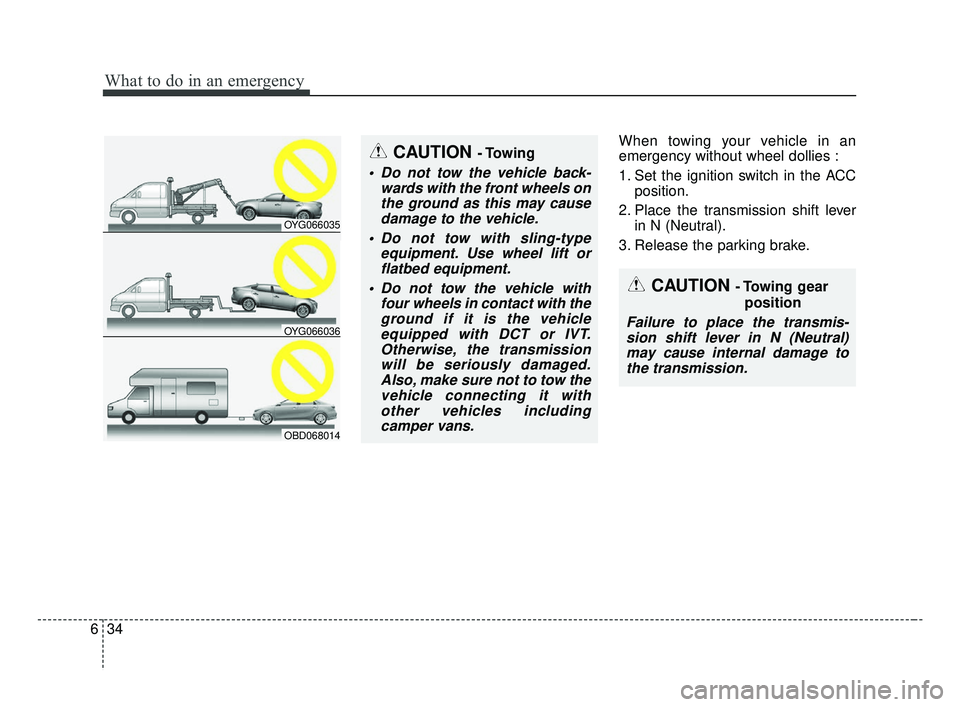
CAUTION - Towing
Do not tow the vehicle back- wards with the front wheels onthe ground as this may causedamage to the vehicle.
Do not tow with sling-type equipment. Use wheel lift orflatbed equipment.
Do not tow the vehicle with four wheels in contact with theground if it is the vehicleequipped with DCT or IVT.Otherwise, the transmissionwill be seriously damaged.Also, make sure not to tow thevehicle connecting it withother vehicles includingcamper vans.
OYG066035
OBD068014
OYG066036
BDm CAN (ENG) 6.qxp 7/4/2018 10:21 AM Page 34
Page 423 of 550
637
What to do in an emergency
Emergency towing precautions
Turn the ignition switch to ACC sothe steering wheel isn’t locked.
Place the transaxle shift lever in N (Neutral).
Release the parking bake.
Press the brake pedal with more force than normal since you will
have reduced brake performance.
More steering effort will be required because the power steer-
ing system will be disabled.
If you are driving down a long hill, the brakes may overheat and brake
performance will be reduced. Stop
often and let the brakes cool off.
If the car is being towed with all four wheels on the ground, it can
be towed only from the front. Be
sure that the transaxle is in neutral.
Be sure the steering is unlocked by
placing the ignition switch in the
ACC position. A driver must be in
the towed vehicle to operate the
steering and brakes.CAUTION
- Intelligent Variable
Transmission (IVT)
Vehicles with Intelligent VariableTransmission (IVT) can only betowed to an ordinary vehiclewhen there is no IVT transmis-sion oil leakage. If towing to anordinary vehicle in the event ofoil leakage, the transmissionmay be damaged. If towing to anordinary vehicle in the event ofoil leakage, the transmissionmay be damaged.
CAUTION
- Intelligent Variable
Transmission
If the car is being towed with all four wheels on the ground,it can be towed only from thefront.
(Continued)
(Continued)Be sure that the transmissionis in neutral. Be sure the steer-ing is unlocked by placing theignition switch in the ACCposition. A driver must be inthe towed vehicle to operatethe steering and brakes.
To avoid serious damage to the Intelligent VariableTransmission limit the vehiclespeed to 15 km/h (10 mph) anddrive less than 1.5 km (1 mile)when towing.
Before towing, check the Intelligent VariableTransmission for fluid leaksunder your vehicle. If theIntelligent VariableTransmission fluid is leaking,flatbed equipment or a towingdolly must be used.
BDm CAN (ENG) 6.qxp 7/4/2018 10:21 AM Page 37
Page 424 of 550
Maintenance
Engine compartment . . . . . . . . . . . . . . . . . . . . . . . . 7-4
Maintenance services . . . . . . . . . . . . . . . . . . . . . . . . 7-5
• Owner’s responsibility . . . . . . . . . . . . . . . . . . . . . . . . . 7-5
• Owner maintenance precautions . . . . . . . . . . . . . . . . . 7-6
Owner maintenance . . . . . . . . . . . . . . . . . . . . . . . . . 7-8
• Owner maintenance schedule . . . . . . . . . . . . . . . . . . . 7-8
Scheduled maintenance service. . . . . . . . . . . . . . . 7-10
Explanation of scheduled maintenance items . . . 7-16
• Engine oil and filter. . . . . . . . . . . . . . . . . . . . . . . . . . . 7-16
• Drive belts . . . . . . . . . . . . . . . . . . . . . . . . . . . . . . . . . . 7-16\
• Fuel filter (for gasoline) . . . . . . . . . . . . . . . . . . . . . . . 7-16
• Fuel lines, fuel hoses and connections . . . . . . . . . . . . 7-16
• Vapor hose and fuel filler cap . . . . . . . . . . . . . . . . . . 7-16
• Vacuum crankcase ventilation hoses . . . . . . . . . . . . . 7-17
• Air cleaner filter . . . . . . . . . . . . . . . . . . . . . . . . . . . . . 7-17
• Spark plugs . . . . . . . . . . . . . . . . . . . . . . . . . . . . . . . . . 7-17
• Cooling system . . . . . . . . . . . . . . . . . . . . . . . . . . . . . . . 7-17
• Coolant . . . . . . . . . . . . . . . . . . . . . . . . . . . . . . . . . . . . \
. 7-17
• Intelligent Variable Transmission (IVT) fluid . . . . . 7-17
• Manual transaxle fluid . . . . . . . . . . . . . . . . . . . . . . . . 7-18
• Brake hoses and lines . . . . . . . . . . . . . . . . . . . . . . . . . 7-18
• Brake fluid . . . . . . . . . . . . . . . . . . . . . . . . . . . . . . . . . . 7-19\
• Parking brake . . . . . . . . . . . . . . . . . . . . . . . . . . . . . . . 7-19
• Brake discs, pads, calipers and rotors. . . . . . . . . . . . 7-19
• Exhaust pipe and muffler . . . . . . . . . . . . . . . . . . . . . . 7-19
• Suspension mounting bolts . . . . . . . . . . . . . . . . . . . . . 7-19• Steering gear box, linkage &
boots/lower arm ball joint . . . . . . . . . . . . . . . . . . . . 7-20
• Drive shafts and boots. . . . . . . . . . . . . . . . . . . . . . . . . 7-20
• Air conditioning refrigerant . . . . . . . . . . . . . . . . . . . . 7-20
Checking fluid levels . . . . . . . . . . . . . . . . . . . . . . . 7-20
Engine oil. . . . . . . . . . . . . . . . . . . . . . . . . . . . . . . . . 7-21
• Checking the engine oil level . . . . . . . . . . . . . . . . . . . 7-21
• Changing the engine oil and filter . . . . . . . . . . . . . . . 7-22
Engine coolant . . . . . . . . . . . . . . . . . . . . . . . . . . . . 7-23
• Checking the coolant level . . . . . . . . . . . . . . . . . . . . . 7-23
• Changing the coolant . . . . . . . . . . . . . . . . . . . . . . . . . 7-25
Brake/clutch fluid . . . . . . . . . . . . . . . . . . . . . . . . . . 7-26
• Checking the brake/clutch fluid level . . . . . . . . . . . . 7-26
Washer fluid . . . . . . . . . . . . . . . . . . . . . . . . . . . . . . 7-27
• Checking the washer fluid level . . . . . . . . . . . . . . . . . 7-27
Parking brake . . . . . . . . . . . . . . . . . . . . . . . . . . . . . 7-28
• Checking the parking brake. . . . . . . . . . . . . . . . . . . . 7-28
Air cleaner. . . . . . . . . . . . . . . . . . . . . . . . . . . . . . . . 7-29
• Filter replacement . . . . . . . . . . . . . . . . . . . . . . . . . . . . 7-29
Climate control air filter . . . . . . . . . . . . . . . . . . . . 7-31
• Filter inspection . . . . . . . . . . . . . . . . . . . . . . . . . . . . . . 7-31
Wiper blades . . . . . . . . . . . . . . . . . . . . . . . . . . . . . . 7-33
• Blade inspection . . . . . . . . . . . . . . . . . . . . . . . . . . . . . . 7-33
• Blade replacement . . . . . . . . . . . . . . . . . . . . . . . . . . . . 7-33
7
BDm CAN (ENG) 7.qxp 7/4/2018 10:23 AM Page 1
Page 431 of 550
Maintenance
87
OWNER MAINTENANCE
The following lists are vehicle checks
and inspections that should be per-
formed by the owner or an author-
ized Kia dealer at the frequencies
indicated to help ensure safe,
dependable operation of your vehi-
cle.
Any adverse conditions should be
brought to the attention of your deal-
er as soon as possible.
These Owner Maintenance Checks
are generally not covered by war-
ranties and you may be charged for
labor, parts and lubricants used.Owner maintenance schedule
When you stop for fuel:
Check the engine oil level.
Check the coolant level in coolantreservoir.
Check the windshield washer fluid level.
Look for low or under-inflated tires.
While operating your vehicle:
Note any changes in the sound of the exhaust or any smell of
exhaust fumes in the vehicle.
Check for vibrations in the steering wheel. Notice any increased steer-
ing effort or looseness in the steer-
ing wheel, or change in its straight-
ahead position.
Notice if your vehicle constantly turns slightly or “pulls” to one side
when traveling on smooth, level
road.
When stopping, listen and check for unusual sounds, pulling to one
side, increased brake pedal travel
or “hard-to-push” brake pedal.
If any slipping or changes in the operation of your transmission
occurs, check the transmission
fluid level.
Check manual transaxle operation, including clutch operation.
Check the parking brake.
Check for fluid leaks under your vehicle (water dripping from the air
conditioning system during or after
use is normal).
WARNING- Hot coolant
Be careful when checking your
engine coolant level when the
engine is hot. Scalding hot
coolant and steam may blow
out under pressure.
BDm CAN (ENG) 7.qxp 7/4/2018 10:23 AM Page 8
Page 432 of 550
79
Maintenance
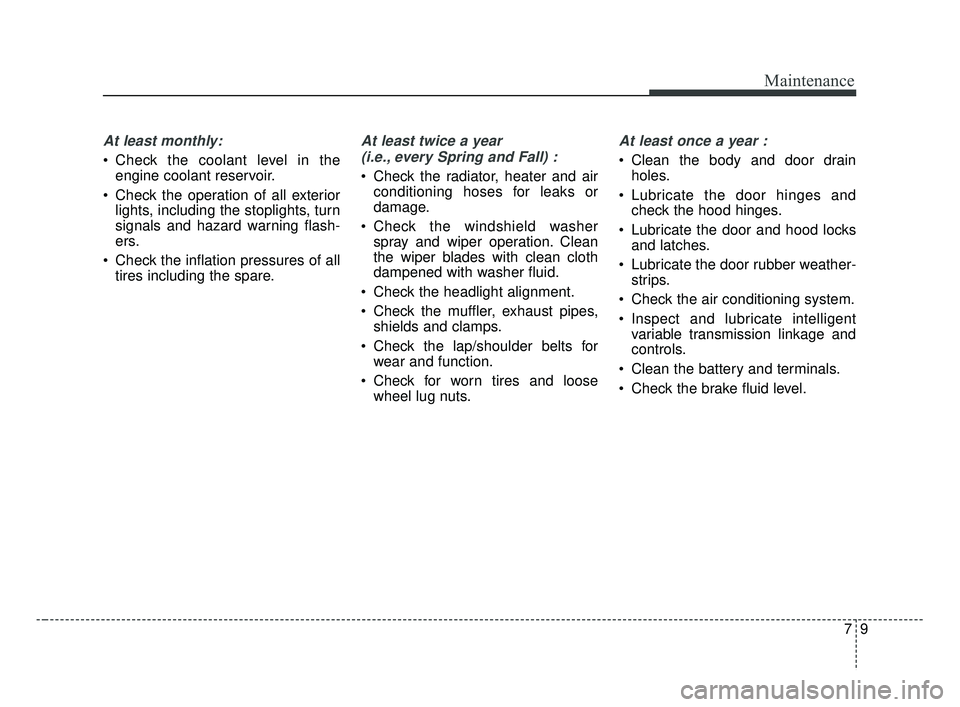
At least monthly:
Check the coolant level in theengine coolant reservoir.
Check the operation of all exterior lights, including the stoplights, turn
signals and hazard warning flash-
ers.
Check the inflation pressures of all tires including the spare.
At least twice a year
(i.e., every Spring and Fall) :
Check the radiator, heater and air conditioning hoses for leaks or
damage.
Check the windshield washer spray and wiper operation. Clean
the wiper blades with clean cloth
dampened with washer fluid.
Check the headlight alignment.
Check the muffler, exhaust pipes, shields and clamps.
Check the lap/shoulder belts for wear and function.
Check for worn tires and loose wheel lug nuts.
At least once a year :
Clean the body and door drainholes.
Lubricate the door hinges and check the hood hinges.
Lubricate the door and hood locks and latches.
Lubricate the door rubber weather- strips.
Check the air conditioning system.
Inspect and lubricate intelligent variable transmission linkage and
controls.
Clean the battery and terminals.
Check the brake fluid level.
BDm CAN (ENG) 7.qxp 7/4/2018 10:23 AM Page 9
Page 436 of 550
713
Maintenance
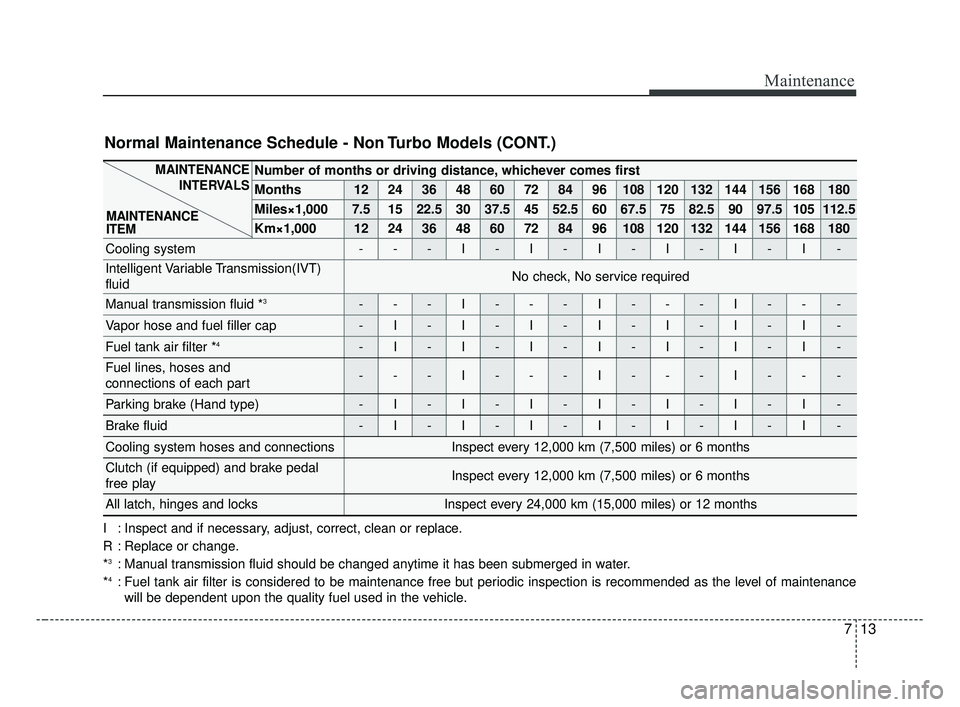
Number of months or driving distance, whichever comes first
Months1224364860728496108120132144156168180
Miles×1,0007.51522.530 37.5 45 52.5 60 67.5 75 82.5 90 97.5 105 112.5
Km×1,00012 24 36 48 60 72 84 96 108 120 132 144 156 168 180
Cooling system---I-I-I-I-I-I-
Intelligent Variable Transmission(IVT)
fluidNo check, No service required
Manual transmission fluid *3---I---I---I---
Vapor hose and fuel filler cap-I-I-I-I-I-I-I-
Fuel tank air filter *4-I-I-I-I-I-I-I-
Fuel lines, hoses and
connections of each part---I---I---I---
Parking brake (Hand type)-I-I-I-I-I-I-I-
Brake fluid-I-I-I-I-I-I-I-
Cooling system hoses and connectionsInspect every 12,000 km (7,500 miles) or 6 months
Clutch (if equipped) and brake pedal
free playInspect every 12,000 km (7,500 miles) or 6 months
All latch, hinges and locksInspect every 24,000 km (15,000 miles) or 12 months
MAINTENANCEINTERVALS
MAINTENANCE
ITEM
Normal Maintenance Schedule - Non Turbo Models (CONT.)
I : Inspect and if necessary, adjust, correct, clean or replace.
R : Replace or change.
*
3: Manual transmission fluid should be changed anytime it has been submerged in water.
*4: Fuel tank air filter is considered to be maintenance free but periodic inspection is recommended as the level of maintenance will be dependent upon the quality fuel used in the vehicle.
BDm CAN (ENG) 7.qxp 7/4/2018 10:23 AM Page 13
Page 437 of 550
Maintenance
14
7
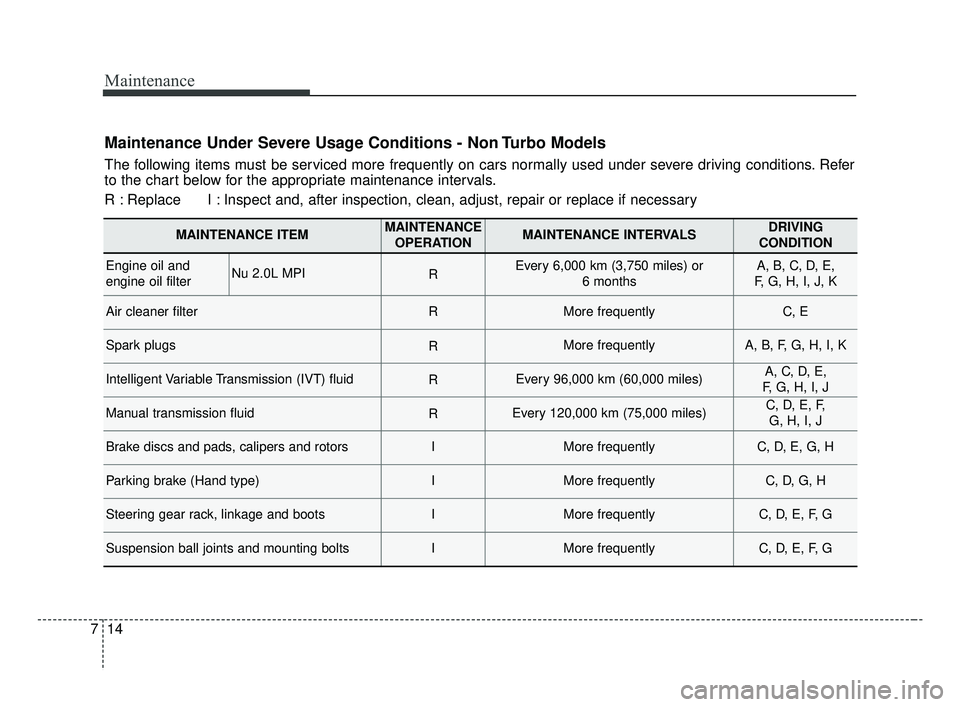
Maintenance Under Severe Usage Conditions - Non Turbo Models
The following items must be serviced more frequently on cars normally used under severe driving conditions. Refer
to the chart below for the appropriate maintenance intervals.
R : Replace I : Inspect and, after inspection, clean, adjust, repair or replace if neces\
sary
MAINTENANCE ITEMMAINTENANCE
OPERATIONMAINTENANCE INTERVALSDRIVING
CONDITION
Engine oil and
engine oil filterNu 2.0L MPIREvery 6,000 km (3,750 miles) or 6 monthsA, B, C, D, E,
F, G, H, I, J, K
Air cleaner filterRMore frequentlyC, E
Spark plugs RMore frequentlyA, B, F, G, H, I, K
Intelligent Variable Transmission (IVT) fluidREvery 96,000 km (60,000 miles)A, C, D, E,
F, G, H, I, J
Manual transmission fluidREvery 120,000 km (75,000 miles)C, D, E, F, G, H, I, J
Brake discs and pads, calipers and rotorsIMore frequentlyC, D, E, G, H
Parking brake (Hand type)IMore frequentlyC, D, G, H
Steering gear rack, linkage and bootsIMore frequentlyC, D, E, F, G
Suspension ball joints and mounting boltsIMore frequentlyC, D, E, F, G
BDm CAN (ENG) 7.qxp 7/4/2018 10:23 AM Page 14
Page 440 of 550
717
Maintenance
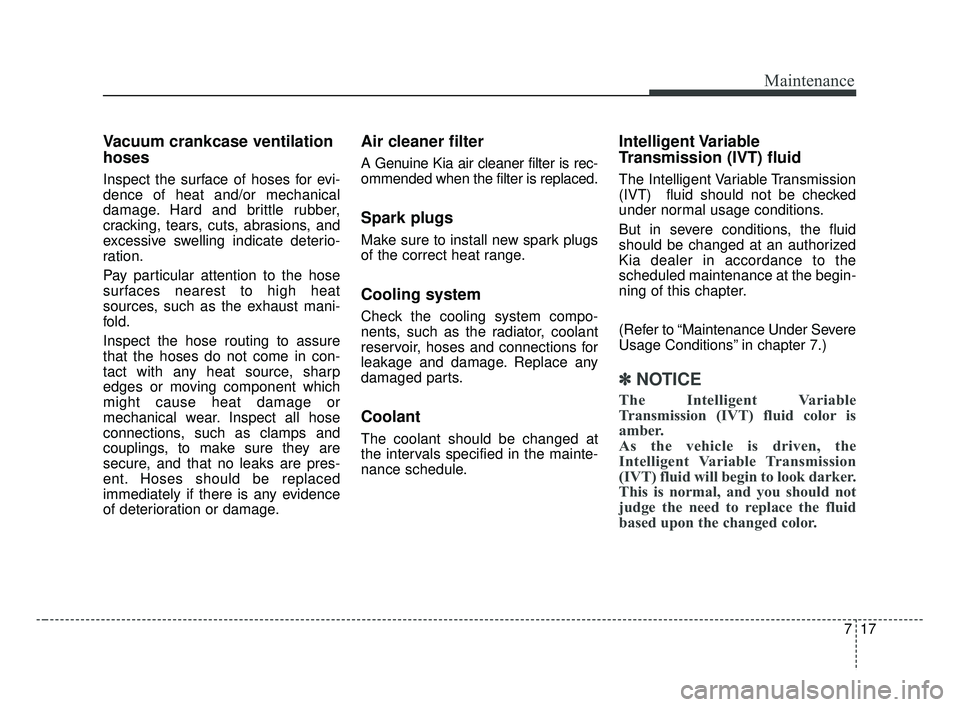
Vacuum crankcase ventilation
hoses
Inspect the surface of hoses for evi-
dence of heat and/or mechanical
damage. Hard and brittle rubber,
cracking, tears, cuts, abrasions, and
excessive swelling indicate deterio-
ration.
Pay particular attention to the hose
surfaces nearest to high heat
sources, such as the exhaust mani-
fold.
Inspect the hose routing to assure
that the hoses do not come in con-
tact with any heat source, sharp
edges or moving component which
might cause heat damage or
mechanical wear. Inspect all hose
connections, such as clamps and
couplings, to make sure they are
secure, and that no leaks are pres-
ent. Hoses should be replaced
immediately if there is any evidence
of deterioration or damage.
Air cleaner filter
A Genuine Kia air cleaner filter is rec-
ommended when the filter is replaced.
Spark plugs
Make sure to install new spark plugs
of the correct heat range.
Cooling system
Check the cooling system compo-
nents, such as the radiator, coolant
reservoir, hoses and connections for
leakage and damage. Replace any
damaged parts.
Coolant
The coolant should be changed at
the intervals specified in the mainte-
nance schedule.
Intelligent Variable
Transmission (IVT) fluid
The Intelligent Variable Transmission
(IVT) fluid should not be checked
under normal usage conditions.
But in severe conditions, the fluid
should be changed at an authorized
Kia dealer in accordance to the
scheduled maintenance at the begin-
ning of this chapter.
(Refer to “Maintenance Under Severe
Usage Conditions” in chapter 7.)
✽ ✽NOTICE
The Intelligent Variable
Transmission (IVT) fluid color is
amber.
As the vehicle is driven, the
Intelligent Variable Transmission
(IVT) fluid will begin to look darker.
This is normal, and you should not
judge the need to replace the fluid
based upon the changed color.
BDm CAN (ENG) 7.qxp 7/4/2018 10:23 AM Page 17
Page 441 of 550
Maintenance
18
7
Manual transaxle fluid
(if equipped)
Inspect the manual transaxle fluid
according to the maintenance sched-
ule.
Brake hoses and lines
Visually check for proper installation,
chafing, cracks, deterioration and
any leakage. Replace any deteriorat-
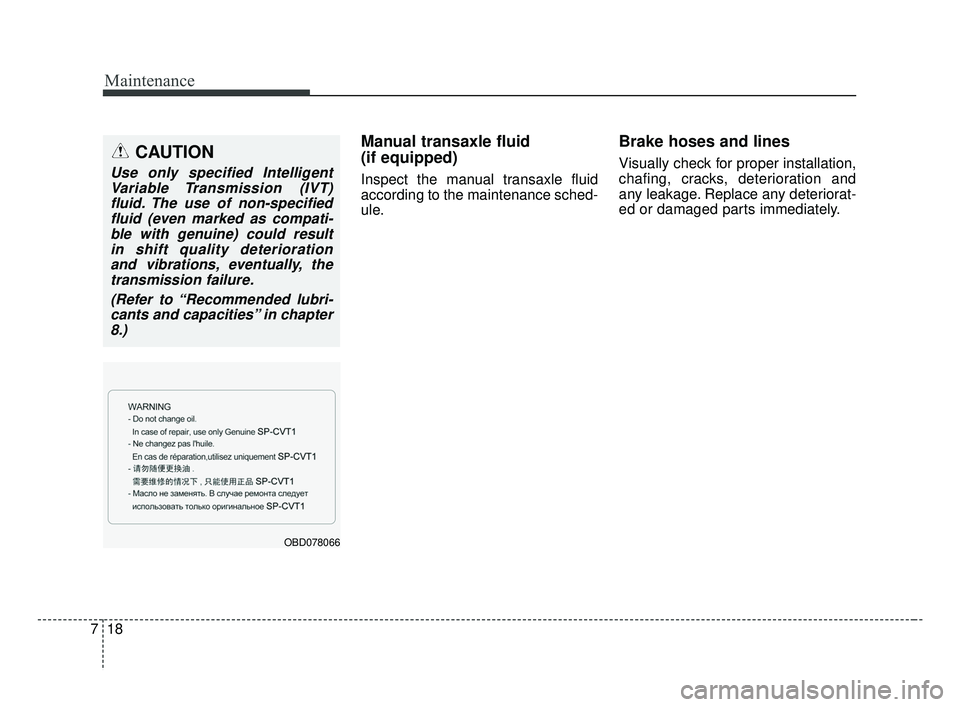
ed or damaged parts immediately.CAUTION
Use only specified Intelligent
Variable Transmission (IVT)fluid. The use of non-specifiedfluid (even marked as compati-ble with genuine) could resultin shift quality deteriorationand vibrations, eventually, thetransmission failure.
(Refer to “Recommended lubri-cants and capacities” in chapter8.)
OBD078066
BDm CAN (ENG) 7.qxp 7/4/2018 10:24 AM Page 18
Page 472 of 550
749
Maintenance
Temperature -A, B & C
The temperature grades are A (the
highest), B and C representing the
tire’s resistance to the generation of
heat and its ability to dissipate heat
when tested under controlled condi-
tions on a specified indoor laboratory
test wheel.
Sustained high temperature can
cause the material of the tire to
degenerate and reduce tire life, and
excessive temperature can lead to
sudden tire failure. Grades B and A
represent higher levels of perform-
ance on the laboratory test wheel
than the minimum required by law.Tire terminology and definitions
Air Pressure:
The amount of air
inside the tire pressing outward on
the tire. Air pressure is expressed in
kilopascal (kPa) or pounds per
square inch (psi).
Accessory Weight: This means the
combined weight of optional acces-
sories. Some examples of optional
accessories are, intelligent variable
transmission, power seats, and air
conditioning.
Aspect Ratio: The relationship of a
tire's height to its width.
Belt: A rubber coated layer of cords
that is located between the plies and
the tread. Cords may be made from
steel or other reinforcing materials.
Bead: The tire bead contains steel
wires wrapped by steel cords that
hold the tire onto the rim.
Bias Ply Tire: A pneumatic tire in
which the plies are laid at alternate
angles less than 90 degrees to the
centerline of the tread. Cold Tire Pressure:
The amount of
air pressure in a tire, measured in
kilopascals (kPa) or pounds per
square inch (psi) before a tire has
built up heat from driving.
Curb Weight: This means the weight
of a motor vehicle with standard and
optional equipment including the
maximum capacity of fuel, oil and
coolant, but without passengers and
cargo.
DOT Markings: The DOT code
includes the Tire Identification
Number (TIN), an alphanumeric des-
ignator which can also identify the
tire manufacturer, production plant,
brand and date of production.
BDm CAN (ENG) 7.qxp 7/4/2018 10:25 AM Page 49