brake light LINCOLN MKZ 2014 Owner's Manual
[x] Cancel search | Manufacturer: LINCOLN, Model Year: 2014, Model line: MKZ, Model: LINCOLN MKZ 2014Pages: 468, PDF Size: 4.49 MB
Page 297 of 468
VEHICLE STORAGE
If you plan on storing your vehicle for
an extended period of time (30 days
or more), read the following
maintenance recommendations to
make sure your vehicle stays in good
operating condition.
All motor vehicles and their
components were engineered and
tested for reliable, regular driving.
Long term storage under various
conditions may lead to component
degradation or failure unless specific
precautions are taken to preserve the
components.
General
• Store all vehicles in a dry,ventilated place.
• Protect from sunlight, if possible.
• If vehicles are stored outside, they require regular maintenance to
protect against rust and damage.
Body
• Wash your vehicle thoroughly toremove dirt, grease, oil, tar or mud
from exterior surfaces, rear-wheel
housing and underside of front
fenders.
• Periodically wash your vehicle stored in exposed locations.
• Touch-up exposed or primed metal to prevent rust. • Cover chrome and stainless steel
parts with a thick coat of auto wax
to prevent discoloration. Re-wax
as necessary when your vehicle is
washed.
• Lubricate all hood, door and trunk lid hinges, and latches with a light
grade oil.
• Cover interior trim to prevent fading.
• Keep all rubber parts free from oil and solvents.
Engine
• The engine oil and filter should bechanged prior to storage, as used
engine oil contain contaminates
that may cause engine damage.
• Start the engine every 15 days. Run at fast idle until it reaches normal
operating temperature
• With your foot on the brake, shift through all the gears while the
engine is running.
Fuel system
• Fill the fuel tank with high-qualityfuel until the first automatic
shutoff of the fuel pump nozzle.
294
Vehicle Care
Page 301 of 468
General Information
WARNING
Failure to follow these guidelines
could result in an increased risk
of loss of vehicle control, injury or
death.
Note: Do not use the kit if a tire has
become severely damaged by driving
the vehicle with a tire that has
insufficient air pressure. Only punctured
areas located within the tire tread can
be sealed with the kit.
Do not attempt to repair punctures
larger than 1.4 inch (6.4 millimeters)
or damage to the tire's sidewall. The
tire may not completely seal.
Loss of air pressure may adversely
affect tire performance. For this
reason:
Note: Do not drive the vehicle above
50 mph (80 km/h).
Note: Do not drive further than 120
miles (200 kilometers). Drive only to
the closest Ford Motor Company
authorized dealer or tire repair shop to
have your tire inspected.
• Drive carefully and avoid abrupt steering maneuvers.
• Periodically monitor tire inflation pressure in the affected tire; if the
tire is losing pressure, have the
vehicle towed.
• Read the information in the Tips for Use of the Kit section to make
sure safe operation of the kit and
your vehicle.
Tips for Use of the Kit
Read the following list of tips to
ensure safe operation of the kit:
• Before operating the kit, make sureyour vehicle is safely off the road
and away from moving traffic. Turn
on the hazard lights.
• Always set the parking brake to ensure the vehicle doesn't move
unexpectedly.
• Do not remove any foreign objects, such as nails or screws, from the
tire.
• When using the kit, leave the engine running (only if the vehicle
is outdoors or in a well-ventilated
area) so the compressor doesn't
drain the vehicle's battery.
• Do not allow the compressor to operate continuously for more
than 15 minutes; this will help
prevent the compressor from
overheating.
• Never leave the kit unattended when it is operating.
• Sealant compound contains latex. Make sure that you use the
non-latex gloves provided to avoid
an allergic reaction.
• Keep the kit away from children.
• Only use the kit when the ambient temperature is between -22°F
(–30°C) and 158°F (70°C).
298
Wheels and Tires
Page 302 of 468
• Only use the sealing compoundbefore the use by date. The use by
date is on the lower right hand
corner of the label located on the
sealant canister (bottle). Check
the use by date regularly and
replace the canister after four
years.
• Do not store the kit unsecured inside the passenger compartment
of the vehicle as it may cause injury
during a sudden stop or crash.
Always store the kit in its original
location.
• After sealant use, the tire pressure monitoring system sensor and
valve stem on the wheel must be
replaced by an authorized Ford
dealer.
• When inflating a tire or other objects, use the black air hose only.
Do not use the transparent hose
which is designed for sealant
application only.
• Operating the kit could cause an electrical disturbance in radio, CD,
and DVD player operation.
What to do when a Tire Is
Punctured
A tire puncture within the tire's tread
area can be repaired in two stages
with the kit. • In the first stage, the tire will be
reinflated with a sealing
compound and air. After the tire
has been reinflated, you will need
to drive the vehicle a short
distance (about 4 miles [6
kilometers]) to distribute the
sealant in the tire.
• In the second stage, you will need to check the tire pressure and
adjust, if necessary, to the vehicle's
tire inflation pressure.
First Stage: Reinflating the Tire
with Sealing Compound and Air
WARNINGS
Do not stand directly over the kit
while inflating the tire. If you
notice any unusual bulges or
deformations in the tire's sidewall
during inflation, stop and call roadside
assistance.
If the tire doesn't inflate to the
recommended tire pressure
within 15 minutes, stop and call
roadside assistance.
Preparation: Park the vehicle in a safe,
level and secure area, away from
moving traffic. Turn the hazard lights
on. Apply the parking brake and turn
the engine off. Inspect the flat tire for
visible damage.
Sealant compound contains latex. To
avoid any allergic reactions, use the
non-latex gloves located in the
accessory box on the underside of the
kit housing.
299
Wheels and Tires
Page 326 of 468
USING SNOW CHAINS
WARNINGS
If you choose to install snow tires
on your vehicle, they must be the
same size, construction, and load
range as the original tires listed on the
tire placard, and they must be
installed on all four wheels. Mixing
tires of different size or construction
on your vehicle can adversely affect
your vehicle's handling and braking,
and may lead to loss of vehicle
control.
Do not use snow chains or cables
on this vehicle as they may cause
damage to your vehicle which may
lead to loss of vehicle control.
Snow chains have not been approved
for use on your vehicle.
The original equipment tires on your
vehicle may have an all-weather tread
design to provide traction, handling,
and braking performance in
year-round driving. You may install
snow tires for improved traction when
driving in areas with sustained periods
of snow or icy driving conditions.
CHANGING A ROAD WHEEL
WARNINGS
The use of tire sealants may
damage your tire pressure
monitoring system and should not be
used. However, if you must use a
sealant, the tire pressure monitoring
system sensor and valve stem on the
wheel must be replaced by an
authorized dealer.
If the tire pressure monitor
sensor becomes damaged, it will
no longer function. See Tire Pressure
Monitoring System (page 303).
Note: The tire pressure monitoring
system indicator light will illuminate
when the spare tire is in use. To restore
the full function of the monitoring
system, all road wheels equipped with
tire pressure monitoring sensors must
be mounted on the vehicle.
If you get a flat tire while driving, do
not apply the brake heavily. Instead,
gradually decrease your speed. Hold
the steering wheel firmly and slowly
move to a safe place on the side of
the road.
Have a flat serviced by an authorized
dealer in order to prevent damage to
the tire pressure monitoring system
sensors. See Tire Pressure
Monitoring System (page 303).
Replace the spare tire with a road tire
as soon as possible. During repairing
or replacing of the flat tire, have the
authorized dealer inspect the tire
pressure monitoring system sensor
for damage.
323
Wheels and Tires
Page 441 of 468
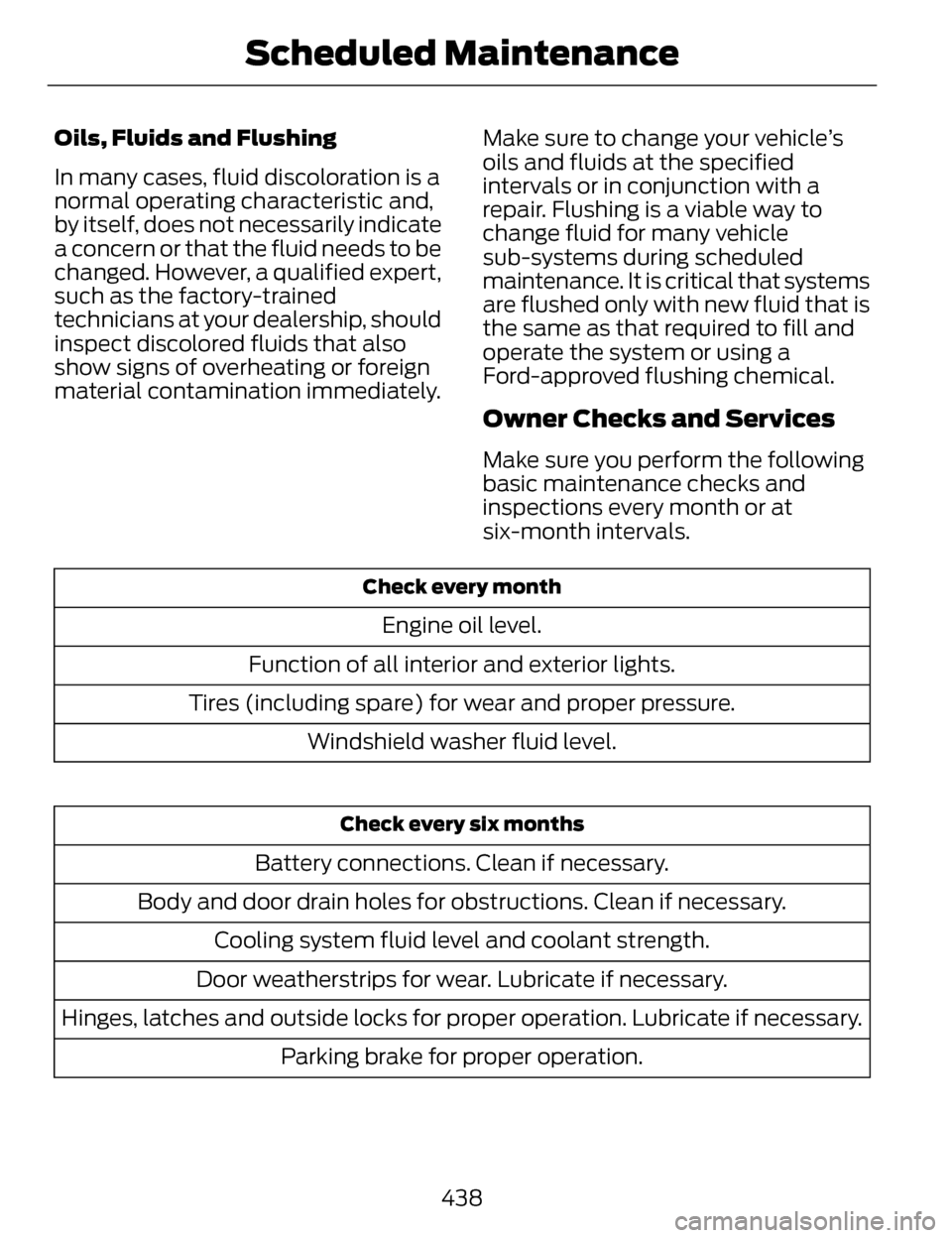
Oils, Fluids and Flushing
In many cases, fluid discoloration is a
normal operating characteristic and,
by itself, does not necessarily indicate
a concern or that the fluid needs to be
changed. However, a qualified expert,
such as the factory-trained
technicians at your dealership, should
inspect discolored fluids that also
show signs of overheating or foreign
material contamination immediately.Make sure to change your vehicle’s
oils and fluids at the specified
intervals or in conjunction with a
repair. Flushing is a viable way to
change fluid for many vehicle
sub-systems during scheduled
maintenance. It is critical that systems
are flushed only with new fluid that is
the same as that required to fill and
operate the system or using a
Ford-approved flushing chemical.
Owner Checks and Services
Make sure you perform the following
basic maintenance checks and
inspections every month or at
six-month intervals.
Check every month
Engine oil level.
Function of all interior and exterior lights.
Tires (including spare) for wear and proper pressure. Windshield washer fluid level.
Check every six months
Battery connections. Clean if necessary.
Body and door drain holes for obstructions. Clean if necessary. Cooling system fluid level and coolant strength.
Door weatherstrips for wear. Lubricate if necessary.
Hinges, latches and outside locks for proper operation. Lubricate if necessary. Parking brake for proper operation.
438
Scheduled Maintenance
Page 461 of 468
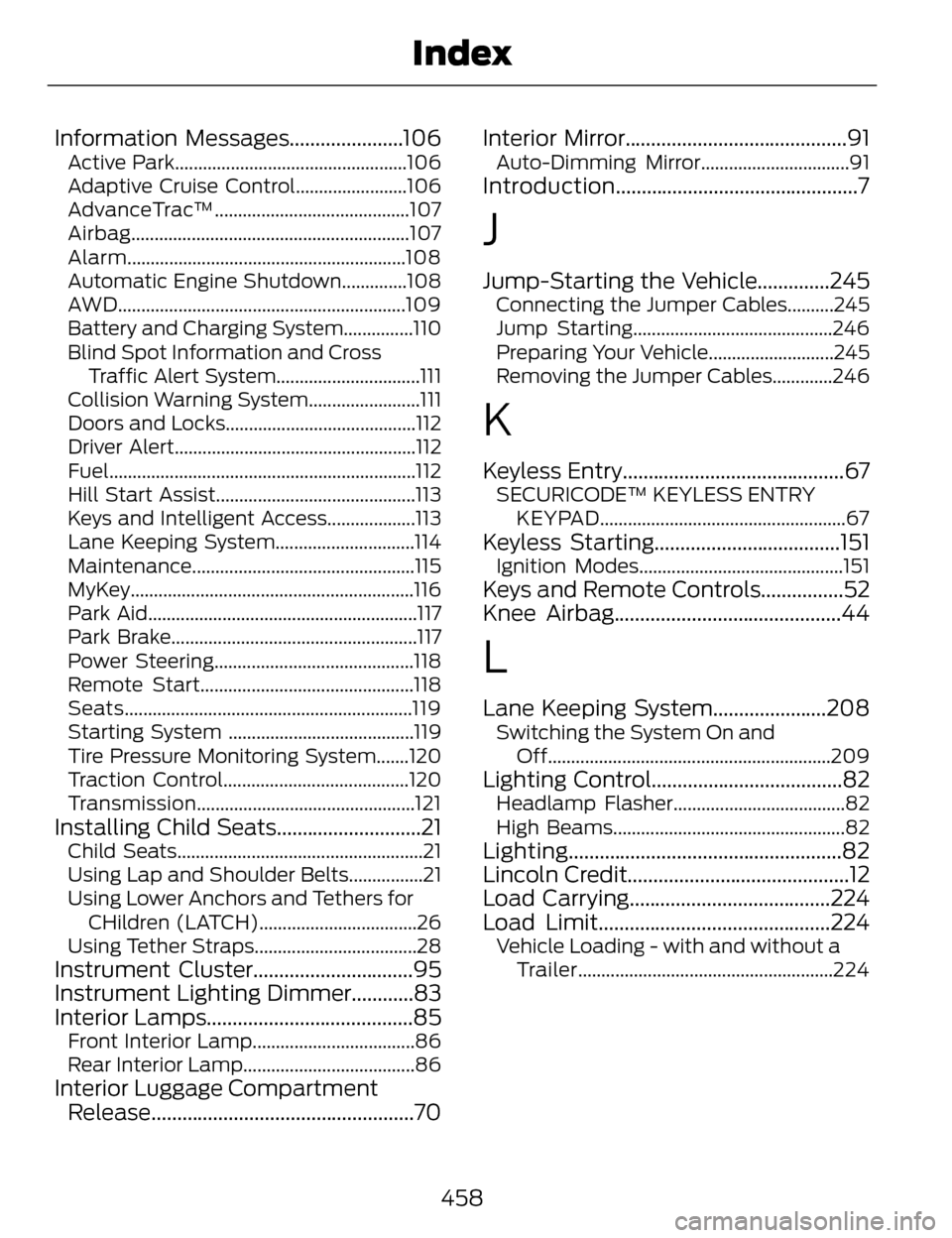
Information Messages......................106Active Park..................................................106
Adaptive Cruise Control........................106
AdvanceTrac™..........................................107
Airbag............................................................107
Alarm............................................................108
Automatic Engine Shutdown..............108
AWD..............................................................109
Battery and Charging System...............110
Blind Spot Information and CrossTraffic Alert System...............................111
Collision Warning System........................111
Doors and Locks.........................................112
Driver Alert....................................................112
Fuel..................................................................112
Hill Start Assist...........................................113
Keys and Intelligent Access...................113
Lane Keeping System..............................114
Maintenance................................................115
MyKey.............................................................116
Park Aid..........................................................117
Park Brake.....................................................117
Power Steering...........................................118
Remote Start..............................................118
Seats..............................................................119
Starting System ........................................119
Tire Pressure Monitoring System.......120
Traction Control........................................120
Transmission...............................................121
Installing Child Seats............................21Child Seats.....................................................21
Using Lap and Shoulder Belts................21
Using Lower Anchors and Tethers for CHildren (LATCH)..................................26
Using Tether Straps...................................28
Instrument Cluster...............................95
Instrument Lighting Dimmer............83
Interior Lamps........................................85
Front Interior Lamp...................................86
Rear Interior Lamp.....................................86
Interior Luggage Compartment Release...................................................70 Interior Mirror...........................................91
Auto-Dimming Mirror................................91
Introduction...............................................7
J
Jump-Starting the Vehicle..............245Connecting the Jumper Cables..........245
Jump Starting...........................................246
Preparing Your Vehicle...........................245
Removing the Jumper Cables.............246
K
Keyless Entry...........................................67SECURICODE™ KEYLESS ENTRY
KEYPAD.....................................................67
Keyless Starting....................................151Ignition Modes............................................151
Keys and Remote Controls................52
Knee Airbag............................................44
L
Lane Keeping System......................208Switching the System On andOff.............................................................209
Lighting Control.....................................82Headlamp Flasher.....................................82
High Beams..................................................82
Lighting.....................................................82
Lincoln Credit...........................................12
Load Carrying.......................................224
Load Limit.............................................224
Vehicle Loading - with and without aTrailer.......................................................224
458
Index
Page 466 of 468
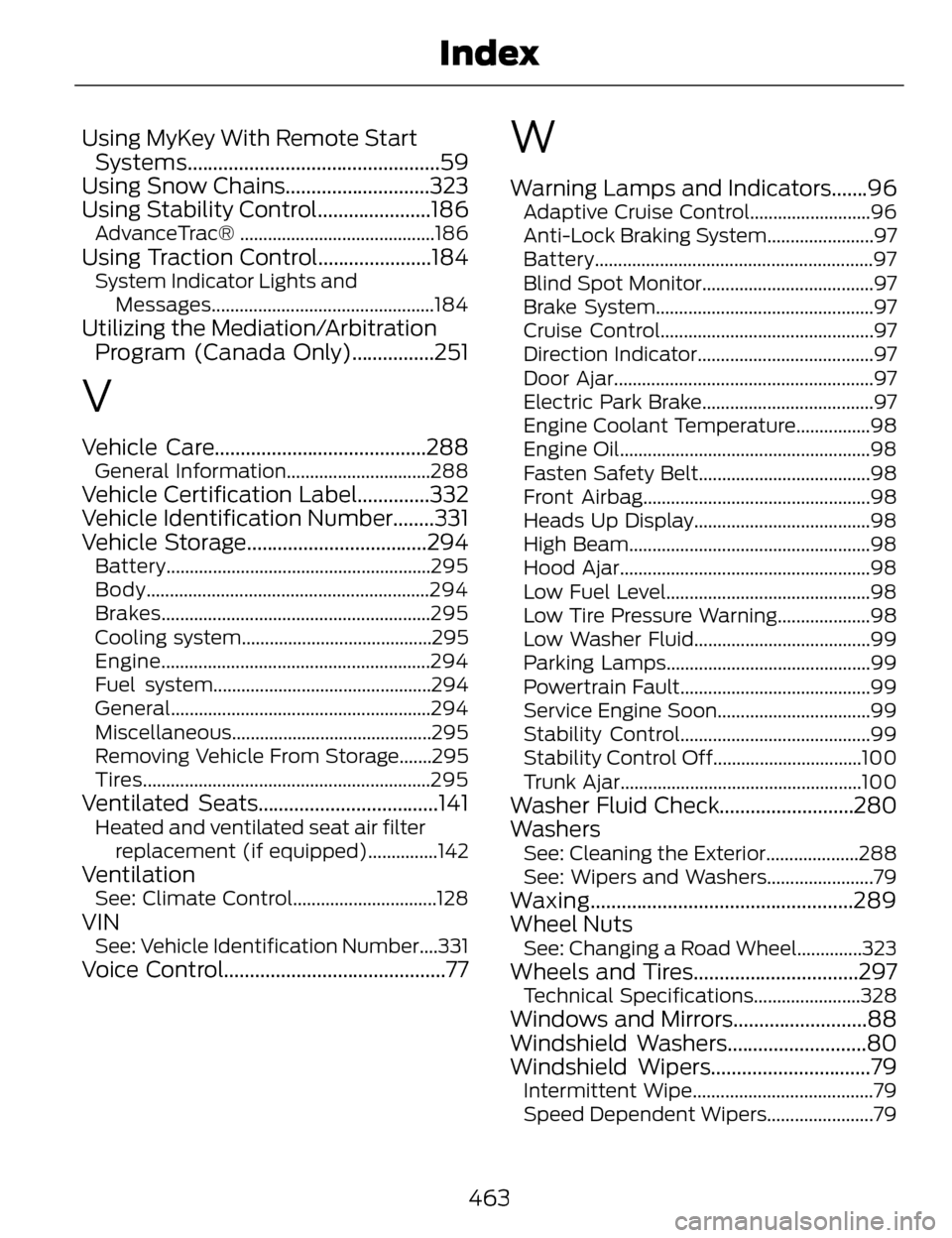
Using MyKey With Remote StartSystems.................................................59
Using Snow Chains............................323
Using Stability Control......................186
AdvanceTrac® ..........................................186
Using Traction Control......................184System Indicator Lights and
Messages................................................184
Utilizing the Mediation/ArbitrationProgram (Canada Only)................251
V
Vehicle Care.........................................288General Information...............................288
Vehicle Certification Label..............332
Vehicle Identification Number........331
Vehicle Storage...................................294
Battery.........................................................295
Body.............................................................294
Brakes..........................................................295
Cooling system.........................................295
Engine..........................................................294
Fuel system...............................................294
General........................................................294
Miscellaneous...........................................295
Removing Vehicle From Storage.......295
Tires..............................................................295
Ventilated Seats...................................141Heated and ventilated seat air filter
replacement (if equipped)...............142
VentilationSee: Climate Control...............................128
VINSee: Vehicle Identification Number....331
Voice Control...........................................77
W
Warning Lamps and Indicators.......96Adaptive Cruise Control..........................96
Anti-Lock Braking System.......................97
Battery............................................................97
Blind Spot Monitor.....................................97
Brake System...............................................97
Cruise Control..............................................97
Direction Indicator......................................97
Door Ajar........................................................97
Electric Park Brake.....................................97
Engine Coolant Temperature................98
Engine Oil......................................................98
Fasten Safety Belt.....................................98
Front Airbag.................................................98
Heads Up Display......................................98
High Beam....................................................98
Hood Ajar......................................................98
Low Fuel Level............................................98
Low Tire Pressure Warning....................98
Low Washer Fluid......................................99
Parking Lamps............................................99
Powertrain Fault.........................................99
Service Engine Soon.................................99
Stability Control.........................................99
Stability Control Off................................100
Trunk Ajar....................................................100
Washer Fluid Check..........................280
Washers
See: Cleaning the Exterior....................288
See: Wipers and Washers.......................79
Waxing...................................................289
Wheel Nuts
See: Changing a Road Wheel..............323
Wheels and Tires................................297Technical Specifications.......................328
Windows and Mirrors..........................88
Windshield Washers...........................80
Windshield Wipers...............................79
Intermittent Wipe.......................................79
Speed Dependent Wipers.......................79
463
Index