tire type LINCOLN MKZ 2018 User Guide
[x] Cancel search | Manufacturer: LINCOLN, Model Year: 2018, Model line: MKZ, Model: LINCOLN MKZ 2018Pages: 595, PDF Size: 5.06 MB
Page 352 of 595
•Treadwear The treadwear grade isa comparative rating based on thewear rate of the tire when testedunder controlled conditions on aspecified government test course.For example, a tire graded 150 wouldwear one and one-half times as wellon the government course as a tiregraded 100.
•Traction: The traction grades, fromhighest to lowest are AA, A, B, andC. The grades represent the tire'sability to stop on wet pavement asmeasured under controlledconditions on specified governmenttest surfaces of asphalt and concrete.A tire marked C may have poortraction performance.
•Temperature: The temperaturegrades are A (the highest), B and C,representing the tire's resistance tothe generation of heat and its abilityto dissipate heat when tested undercontrolled conditions on a specifiedindoor laboratory test wheel.
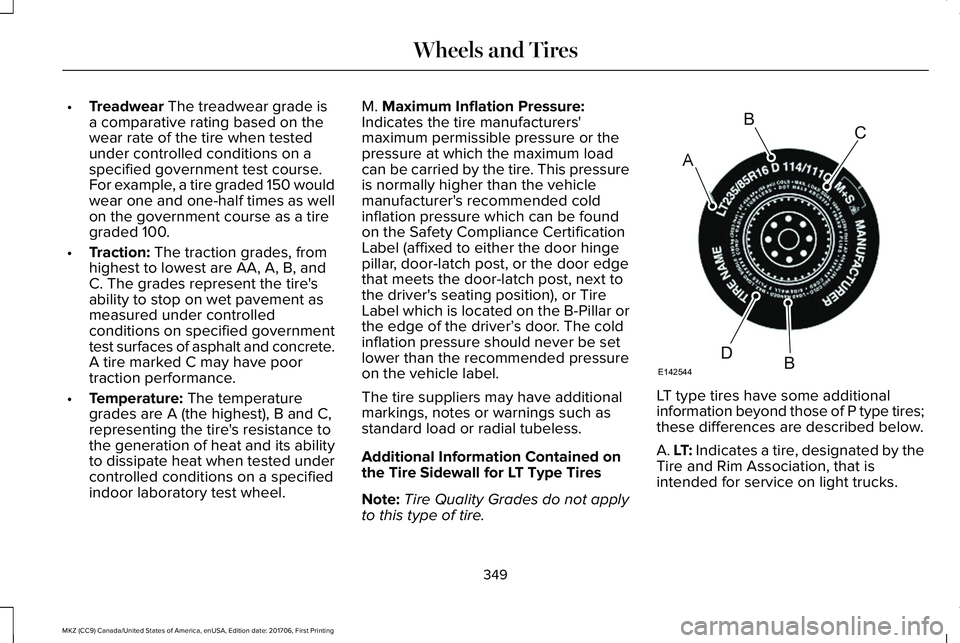
M. Maximum Inflation Pressure:Indicates the tire manufacturers'maximum permissible pressure or thepressure at which the maximum loadcan be carried by the tire. This pressureis normally higher than the vehiclemanufacturer's recommended coldinflation pressure which can be foundon the Safety Compliance CertificationLabel (affixed to either the door hingepillar, door-latch post, or the door edgethat meets the door-latch post, next tothe driver's seating position), or TireLabel which is located on the B-Pillar orthe edge of the driver’s door. The coldinflation pressure should never be setlower than the recommended pressureon the vehicle label.
The tire suppliers may have additional
markings, notes or warnings such asstandard load or radial tubeless.
Additional Information Contained onthe Tire Sidewall for LT Type Tires
Note:Tire Quality Grades do not applyto this type of tire.
LT type tires have some additional
information beyond those of P type tires;these differences are described below.
A. LT: Indicates a tire, designated by theTire and Rim Association, that isintended for service on light trucks.
349
MKZ (CC9) Canada/United States of America, enUSA, Edition date: 201706, First Printing
Wheels and TiresA
BC
BDE142544
Page 353 of 595
B. Load Range and Load InflationLimits: Indicates the tire's load-carryingcapabilities and its inflation limits.
C. Maximum Load Dual lb (kg) at psi(kPa) cold: Indicates the maximum loadand tire pressure when the tire is usedas a dual; defined as four tires on therear axle (a total of six or more tires onthe vehicle).
D. Maximum Load Single lb (kg) at psi(kPa) cold: Indicates the maximum loadand tire pressure when the tire is usedas a single; defined as two tires (total)on the rear axle.
Information on T Type Tires
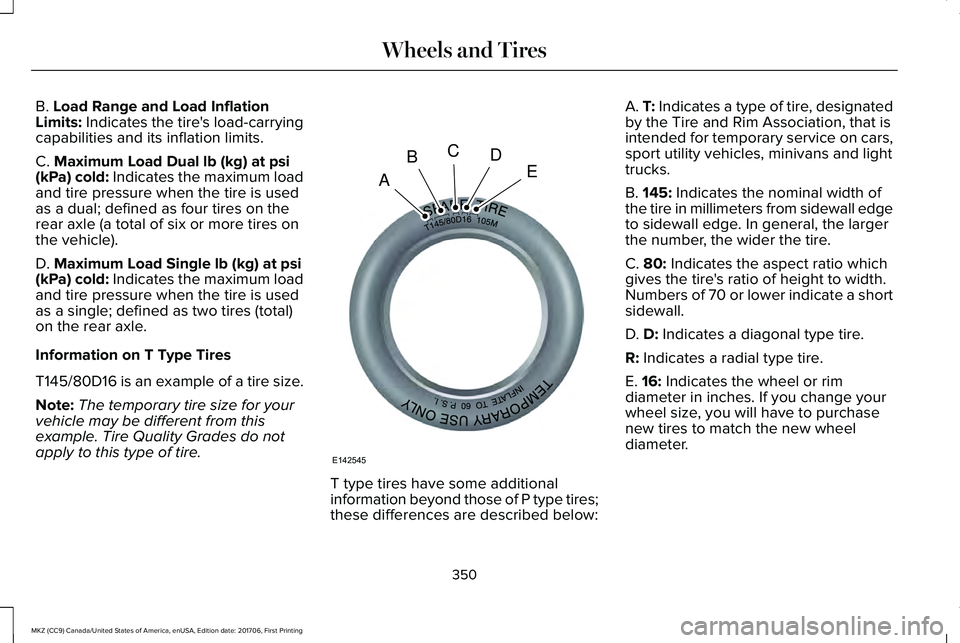
T145/80D16 is an example of a tire size.
Note:The temporary tire size for yourvehicle may be different from thisexample. Tire Quality Grades do notapply to this type of tire.
T type tires have some additionalinformation beyond those of P type tires;these differences are described below:
A. T: Indicates a type of tire, designatedby the Tire and Rim Association, that isintended for temporary service on cars,sport utility vehicles, minivans and lighttrucks.
B. 145: Indicates the nominal width ofthe tire in millimeters from sidewall edgeto sidewall edge. In general, the largerthe number, the wider the tire.
C. 80: Indicates the aspect ratio whichgives the tire's ratio of height to width.Numbers of 70 or lower indicate a shortsidewall.
D. D: Indicates a diagonal type tire.
R: Indicates a radial type tire.
E. 16: Indicates the wheel or rimdiameter in inches. If you change your
wheel size, you will have to purchasenew tires to match the new wheeldiameter.
350
MKZ (CC9) Canada/United States of America, enUSA, Edition date: 201706, First Printing
Wheels and TiresA
BCDE
E142545
Page 354 of 595
Location of the Tire Label
You will find a Tire Label containing tireinflation pressure by tire size and otherimportant information located on theB-Pillar or the edge of the driver’s door.
Inflating Your Tires
Safe operation of your vehicle requiresthat your tires are properly inflated.Remember that a tire can lose up to halfof its air pressure without appearing flat.
Every day before you drive, check yourtires. If one looks lower than the others,use a tire gauge to check pressure of alltires and adjust if required.
At least once a month and before longtrips, inspect each tire and check the tirepressure with a tire gauge (includingspare, if equipped). Inflate all tires to theinflation pressure recommended by FordMotor Company.
You are strongly urged to buy a reliabletire pressure gauge, as automaticservice station gauges may beinaccurate. Ford recommends the useof a digital or dial-type tire pressuregauge rather than a stick-type tirepressure gauge.
Use the recommended cold inflationpressure for optimum tire performanceand wear. Under-inflation orover-inflation may cause uneventreadwear patterns
WARNING
Under-inflation is the most commoncause of tire failures and may resultin severe tire cracking, tread separationor blowout, with unexpected loss ofvehicle control and increased risk of
injury. Under-inflation increases sidewallflexing and rolling resistance, resultingin heat buildup and internal damage tothe tire. It also may result in unnecessarytire stress, irregular wear, loss of vehiclecontrol and accidents. A tire can lose upto half of its air pressure and not appearto be flat!
Always inflate your tires to the Fordrecommended inflation pressure evenif it is less than the maximum inflationpressure information found on the tire.The Ford recommended tire inflationpressure is found on the SafetyCompliance Certification Label (affixedto either the door hinge pillar, door-latchpost, or the door edge that meets thedoor-latch post, next to the driver'sseating position), or Tire Label which islocated on the B-Pillar or the edge of thedriver’s door. Failure to follow the tirepressure recommendations can causeuneven treadwear patterns andadversely affect the way your vehiclehandles
Maximum Inflation Pressure is the tiremanufacturer's maximum permissible
pressure and the pressure at which themaximum load can be carried by the tire.This pressure is normally higher than themanufacturer’s recommended coldinflation pressure which can be foundon the Safety Compliance CertificationLabel (affixed to either the door hingepillar, door-latch post, or the door edge
351
MKZ (CC9) Canada/United States of America, enUSA, Edition date: 201706, First Printing
Wheels and Tires
Page 355 of 595
that meets the door-latch post, next tothe driver's seating position), or TireLabel which is located on the B-Pillar orthe edge of the driver’s door. The coldinflation pressure should never be setlower than the recommended pressureon the Safety Compliance CertificationLabel or Tire Label.
When weather temperature changesoccur, tire inflation pressures alsochange. A 10°F (6°C) temperature dropcan cause a corresponding drop of 1 psi(0.07 bar) in inflation pressure. Checkyour tire pressures frequently and adjustthem to the proper pressure which canbe found on the Safety ComplianceCertification Label or Tire Label.
To check the pressure in your tire(s):
1. Make sure the tires are cool,meaning they are not hot fromdriving even a mile.
Note:If you are checking tire pressurewhen the tire is hot, (for example drivenmore than 1.0 mi (1.6 km), never bleedor reduce air pressure. The tires are hotfrom driving and it is normal forpressures to increase aboverecommended cold pressures. A hot tireat or below recommended cold inflationpressure could be significantlyunder-inflated.
Note:If you have to drive a distance toget air for your tire(s), check and recordthe tire pressure first and add theappropriate air pressure when you getto the pump. It is normal for tires to heatup and the air pressure inside to go upas you drive.
2.Remove the cap from the valve on
one tire, then firmly press the tiregauge onto the valve and measurethe pressure.
3. Add enough air to reach therecommended air pressure.
Note:If you overfill the tire, release airby pressing on the metal stem in thecenter of the valve. Then recheck thepressure with your tire gauge.
4. Replace the valve cap.
5.Repeat this procedure for each tire,including the spare.
Note:Some spare tires operate at ahigher inflation pressure than the othertires. For T type mini-spare tires, see theDissimilar spare wheel and tireassembly information for a description.Store and maintain at 60 psi (4.15 bar).For full-size and dissimilar spare tires,see the Dissimilar spare wheel and tireassembly information for a description.Store and maintain at the higher of thefront and rear inflation pressure as
shown on the Tire Label.
6.Visually inspect the tires to makesure there are no nails or otherobjects embedded that could pokea hole in the tire and cause an airleak.
352
MKZ (CC9) Canada/United States of America, enUSA, Edition date: 201706, First Printing
Wheels and Tires
Page 367 of 595
Dissimilar Spare Wheel and TireAssembly Information
WARNING
Failure to follow these guidelines couldresult in an increased risk of loss ofvehicle control, injury or death.
If you have a dissimilar spare wheel and tire,then it is intended for temporary use only.This means that if you need to use it, youshould replace it as soon as possible with aroad wheel and tire assembly that is thesame size and type as the road tires andwheels that were originally provided by Ford.If the dissimilar spare tire or wheel isdamaged, it should be replaced rather thanrepaired.
Important Use of Spare Wheel
A dissimilar spare wheel and tire assemblyis defined as a spare wheel and tire assemblythat is different in brand, size or appearancefrom the road tires and wheels and can beone of three types:
1. T-type mini-spare.*
2. Full-size dissimilar spare with label onwheel.**
3.Full-size dissimilar spare without label onwheel.*This spare tire begins with the letter T for
tire size and may have Temporary Use Onlymolded in the sidewall.** This spare tire has a label on the wheel that
states: THIS WHEEL AND TIRE ASSEMBLYFOR TEMPORARY USE ONLY.
Driving with a T-type Mini-spare or Full-sizeDissimilar Spare With Label on Wheel
Do not:
•Exceed 50 mph (80 km/h).
•Load the vehicle beyond maximumvehicle load rating listed on the SafetyCompliance Label.
•Tow a trailer.
•Use snow chains on the end of thevehicle with the dissimilar spare tire.
•Use more than one dissimilar spare tireat a time.
•Use commercial car washing equipment.
•Try to repair the dissimilar spare tire.
Use of the above dissimilar spare wheel atany one wheel location can lead toimpairment of the following:
•Handling, stability and brakingperformance.
•Comfort and noise.
•Ground clearance and parking at curbs.
•Winter weather driving capability.
•Wet weather driving capability.
•All-wheel driving capability (if applicable).
Driving With a Full-size Dissimilar SpareWheel and Tire Assembly
Do not:
•Exceed 70 mph (113 km/h).
•Use more than one dissimilar sparewheel and tire assembly at a time.
364
MKZ (CC9) Canada/United States of America, enUSA, Edition date: 201706, First Printing
Wheels and Tires
Page 580 of 595
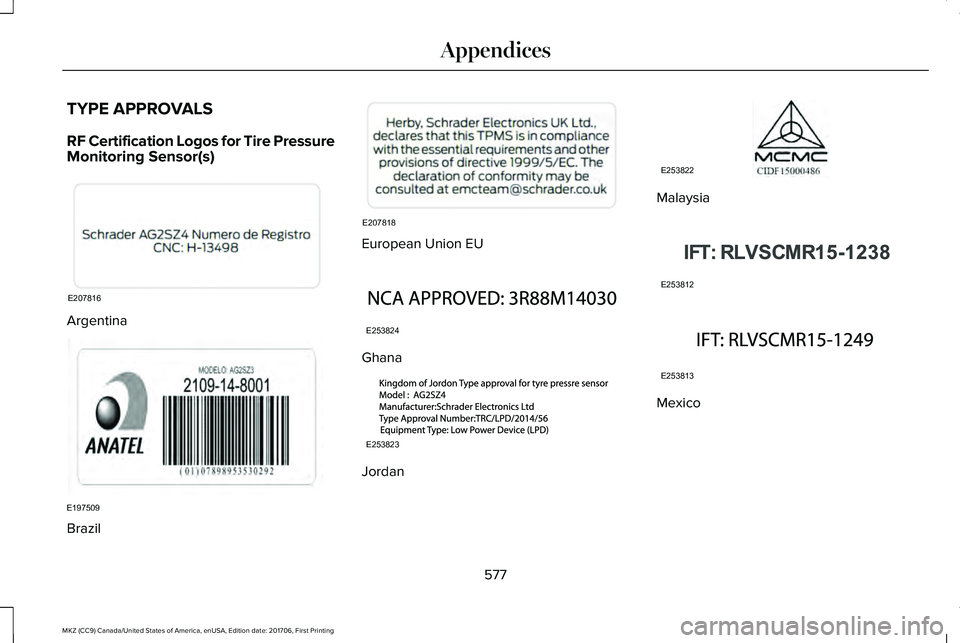
TYPE APPROVALS
RF Certification Logos for Tire PressureMonitoring Sensor(s)
Argentina
Brazil
European Union EU
Ghana
Jordan
Malaysia
Mexico
577
MKZ (CC9) Canada/United States of America, enUSA, Edition date: 201706, First Printing
AppendicesE207816 E197509 E207818 E253824 E253823 E253822 E253812 E253813
Page 585 of 595
Automatic Transmission Fluid Check.......3146F35/HF35 transmission...................................3146F50/6F55 Transmission..................................315
Autowipers.......................................................85Autowipers Settings.............................................86Low Temperature Wipe Inhibit..........................86
Auxiliary Power Points.................................160110 Volt AC Power Point....................................16012 Volt DC Power Point......................................160Locations...............................................................160
AWDSee: All-Wheel Drive...........................................186
B
BatterySee: Changing the 12V Battery........................319
Blind Spot Information System.................238Switching the System Off and On..................239System Errors......................................................239Using the Blind Spot InformationSystem..............................................................238
Body Styling Kits...........................................335Bonnet LockSee: Opening and Closing the Hood............302
Booster Seats..................................................30Types of Booster Seats........................................31
Brake Fluid Check.........................................318
Brakes..............................................................195General Information............................................195
Breaking-In.....................................................263Bulb Specification Chart.............................323
C
Cabin Air Filter................................................141California Proposition 65...............................12Capacities and Specifications - 2.0L.......380Alternative Engine Oil for Extremely ColdClimates............................................................385Specifications.......................................................381
Capacities and Specifications - 3.0L.......387Alternative Engine Oil for Extremely ColdClimates...........................................................392Specifications......................................................388
Capacities and Specifications...................373Car WashSee: Cleaning the Exterior...............................327
Catalytic Converter........................................177On-Board Diagnostics (OBD-II)........................178Readiness for Inspection and Maintenance(I/M) Testing......................................................179
Center Console.............................................162Rear Seat Armrest...............................................162
Changing a Bulb...........................................323Replacing Bulbs..................................................323
Changing a Fuse..........................................299Fuses.....................................................................299
Changing a Road Wheel.............................363Changing a Road Wheel Procedure..............365Dissimilar Spare Wheel and Tire AssemblyInformation.......................................................364Stowing the Flat Tire Using the RetainerStrap..................................................................369Stowing the Flat Tire Without the RetainerStrap..................................................................369
Changing the 12V Battery...........................319Changing the Engine Air Filter.................325Changing the Wiper Blades.......................321Checking MyKey System Status.................66MyKey Distance....................................................66Number of Admin Keys.......................................66Number of MyKeys...............................................66
Checking the Wiper Blades........................321Child Restraint and SeatbeltMaintenance..................................................44Child Restraint Positioning...........................33Child Safety.......................................................19General Information..............................................19
Child Safety Locks..........................................34Left-Hand Side.......................................................35Right-Hand Side....................................................35
Cleaning Leather Seats..............................332
582
MKZ (CC9) Canada/United States of America, enUSA, Edition date: 201706, First Printing
Index
Page 589 of 595
Adaptive Headlamps...........................................119AdvanceTrac™........................................................119Airbag......................................................................119Alarm......................................................................120Automatic Engine Shutdown...........................120AWD.........................................................................121Battery and Charging System..........................122Blind Spot Information and Cross Traffic AlertSystem...............................................................123Doors and Locks..................................................123Driver Alert............................................................124Fuel.........................................................................124Hill Start Assist.....................................................125Keys and Intelligent Access.............................125Lane Keeping System........................................126Maintenance.........................................................127MyKey.....................................................................128Park Aid..................................................................129Park Brake.............................................................129Power Steering....................................................130Pre-Collision Assist..............................................131Remote Start..........................................................131Seats.......................................................................132Starting System ...................................................132Tire Pressure Monitoring System....................133Traction Control...................................................133Transmission.........................................................134
Installing Child Restraints..............................21Child Seats..............................................................21Using Lap and Shoulder Belts............................21Using Lower Anchors and Tethers forCHildren (LATCH).............................................27Using Tether Straps..............................................29
Instrument Cluster.........................................104Instrument Lighting Dimmer........................90Instrument Panel Overview...........................17Interior Lamps..................................................94Front Interior Lamp...............................................94Rear Interior Lamp................................................95
Interior Luggage CompartmentRelease...........................................................76Interior Mirror.................................................100Auto-Dimming Mirror..........................................100
Introduction.........................................................7
J
Jump Starting the Vehicle..........................268Connecting the Jumper Cables.....................269Jump Starting......................................................270Preparing Your Vehicle.....................................268Removing the Jumper Cables.........................270
K
Keyless Entry....................................................74SECURICODE™ KEYLESS ENTRYKEYPAD...............................................................74
Keyless Starting.............................................163Ignition Modes.....................................................163
Keys and Remote Controls...........................57
L
Lane Keeping System.................................233Switching the System On and Off..................234
Lighting Control...............................................88Headlamp Flasher................................................89Headlamp High Beam.........................................89
Lighting..............................................................88General Information.............................................88
Lincoln Automotive Financial Services......12Lincoln Protect..............................................506Lincoln Protect (CANADA ONLY)....................507Lincoln Protect Extended Service Plans (U.S.Only)..................................................................506
Load Carrying.................................................251Load Limit........................................................251Special Loading Instructions for Owners ofPick-up Trucks and Utility-typeVehicles............................................................255
586
MKZ (CC9) Canada/United States of America, enUSA, Edition date: 201706, First Printing
Index
Page 593 of 595
The Better Business Bureau (BBB) AutoLine Program (U.S. Only)..........................276Tire Care.........................................................343Glossary of Tire Terminology..........................345Information About Uniform Tire QualityGrading.............................................................344Information Contained on the TireSidewall............................................................346Temperature A B C.............................................345Traction AA A B C...............................................344Treadwear.............................................................344
Tire Inflation When PuncturedSee: Tire Sealant and Inflator Kit....................336
Tire Pressure Monitoring System.............359Changing Tires With a Tire PressureMonitoring System........................................360Understanding Your Tire Pressure MonitoringSystem .............................................................360
Tire Repair KitSee: Tire Sealant and Inflator Kit....................336
Tire Sealant and Inflator Kit.......................336First Stage: Reinflating the Tire with SealingCompound and Air........................................338General Information...........................................336Second Stage: Checking Tire Pressure.........341Tips for Use of the Kit........................................337What to do after the Tire has beenSealed................................................................341
What to do when a Tire Is Punctured............338
TiresSee: Wheels and Tires......................................336
Towing a Trailer............................................256Load Placement..................................................256
Towing Points................................................272Installing the Recovery Hook..........................272Recovery Hook Location..................................272
Towing the Vehicle on Four Wheels........261Emergency Towing.............................................261Recreational Towing...........................................261
Towing.............................................................256Traction Control.............................................201Principle of Operation........................................201
Transmission Code Designation...............379Transmission...................................................180Transporting the Vehicle.............................271Type Approvals.............................................577RF Certification Logos for Tire PressureMonitoring Sensor(s).....................................577
U
Under Hood Overview - 2.0L....................304Under Hood Overview - 3.0L....................306Universal Garage Door Opener................155HomeLink Wireless Control System...............155
USB Port..........................................................397
Using Adaptive Cruise Control.................223Automatic Cancellation....................................226Blocked Sensor..................................................228Canceling the Set Speed.................................226Changing the Set Speed..................................226Detection Issues.................................................227Following a Vehicle............................................224Following a Vehicle to a CompleteStop...................................................................225Hilly Condition Usage........................................227Overriding the Set Speed................................226Park Brake Application......................................227Resuming the Set Speed.................................226Setting the Adaptive Cruise Speed...............224Setting the Adaptive Cruise Speed When YourVehicle is Stationary......................................224Setting the Gap Distance.................................225Switching Adaptive Cruise Control Off.........227Switching Adaptive Cruise Control On.........223Switching to Normal Cruise Control..............230System Not Available........................................228
Using All-Wheel Drive..................................186Driving In Special Conditions With All-WheelDrive (AWD)......................................................188Operating AWD Vehicles With Spare orMismatched Tires...........................................188
Using Cruise Control...................................222Switching Cruise Control Off...........................223
590
MKZ (CC9) Canada/United States of America, enUSA, Edition date: 201706, First Printing
Index