MITSUBISHI MONTERO 1998 User Guide
MONTERO 1998
MITSUBISHI
MITSUBISHI
https://www.carmanualsonline.info/img/19/57333/w960_57333-0.png
MITSUBISHI MONTERO 1998 User Guide
Page 1443 of 1501
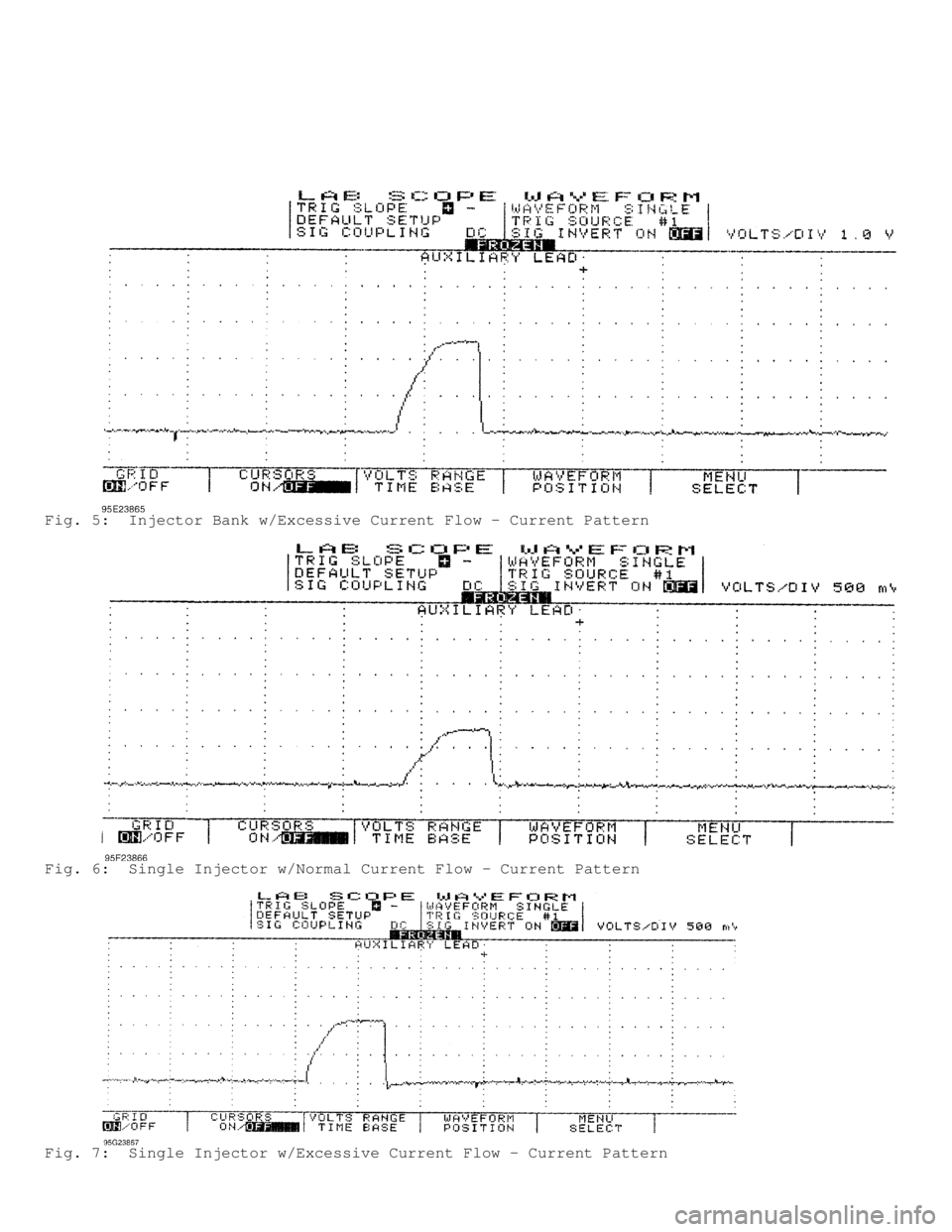
Fig. 5: Injector Bank w/Excessive Current Flow - Current Pattern
Fig. 6: Single Injector w/Normal Current Flow - Current Pattern
Fig. 7: Single Injector w/Excessive Current Flow - Current Pattern
Page 1444 of 1501
![MITSUBISHI MONTERO 1998 User Guide EXAMPLE #2 - VOLTAGE CONTROLLED DRIVER
This time we will look at a GM 3.1L V6 VIN [T]. Fig. 8 shows
the 1, 3, 5 (odd) injector bank with the current waveform indicating
about a 2.6](/img/19/57333/w960_57333-1443.png "MITSUBISHI MONTERO 1998 User Guide EXAMPLE #2 - VOLTAGE CONTROLLED DRIVER
This time we will look at a GM 3.1L V6 VIN [T]. Fig. 8 shows
the 1, 3, 5 (odd) injector bank with the current waveform indicating
about a 2.6")
EXAMPLE #2 - VOLTAGE CONTROLLED DRIVER
This time we will look at a GM 3.1L V6 VIN [T]. Fig. 8 shows
the 1, 3, 5 (odd) injector bank with the current waveform indicating
about a 2.6 amp draw at idle. This pattern, taken from a known good
vehicle, correctly stays at or below the maximum 2.6 amps current
range. Ideally, the current for each bank should be very close in
comparison.
Notice the small dimple on the current flow's rising edge.
This is the actual injector opening or what engineers refer to as the
"set point." For good idle quality, the set point should be uniform
between the banks.
When discussing Ohm's Law as it pertains to this parallel
circuit, consider that each injector has specified resistance of 12.2
ohms. Since all three injectors are in parallel the total resistance
of this parallel circuit drops to 4.1 ohms. Fourteen volts divided by
four ohms would pull a maximum of 3.4 amps on this bank of injectors.
However, as we discussed in EXAMPLE #1 above, other factors knock this
value down to roughly the 2.6 amp neighborhood.
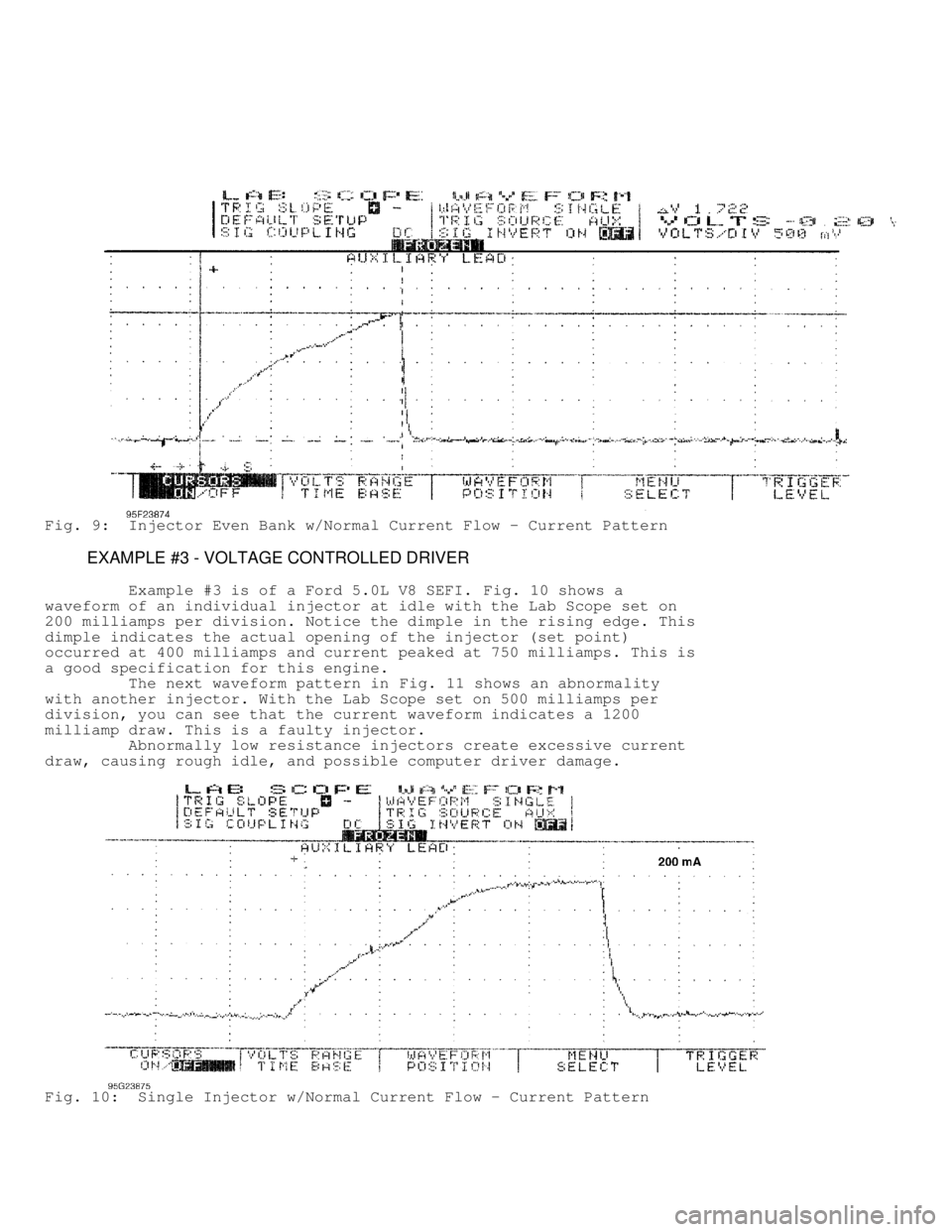
Now we are going to take a look at the even bank of
injectors; injectors 2, 4, and 6. See Fig. 9. Notice this bank peaked
at 1.7 amps at idle as compared to the 2.6 amps peak of the odd bank (
Fig. 8 ). Current flow between even and odd injectors banks is not
uniform, yet it is not causing a driveability problem. That is because
it is still under the maximum amperage we figured out earlier. But be
aware this vehicle could develop a problem if the amperage flow
increases any more.
Checking the resistance of this even injector group with a
DVOM yielded 6.2 ohms, while the odd injector group in the previous
example read 4.1 ohms.
Fig. 8: Injector Odd Bank w/Normal Current Flow - Current Pattern
Page 1445 of 1501
Fig. 9: Injector Even Bank w/Normal Current Flow - Current Pattern
EXAMPLE #3 - VOLTAGE CONTROLLED DRIVER
Example #3 is of a Ford 5.0L V8 SEFI. Fig. 10 shows a
waveform of an individual injector at idle with the Lab Scope set on
200 milliamps per division. Notice the dimple in the rising edge. This
dimple indicates the actual opening of the injector (set point)
occurred at 400 milliamps and current peaked at 750 milliamps. This is
a good specification for this engine.
The next waveform pattern in Fig. 11 shows an abnormality
with another injector. With the Lab Scope set on 500 milliamps per
division, you can see that the current waveform indicates a 1200
milliamp draw. This is a faulty injector.
Abnormally low resistance injectors create excessive current
draw, causing rough idle, and possible computer driver damage.
Fig. 10: Single Injector w/Normal Current Flow - Current Pattern
Page 1447 of 1501
PFI VIN [3]. It is a perfect example of the peak and hold theory. The
waveform shows a 1-amp per division current flow, ramping to 4 amps
and then decreasing to 1-amp to hold the injector open.
Fig. 13: Injector Bank w/Normal Current Flow - Current Pattern
EXAMPLE #6 - CURRENT CONTROLLED DRIVER
This next known-good waveform is from a Ford 5.0L V8 CFI VIN
[F]. See Fig. 14. The pattern, which is set on a 250 milliamps scale,
indicates a 1.25 amp peak draw and a hold at 350 milliamps.
Fig. 14: Single Injector w/Normal Current Flow - Current Pattern
EXAMPLE #7 - CURRENT CONTROLLED DRIVER
The known-good current controlled type waveform in Fig. 15 is
from a GM 2.0L TBI VIN [1]. With the lab scope set at 2 amps per
division, notice that this system peaks at 4 amps and holds at 1 amp.
The next waveform is from the same type of engine, except
Page 1450 of 1501
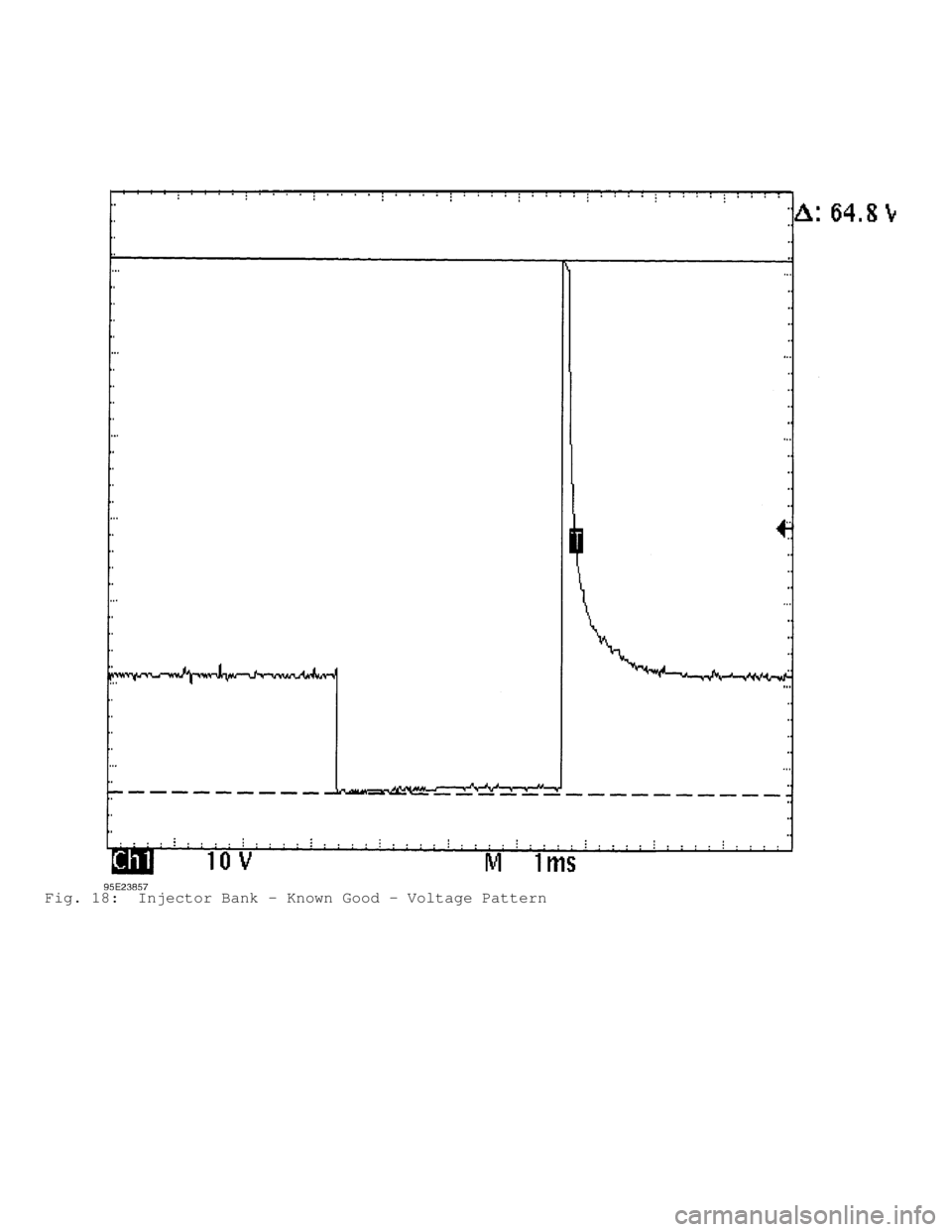
Fig. 18: Injector Bank - Known Good - Voltage Pattern
Page 1451 of 1501
Fig. 19: Injector Bank - Known Good - Voltage Pattern
EXAMPLE #2 - VOLTAGE CONTROLLED DRIVER
The known-good waveform pattern in Fig. 20 is from a GM 3.8L
V6 PFI VIN [3]. It was taken during hot idle, closed loop and no load.
Page 1452 of 1501
Fig. 20: Injector Bank - Known Good - Voltage Pattern
EXAMPLE #3 - VOLTAGE CONTROLLED DRIVER
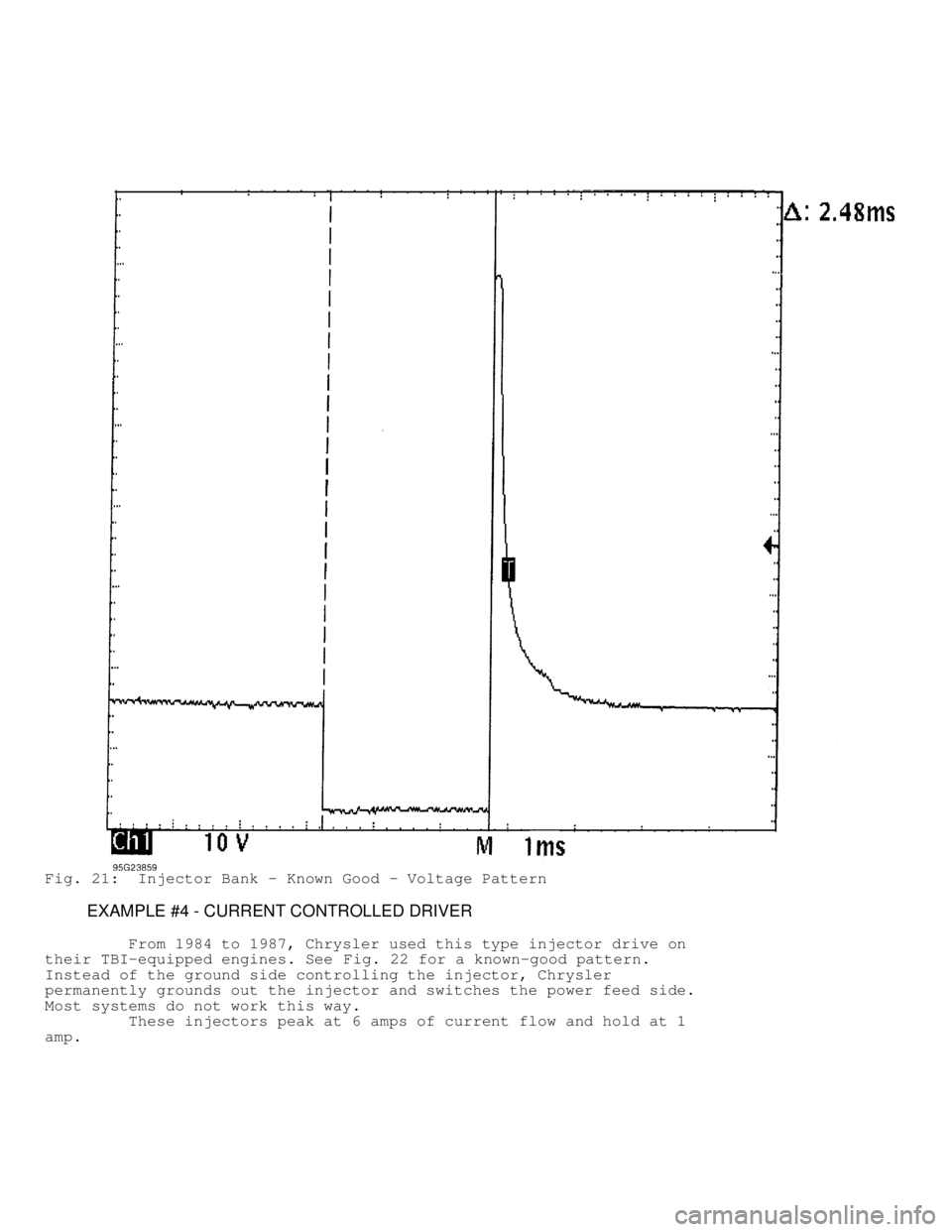
This known-good waveform pattern, Fig. 21, is from a GM 5.0L
V8 TPI VIN [F]. It was taken during hot idle, closed loop and no load.
Page 1453 of 1501
Fig. 21: Injector Bank - Known Good - Voltage Pattern
EXAMPLE #4 - CURRENT CONTROLLED DRIVER
From 1984 to 1987, Chrysler used this type injector drive on
their TBI-equipped engines. See Fig. 22 for a known-good pattern.
Instead of the ground side controlling the injector, Chrysler
permanently grounds out the injector and switches the power feed side.
Most systems do not work this way.
These injectors peak at 6 amps of current flow and hold at 1
amp.
Page 1455 of 1501
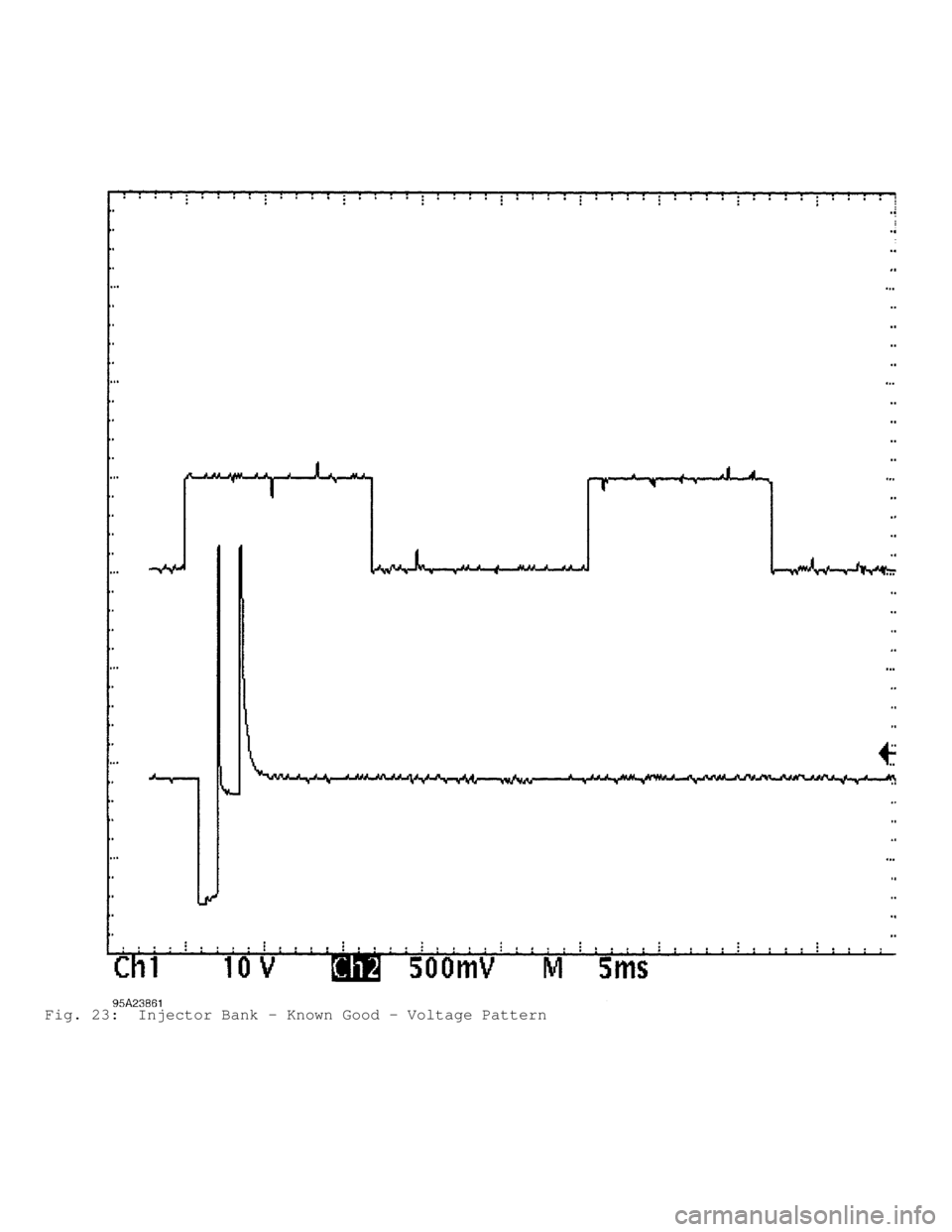
Fig. 23: Injector Bank - Known Good - Voltage Pattern
Page 1456 of 1501
Fig. 24: Injector Bank - Known Good - Voltage Pattern
EXAMPLE #6 - CURRENT CONTROLLED DRIVER
This known-good pattern from a Ford 3.0L V6 PFI VIN [U]
illustrates that a zener diode inside the computer is used to clamp
the injector's inductive kick to 35-volts on this system. See Fig. 25.
![MITSUBISHI MONTERO 1998 User Guide PFI VIN [3]. It is a perfect example of the peak and hold theory. The
waveform shows a 1-amp per division current flow, ramping to 4 amps
and then decreasing to 1-amp to hold the injector open.
Fig. 1](/img/19/57333/w960_57333-1446.png "MITSUBISHI MONTERO 1998 User Guide PFI VIN [3]. It is a perfect example of the peak and hold theory. The
waveform shows a 1-amp per division current flow, ramping to 4 amps
and then decreasing to 1-amp to hold the injector open.
Fig. 1")
![MITSUBISHI MONTERO 1998 User Guide Fig. 19: Injector Bank - Known Good - Voltage Pattern
EXAMPLE #2 - VOLTAGE CONTROLLED DRIVER
The known-good waveform pattern in Fig. 20 is from a GM 3.8L
V6 PFI VIN [3]. It was tak](/img/19/57333/w960_57333-1450.png "MITSUBISHI MONTERO 1998 User Guide Fig. 19: Injector Bank - Known Good - Voltage Pattern
EXAMPLE #2 - VOLTAGE CONTROLLED DRIVER
The known-good waveform pattern in Fig. 20 is from a GM 3.8L
V6 PFI VIN [3]. It was tak")
![MITSUBISHI MONTERO 1998 User Guide Fig. 20: Injector Bank - Known Good - Voltage Pattern
EXAMPLE #3 - VOLTAGE CONTROLLED DRIVER
This known-good waveform pattern, Fig. 21, is from a GM 5.0L
V8 TPI VIN [F]. It was tak](/img/19/57333/w960_57333-1451.png "MITSUBISHI MONTERO 1998 User Guide Fig. 20: Injector Bank - Known Good - Voltage Pattern
EXAMPLE #3 - VOLTAGE CONTROLLED DRIVER
This known-good waveform pattern, Fig. 21, is from a GM 5.0L
V8 TPI VIN [F]. It was tak")
![MITSUBISHI MONTERO 1998 User Guide Fig. 24: Injector Bank - Known Good - Voltage Pattern
EXAMPLE #6 - CURRENT CONTROLLED DRIVER
This known-good pattern from a Ford 3.0L V6 PFI VIN [U]
illustrates that a zener diode i](/img/19/57333/w960_57333-1455.png "MITSUBISHI MONTERO 1998 User Guide Fig. 24: Injector Bank - Known Good - Voltage Pattern
EXAMPLE #6 - CURRENT CONTROLLED DRIVER
This known-good pattern from a Ford 3.0L V6 PFI VIN [U]
illustrates that a zener diode i")