NISSAN ALMERA 2001 Workshop Manual
ALMERA 2001
NISSAN
NISSAN
https://www.carmanualsonline.info/img/5/57348/w960_57348-0.png
NISSAN ALMERA 2001 Workshop Manual
Page 570 of 2898
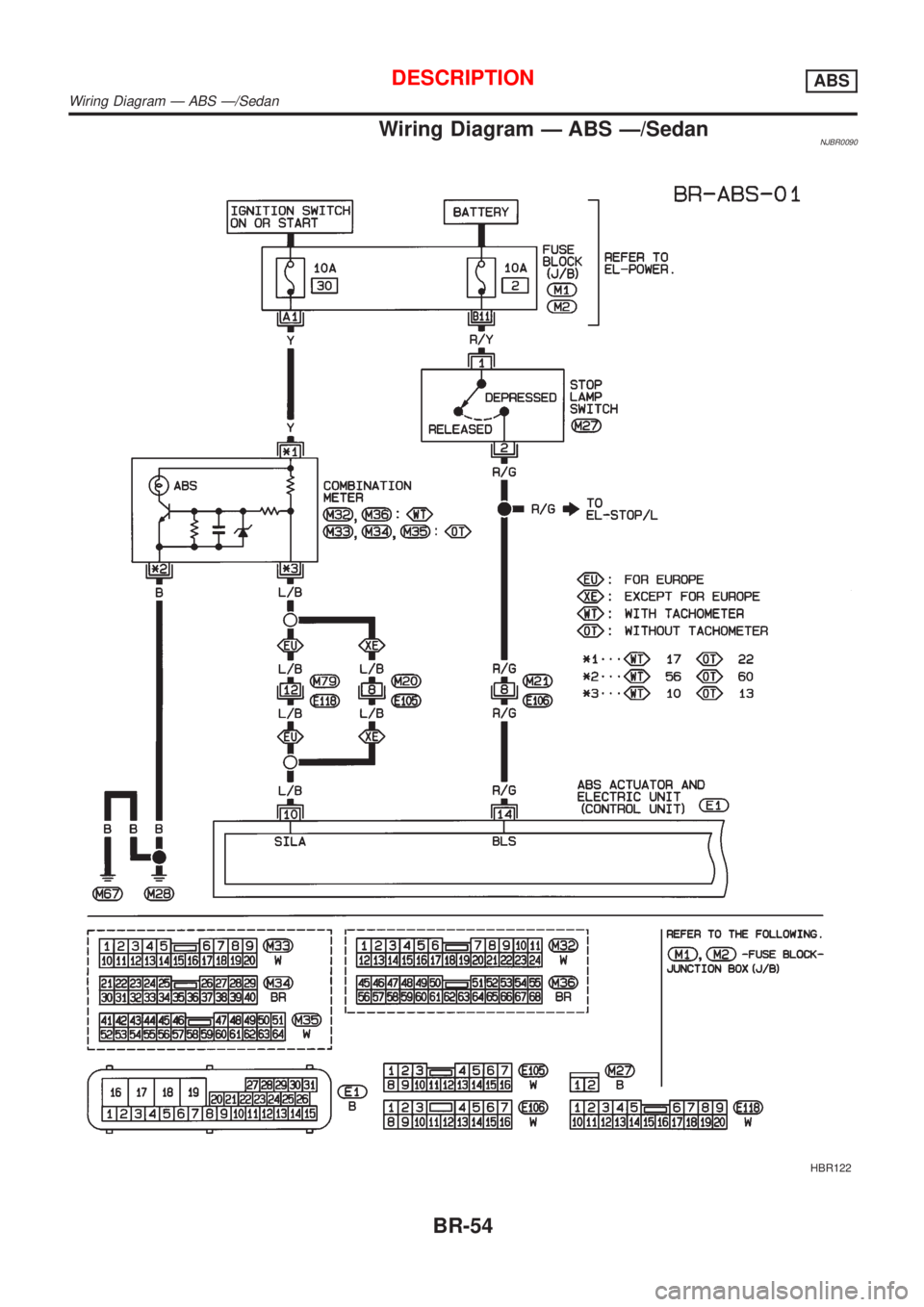
Wiring Diagram Ð ABS Ð/SedanNJBR0090
HBR122
DESCRIPTIONABS
Wiring Diagram Ð ABS Ð/Sedan
BR-54
Page 571 of 2898
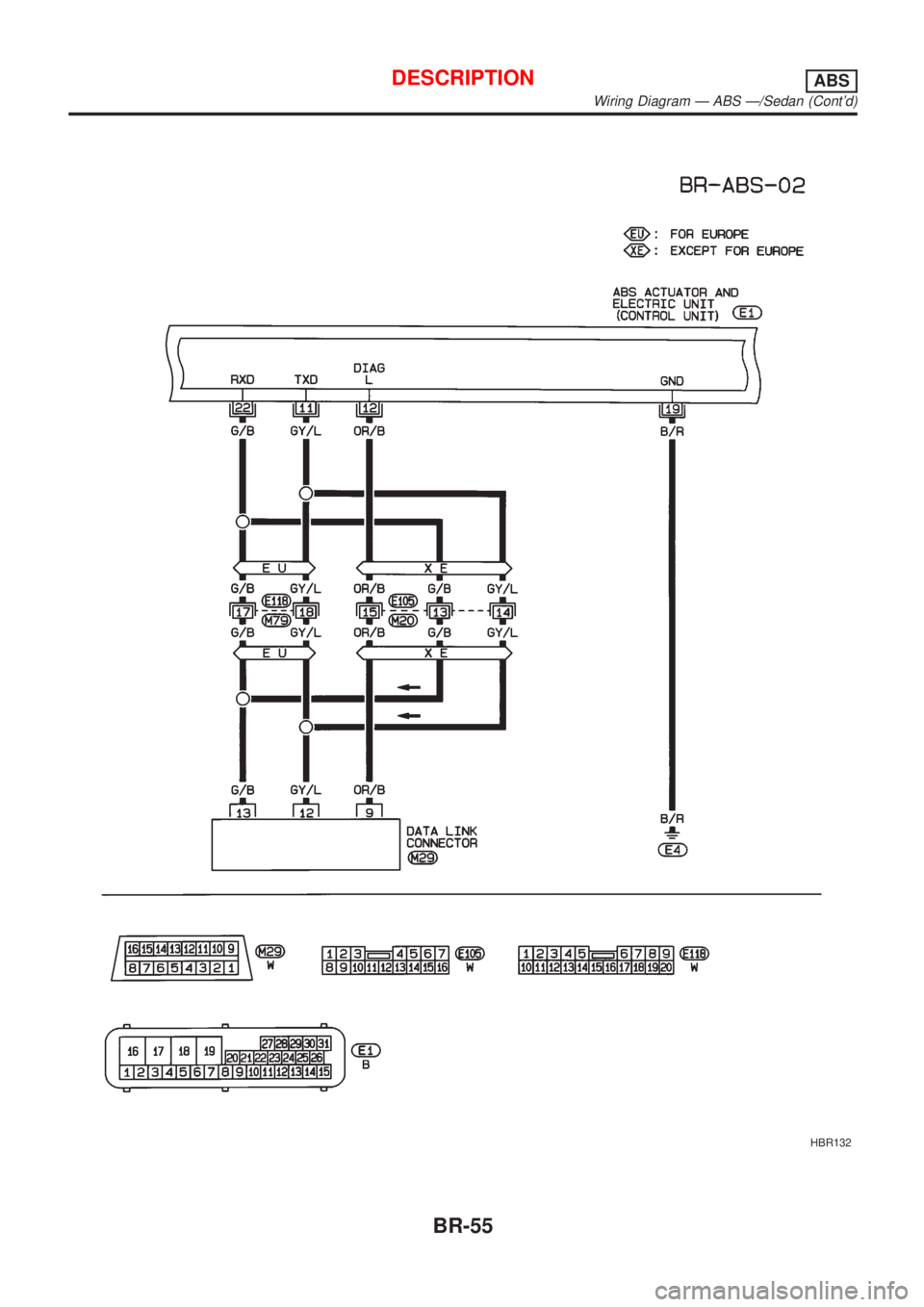
HBR132
DESCRIPTIONABS
Wiring Diagram Ð ABS Ð/Sedan (Cont'd)
BR-55
Page 572 of 2898
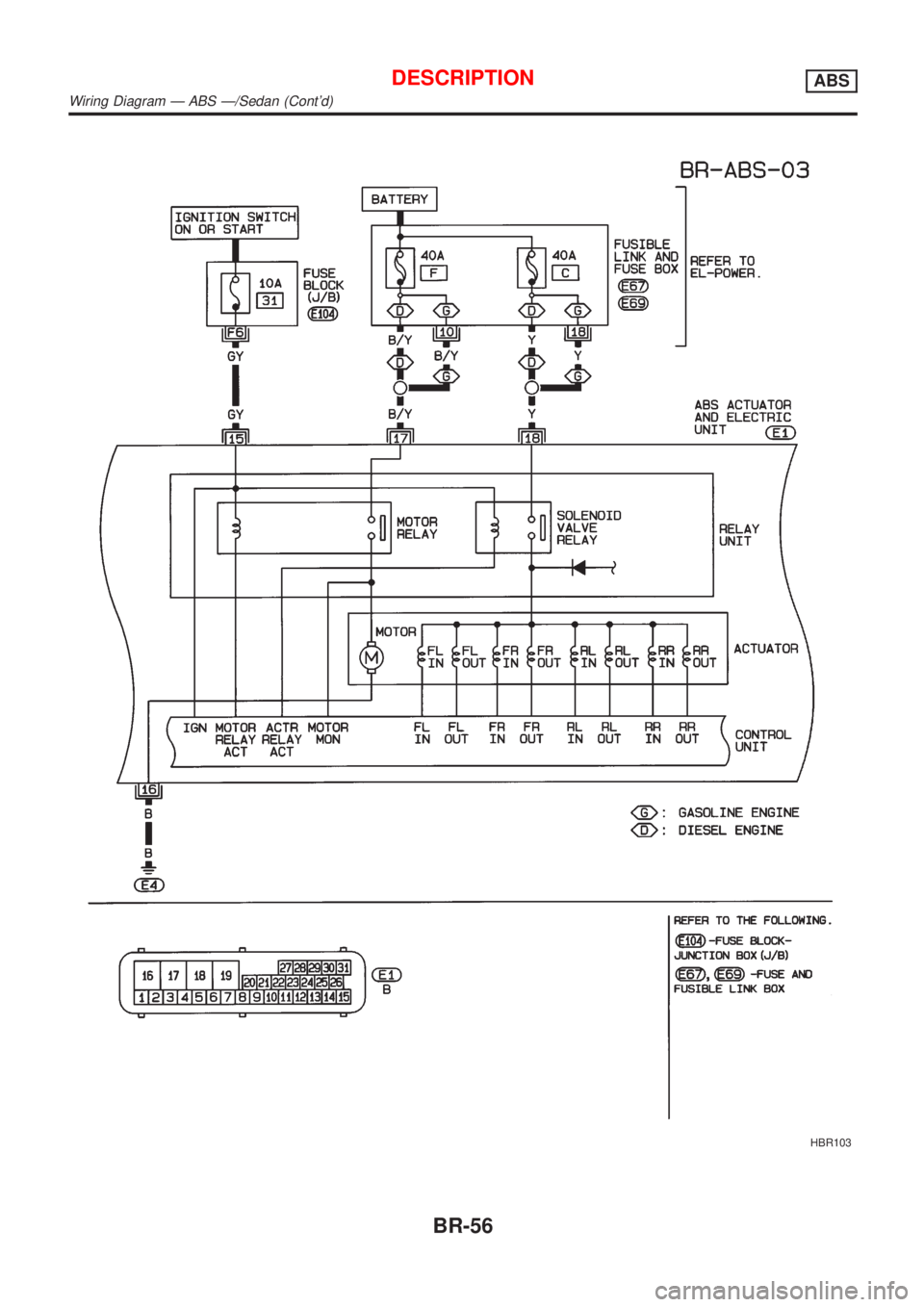
HBR103
DESCRIPTIONABS
Wiring Diagram Ð ABS Ð/Sedan (Cont'd)
BR-56
Page 573 of 2898
HBR123
DESCRIPTIONABS
Wiring Diagram Ð ABS Ð/Sedan (Cont'd)
BR-57
Page 575 of 2898
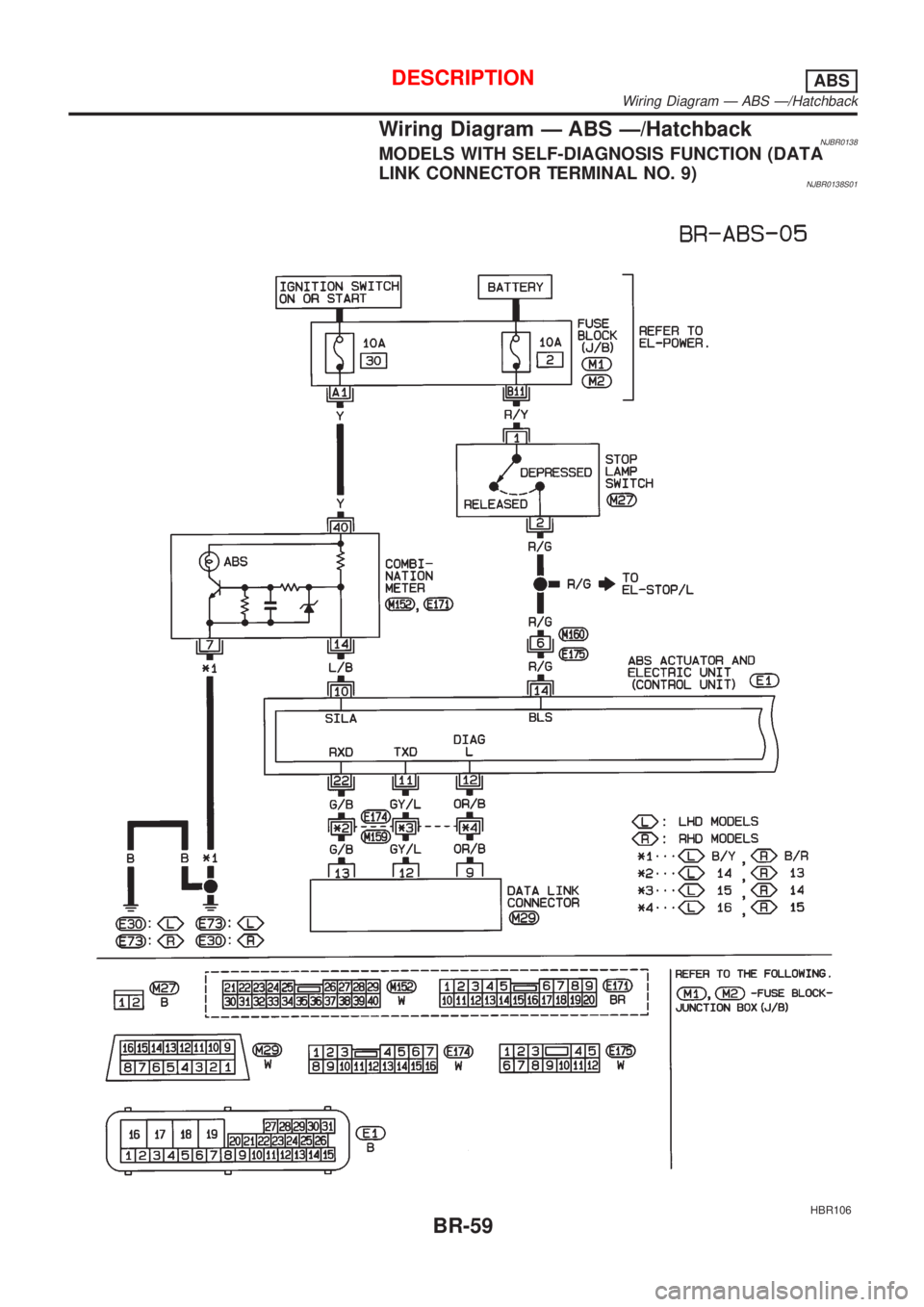
Wiring Diagram Ð ABS Ð/HatchbackNJBR0138MODELS WITH SELF-DIAGNOSIS FUNCTION (DATA
LINK CONNECTOR TERMINAL NO. 9)
NJBR0138S01
HBR106
DESCRIPTIONABS
Wiring Diagram Ð ABS Ð/Hatchback
BR-59
Page 576 of 2898
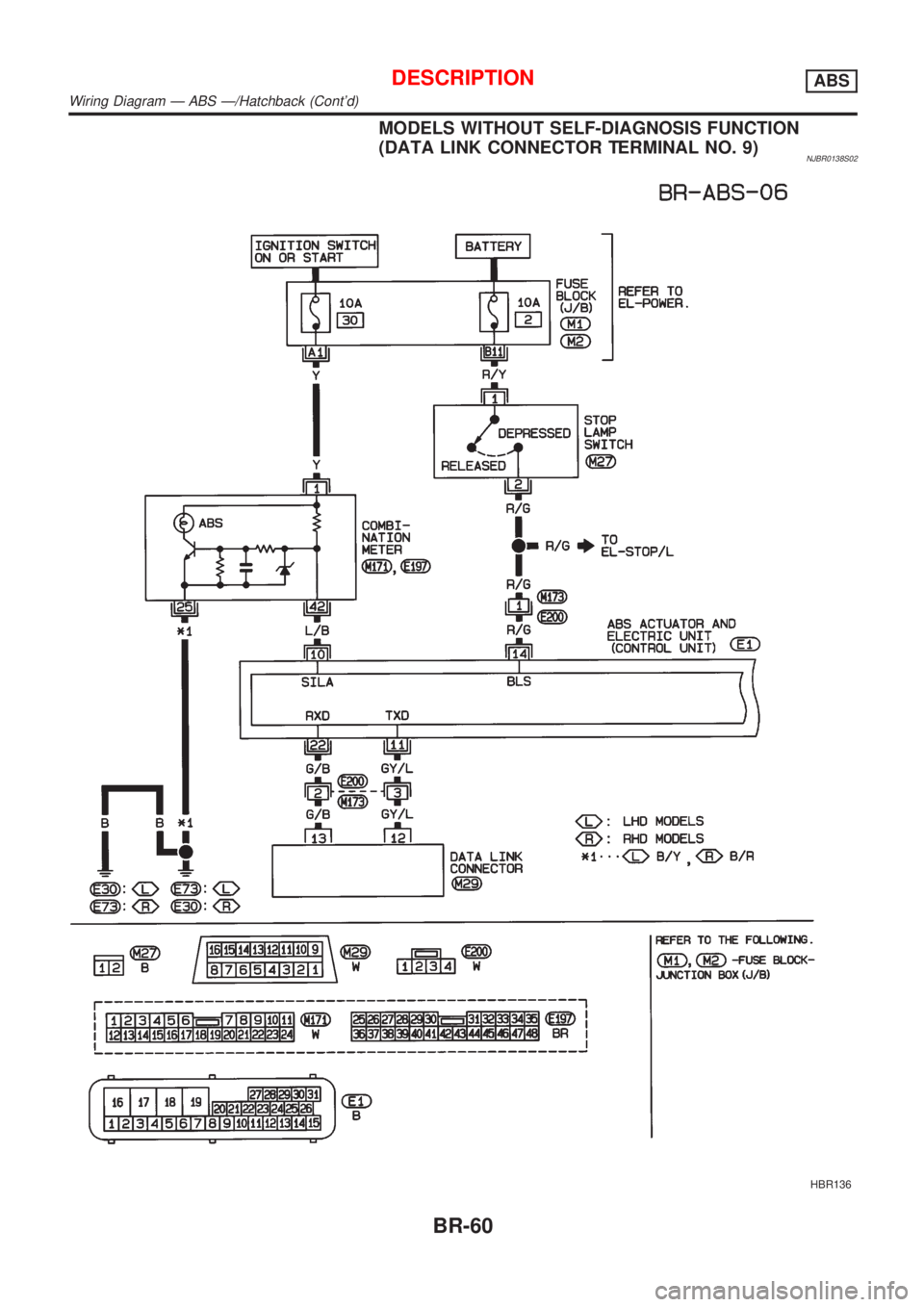
MODELS WITHOUT SELF-DIAGNOSIS FUNCTION
(DATA LINK CONNECTOR TERMINAL NO. 9)
NJBR0138S02
HBR136
DESCRIPTIONABS
Wiring Diagram Ð ABS Ð/Hatchback (Cont'd)
BR-60
Page 577 of 2898
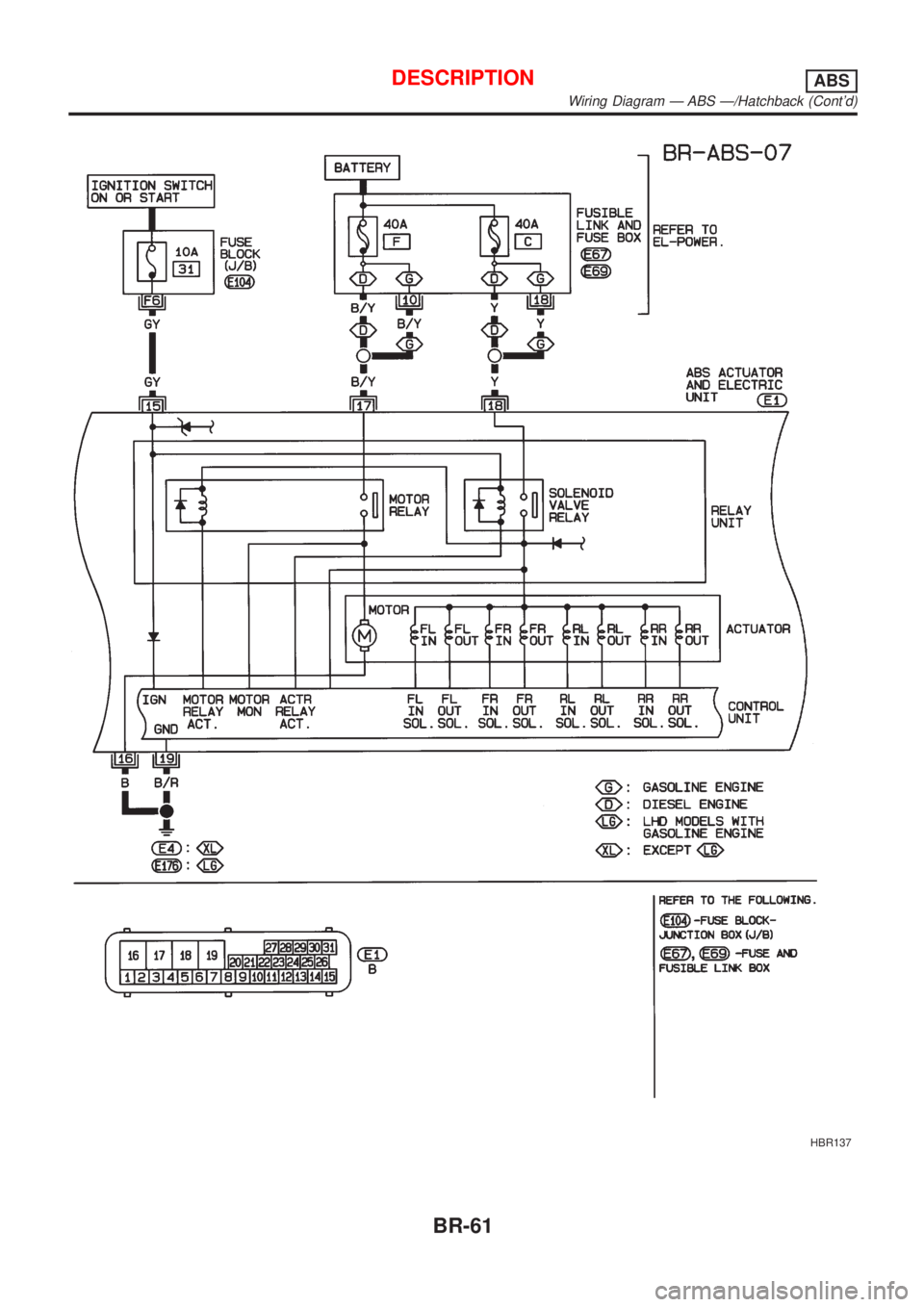
HBR137
DESCRIPTIONABS
Wiring Diagram Ð ABS Ð/Hatchback (Cont'd)
BR-61
Page 578 of 2898
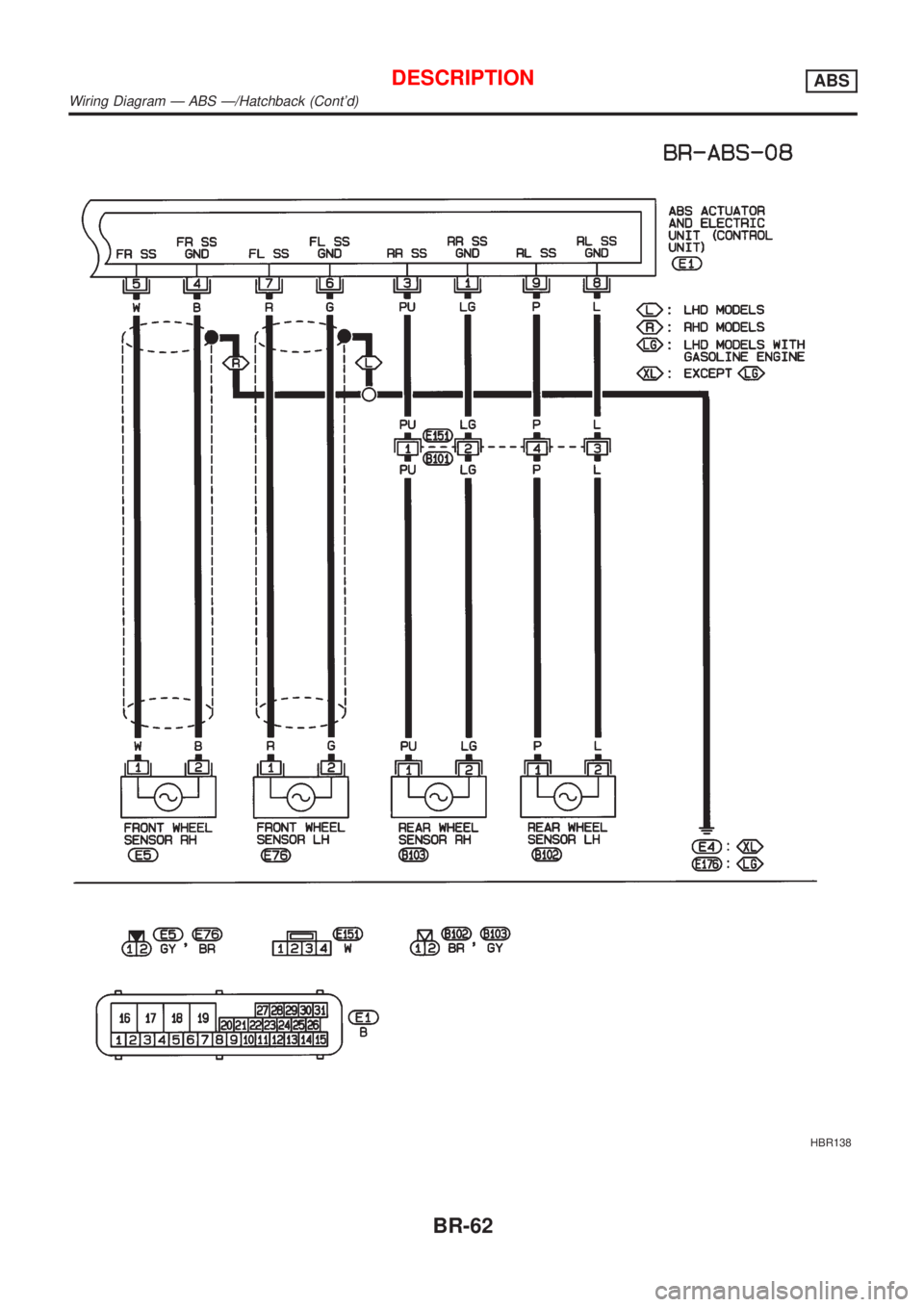
HBR138
DESCRIPTIONABS
Wiring Diagram Ð ABS Ð/Hatchback (Cont'd)
BR-62
Page 587 of 2898
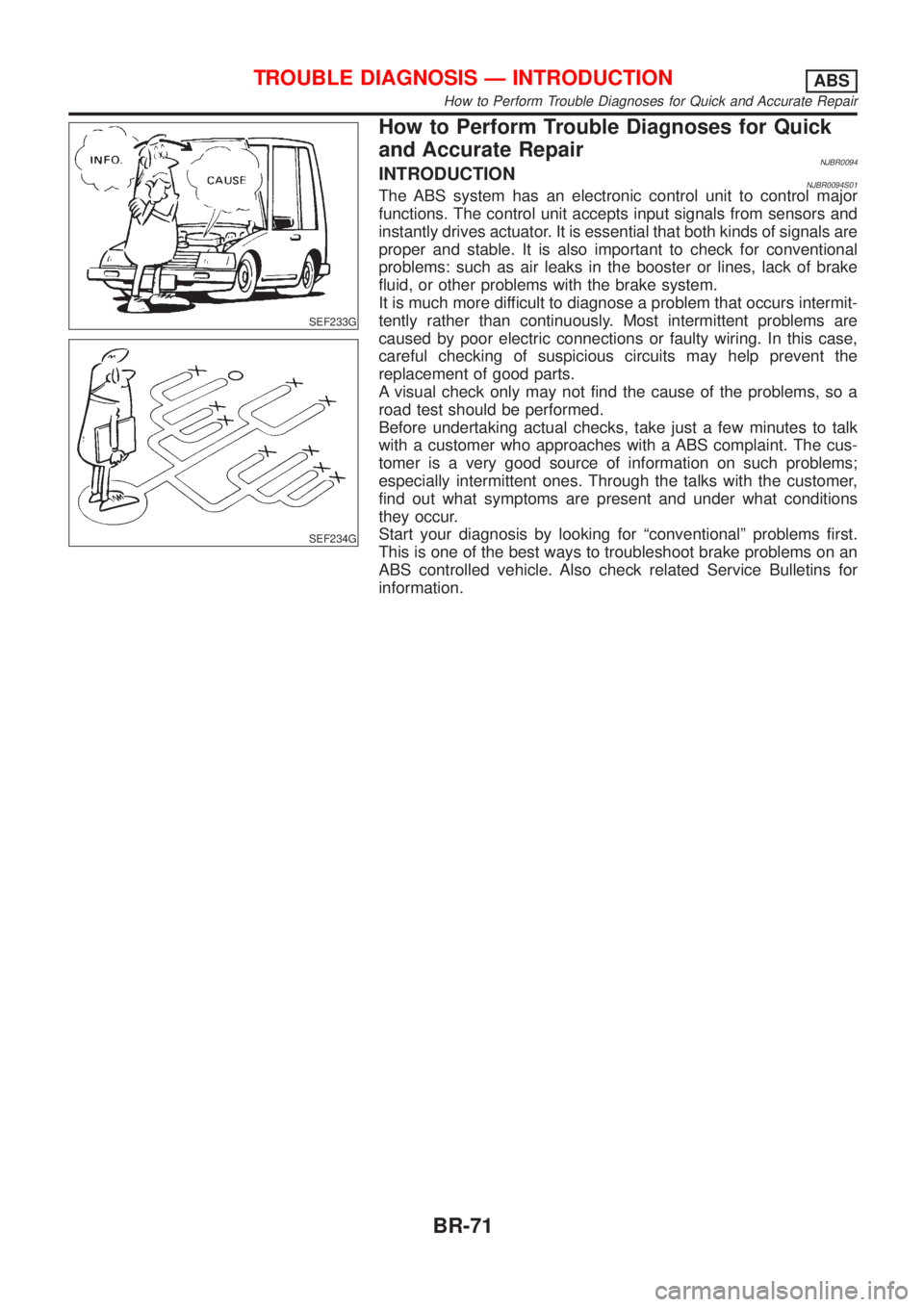
SEF233G
SEF234G
How to Perform Trouble Diagnoses for Quick
and Accurate Repair
NJBR0094INTRODUCTIONNJBR0094S01The ABS system has an electronic control unit to control major
functions. The control unit accepts input signals from sensors and
instantly drives actuator. It is essential that both kinds of signals are
proper and stable. It is also important to check for conventional
problems: such as air leaks in the booster or lines, lack of brake
fluid, or other problems with the brake system.
It is much more difficult to diagnose a problem that occurs intermit-
tently rather than continuously. Most intermittent problems are
caused by poor electric connections or faulty wiring. In this case,
careful checking of suspicious circuits may help prevent the
replacement of good parts.
A visual check only may not find the cause of the problems, so a
road test should be performed.
Before undertaking actual checks, take just a few minutes to talk
with a customer who approaches with a ABS complaint. The cus-
tomer is a very good source of information on such problems;
especially intermittent ones. Through the talks with the customer,
find out what symptoms are present and under what conditions
they occur.
Start your diagnosis by looking for ªconventionalº problems first.
This is one of the best ways to troubleshoot brake problems on an
ABS controlled vehicle. Also check related Service Bulletins for
information.
TROUBLE DIAGNOSIS Ð INTRODUCTIONABS
How to Perform Trouble Diagnoses for Quick and Accurate Repair
BR-71
Page 608 of 2898
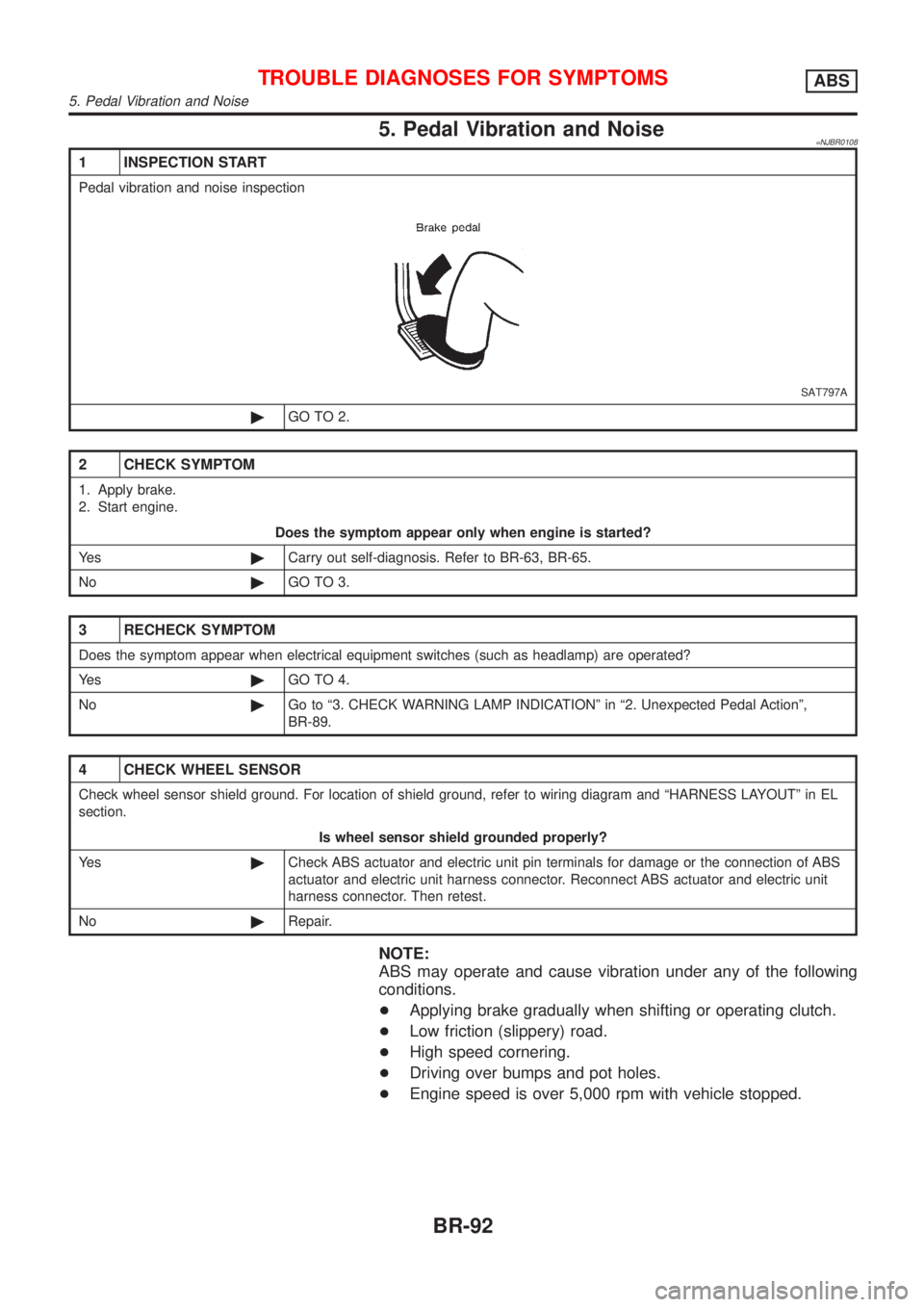
5. Pedal Vibration and Noise=NJBR0108
1 INSPECTION START
Pedal vibration and noise inspection
SAT797A
©GO TO 2.
2 CHECK SYMPTOM
1. Apply brake.
2. Start engine.
Does the symptom appear only when engine is started?
Ye s©Carry out self-diagnosis. Refer to BR-63, BR-65.
No©GO TO 3.
3 RECHECK SYMPTOM
Does the symptom appear when electrical equipment switches (such as headlamp) are operated?
Ye s©GO TO 4.
No©Go to ª3. CHECK WARNING LAMP INDICATIONº in ª2. Unexpected Pedal Actionº,
BR-89.
4 CHECK WHEEL SENSOR
Check wheel sensor shield ground. For location of shield ground, refer to wiring diagram and ªHARNESS LAYOUTº in EL
section.
Is wheel sensor shield grounded properly?
Ye s©Check ABS actuator and electric unit pin terminals for damage or the connection of ABS
actuator and electric unit harness connector. Reconnect ABS actuator and electric unit
harness connector. Then retest.
No©Repair.
NOTE:
ABS may operate and cause vibration under any of the following
conditions.
+Applying brake gradually when shifting or operating clutch.
+Low friction (slippery) road.
+High speed cornering.
+Driving over bumps and pot holes.
+Engine speed is over 5,000 rpm with vehicle stopped.
TROUBLE DIAGNOSES FOR SYMPTOMSABS
5. Pedal Vibration and Noise
BR-92