Start NISSAN TERRANO 2002 Service Manual PDF
[x] Cancel search | Manufacturer: NISSAN, Model Year: 2002, Model line: TERRANO, Model: NISSAN TERRANO 2002Pages: 1767, PDF Size: 41.51 MB
Page 267 of 1767
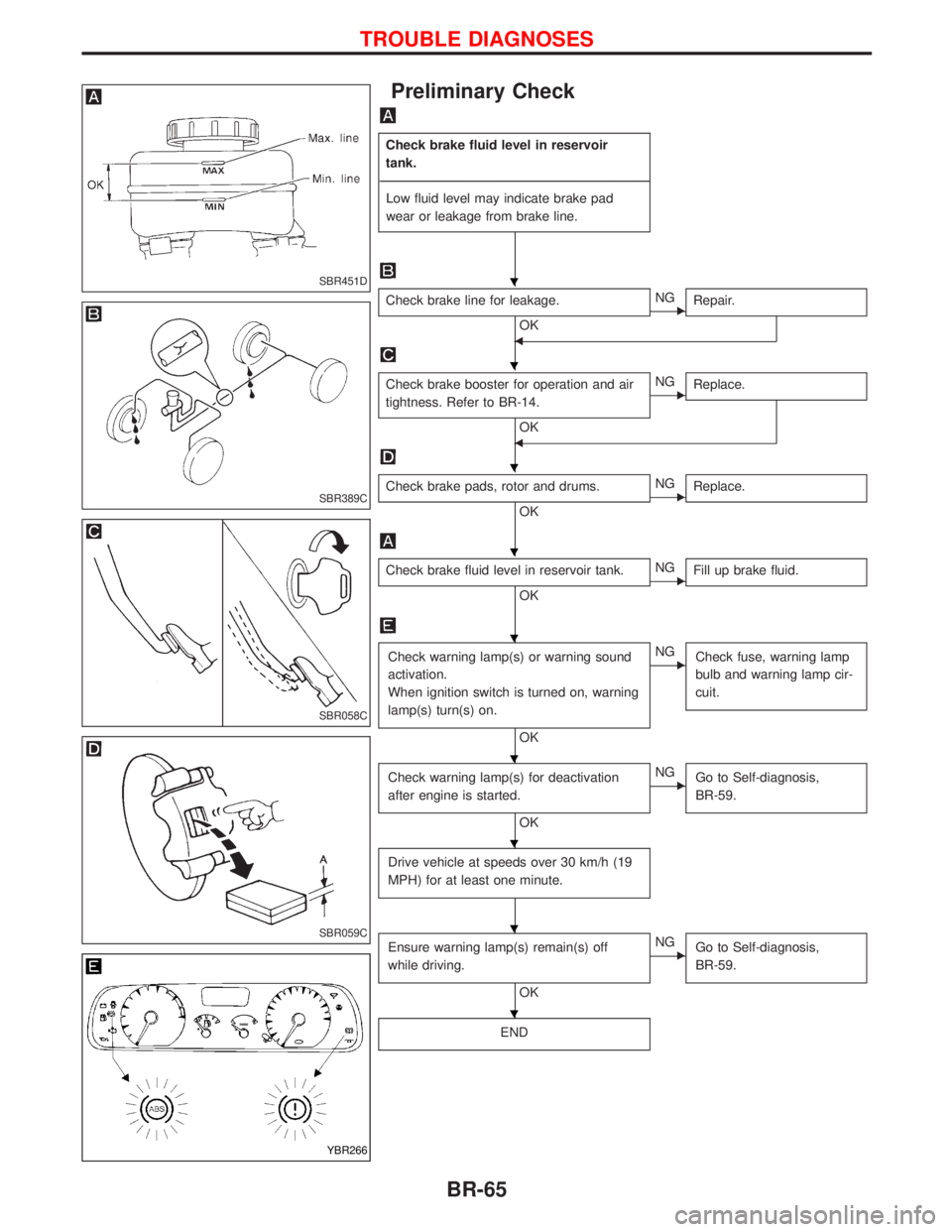
Preliminary Check
Check brake fluid level in reservoir
tank.
----------------------------------------------------------------------------------------------------------------------------------------------------------------------------------------------------------------------------------------------------------------------------------------------------------------
Low fluid level may indicate brake pad
wear or leakage from brake line.
Check brake line for leakage.
OKENG
Repair.
F
Check brake booster for operation and air
tightness. Refer to BR-14.
OK
ENG
Replace.
F
Check brake pads, rotor and drums.
OKENG
Replace.
Check brake fluid level in reservoir tank.
OKENG
Fill up brake fluid.
Check warning lamp(s) or warning sound
activation.
When ignition switch is turned on, warning
lamp(s) turn(s) on.
OK
ENG
Check fuse, warning lamp
bulb and warning lamp cir-
cuit.
Check warning lamp(s) for deactivation
after engine is started.
OK
ENG
Go to Self-diagnosis,
BR-59.
Drive vehicle at speeds over 30 km/h (19
MPH) for at least one minute.
Ensure warning lamp(s) remain(s) off
while driving.
OK
ENG
Go to Self-diagnosis,
BR-59.
END
SBR451D
SBR389C
SBR058C
SBR059C
YBR266
H
H
H
H
H
H
H
H
H
TROUBLE DIAGNOSES
BR-65
Page 275 of 1767
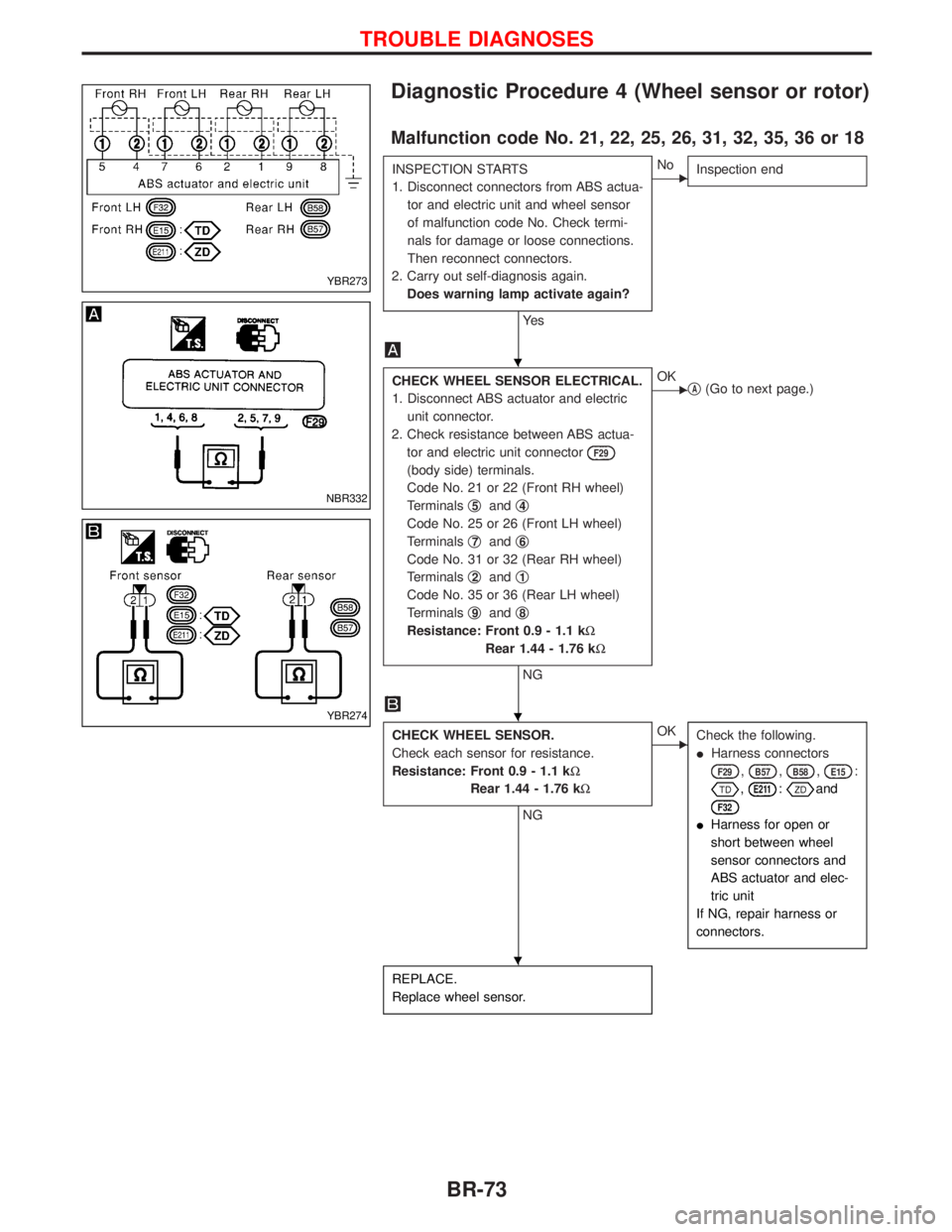
Diagnostic Procedure 4 (Wheel sensor or rotor)
Malfunction code No. 21, 22, 25, 26, 31, 32, 35, 36 or 18
INSPECTION STARTS
1. Disconnect connectors from ABS actua-
tor and electric unit and wheel sensor
of malfunction code No. Check termi-
nals for damage or loose connections.
Then reconnect connectors.
2. Carry out self-diagnosis again.
Does warning lamp activate again?
Ye s
ENo
Inspection end
CHECK WHEEL SENSOR ELECTRICAL.
1. Disconnect ABS actuator and electric
unit connector.
2. Check resistance between ABS actua-
tor and electric unit connector
F29
(body side) terminals.
Code No. 21 or 22 (Front RH wheel)
Terminalsq
5andq4
Code No. 25 or 26 (Front LH wheel)
Terminalsq
7andq6
Code No. 31 or 32 (Rear RH wheel)
Terminalsq
2andq1
Code No. 35 or 36 (Rear LH wheel)
Terminalsq
9andq8
Resistance: Front 0.9 - 1.1 kW
Rear 1.44 - 1.76 kW
NG
EOK
qA(Go to next page.)
CHECK WHEEL SENSOR.
Check each sensor for resistance.
Resistance: Front 0.9 - 1.1 kW
Rear 1.44 - 1.76 kW
NG
EOK
Check the following.
IHarness connectors
F29,B57,B58,E15:
,E211:and
F32
IHarness for open or
short between wheel
sensor connectors and
ABS actuator and elec-
tric unit
If NG, repair harness or
connectors.
REPLACE.
Replace wheel sensor.
YBR273
NBR332
YBR274
H
H
H
TROUBLE DIAGNOSES
BR-73
Page 282 of 1767
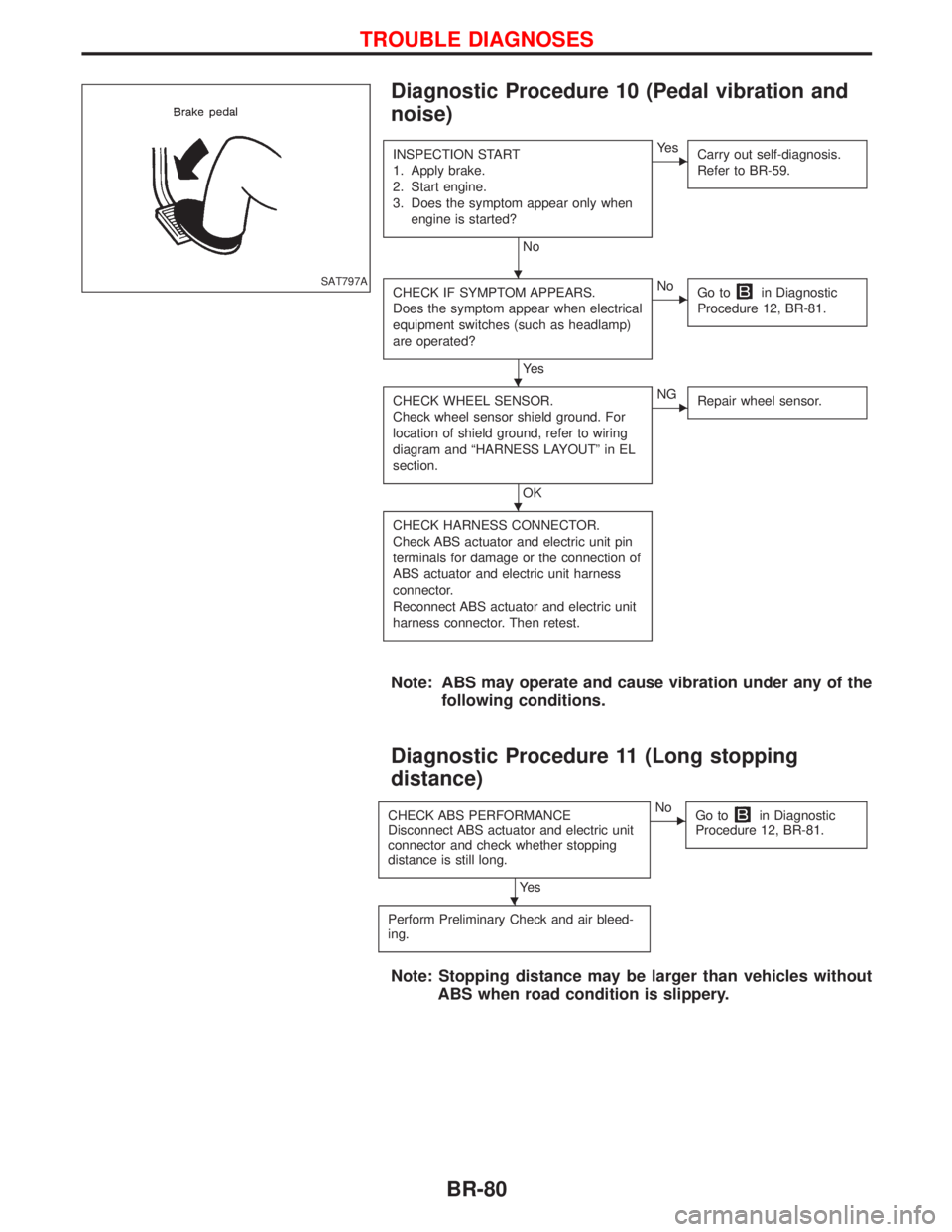
Diagnostic Procedure 10 (Pedal vibration and
noise)
INSPECTION START
1. Apply brake.
2. Start engine.
3. Does the symptom appear only when
engine is started?
No
EYe s
Carry out self-diagnosis.
Refer to BR-59.
CHECK IF SYMPTOM APPEARS.
Does the symptom appear when electrical
equipment switches (such as headlamp)
are operated?
Ye s
ENo
Go toin Diagnostic
Procedure 12, BR-81.
CHECK WHEEL SENSOR.
Check wheel sensor shield ground. For
location of shield ground, refer to wiring
diagram and ªHARNESS LAYOUTº in EL
section.
OK
ENG
Repair wheel sensor.
CHECK HARNESS CONNECTOR.
Check ABS actuator and electric unit pin
terminals for damage or the connection of
ABS actuator and electric unit harness
connector.
Reconnect ABS actuator and electric unit
harness connector. Then retest.
Note: ABS may operate and cause vibration under any of the
following conditions.
Diagnostic Procedure 11 (Long stopping
distance)
CHECK ABS PERFORMANCE
Disconnect ABS actuator and electric unit
connector and check whether stopping
distance is still long.
Ye s
ENo
Go toin Diagnostic
Procedure 12, BR-81.
Perform Preliminary Check and air bleed-
ing.
Note: Stopping distance may be larger than vehicles without
ABS when road condition is slippery.
SAT797AH
H
H
H
TROUBLE DIAGNOSES
BR-80
Page 365 of 1767
DTC Confirmation Procedure ..................................191
Diagnostic Procedure ..............................................191
DTC 0707 P7×F/INJ TIMG FB.....................................192
Description ...............................................................192
CONSULT-II Reference Value in Data Monitor
Mode ........................................................................193
ECM Terminals and Reference Value .....................193
On Board Diagnosis Logic.......................................193
DTC Confirmation Procedure ..................................194
Wiring Diagram ........................................................195
Diagnostic Procedure ..............................................197
DTC 0802 ECM 10.......................................................200
Description ...............................................................200
On Board Diagnosis Logic.......................................200
DTC Confirmation Procedure ..................................200
Diagnostic Procedure ..............................................201
DTC 0804 ECM 11.......................................................202
Description ...............................................................202
On Board Diagnosis Logic.......................................202
DTC Confirmation Procedure ..................................202
Diagnostic Procedure ..............................................203
DTC 0807 ECM 14.......................................................204
Description ...............................................................204
ECM Terminals and Reference Value .....................204
On Board Diagnosis Logic.......................................204
DTC Confirmation Procedure ..................................204
Wiring Diagram ........................................................205
Diagnostic Procedure ..............................................206
DTC 0902 ECM RLY....................................................209
ECM Terminals and Reference Value .....................209
On Board Diagnosis Logic.......................................209
DTC Confirmation Procedure ..................................209
Wiring Diagram ........................................................210
Diagnostic Procedure .............................................. 211
DTC 0903 ECM 15.......................................................213
Description ...............................................................213
On Board Diagnosis Logic.......................................213
DTC Confirmation Procedure ..................................213
Diagnostic Procedure ..............................................214
DTC 0905 TURBO PRESSURE..................................215
Component Description ...........................................215
ECM Terminals and Reference Value .....................215
On Board Diagnosis Logic.......................................215
DTC Confirmation Procedure ..................................216
Wiring Diagram ........................................................217
Diagnostic Procedure ..............................................219
DTC 1003 EGR VOLUME CONT/V.............................222
Description ...............................................................222
CONSULT-II Reference Value in Data Monitor
Mode ........................................................................223
ECM Terminals and Reference Value .....................223
On Board Diagnosis Logic.......................................223DTC Confirmation Procedure ..................................224
Wiring Diagram ........................................................225
Diagnostic Procedure ..............................................227
DTC 1004 FUEL CUT SYSTEM1................................232
Description ...............................................................232
CONSULT-II Reference Value in Data Monitor
Mode ........................................................................233
ECM Terminals and Reference Value .....................233
On Board Diagnosis Logic.......................................233
DTC Confirmation Procedure ..................................234
Wiring Diagram ........................................................235
Diagnostic Procedure ..............................................237
GLOW CONTROL SYSTEM.......................................239
Description ...............................................................239
ECM Terminals and Reference Value .....................240
Wiring Diagram ........................................................241
Diagnostic Procedure ..............................................242
START SIGNAL...........................................................248
Wiring Diagram ........................................................248
Diagnostic Procedure ..............................................249
PARK/NEUTRAL POSITION (PNP) SWITCH.............251
Description ...............................................................251
CONSULT-II Reference Value in Data Monitor
Mode ........................................................................251
ECM Terminals and Reference Value .....................251
Wiring Diagram ........................................................252
Diagnostic Procedure ..............................................253
HEAT UP SWITCH......................................................258
Component Description ...........................................258
CONSULT-II Reference Value in Data Monitor
Mode ........................................................................258
ECM Terminals and Reference Value .....................258
Wiring Diagram ........................................................259
Diagnostic Procedure ..............................................260
SWIRL CONTROL VALVE CONTROL SOLENOID
VA LV E..........................................................................263
Description ...............................................................263
CONSULT-II Reference Value in Data Monitor
Mode ........................................................................264
ECM Terminals and Reference Value .....................264
Wiring Diagram ........................................................265
Diagnostic Procedure ..............................................266
INTAKE AIR CONTROL VALVE CONTROL
SOLENOID VALVE......................................................273
Description ...............................................................273
Operation .................................................................273
ECM Terminals and Reference Value .....................273
Wiring Diagram ........................................................274
Diagnostic Procedure ..............................................275
VARIABLE NOZZLE TURBOCHARGER
CONTROL SOLENOID VALVE...................................281
Description ...............................................................281
CONTENTS(Cont'd)
EC-3
Page 368 of 1767
Diagnostic Procedure ..............................................443
DTC PD1603 ECM 12, DTC P1607 ECM2.................444
Description ...............................................................444
On Board Diagnosis Logic.......................................444
DTC Confirmation Procedure ..................................444
Diagnostic Procedure ..............................................445
DTC P1620 ECM RLY.................................................446
On Board Diagnosis Logic.......................................446
DTC Confirmation Procedure ..................................446
Wiring Diagram ........................................................447
Diagnostic Procedure ..............................................448START SIGNAL...........................................................449
Wiring Diagram ........................................................449
Diagnostic Procedure ..............................................450
OIL PRESSURE SWITCH...........................................451
Wiring Diagram ........................................................451
MI & DATA LINK CONNECTORS...............................452
Wiring Diagram ........................................................452
SERVICE DATA AND SPECIFICATIONS (SDS)........453
General Specifications .............................................453
Injection Nozzle .......................................................453
Inspection and Adjustment ......................................453
CONTENTS(Cont'd)
EC-6
Page 371 of 1767
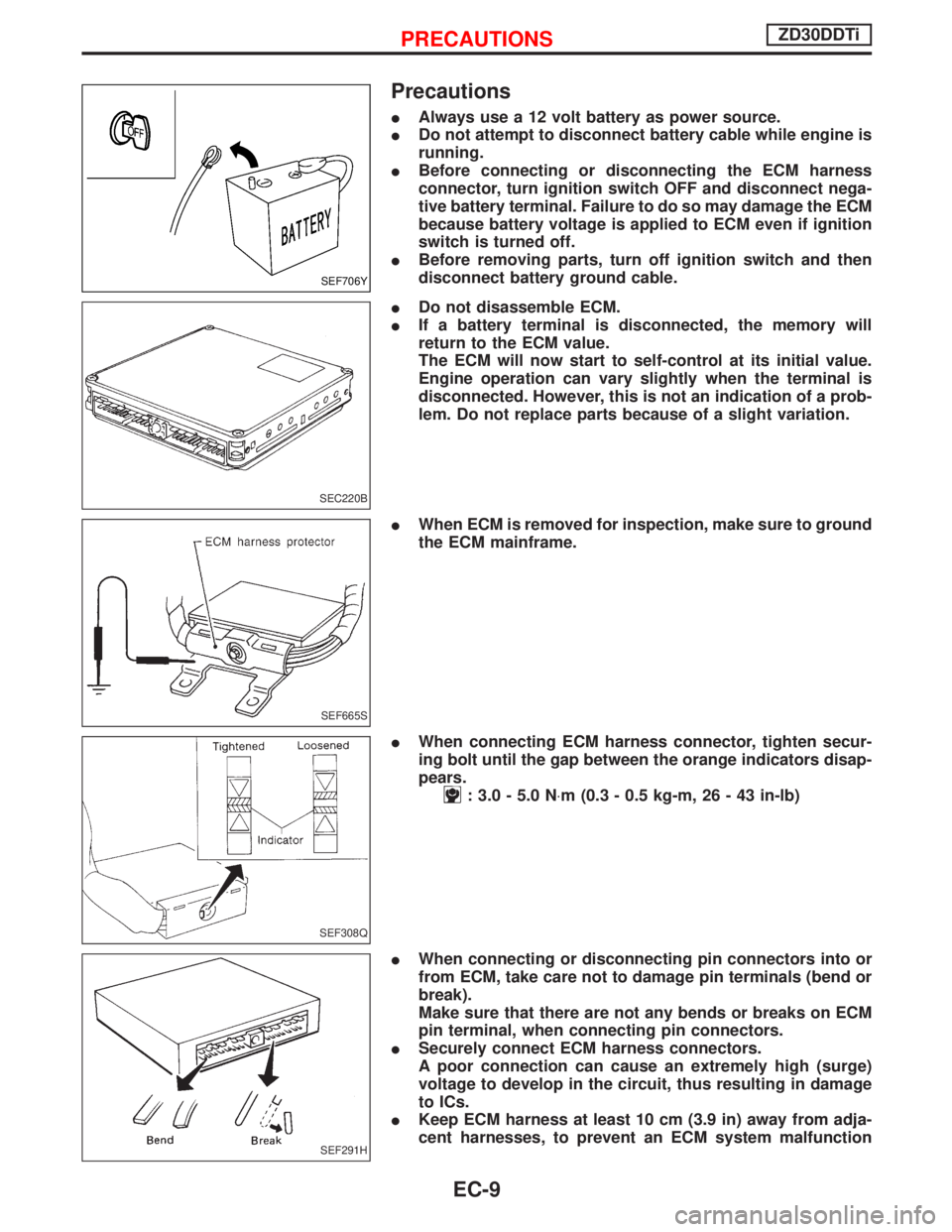
Precautions
IAlways use a 12 volt battery as power source.
IDo not attempt to disconnect battery cable while engine is
running.
IBefore connecting or disconnecting the ECM harness
connector, turn ignition switch OFF and disconnect nega-
tive battery terminal. Failure to do so may damage the ECM
because battery voltage is applied to ECM even if ignition
switch is turned off.
IBefore removing parts, turn off ignition switch and then
disconnect battery ground cable.
IDo not disassemble ECM.
IIf a battery terminal is disconnected, the memory will
return to the ECM value.
The ECM will now start to self-control at its initial value.
Engine operation can vary slightly when the terminal is
disconnected. However, this is not an indication of a prob-
lem. Do not replace parts because of a slight variation.
IWhen ECM is removed for inspection, make sure to ground
the ECM mainframe.
IWhen connecting ECM harness connector, tighten secur-
ing bolt until the gap between the orange indicators disap-
pears.
: 3.0 - 5.0 N×m (0.3 - 0.5 kg-m, 26 - 43 in-lb)
IWhen connecting or disconnecting pin connectors into or
from ECM, take care not to damage pin terminals (bend or
break).
Make sure that there are not any bends or breaks on ECM
pin terminal, when connecting pin connectors.
ISecurely connect ECM harness connectors.
A poor connection can cause an extremely high (surge)
voltage to develop in the circuit, thus resulting in damage
to ICs.
IKeep ECM harness at least 10 cm (3.9 in) away from adja-
cent harnesses, to prevent an ECM system malfunction
SEF706Y
SEC220B
SEF665S
SEF308Q
SEF291H
PRECAUTIONSZD30DDTi
EC-9
Page 373 of 1767
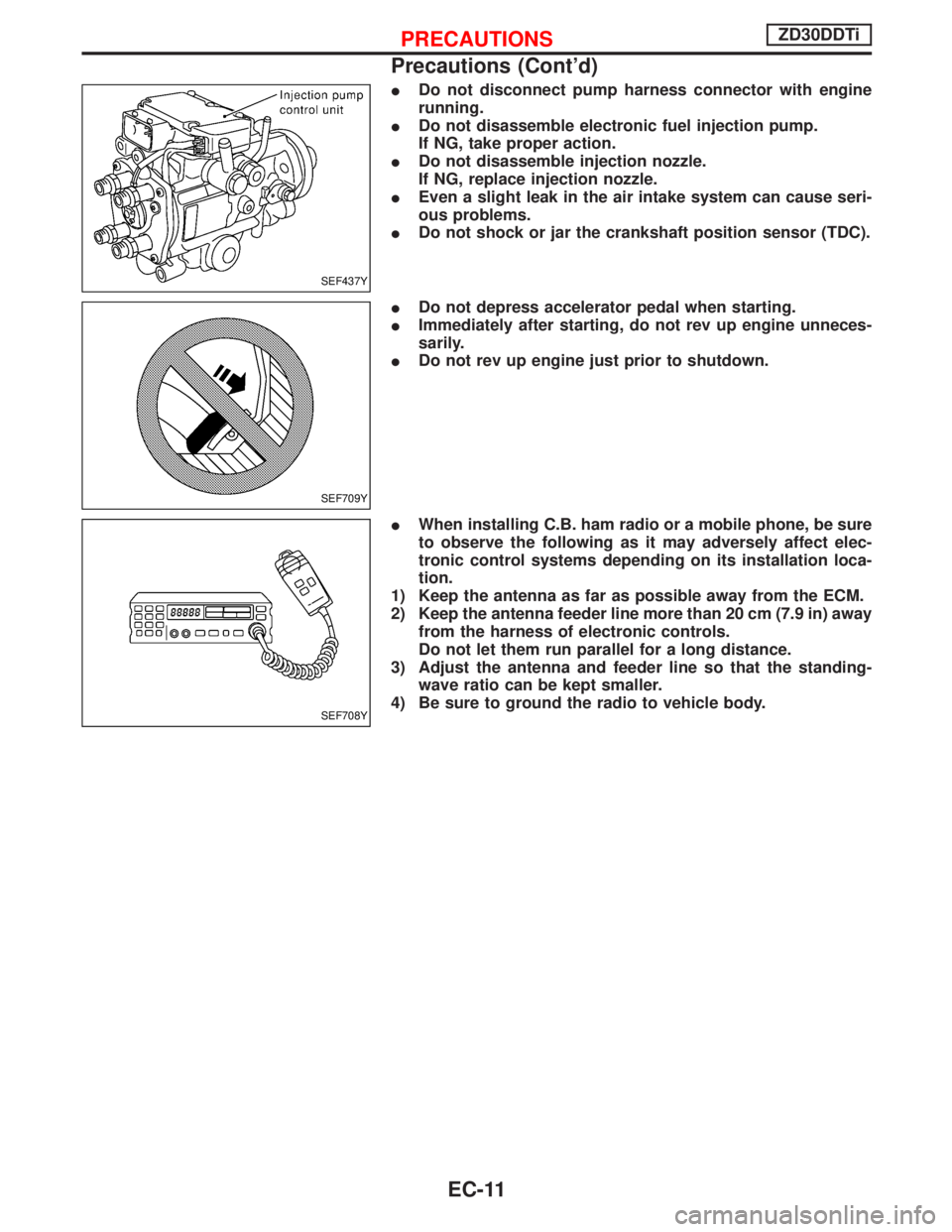
IDo not disconnect pump harness connector with engine
running.
IDo not disassemble electronic fuel injection pump.
If NG, take proper action.
IDo not disassemble injection nozzle.
If NG, replace injection nozzle.
IEven a slight leak in the air intake system can cause seri-
ous problems.
IDo not shock or jar the crankshaft position sensor (TDC).
IDo not depress accelerator pedal when starting.
IImmediately after starting, do not rev up engine unneces-
sarily.
IDo not rev up engine just prior to shutdown.
IWhen installing C.B. ham radio or a mobile phone, be sure
to observe the following as it may adversely affect elec-
tronic control systems depending on its installation loca-
tion.
1) Keep the antenna as far as possible away from the ECM.
2) Keep the antenna feeder line more than 20 cm (7.9 in) away
from the harness of electronic controls.
Do not let them run parallel for a long distance.
3) Adjust the antenna and feeder line so that the standing-
wave ratio can be kept smaller.
4) Be sure to ground the radio to vehicle body.
SEF437Y
SEF709Y
SEF708Y
PRECAUTIONSZD30DDTi
Precautions (Cont'd)
EC-11
Page 382 of 1767
Fuel Injection Control System
DESCRIPTION
System description
Three types of fuel injection control are provided to accommodate engine operating conditions; normal control,
idle control and start control. The ECM determines the appropriate fuel injection control. Under each control,
the amount of fuel injected is compensated to improve engine performance.
Pulse signals are exchanged between ECM and electronic control fuel injection pump (control unit is built-in).
The fuel injection pump control unit performs duty control on the spill valve (built into the fuel injection pump)
according to the input signals to compensate the amount of fuel injected to the preset value.
Start control
Input/output signal chart
Sensor Input Signal to ECM ECM Function Actuator
Engine coolant temperature sensor Engine coolant temperature
Fuel injection con-
trol (start control)Electronic control fuel injec-
tion pump Crankshaft position sensor (TDC) Engine speed
Ignition switch Start signal
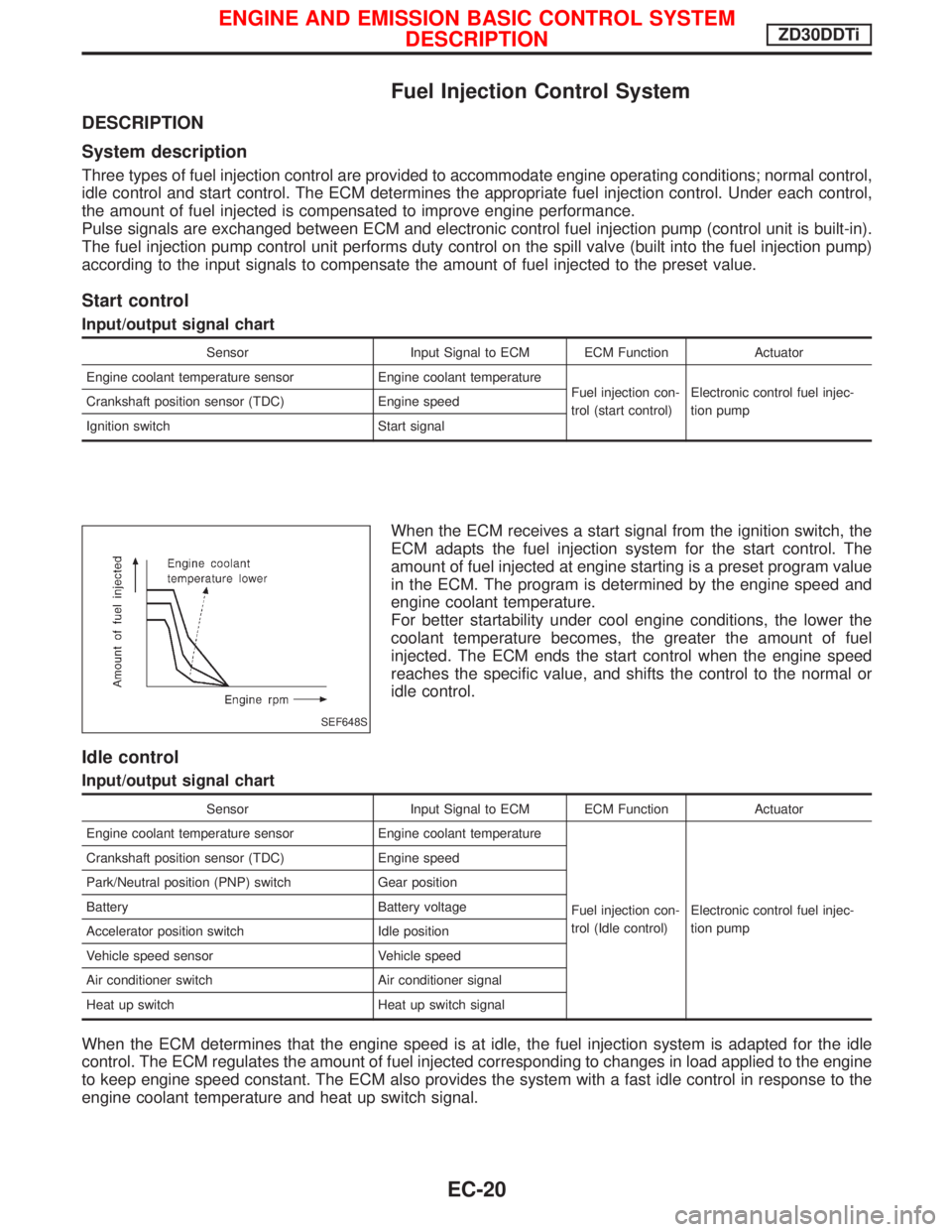
When the ECM receives a start signal from the ignition switch, the
ECM adapts the fuel injection system for the start control. The
amount of fuel injected at engine starting is a preset program value
in the ECM. The program is determined by the engine speed and
engine coolant temperature.
For better startability under cool engine conditions, the lower the
coolant temperature becomes, the greater the amount of fuel
injected. The ECM ends the start control when the engine speed
reaches the specific value, and shifts the control to the normal or
idle control.
Idle control
Input/output signal chart
Sensor Input Signal to ECM ECM Function Actuator
Engine coolant temperature sensor Engine coolant temperature
Fuel injection con-
trol (Idle control)Electronic control fuel injec-
tion pump Crankshaft position sensor (TDC) Engine speed
Park/Neutral position (PNP) switch Gear position
Battery Battery voltage
Accelerator position switch Idle position
Vehicle speed sensor Vehicle speed
Air conditioner switch Air conditioner signal
Heat up switch Heat up switch signal
When the ECM determines that the engine speed is at idle, the fuel injection system is adapted for the idle
control. The ECM regulates the amount of fuel injected corresponding to changes in load applied to the engine
to keep engine speed constant. The ECM also provides the system with a fast idle control in response to the
engine coolant temperature and heat up switch signal.
SEF648S
ENGINE AND EMISSION BASIC CONTROL SYSTEM
DESCRIPTIONZD30DDTi
EC-20
Page 388 of 1767
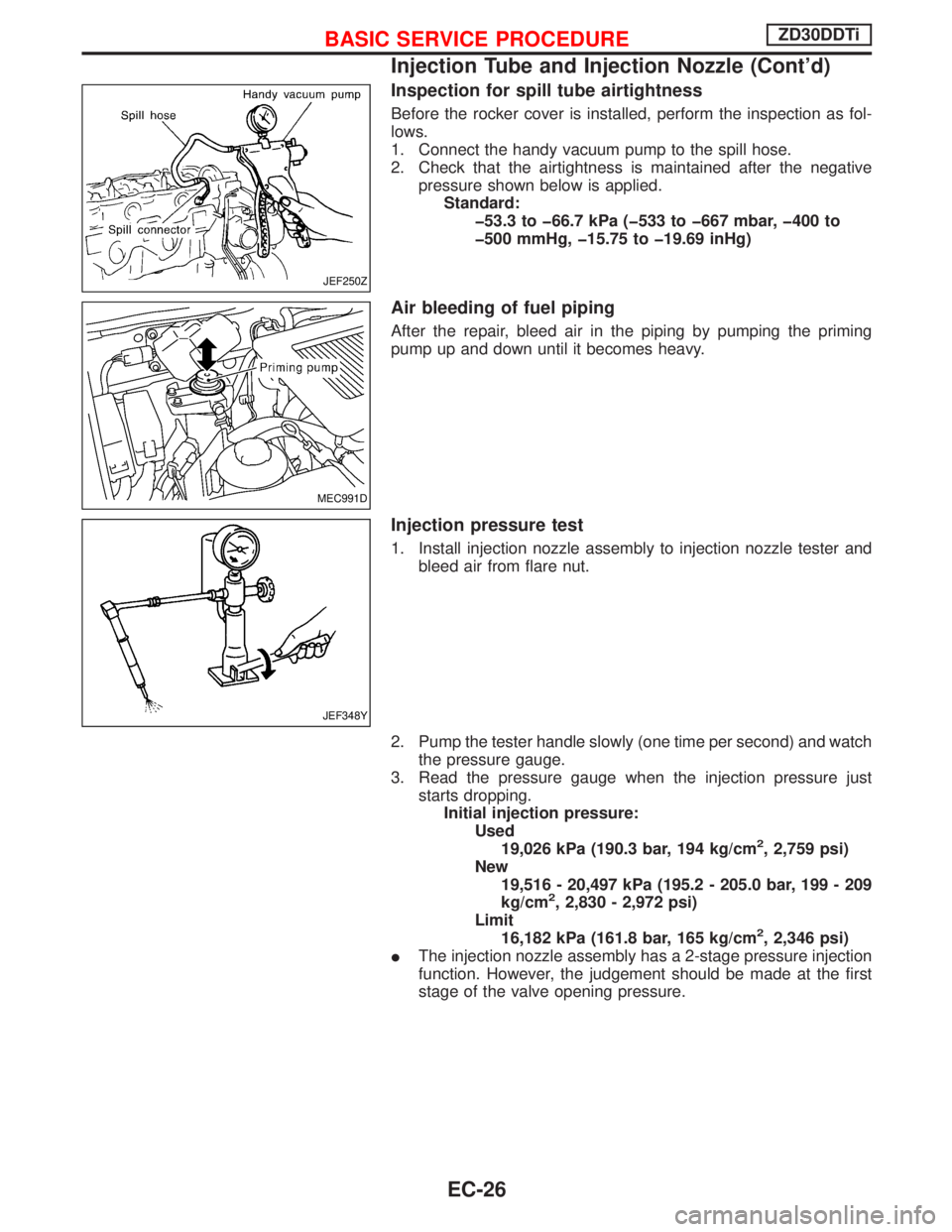
Inspection for spill tube airtightness
Before the rocker cover is installed, perform the inspection as fol-
lows.
1. Connect the handy vacuum pump to the spill hose.
2. Check that the airtightness is maintained after the negative
pressure shown below is applied.
Standard:
þ53.3 to þ66.7 kPa (þ533 to þ667 mbar, þ400 to
þ500 mmHg, þ15.75 to þ19.69 inHg)
Air bleeding of fuel piping
After the repair, bleed air in the piping by pumping the priming
pump up and down until it becomes heavy.
Injection pressure test
1. Install injection nozzle assembly to injection nozzle tester and
bleed air from flare nut.
2. Pump the tester handle slowly (one time per second) and watch
the pressure gauge.
3. Read the pressure gauge when the injection pressure just
starts dropping.
Initial injection pressure:
Used
19,026 kPa (190.3 bar, 194 kg/cm
2, 2,759 psi)
New
19,516 - 20,497 kPa (195.2 - 205.0 bar, 199 - 209
kg/cm
2, 2,830 - 2,972 psi)
Limit
16,182 kPa (161.8 bar, 165 kg/cm
2, 2,346 psi)
IThe injection nozzle assembly has a 2-stage pressure injection
function. However, the judgement should be made at the first
stage of the valve opening pressure.
JEF250Z
MEC991D
JEF348Y
BASIC SERVICE PROCEDUREZD30DDTi
Injection Tube and Injection Nozzle (Cont'd)
EC-26
Page 396 of 1767
IIf the battery is disconnected, the emission-related diagnostic information will be lost after approx.
24 hours.
IErasing the emission-related diagnostic information using CONSULT-II is easier and quicker than
switching the diagnostic test mode using the data link connector.
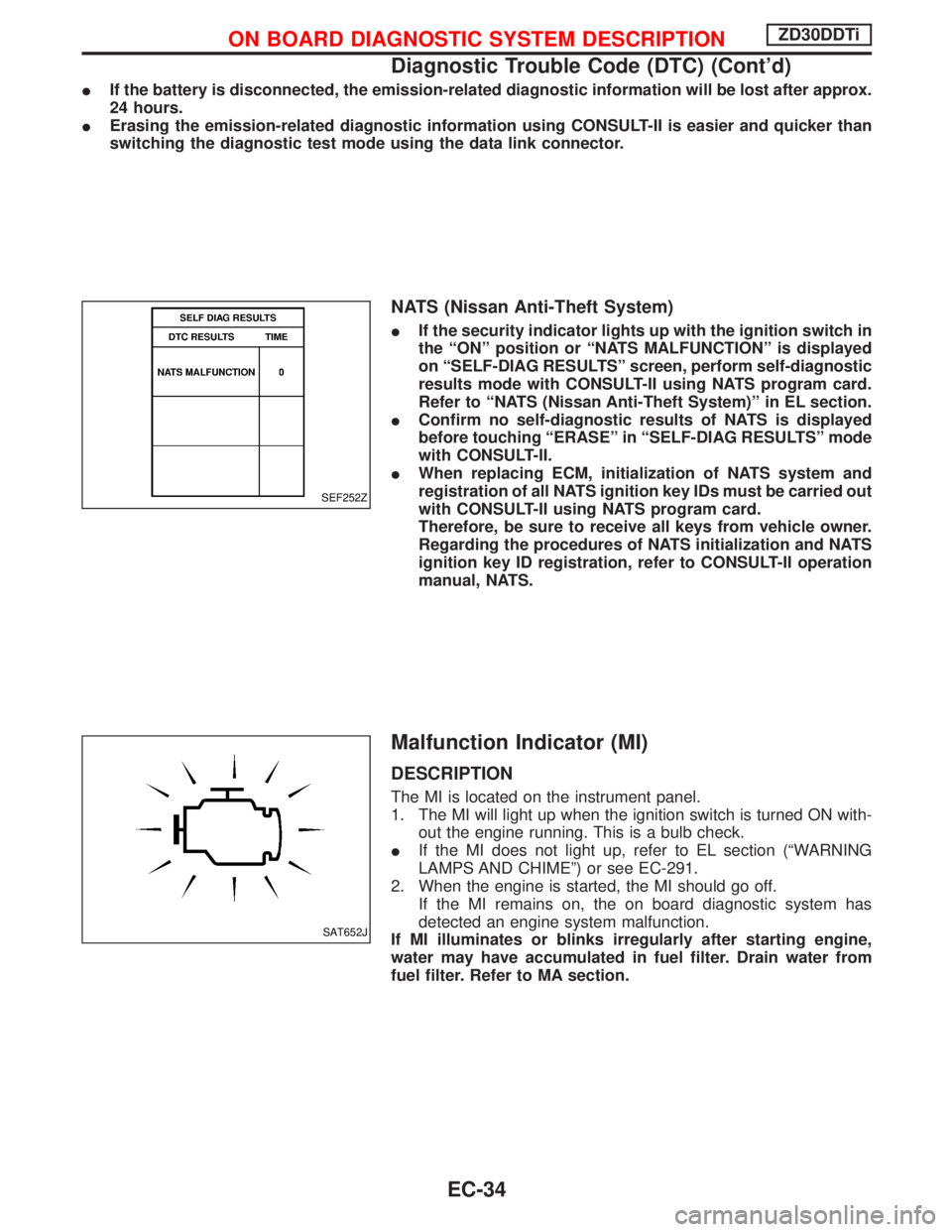
NATS (Nissan Anti-Theft System)
IIf the security indicator lights up with the ignition switch in
the ªONº position or ªNATS MALFUNCTIONº is displayed
on ªSELF-DIAG RESULTSº screen, perform self-diagnostic
results mode with CONSULT-II using NATS program card.
Refer to ªNATS (Nissan Anti-Theft System)º in EL section.
IConfirm no self-diagnostic results of NATS is displayed
before touching ªERASEº in ªSELF-DIAG RESULTSº mode
with CONSULT-II.
IWhen replacing ECM, initialization of NATS system and
registration of all NATS ignition key IDs must be carried out
with CONSULT-II using NATS program card.
Therefore, be sure to receive all keys from vehicle owner.
Regarding the procedures of NATS initialization and NATS
ignition key ID registration, refer to CONSULT-II operation
manual, NATS.
Malfunction Indicator (MI)
DESCRIPTION
The MI is located on the instrument panel.
1. The MI will light up when the ignition switch is turned ON with-
out the engine running. This is a bulb check.
IIf the MI does not light up, refer to EL section (ªWARNING
LAMPS AND CHIMEº) or see EC-291.
2. When the engine is started, the MI should go off.
If the MI remains on, the on board diagnostic system has
detected an engine system malfunction.
If MI illuminates or blinks irregularly after starting engine,
water may have accumulated in fuel filter. Drain water from
fuel filter. Refer to MA section.
SEF252Z
SAT652J
ON BOARD DIAGNOSTIC SYSTEM DESCRIPTIONZD30DDTi
Diagnostic Trouble Code (DTC) (Cont'd)
EC-34