tailgate Seat Alhambra 2006 Owner's Guide
[x] Cancel search | Manufacturer: SEAT, Model Year: 2006, Model line: Alhambra, Model: Seat Alhambra 2006Pages: 299, PDF Size: 6.33 MB
Page 119 of 299
Lights and visibility117
Safety FirstOperating instructionsTips and MaintenanceTe c h n i c a l D a t a
Caution
In icy conditions, always check that the wiper blades are not frozen to the
glass before using the wipers for the first time. If you switch on the wipers
when the wiper blades are frozen to the windscreen, you could damage both
the wiper blades and the wiper motor.
Rear window wiper ]
The windscreen wiper lever controls the rear window wipers
and the automatic rear window wash and wipe.
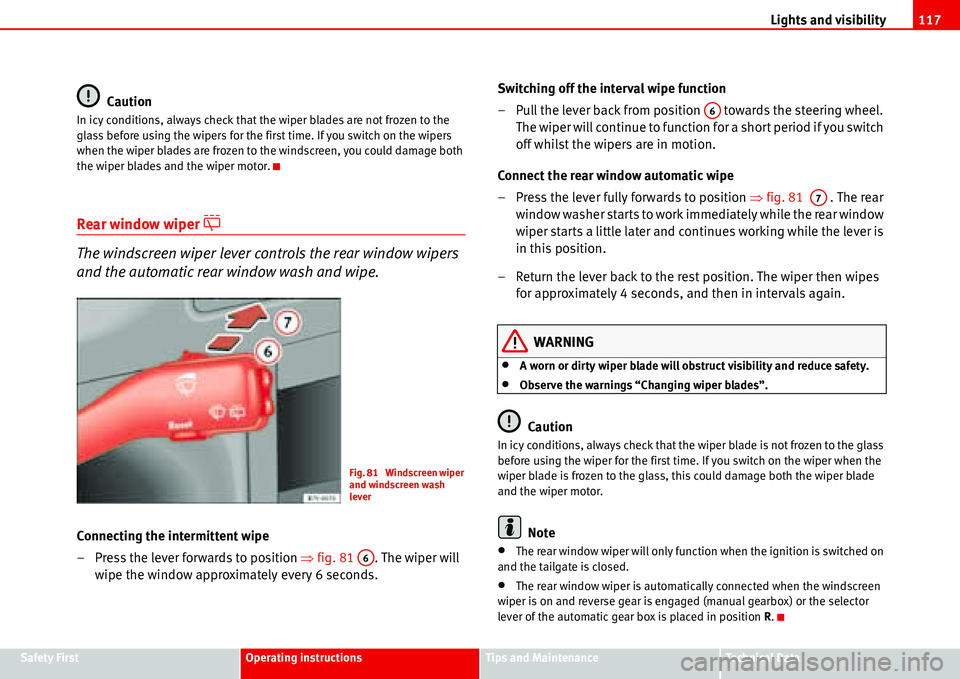
Connecting the intermittent wipe
– Press the lever forwards to position Ÿfig. 81 . The wiper will
wipe the window approximately every 6 seconds.Switching off the interval wipe function
– Pull the lever back from position towards the steering wheel.
The wiper will continue to function for a short period if you switch
off whilst the wipers are in motion.
Connect the rear window automatic wipe
– Press the lever fully forwards to position Ÿfig. 81 . The rear
window washer starts to work immediately while the rear window
wiper starts a little later and continues working while the lever is
in this position.
– Return the lever back to the rest position. The wiper then wipes
for approximately 4 seconds, and then in intervals again.
WARNING
•A worn or dirty wiper blade will obstruct visibility and reduce safety.
•Observe the warnings “Changing wiper blades”.
Caution
In icy conditions, always check that the wiper blade is not frozen to the glass
before using the wiper for the first time. If you switch on the wiper when the
wiper blade is frozen to the glass, this could damage both the wiper blade
and the wiper motor.
Note
•The rear window wiper will only function when the ignition is switched on
and the tailgate is closed.
•The rear window wiper is automatically connected when the windscreen
wiper is on and reverse gear is engaged (manual gearbox) or the selector
lever of the automatic gear box is placed in position R.
Fig. 81 Windscreen wiper
and windscreen wash
lever
A6
A6
A7
Page 144 of 299
Seats and stowage 142
Hazard warning triangles and first aid kit
Warning triangle
The hazard warning triangle may be fitted in the bracket behind the right trim
of the luggage compartment.
Note
The warning triangle is not part of the vehicle's standard equipment.
First-aid kit
In the bracket located behind the right hand trim in the luggage compartment
there is space for a standard first aid kit and the hazard warning triangle.
For reasons of space, in vehicles fitted with a removable tow bar
35) the
bracket only holds a smaller first aid kit and the hazard warning triangle.
Note
•In some vehicles the first aid kit bracket is behind the left hand trim in the
luggage compartment.
•The first aid kit is not issued as a standard feature with the vehicle.
•The first aid kit must comply with legal requirements.
•Observe the expiry date of the contents of the first aid kit. You should
purchase a new first-aid kit as soon as possible after the shelf-life date of the
first-aid kit has expired.
•Before buying accessories and replacement parts, refer to the note “
Accessories, modifications and renewal of parts”.
Luggage compartment
Loading the luggage compartment
All luggage and other loose objects must be safely secured in
the luggage compartment.
Please observe the following points to ensure the vehicle handles
well at all times:
– If necessary, remove the seats to increase the load area.
– Distribute the load as evenly as possible in the luggage compart-
ment.
– Place and stow heavy objects directly on the floor of the vehicle.
If possible they should be positioned above or in front of the rear
axle.
– Drive particularly carefully if you are transporting heavy objects
Ÿpage 144.
– Use suitable straps to secure heavy objects to the fitted fastening
rings Ÿpage 143.
– If objects protrude over the end of the vehicle, you must draw the
attention of other road users to this. Observe legal requirements
when doing so.
When driving with the tailgate open, please observe the instructions on
Ÿpage 98.
35)Optional equipment
Page 145 of 299
Seats and stowage143
Safety FirstOperating instructionsTips and MaintenanceTe c h n i c a l D a t a
WARNING
Loose luggage and other objects in the luggage compartment can cause
serious injuries.
•Always stow objects in the luggage compartment and secure them on
the fastening rings.
•Use suitable specialist straps to secure heavy objects.
•During sudden manoeuvres or accidents, loose objects can be thrown
forward, injuring vehicle occupants. This increased risk of injury will be
further increased if a loose object is struck by an inflating airbag. If this
happens, objects can be transformed into “missiles”. Risk of fatal injury.
•Remember that transporting heavy objects modifies the driving condi-
tions as the centre of gravity has been altered. There is a risk of accident.
Therefore, it is essential to adjust your speed and driving style accordingly,
to avoid accidents.
•Never exceed the allowed axle loads or allowed maximum weight. If the
allowed axle load or the allowed total weight is exceeded, the driving char-
acteristics of the vehicle may change, leading to accidents, injuries and
damage to the vehicle.
•Never leave the vehicle unattended, especially when the tailgate is
open. Children could climb into the luggage compartment closing the door
behind them; they will remain trapped without help and there is a mortal
risk.
•Never allow children to play in or around the vehicle. Close and lock
both the tailgate and all the doors when you leave the vehicle. Before you
lock the vehicle, make sure that there are no adults or children in the
vehicle.
•Never transport passengers in the luggage compartment. Every
passenger must be properly belted in .
Caution
•Avoid overloading small areas by placing heavy objects on the vehicle
floor.
•The wires of the heating element in the rear window and the window aerial
in the rear side windows could be damaged if objects on the luggage
compartment cover rub against them.
•If you have removed the seats from the passenger compartment, you
should place a large, robust covering over the floor anchors to prevent
damage.
Note
•Air circulation in the vehicle helps reduce fogging of the windows. Used
air escapes through ventilation slits in the side trim of the luggage compart-
ment. Ensure that the ventilation slits are never covered.
•Straps for securing the load to the fastening rings are commercially
available.
Fastening rings
There are fastening rings in the luggage compartment which
can be used to secure luggage and other objects.
– Always use suitable undamaged belts for fastening the luggage
or any other object tot he anchorage rings Ÿ in “Loading the
luggage compartment” on page 142.
The retainers for the detachable seat belts for the third row of seats and the
floor anchors for the seats can be used as fastening rings for items of
luggage.
Page 147 of 299
Seats and stowage145
Safety FirstOperating instructionsTips and MaintenanceTe c h n i c a l D a t a
•Always stow objects safely in the vehicle and secure them on the
fastening rings if necessary.
•Use suitable specialist straps to secure heavy objects.
•Loose objects in the vehicle can move suddenly. As the centre of gravity
moves, safety is impaired and the vehicle becomes difficult to handle.
•During sudden manoeuvres or accidents, loose objects can be thrown
forward, injuring vehicle occupants. This increased risk of injury will be
further increased if a loose object is struck by an inflating airbag. If this
happens, objects can be transformed into “missiles”. Risk of fatal injury.
•Remember that transporting heavy objects modifies the driving condi-
tions as the centre of gravity has been altered. There is a risk of accident.
Therefore, it is essential to adjust your speed and driving style accordingly,
to avoid accidents.
•Never exceed the allowed axle loads or allowed maximum weight. If the
allowed axle load or the allowed total weight is exceeded, the driving char-
acteristics of the vehicle may change, leading to accidents, injuries and
damage to the vehicle.
•Never leave the vehicle unattended, especially when the tailgate is
open. Children could climb into the interior of the vehicle closing the door
behind them; they will remain trapped without help and there is a mortal
risk.
•Never allow children to play in or around the vehicle. Close and lock all
windows, the tailgate and all doors when you leave the vehicle.
•Never transport passengers in the luggage compartment. Every
passenger must be properly belted in.
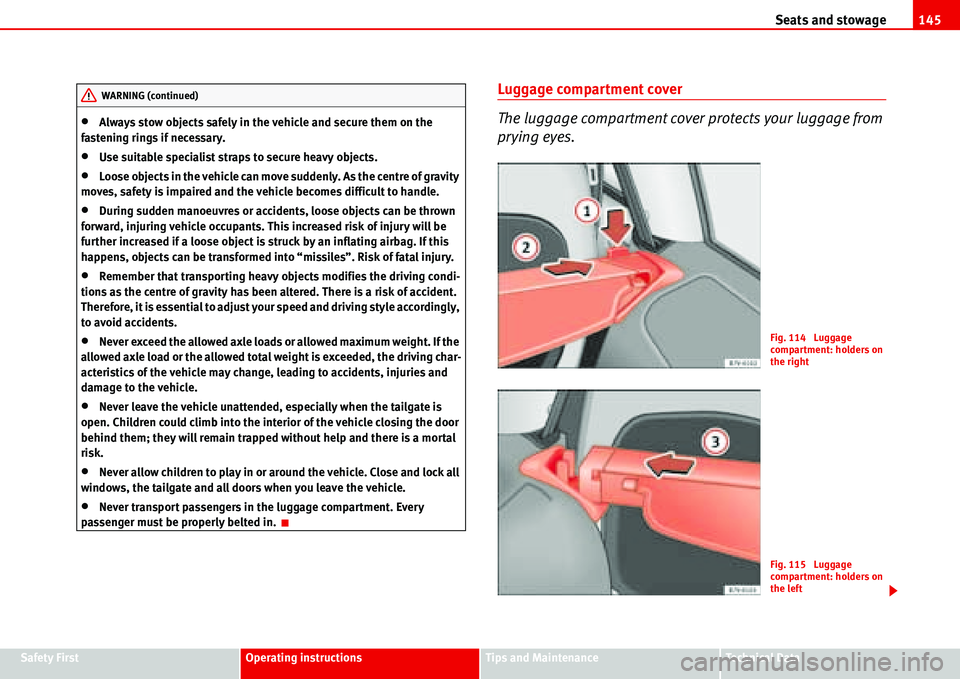
Luggage compartment cover
The luggage compartment cover protects your luggage from
prying eyes.WARNING (continued)
Fig. 114 Luggage
compartment: holders on
the right
Fig. 115 Luggage
compartment: holders on
the left
Page 150 of 299
Seats and stowage 148
•Damage to the vehicle caused by incorrect installation of mounts or roof
carrier systems not approved by the factory are excluded from the vehicle
warranty.
Securing the load
Loads transported on the roof carrier must be securely
attached. The car's handling is affected when transporting
loads.
The maximum permissible roof load for your vehicle is 75 kg. The load limit
applies to the combined weight of the carrier system and the load itself.
Distribute the load evenly. However, if you are using a roof carrier with a lower
weight rating, you will not be able to carry the maximum roof load. Do not
exceed the maximum weight limit for the roof carrier which is listed in the
fitting instructions.
WARNING
•If damaged, fine or inadequate securing straps are used to fasten
objects carried on the roof, they could break in the event of sharp braking.
This could cause an accident and serious injury.
•Always use appropriate securing straps to secure objects on the roof
carrier against sliding or flying off. This could cause an accident. The load
must be correctly secured.
•Always respect the maximum authorised weight for the roof, the
maximum authorised weight on the axles and the total maximum author-
ised weight of the vehicle. Otherwise there is danger of causing an acci-
dent.
•The risk of an accident is increased by transporting heavy or bulky
loads on the roof, which affects the car's handling by shifting the centre of
gravity and increasing susceptibility to cross winds. Both circumstances increase the risk of accident. Therefore you must adapt your driving style
and speed to the prevailing conditions - avoid sudden braking or driving
manoeuvres when there is a load on the roof carrier.
Caution
Please take extra care not to let the tailgate or rear window strike the roof load
when open – there is a risk of damage to the vehicle.
For the sake of the environment
The roof carrier is often left on the roof for convenience even if it is not being
used. However, increased air resistance means that the vehicle uses more
fuel. For this reason you should always take off the roof carrier when it is not
in use.
Cooling and heating box*
Notes on usage
The cooling and heating box may only be installed in the posi-
tion of rear left seat in the third row.
Power can be supplied by any of the 12 Volt sockets in the vehicle. It
consumes approximately 33 watts and has a capacity of approximately
32 litres.
The battery will discharge if the cooling and heating box is used for a long
period while the engine is switched off.
WARNING (continued)
Page 234 of 299
If and when 232
Box spanner for wheel bolts
Jack. Before you return the jack to the tool box, you must fully wind in the
claw. The crank must then be folded tight against the side of the jack.
The removable towing bracket
44), the key for unlocking the sunroof in an
emergency44) and the anti-theft wheel bolt adaptor44) are stored next to the
vehicle tools.
Adapter for anti-theft wheel bolts
We recommend you carry the wheel bolt adapter
44) in the vehicle tool kit at
all times.
The code number of the anti-theft wheel bolt is stamped on the front of the
adapter. You will need this number to replace the adapter if lost. Make a note
the code number of the anti-theft wheel bolt and keep it in a safe place - but
not in your vehicle.
WARNING
•Do not use the hexagonal socket in the screwdriver handle to tighten
the wheel bolts. It is not suitable for tightening the bolts to the necessary
torque. This may cause an accident.
•The jack supplied by the factory is only designed for changing wheels
on this model. Never attempt to use it for lifting heavier vehicles or other
loads. Risk of injury.
•Use the jack only on firm, level ground.
•Never start the engine when you have raised the vehicle on the jack.
Risk of accident.
•Never place your body (e.g. arm or leg) underneath the vehicle if it is
only supported by the jack Risk of injury.
•If you have to work underneath the vehicle, you must use suitable
stands additionally to support the vehicle - Risk of accident!.
Taking out the spare wheel
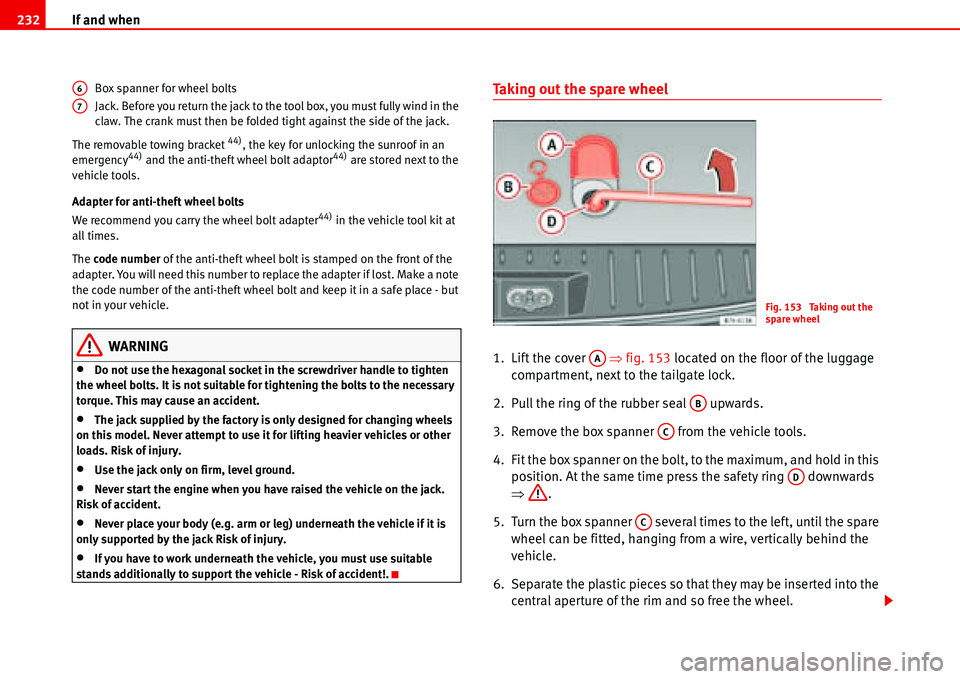
1. Lift the cover Ÿfig. 153 located on the floor of the luggage
compartment, next to the tailgate lock.
2. Pull the ring of the rubber seal upwards.
3. Remove the box spanner from the vehicle tools.
4. Fit the box spanner on the bolt, to the maximum, and hold in this
position. At the same time press the safety ring downwards
Ÿ.
5. Turn the box spanner several times to the left, until the spare
wheel can be fitted, hanging from a wire, vertically behind the
vehicle.
6. Separate the plastic pieces so that they may be inserted into the
central aperture of the rim and so free the wheel.
A6
A7
Fig. 153 Taking out the
spare wheel
AA
AB
AC
AD
AC
Page 248 of 299
If and when 246
– Remove the failed glass bulb and replace with a new bulb.
– Insert the lamp holder in the turn signal guide rail.
– First fit the turn signal in the opening of the chassis, securing the
tabs Ÿpage 245, fig. 165 and then, fit the lamp as shown by
the arrow .
Rear lights
Before changing a bulb, the tailgate should always be opened.
The lights have the following layout:
On the body
Turn signals, pilot light and brake/rear light
On the tailgate / rear door
Reversing light and rear antifog light.
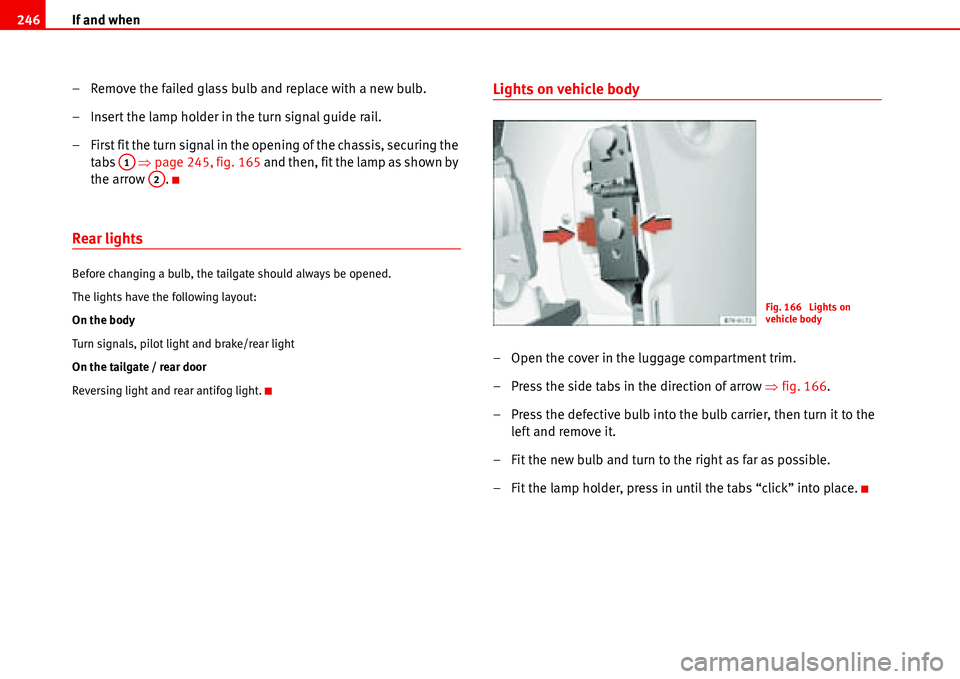
Lights on vehicle body
– Open the cover in the luggage compartment trim.
– Press the side tabs in the direction of arrow Ÿfig. 166.
– Press the defective bulb into the bulb carrier, then turn it to the
left and remove it.
– Fit the new bulb and turn to the right as far as possible.
– Fit the lamp holder, press in until the tabs “click” into place.
A1
A2
Fig. 166 Lights on
vehicle body
Page 249 of 299
If and when247
Safety FirstOperating instructionsTips and MaintenanceTe c h n i c a l D a t a
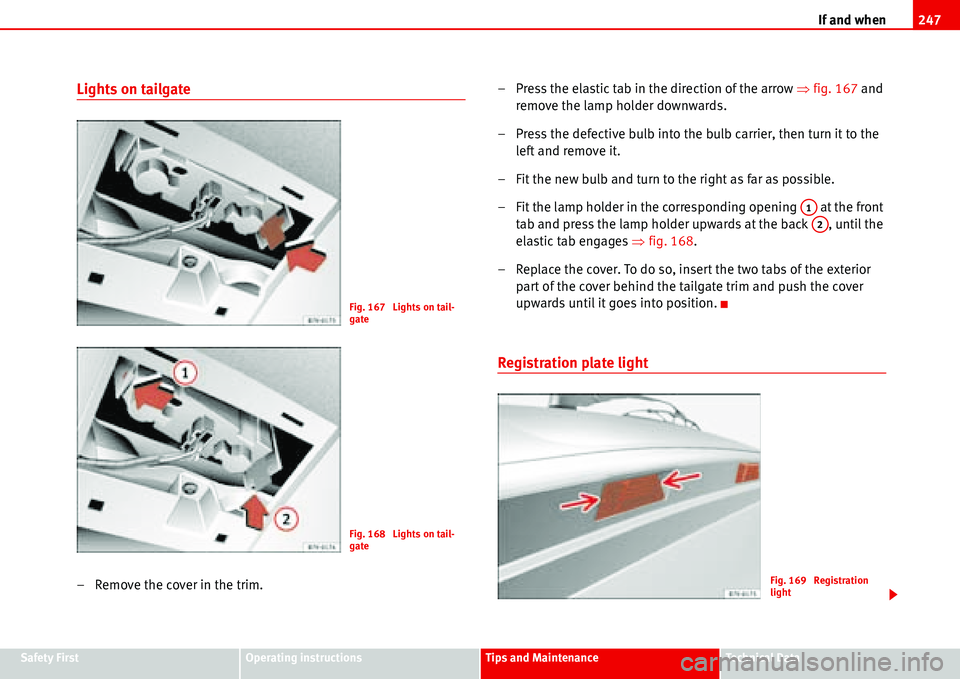
Lights on tailgate
– Remove the cover in the trim.– Press the elastic tab in the direction of the arrow Ÿfig. 167 and
remove the lamp holder downwards.
– Press the defective bulb into the bulb carrier, then turn it to the
left and remove it.
– Fit the new bulb and turn to the right as far as possible.
– Fit the lamp holder in the corresponding opening at the front
tab and press the lamp holder upwards at the back , until the
elastic tab engages Ÿfig. 168.
– Replace the cover. To do so, insert the two tabs of the exterior
part of the cover behind the tailgate trim and push the cover
upwards until it goes into position.
Registration plate light
Fig. 167 Lights on tail-
gate
Fig. 168 Lights on tail-
gate
A1
A2
Fig. 169 Registration
light
Page 250 of 299
If and when 248
– Remove the glass
– Remove the failed glass bulb and replace with a new bulb.
– Bolt down the glass without over tightening, ensuring that the
seal is perfectly fitted.
– Fit the reflector in the corresponding space in the tailgate
ensuring that the rubber seal and the light are assembled
correctly.
– Do not bolt down the glass too tightly.
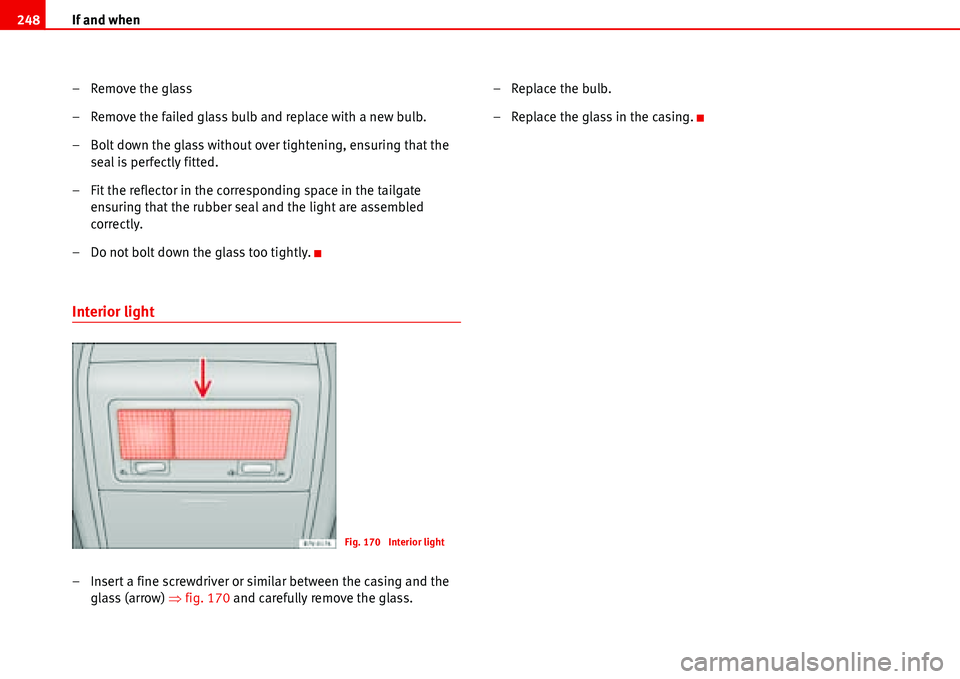
Interior light
– Insert a fine screwdriver or similar between the casing and the
glass (arrow) Ÿfig. 170 and carefully remove the glass.– Replace the bulb.
– Replace the glass in the casing.
Fig. 170 Interior light
Page 290 of 299
Index 288
Belt tension devices . . . . . . . . . . . . . . . . . . . . . . 30
Biodiesel . . . . . . . . . . . . . . . . . . . . . . . . . . . . . . 207
Bonnet . . . . . . . . . . . . . . . . . . . . . . . . . . . . . . . . 211
Brake assist system . . . . . . . . . . . . . . . . . . . . . 180
Brake fluid . . . . . . . . . . . . . . . . . . . . . . . . . . . . . 221
Changing . . . . . . . . . . . . . . . . . . . . . . . . . . . 222
Brake pad wear
Warning lamp . . . . . . . . . . . . . . . . . . . . . . . 179
Brake pad wear indicator*
Indicator . . . . . . . . . . . . . . . . . . . . . . . . . . . . . 77
Brake pads . . . . . . . . . . . . . . . . . . . . . . . . . . . . . 185
Brake servo . . . . . . . . . . . . . . . . . . . . . . . . 179, 185
Brake system . . . . . . . . . . . . . . . . . . . . . . . . . . . 221
brake servo . . . . . . . . . . . . . . . . . . . . . . . . . 179
Warning lamp . . . . . . . . . . . . . . . . . . . . . . . . 76
warning lamp . . . . . . . . . . . . . . . . . . . . . . . . 179
Brakes . . . . . . . . . . . . . . . . . . . . . . . . . . . . 179, 185
Braking distance . . . . . . . . . . . . . . . . . . . . . . . . 185
Bulb change . . . . . . . . . . . . . . . . . . . . . . . . . . . 245
Bulb defect
warning lamp . . . . . . . . . . . . . . . . . . . . . . . . . 76
Buzzer . . . . . . . . . . . . . . . . . . . . . . . . . . . . . . . . 161
C
Car care
Exterior . . . . . . . . . . . . . . . . . . . . . . . . . . . . . 194
Car care products . . . . . . . . . . . . . . . . . . . . . . . 193
Car phone . . . . . . . . . . . . . . . . . . . . . . . . . . . . . 203
Car washes . . . . . . . . . . . . . . . . . . . . . . . . . . . . 194Catalytic converter . . . . . . . . . . . . . . . . . . . . . . 186
CCS . . . . . . . . . . . . . . . . . . . . . . . . . . . . . . . . . . . 175
CD changer
Location . . . . . . . . . . . . . . . . . . . . . . . . . . . . 136
Central locking . . . . . . . . . . . . . . . . . . . . . . . . . . 87
individual opening of doors . . . . . . . . . . . . . 88
Central locking button . . . . . . . . . . . . . . . . . . . . 90
Central stowage on instrument panel . . . . . . . 133
Cetane number . . . . . . . . . . . . . . . . . . . . . . . . . 207
Changing a bulb . . . . . . . . . . . . . . . . . . . . . . . . 245
Changing a wheel . . . . . . . . . . . . . . . . . . . 236, 240
Changing brake pads . . . . . . . . . . . . . . . . . . . . 185
Changing bulbs
lights on tailgate/rear door . . . . . . . . . . . . 247
Lights on vehicle body . . . . . . . . . . . . . . . . 246
Reading light . . . . . . . . . . . . . . . . . . . . . . . . 249
Registration plate light . . . . . . . . . . . . . . . . 247
Changing gear
SeeManual gearbox . . . . . . . . . . . . . . . . . . 165
Changing the bulbs
interior light . . . . . . . . . . . . . . . . . . . . . . . . . 248
rear lights . . . . . . . . . . . . . . . . . . . . . . . . . . 246
Changing the lamps
Side indicator lights . . . . . . . . . . . . . . . . . . 245
Chassis number . . . . . . . . . . . . . . . . . . . . . . . . 258
Checking . . . . . . . . . . . . . . . . . . . . . . . . . . . . . . 224
Checking battery electrolyte level . . . . . . . . . . 224
Checking engine oil level . . . . . . . . . . . . . . . . . 214
Child safety . . . . . . . . . . . . . . . . . . . . . . . . . . . . . 45Child seat . . . . . . . . . . . . . . . . . . . . . . . . . . . . . . . 47
Categorisation in groups . . . . . . . . . . . . . . . 47
Group 1 . . . . . . . . . . . . . . . . . . . . . . . . . . . . . 48
Group 2 . . . . . . . . . . . . . . . . . . . . . . . . . . . . . 48
Group 3 . . . . . . . . . . . . . . . . . . . . . . . . . . . . . 48
Groups 0 and 0+ . . . . . . . . . . . . . . . . . . . . . . 47
in front passenger seat . . . . . . . . . . . . . . . . . 33
Safety notes . . . . . . . . . . . . . . . . . . . . . . . . . . 45
securing . . . . . . . . . . . . . . . . . . . . . . . . . . . . . 49
Childproof locks . . . . . . . . . . . . . . . . . . . . . . . . . 92
Cigarette lighter . . . . . . . . . . . . . . . . . . . . . . . . 140
Cleaning alloy wheels . . . . . . . . . . . . . . . . . . . . 198
Cleaning and caring for your vehicle . . . . . . . . 193
Cleaning chrome . . . . . . . . . . . . . . . . . . . . . . . . 197
Cleaning cloth seat covers . . . . . . . . . . . . . . . . 200
Cleaning dash panel . . . . . . . . . . . . . . . . . . . . . 199
Cleaning engine compartment . . . . . . . . . . . . . 199
Cleaning fabric trim . . . . . . . . . . . . . . . . . . . . . 200
Cleaning leather . . . . . . . . . . . . . . . . . . . . . . . . 200
Cleaning plastic parts . . . . . . . . . . . . . . . . . . . . 199
Cleaning seat belts . . . . . . . . . . . . . . . . . . . . . . 201
Cleaning steel wheels . . . . . . . . . . . . . . . . . . . . 197
Cleaning windows . . . . . . . . . . . . . . . . . . . . . . . 196
Cleaning wooden trim . . . . . . . . . . . . . . . . . . . . 200
Climatronic . . . . . . . . . . . . . . . . . . . . . . . . . . . . 151
Air outlet . . . . . . . . . . . . . . . . . . . . . . . . . . . 156
Controls . . . . . . . . . . . . . . . . . . . . . . . . . . . . 151
faults . . . . . . . . . . . . . . . . . . . . . . . . . . . . . . 157
General notes . . . . . . . . . . . . . . . . . . . . . . . 157
Second cooling system . . . . . . . . . . . . . . . 155