towing Seat Alhambra 2011 Owner's Guide
[x] Cancel search | Manufacturer: SEAT, Model Year: 2011, Model line: Alhambra, Model: Seat Alhambra 2011Pages: 385, PDF Size: 7.92 MB
Page 237 of 385
235
Trailer towing
The warning lamp
● When the indicator flashes , the t ow ball is not in its final position, has
not engaged or is damaged ⇒ .
● When the indicator remain s
lit and the tailgate is open, the tow ball has
inserted correctly into the folded or deployed position.
● When the tailgate is closed, the indicator is turned off. WARNING
The incorrect use of the tow hitch can cause accidents and injury.
● Ensure that no person, animal or object gets in the way of the tow
ba l
l.
● Never push the button when there is a trailer hitched or when any
kind of c
arrier or accessory is fitted to the tow hitch ball.
● While the ball is moving, do not interfere with any tool.
● Do not drive with a trailer if the indicator does not light.
● If there is a fault in the electric system or the trailer tow hitch, visit a
speci
alist workshop to have it checked.
● If the diameter of the tow hitch is less than 49 mm, never use this for
a trail
er. CAUTION
● If anything is attached to the tow hitch ball, do not, under any circum-
s t
ances press the button.
● Never direct a high-pressure or steam cleaning system directly at the
tow hit
ch ball or trailer power socket. This could cause damage to seals or
remove lubricating grease. Note
In extremely low temperatures, it is possible that the tow hitch is not re-
le a
sed. In this case, place the vehicle in a warmer location (for example, a
garage). Installing a bicycle carrier to the tow hitch The maximum load permitted for a bicycle carrier on the tow hitch ball is
75 kg
, w
ith a maximum distance of 300 mm from the support. The distance
between supports is the distance between the bicycle carrier centre of gravi-
ty (with the bicycles) and the centre of point of the tow hitch ball. WARNING
The incorrect use of the tow hitch with a bicycle carrier installed can
cau se ac
cidents and injury.
● Never exceed the load and distances between supports indicated.
● Never fit the bicycle carrier to the tow hitch ball neck, underneath the
tow hit
ch given that the bicycle carrier may be incorrectly fitted due to
the shape of the tow hitch and the model of bicycle carrier.
● Always read and take the manufacturer assembly instructions into ac-
count
. CAUTION
Exceeding the maximum load and distance between supports indicated can
cau se c
onsiderable damage to the vehicle.
● Never exceed the specifications.
Hitching and connecting the trailer Trailer cable
Alw
a
ys secure the trailer cable to the towing vehicle correctly. Leave a little
bit of slack in the cable for turning. However, ensure that the cable does not
rub off the ground while driving. Safety First Operating instructions Practical tips Technical Data
Page 238 of 385
236
Trailer towing
Trailer electric socket
The electric c
onnection between vehicle and trailer is a 13-pin socket. If the
trailer plug has seven pins, an adapter cable must be used.
Trailer rear lights
Check the trailer rear lights to ensure they work correctly and remain legal.
Ensure that the trailer does not use more than the maximum power
⇒ page 233.
Trailer connected to the antitheft alarm:
● When a vehicle comes from the factory fitted with an antitheft alarm and
tow hit
ch.
● When the trailer is connected to the vehicle using the socket.
● When the vehicle and trailer electrical systems work correctly and are
not dam
aged.
● When the vehicle is locked using the vehicle key and the antitheft alarm
is t
urned on.
When the vehicle is locked, the alarm is triggered when the electrical con-
nection between the vehicle and the trailer is removed.
Always turn off the anti-theft alarm system before connecting or disconnect-
ing a trailer. Otherwise, the tilt sensor may erroneously activate the alarm. WARNING
Erroneous or unsuitable connection of electric cables may supply energy
to the tr ai
ler causing an anomaly in the vehicle electronics that could re-
sult in an accident with serious consequences.
● All work on the electrical system must be carried out only by a spe-
cia
list workshop.
● Never connect the trailer's electric system to the electrical connec-
tions of
the rear lights or any other power sources. CAUTION
Do not leave the trailer connected to the vehicle when parked; places on its
sup por
t wheel or its supports. For example, when changing the load or a
puncture, the vehicle will be pushed up or down. The force acting on the
tow hitch and the trailer could damage the vehicle or the trailer. Note
● In case of a fault in the vehicle or trailer electrical system or in case of
pr o
blems with the antitheft alarm system, have the system checked by a
specialist workshop.
● If the trailer accessories use energy from the socket when the engine is
stop
ped, the battery will be discharged.
● For technical reasons, trailers fitted with rear LED lights cannot be con-
nected to the antithef
t alarm system.
● If the vehicle battery is running low, the electrical connection with the
trail
er is automatically cut.
● With the engine running, the electrical equipment on the trailer will con-
sume pow
er.
Loading the trailer Trailer weight / drawbar load
The trai
l
er weight is the load that the vehicle can pull ⇒ . The drawbar
loa d i
s the vertical weight of the trailer hitch on the tow hitch ball
⇒ page 240.
The figures for trailer weights and draw bar weights given on the data plate
of the towing bracket are for values of this model only. The correct figures
for your specific vehicle, which may be lower than these figures for the tow
hitch, are given in the registration documents. The instructions in the offi-
cial vehicle documents take precedence.
Page 239 of 385
237
Trailer towing
For the sake of road safety, SEAT recommends using the maximum allowed
dra wb
ar load. The handling of the combined vehicle and trailer will be poor
if the drawbar load is too low.
The drawbar load increases the weight on the rear axle, reducing the vehicle
carrying capacity.
Gross combination weight
This figure refers to the combined weight of the loaded vehicle and loaded
trailer.
Loading the trailer
The combined vehicle and trailer must be balanced. Use the maximum
drawbar load authorised and do not overload the front or the rear of the
trailer:
● Distribute loads in the trailer so that heavy objects are as near to the
axle a
s possible or even above it.
● Correctly secure the trailer load.
Tyr
e pressure
Inflate the trailer tyres according to the manufacturer's instructions.
Inflate the towing vehicles tyres to the maximum ⇒ page 293.WARNING
Exceeding the maximum authorised axle load, drawbar load or the gross
comb in
ation weight of the towing vehicle and trailer could cause a seri-
ous accident with severe consequences.
● Never exceed the specifications.
● With the actual load on the front and rear axles, the maximum axle
load shou
ld never be exceeded. The weight on the front and rear should
never exceed the gross vehicle weight. WARNING
If the load moves, the stability and safety of the vehicle and trailer com-
bin ation w
ill be seriously affected and this could result in a serious acci-
dent.
● Always correctly load the trailer.
● Always secure loads correctly with suitable and undamaged attach-
ment rope or s
traps.
Driving with a trailer Adjusting the headlights
When to
w
ing a trailer, the front of the vehicle may rise and so the dipped
beam headlights may blind other drivers. Use the headlight range control to
lower the cone of light. If you do not have headlight range control, have the
headlights adjusted by a qualified dealership. Vehicles with high-intensity
discharge lamps adapt automatically and do not require adjustment.
Details of driving with a trailer
● If the trailer has an overru
n brake, apply the brakes gently at first and
then, firmly. This will prevent the jerking that can be caused by the trailer
wheels locking.
● As of the combined vehicle and trailer mass, braking distances will be
great
er.
● Select a low gear before driving down a steep hill to use the engine
brakin
g effect to slow down the vehicle. Otherwise, the braking system
could overheat and fail. Safety First Operating instructions Practical tips Technical Data
Page 240 of 385
238
Trailer towing
●The vehicle centre of gravity and handling change because of the trailer
lo a
d and because of the increased combined mass of the vehicle and trail-
er.
● If the towing vehicle is empty and the trailer loaded then the load distri-
bution is
incorrect. If you must travel in these conditions, drive carefully and
reduce your speed accordingly.
Hill starts with a trailer
Depending on the hill and the gross combined weight, it is possible that the
combined vehicle and trailer move backwards slightly when starting.
For a hill start with a trailer, proceed as follows:
● Press and hold the brake pedal.
● Press the button once to turn off the electric parking brake
⇒ p ag
e 183.
● Press and hold the button to hold the vehicle and trailer combination
us in
g the parking brake.
● With a manual gearbox: press the clutch pedal to the floor.
● Engage first gear or the gear range D ⇒ page 174, Ch
anging gear.
● Release the brake pedal.
● Move off slowly. To do this, gently release the clutch pedal (for manual
gearbo
x).
● Release the button only when the engine provides sufficient power
to mo v
e the vehicle and trailer combination. WARNING
Jerking the trailer in an unsuitable manner could cause loss of vehicle
contr o
l with the subsequent serious consequences.
● Driving with a trailer and transporting heavy or a large objects will
chan
ge the vehicle handling and braking distances. WARNING (Continued)
● Antic ipate traffic and be extremely cautious. Brake early.
● Adju
s
t your speed and driving style to visibility, road, traffic and
weather c
onditions. Reduce your speed, especially on steep hills.
● Accelerate gently and carefully. Avoid brusque manoeuvres and sud-
den brakin
g.
● Always take the following precautions seriously. Reduce your speed
immediately
if you observe the trailer rocking from side to side.
● Never try to stop the “snaking” by increasing speed.
● Always take the speed limits for vehicles with and without trailers in
each c
ountry into account.
Stabilising the vehicle and trailer combination Stabilisation of the vehicle and trailer combination is an extension of the
electr
onic
stability control ESC (ESP) and helps, with the assistance of the
trajectory control, to reduce trailer “snaking”.
Stabilisation of the vehicle and trailer combination is active when the ESC
(ESP) indicator on the dashboard remains lit for about two seconds more
than the ABS indicator.
Requirements for stabilising the vehicle/trailer combination
● An original tow hitch is fitted by the manufacturer or a compatible model
is r
etrofitted.
● The ESC (ESP) is on. The warning indicator in the control panel is not
lit
.
● The trailer is connected to the vehicle using the socket.
● The vehicle is driven faster than 60 km/h.
● The maximum drawbar load is used.
Page 241 of 385
239
Trailer towing
● The trailer must have a fixed drawbar.
● Tr
ailers with brakes must be equipped with a mechanical inertia brake. WARNING
Do not let the extra safety afforded by the stabilisation system tempt you
into t ak
ing any risks when driving.
● Adjust your speed and driving style to visibility, road, traffic and
weather c
onditions.
● If the road surface is slippery, take care when accelerating.
● When a system is operating, lift your foot off the accelerator. WARNING
It is possible that the combination stabilisation system does not correct-
ly r ec
ognised all driving situations.
● It is possible that the stabilisation system does not detect snaking of
a light trai
ler and thus does not intervene.
● When driving on slippery ground, the trailer could jack-knife
despite
the stabilisation system.
● Trailers with a high centre of gravity may even tip over before they
star
t to rock sideways.
● If a trailer is not used at the trailer socket is connected (for example,
inst
allation of a bicycle carrier with lights), repeated automatic braking
may occur in extreme driving conditions. Retrofitting a tow hitch
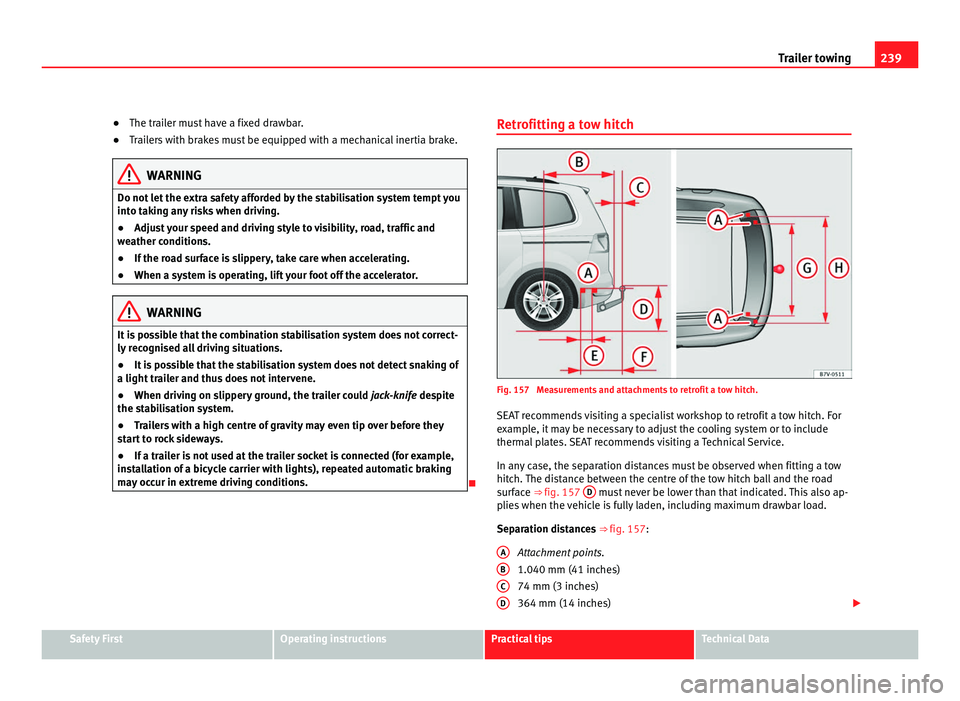
Fig. 157 Measurements and attachments to retrofit a tow hitch.
SEA T r
ecommends visiting a specialist workshop to retrofit a tow hitch. For
example, it may be necessary to adjust the cooling system or to include
thermal plates. SEAT recommends visiting a Technical Service.
In any case, the separation distances must be observed when fitting a tow
hitch. The distance between the centre of the tow hitch ball and the road
surface ⇒ fig. 157 D must never be lower than that indicated. This also ap-
plie s
when the vehicle is fully laden, including maximum drawbar load.
Separation distances ⇒ fig. 157:
Attachment points.
1.040 mm (41 inches)
74 mm (3 inches)
364 mm (14 inches)
A B
C
D
Safety First Operating instructions Practical tips Technical Data
Page 242 of 385
240
Trailer towing
247 mm (10 inches)
596 mm (23 inche s)
1097 mm (43 inc
hes)
1102 mm (43 inches) WARNING
Erroneous or unsuitable connection of electric cables may cause anoma-
lies in the
vehicle electronics that could result in an accident with serious
consequences.
● Never connect the trailer's electric system to the electrical connec-
tions of
the rear lights or any other unsuitable power sources. Only use
suitable connectors to connect a trailer.
● Visit a specialist workshop if you wish to retrofit a tow hitch to the
vehicl
e. WARNING
If the tow hitch is badly fitted or unsuitable, the trailer may separate from
the v ehic
le while driving. This could result in serious accident. Note
Use only tow hitches approved by SEAT for the vehicle.
Maximum gross trailer weight The instructions in the official vehicle documents take precedence. All the
tec
hnic
al data provided in this documentation is applicable to the basic
model. The vehicle data label in the Maintenance Programme or the vehicle
documents show which engine is installed in your vehicle. E F
G
H The figures may be different depending on if additional equipment is fitted,
for diff
er
ent models and for special vehicles. WARNING
Exceeding the maximum trailer weight indicated could cause a serious
acc ident
.
● Never exceed the indicated trailer weight. CAUTION
Exceeding the maximum trailer weight indicated could cause damage to the
vehic l
e.
● Never exceed the indicated trailer weight.
Gross combined vehicle weight rating The instructions in the official vehicle documents take precedence. All the
tec
hnic
al data provided in this documentation is applicable to the basic
model. The vehicle data label in the Maintenance Programme or the vehicle
documents show which engine is installed in your vehicle.
The figures may be different depending on if additional equipment is fitted,
for different models and for special vehicles.
The maximum combined weights listed are only applicable for altitudes up
to 1000 m above sea level. The weight of the car and trailer must be re-
duced by about 10% for every further 1000 m (or part thereof). WARNING
Exceeding the maximum weight indicated could cause a serious accident.
● Never exceed the gross combined weight rating.
Page 243 of 385
241
Trailer towing CAUTION
Exceeding the maximum gross combined weight rating indicated could
cau se d
amage to the vehicle.
● Never exceed the gross combined weight rating. Safety First Operating instructions Practical tips Technical Data
Page 284 of 385
282
Checking and refilling levels
● Unscrew the cap from engine oil filler opening on the cylinder head
⇒ fig. 169
. If you are not sure where the cap is, request help from a special-
ist.
● Only refill using engine oil expressly approved by SEAT and in small
quantities (not
more than 0.5 l or 1/2 a quarter of a gallon at a time)
⇒ page 280.
● To avoid adding too much oil, each time you add a quantity, wait until
the oil h
as flowed into the crankcase so that it can be measured with the
dipstick.
● Check the oil level before adding any more oil. Do not top up with too
much engine oi
l ⇒ .
● When the oil level is in at least the ⇒ fig. 168 B zone, insert the dip-
stic k
into the tube fully to avoid engine oil escaping when the engine is run-
ning.
● After topping up the oil, ensure that the cap is screwed on to the filler
mouth correctly
. WARNING
Oil could catch fire if it comes into contact with hot engine components.
This c
ould lead to a fire, explosion and severe injuries.
● Always ensure that after topping of oil, the engine oil filler cap is cor-
rectly tight
ened. This will avoid engine oil spilling onto hot engine parts
when the engine is running. CAUTION
● If the oil level is above the area A do not start the engine. You should
obt ain pr
ofessional assistance. Otherwise catalytic converter and engine
damage may occur.
● When refilling or changing service liquids, ensure that you put the liq-
uids int
o the right tank. Making a mistake when refilling could cause seri-
ous malfunctions and damage the engine! For the sake of the environment
The oil level must never be above area A . Otherwise oil can be drawn in
through the c r
ankcase breather and escape into the atmosphere via the ex-
haust system.
Engine oil consumption The consumption of engine oil can be different from one engine to another
and can
v
ary during the useful life of the engine.
Depending on driving style and the conditions of use, the consumption of
engine oil can reach 1 litre every 2000 km (one quarter of a gallon every
1200 miles); for new vehicles, this could be higher for the first 5000 km
(3000 miles). For this reason the engine oil level must be checked at regular
intervals, preferably when filling the tank and before a journey.
When the engine is working hard, for instance during sustained high-speed
motorway cruising in summer, when towing a trailer or climbing mountain
passes, the oil level should preferably be kept within area ⇒ fig. 168 A .
Changing the engine oil The engine oil must be changed regularly according to the specifications of
the Maint
en
ance Programme.
Due to the problems linked with disposing of used oil and the need for suit-
able tools and special knowledge, always visit a Technical Service to have
the engine oil and filter changed. SEAT recommends visiting a Technical
Service.
Detailed information on the service intervals are shown in the Maintenance
Programme.
Page 285 of 385
283
Checking and refilling levels
Engine oil additives make new oil darker after the engine has been running
for a shor t
period. This is normal and does not mean more frequent oil
changes are required. WARNING
If, in exceptional circumstances, you must change the engine oil yourself,
pl e
ase note the following:
● Wear eye protection.
● Always wait until the engine has completely cooled to avoid being
burned.
● Alw
ays keep your arms horizontal when unscrewing the oil drainage
bolt so th
at the oil does not run down your arms when it begins to drain.
● Use a suitable and large enough container to collect all of the used oil
in the engine.
● Never c
ollect engine oil in empty food containers, cans, bottles and
other container
s as not all people are able to identify engine oil.
● Oil is toxic and must be kept out of the reach of children. For the sake of the environment
Before changing the engine oil, find a suitable location or service for proper
dis po
sal. For the sake of the environment
Always dispose of engine oil with the utmost respect for the environment.
Never di s
pose of used engine oil in places such as a garden, woods, drains,
roads, paths, rivers and drainage systems. Engine coolant
Introduction Never work on the engine cooling system or if you are not familiar with the
operation
s
to be carried out, the applicable safety standards and especially
if you do not have the instruments, liquids and tools necessary ⇒ ! Have
the work c
arried out by a Technical Service if you are uncertain. SEAT recom-
mends visiting a Technical Service.
Negligent work can cause serious injury.
Additional information and warnings:
● Towing mode ⇒ page 233
● W
orking in the engine compartment ⇒ page 275
● A
ccessories, parts replacement, repairs and modifications ⇒ page 257 WARNING
Engine coolant is toxic!
● Only keep engine coolant in its original container, tightly shut and in
a saf e p
lace.
● Never store engine coolant in empty food containers or bottles as
other people m
ay accidentally drink it.
● Always keep engine coolant out of reach of children.
● Ensure that the proportion of engine coolant additive corresponds to
the lowe
st outside temperature to which the vehicle will be exposed.
● If the outside temperature is extremely low, the engine coolant could
freeze c
ausing the vehicle to stop. As this would also cause the heating
to stop working, passengers without sufficient clothing could freeze. Safety First Operating instructions Practical tips Technical Data
Page 308 of 385
306
Wheels and tyres WARNING (Continued)
● Only use suitable tools that are not damaged when changing a wheel.
● A
lw
ays stop the engine, turn on the electronic parking brake and
plac
e the gear selector lever in position P, for an automatic gearbox, or
engage a gear for a manual gearbox to reduce the risk of the vehicle mov-
ing accidentally.
● Have the tightening torque of the wheel bolts checked as soon as
poss
ible with a reliable torque wrench.
Preparations for changing a wheel Check list
Bef
or
e changing a wheel, complete the following operations in the order
given ⇒ :
Park the
vehicle on an even and solid surface.
Connect the electronic parking brake ⇒ page 183.
Automatic gearbox: Move selector lever to position P ⇒ page 174.
Stop the engine and remove the key from the ignition ⇒ page 170.
Manual gearbox: Select a gear ⇒ page 174.
Have all vehicle occupants get out of the vehicle and wait in a safe
place (for example, behind the safety barrier).
Block the opposite wheel with wedges or a similar object.
When towing a trailer: unhook the trailer from the towing vehicle and
park it correctly.
If the luggage compartment is full: take the baggage out of the vehicle. Take the vehicle tool kit out of the luggage compartment.
Remove the wheel trims ⇒ page 304.
1.
2.
3.
4.
5.
6.
7.
8.
9.
10.
11. WARNING
Failure to follow the checklist prepared for your own safety could lead to
acc ident
s and severe injuries.
● Always complete the operations given in the checklist and observe
the genera
l rules of safety.