warning Seat Alhambra 2013 Owner's Manual
[x] Cancel search | Manufacturer: SEAT, Model Year: 2013, Model line: Alhambra, Model: Seat Alhambra 2013Pages: 387, PDF Size: 6.13 MB
Page 243 of 387
241
Trailer towing
● The vehicle centre of gravity and handling change because of the trailer
load and because of the increased combined mass of the vehicle and trail-
er.
● If the towing vehicle is empty and the trailer loaded then the load distri-
bution is incorrect. If you must travel in these conditions, drive carefully and
reduce your speed accordingly.
Hill starts with a trailer
Depending on the hill and the gross combined weight, it is possible that the
combined vehicle and trailer move backwards slightly when starting.
For a hill start with a trailer, proceed as follows:
● Press and hold the brake pedal.
● Press the button
once to turn off the electric parking brake
⇒ page 184.
● Press and hold the button
to hold the vehicle and trailer combination
using the parking brake.
● With a manual gearbox: press the clutch pedal to the floor.
● Engage first gear or the gear range D ⇒ page 175, Changing gear.
● Release the brake pedal.
● Move off slowly. To do this, gently release the clutch pedal (for manual
gearbox).
● Release the button
only when the engine provides sufficient power
to move the vehicle and trailer combination.
WARNING
Jerking the trailer in an unsuitable manner could cause loss of vehicle
control with the subsequent serious consequences.
● Driving with a trailer and transporting heavy or a large objects will
change the vehicle handling and braking distances.
WARNING (Continued)
● Anticipate traffic and be extremely cautious. Brake early.
● Adjust your speed and driving style to visibility, road, traffic and
weather conditions. Reduce your speed, especially on steep hills.
● Accelerate gently and carefully. Avoid brusque manoeuvres and sud-
den braking.
● Always take the following precautions seriously. Reduce your speed
immediately if you observe the trailer rocking from side to side.
● Never try to stop the “snaking” by increasing speed.
● Always take the speed limits for vehicles with and without trailers in
each country into account.
Stabilising the vehicle and trailer combination
Stabilisation of the vehicle and trailer combination is an extension of the
electronic stability control (ESC) and helps, with the assistance of the trajec-
tory control, to reduce trailer “snaking”.
Stabilisation of the vehicle and trailer combination is active when the ESC
indicator on the dash panel remains lit for about two seconds more than the
ABS indicator.
Requirements for stabilising the vehicle/trailer combination
● An original tow hitch is fitted by the manufacturer or a compatible model
is retrofitted.
● The ECS is switched on. The warning lamp on the instrument panel is
not lit.
● The trailer is connected to the vehicle using the power socket.
● The vehicle is driven faster than 60 km/h (40 mph).
● The maximum drawbar load is used.
Safety FirstOperating instructionsPractical tipsTechnical Specifications
Page 244 of 387
242Trailer towing
●The trailer must have a fixed drawbar.
● Trailers with brakes must be equipped with a mechanical inertia brake.
WARNING
Do not let the extra safety afforded by the stabilisation system tempt you
into taking any risks when driving.
● Adjust your speed and driving style to visibility, road, traffic and
weather conditions.
● If the road surface is slippery, take care when accelerating.
● When a system is operating, lift your foot off the accelerator.
WARNING
It is possible that the combination stabilisation system does not correct-
ly recognised all driving situations.
● It is possible that the stabilisation system does not detect snaking of
a light trailer and thus does not intervene.
● When driving on slippery ground, the trailer could jack-knife despite
the stabilisation system.
● Trailers with a high centre of gravity may even tip over before they
start to rock sideways.
● If a trailer is not used and the trailer power socket is connected (for
example, installation of a bicycle carrier with lights), repeated automatic
braking may occur in extreme driving conditions.
Retrofitting a tow hitch
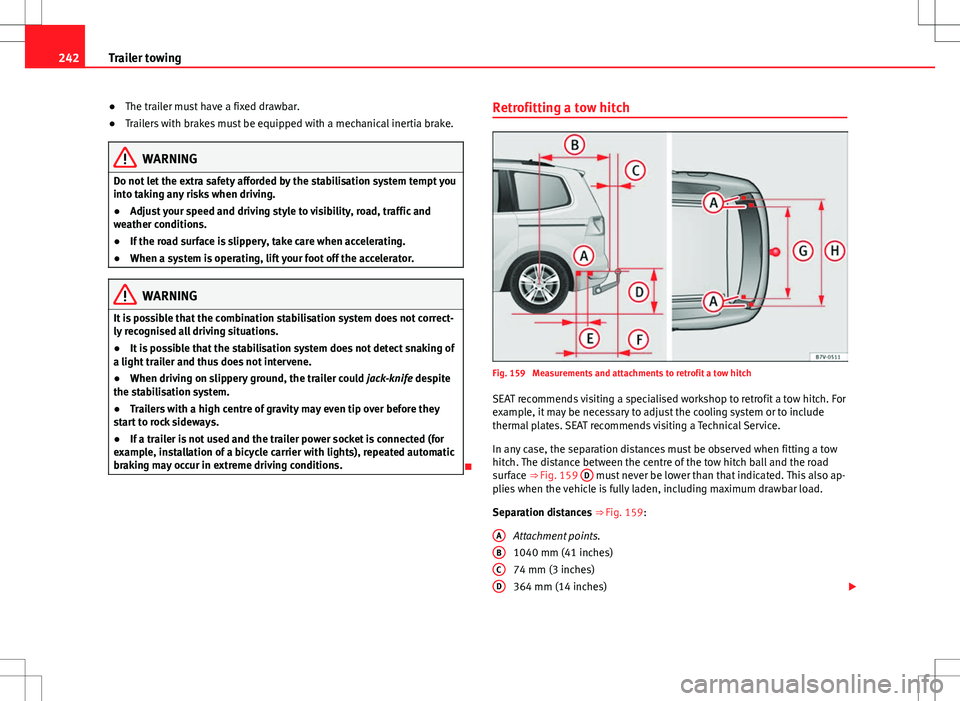
Fig. 159 Measurements and attachments to retrofit a tow hitch
SEAT recommends visiting a specialised workshop to retrofit a tow hitch. For
example, it may be necessary to adjust the cooling system or to include
thermal plates. SEAT recommends visiting a Technical Service.
In any case, the separation distances must be observed when fitting a tow
hitch. The distance between the centre of the tow hitch ball and the road
surface ⇒ Fig. 159 D
must never be lower than that indicated. This also ap-
plies when the vehicle is fully laden, including maximum drawbar load.
Separation distances ⇒ Fig. 159:
Attachment points.
1040 mm (41 inches)
74 mm (3 inches)
364 mm (14 inches)
A
BCD
Page 245 of 387
243
Trailer towing
247 mm (10 inches)
596 mm (23 inches)
1097 mm (43 inches)
1102 mm (43 inches)
WARNING
Erroneous or unsuitable connection of electric cables may cause anoma-
lies in the vehicle electronics that could result in an accident with serious
consequences.
● Never connect the trailer's electric system to the electrical connec-
tions of the rear lights or any other unsuitable power sources. Only use
suitable connectors to connect a trailer.
● Visit a specialised workshop if you wish to retrofit a tow hitch to the
vehicle.
WARNING
If the tow hitch is badly fitted or unsuitable, the trailer may separate from
the vehicle while driving. This could result in a serious accident.
Note
Use only tow hitches approved by SEAT for the vehicle.
Maximum gross trailer weight
The instructions in the official vehicle documents take precedence. All the
technical data provided in this documentation is applicable to the basic
model. The vehicle data label in the Maintenance Programme or the vehicle
documentation shows which engine is installed in your vehicle. E
FGH
The figures may be different depending whether additional equipment is fit-
ted, for different models and for special vehicles.
WARNING
Exceeding the maximum trailer weight indicated could cause a serious
accident.
● Never exceed the indicated trailer weight.
CAUTION
Exceeding the maximum trailer weight indicated could cause damage to the
vehicle.
● Never exceed the indicated trailer weight.
Gross combined vehicle weight rating
The instructions in the official vehicle documents take precedence. All the
technical data provided in this documentation is applicable to the basic
model. The vehicle data label in the Maintenance Programme or the vehicle
documentation shows which engine is installed in your vehicle.
The figures may be different depending whether additional equipment is fit-
ted, for different models and for special vehicles.
The maximum combined weights listed are only applicable for altitudes up
to 1000 m above sea level. The weight of the car and trailer must be re-
duced by about 10% for every further 1000 m (or part thereof).
WARNING
Exceeding the maximum weight indicated could cause a serious accident.
● Never exceed the gross combined weight rating.
Safety FirstOperating instructionsPractical tipsTechnical Specifications
Page 247 of 387
245
Vehicle maintenance and cleaning
Vehicle maintenance and cleaning Care and cleaning the vehicle exterior
Introduction
Regular maintenance and washing help to maintain the value of the vehicle.
This may also be one of the requirements for acknowledging warranty
claims in the event of bodywork corrosion or paint defects.
Products suitable for the care of your vehicle are available at any Technical
Service.
Additional information and warnings:
● Care and cleaning of the vehicle interior ⇒ page 252
● Working in the engine compartment ⇒ page 278
● Accessories, parts replacement, repairs and modifications ⇒ page 260
WARNING
Car-care products may be toxic and hazardous. If car care products are
not suitable or are used inappropriately, this could result in accident, se-
rious injury, burns or intoxication.
● Car care products must always be stored in the original container
which should be kept closed.
● Observe information provided by the manufacturer.
● To prevent confusion, never store car care products in empty food
cans, bottles or other containers.
● Keep all care products out of reach of children.
WARNING (Continued)
● Harmful vapours may be produced when using car care products.
Therefore, care products should only be used in well-ventilated spaces or
in the open air.
● Never use fuel, turpentine, engine oil, acetone or any other volatile
liquid to wash, clean or care for the vehicle. These are toxic and highly
flammable.
WARNING
Inappropriate care and cleaning of vehicle components may effect the ve-
hicle safety equipment, increasing the risk of severe injury.
● Vehicle components should only be cleaned and maintained in ac-
cordance with the manufacturer's instructions.
● Only use approved or recommended care products.
CAUTION
Cleaning products which contain solvents will damage the material.
For the sake of the environment
● Only wash the vehicle in areas allocated for this purpose, to prevent
dirty water which may be contaminated by oil, grease or fuel, from entering
the drains. In some places, washing vehicles outside wash bays is prohibi-
ted.
● Where possible, always use products which respect the environment.
● The remains of car care products should not be disposed of with ordina-
ry household waste. Observe information provided by the manufacturer.
Safety FirstOperating instructionsPractical tipsTechnical Specifications
Page 248 of 387
246Vehicle maintenance and cleaning
Washing the vehicle
The longer substances such as insects, bird droppings, resinous tree sap,
road dirt, industrial deposits, tar, soot or road salt and other aggressive ma-
terials remain on the vehicle, the more damage they do to the paintwork.
High temperatures (for instance due to strong sunlight) further intensify the
corrosive effect. The vehicle undercarriage should also be thoroughly wash-
ed at regular intervals.
Automatic car washes
Always observe the instructions provided at the automatic car wash. The
standard precautionary measures prior to entering the car wash should be
taken to avoid damage to the vehicle (close all windows, fold in exterior mir-
rors). If the vehicle is fitted with additional components (spoiler, roof-rack,
aerial...), check with the car wash supervisor whether these can enter the
car wash ⇒
.
The vehicle paintwork is so durable that the vehicle can normally be washed
without problems in an automatic car wash tunnel. However, wear and dam-
age to the paintwork will depend on the type of car wash used. SEAT recom-
mends the use of car washed without brushes.
To remove traces of wax on windows and to prevent wiper blades from
scratching, please observe the following ⇒ page 248, Cleaning windows
and exterior mirrors.
Washing the car by hand
When washing the car by hand, use plenty of water to soften the dirt first,
and rinse off as well as possible.
Then clean the vehicle with a soft sponge, glove or brush using only slight
pressure. Start at the roof and work downwards. Special car shampoo
should only be used for very persistent dirt.
Rinse the sponge or glove thoroughly and often.
Wheels, sills and similar should be cleaned last. Use a second sponge for
this.
WARNING
Sharp components on the vehicle may cause injury.
● Protect arms and hands from sharp edges when cleaning the vehicle
undercarriage or the interior of the wheel hubs.
WARNING
After the vehicle has been washed, the braking effect will be reduced
(and the braking distance increased) due to moisture (and ice in winter)
on the brakes.
● Dry the brakes and remove ice by braking carefully. Ensure that you
are not endangering other road-users or breaking traffic regulations in
the process.
CAUTION
● The temperature of the water must not exceed +60 °C (+140 °F).
● To avoid damage to the paintwork, do not wash the vehicle in full sun.
● Do not use rough sponges or similar which could damage the surface to
clean away the traces of insects.
● Never wipe the headlights with a dry cloth or sponge, always moisten
first. It is best to use soapy water.
● Washing the vehicle in low temperatures: When washing the vehicle
with a hose, do not direct water into the lock cylinders or the gaps around
the doors, rear lid, or sunroof. Locks and seals could freeze!
CAUTION
To prevent damage to the vehicle, please observe the following before en-
tering an automatic car wash :
● Compare the distance between the vehicle wheels and the distance be-
tween the guide-rails of the car wash to prevent damage to the wheels and
tyres!
Page 249 of 387
247
Vehicle maintenance and cleaning
● Switch off the rain sensor and the Auto Hold function before entering a
car wash.
● Compare the height and width of your vehicle with the available height
and width when entering and driving through the car wash.
● Fold in exterior mirrors Electrically retractable exterior mirrors must NOT
be folded in or out by hand. Always use the electrical power control.
● To avoid damaging the bonnet paintwork, rest the wipers on the wind-
screen after drying them. Do not let them fall!
● Lock the rear lid to prevent it from opening unexpectedly while inside
the car wash.
Washing the vehicle with high pressure cleaning
equipment
When cleaning the vehicle with a high-pressure cleaner, always follow the
operating instructions for the equipment. Pay special attention to the re-
quired pressure of the jet and the distance between the jet and the vehicle
⇒
.
Keep a suitable distance from soft materials, such as rubber hoses or insu-
lating material, and from the parking distance warning system sensors. The
parking distance sensors are fitted in the rear bumpers and, where applica-
ble, in the front bumpers ⇒
.
Do not use a nozzle that sprays the water out in a direct stream or one that
has a rotating jet for forcing off dirt ⇒
.
WARNING
The incorrect use of high pressure cleaning equipment could result in
permanent damage, visible or invisible, to the tyres or other materials.
This could result in a serious accident.
● Ensure there is a suitable distance between the nozzle and the tyres.
● Never wash tyres with a concentrated jet or so-called “dirt blasters”.
Even at large spraying distances and short cleaning times, you may dam-
age the tyres.
WARNING
After the vehicle has been washed, the braking effect will be reduced
(and the braking distance increased) due to moisture (and ice in winter)
on the brakes.
● Dry the brakes and remove ice by braking carefully. Ensure that you
are not endangering other road-users or breaking traffic regulations in
the process.
CAUTION
● The temperature of the water must not be above +60 °C (+140 °F).
● To avoid damage to the paintwork, do not wash the vehicle in full sun.
● The sensors on the bumpers should be kept clean and free of ice at all
times to ensure the parking distance warning system and the parking aid
system operate correctly. When cleaning with pressure hoses and steam
cleaners, the sensors should be sprayed only briefly. A distance of 10 cm
between the sensors and the steam / hose nozzle must be observed.
● Do not use a high pressure cleaner to remove ice or snow from windows
● Washing the vehicle in low temperatures: When washing the vehicle
with a hose, do not direct water into the lock cylinders or the gaps around
the doors, rear lid, or sunroof. Locks and seals could freeze!
Safety FirstOperating instructionsPractical tipsTechnical Specifications
Page 250 of 387
248Vehicle maintenance and cleaning
Cleaning windows and exterior mirrors
Cleaning windows and exterior mirrors
Spray windows and exterior windows with a standard window cleaner con-
taining alcohol.
Dry the windows with a clean chamois leather or a lint-free cloth. The cha-
mois leathers used on painted surfaces are not suitable for cleaning win-
dows because they are soiled with wax deposits which could smear the win-
dows.
Use window cleaner or a silicone remover to clean rubber, oil, grease and
silicone deposits off ⇒
.
Removing wax deposits
Automatic car washes and certain car care products may leave wax deposits
on the windows. These deposits can only be removed with a special product
or cleaning cloths. Wax deposits on the windscreen could cause the wiper
blades to judder. SEAT recommends you wipe the wax deposits off the wind-
screen with a soft cloth each time after you have washed the vehicle.
A window cleaning detergent which helps to dissolve the wax may be added
to the windscreen washer fluid to prevent the wiper blades from scratching
the windscreen. Please ensure the you add the cleaning product in the cor-
rect proportions. Products for removing grease do not eliminate the wax de-
posits ⇒
.
Special cleaning products or window cloths are available at any Technical
Service. To remove wax deposits, SEAT recommends the following products:
● For the hottest time of the year: the window cleaner for summer
use G 052 184 A1. Proportion 1:100 (1 part detergent, 100 parts water) in
the windscreen washer reservoir.
● All year round: the window cleaner G 052 164 A2; proportion 1:2 in
windscreen washer reservoir (1 part concentrate, 2 parts water) in winter, up
to -18 °C (-0.4 °F), or 1:4, during the rest of the year.
● Window cloths G 052 522 A1 for all windows and exterior mirrors. Removing snow
Use a small brush to remove snow from the windows and exterior mirrors.
Removing ice
If possible, use a de-icing spray to remove ice. If you use an ice scraper,
push it in one direction only
without swinging it. If you pull the scraper
backwards, the dirt may scratch the window.
WARNING
Dirty or misted windows reduce visibility in all directions and increase
the risk of accident and serious injury.
● Do not drive unless you have good visibility through all windows!
● Remove ice and snow from the windows and demist inside and out.
CAUTION
● Never mix our cleaning products with other products not recommended
by SEAT in the windscreen washer reservoir. This could lead to flocculation
and may block the windscreen washer jets.
● Do not use hot or warm water to remove ice or snow from the windows
and exterior mirrors. The glass could crack!
● The heating element for the rear window is located on the inner side of
the window. Do not stick adhesive labels over the heating elements and
never clean the inside of the rear window with corrosive or acid products or
other similar chemical cleaning products.
● Aerials on the inside of windows may be damaged if knocked or if
cleaned with corrosive or acid cleaning products. Do not stick adhesive la-
bels over the heating elements and never clean the inside of the rear win-
dow with corrosive or acid products or other similar chemical cleaning prod-
ucts.
Page 252 of 387
250Vehicle maintenance and cleaning
● Insert a new blade of the same length and type in the wiper arm in the
opposite direction to the arrow B
and hook into place. This feature is op-
erational when the knob is in position (arrow A).
● Replace the wiper arm on the rear window.
WARNING
Worn or dirty wiper blades reduce visibility and increase the risk of acci-
dent and serious injury.
● Always replace damaged or worn blades or blades which do not clean
the windscreen correctly.
CAUTION
● Damaged or dirty windscreen wipers could scratch the glass.
● If products containing solvents, rough sponges or sharp objects are
used to clean the blades, the graphite layer will be damaged.
● Never use fuel, nail varnish remover, paint thinner or similar products to
clean the windows.
Caring for and polishing the vehicle paintwork
Waxing
Regular waxing protects the paintwork. It is time to apply a good coat of wax
when water no longer forms droplets and rolls off the clean paintwork.
Even if a wax solution is used regularly in the automatic car wash, SEAT rec-
ommends protecting the paint with a hard wax coating at least twice a year.
Polishing
Polishing is only necessary if the paint has lost its shine, and the gloss can-
not be brought back by applying wax. If the polish does not contain wax, a wax product should be applied after
polishing.
CAUTION
● To prevent damage, car polish or hard wax should not be used on com-
ponents painted in matt paint, plastic components and the glass headlamp
and tail light covers.
● Do not polish the paintwork if it is dirty, apply polish in dusty or sandy
zones.
Cleaning chrome parts
Clean chrome parts with a damp cloth. SEAT recommends the use of a
chrome care product to clean stains and dirt from chrome surfaces. Use a
soft dry cloth to polish chrome parts.
CAUTION
To prevent scratching chrome surfaces:
● Do not use abrasive products.
● Do not clean or polish chrome parts in a sandy or dusty environment.
● Do not polish dirty surfaces.
Caring for and cleaning anodized surfaces
It is not easy to detect the difference between aluminium and an anodized
surface, for example, a radiator grille. However, anodized surfaces must not
be treated in the same way as aluminium surfaces. Never use rough spong-
es or cloths to wipe away insect remains.
Page 254 of 387
252Vehicle maintenance and cleaning
WARNING
Additional underseal or anti-corrosion products could catch fire due to
the high temperatures reached by the exhaust gas system and other en-
gine components.
● Do not apply additional underseal or anti-corrosion products to the
exhaust pipes, catalytic converters, heat shields or other parts of the ve-
hicle which reach high temperatures.
Cleaning the engine compartment
The engine compartment of any motor vehicle is a potentially hazardous
area ⇒ page 278. The engine compartment should only be cleaned by qualified personnel. If
it is not correctly cleaned, the anti-corrosion coating and consequently elec-
trical components may be damaged. Moreover, water may filter directly into
the vehicle interior through the water chamber ⇒
.
If the engine compartment is very dirty, always take the vehicle to a special-
ised workshop for professional cleaning. SEAT recommends visiting a Tech-
nical Service.
Water box
The water box is in the engine compartment, between the windscreen and
the engine, and beneath a perforated cover. Air is taken in through the wa-
ter box from outside to the vehicle interior via the heating and air condition-
er.
Leaves and other loose objects should be regularly cleaned away from the
water box either by hand or with a vacuum.
WARNING
When working on the engine or in the engine compartment, there is a
risk of injury, burns, accident or fire.
● Before starting work, please ensure you are familiar with the required
procedure and the safety precautions ⇒ page 278.
● SEAT recommends you have this work performed by a specialised
workshop.
CAUTION
If water is manually poured into the water box (for example, using a high
pressure cleaning appliance), this could cause significant damage to the ve-
hicle.
For the sake of the environment
Only wash the engine compartment in areas allocated for this purpose, to
prevent dirty water which may be contaminated by oil, grease or fuel, from
entering the drains. In some districts, the engine compartment may not be
washed outside the wash bays provided for this purpose.
Caring for and cleaning the vehicle interior Introduction
The dye used in many modern garments, for example dark jeans, is not al-
ways sufficiently colour-fast. Seat upholstery (material and leather), espe-
cially when light-coloured, may visibly discolour if the dye comes out of
clothing (even when used correctly). This is not an upholstery defect but in-
dicates that the dye in the item of clothing is not sufficiently colour-fast.
Page 255 of 387
253
Vehicle maintenance and cleaning
The longer stains or dirt remain on the vehicle surfaces, especially the fab-
rics covering the padded upholstery, the more difficult it becomes to clean
and maintain them. If stains and dirt are left for a long time, it may be that
they are impossible to remove.
WARNING
Car-care products may be toxic and hazardous. Using unsuitable car-care
products or, using them in the wrong way, may cause accidents, serious
injury, burns or intoxication.
● Keep your car-care products in their original containers.
● Read the instructions.
● Never keep car-care products in empty food containers, bottles or
other similar containers. Other people may confuse them.
● Keep all car-care products out of the reach of children.
● Some products may give off harmful vapours during use. Therefore,
they should be used outdoors in well-ventilated places.
● Never use fuel, turpentine, engine oil, nail-varnish remover or any
other volatile product for washing, maintenance or cleaning. These are
toxic and highly flammable.
WARNING
Unsuitable maintenance and cleaning of vehicle components may impair
proper operation of safety equipment and cause serious injury.
● Maintain and clean vehicle components according to the manufactur-
er's instructions.
● Only use approved or recommended cleaning products.
CAUTION
● Cleaning products which contain solvents have a corrosive effect and
may damage the material irreparably.
● Stains and dirt containing aggressive substances or solvents attack the
material and may damage it irreparably, even when they are cleaned quick-
ly.
● Dirt and stains should not be allowed to dry and should be cleaned as
quickly as possible.
● In the case of stubborn stains, take the vehicle to a specialised work-
shop to avoid damage.
Treating your upholstery
Checklist
To treat and maintain your seat upholstery, keep the following in mind ⇒
:
¥ Before entering the vehicle, close any Velcro fasteners that might
snag on the upholstery or trim fabric. Any open Velcro fasteners may
damage the trim or upholstery fabrics.
¥ To prevent damage, avoid direct contact between sharp decorative
objects and the upholstery and trim fabrics. Decorative objects in-
clude zips, rivets and rhinestones on clothing and belts.
¥ From time to time, clean the dust that gathers in the perforations,
folds and seams so that the surfaces of the seats are not damaged
by its abrasive effect.
¥ Make sure clothes are colour-fast to avoid them running and staining
the upholstery. This is especially important if the upholstery is light
in colour.
Safety FirstOperating instructionsPractical tipsTechnical Specifications