maintenance Seat Alhambra 2018 Owner's Guide
[x] Cancel search | Manufacturer: SEAT, Model Year: 2018, Model line: Alhambra, Model: Seat Alhambra 2018Pages: 324, PDF Size: 7.04 MB
Page 288 of 324
Advice
and they must be charged in a controlled en-
v ir
onment
››› . SEAT recommends taking
y our c
ar in f
or technical service.
Replacing a vehicle battery
The battery has been developed to suit the
conditions of its location and has special
safety features. If the battery must be re-
placed, consult a technical service for infor-
mation on electromagnetic compatibility, the
size and maintenance, performance and
safety requirements of the new battery in
your vehicle before you purchase one. SEAT
recommends you have the battery replaced
by a technical service.
Use only maintenance-free genuine batteries
conforming to TL 825 06 and VW 7 50 73
Standards. These standards must be dated
April 2008 or later.
Start-Stop systems ( ››› page 209) are equip-
ped with a special battery. Therefore, it must
only be replaced with a battery of the same
specifications.
Disconnecting the vehicle's battery
If you must disconnect the battery from the
electrical system, please note the following:
● Switch off the ignition and all electrical
equipment. ●
The vehic le must be unlocked before dis-
connecting the battery, otherwise the alarm
will be triggered.
● First disconnect the negative cable and
then the positiv
e ››› .
C onnectin
g the
vehicle's battery
● Before reconnecting the battery, switch off
the engine and all
electrical devices.
● First reconnect the positive cable and then
the negativ
e ››› .
Diff er
ent
control lamps may light up after
connecting the battery and switching the ig-
nition on. They will be turned off after a short
trip at a speed of between 15-20 km/h
(10-12 mph). If the warning indicators remain
lit, please visit a specialised workshop to
have the vehicle checked.
If the battery has been disconnected for a
long time, it is possible that the next service
date is not displayed or calculated correctly
››› page 102. Respect the maximum service
intervals permitted ››› Booklet Maintenance
Programme.
Vehicles with Keyless Access (››› page 117):
if, after connecting the battery, the ignition
cannot be switched on, lock and unlock the
vehicle from outside. Then try to switch on
the ignition again. If the ignition does not
work, seek professional assistance. Automatically disconnecting devices
The intellig
ent vehicle electrical system auto-
matically implements a range of measures to
prevent the battery from discharging when
high demands are made on it:
● the idling speed is increased so that the al-
ternat
or provides more electricity.
● where necessary, the power of the most
power
ful devices is reduced or even com-
pletely disconnected.
● On starting the engine, the power supply
from the 12-v
olt power sockets and the ciga-
rette lighter may be interrupted for a short
time.
The on-board management program cannot
always prevent the battery from running flat.
For example, if the ignition is left on for a
long period with the engine off or if the side
lights or parking lights are left on while the
vehicle is stationary.
Why does the battery run flat?
● When stationary for a long time without
star
ting the engine, particularly if the ignition
is switched on.
● Use of electrical devices with the engine
switc
hed off.
● If the auxiliary heater is running
›››
page 180.
286
Page 289 of 324
Wheels and tyres
WARNING
Incorrectly securing the battery or using the
wron g b
attery can cause short-circuits, fire
and serious injuries.
● Always use only maintenance free batteries
that do not
run flat alone and whose proper-
ties, specifications and size correspond to
the standard battery. The specifications are
indicated on the battery case. WARNING
A highly explosive mixture of gases is re-
le a
sed when the battery is under charge.
● The batteries should be charged in a well-
ventil
ated room only.
● Never charge a frozen or recently thawed
batter
y. A flat battery can also freeze at tem-
peratures close to 0°C (+32°F).
● Always replace a battery which has frozen.
● Battery cables not correctly connected may
cause a shor
t circuit. Reconnect first the posi-
tive cable and then the negative cable. CAUTION
● Never di s
connect the battery if the ignition
is switched on or if the engine is running.
This could damage the electrical system or
electronic components.
● Never plug accessories that supply current,
such a
s solar panels or a battery charger, to
the 12-volt power sockets or the cigarette lighter. This could damage the vehicle's elec-
trica
l
system. For the sake of the environment
● Di spo
se of the battery in an environment-
friendly manner. Batteries contain toxic sub-
stances such as sulphuric acid and lead.
● Battery acid can contaminate the environ-
ment. If it
has leaked use adequate care col-
lecting it (gloves and protective glasses), and
dispose of it correctly. Wheels and tyres
T y
r
es
Introduction The SEAT Alhambra is equipped as standard
with anti-p
u
ncture technology tyres (Conti-
Seal). In the event of a puncture or air leak of
up to 5 mm, the tyre seals the hole with a
protective layer inside the tread.
The inclusion of this technology means that
there is no type of spare wheel included in
the vehicle's equipment.
SEAT recommend that all work on tyres and
wheels is carried out by a specialised work-
shop. These workshops have the necessary
special tools and replacement parts, trained
personnel and facilities for disposing of the
old tyres while respecting the environment.
SEAT recommends taking your car in for tech-
nical service. WARNING
The vehicle cannot be totally controlled or
brak ed if
the tyres (new or used) are worn or
damaged.
● Incorrect use of wheels and tyres could
make driv
ing more dangerous and result in
serious accidents and damage. » 287
Technical data
Advice
Operation
Emergencies
Safety
Page 299 of 324
Technical features
Technical data
T ec
hnic
al features
Important information Important The information in the vehicle documentation
alwa
y
s takes precedence over the informa-
tion in this Instruction Manual.
All technical specifications provided in this
documentation are valid for the standard
model in Spain. The vehicle data card inclu-
ded in the Maintenance Programme or the
vehicle registration documents shows which
engine is installed in the vehicle.
The figures may be different depending
whether additional equipment is fitted, for
different models, for special vehicles and for
other countries. Abbreviations used in the Technical Specifi-
cation
s
section
kWKilowatt, engine power measurement.
PSPferdestärke (horsepower), formerly
used to denote engine power.
rpmRevolutions per minute - engine speed.
NmNewton metres, unit of engine torque.
CZCetane number, indication of the diesel
combustion power.
RONResearch octane number, indication of
the knock resistance of petrol. Vehicle identification data
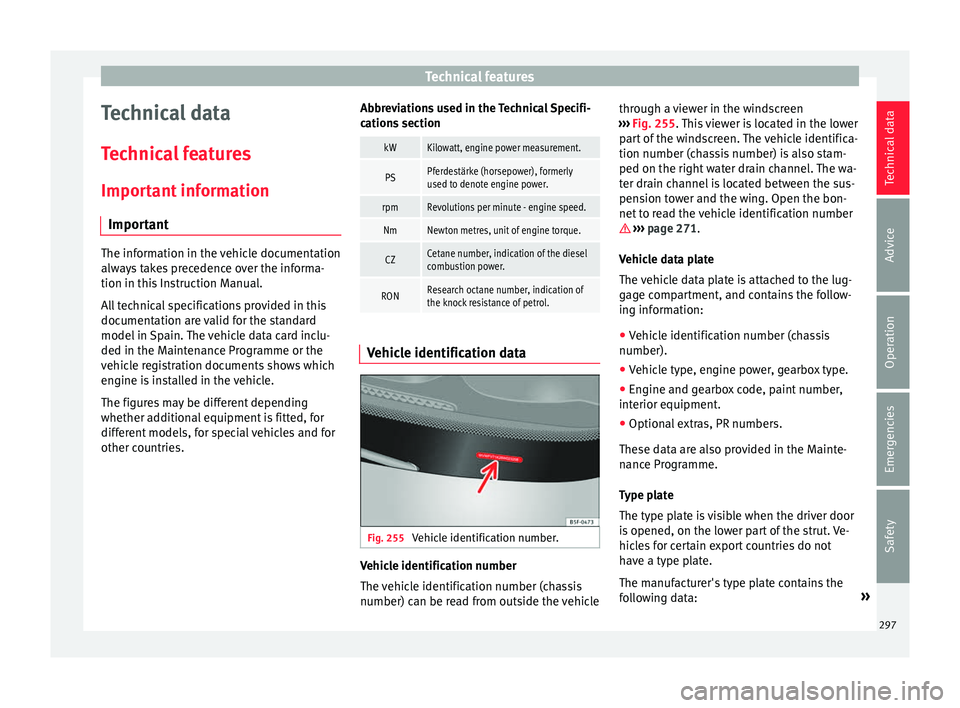
Fig. 255
Vehicle identification number. Vehicle identification number
The
v
ehic
le identification number (chassis
number) can be read from outside the vehicle through a viewer in the windscreen
›››
Fig. 255. This viewer is located in the lower
part of the windscreen. The vehicle identifica-
tion number (chassis number) is also stam-
ped on the right water drain channel. The wa-
ter drain channel is located between the sus-
pension tower and the wing. Open the bon-
net to read the vehicle identification number
››› page 271.
Vehicle data plate
The vehicle data plate is attached to the lug-
gage compartment, and contains the follow-
ing information:
● Vehicle identification number (chassis
number).
● Vehicle type, engine power, gearbox type.
● Engine and gearbox code, paint number,
interior equipment.
● Option
al extras, PR numbers.
These dat
a are also provided in the Mainte-
nance Programme.
Type plate
The type plate is visible when the driver door
is opened, on the lower part of the strut. Ve-
hicles for certain export countries do not
have a type plate.
The manufacturer's type plate contains the
following data: »
297
Technical data
Advice
Operation
Emergencies
Safety
Page 318 of 324
Index
Replacement parts . . . . . . . . . . . . . . . . . . . . . . . . 247
R ep
l
acing bulbs
see Changing bulbs . . . . . . . . . . . . . . . . . . . . . . 92
Reprogramming control units . . . . . . . . . . . . . . . 250
Retaining hooks . . . . . . . . . . . . . . . . . . . . . . . . . . 163
Revolution counter . . . . . . . . . . . . . . . . . . . . . . . . 102
Rims changing a wheel . . . . . . . . . . . . . . . . . . . . . . . . 46
Roll-back function windows . . . . . . . . . . . . . . . . . . . . . . . . . . . . . . 128
Rollback anti-trap function electric sliding doors . . . . . . . . . . . . . . . . . . . . 123
Roof carrier . . . . . . . . . . . . . . . . . . . . . . . . . . . . . . 164
Roof carrier system . . . . . . . . . . . . . . . . . . . . . . . . 164 fastening the supports . . . . . . . . . . . . . . . . . . . 164
Roof rack . . . . . . . . . . . . . . . . . . . . . . . . . . . . . . . . 164
Rubber seals . . . . . . . . . . . . . . . . . . . . . . . . . . . . . 257
Run-flat tyres codes . . . . . . . . . . . . . . . . . . . . . . . . . . . . . . . . . 294
Run-in tyres . . . . . . . . . . . . . . . . . . . . . . . . . . . . . . . . . . 290
Running in brake pads . . . . . . . . . . . . . . . . . . . . . . . . . . . . 191
new engine . . . . . . . . . . . . . . . . . . . . . . . . . . . . 199
S SAFE . . . . . . . . . . . . . . . . . . . . . . . . . . . . . . 119, 187
Safe driving . . . . . . . . . . . . . . . . . . . . . . . . . . . . . . 57
Safety child safety . . . . . . . . . . . . . . . . . . . . . . . . . . . . . 75
child seats . . . . . . . . . . . . . . . . . . . . . . . . . . . . . . 75
disconnecting the passenger front airbag . . . . 20
safe driving . . . . . . . . . . . . . . . . . . . . . . . . . . . . . 57
Safety equipment . . . . . . . . . . . . . . . . . . . . . . . . . . 58
Safety instructions using child seats . . . . . . . . . . . . . . . . . . . . . 22, 76 Sale of vehicle
in other countrie s / continents . . . . . . . . . . . . 263
Salt water . . . . . . . . . . . . . . . . . . . . . . . . . . . . . . . 205
Scrapping . . . . . . . . . . . . . . . . . . . . . . . . . . . . . . . 264 airbag system . . . . . . . . . . . . . . . . . . . . . . . . . . 264
vend-of-life vehicles . . . . . . . . . . . . . . . . . . . . . 264
Seat convenient entry function for the third row ofseats . . . . . . . . . . . . . . . . . . . . . . . . . . . . . . . 149
electric front seat . . . . . . . . . . . . . . . . . . . . . . . . 16
folding down rear seats . . . . . . . . . . . . . . . . . . 155
folding the backrest of the front passenger seat . . . . . . . . . . . . . . . . . . . . . . . . . . . . . . . . 151
heating . . . . . . . . . . . . . . . . . . . . . . . . . . . . . . . 147
incorrect position . . . . . . . . . . . . . . . . . . . . . . . . 60
number of seats . . . . . . . . . . . . . . . . . . . . . . . . . 60
rear seats . . . . . . . . . . . . . . . . . . . . . . . . . . . . . 143
seat with position memory . . . . . . . . . . . . . . . 148
Seat belt position . . . . . . . . . . . . . . . . . . . . . . . . . . 66 for pregnant women . . . . . . . . . . . . . . . . . . . . . . 17
seat belts . . . . . . . . . . . . . . . . . . . . . . . . . . . . . . 17
Seat belts . . . . . . . . . . . . . . . . . . . . . . . . . . . . . . . . 62 adjustment . . . . . . . . . . . . . . . . . . . . . . . . . . 17, 65
automatic belt retractor . . . . . . . . . . . . . . . . . . . 68
belt height adjustments . . . . . . . . . . . . . . . . . . . 68
belt tensioner . . . . . . . . . . . . . . . . . . . . . . . . . . . 68
belt tension limiter . . . . . . . . . . . . . . . . . . . . . . . 68
cleaning . . . . . . . . . . . . . . . . . . . . . . . . . . . . . . 262
protective function . . . . . . . . . . . . . . . . . . . . . . . 63
purpose . . . . . . . . . . . . . . . . . . . . . . . . . . . . . . . . 62
seat belt position . . . . . . . . . . . . . . . . . . . . . . . . 66
twisted belt . . . . . . . . . . . . . . . . . . . . . . . . . . . . . 65
unfastened . . . . . . . . . . . . . . . . . . . . . . . . . . . . . 64
use . . . . . . . . . . . . . . . . . . . . . . . . . . . . . . . . . . . . 65
warning lamp . . . . . . . . . . . . . . . . . . . . . . . . . . . 63
with two buckles . . . . . . . . . . . . . . . . . . . . . . . . . 67
Seat belt tensioner . . . . . . . . . . . . . . . . . . . . . . 18, 68 Seat belt with two buckles
fas tening . . . . . . . . . . . . . . . . . . . . . . . . . . . . . . . 67
twisting . . . . . . . . . . . . . . . . . . . . . . . . . . . . . . . . 67
unfastening . . . . . . . . . . . . . . . . . . . . . . . . . . . . . 67
Seat functions . . . . . . . . . . . . . . . . . . . . . . . . . . . 147 convenient entry function for the third row ofseats . . . . . . . . . . . . . . . . . . . . . . . . . . . . . . . 149
folding the backrest of the front passenger seat . . . . . . . . . . . . . . . . . . . . . . . . . . . . . . . . 151
lumbar massage . . . . . . . . . . . . . . . . . . . . . . . . 148
Seat heating . . . . . . . . . . . . . . . . . . . . . . . . . . . . . 147
SEAT information system . . . . . . . . . . . . . . . . . . . . 27 structure . . . . . . . . . . . . . . . . . . . . . . . . . . . . . . . 28
Seats . . . . . . . . . . . . . . . . . . . . . . . . . . . . . . . . . . . . 60 adjustment . . . . . . . . . . . . . . . . . . . . . . . . . . . . 143
Seat upholstery cleaning and maintenance of natural leather . 261
synthetic leather . . . . . . . . . . . . . . . . . . . . . . . . 261
Selective Catalytic Reduction . . . . . . . . . . . . . . . 268
Selector lever locking . . . . . . . . . . . . . . . . . . . . . . 195
Service fluids . . . . . . . . . . . . . . . . . . . . . . . . . . . . 247
Service interval display . . . . . . . . . . . . . . . . . . . . 105
Service notification: read . . . . . . . . . . . . . . . . . . . 106
Signal lever . . . . . . . . . . . . . . . . . . . . . . . . . . . . . . . 26
Sign Assist . . . . . . . . . . . . . . . . . . . . . . . . . 230, 231 connection . . . . . . . . . . . . . . . . . . . . . . . . . . . . 232
disconnection . . . . . . . . . . . . . . . . . . . . . . . . . . 232
indication on display . . . . . . . . . . . . . . . . . . . . 231
operation mode . . . . . . . . . . . . . . . . . . . . . . . . 232
trailer . . . . . . . . . . . . . . . . . . . . . . . . . . . . . . . . . 232
Sliding door . . . . . . . . . . . . . . . . . . . . . . . . . . . . . 122 childproof lock . . . . . . . . . . . . . . . . . . . . . . . . . 123
manually opening and closing . . . . . . . . . . . . 122
opening and closing electrically . . . . . . . . . . . 122
Snow chains . . . . . . . . . . . . . . . . . . . . . . . . . 50, 299 all-wheel drive . . . . . . . . . . . . . . . . . . . . . . . . . . 50
Spanner symbol . . . . . . . . . . . . . . . . . . . . . . . . . . 106
Spare fuel canister . . . . . . . . . . . . . . . . . . . . . . . . 265
316