ECU Seat Altea XL 2015 Owner's Guide
[x] Cancel search | Manufacturer: SEAT, Model Year: 2015, Model line: Altea XL, Model: Seat Altea XL 2015Pages: 236, PDF Size: 4.23 MB
Page 184 of 236
Advice
●
Never start the engine when the vehicle is
on the jack. Risk of accident.
● If work is to be carried out underneath the
vehicle, this must be secured by suitable
stands. Otherwise, there is a risk of injury. Note
The jack does not generally require any main-
tenance. If required, it should be greased us-
ing universal-type grease. Compact spare wheel* (temporary
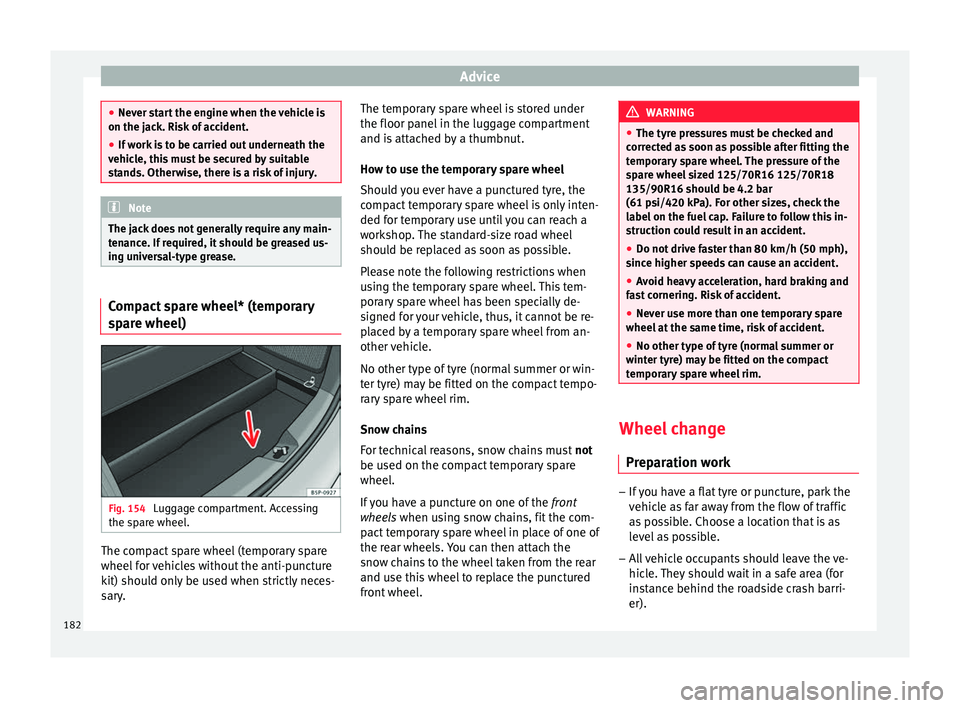
spare wheel)
Fig. 154
Luggage compartment. Accessing
the spare wheel. The compact spare wheel (temporary spare
wheel for vehicles without the anti-puncture
kit) should only be used when strictly neces-
sary. The temporary spare wheel is stored under
the floor panel in the luggage compartment
and is attached by a thumbnut.
How to use the temporary spare wheel
Should you ever have a punctured tyre, the
compact temporary spare wheel is only inten-
ded for temporary use until you can reach a
workshop. The standard-size road wheel
should be replaced as soon as possible.
Please note the following restrictions when
using the temporary spare wheel. This tem-
porary spare wheel has been specially de-
signed for your vehicle, thus, it cannot be re-
placed by a temporary spare wheel from an-
other vehicle.
No other type of tyre (normal summer or win-
ter tyre) may be fitted on the compact tempo-
rary spare wheel rim.
Snow chains
For technical reasons, snow chains must
not
be used on the compact temporary spare
wheel.
If you have a puncture on one of the front
wheels when using snow chains, fit the com-
p act
temporary spare wheel in place of one of
the rear wheels. You can then attach the
snow chains to the wheel taken from the rear
and use this wheel to replace the punctured
front wheel. WARNING
● The tyre pressures must be checked and
corrected as soon as possible after fitting the
temporary spare wheel. The pressure of the
spare wheel sized 125/70R16 125/70R18
135/90R16 should be 4.2 bar
(61 psi/420 kPa). For other sizes, check the
label on the fuel cap. Failure to follow this in-
struction could result in an accident.
● Do not drive faster than 80 km/h (50 mph),
since higher speeds can cause an accident.
● Avoid heavy acceleration, hard braking and
fast cornering. Risk of accident.
● Never use more than one temporary spare
wheel at the same time, risk of accident.
● No other type of tyre (normal summer or
winter tyre) may be fitted on the compact
temporary spare wheel rim. Wheel change
Preparation work –
If you have a flat tyre or puncture, park the
vehicle as far away from the flow of traffic
as possible. Choose a location that is as
level as possible.
– All vehicle occupants should leave the ve-
hicle. They should wait in a safe area (for
instance behind the roadside crash barri-
er).
182
Page 185 of 236
Emergencies
– Switch off the engine. Switch on the hazard
warning lights.
– Apply the handbrake firmly.
– En g
age the first gear , or put
the selector
lever to position P for those vehicles with
an automatic gearbox.
– If you are towing a trailer, unhitch it from
your vehicle.
– Take the vehicle tools and the spare wheel
out of
the luggage compartment. WARNING
Put the hazard warning lights on and place
the warning triangle in position. This is for
your own safety and also warns other road
users. CAUTION
If you have to change the tyre on a gradient,
block the wheel opposite the wheel being
changed by placing a stone or similar object
under it to prevent the vehicle from rolling
away. Note
Please observe related legal requirements. Changing a wheel
Change the wheel as described below: –
Remove the wheel cover
. A
l
so refer to
››› Fig. 155.
– Slac
ken the wheel bolts .
– Rai
se the vehicle with the jack at the corre-
spondin
g area.
– Remove the wheel and put
on the spare
one.
– Lower the vehicle.
– Tighten the wheel
bolts firmly with the box
sp
anner.
– Replace the hub cap.
Aft
er changing a wheel –
Put the tools back in their storage location.
– Place the wheel with the defective tyre in
the luggage compartment and secure it.
– Check the tyre pressure of the newly fitted
tyre as soon as possible.
– Have the tightening torque of the wheel
bolts checked as soon as possible with a
torque wrench. The prescribed torque must
be 120 Nm. Note
● If you notice that the wheel bolts are corro-
ded and difficult to turn when changing a wheel, they must be replaced before having
the wheel bolt tightening torque checked.
● For safety reasons, drive at moderate
speeds until the wheel bolt tightening torque
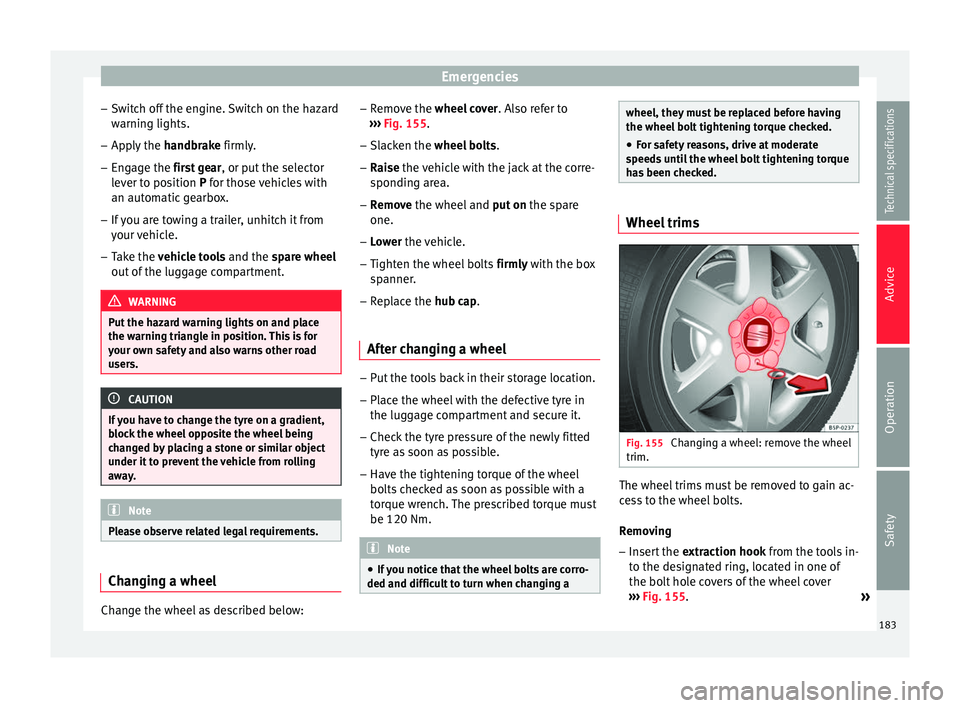
has been checked. Wheel trims
Fig. 155
Changing a wheel: remove the wheel
trim. The wheel trims must be removed to gain ac-
cess to the wheel bolts.
Removing
– Insert the extraction hook from the tools in-
to the designated ring, located in one of
the bolt hole covers of the wheel cover
››› Fig. 155 .
»
183
Technical specifications
Advice
Operation
Safety
Page 186 of 236
Advice
– Pull off the hub cap.
Wheel c
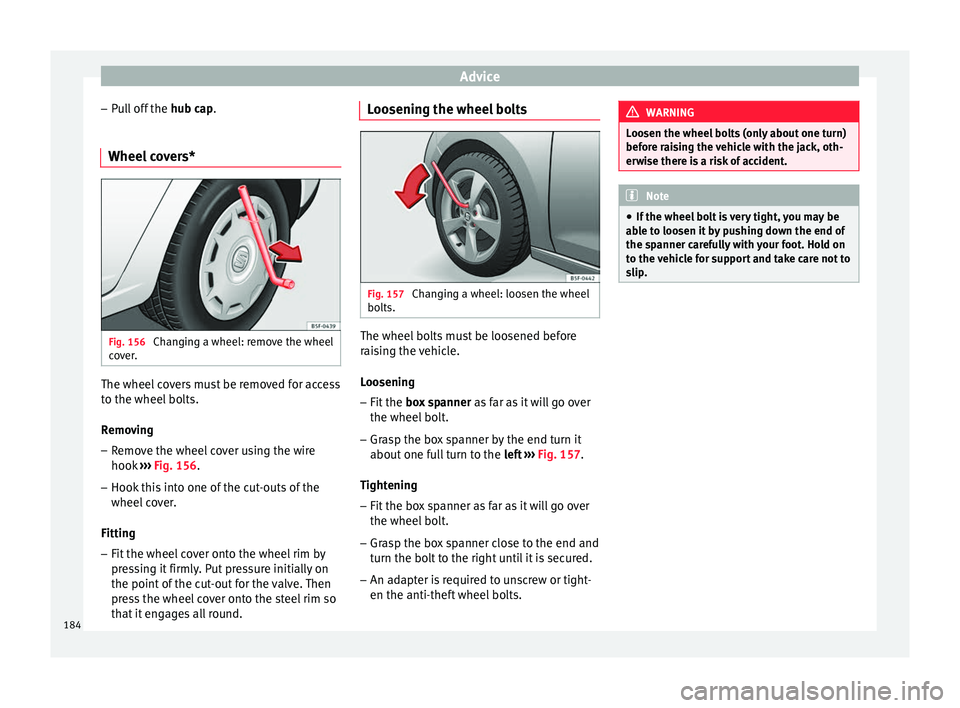
overs* Fig. 156
Changing a wheel: remove the wheel
cover. The wheel covers must be removed for access
to the wheel bolts.
Removing
– Remove the wheel cover using the wire
hook ››› Fig. 156 .
– Hook thi
s into one of the cut-outs of the
wheel cover.
Fitting
– Fit the wheel cover onto the wheel rim by
pressing it firmly. Put pressure initially on
the point of the cut-out for the valve. Then
press the wheel cover onto the steel rim so
that it engages all round. Loosening the wheel bolts
Fig. 157
Changing a wheel: loosen the wheel
bolts. The wheel bolts must be loosened before
raising the vehicle.
Loosening
– Fit the box spanner as far as it will go over
the wheel bolt.
– Grasp the box spanner by the end turn it
about one full turn to the left
›
›› Fig. 157.
Tightening
– Fit the box spanner as far as it will go over
the wheel bolt.
– Grasp the box spanner close to the end and
turn the bolt to the right until it is secured.
– An adapter is required to unscrew or tight-
en the anti-theft wheel bolts. WARNING
Loosen the wheel bolts (only about one turn)
before raising the vehicle with the jack, oth-
erwise there is a risk of accident. Note
● If the wheel bolt is very tight, you may be
able to loosen it by pushing down the end of
the spanner carefully with your foot. Hold on
to the vehicle for support and take care not to
slip. 184
Page 190 of 236
Advice
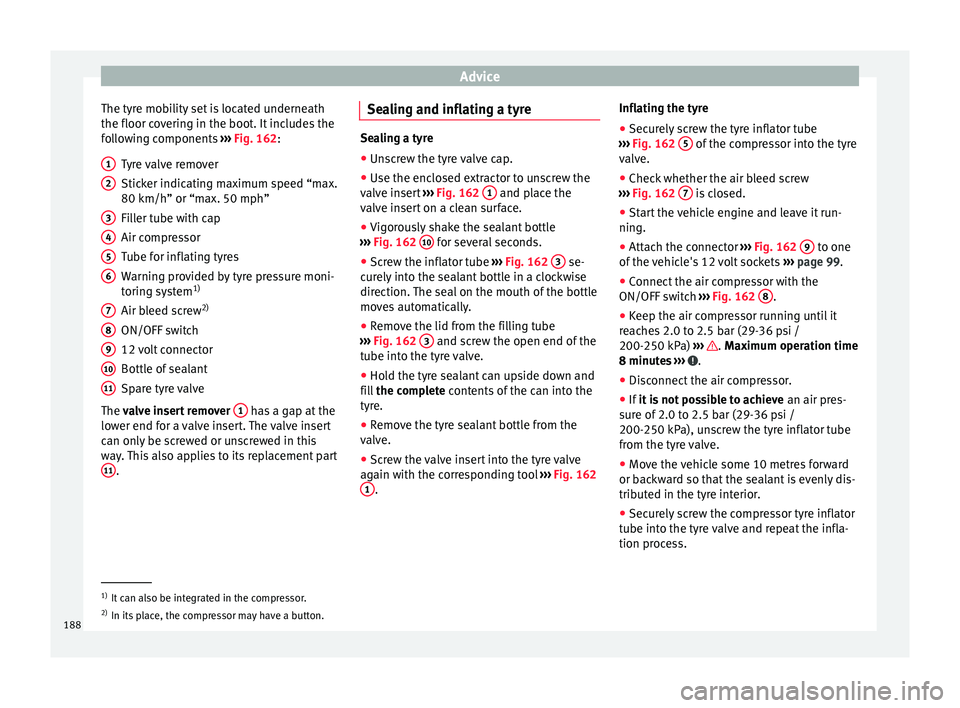
The tyre mobility set is located underneath
the floor covering in the boot. It includes the
following components ››› Fig. 162 :
T y
re valve remover
Sticker indicating maximum speed “max.
80 km/h” or “max. 50 mph”
Filler tube with cap
Air compressor
Tube for inflating tyres
Warning provided by tyre pressure moni-
toring system 1)
Air bleed screw 2)
ON/OFF switch
12 volt connector
Bottle of sealant
Spare tyre valve
The
valve insert remover 1 has a gap at the
lower end for a valve insert. The valve insert
can only be screwed or unscrewed in this
way. This also applies to its replacement part 11 .
1 2
3
4
5
6
7
8
9
10
11 Sealing and inflating a tyre
Sealing a tyre
● Unscrew the tyre valve cap.
● Use the enclosed extractor to unscrew the
valve insert ››› Fig. 162 1 and place the
valve insert on a clean surface.
● Vigorously shake the sealant bottle
››› Fig. 162 10 for several seconds.
● Screw the inflator tube ››› Fig. 162 3 se-
curely into the sealant bottle in a clockwise
direction. The seal on the mouth of the bottle
moves automatically.
● Remove the lid from the filling tube
››› Fig. 162 3 and screw the open end of the
tube into the tyre valve.
● Hold the tyre sealant can upside down and
fill the complete contents of the can into the
ty r
e.
● Remove the tyre sealant bottle from the
valve.
● Screw the valve insert into the tyre valve
again with the corresponding tool ›››
Fig. 162
1 .Inflating the tyre
●
Securely screw the tyre inflator tube
››› Fig. 162 5 of the compressor into the tyre
valve.
● Check whether the air bleed screw
››› Fig. 162 7 is closed.
● Start the vehicle engine and leave it run-
ning.
● Attach the connector ››› Fig. 162 9 to one
of the vehicle's 12 volt sockets ››› page 99.
● Connect the air compressor with the
ON/OFF switch ››› Fig. 162 8 .
● Keep the air compressor running until it
reaches 2.0 to 2.5 bar (29-36 psi /
200-250 kPa) ››› .
Maximum operation time
8 minut e
s ››› .
● Disconnect the air compressor.
● If it is not possible to achieve an air pres-
sure of 2.0 to 2.5 bar (29-36 psi /
200-250 kPa), unscrew the tyre inflator tube
from the tyre valve.
● Move the vehicle some 10 metres forward
or backward so that the sealant is evenly dis-
tributed in the tyre interior.
● Securely screw the compressor tyre inflator
tube into the tyre valve and repeat the infla-
tion process. 1)
It can also be integrated in the compressor.
2) In its place, the compressor may have a button.
188
Page 204 of 236

Advice
Side lights/ brake lights 3 Applies to the model: ALTEA
Fig. 184
Side lights and brake lights. Fig. 185
Side lights and brake lights. –
Open the rear lid.
– Remove the bolts ››› Fig. 184 A .
– Remove the cover of the luggage compart-
ment lateral panel. –
Unscrew the plastic fitting ››› Fig. 185 B securing the tail light. Inserting a screw-
driver under the plastic fitting may help to
loosen it.
– Partially remove the tail light from its cas-
ing taking care not to pull on the cable.
– Remove the bulb holder connector.
– Unscrew the bolts ››› Fig. 186 C from the
bulb holder and pull on this.
– Press on the bulb and rotate to the left then
fit the replacement.
– To refit follow the steps in reverse order,
taking special care when fitting the bulb
holder. The metal contacts of the bulb hold-
er ends should be correctly fitted with re-
spect to the rear light contacts. Turn signal light 3 Applies to the model: ALTEA
Fig. 186
Turn signal light. Fig. 187
Turn signal light. –
Remove the lamp from its housing
››› page 202.
– Unscrew the bolts ››› Fig. 186 C from the
bulb holder and pull on this.
202
Page 206 of 236

Advice
Position light, fog light and reverse
light on the rear lid 3 Applies to the model: ALTEA XL/ALTEA FREETRACK
Fig. 191
Lights on the boot. Fig. 192
Side light. Side light
A–
Open the rear lid.
– Pull the cover off. –
Take the lampholder out pressing on the
securing pins and extract it outwards.
– Remove the blown bulb and replace it with
another.
– To refit follow the steps in reverse order,
taking special care when fitting the bulb
holder.
Fog light and reverse lights B –
Open the rear lid.
– Pull the cover off.
– Turn the bulb holder to the left.
– Remove the blown bulb and replace it with
another.
– Installation involves all of the above steps
in reverse sequence. Side turn signals Fig. 193
Side turn signal. –
Press the turn signal to the left or to the
right to remove the bulb.
– Remove the bulb holder from the turn sig-
nal.
– Remove the failed glass bulb and replace
with a new bulb.
– Insert the bulb holder in the turn signal
guide until it clicks into place.
– First place the turn signal in the opening in
the bodywork, fixing the tabs ››› Fig. 193 ,
arr o
w 1 .
– Insert the bulb as shown by the arrow 2 ›››
Fig. 193.
204
Page 230 of 236
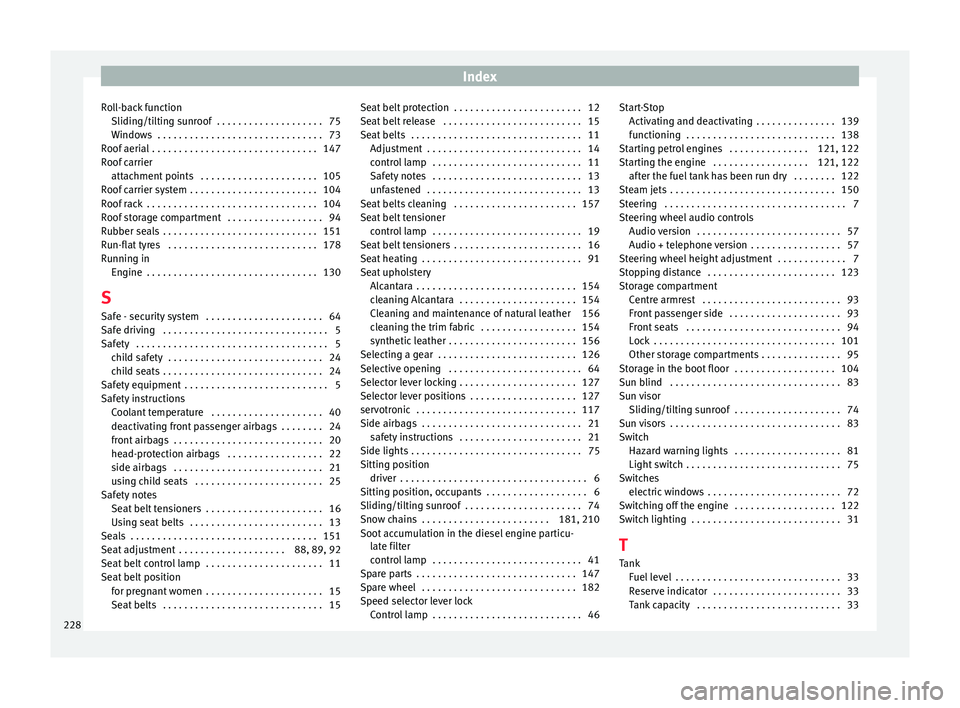
Index
Roll-back function Sliding/tilting sunroof . . . . . . . . . . . . . . . . . . . . 75
Windows . . . . . . . . . . . . . . . . . . . . . . . . . . . . . . . 73
Roof aerial . . . . . . . . . . . . . . . . . . . . . . . . . . . . . . . 147
Roof carrier attachment points . . . . . . . . . . . . . . . . . . . . . . 105
Roof carrier system . . . . . . . . . . . . . . . . . . . . . . . . 104
Roof rack . . . . . . . . . . . . . . . . . . . . . . . . . . . . . . . . 104
Roof storage compartment . . . . . . . . . . . . . . . . . . 94
Rubber seals . . . . . . . . . . . . . . . . . . . . . . . . . . . . . 151
Run-flat tyres . . . . . . . . . . . . . . . . . . . . . . . . . . . . 178
Running in Engine . . . . . . . . . . . . . . . . . . . . . . . . . . . . . . . . 130
S Safe - security system . . . . . . . . . . . . . . . . . . . . . . 64
Safe driving . . . . . . . . . . . . . . . . . . . . . . . . . . . . . . . 5
Safety . . . . . . . . . . . . . . . . . . . . . . . . . . . . . . . . . . . . 5 child safety . . . . . . . . . . . . . . . . . . . . . . . . . . . . . 24
child seats . . . . . . . . . . . . . . . . . . . . . . . . . . . . . . 24
Safety equipment . . . . . . . . . . . . . . . . . . . . . . . . . . . 5
Safety instructions Coolant temperature . . . . . . . . . . . . . . . . . . . . . 40
deactivating front passenger airbags . . . . . . . . 24
front airbags . . . . . . . . . . . . . . . . . . . . . . . . . . . . 20
head-protection airbags . . . . . . . . . . . . . . . . . . 22
side airbags . . . . . . . . . . . . . . . . . . . . . . . . . . . . 21
using child seats . . . . . . . . . . . . . . . . . . . . . . . . 25
Safety notes Seat belt tensioners . . . . . . . . . . . . . . . . . . . . . . 16
Using seat belts . . . . . . . . . . . . . . . . . . . . . . . . . 13
Seals . . . . . . . . . . . . . . . . . . . . . . . . . . . . . . . . . . . 151
Seat adjustment . . . . . . . . . . . . . . . . . . . . 88, 89, 92
Seat belt control lamp . . . . . . . . . . . . . . . . . . . . . . 11
Seat belt position for pregnant women . . . . . . . . . . . . . . . . . . . . . . 15
Seat belts . . . . . . . . . . . . . . . . . . . . . . . . . . . . . . 15 Seat belt protection . . . . . . . . . . . . . . . . . . . . . . . . 12
Seat belt release . . . . . . . . . . . . . . . . . . . . . . . . . . 15
Seat belts . . . . . . . . . . . . . . . . . . . . . . . . . . . . . . . . 11
Adjustment . . . . . . . . . . . . . . . . . . . . . . . . . . . . . 14
control lamp . . . . . . . . . . . . . . . . . . . . . . . . . . . . 11
Safety notes . . . . . . . . . . . . . . . . . . . . . . . . . . . . 13
unfastened . . . . . . . . . . . . . . . . . . . . . . . . . . . . . 13
Seat belts cleaning . . . . . . . . . . . . . . . . . . . . . . . 157
Seat belt tensioner control lamp . . . . . . . . . . . . . . . . . . . . . . . . . . . . 19
Seat belt tensioners . . . . . . . . . . . . . . . . . . . . . . . . 16
Seat heating . . . . . . . . . . . . . . . . . . . . . . . . . . . . . . 91
Seat upholstery Alcantara . . . . . . . . . . . . . . . . . . . . . . . . . . . . . . 154
cleaning Alcantara . . . . . . . . . . . . . . . . . . . . . . 154
Cleaning and maintenance of natural leather 156
cleaning the trim fabric . . . . . . . . . . . . . . . . . . 154
synthetic leather . . . . . . . . . . . . . . . . . . . . . . . . 156
Selecting a gear . . . . . . . . . . . . . . . . . . . . . . . . . . 126
Selective opening . . . . . . . . . . . . . . . . . . . . . . . . . 64
Selector lever locking . . . . . . . . . . . . . . . . . . . . . . 127
Selector lever positions . . . . . . . . . . . . . . . . . . . . 127
servotronic . . . . . . . . . . . . . . . . . . . . . . . . . . . . . . 117
Side airbags . . . . . . . . . . . . . . . . . . . . . . . . . . . . . . 21 safety instructions . . . . . . . . . . . . . . . . . . . . . . . 21
Side lights . . . . . . . . . . . . . . . . . . . . . . . . . . . . . . . . 75
Sitting position driver . . . . . . . . . . . . . . . . . . . . . . . . . . . . . . . . . . . 6
Sitting position, occupants . . . . . . . . . . . . . . . . . . . 6
Sliding/tilting sunroof . . . . . . . . . . . . . . . . . . . . . . 74
Snow chains . . . . . . . . . . . . . . . . . . . . . . . . 181, 210
Soot accumulation in the diesel engine particu- late filter
control lamp . . . . . . . . . . . . . . . . . . . . . . . . . . . . 41
Spare parts . . . . . . . . . . . . . . . . . . . . . . . . . . . . . . 147
Spare wheel . . . . . . . . . . . . . . . . . . . . . . . . . . . . . 182
Speed selector lever lock Control lamp . . . . . . . . . . . . . . . . . . . . . . . . . . . . 46 Start-Stop
Activating and deactivating . . . . . . . . . . . . . . . 139
functioning . . . . . . . . . . . . . . . . . . . . . . . . . . . . 138
Starting petrol engines . . . . . . . . . . . . . . . 121, 122
Starting the engine . . . . . . . . . . . . . . . . . . 121, 122 after the fuel tank has been run dry . . . . . . . . 122
Steam jets . . . . . . . . . . . . . . . . . . . . . . . . . . . . . . . 150
Steering . . . . . . . . . . . . . . . . . . . . . . . . . . . . . . . . . . 7
Steering wheel audio controls Audio version . . . . . . . . . . . . . . . . . . . . . . . . . . . 57
Audio + telephone version . . . . . . . . . . . . . . . . . 57
Steering wheel height adjustment . . . . . . . . . . . . . 7
Stopping distance . . . . . . . . . . . . . . . . . . . . . . . . 123
Storage compartment Centre armrest . . . . . . . . . . . . . . . . . . . . . . . . . . 93
Front passenger side . . . . . . . . . . . . . . . . . . . . . 93
Front seats . . . . . . . . . . . . . . . . . . . . . . . . . . . . . 94
Lock . . . . . . . . . . . . . . . . . . . . . . . . . . . . . . . . . . 101
Other storage compartments . . . . . . . . . . . . . . . 95
Storage in the boot floor . . . . . . . . . . . . . . . . . . . 104
Sun blind . . . . . . . . . . . . . . . . . . . . . . . . . . . . . . . . 83
Sun visor Sliding/tilting sunroof . . . . . . . . . . . . . . . . . . . . 74
Sun visors . . . . . . . . . . . . . . . . . . . . . . . . . . . . . . . . 83
Switch Hazard warning lights . . . . . . . . . . . . . . . . . . . . 81
Light switch . . . . . . . . . . . . . . . . . . . . . . . . . . . . . 75
Switches electric windows . . . . . . . . . . . . . . . . . . . . . . . . . 72
Switching off the engine . . . . . . . . . . . . . . . . . . . 122
Switch lighting . . . . . . . . . . . . . . . . . . . . . . . . . . . . 31
T
Tank Fuel level . . . . . . . . . . . . . . . . . . . . . . . . . . . . . . . 33
Reserve indicator . . . . . . . . . . . . . . . . . . . . . . . . 33
Tank capacity . . . . . . . . . . . . . . . . . . . . . . . . . . . 33
228