height Seat Toledo 2014 User Guide
[x] Cancel search | Manufacturer: SEAT, Model Year: 2014, Model line: Toledo, Model: Seat Toledo 2014Pages: 200, PDF Size: 4.37 MB
Page 76 of 200
Operation
Note
● Only connect the heated seats when the
engine is running. This provides considerable
savings on the battery capacity.
● In the event of a drop in voltage in the on-
board systems, the heated seats switch off
automatically to ensure enough power to con-
trol the engine ››› page 143, Automatic dis-
connection of electrical equipment . Armrest on front seats with inner
storage*
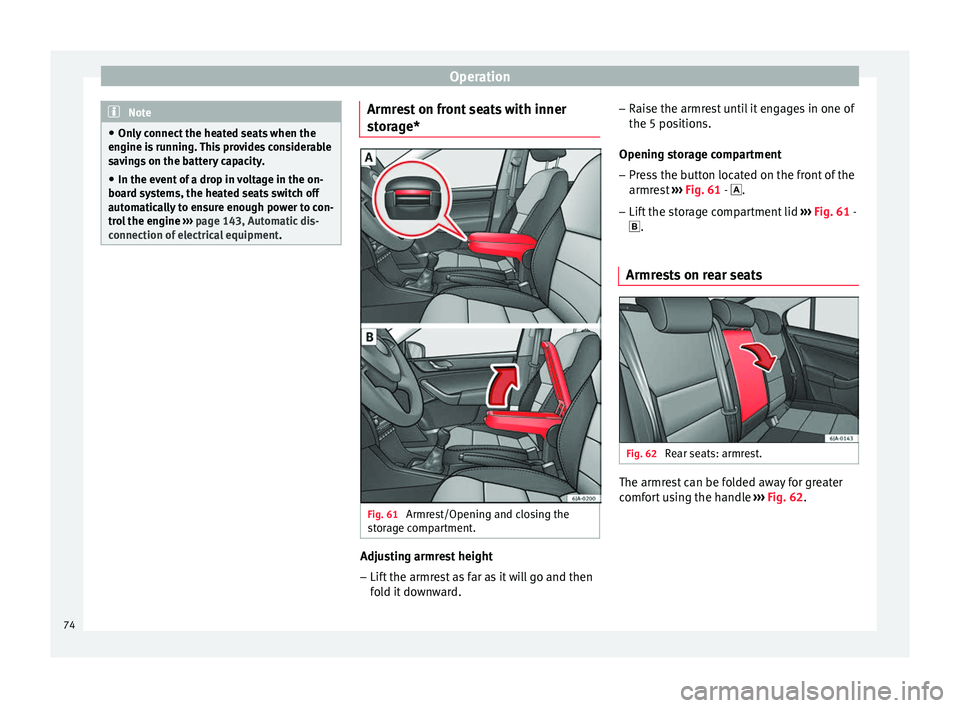
Fig. 61
Armrest/Opening and closing the
storage compartment. Adjusting armrest height
– Lift the armrest as far as it will go and then
fold it downward. –
Raise the armrest until it engages in one of
the 5 positions.
Opening storage compartment
– Press the button located on the front of the
armrest ››› Fig. 61 -
.
– Lif
t the storage compartment lid ››› Fig. 61 -
.
Armre
sts on rear seats Fig. 62
Rear seats: armrest. The armrest can be folded away for greater
comfort using the handle
››› Fig. 62 .
74
Page 87 of 200

Transport and practical equipment
Rear shelf Fig. 82
Remove the shelf. Fig. 83
Remove the shelf. The shelf can be removed if a large load is to
be transported.
Removing the shelf
–
Remove the straps from the shelf 1›››
Fig. 82 . –
Remo ve the shelf from its housing
2 by
knocking it gently from underneath be-
tween the supports.
Fitting the shelf – Place the shelf on the side supports on the
trim.
– Adjust the shelf supports 3
››› Fig. 83 to fit
the s up
ports 2 in the trim.
– Fit into place by knocking the top of the
shelf gently between the supports.
– Attach the straps 1 to the tray.
WARNING
Do not place objects on the rear shelf that
could endanger the vehicle occupants in case
of a sudden braking manoeuvre or an acci-
dent. CAUTION
● The rear shelf supports a maximum load of
1 kg.
● If handled incorrectly, the tray could bend
on closing the rear lid and become damaged
or damage the trim. Follow the instructions
below:
– The shelf supports 3
››› Fig. 83 must be
sec ur
ely in place in the trim supports 2 .
– The size of the load must not exceed the
height of the shelf. –
When open, the shelf must not be bent
against the shelf seal.
– There must be no objects in the space be-
tween the open shelf and the backrest of
the rear seat. Note
The shelf will lift when the rear lid is opened. Roof rack*
Introduction WARNING
● The load on the roof carrier must be proper-
ly secured. Risk of accident!
● Always secure the load using retaining
straps that are in good condition.
● Distribute the load evenly.
● When transporting heavy or large objects
on the roof, any change in normal vehicle be-
haviour due to a change in the centre of gravi-
ty or increased wind resistance must be taken
into account. Risk of accident! For this rea-
son, speed and driving style must be adjus-
ted for the situation.
● Avoid sudden manoeuvres and braking.
● Adjust your driving style to suit visibility,
the weather and road and traffic conditions. » 85
Technical specifications
Advice
Operation
Safety
Page 88 of 200
Operation
●
Never exceed the allowed axle loads or al-
lowed maximum weight. Risk of accident! CAUTION
● Only use SEAT-authorised roof carriers.
● Where roof carriers from other systems are
used or where they are not fitted properly,
any damage caused to the vehicle will not be
covered by the warranty. Therefore, carefully
follow the Instruction Manual for installation
of the roof carrier.
● Remember that the rear lid must not hit the
roof load.
● The total height of the vehicle increases ac-
cording to the roof load. Compare the height
of the vehicle with the heights of bridges or
other underpasses, for example, the height
of the garage door.
● Do not forget to remove the roof carrier be-
fore entering an automatic carwash.
● Take into account that the load must not
damage the aerial located on the roof. For the sake of the environment
If aerodynamic resistance increases, fuel con-
sumption will also increase. Attachment points
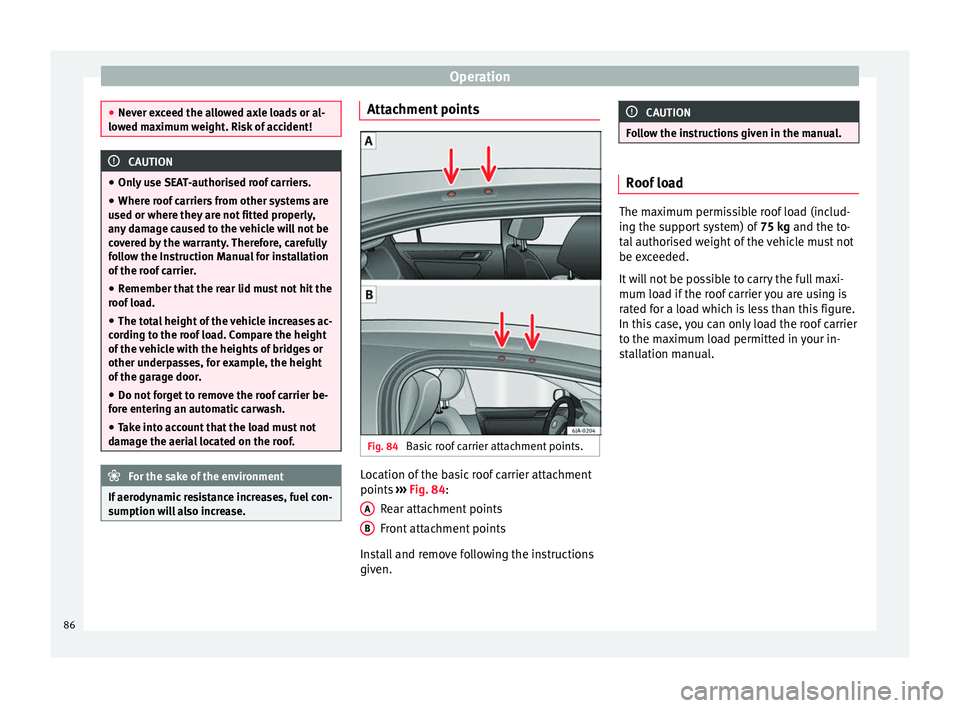
Fig. 84
Basic roof carrier attachment points. Location of the basic roof carrier attachment
points
››› Fig. 84 :
R e
ar attachment points
Front attachment points
Install and remove following the instructions
given. A B CAUTION
Follow the instructions given in the manual. Roof load
The maximum permissible roof load (includ-
ing the support system) of
75 kg and the to-
t al
authorised weight of the vehicle must not
be exceeded.
It will not be possible to carry the full maxi-
mum load if the roof carrier you are using is
rated for a load which is less than this figure.
In this case, you can only load the roof carrier
to the maximum load permitted in your in-
stallation manual. 86
Page 90 of 200
Operation
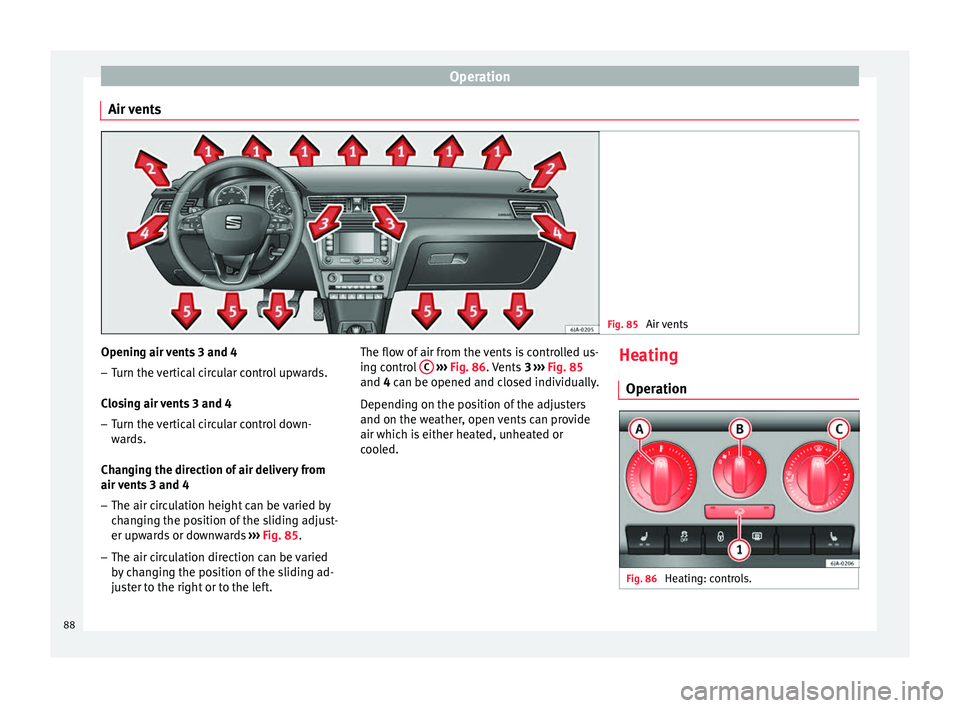
Air vents Fig. 85
Air vents Opening air vents 3 and 4
– Turn the vertical circular control upwards.
Closing air vents 3 and 4
– Turn the vertical circular control down-
wards.
Changing the direction of air delivery from
air vents 3 and 4 – The air circulation height can be varied by
changing the position of the sliding adjust-
er upwards or downwards ››› Fig. 85 .
– The air c ir
culation direction can be varied
by changing the position of the sliding ad-
juster to the right or to the left. The flow of air from the vents is controlled us-
ing control
C
››› Fig. 86 . Vents
3
›
›› Fig. 85
and 4 can be opened and closed individually.
Depending on the position of the adjusters
and on the weather, open vents can provide
air which is either heated, unheated or
cooled. Heating
Operation Fig. 86
Heating: controls.88
Page 109 of 200

Driving
The tyre pressures should always be checked
when the tyres are cold.
Do not u
se winter tyres all year round as they
increase fuel consumption by up to 10%.
Avoid unnecessary weight
Given that every kilo of extra weight
will in-
crease the fuel consumption, it is advisable
to always check the luggage compartment to
make sure that no unnecessary loads are be-
ing transported.
A roof rack is often left in place for the sake
of convenience, even when it is no longer
needed. At a speed of 100 km/h (62 mph)
and 120 km/h (75 mph) your vehicle will use
about 12% more fuel as a result of the extra
wind resistance caused by the roof rack even
when it is not in use.
Save electricity
The engine activates the alternator, which
produces electricity. With the need for elec-
tricity, fuel consumption also increases. Be-
cause of this, always turn off electrical devi-
ces when you do not need them. Examples of
devices that use a lot of electricity are: the
fan at high speeds, the rear window heating
and the seat heaters*. Note
● If you vehicle has Start-Stop, it is not rec-
ommended t o sw
itch this function off. ●
It is recommended to close the windows
when driving at more than 60 km/h (40 mph)
● Do not drive with your foot resting on the
clutch pedal, as the pressure can make the
p l
ate spin, more fuel will be used and it can
burn the clutch plate lining, causing a serious
fault.
● Do not hold the vehicle on a hill with the
clutch, use the foot brake or hand brake, us-
ing the latter to start. The fuel consumption
will be lower and you will prevent the clutch
plate from being damaged.
● On descents, use the engine brake, chang-
ing to the gear that is more suitable for the
slope. Fuel consumption will be “zero” and
the brakes will not suffer. Wading and driving off-road
Driving through water Fig. 94
Driving through water. To prevent the vehicle from being damaged
when driving through water (i.e. flooded
roads), please observe the following:
● Determine the depth of the water before
entering. Water can reach a maximum height
of below the door sill ››› Fig. 94 .
● Driv e at
a maximum pace of walking speed.
Driving at a higher speed can cause a wave
in front of the vehicle, which can cause water
to enter the engine air intake system or other
parts of the vehicle.
● Never stop in the water, never reverse and
never stop the engine.
● Before driving through water deactivate the
Start-Stop system ››› page 112. WARNING
● Driving through water, dirt and mud can re-
duce braking capability and prolong the brak-
ing distance – Risk of accident!
● Do not carry out any sudden or strong brak-
ing manoeuvres after driving through water.
● Clean and dry the brakes as soon as possi-
ble after driving through water by breaking
intermittently. Carry out braking in order to
dry the brakes and clean the brake discs only
if traffic so permits. Do not put other drivers
at risk. » 107Technical specifications
Advice
Operation
Safety
Page 136 of 200

Advice
away from the glass. Otherwise the paint-
work may be damaged.
– Pull the release catch in the direction of the
arrow 2
››› Fig. 108 and the bonnet will be
r el
eased.
– Hold and lift the bonnet.
– Remove the support strut 3
››› Fig. 109
from its fastening in the direction of the ar- row and secure the raised bonnet so that
the end of the strut hooks onto the opening
in the bonnet
4 .
Closing the bonnet – Lift the bonnet slightly and unhook the
support strut keeping the bonnet open and
insert it into its fastening 3 .
–
Let the bonnet drop from a height of
around 20 cm into the catch Do not press
down afterwards!
– Check that the bonnet is correctly closed.
Checking fluid levels Fig. 110
Diagram for the location of the various elements. From time to time, the levels of the different
fluids in the vehicle must be checked. Never
fill with incorrect fluids, otherwise serious
damage to the engine may be caused.
Coolant expansion tank . . . . . . . . . . .138
Window washer water tank . . . . . . . .139
Engine oil filler cap . . . . . . . . . . . . . . .137
1 2
3 Engine oil level dipstick
. . . . . . . . . . .136
Brake fluid reservoir . . . . . . . . . . . . . .139
Battery . . . . . . . . . . . . . . . . . . . . . . . . . . . 140
The checking and replenishment of the serv-
ice fluids are carried out on the components
mentioned above. These operations are de-
scribed in the ››› page 132 .
4 5
6 Overview
You will find further explanations, instruc-
tions and restrictions on the technical speci-
fications as of
››› page 174 . Note
The layout of the engine compartment is very
similar to all petrol and diesel engines. 134
Page 148 of 200

Advice
Replacing tyres and wheels All four wheels must be fitted only with tyres
of the same type, size and the same tread
pattern.
The correct tyre/wheel combinations speci-
fied for your vehicle are listed in its docu-
mentation.
Note for Italy: A SEAT Service Centre should
be c
on
sulted whether different sized wheels
or tyres to those originally fitted by SEAT may
be fitted, as well as the combinations al-
lowed between the front axle (axle 1) and
back axle (axle 2).
Understanding the tyre designations makes
it easier to choose the correct tyres. The tyre
designation is marked on the sidewall. For
example.
195/55 R 15 85 H
This contains the following information:
195Tyre width in mm
55Height/width ratio in %
Ridentifying tyre construction letter –
Radial
15Rim diameter in inches
85Load rating code
HSpeed rating code letter The tyres are subject to the following
maxi-
mum speed limits :
Speed rating code
letterMaximum speed limit
Q160 km/h (99 mph)
R170 km/h (106 mph)
S180 km/h (112 mph)
T190 km/h (118 mph)
U200 km/h (124 mph)
H210 km/h (130 mph)
V240 km/h (149 mph)
W270 km/h (168 mph) The
manufacturing date
is also indicated on
the ty
re sidewall (possibly only on the inner
side of the wheel).
DOT … 27 12…
means, for example, that the tyre was pro-
duced in the 27th week of 2012.
Follow the instructions ››› page 146 if you
only have a temporary spare wheel.
Tyres with directional tread pattern The direction of rotation is indicated by the
arrows on the tyre sidewall
. The direction ofrotation indicated must be respected. This
guarantees optimum grip and helps avoid ex-
cessive noise, wear and aquaplaning.
In the event of a flat tyre, a spare wheel with
an undetermined tread pattern or an oppo-
site tread pattern must be used and you must
drive carefully, as in these cases the tyres no
longer offer maximum performance.
Spare wheel Spare wheel location* Fig. 119
Luggage compartment: spare wheel. The spare wheel is housed in a well under
the floor panel in the luggage compartment
and is secured by a special bolt
››› Fig. 119 .
T ak
e out the tool box before removing the
spare wheel.
146
Page 188 of 200

Technical specifications
DimensionsLength/Width (mm)4,482/1,715
Height at kerb weight (mm)1,466
Front and rear projections (mm)876/1,004
Wheelbase (mm)2,602
Turning radius (m)10.2
Front/rear a)
track width (mm)1,463/1,500
a) This data will change depending on the type of wheel rim.
Capacities
Capacities
Fuel tank 55 litres
Windscreen washer fluid
container with headlight
washer 3.5 litres/ 5.4 litres
Tyre pressure
Summer tyres:
Correct tyre pressure can be seen on the sticker on the
inside of the fuel tank flap.
Winter tyres:
The pressure of these tyres is 0.2 bar higher than that of
summer tyres (2.9 psi / 20 kPa). 186
Page 189 of 200

Index
Index
A
ABS . . . . . . . . . . . . . . . . . . . . . . . . . . . . . . . . . . . . 109 control lamp . . . . . . . . . . . . . . . . . . . . . . . . . . . . 36
Accessories . . . . . . . . . . . . . . . . . . . . . . . . . . . . . . 122
Adjusting the seat belt height . . . . . . . . . . . . . . . . 15
Adjustment seats . . . . . . . . . . . . . . . . . . . . . . . . . . . . . . . . . . 72
steering wheel . . . . . . . . . . . . . . . . . . . . . . . . . . . 7
Aerial . . . . . . . . . . . . . . . . . . . . . . . . . . . . . . . . . . . 124 see radio reception . . . . . . . . . . . . . . . . . . . . . . 126
Airbag . . . . . . . . . . . . . . . . . . . . . . . . . . . . . . . . . . . 16
Airbag covers . . . . . . . . . . . . . . . . . . . . . . . . . . . . . 19
Airbags description . . . . . . . . . . . . . . . . . . . . . . . . . . . . . 17
Airbag system . . . . . . . . . . . . . . . . . . . . . . . . . . . . . 16 activation . . . . . . . . . . . . . . . . . . . . . . . . . . . . . . 18
control lamp . . . . . . . . . . . . . . . . . . . . . . . . . . . . 18
front airbags . . . . . . . . . . . . . . . . . . . . . . . . . . . . 19
functioning . . . . . . . . . . . . . . . . . . . . . . . . . . . . . 18
Head-protection airbags . . . . . . . . . . . . . . . . . . 21
side airbags . . . . . . . . . . . . . . . . . . . . . . . . . . . . 20
air conditioning air conditioning . . . . . . . . . . . . . . . . . . . . . . . . . 88
Air conditioning air conditioning . . . . . . . . . . . . . . . . . . . . . . 90, 92
Climatronic . . . . . . . . . . . . . . . . . . . . . . . . . . . . . 93
Air recirculation manual air conditioning . . . . . . . . . . . . . . . . . . . 92
Alarm . . . . . . . . . . . . . . . . . . . . . . . . . . . . . . . . . . . . 57
Anti-lock system . . . . . . . . . . . . . . . . . . . . . . . . . . 109
Anti-theft alarm system . . . . . . . . . . . . . . . . . . . . . 57
Armrest . . . . . . . . . . . . . . . . . . . . . . . . . . . . . . . . . . 74 rear . . . . . . . . . . . . . . . . . . . . . . . . . . . . . . . . . . . 74
Ashtrays . . . . . . . . . . . . . . . . . . . . . . . . . . . . . . . . . 78 Aspects to take into account before starting the
vehicle . . . . . . . . . . . . . . . . . . . . . . . . . . . . . . . . . . 5
ASR . . . . . . . . . . . . . . . . . . . . . . . . . . . . . . . . . . . . 109 Assistance systems . . . . . . . . . . . . . . . . . . . . . . 35
control lamp . . . . . . . . . . . . . . . . . . . . . . . . . . . . 35
Assistance system ABS . . . . . . . . . . . . . . . . . . . . . . . . . . . . . . . . . . 109
ASR . . . . . . . . . . . . . . . . . . . . . . . . . . . . . . . . . . 109
Start-Stop . . . . . . . . . . . . . . . . . . . . . . . . . . . . . 112
Assistance systems ABS . . . . . . . . . . . . . . . . . . . . . . . . . . . . . . . . . . . 36
cruise control . . . . . . . . . . . . . . . . . . . . . . . . . . 111
EDL . . . . . . . . . . . . . . . . . . . . . . . . . . . . . . . . . . 110
ESC . . . . . . . . . . . . . . . . . . . . . . . . . . . . . . 35, 108
parking aid . . . . . . . . . . . . . . . . . . . . . . . . . . . . 110
Audible signal . . . . . . . . . . . . . . . . . . . . . . . . . . . . 11
Auto-check system . . . . . . . . . . . . . . . . . . . . . . . . . 44
Automatic disconnection of electrical equip- ment . . . . . . . . . . . . . . . . . . . . . . . . . . . . . . . . . 143
Automatic gearbox . . . . . . . . . . . . . . . . . . . . . . . . 100 back-up programme . . . . . . . . . . . . . . . . . . . . . 104
Driving programmes . . . . . . . . . . . . . . . . . . . . . 103
instructions for use . . . . . . . . . . . . . . . . . . . . . 100
kick-down . . . . . . . . . . . . . . . . . . . . . . . . . . . . . 101
manual release of the selector lever . . . . . . . . 162
parking . . . . . . . . . . . . . . . . . . . . . . . . . . . . . . . 101
Selector lever lock . . . . . . . . . . . . . . . . . . . . . . 103
selector lever positions . . . . . . . . . . . . . . . . . . 101
starting . . . . . . . . . . . . . . . . . . . . . . . . . . . . . . . 101
stopping . . . . . . . . . . . . . . . . . . . . . . . . . . . . . . 101
Tiptronic . . . . . . . . . . . . . . . . . . . . . . . . . . . . . . 102
Automatic headlight control . . . . . . . . . . . . . . . . . 63
AUX-IN . . . . . . . . . . . . . . . . . . . . . . . . . . . . . . . . . . . 51
B Back-up automatic gearbox . . . . . . . . . . . . . . . . . . . . . . 104 Battery
automatic disconnection of electrical equip-ment . . . . . . . . . . . . . . . . . . . . . . . . . . . . . . . 143
changing . . . . . . . . . . . . . . . . . . . . . . . . . . . . . . 143
charging . . . . . . . . . . . . . . . . . . . . . . . . . . . . . . 142
checking acid level . . . . . . . . . . . . . . . . . . . . . . 142
replacing the battery . . . . . . . . . . . . . . . . . . . . . 53
safety instructions . . . . . . . . . . . . . . . . . . . . . . 140
winter service . . . . . . . . . . . . . . . . . . . . . . . . . . 142
Before starting the vehicle . . . . . . . . . . . . . . . . . . . 5
Belt tightening . . . . . . . . . . . . . . . . . . . . . . . . . . . . 15
Bonnet closing . . . . . . . . . . . . . . . . . . . . . . . . . . . . . . . . 133
opening . . . . . . . . . . . . . . . . . . . . . . . . . . . . . . . 133
Boot hook . . . . . . . . . . . . . . . . . . . . . . . . . . . . . . . . . . 84
retaining elements . . . . . . . . . . . . . . . . . . . . . . . 83
retaining nets . . . . . . . . . . . . . . . . . . . . . . . . . . . 84
see boot hatch . . . . . . . . . . . . . . . . . . . . . . . . . . 59
Boot hatch . . . . . . . . . . . . . . . . . . . . . . . . . . . . . . . 59 automatic lock . . . . . . . . . . . . . . . . . . . . . . . . . . 58
Boot lid . . . . . . . . . . . . . . . . . . . . . . . . . . . . . . . . . . 59 automatic lock . . . . . . . . . . . . . . . . . . . . . . . . . . 58
Brake assist . . . . . . . . . . . . . . . . . . . . . . . . . . . . . 108
Brake fluid checking . . . . . . . . . . . . . . . . . . . . . . . . . . . . . . 139
Brakes brake fluid . . . . . . . . . . . . . . . . . . . . . . . . . . . . . 139
handbrake . . . . . . . . . . . . . . . . . . . . . . . . . . . . . . 99
running in . . . . . . . . . . . . . . . . . . . . . . . . . . . . . 104
warning lamps . . . . . . . . . . . . . . . . . . . . . . . . . . 33
Brake servo . . . . . . . . . . . . . . . . . . . . . . . . . . . . . . . 99
Button on driver's door electric window opening and closing . . . . . . . . 60
187