(567,1)
北米Model "A1700BE-B" EDITED: 2017/ 10/ 11
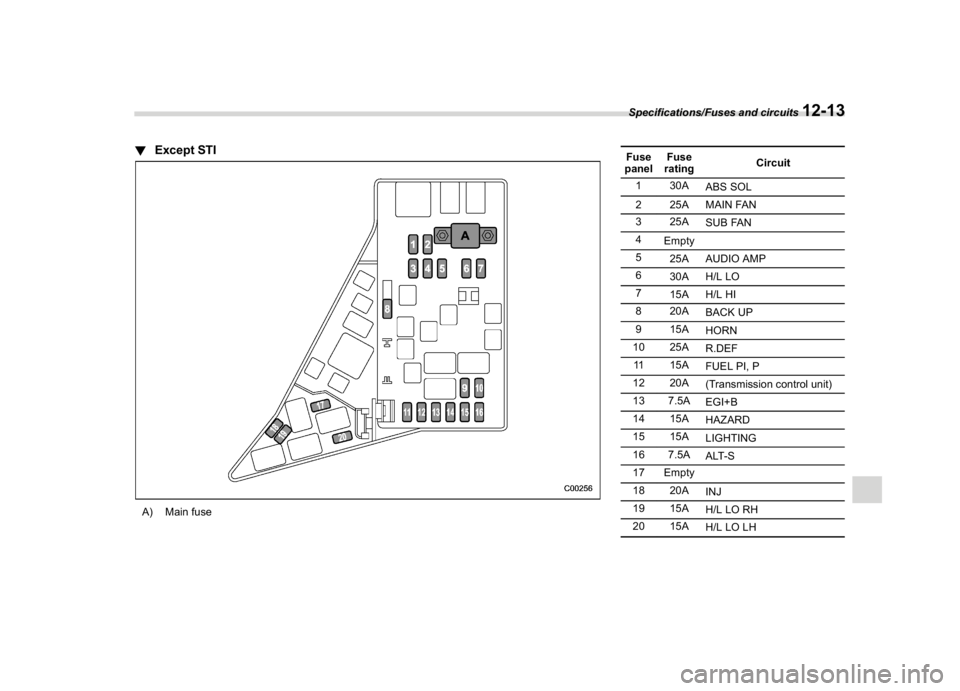
!Except STIA) Main fuseFuse
panelFuse
ratingCircuit
1 30A
ABS SOL
2 25A MAIN FAN
3 25A
SUB FAN
4
Empty
5
25A AUDIO AMP
6
30A H/L LO
7
15A H/L HI
8 20A
BACK UP
9 15A
HORN
10 25A
R.DEF
11 15A
FUEL PI, P
12 20A
(Transmission control unit)
13 7.5A
EGI+B
14 15A
HAZARD
15 15A
LIGHTING
16 7.5A
ALT-S
17 Empty
18 20A
INJ
19 15A
H/L LO RH
20 15A
H/L LO LH
Specifications/Fuses and circuits
12-13
12
(570,1)
北米Model "A1700BE-B" EDITED: 2017/ 10/ 11
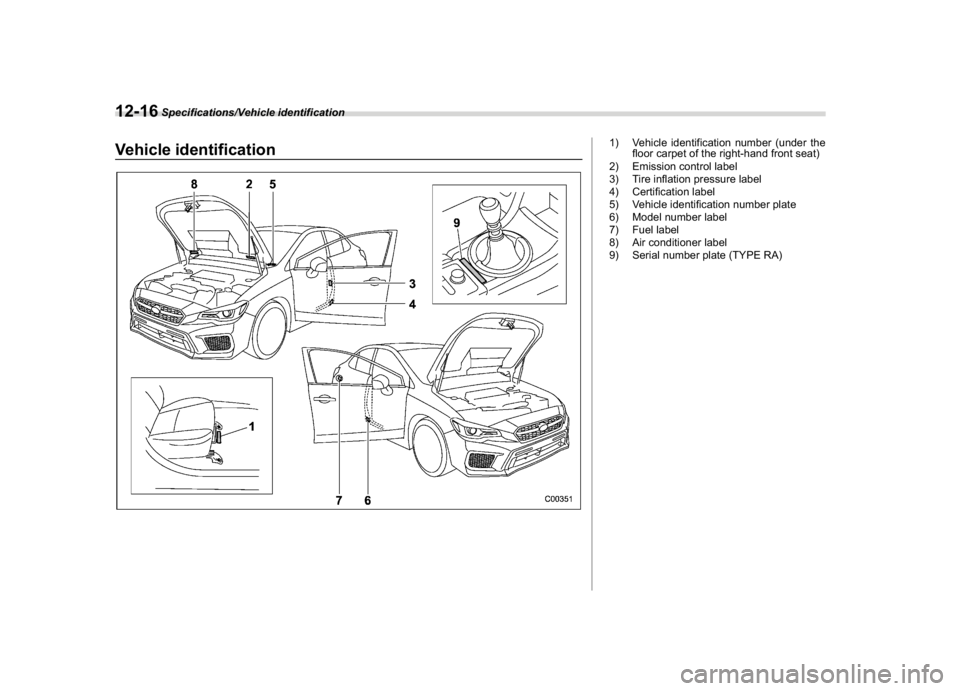
Vehicle identification
1) Vehicle identification number (under the
floor carpet of the right-hand front seat)
2) Emission control label
3) Tire inflation pressure label
4) Certification label
5) Vehicle identification number plate
6) Model number label
7) Fuel label
8) Air conditioner label
9) Serial number plate (TYPE RA)
Specifications/Vehicle identification
12-16
(577,1)
北米Model "A1700BE-B" EDITED: 2017/ 10/ 11
crease in temperature could cause
tread separation, and failure of the
tire(s). Possible resulting loss of
vehicle control could lead to an
accident.!Measuring and adjusting air
pressure to achieve proper in-
flationCheck and, if necessary, adjust the
pressure of each tire (including the
spare) at least once a month and
before any long journey. Check the
tire pressures when the tires are
cold. Use a pressure gauge to
adjust the tire pressures to the
specific values. Driving even a short
distance warms up the tires and
increases the tire pressures. Also,
the tire pressures are affected by
the outside temperature. It is best to
check tire pressure outdoors before
driving the vehicle. When a tire
becomes warm, the air inside it
expands, causing the tire pressure
to increase. Be careful not to mis-
takenly release air from a warm tire
to reduce its pressure.
&Glossary of tire terminology.
Accessory weight
The combined weight (in excess of
those standard items which may be
replaced) of automatic transmis-
sion, power steering, power brakes,
power windows, power seats, radio,
and heater, to the extent that these
items are available as factory-in-
stalled equipment (whether in-
stalled or not)..
Bead
The part of the tire that is made of
steel wires, wrapped or reinforced
by ply cords and that is shaped to fit
the rim..
Bead separation
A breakdown of the bond between
components in the bead..
Bias ply tire
A pneumatic tire in which the ply
cords that extend to the beads are
laid at alternate angles substantially
less than 90 degrees to the center-
line of the tread..
Carcass
The tire structure, except tread andsidewall rubber which, when in-
flated, bears the load.
.
Chunking
The breaking away of pieces of the
tread or sidewall..
Cold tire pressure
The pressure in a tire that has been
driven less than 1 mile or has been
standing for three hours or more..
Cord
The strands forming the plies in the
tire..
Cord separation
The parting of cords from adjacent
rubber compounds..
Cracking
Any parting within the tread, side-
wall, or inner liner of the tire
extending to cord material..
Curb weight
The weight of a motor vehicle with
standard equipment including the
maximum capacity of fuel, oil and
coolant, and if so equipped, air
conditioning and additional weight
optional engine.
–CONTINUED–
Consumer information and Reporting safety defects/Tire information
13-5
13